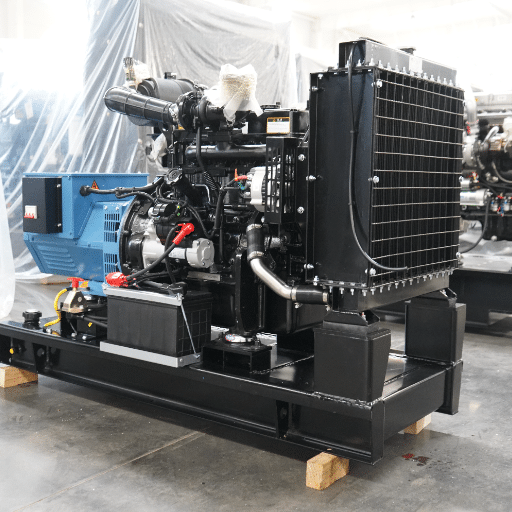


Different power generators may not be of the same quality, specifically, residential and industrial generators. They are created for different uses and have different areas, environments, and amounts of electricity consumption. Regardless of whether you are a house owner searching for the security of power during unpredictable power outages or a plant manager who is in charge of the power supply in facilities that are highly sensitive to power fluctuations, it is imperative to discern the differences between the two types of generators. This paper will present the criteria mentioned above, including power output, design specifications, application scope, and cost considerations, which are of utmost importance, and the differences in each of them, as the main ideas, for you to be able to choose in a thoughtful way. You will then have a quite good idea which type of generator is well-matched to your needs.
Brief Introduction to Generator

Electric generators are equipment that transform mechanical force into electricity, making a steady power supply even during blackouts or in places where there is no grid connection to electricity. They work by the laws of electromagnetic induction where a conductor that moves through a magnetic field hence the electricity generated. For the most part, generators come in two categories: portable and stationary-type ones. Smaller, mobile portable generators are suitable for temporary power demand while stationary ones are permanently installed and power-up automatically when the electricity from the grid is gone. The choice of the generator is mainly based on power demand, site condition, and finances. In order to choose the right system, familiarity of these basics is very important.
What is a Generator?
Generators are machines that have been built in such a way that mechanical energy is transformed into electrical energy by the induction of an electromotive force. The heart of the process is the interaction of a magnetic field and a conductor that results in the electric current. The present-day generators are associated with all sorts of power sources like petrol, diesel, natural gas and even the renewal sources such as wind and hydroelectricity. They are used everywhere from backup power during the outages, to keeping up the industrial activities, to making the access to electricity for the remote areas possible. The most innovative areas in which the recent engineering work is done on generators are in the conversion of energy needed to run them, in the practically zero emission generators and in the development of the generators that can be controlled completely by the computer. To maximize the use of generators in the various sectors and as well within the household level, it is important to comprehend the working of these generators and hence to have their feature analyzed.
Types of Generators
| Type | Fuel Source | Key Features | Primary Use | Efficiency |
|---|---|---|---|---|
| Diesel Generators | Diesel | Durable, long lifespan | Industrial, large-scale power | High efficiency |
| Gasoline Generators | Gasoline | Portable, ideal for homes | Residential backup power | Moderate efficiency |
| Natural Gas Generators | Natural Gas | Cleaner emissions | Commercial and residential use | High efficiency |
| Propane Generators | Propane | Fuel storage flexibility | Off-grid and RV power | High efficiency |
| Solar Generators | Solar energy | Renewable, no emissions | Eco-friendly small-scale power | Variable efficiency |
| Hybrid Generators | Multiple (e.g., solar/diesel) | Versatile, energy-efficient combo | Both residential and industrial | Optimized efficiency |
| Portable Generators | Various | Lightweight, easy mobility | Outdoor and emergency use | Moderate efficiency |
| Standby Generators | Natural Gas or Diesel | Automatically powers during outages | Long-term backup power | High reliability |
| Hydroelectric Generators | Water flow | Sustainable, large-scale generation | Hydropower plants | Very high efficiency |
| Wind-powered Generators | Wind | Renewable, no direct emissions | Wind farms | Location-dependent |
Importance of Backup Power
Backup power systems have a very significant role to play in the continuous operation of a company during power cuts without any interruption, downtime reduction, and risk management during the energy cut-offs. There are few businesses like hospitals, data centers, and manufacturing which use generators extensively to save the loss incurred due to power interruption. For example, as per research, one can even say that the smallest power disturbance of the data center can cause a smaller business to lose around $10,000, and the business can lose a lot more if it is a big one.
Even further, the whole issue is not only the economic losses, but also the backup power that comes into play. For that reason, places like hospitals as well as emergency response centers are tied to the power grid 24/7 to ensure that life-saving equipment, as well as the basic functions and operations, are supplied. In addition, the increasing connection of smart grids and renewable energy sources is making backup systems more and more efficient and they are now at the peak of energy storage and use which is ideal for grid outages.
For household users, the most up-to-date alternatives such as portable generators and home standby units are offering a ready power source, which is necessary for keeping up the communication, refrigeration, and heating or cooling devices. It is always an excellent idea to buy a backup power source that will not fail if the power goes out; in fact, it is not just about having power all the time, but also about being resilient enough to live with power cuts in the electricity-dependent world of today.
Residential Generators

Residential generators are a great solution because they guarantee a power supply even when the main source is down. In this case, the gadgets that must stay on like refrigerators, etc., and the HVAC units will still be working. The consumers can choose between the portable generators, which are the most economic and less restrictive ones, and the standby generators, which have a higher capacity and work automatically during the outages. The other advantage of the standby generators is that they will be fueled by natural gas or propane, providing the user with a continuous energy supply and no refueling will be needed. Thus, the generator ensures safety and convenience to the homeowners.
Features and Functionality
Residential generators are specially made to be like a proper and stable source of backup power when the light goes off by using modern technology that easily integrates with the electrical system of the house. A very fancy feature is the automatic transfer switches (ATS) which find powercuts and turn on the generator right away so that there will be only a short disruption of power and hence ease for homeowners. These systems are very flexible so that they can keep the power for the most necessary circuits or for the whole house depending on the load of the generator and the need of the homeowner.
Moreover, the new residential generators are good examples of this accounted fuel efficiency, for those advanced generators that can be fueled by natural gas, propane, or diesel. In both cases, natural gas usually the preferable option and the very best for the environment, while the propane could be stored in a giant tank so the energy supply is guaranteed to be continuous without the need for any manual operation. Unfortunately, noise reduction was the only significant advancement models incorporated into their design until they began to include enclosures with isolating walls and low-tone exhaust systems, allowing them to operate quietly and thus live in residential areas.
Moreover, remote monitoring capabilities are now a regular part of the generators and people can check the performance on their phones or other devices via apps. The information given is about the fuel supply, maintenance and actual faults, all in real time so the generator can be maintained as required. Together with enclosures made to withstand such weather and materials that are built to last, these systems are capable of bringing longevity and rank up with others when it comes to toughness. and they become a very important acquisition for homeowners who are after the safety of electricity supply.
Fuel Types: Natural Gas vs Diesel
| Comparison Factor | Natural Gas | Diesel |
|---|---|---|
| Availability | Typically available via local gas lines | Stored on-site in tanks |
| Cost | Generally lower in cost | Fluctuates based on oil market |
| Fuel Storage | No storage required | Requires dedicated storage tanks |
| Efficiency | Slightly less efficient | Highly efficient for energy output |
| Maintenance | Requires less frequent maintenance | Demands regular engine servicing |
| Environmental Impact | Emits less pollution | Higher emissions and particulate matter |
| Lifespan of Generator | Longer lifespan due to cleaner fuel | Potentially shorter due to carbon buildup |
| Start-Up Performance | Reliable in warmer climates | Reliable in both warm and cold climates |
| Noise Levels | Operates relatively quietly | Generally louder during operation |
| Suitability for Emergency Use | Limited supply during disruptions | More reliable in emergencies |
Residential Generators Installation for Homes
The correct installation of residential generators is a main factor to guarantee safety, efficiency, and compliance with the law. Usually, the very first step is the assessment of the electric power needs of the house so as to be able to derive the amount of power to be generated and model either a portable generator or a stationary one. The point is that the generator must be put in a place with good air circulation, not closer than about five feet to any windows, doors, and openings so as not to allow the carbon monoxide to accumulate.
To make sure the generator can work perfectly through a transfer switch and not backfeed into the grid during a power failure, only a licensed electrician should handle the connections. The generator also needs a secure and flat surface for installation, like concrete or a prefabricated pad, to avoid cracks or malfunctions in the future; while the local permitting and inspection regulations are essential, one should not avoid them due to hazards and penalties. And, carrying out regular oil changes, fuel system checks and battery inspections are not sacrifices but must be done to be able to continue enjoying the generator during prolonged times of not using it.
Modern generators equipped with remote monitoring have made it possible for the performance of such facilities to be measured and alert notifications to be sent to homeowners to notify them of the need for service. If the installation is done properly, it will not only keep the power supply running in case of an outage but also improve the safety and the level of comfort in a house.
Industrial Generators

Industrial generators are machines specifically built for distributing electricity on a large scale, and are often used in settings like factories, hospitals, data centers, and building sites. They are designed to take over the power supply during a power cut or to work in parallel with the grid. The generators running on diesel and natural gas are the most common as they are most efficient and there is enough fuel in the market.
A few of the main characteristics are increased durability, the use of innovative cooling systems, and the ability to monitor loads so as to handle time-consuming operations and varying energy needs. To make sure that their dependability and efficacy remain at high levels during long periods of usage, one must not overlook the necessity of the regular checks including oil, air and fuel filter changes and diagnostics. These engines act as a life-support in maintainability and as a tool for cost reduction as well, since they are a big part of the minimal downtime, which enables the operational continuity.
Power Requirements and Capacity
Industrial generators are designed to meet the different and changing power needs of factories, hospitals, data centers, and other industrial buildings. These generating sets are differentiated according to their power output, which is usually expressed in kilowatts (kW) or megawatts (MW). The capacity varies a lot: the smallest ones could power around 20 kW for a specific requirement, while there are also very large setups with more than 3 MW that supply energy to whole manufacturing plants or other operations and yet shall remain uninterrupted.
The first thing that needs to be done in order to match the power requirements is to make a calculation of the continuous and peak loads, considering such things as the start-up surges of the equipment and the concurrent operational demands. The need for big capacity generators to prevent interruptions is likely to be determined by the use of heavy machinery and high-energy equipment. Gradual increase of the power supply is made possible through the use of modern systems with configurations which is able to be scaled up, that is, facilities can install generators one by one and run them in parallel.
Industrial generators, as a rule, are provided with high technology load-sharing equipment and automatic transfer switches (ATS) besides the standard backup facility, thus ensuring great power management and terrific energy reserves. These controls, together with the very accurate sizing and capacity planning, ensure that the risks of underperformance and system failure are decreased, especially in significant settings. Thus, the knowledge of the actual power requirements and the use of generators of the correct sizes become the two primary contributing factors for maintaining the business that is running without interruption.
Commercial Generator Installation
When you set up commercial generators, you need to be very strict in the planning and also very compliant to the industrial requirements set to guarantee the reliability and efficiency of the generator. The site selection is one of the key things to put right because the generator has to be in a place that is neither hard to get to for maintenance nor exposed to external environmental hazards such as flooding or extreme weather conditions. Moreover, there are the ventilation needs to be considered to the point of this potentially being the cause of not only overheating but also the spreading of exhaust which is highly important in the case of the generator being installed in a confined space.
Applying the load assessment is one of the essential steps in the process of the power plant design, and it must be done correctly so that no further energy and capacity are wasted during the peak operation period. While the whole industry is moving towards the use of real-time monitoring systems and other newer plants, operators already have the option to have a look at performance metrics over the internet. Not only that, but they can also identify potential issues before they result in costly downtime through the data obtained.
Adhering to the local electrical standards and regulations and meeting the requirements of the National Electrical Code (NEC) are also among the first few things to be considered. The installation of transfer switches, grounding, and incorporation with the already existing power distribution systems underline projects that must be handled in a safe manner, free of this traditional, sometimes avoidable, risk, and in accordance with the law. The organizations could get operational resiliency at a maximum if they were to install with the help of the latest tools and techniques that have been named.
Typical Applications in Industries
Industrial generators are a major contributor across different businesses as they provide dependable power supplies for the purpose of supporting operations during the time of an outage or at remote sites. Through this, in the manufacturing sector, they make sure that the production processes are done in an uninterrupted way by running big machines and systems that are critical. Generators from various sectors like the health sector, the hospitals, the patient care, life-saving equipment maintenance, and ensuring networking communication is always available even when power is out. At the same time, the data centers’ operations are not affected by the above-ground network’s delivery and receiving of cable.
Industrial generators are very helpful in construction sites due to the lack of access to conventional power grids in areas where these generators provide electricity to tools, lighting, and safety equipment. The oil and gas industry depends on generators with a high capacity to power drilling operations and refining processes in distant areas. At the same time, the agricultural sector employs generators for the purpose of irrigation and refrigeration for perishable goods as well as automated feeding systems, thus ensuring production continuity even in power supply fluctuations. Generators with the latest control systems and the most fuel-efficient technologies that are combined with the best materials are the key to the industrial sector’s success, and currently, they are a force to be reckoned with in the field of engineering and technology due to their outstanding efficiency in the provision of power.
Comparative Analysis: Residential vs Industrial Generators

Consumer generators are normally smaller, have fewer watts, and are intended for short-term, cyclic use during blackouts. These usually use gasoline or propane and are made to be silent in order to match the domestic atmosphere. It is a cost-effective option for individual households and it is very easy to maintain due to the low rate of usage.
On the other hand, the commercial category of generators finds itself being designed to cope with long hours of heavy activity and to provide options for serving utility main (or critical) power systems in hospitals, factories, data centers, etc. They are generally bigger, have more power, and run on high-quality fuels, which are usually diesel or natural gas. Most of the commercial generators feature the latest technology and automatic system controls that deal adequately with more heavy loads and are able to prevent the systems from shutting down or being harmed due to adverse weather.
The main difference is in the amount of power produced and the things that the system is used for—those meant for domestic use focus on being convenient as well as inexpensive, while the big-scale commercial and industrial solution is more about being resourceful and able to work for a long period.
Difference Between Residential and Industrial Generators
| Feature | Residential Generators | Industrial Generators |
|---|---|---|
| Power Output | Lower, suitable for household needs | Higher, supports large-scale operations |
| Primary Fuel Source | Gasoline, propane, or natural gas | Diesel, natural gas, or propane |
| Load Capacity | Handles light to moderate loads | Capable of heavy, continuous loads |
| Operational Duration | Short-term or standby use | Designed for long, continuous operation |
| Maintenance Requirements | Minimal upkeep, less frequent servicing | Intensive, requires regular servicing |
| Noise Level | Quieter operation for residential areas | Louder, requires specialized noise reduction |
| System Controls | Basic controls, manual operation | Advanced automation and control systems |
| Durability | Less robust, suited for moderate environments | Built to withstand harsh industrial conditions |
| Cost | Lower initial investment | Higher cost due to advanced capabilities |
| Mobility | Portable or stationary options available | Primarily stationary, attached to heavy systems |
Installation Considerations
While setting up residential and industrial generators, the utmost care should be taken, and major issues should be considered in order to get efficient, compliant, and safe installations. The generators for home use usually don’t occupy much room, and they can be installed near a building if the local laws, considering the distances from the property line and clearances from windows, doors, and vents, are complied with. Noise, of course, is a big issue in the neighborhood; various forms of soundproofing or using enclosures to mitigate noise levels may have to be adopted in order to comply with the local codes related to noise.
Installing industrial generators, however, entails much foresight because they produce more power and thus require sophisticated operation facilities. Often, such generators necessitate the provision of strong support bases, such as concrete pads, to not only bear their weight but also cushion vibrations that may be caused by different factors. Consequently, industrial generators have to follow stricter environmental laws regarding fumes and fuel storage. In the US, they have to be granted an EPA Tier certification. Besides, a high-capacity electrical system normally needs the facility to provide special switchgear and transfer switches that will make the former merge with the facility’s power system effectively, and thus, guarantee a continuous power supply during the operational changeover periods.
All the installations, be they residential or industrial, have to go through an evaluation process based on the site information. The evaluation addresses the factors of location for the purpose of accessibility for maintenance and delivery of fuel, as well as the building codes and zoning laws, which are strictly local.
Choosing the Right Generator

The selection of generators requires the consideration of certain major points for the assurance that they will serve the purpose.
- Power Requirements: The total power requirement for the most crucial or circumstantial tools, machines, and systems should be the topmost priority to determine. Homes need power for lighting, heating, cooling, and refrigeration, whereas power for industries may run the high-powered machines.
- Fuel Type: In general, generators are powered by gasoline, diesel, natural gas, or propane. Each of them offers different characteristics and advantages, making the comparison between them practically impossible due to the different perspectives based on their unique performance; diesel, though, is among the most efficient and long-lasting as possible, while natural gas is more clean energy with the most stable supply for stationary applications.
- Operational Runtime: The generator should go on fuel utilization and tank capacity as the criteria, deciding as to how long it continues to operate. The amount of time it lives means the number of hours it withstands constant power outages or industrial operations cannot be interrupted.
- Portability vs. Permanence: Portable generators are great for applications only when needed for a short time or to move around with, while standby models are less problematic due to their more reliable and more convenient use in permanent fixed installations.
- Noise Levels: It would be nice to think if there are technologies available to that help in the reduction of the noise that is made by generators or sound enclosures the use of which will be the least annoying and will reduce sound disturbances especially in residential areas and workplaces where there is a need for silence.
- Safety Features: The usage products from any brand must have protective characteristics or features, which include, but not limited to, overload prevention, and automatic voltage regulation, and carbon monoxide detection, for safe operation.
From there, when considering these facets, someone can choose an adequately trustworthy generator that meets his or her power needs, is good on budget, and provides lasting protection as well.
Assessing Your Power Needs
One of the first things that need to be considered when factoring in a generator is the amount of power you would like to generate. This would involve determining the total power the generator needs to generate, which in practice depends on all appliances and devices that are intended to be put in use with the generator. Here, we derive the running watt and the starting power rating from each device in the lot. Running watts denote the power that will be in continuous use, and starting watts should mark the simultaneous power used by a couple for the needs of starting. For example, refrigerators and air-coolers usually have between them the biggest surge-wattage demands at the start.
The selection of a generator with a 20 to 30% higher wattage output is the most secure means to have uninterrupted operation. The additional wattage will take care of power surges and, in the end, will prevent further damage to the best. Moreover, it is important to decide if you need a single-phase or three-phase output, as it is very much determined by the kind of equipment and applications you are going to use and connect to the power source. Houses usually get single-phase power, while factories and machines get three-phase.
Final Thoughts on Generator Selection
Picking out the correct generator, a detailed evaluation of the operational needs, consumption patterns, and possibly underlying environmental conditions must come first. Making the most of the latest generator technology thus, for example, the introduction of models that are more energy-efficient or having built-in monitoring devices, can bring about a major leap in the long-term performance and cost management. Available data implies that the present-day inverter generators, as one case in point, are able to produce a cleaner type of electricity suitable for the sensitive electronics thus on the other hand also cutting off the noise and fuel usage. Further, the compliance of emissions with certain laws, e.g., EPA Tier standards, by the manufacturer ensures that the consumer lives up to the environmental sustainability objective set out by these laws. To get the right source of power out of every single technical factor is offered by the good fortune of having a profound insight into one’s requirements.
Reference Sources
- PubMed Central (PMC)
Title: Buying electricity resilience: using backup generator sales
https://pmc.ncbi.nlm.nih.gov/articles/PMC10163284/ - National Renewable Energy Laboratory (NREL)
Title: Emergency Diesel Generator Reliability and Installation
https://docs.nrel.gov/docs/fy20osti/76553.pdf - U.S. Energy Information Administration (EIA)
Title: Distributed Generation, Battery Storage, and Combined Heat and Power
https://www.eia.gov/analysis/studies/buildings/dg_storage_chp/pdf/dg_storage_chp.pdf
Frequently Asked Questions (FAQs)
What is the difference between a residential and a commercial generator?
Residential and commercial generators are differentiated largely on the basis of power rating and purpose: residential units are small in their feeding for residential purposes, whereas commercial units are built large to cater to business further. Cum power rating, power source, and fuel consumption stand out as the most glaring three distinctions between the residential and commercial generators. For one, the residential units appear less expensive with them being capable of being fuelled on very easy fuels, the industrial commercial generators are massive and in most cases run on very complex energy sources whose handling requires special training.
How do I choose a generator based on fuel source for a home or business?
The choice of fuel for your home or business generator very much depends on its generator type: the use of diesel generators implies high power and fuel efficiency for commercial and industrial purposes while those of propane or natural gas for residential needs. Different types of generators mean different fuels, so consider both the availability and the running time of the generator under the load. Residential generators are meant for infrequent power demand and immediate start-up; commercial ones, however, are all about longevity and therefore frequent use. Buying a generator guideline and professional installation are both important, to say the least, in terms of safety and compliance.
Why consider power outage scenarios when selecting industrial and residential generators?
In a planning initiative for power outage, the result will be the identification of the total generators capacity needed and the most appropriate generator for one’s requirement, either it be a home generator or a commercial generator. The placement of generators is always programmed to back up critical circuits and may be sized equally by subtracting the residential and commercial load profiles. The size of commercial generators is much bigger, and a typical generator is set up to run continuously for hours without interruption, whereas domestic generators are only meant to operate to bring home systems back to life.
How do I decide between a generator for my business and one for my home?
Selecting the correct generator for your business means that you must take into account the total generators demand, critical equipment, and runtime expectations, which are not the same with the generator for your house that is targeted at comfort and essential circuits only. Commercial and industrial settings might have to have two systems in parallel since this is the case, they would also be consuming a lot more fuel, on the other hand, residential generators would have to be run every now and then, thus, the fuel consumption would be less and affordability would be put first. Residential and commercial types, commercial setups have higher installation, and maintenance expenses and the need for expert installation help.