

A three-phase diesel generator produces three alternating voltages offset by 120 degrees, and delivers about 1.73 times the power of a single-phase machine at the same current. That is the standard definition, and it is where most guides stop.
Here is what they leave out. The three-phase output changes what your site can run, how much current your switchgear...

A generator coolant temperature alarm is not one device. It is at least two: an analog sender that reads temperature and can drift, and a switch that trips at a fixed point and cannot. Which one fired decides whether you spend the afternoon on the engine or on the wiring.
Most operators never make that distinction. The alarm says high coolant temperature,...

Yes, you can recover heat from a diesel generator. But only within a narrow band of temperatures the engine will tolerate, and only if the set runs enough hours to pay back the equipment. Miss either condition and generator heat recovery stops being an efficiency project and becomes an expensive one.
The pitch you have probably read goes like this....
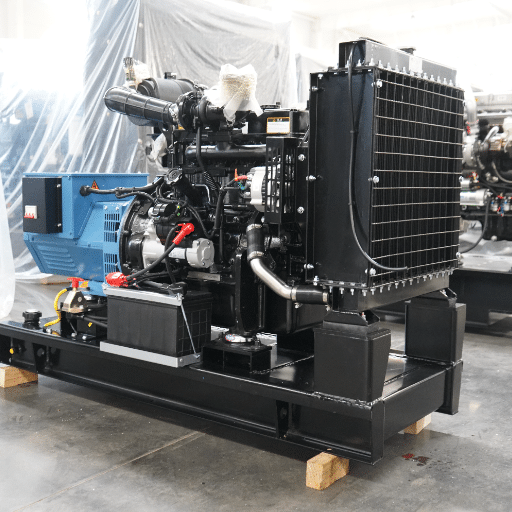
Generator heat exchanger cooling is a liquid-to-liquid method of rejecting engine heat into a separate water loop instead of into air. A shell-and-tube exchanger takes the place of the radiator and fan, so the engine’s jacket water transfers its heat to a second water supply: city water, a cooling tower loop, building chilled water, or the sea....

A generator block heater, also called a jacket water heater, is a thermostatically controlled electric element plumbed into the engine’s coolant circuit. It holds jacket water at roughly 100 to 120 °F (38 to 49 °C) while the set sits idle, so a standby diesel can start and accept full load within seconds on the coldest night of the year.
Here’s...

Most generator nameplates already assume a hot day. A typical industrial set is rated for full output at a 40 °C ambient, so a high ambient temperature generator site, one that sees 45 to 50 °C for months, starts every summer above the line the machine was quoted on. The double squeeze catches most owners only when alarms start: the engine makes less...

Generator cooling system maintenance is the scheduled care of the closed loop that keeps a diesel genset at working temperature: daily coolant checks, periodic coolant testing and flushing, radiator and fan cleaning, water pump and thermostat checks, and cold-weather preparation. Run it on hours OR calendar time, whichever comes first, and most overheating...

A diesel generator set turns only about a third of its fuel’s energy into electricity. The rest leaves as heat, and generator heat rejection is the calculation that sizes the radiator, the cooling fan, and the generator room. On a typical turbocharged set, the rejected heat is roughly 1.7 to 1.9 times the machine’s rated kW, not the modest...

The right diesel generator coolant antifreeze is an ethylene glycol mix at about 50/50 with distilled water, chosen by chemistry and never by color: IAT, OAT, or HOAT to match your engine, plus a cavitation additive (SCA) when it runs wet liners. A diesel generator cooling system is a closed loop, and the fluid in that loop decides whether it protects...
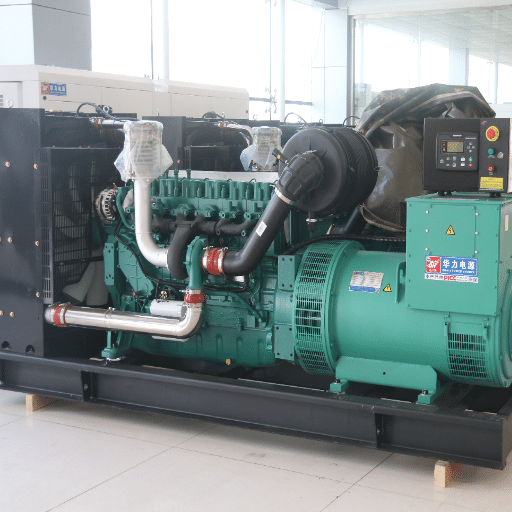
A diesel generator cooling system is a closed loop. The water pump pushes coolant through the engine block and cylinder head, where it picks up combustion heat. Once the coolant passes about 80 °C, the thermostat opens and routes it to the radiator. A fan pulls air through the core, the heat leaves the coolant, and the cooled coolant returns to the...