
A medium voltage generator produces power at distribution voltage instead of the 400 V or 480 V of an ordinary industrial set. You specify one when the load, the fault current or the cable run makes low voltage impractical. In practice that happens between about 5 MVA and 10 MVA, not at one megawatt figure.
Most buyers arrive at this question with one number in mind. Their consultant, their spreadsheet, or a forum post says medium voltage starts at 2 MW. Then they read a datasheet quoting 2,500 kVA, and the number stops making sense.
This guide separates the three constraints that decide the voltage class, explains why the phrase isn’t standardised, and sets out what changes in the four systems around the set.
Key Takeaways
- “Medium voltage” has no single definition. The IEV only places it between low and high voltage; EN 50160 fixes it at 1 kV to 36 kV, switchgear standards use up to 52 kV, and US practice runs to 69 kV.
- There are three limits, not one, and two of them converge: a low voltage board gives up between about 5 MVA and 10 MVA, near 8 MW at 0.8 power factor.
- A 2 MW set at 0.8 power factor draws about 3,000 A at 480 V, not the 2,400 A that MW rules of thumb imply.
- Crossing to 11 kV changes switchgear, cable, protection and clearance all at once. Those four systems, not the alternator, are the real cost.
- MV generator ranges start around 1 MVA. Below that, a low voltage set plus a transformer almost always costs less.
Specifying one now? Send us the voltage class and the network it has to feed, and our engineers will tell you whether the two match before the enquiry goes out.
What Medium Voltage Means on a Generator
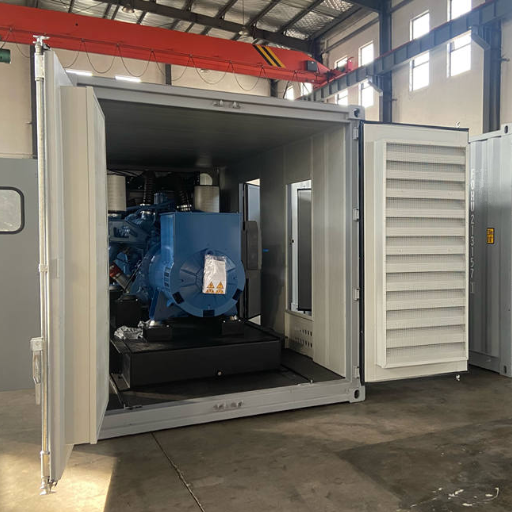
Start with an uncomfortable fact. The term medium voltage isn’t defined the way you’d expect.
IEC 60038, the standard most people assume defines it, only tabulates preferred voltage values and bands. It labels the low end and the high end, and says nothing about the middle.
The IEC’s own vocabulary, IEC 60050, is deliberately vague: medium voltage is “any set of voltage levels lying between low and high voltage”, and its note puts the overlap with high voltage usually in the 30 kV to 100 kV band. The 1 kV to 36 kV figure everyone quotes comes from EN 50160 instead, the European standard for public distribution voltage, and that’s a network definition rather than a universal one.
The disagreement matters because it’s invisible on a quotation.
| Source | Low voltage | Medium voltage | High voltage |
|---|---|---|---|
| IEC 60050 (IEV) | up to about 1 kV | “between low and high voltage”; boundary usually 30 kV to 100 kV | not fixed |
| EN 50160 (public distribution) | up to 1 kV | above 1 kV, up to 36 kV | outside its scope |
| IEC 62271-1 (switchgear) | outside its scope | not a term it uses | above 1 kV, distribution typically to 52 kV |
| US practice | under 600 V in practice | ANSI/IEEE 1 kV to 35 kV; NEC buckets split at 1 kV and 4.16 kV | no single answer |
Regional habits make the gap wider still. Chinese manufacturers often label a 6 kV or 10 kV machine a high-voltage generator, which is correct by local convention and confusing to anyone holding an IEC specification. North American buyers expect 4.16 kV. UK, Indian, East African and Middle Eastern projects usually expect 11 kV.
None of this is trivia. If your specification says “medium voltage generator set” and nothing more, you can receive compliant bids at 6.6 kV, 11 kV and 33 kV, and every one of them will look like a match.
One further warning. A generator rated at 600 V is a low voltage machine. It sits below the 1 kV line that IEC and European practice draw, so don’t let a supplier reclassify it.
Only US usage is looser, and the table above shows where it splits. Our explainer on what is considered low voltage sets out the same boundary for building wiring, where the IEC limit also falls at 1 kV.
Why 11 kV shows up so often
Medium voltage generators are rarely chosen in isolation. They connect to a distribution network that already exists, and the generator has to match it.
That is why 11 kV dominates. It’s the most widely used distribution level across the UK, India, East Africa, the Middle East and much of Southeast Asia. If the site runs at 11 kV, an 11 kV generator ties in without a transformer.
Medium voltage is a band, not a point. Sets are built at 3.3 kV, 6.6 kV, 10.5 kV and 11 kV, and the lower levels are not obsolete. Where the site distributes at 6.6 kV or 3.3 kV, the set should match that instead. Choosing a different class means buying a transformer to undo the decision, and lower voltage also means cheaper switchgear and easier clearances.
Our guide to three-phase generator voltage covers how these levels appear on a nameplate.
When a Medium Voltage Generator Beats 400 V

The most repeated rule is that medium voltage begins around 2 MW. It’s a useful shortcut and a poor decision rule, because two of the three limits that decide the answer land in nearly the same place.
Kojo Osei found this out on a mine camp in Ghana in 2023. He ordered two 1,000 kW sets at 480 V and sized the busbar and feeder cable from a spreadsheet built on the usual 2,400 A figure. At 0.8 power factor the pair drew roughly 3,000 A, a quarter more than planned. The busbar was reworked before energisation, and the schedule slipped three weeks.
Here are the three limits.
The LV bus current limit
A standard low voltage switchboard is built to carry about 6,000 A. A double-ended arrangement, with generators feeding in from each end and the feeder breakers in the middle, doubles that to 12,000 A.
Those figures come from a Generac whitepaper on medium voltage on-site generation, which is blunt about where they lead.
| Constraint | Practical limit | At 400 V | At 480 V |
|---|---|---|---|
| LV bus, single-ended | 6,000 A, standard board | ≈4.16 MVA | ≈4.99 MVA |
| LV bus, double-ended | 12,000 A, generators at each end | ≈8.31 MVA | ≈9.98 MVA |
| Fault current | 100 kA, where 150–200 kA gear starts | ≈8.31 MVA at 12% X″d | ≈9.98 MVA at 12% X″d |
| Cable run | volt drop and charging current | no fixed figure | no fixed figure |
At 6,000 A a board is close to its ceiling around 5 MVA at 480 V. Above that you are buying custom busbar, not switchgear.
The fault current limit lands in the same place
Fault current is set by the alternator’s subtransient reactance, written X″d. A machine with 12% reactance delivers a short-circuit current about eight times its rated current, so the 100 kA step arrives at about 12,000 A rated. That is exactly the double-ended bus figure.
The whitepaper states it without the arithmetic: at 12% reactance “the 100 kA limit occurs at the same 12,000 amps as the bus limit”, and for 480 V equipment “these limits are converging at 8,000 kW”.
That convergence is the real crossover. A single-ended 6,000 A board gives up near 5 MVA, where the same machine faults at only about 50 kA. Double the bus and both limits move together to roughly 10 MVA at 480 V, about 8 MW at 0.8 power factor.
Once fault current passes roughly 100 kA, the switchgear you need jumps to a 150–200 kA rating, and the price climbs steeply. Splitting the bus or moving to medium voltage both solve it. Specifying a medium voltage generator solves it permanently.
The cable run limit
The third limit has no clean number, and anyone who gives you one is guessing.
On a long feeder, low voltage forces you to parallel cables until the copper cost exceeds the transformer or the MV alternator you were avoiding. That question can’t be answered in metres without knowing load, conductor size and permissible drop.
If you are sizing the low voltage side today, our guide to generator cable sizing and installation works through that calculation. The medium voltage case doesn’t repeat it, it replaces the inputs.
Why the 2 MW rule misleads
Rules of thumb are written in megawatts; the limits are in amperes. Converting needs power factor, and the shortcut usually ignores it.
A 2 MW set at 480 V draws about 2,406 A at unity power factor. At 0.8 power factor the same 2 MW is 2.5 MVA and draws about 3,007 A. A quarter more current, from the same power figure.
Current is what sizes the busbar, the cable and the breaker. Size any of them from an MW rule of thumb and you’ll under-size them.
An MV Winding or a Step-Up Transformer?
There are two ways to get medium voltage out of a generator set, and the choice is a genuine engineering decision rather than a preference.
An MV winding builds the alternator to generate at the final voltage. A medium voltage generator with an MV winding produces 11 kV directly, with no transformer in the path. Fewer components, fewer losses, less floor space.
A step-up transformer keeps the alternator at 400 V or 480 V and raises the voltage on the load side. The set stays a standard, serviceable LV machine, and the transformer becomes the adjustable part of the design.
The trade runs in both directions. An MV winding removes transformer losses and footprint, but it locks the machine to one voltage and makes the alternator a specialist item with a longer lead time. A transformer adds losses and space, yet lets you keep a conventional alternator and change your mind about voltage later.
Either way you end up reading a nameplate, and our guide to generator alternator specifications explains what the low voltage entries mean.
MV alternators are a real product class rather than a special order. One major manufacturer publishes a range of medium and high voltage generators from 1 to 8 MVA for engine applications. Availability isn’t the constraint. Fit is.
A catalogue can’t carry them, though. Voltage and frequency are specified per order on a custom build, which is why custom diesel generator work is where this choice usually gets made.
What Changes at 11 kV
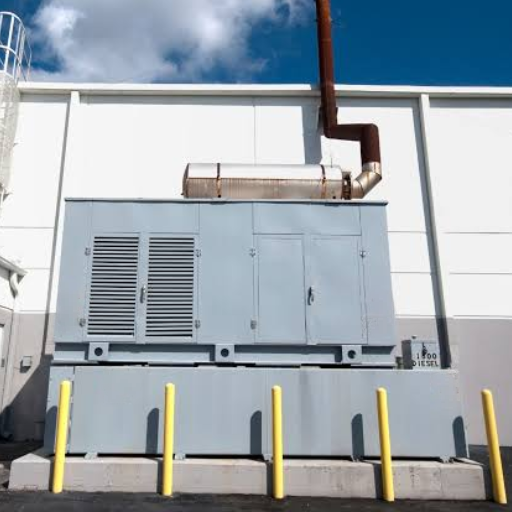
The alternator is the least of it. Four systems around an 11 kV generator stop being ordinary the moment you cross into medium voltage, and together they usually cost more than the difference in alternator price.
| System | At 400 V | At 11 kV |
|---|---|---|
| Switchgear | moulded-case or air circuit breakers | metal-clad MV switchgear, vacuum or gas insulated |
| Cable | LV cable, simple terminations | screened MV cable, stress control, trained jointers |
| Protection | thermal-magnetic or electronic trip units | protective relays: overcurrent, earth fault, differential |
| Clearance | a few millimetres | defined clearance and creepage distances, barriers, interlocks |
Beatrix Halvorsen, a consulting engineer working on a Norwegian process plant in 2024, specified “medium voltage switchgear” in a tender and received three bids at 6.6 kV, 11 kV and 33 kV. The prices were not comparable and the evaluation stalled for a month. She added one line to the specification, fixing the voltage class and the insulation level, and the next round came back bid against bid.
The general lesson is that at 11 kV the generator becomes part of an electrical installation rather than a packaged appliance. You stop buying a set and start commissioning a system.
Switchgear is usually procured as its own package, on its own lead time, often from a different supplier than the generator. When both arrive late the site blames the generator, but the slip was in the switchgear.
Protection and Grounding Are Not Optional Extras
On a low voltage set, protection is largely built into the breaker. On a medium voltage set it’s a design task.
A medium voltage generator normally carries differential protection across its windings, because a stator fault inside the machine won’t clear on an overcurrent relay alone. That protection needs current transformers at both ends of the winding, wired to a relay that compares them. None of this is a panel option.
Grounding is the second decision, and it drives the first. In UK, Indian and East African practice the same subject is called earthing, and the calculation is identical. Solid grounding, low resistance grounding and grounding through a transformer all produce different fault currents, and the protection settings follow from whichever you choose.
Get the grounding wrong and the fault current is either too small to detect or too large for the switchgear. Both failure modes damage equipment, and neither shows up until a fault occurs.
The low voltage case is well documented, and our guide to three-phase generator wiring and grounding covers it properly. At 11 kV the same decision carries different consequences, so treat that page as background rather than as a template.
This is why we treat medium voltage enquiries as engineering projects rather than catalogue orders. The protection and grounding study comes before the quotation, not after.
Specifying a Medium Voltage Generator: What Goes in the Enquiry
Comparable bids come from comparable enquiries. If you send only a power rating and the word “medium voltage”, you’ll get prices for equipment that cannot be compared or combined.
These are the lines that separate a real enquiry from a request for a rough number.
| Line in the enquiry | Why it changes the price |
|---|---|
| System voltage and insulation level | 6.6 kV and 11 kV are different machines and different switchgear |
| Rated power in kVA and kW, with power factor | kW alone hides the current that sizes everything |
| Duty: standby, prime or continuous | Sets the rating the alternator is built to |
| Fault level required, or the upstream fault contribution | Sizes switchgear and protection |
| Grounding method | Drives fault current and relay settings |
| Cable route length and installation method | Decides whether MV pays at all |
| Ambient temperature, altitude and enclosure | Derates the set before it is even selected |
| Standard and certification required | IEC, NEMA or a national code, and the testing that proves it |
Two of those lines cause most of the trouble. Power factor is routinely omitted, and without it the current is unknown. The required standard is often omitted too, which is how an IEC enquiry attracts a NEMA-priced bid.
If you are writing a tender, put the voltage class and the standard in the first paragraph. Everything downstream depends on them.
One last distinction. A datasheet describes what a machine is. A specification states what your project needs. Suppliers answer the second with the first, and the two rarely line up without a comparison.
Operating and Maintaining an MV Installation
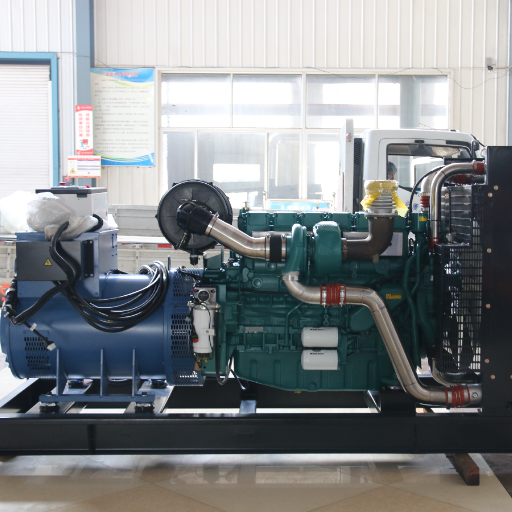
Maintenance at medium voltage gains one requirement that no amount of spare parts can cover: authorised people.
Work on MV switchgear is normally restricted to technicians with a specific authorisation, and the definition of that authorisation is local. A service contract that covers the engine, the alternator and the control panel may still leave nobody qualified to open the switchgear.
Anand, a plant engineer in India, inherited an 11 kV installation where exactly this had happened. His maintenance agreement named the engine and the alternator and said nothing about the MV equipment. The first time a relay needed testing, the work had to be tendered separately, and the plant ran without verified protection for five weeks.
The fix is one clause in the contract. Name the MV switchgear and the relay testing explicitly, and name who is authorised to work on them.
Beyond that, the MV regime is mostly familiar. Insulation resistance testing, torque checks, relay calibration and thermal imaging appear on a low voltage schedule too. Only the intervals, the instruments and the people change.
Frequently Asked Questions
What is a medium voltage generator?
It’s a generator set built to deliver power above 1 kV, most often at 3.3 kV, 6.6 kV, 10.5 kV or 11 kV. It generates at the final voltage, so it avoids the step-up transformer an ordinary low voltage set needs to reach the same level. It also feeds medium voltage switchgear directly through its own protection.
Is 11 kV medium voltage or high voltage?
Medium voltage, in almost every framework that sets a number. EN 50160 puts the ceiling at 36 kV and switchgear standards put it at 52 kV, so 11 kV sits well inside both. The IEV itself only says medium voltage lies between low and high, which is why Chinese suppliers can call a 10 kV machine high voltage without being wrong in local usage.
When should I specify a medium voltage generator instead of low voltage?
When two of the three arrive together. A single-ended LV bus tops out near 6,000 A, about 5 MVA at 480 V. A double-ended one reaches 12,000 A, where the 100 kA fault-current step lands at the same point, around 10 MVA. Long cable runs then make low voltage uneconomic through volt drop and copper.
If a transformer gets me to 11 kV, is that a medium voltage generator?
No. The set stays a low voltage machine, and the medium voltage kit is the transformer, switchgear and cable on its output. That’s often the right design, but the enquiry should say which machine you are buying, because the standard and the protection regime follow the generator, not the busbar it feeds.
What protection does a medium voltage generator need?
At minimum, overcurrent and earth fault protection, plus differential protection across the stator winding. The differential element is what detects a fault inside the machine, which an overcurrent relay will not clear on its own. Grounding method determines the fault current these relays must be set for.
Why do large generators generate at medium voltage instead of stepping up?
Because current, not voltage, sets conductor mass and heat. At ten times the voltage, the same power needs one tenth the current, and losses fall with the square of current. Above a few MVA the saving in copper and cooling outweighs the cost of an MV alternator.
The Decision Comes Before the Equipment
Sizing a medium voltage generator is an engineering decision with three inputs, and none of them is the megawatt figure alone. Check the bus current, check the fault current, and check the cable run. The first two usually arrive together, and that is what makes the transition sharper than the rules of thumb suggest.
Then check your own specification. Fix the voltage class, fix the standard, and state the power factor. A tender that names “a medium voltage generator” and stops there will produce bids you cannot compare, from suppliers who are all technically compliant.
That is also why we ask for the load list before we quote. The most expensive mistake is not choosing 11 kV when 6.6 kV would do. It is discovering the mismatch after the switchgear is on order.
If you are working through a specification now, send it to our engineering team. We will tell you which of the three limits your project is near, and what we would change in the enquiry before it goes out to tender.