

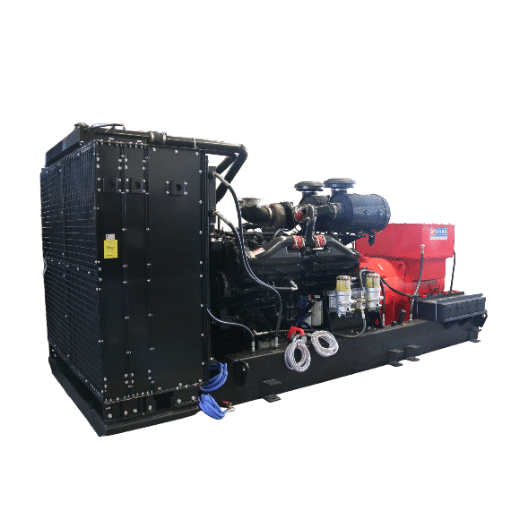
A remote radiator generator moves the cooling core off the machine and out of the room, usually onto a roof, an exterior wall, or the top of a container, and pipes the engine coolant to it. You need this setup when the room around the genset cannot move enough air through a unit-mounted radiator, when the site runs hotter than the radiator’s design...
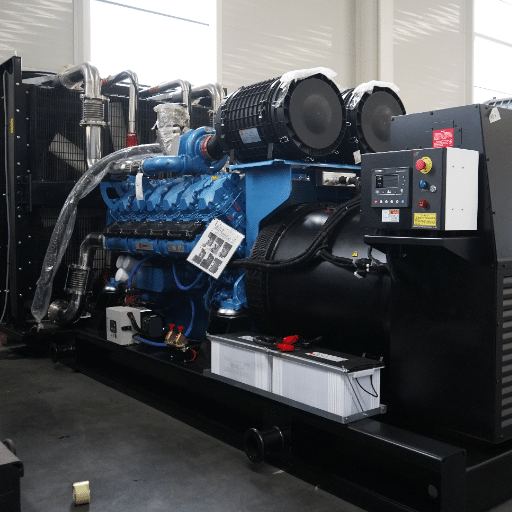
The most common causes of generator overheating are low coolant, a clogged radiator, and a stuck thermostat. Together, those three sit behind most high-temperature trips, and every one of them is preventable with routine maintenance.
Here is why this matters. Generator overheating causes are behind roughly 40% of all diesel generator failures, a figure...
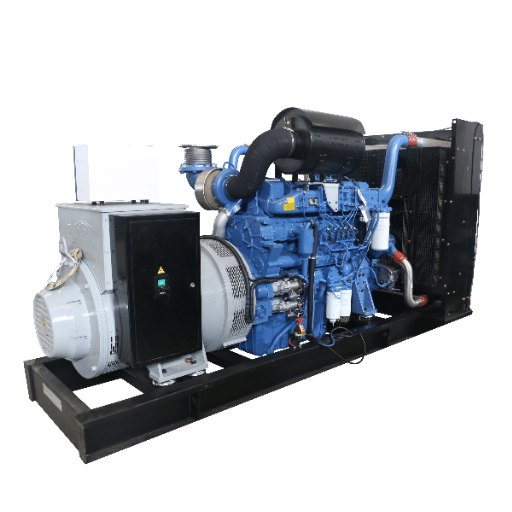
A generator cooling system is the closed-loop liquid circuit that carries waste heat away from a diesel engine so it can run at a safe, steady temperature. It moves a mix of coolant and water through the engine block and cylinder head, then rejects that heat to the outside air through a radiator. Without it, a diesel genset would overheat, derate, and...

A generator fuel consumption chart shows how many litres of diesel a genset burns per hour at different loads, usually 25%, 50%, 75%, and 100%. As a rough starting point, a modern diesel genset burns about 0.25 litres per kWh at full load, which works out to roughly one litre per hour for every 4 kW of rated output. So a 100 kW genset burns about 25...
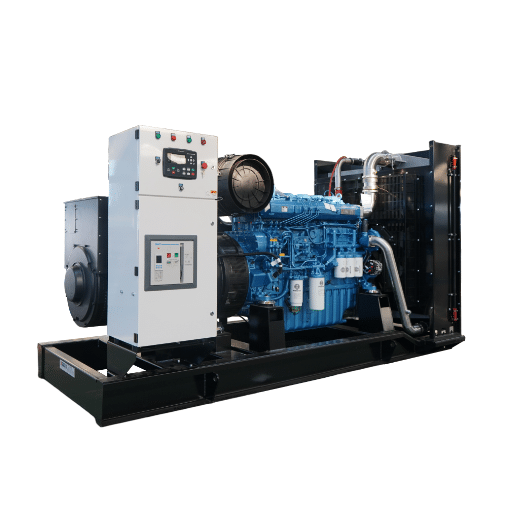
A generator control panel does four things: it starts and stops the engine, monitors running parameters, protects the genset from faults, and coordinates with a transfer switch to restore power when the mains fails. These generator control panel functions decide whether a blackout ends in seconds or stretches into hours. Get them wrong and the machine...

Generator engine specifications tell you how much power the engine can produce, for how long, and under what conditions. The most important number to understand is the power rating: a “500 kW” engine rated for standby duty runs at only about 450 kW in continuous prime service, because standby power carries strict limits on operating hours...

The difference between a 50 Hz and 60 Hz generator comes down to engine speed and regional grid standards: a 50 Hz generator runs at 1500 RPM (4-pole) and suits Europe, Asia, Africa, and Australia, while a 60 Hz generator runs at 1800 RPM and suits North America, Saudi Arabia, South Korea, and the Philippines. Neither is “better.” The right...
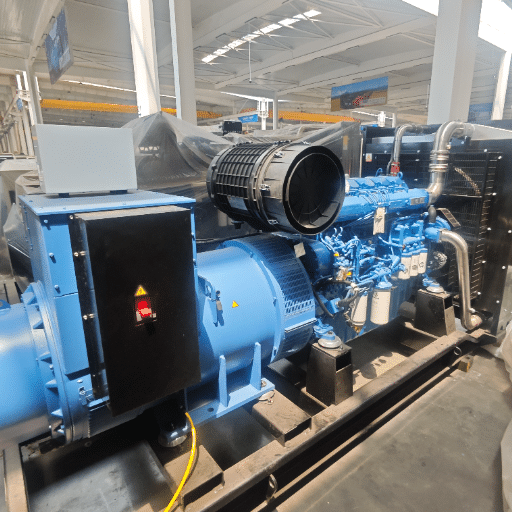
The key generator alternator specifications to check on any spec sheet are insulation class, temperature rise, excitation system, THD (total harmonic distortion), voltage regulation, winding pitch, and IP rating. A quality industrial alternator typically shows Class H insulation, PMG or AREP excitation, THD below 5%, voltage regulation within ±1%, and...

Generator emissions standards are government regulations that limit the pollutants a generator’s engine can release, mainly nitrogen oxides (NOx), particulate matter (PM), hydrocarbons (HC), and carbon monoxide (CO). The major regimes are EPA Tier ratings in the United States, Stage V in the European Union, CPCB IV+ in India, and Stage IV in China....
A generator IP rating is a two-digit code, defined by the IEC 60529 standard, that tells you how well a generator is protected against dust and water. The first digit rates protection against solid objects (0 to 6), and the second digit rates protection against liquids (0 to 9K). Most diesel generators have an IP rating between IP21 and IP65, depending...