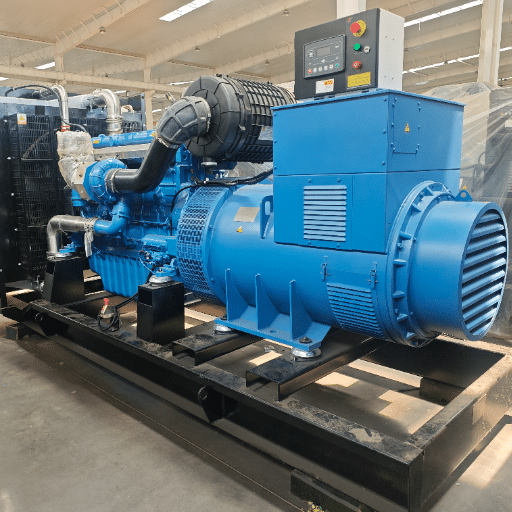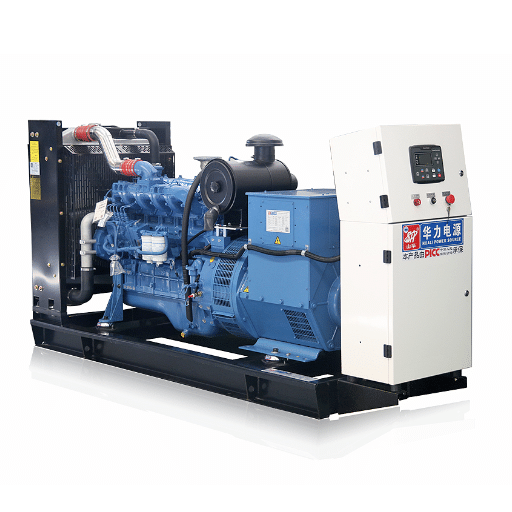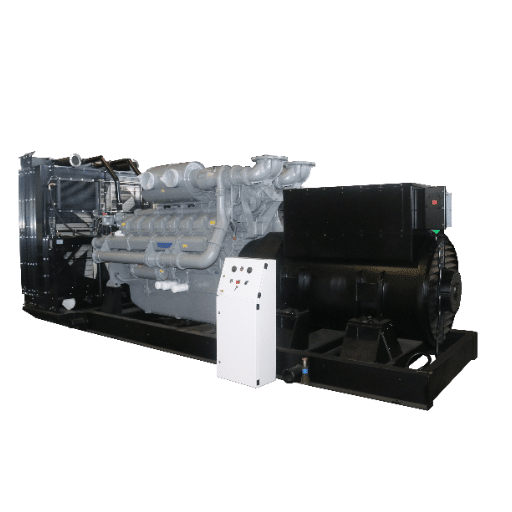

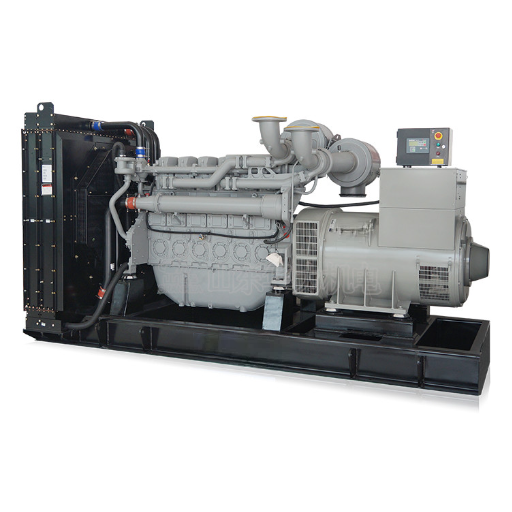
A generator nameplate isn’t one plate. A packaged generating set carries three, from three different manufacturers, and the one you’re reading may not be the one that answers your question.
That’s the part every guide skips. They list the fields in alphabetical order and never say the fields live on separate pieces of metal, put there by separate companies, each describing only its own component.
Two consequences follow, and they cost money. The rating you quote may belong to the wrong part of the machine. And the two lines that decide whether that rating applies to your site are the ones most people never read.
This article covers which plate answers which question, what the set’s own plate is required to carry, and what the numbers on it are actually for. For the output side of the machine itself, our three phase diesel generator guide covers sizing, current and faults. And if you are reading a machine’s plate rather than a generator’s, that is an entirely separate document.
We assemble three-phase sets from 5 kW to 3,000 kW for Cummins, Perkins, and Weichai engines, so we can see which plate buyers quote from and how often it is the wrong one.
Holding a plate you can’t make sense of? Send us the photographs and the model numbers, and we’ll tell you what the set is rated at. Talk to our engineering team →
Key Takeaways
- A generator set has three rating plates, not one: the set plate from the assembler, the engine plate from the engine maker and the alternator plate from the alternator maker. Each describes only its own component.
- Only the set plate states the basis for the rating. The rating is valid at the site altitude and ambient temperature declared on it, so those two lines are the rating’s fine print.
- The plate is a regulated document, not a manufacturer’s choice. Jurisdictions specify the minimum fields, including “insulation class or temperature rise”, which is why some plates carry a class letter and others carry a temperature.
- The engine limits kW and the alternator limits kVA, so “what size is this machine” has three defensible answers on the same frame.
- Serial numbers have no universal format. Record them exactly as printed, leading zeros included, and use them for the manual and the parts list, not for the rating.
Generator Nameplate: One Machine, Three Plates
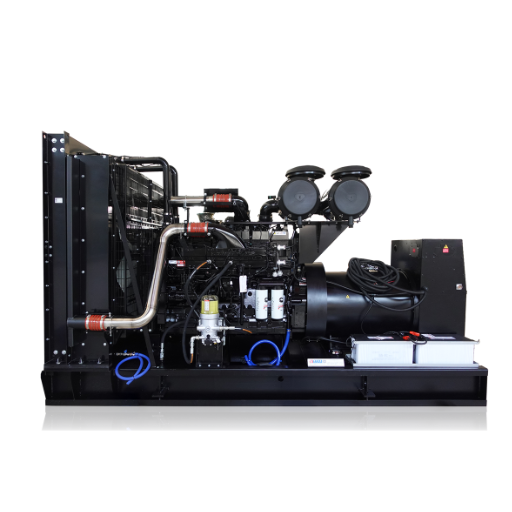
A generating set is an assembly, not a single manufactured object. Three companies built its parts, and each one put a plate on what it made.
The set plate comes from whoever assembled the package. It describes the complete machine: what the whole thing delivers, and under what conditions.
The engine plate comes from the engine manufacturer. It describes the prime mover: the model, the serial number, the rated speed, and usually the emissions certification for its market.
The alternator plate comes from the alternator manufacturer. It describes the generator end: its own kVA rating, its voltage range, and its insulation details.
Read one and you’ve read a third of the machine. Some makers call these data tags rather than nameplates, and the engine’s is often labelled the engine nameplate, but it’s the same three-document structure under different words.
Almost every guide treats “the nameplate” as a single object. It isn’t. It’s three documents bolted to the same frame, written by three companies who never compared notes.
There’s a good reason for that. Engines and alternators are made in far larger volumes than complete sets, and both are sold into other applications. A 500 kVA alternator will turn up on a marine set and a turbine package as well as a genset. Its plate is written for all of them, which is why it can’t tell you what your set delivers.
Which Plate Answers Which Question
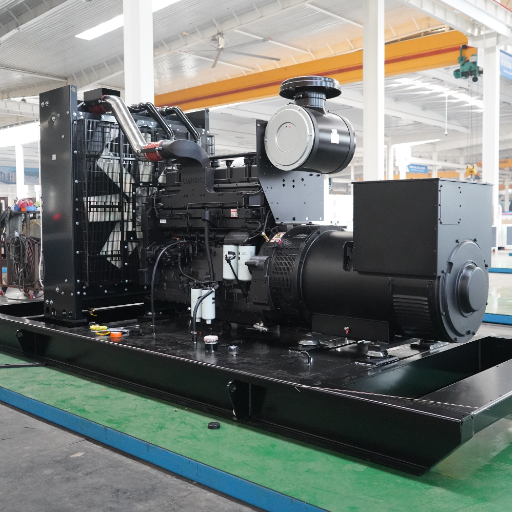
The practical skill is knowing which document to walk to. Here is the mapping.
| The question | The plate | The line to read | What it cannot tell you |
|---|---|---|---|
| What does this set deliver to my site? | Set plate | Rated kVA and kW, with the altitude and ambient basis | Whether the engine or the alternator is the limiting part |
| What engine is in it, and what parts fit? | Engine plate | Engine model, serial number, rated speed | Anything about the electrical output |
| How much current can the alternator deliver? | Alternator plate | Its own kVA rating and voltage range | Whether the engine can drive it to that figure |
| How old is the machine? | Set or engine plate | Year of manufacture, or the model and serial via the maker | Whether it has been rebuilt since |
| What is the fuel consumption? | None of them | Nothing. Ask for the datasheet | Everything, because fuel curves are not a plate field |
The last row matters as much as the others. Plates carry the identity and the ratings, not the performance envelope. Buyers regularly expect to find fuel consumption, noise level or dimensions there, and none of them are plate fields.
Dinesh found this the expensive way. He was specifying switchgear for a 400 kVA set and quoted the alternator’s own rating plate to the panel builder, who sized the incoming breaker to it.
It was the right number from the wrong document. The engine on that particular build couldn’t drive the alternator to its full rating at the site’s 1,800 m elevation, so the set’s real output sat well below the figure on the alternator tag. The panel was oversized and the set was undersized for the load it had been bought to carry. Both errors traced to reading one plate.
The Two Lines That Decide Whether the Rating Applies
This is the most useful thing on the machine, and it’s the thing almost nobody reads.
A rating isn’t a property of the machine alone. It’s a promise made at stated conditions, and those conditions have to be recorded somewhere. On most sets they sit on the plate itself, next to the rating they qualify. The two that matter most are:
- the permissible site altitude, in metres above sea level;
- the permissible ambient temperature, in degrees Celsius.
Read them as a qualifier on everything else on the plate. A set rated 400 kVA is 400 kVA at those two conditions. Above them, the output falls and the rating no longer describes what you own.
If your plate doesn’t state them, that’s a question for the supplier rather than an assumption to make.
The physical reason is straightforward. An engine breathes air, and thinner air at altitude carries less oxygen, so less fuel burns and less power comes out. An alternator rejects heat into its cooling air, and hotter incoming air removes less of it, so the winding reaches its temperature limit at a lower current.
Which means a plate read without those two lines is an incomplete reading. You’ve got the number and not the conditions that make it true.
And it’s why we ask two questions before quoting anything. What is the site elevation, and what is the highest ambient temperature the set will see? Get those wrong and the machine arrives correctly built to a rating that doesn’t apply where it’s standing.
Where the curves and the loss percentages live is a subject in itself. Our guide to generator engine specifications covers how altitude and ambient reduce output, with the figures. What belongs here is narrower and more practical: the plate tells you its own basis, so compare that basis to your site before you accept the number.
What a Generator Nameplate Is Required to Carry
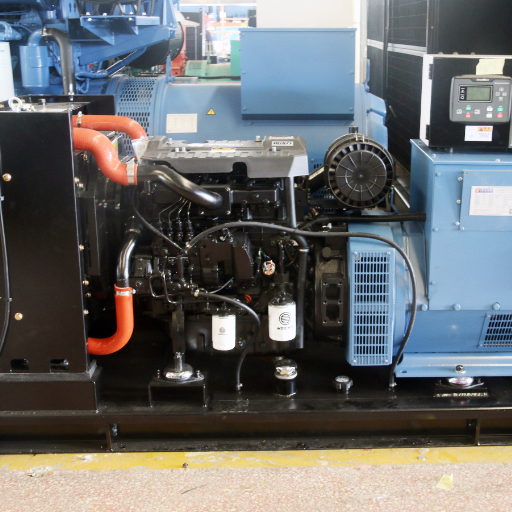
Here’s something that reframes the whole exercise: the field list isn’t a manufacturer’s decision.
A rating plate is a regulated document in most jurisdictions. California, for example, requires each generator to carry a permanent, prominently displayed plate stating at minimum:
- the manufacturer’s name and identification numbers;
- kilovolt-amperes, or kilowatts and power factor;
- voltage, current, phase, frequency and speed;
- insulation class or temperature rise.
That is Title 8, section 2885 of the California Code of Regulations, and other jurisdictions set comparable requirements. Your own market will have its own version, but the shape is similar everywhere.
Two things follow from reading it.
First, the list explains why plates look alike. A Weichai set and a Cummins set carry recognisably similar fields, and that isn’t imitation. Both assemblers are satisfying the same kind of requirement.
Second, you’ve got a compliance floor. Count the lines. A plate missing the identification numbers, the ratings or the thermal field isn’t one you should accept on a machine you’re buying, whatever the paperwork says.
The phrase “insulation class or temperature rise” explains a genuine oddity. Some plates carry a class letter such as F or H. Others carry a temperature rise in kelvin.
Both satisfy the requirement, and they aren’t the same information. Our guide to generator alternator specifications covers what the difference means for winding life. Here the point is narrower: the plate must carry one of them, so a plate with neither is deficient.
That list is also where the voltage and phase figures sit. What the voltage classes mean, and why equipment rated for one often tolerates another, is covered in our guide to three phase generator voltage.
Anya lost a fortnight to a comparison that should have taken an afternoon. She had two quotes for a similar duty, one at 550 kVA and one at 500 kVA, and concluded the second supplier was offering a weaker machine. Both figures were accurate. The 550 kVA was a standby rating and the 500 was a prime rating, from the same class of machine, and the difference was the duty basis rather than the hardware.
Serial and Model Numbers: What They Are For
Every page offering to “decode” a generator serial number is describing one manufacturer’s scheme as though it were an industry standard. There’s no cross-manufacturer convention.
Serial formats differ between makers, change within a maker over time, and sometimes get renumbered entirely. Honest field advice beats a fictional decoder:
- Record the serial exactly as printed, leading zeros included. Where a maker has restarted a sequence, the same digits can point at two different production years, and the zeros are what separate them.
- Treat an online decoder as a lead, not an answer. It may well be right. Confirm it against the maker’s own literature before you rely on it.
- Photograph every plate on arrival. The plate is the only record that survives the invoice, the manual and the person who ordered the machine.
Tariq’s machine arrived with its set plate over-sprayed. A secondhand import, no documentation, and the only legible tag on the engine. That gave him a model and a serial, and nothing about the electrical end.
He sent those numbers to the engine maker, got the build sheet, and worked back from there to identify which alternator the assembler had paired with it. It took a week. A photograph taken at delivery would’ve taken a second.
When the Plates Disagree
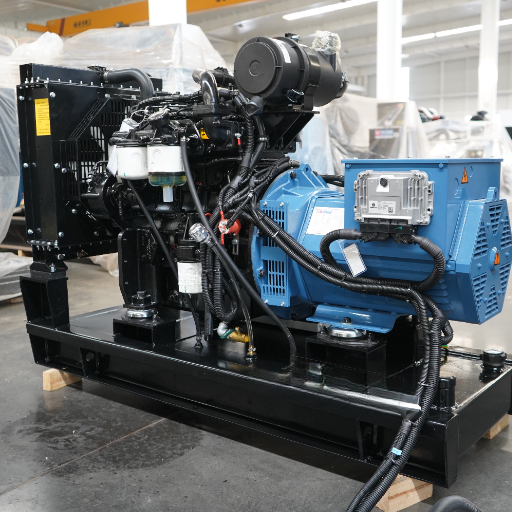
Three plates, three ratings, and they will not always agree. Knowing which one wins is the whole skill.
The engine limits kW. It converts fuel into shaft power, and that figure is capped by its displacement, aspiration and cooling.
The alternator limits kVA. It converts shaft power into electrical output, and its ceiling is thermal: the winding insulation sets how much current it can carry. If you need the rated current rather than the kVA figure, our guide to three phase generator amps works the conversion.
The set plate states the combination and the basis. It’s the only document that reflects what the pair achieves together, at the conditions declared next to it.
So when you find a discrepancy, the question isn’t “which plate is lying”. It’s “which question was each plate answering?” A 400 kW engine and a 500 kVA alternator aren’t in conflict. They are two ceilings on the same machine, and the lower one governs at any given power factor.
Frequently Asked Questions
What information is on a generator nameplate?
The set’s plate carries the manufacturer and identification numbers, the rated output in kVA or in kW with a power factor, the voltage, current, phase, frequency and speed, and either an insulation class or a temperature rise. It also declares the site altitude and ambient temperature its rating is based on. That list is close to the classic AC generator field set taught in plant training material. Phase is one of the simplest fields to misread: it tells you whether the set delivers single or three-phase output, a choice our guide to single phase vs three phase generators covers in full.
Where is the nameplate on a generator?
The set plate is usually fixed near the control panel or within sight of the inspection window, at a height you can read standing at the machine. The engine and alternator plates sit on their own components, which means reaching into the enclosure. Photograph all three the first time you have the canopy open, because the component tags are the ones that go missing.
Why does my generator have more than one nameplate?
Because it’s an assembly rather than a single manufactured product. The engine maker and the alternator maker each rate their own component for many applications, and the assembler issues a third rating for the complete package. The component plates describe parts. Only the set plate describes what your machine delivers.
What does kVA mean on a generator nameplate?
It’s the apparent power the alternator can deliver, which is set by current and voltage rather than by usable output. The kW figure tells you how much of that becomes real power at the stated power factor. Our guide to kVA vs kW covers what that means for sizing.
Can I look up my generator by serial number?
Only through the manufacturer that issued the number, and only for that maker’s own records. There’s no universal generator serial format. Use the serial to request the build sheet, the manual and the correct parts list, and confirm it against the model number rather than reading a year out of the digits.
Is the nameplate the same as the datasheet?
No. A generic equipment nameplate is a condensed, permanently fixed summary, and a generator’s is no different. The datasheet is the fuller document and carries what the plate never does: fuel consumption across load points, noise levels, dimensions, weight, and the derating curves. Ask for both.
Conclusion
Reading a generator nameplate comes down to knowing which document you’re holding.
A set carries three plates from three manufacturers, and each describes only its own component. Only the set plate states the full rating and the conditions it’s valid at, which is why the permissible site altitude and ambient temperature lines matter more than any other figure on the machine. The field list is regulated, so a plate missing its identification, ratings or thermal field is one to query.
Three habits follow, and each takes about a minute:
- Photograph all three plates the first time you have the enclosure open.
- Read the altitude and ambient basis on the set plate and compare it to your site before accepting any figure.
- When two plates disagree, ask which question each one was answering rather than which one is wrong.
If you’ve got a plate in front of you and the numbers aren’t adding up, that’s a quick question for people who build and rate these machines every day. Send us the photographs and the model numbers → and we’ll tell you what the set is rated at, and at what conditions that rating holds.