
Counterfeit generator parts are components sold as genuine OEM parts without the maker’s authorization. The reliable way to identify them is to check the seller, the maker’s authentication code, the part itself and the paperwork, in that order. Visual inspection is the weakest of the four checks, and it is the one most guides put first.
In 2021, Cummins seized 440,000 counterfeit parts in nearly 30 cities in China, as its brand-protection team reported. The fakes now mimic labelling, packaging, barcodes and QR codes. That changes the buyer’s job.
You are not trying to out-inspect a counterfeiter. You are trying to buy through a channel where the question does not arise, then verify what the maker lets you verify.
The price gap is real, and so is the pressure to keep a standby set running. This guide answers the practical question of how to identify counterfeit generator parts with four checks in order of what they actually prove, the verification limits of the major makers, and the purchase-order clause that covers parts with no code at all. If a part has already arrived and you are not sure, send our engineers a photo of the part, the label and the invoice before it goes on the set.
Key Takeaways
– Visual inspection is the weakest check; counterfeiters copy packaging, holograms and QR codes.
– Check the seller first: an authorized distributor with a traceable invoice beats any inspection.
– Verification systems differ by maker, and a missing hologram is not proof of a fake.
– Filters, injectors, AVRs and controllers are the highest-risk categories in a genset.
– A purchase order that warrants authenticity and requires traceability shifts the risk before the part arrives.
What Makes Counterfeit Generator Parts Different?
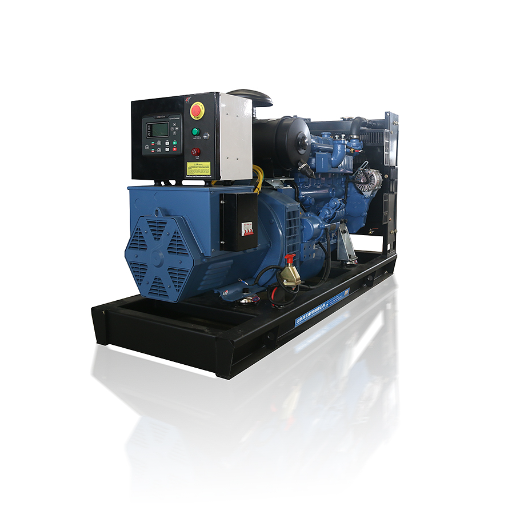
A counterfeit generator part is a component that bears a manufacturer’s trademark, packaging or part number without authorization, and is sold as genuine. The label is the claim. The quality of the copy is a separate question, and it is often good enough to pass a visual check.
Buyers often frame the choice as genuine vs counterfeit generator parts. The deciding fact is authorization, not appearance.
Four other categories get confused with counterfeits, and the difference matters.
| Term | What it is | Legal status | What to do |
|---|---|---|---|
| Counterfeit | Copy sold under the maker’s trademark, packaging or part number | Illegal in most markets; trademark infringement and fraud | Quarantine, document, report |
| Will-fit or aftermarket | Third-party part sold under its own brand or unbranded | Legal when honestly described | Decide on criticality and interval; it is not a counterfeit |
| Gray-market genuine | Genuine part sold outside the authorized channel | Usually legal; the warranty chain may not follow | Treat as unverified until the seller proves the chain |
| Refurbished or remanufactured | Used part rebuilt and sold as such | Legal when disclosed | Check the disclosure, the warranty and the test record |
| House-brand consumable | Distributor’s or assembler’s own brand, made by a third party | Legal when not presented as the engine maker’s part | Judge on specification, not on the logo |
The complication in a generator set is that “genuine” has several owners. The engine maker, the alternator maker and the controller maker each issue their own genuine part. A Cummins engine, a Stamford alternator and a Deep Sea controller can all sit on the same skid with three different authentication systems. The assembler’s “OEM equivalent” describes fitment, not provenance.
That is why the counterfeiting question is narrower than the genuine-versus-aftermarket question. For the buying decision, including when an aftermarket part is acceptable, see our genuine versus aftermarket parts guide. For the wider assembly picture, the generator parts guide covers engine, alternator, cooling, fuel and control as five systems.
Why Counterfeit Generator Parts Pass Visual Inspection
Counterfeiters invest in the layer buyers check first, which is why fake generator parts survive a countertop inspection. Cummins is blunt about the result: “Counterfeiters have become so sophisticated that their parts often look like the original, even down to their labelling, packaging, barcodes and QR codes.” Eaton, writing about counterfeit circuit breakers in POWER Magazine, called them “virtually indistinguishable from the real thing.”
The failures that matter are often invisible even when the outside is perfect. Mecc Alte’s leaflet on counterfeit generator parts lists cracked fan casings, insufficient stator impregnation, poor bearings and substandard voltage regulation. None of those are visible in a photograph of the box.
Visual checks still have a job. They are a triage tool, not a clearance. A blurry label, a misspelled brand, a part number that does not match the invoice or a broken tamper seal is a reason to stop and verify. A box that looks perfect is not a reason to relax.
The scale of the problem is not a reason to panic. It is a reason to stop treating inspection as the control. The Organisation for Economic Co-operation and Development and the EU Intellectual Property Office put counterfeit and pirated goods at USD 467 billion in 2021, or 2.3% of world imports. Counterfeit generator parts are a small part of that total, but the supply chains that carry them are the same ones.
Check 1: The Seller
The strongest single control is buying from the manufacturer or an authorized distributor. It removes the counterfeit question for every part, including the ones with no authentication mark. That is not a slogan. It is the only check that scales across a mixed order of filters, sensors, belts and a controller.
Ask for six things before the order:
- The seller’s legal name and business address, not just a marketplace storefront.
- Written confirmation that the seller is an authorized distributor or dealer for the brand.
- An invoice that names the seller, the part number, the quantity and, where available, the batch or lot.
- The distributor or OEM invoice behind the stock, if the seller is a reseller.
- A company bank account, not a personal account.
- A return and warranty route that survives the seller changing names.
Price is a signal, not a verdict. A part far below the dealer’s price is a reason to ask where it came from. It is not proof of a fake, because stock clearances and gray-market lots exist. The combination of a low price, a vague seller and no traceability is the pattern that matters.
Consider a food plant outside Nairobi. The maintenance team bought a year of fuel and oil filters from an online marketplace at roughly 40% below the dealer price. The invoice carried no company address.
Two filters in the first box had visibly different media. Oil analysis three months later flagged silicon, and the set went for an early service and an engine inspection. The saving was gone, and the plant could not pursue the seller.
The seller check is also the cheapest control against counterfeit generator parts. It takes a phone call and a document request. It happens before anything ships, the only point where a refusal costs nothing.
Check 2: The Maker’s Verification System
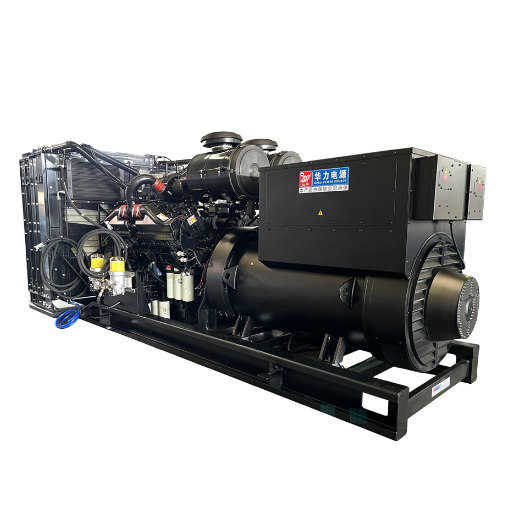
Use the system the actual maker publishes, not a generic rule about holograms. The systems differ by maker, by part type and by label generation. A buyer who does not know which one applies will misread a legitimate part as fake, or a fake as legitimate.
| Maker | What to check | What it proves | Limit |
|---|---|---|---|
| Cummins | Hologram with a verification code, or the secure QR code | The label is in Cummins’ verification system | Legacy labels have no hologram or QR; multiple versions coexist |
| Perkins | Hologram on the packaging | Genuine packaging, and the 12-month parts warranty | The hologram does not prove the part inside is the right part |
| DEUTZ | Hologram, perforated safety label, branded sealing tape | The packaging has not been opened or re-sealed | Dealer confirmation is still the strongest check |
| Mecc Alte | 7-digit serial on the nameplate, checked on the support site or app | The alternator serial is in the maker’s records | Alternator-specific |
| Stamford and AvK | Genuine AVR part number and the 12-month AVR warranty | The AVR came through the authorized chain | AVR-specific |
| Eaton breakers | Serial-number barcode in the PowerEdge app | The breaker is in Eaton’s records, up to 400 A | Electrical products, not engine parts |
The Cummins system is the most detailed public example of a maker’s answer to counterfeit Cummins parts. Three label generations are in circulation: a legacy label with no security feature, a hologram label with a verification code, and a secure QR label that opens scan.cummins.com. The company says a label without a hologram is not proof of a counterfeit, because existing inventory will not be relabeled and versions will coexist for years.
A QR code that opens an unfamiliar domain is a red flag. A code that validates but has been checked many times is a risk signal. The Cummins authentication page carries the current rules and the reporting form.
Perkins takes a simpler line: every genuine part carries a hologram on the packaging, and a part with no hologram is not genuine and does not carry the 12-month warranty. Perkins also publishes the warning signs it sees in seized stock, including misspellings, wrong part numbers, wrong box sizes, blurry labels, misaligned holes and the wrong filter media. Its counterfeit-spotting page is worth reading in a browser, though it blocks automated tools.
DEUTZ documents a different physical system: branded packaging and sealing tape, a hologram sticker, and a safety label with perforations that tear if the box is opened. The DEUTZ genuine parts page lists the checks and the service network.
Two limits apply to every system.
First, a valid code proves the label, not the whole part; a genuine label on a repackaged counterfeit is possible. Second, not every part has a code. Bulk-packed filters, legacy stock and house-brand consumables often have none. For those, the next two checks carry the weight.
If you are holding a quote that is well below the dealer’s price, send it to our engineers with the part number and the seller’s name. We will tell you which maker’s system applies and what the seller should be able to prove.
Check 3: The Part Itself
Physical checks are screening tests, not proof. They catch counterfeit generator parts that were made badly, the wrong part and the damaged part. They do not catch a good copy. Use them to decide what to quarantine, not to certify what to fit.
Five universal checks apply to almost every part:
- Part number match. Compare the box, the part, the invoice and the maker’s parts lookup. Check supersessions; a new number replacing an old one is normal, but it should be documented.
- Packaging integrity. Look for broken seals, re-taped boxes, missing date codes and print that does not match known-genuine stock.
- Markings. Laser or moulded markings are harder to copy than stickers. Check the font, placement and depth.
- Finish and weight. Rough castings, weak seams and a filter that feels light are reasons to look closer.
- The part’s own test. Some components have a definitive bench test. Use it where it exists.
| Part | What to check | Definitive test |
|---|---|---|
| Oil, fuel and air filters | Media colour and pleat count, end-cap material, bypass valve, anti-drainback valve, can seam, micron rating | Cut-open comparison; bench check of bypass opening pressure |
| Fuel injectors | Part number, laser marking, connector, nozzle finish | Injector bench test: opening pressure, spray pattern, flow, leak-off |
| AVRs | Model and part number, connector, regulation behaviour | Regulation test on the alternator against the maker’s specification |
| Controllers | Model, firmware, label, configuration-tool acceptance | Vendor software recognises the unit; clone units often do not |
| Bearings | Backing material, markings, fit | Material check and dimensional measurement |
| Belts and hoses | Markings, length, reinforcement, date code | Fit and pressure test |
Counterfeit generator filters deserve their own warning. The critical parts are inside the can: the media, the bypass valve and the anti-drainback valve. A counterfeit can look right and still starve the engine of oil or let abrasives through. Do not fit a suspect filter to a critical set to “see if it works.” The test can cost an engine.
For engine-specific part numbers, serial numbers and brand differences, our diesel engine parts and serial lookup is the companion guide. For the consumables that should be on the shelf before the next service, see the generator maintenance kit breakdown by interval.
Check 4: Make the Paperwork Do the Work
For counterfeit generator parts with no authentication mark, the purchase contract is the control. It is also the only check that covers the whole order, including the items a receiving clerk cannot test.
Put four things in the purchase order:
- An authenticity warranty. The supplier warrants that every part is genuine, new, and sourced from the manufacturer or an authorized distributor, and is not counterfeit, refurbished or gray-market.
- Traceability. The supplier provides the batch or lot number, a certificate of origin, and the OEM or distributor invoice on request.
- A right to reject. The buyer may quarantine and reject any part that fails verification, at the supplier’s cost.
- An indemnity that covers consequential loss. The part price is not the exposure. Downtime, rework and engine damage are.
A short clause is enough to start:
Supplier warrants that all parts supplied under this order are genuine products of the stated manufacturer, sourced directly from the manufacturer or an authorized distributor, and are not counterfeit, refurbished or gray-market. Supplier shall provide batch or lot traceability and a certificate of origin on request. Supplier shall indemnify Buyer for all costs arising from breach of this warranty, including consequential loss.
This is commercial drafting, not legal advice. Have counsel review it under the governing law and the Incoterms of the sale.
The receiving routine is where the clause becomes real. Match the documents to the goods.
Photograph the label, the part number and the packaging before installation. Verify the maker’s code. Record the result in the maintenance file.
Quarantine anything unresolved, and do not return a suspect part before the evidence is recorded. If the part is confirmed counterfeit, report it to the maker’s brand-protection team and to customs; Cummins, for example, runs a reporting form through its authentication page.
Counterfeit generator parts can void a warranty, and the commercial contract usually decides how. The generator service schedule is the right place to record what was fitted and when, so a future claim or failure investigation has a traceable history.
Counterfeit Generator Parts: Frequently Asked Questions
How can I tell if a generator part is counterfeit?
Check the seller first, then the maker’s authentication code, then the part’s measurable features, then the paperwork. Visual inspection alone is the weakest test, because counterfeiters copy packaging and labels.
Is a fake generator part dangerous?
Yes. Counterfeit filters can starve an engine of oil or let abrasives through. Fake injectors can damage pistons, and fake AVRs can cause unpredictable voltage and protection response. Cummins also cites fire and electrical-failure risk.
Does a missing hologram mean the part is fake?
Not by itself. Cummins says legacy labels without holograms remain valid, and multiple label versions will coexist for years. Use the maker’s own verification system and the seller’s authorization record.
What is the difference between counterfeit and aftermarket?
An aftermarket part is made and sold under its own brand, honestly described. A counterfeit claims to be the genuine branded part. The legal and safety consequences differ, and our genuine versus aftermarket guide covers the buying decision.
What should I do if I receive a suspected counterfeit?
Stop, quarantine it, photograph the part, packaging, label and invoice, verify the code with the maker, and report it to the maker’s brand-protection team and to customs. Do not fit it, and do not return it before the evidence is recorded.
Which generator parts are most often counterfeited?
Counterfeit generator parts cluster around filters, fuel injectors, AVRs, controllers and sensors, because they are high-volume or high-value and their internal quality is hard to see. Bearings and turbochargers are also copied.
Conclusion
Counterfeit generator parts are identified by process, not by eye. Check the seller before the price, use the maker’s own verification system, screen the part for the failures inspection can catch, and put the rest into the purchase order. That order of work is what separates a field checklist from a warning poster.
The scale of counterfeit generator parts is large enough to justify the discipline. The OECD puts counterfeit trade at 2.3% of world imports, and Cummins seized 440,000 parts in China in a single year. The risk on a single genset is smaller, but the consequence is concentrated: a filter, an injector or an AVR can take down an engine or an alternator.
Start with the next delivery. Photograph the label, check the seller, verify the code, and record the result. If something does not reconcile, stop before it goes on the set.
Send us the nameplate, the part number, the label photo and the invoice. Our engineers will check the maker’s system and tell you what the seller should be able to prove before you fit the part.