
Genuine generator parts are the components the manufacturer’s service interval, warranty and emissions approval were validated against. An aftermarket part can be a sound choice, but only inside the design life it was built for. The genuine vs aftermarket generator parts argument is usually framed as price against quality. That framing misses the variable that decides the outcome: whether the part’s design life matches the interval you intend to run.
At 13,466 hours, the generator on the survey vessel Kommandor Susan was well inside a 24,000-hour overhaul interval its engine maker had approved. It failed anyway, put a connecting rod through the crankcase and started a fire that left the vessel without power in the Firth of Forth. The bearings inside it were aftermarket parts from a named supplier, built for the standard overhaul interval, fitted during an overhaul where nobody verified where they came from.
If you have priced a genuine part against an aftermarket equivalent, you know the gap can be wide. This article gives you a rule for which parts need genuine provenance. It also gives you a way to check a part before it goes into an engine, and an honest account of when aftermarket is the right call. It starts with what the words mean, then the failure that shows why the interval matters.
Key Takeaways
– The genuine vs aftermarket generator parts decision comes down to design life against service interval, not the label on the box.
– The Kommandor Susan generator failed at 13,466 hours because bearings built for the standard overhaul were run to an extended interval approved only for genuine parts.
– “Genuine” is brand-relative in a generator set: the engine, alternator and controller each have a different original maker.
– In the US, an aftermarket part does not void a warranty by itself, but the warrantor can deny a claim it proves was caused by that part.
– A part you cannot trace is a risk you cannot price, whatever the label says.
What Genuine, OEM and Aftermarket Actually Mean
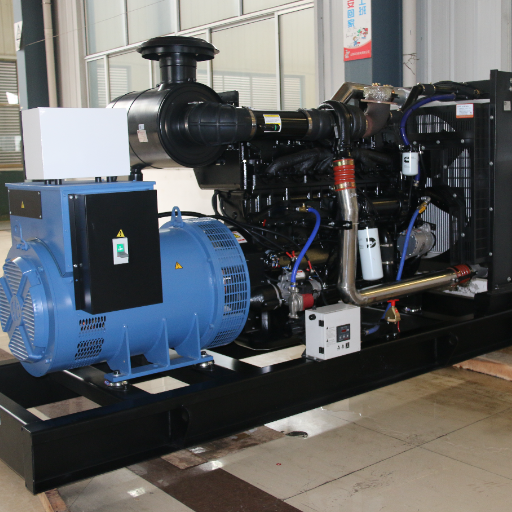
A genuine part is sold under the brand of the company that built the machine, with that company’s part number, warranty and traceability. An aftermarket part is any part supplied by someone else. OEM and OES describe who made a part, not who stands behind it. The five terms are not synonyms, and the difference matters when a quote uses one word and the invoice another.
| Term | What it means | Who stands behind it |
|---|---|---|
| Genuine | Supplied under the engine, alternator or controller maker’s brand, with that maker’s part number | The maker named on the box, through its own warranty and dealer network |
| OEM or OES | Made by the original component manufacturer; may be the same part in a different box, or a different grade | The component maker, unless it was sold through the machine maker |
| Aftermarket or will-fit parts | A legal third-party part made to fit; quality ranges from OEM-equivalent to poor | The seller or distributor, on its own terms |
| Counterfeit | Bears a trademark without authorisation; illegal | Nobody legitimate; there is no valid warranty |
| “OEM equivalent” | A supplier’s description of fitment, not a certification or a validation | The supplier making the claim |
The genuine vs aftermarket generator parts question gets harder inside a generator set, because there is no single original maker. A Cummins engine, a Stamford alternator and a Deep Sea controller each have their own genuine part and their own warranty. The assembler who bolted them together can call a component “OEM equivalent” because it fits, not because the component maker validated it. Ask for the maker’s name and part number, not the assembler’s description.
If you are holding two quotes and cannot tell which maker’s part each one is, send the nameplate and the part number to our engineers. We will tell you what the document trail should show. Talk to an engineer.
Counterfeit is a separate category from aftermarket, and it is the one with no defence. Perkins reports that it tested more than 1,600 counterfeit parts seized in police raids in Sri Lanka. The rear oil seals in one batch were misshapen, made of the wrong material and showing rust on the inner spring. A counterfeit part carries no legitimate warranty, whatever the packaging says.
Cummins says it has destructive-tested more than 300 non-genuine overhaul-kit components, and that none met all of its design specifications. That is the manufacturer’s own test, not an independent finding, but it points the same way as the Kommandor Susan case. The risk is not a logo. It is a part built to a different life.
Cummins’ own presentation of its genuine-parts testing. It is manufacturer material, not independent evidence.
The Failure That Reframed the Argument
The Kommandor Susan is an 83.7 m site investigation vessel. On 25 January 2025, at about 13:05, its first diesel generator, DG1, destroyed itself in the Firth of Forth. DG1 was one of four Caterpillar 3516B-TA units rated at 1,901 kW each.
The engine had run 65,700 hours in total, 13,466 of them since a 2019 overhaul carried out during the vessel’s conversion. That overhaul used non-OEM components from Costex Tractor Parts, including pistons, connecting rods, small-end and big-end bearings, and main bearings.
Caterpillar’s standard intervals for these engines in this application were 5,000 hours for a top-end service and 10,000 hours for a major overhaul. Caterpillar had extended the interval on these engines to 24,000 hours. The report calls that “not an uncommon decision for similarly loaded engines if genuine Caterpillar components were used in subsequent overhauls.” The condition is the whole point.
At 13,466 hours the set was just over halfway to that extended figure. Bearing 5 failed first.
Pon Power compared the failed bearing with a genuine one. The genuine bearing had a white metal surface on an aluminium backing layer, while the CTP bearing had a copper backing layer. The report attributes the failure to weak bonding of the copper layer.
The cap on connecting rod 5 broke, pistons 5 and 6 fractured, and the rods punched through the crankcase. A fire broke out in the engine room. The engine room crew shut down the generators from the switchboard, and the blackout left the anchor winches without power, so the vessel drifted.
The oil analysis taken 19 days and 127 running hours before the failure found no significant wear particles. Nothing in the oil told anyone this was coming. The report’s root cause is direct: “Use of the CTP parts beyond their design life led the connecting rod bearings to fail… The extended service intervals were inappropriate for these substitute components, accelerating the risk of failure.” Pon Power’s own report, quoted in the investigation, is just as blunt: “Make use of original Caterpillar parts as service interval schedules are only applicable for these parts.”
The MAIB report is equally direct about the paperwork. It records “minimal oversight” of the overhaul, “no verification of authenticity for the parts used” and “no control of the suitability of parts used in the vessel’s engine overhauls.” The resulting risk “was not communicated to Gardline when it later purchased the vessel.” CTP was not listed on Caterpillar’s dealer locator, and the report found no evidence that CTP-manufactured parts had been class approved by any marine classification society.
The report does not say aftermarket parts are inherently unsafe, and it puts no failure rate on them. It says that these parts, run to that interval, failed. That boundary is what makes the finding useful.
The problem was not the word “aftermarket”. It was a standard-interval part run against an extended-interval specification.
Genuine vs Aftermarket Generator Parts, Part by Part
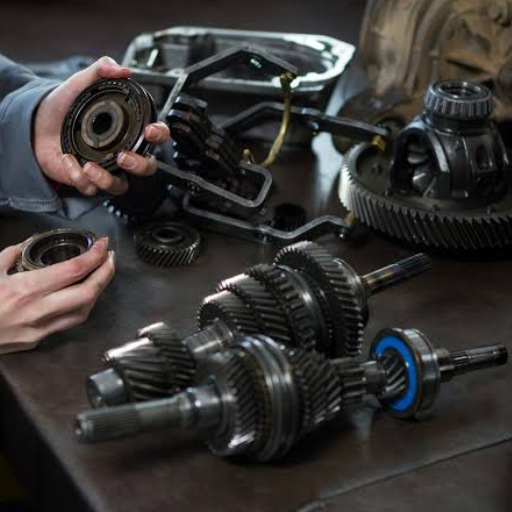
The useful question is not “is aftermarket acceptable”. It is “what happens if this part fails, and what interval will it run”. Ask those two questions in that order, then ask whether you can name the maker. The table applies that rule to the part groups that decide most outcomes.
| Part group | Genuine needed when | Aftermarket acceptable when | What to check |
|---|---|---|---|
| Bearings, pistons, rings, liners | The set runs an extended interval, or a failure can destroy the block or crankshaft | The interval is standard, the part comes from a known engine-component maker, and the maintenance file records it | Part number, maker, material or coating specification, and the interval the supplier rates it for |
| Fuel injection | The engine must meet an emissions limit or hold load precisely; calibration is part of the part | OEM remanufactured units from the maker are the lower-cost route; an unbranded will-fit is not | Test bench report, calibration code, part number |
| Turbocharger | Always, or a maker-approved reman unit; a failed turbo can destroy the engine | A known turbo maker’s direct replacement on a standard interval, with a balance report | Balance certificate, part number, wastegate or variable-geometry calibration |
| AVR | The set runs islanded, in parallel, or on sensitive loads | A reputable AVR brand that states regulation and response figures for your alternator | Model, regulation figure, compatibility with the alternator’s excitation system |
| Controller | “Genuine” means the controller maker’s own part, not the assembler’s badge | A different reputable controller brand, if the configuration is documented | Firmware version, configuration file, harness compatibility |
| Filters | The engine is under warranty or emissions certification | A known filtration maker’s part that meets the engine maker’s stated efficiency and micron rating | Micron rating, bypass setting, efficiency standard |
| Belts and hoses | Rarely, unless a failure stops a critical set | A known belt or hose maker’s part on a standard interval | Part number, material, fit |
| Sensors | The sensor drives protection or emissions control | A known sensor maker’s part with the same calibration | Calibration code, thread, signal range |
| Aftertreatment | Always; the emissions approval is tied to the specific component | Not on a certified engine | Part number, certification reference |
Read the table as conditions, not brand preferences. A bearing from a known supplier on a standard interval is a different proposition from the same bearing run to an extended interval. An AVR from a reputable maker is a different proposition on a standby set than on a set that carries a hospital load in parallel with another set.
The controller row surprises people. On a modern set the controller maker is often not the engine maker or the alternator maker. Genuine means the controller maker’s own part, not the assembler’s badge.
If the firmware and configuration file are documented, a different reputable controller can be the right choice. If they are not, you have bought a box that may not protect the engine.
The generator parts guide covers what each group does and how it fails.
What the Warranty Really Covers
The OEM vs aftermarket generator parts debate usually starts with price and ends with the warranty.
Start with what the law actually says, because both sides of this argument misstate it. Under the US Magnuson-Moss Warranty Act, a warrantor may not condition coverage on the use of brand-identified parts. Fitting an aftermarket or recycled part does not, by itself, void a warranty. A warrantor may deny a specific claim if it can show the aftermarket part caused the failure, and the burden of proof sits with the warrantor.
Two exceptions exist: the part was supplied free under the warranty, or the warrantor holds a waiver from the Federal Trade Commission. The rule is US consumer law. Industrial and export generator sales usually run on a commercial contract, which can set different terms, so read the contract you actually signed rather than the label on the box.
The FTC has enforced this. In 2022 it ordered Harley-Davidson and MWE Investments, which sells Westinghouse generators, to stop telling customers that third-party parts or repairs would void their warranties. The message is not that aftermarket is always safe. It is that “voids the warranty” is a claim someone has to prove.
The commercial reality is more restrictive than the statute. An extended service interval is a conditional approval: the engine maker validated it on its own parts. Fit a substitute and the interval no longer applies unless the substitute has been validated to the same life.
That is the genuine vs aftermarket generator parts question in warranty form. It is also why the warranty question and the interval question are the same question, as the Kommandor Susan report found.
Ask one more thing before you compare prices: does the warranty cover consequential damage? An aftermarket warranty may cover the part and nothing it destroys. A bearing that costs a fraction of the genuine part can still take a crankshaft, a block and a week of downtime with it. The clause that matters is the one that says what happens after the part fails.
If the set is under a maintenance contract, the same rule applies to the parts your service provider fits. Ask to see the part numbers on the invoice, and compare them with the generator maintenance services record for the set.
How to Verify Genuine vs Aftermarket Generator Parts
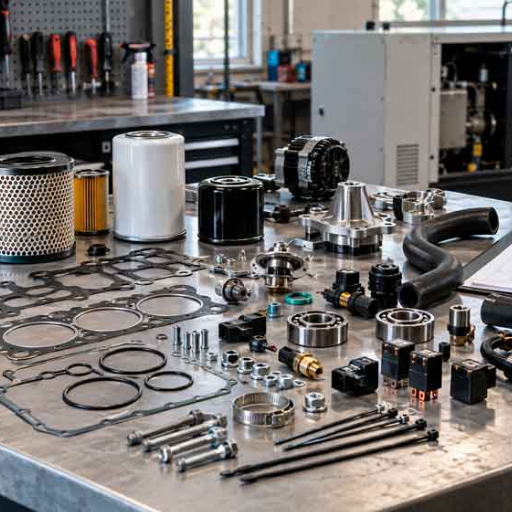
Verification is a paperwork problem before it is a metallurgy problem. You will not inspect a bearing’s backing layer with your eyes. You can insist on the documents that say what it is.
- Serial number, not just the model. Engine and alternator serial numbers identify the build and the correct parts list. Document: a photograph of the nameplate and the build record from the maker or dealer.
- Part number and supersession. A superseded number may still fit, but the supersession note tells you what changed. Document: the maker’s catalogue page or a written dealer quote showing the current number.
- Certificate of origin or authorised-dealer confirmation. This is the check the Kommandor Susan overhaul never made. Document: a certificate of origin, or a listing on the maker’s own dealer locator.
- Packaging and authentication label, checked against the maker’s system. A label you have not verified is a design, not a proof. Document: the result from the maker’s authentication service, saved with the invoice.
- Warranty terms, including consequential damage. Read the clause before you need it. Document: the written warranty, not a verbal assurance.
- A written entry in the maintenance file. The next owner will need it, and so will you at claim time. Document: a signed record with the part number, maker, source and date.
Two of these checks are cheap, and one is decisive. The dealer locator check takes a minute and would have stopped the Kommandor Susan overhaul before the parts went in. A price far below the dealer’s is not proof, but it is a reason to run the checks.
The interval decides which checks matter. If the set runs the standard generator service schedule, an aftermarket part from a known maker has more room. If the interval has been extended, the part needs to be validated to that life, and only the maker’s own documentation will show it.
When Aftermarket Generator Parts Are the Right Call
The genuine vs aftermarket generator parts decision gets easier once you stop asking which one is better. Aftermarket is the right call under three conditions, and all three have to hold.
The set runs a standard interval. The part comes from a maker you can name, with a part number and a warranty. A failure would not destroy the core of the engine or alternator.
Filters, belts and hoses from established filtration and belt makers usually meet those conditions on a standby set. Non-critical gaskets and clamps often do too. Legacy sets are the clearest case. When the original maker has discontinued the part, a known aftermarket supplier may be the only route, and a documented substitute is better than a worn original.
The exceptions are absolute. Do not use an aftermarket part on an extended interval. Do not use one where failure destroys the core: bearings, pistons, rods, fuel injection, turbochargers, aftertreatment. Do not use one you cannot trace.
The first exception is the one the Kommandor Susan report turned on. The second is the one that turns a cheap part into an expensive repair.
Specifying a new set? The same logic decides which parts you write into the specification. ShanHua builds generator sets around Cummins, Perkins and Weichai engines, and our documentation includes OEM certificates for several of the component brands we fit. Ask which maker’s warranty applies to each major part before the order. See our diesel generator sets.
Genuine vs Aftermarket Generator Parts: FAQ
Is it OK to use aftermarket diesel generator parts?
Yes, when the part is from a known maker, the set runs a standard interval, and a failure would not destroy the core. No, when the interval has been extended or the part is safety-critical. The label matters less than those three conditions.
Does using aftermarket parts void the warranty?
In the US, not by itself. The warrantor can deny a claim it proves was caused by the part, and it carries the burden of proof. Commercial and export contracts can set different terms.
How can I tell if a generator part is genuine?
Start with the part number and serial number, then the maker’s authentication label or dealer check, then the paperwork. A price far below the dealer’s is a reason to ask, not proof either way.
What is the difference between OEM and genuine?
Genuine is sold under the machine maker’s brand and warranty. OEM or OES is made by the original component maker, sometimes the same part in a different box, sometimes not. The only way to know is the maker’s name and the part number.
Are counterfeit generator parts dangerous?
They are illegal and uncontrolled. The documented risks are material substitution and dimensions that look right but do not hold. Perkins’ seized oil seals are a useful example of what that looks like.
Which generator parts should always be genuine?
Bearings, pistons, rings and liners on an extended interval; fuel injection and turbochargers; emissions aftertreatment; and any part whose failure can destroy the engine or the alternator.
Conclusion
The interval is the specification. A part is not genuine or aftermarket in the abstract; it is a component with a design life, fitted to a machine that is being run to a schedule. Change the part and the schedule no longer applies unless the substitute has been validated to the same life.
The practical next step is small. Pick the part you are about to buy. Write down the maker, the part number and the interval it will run. If you cannot fill those three lines, you are not ready to fit it.
That is the whole genuine vs aftermarket generator parts decision, and it fits on one line. Send us the nameplate, the part number and the quote. Our engineering team will tell you which maker’s part it is and what the interval allows. Send us the nameplate and part number.