
Medium voltage generator maintenance is not a longer version of the low voltage checklist. The engine work is the same at any voltage. What changes at 11 kV is where the failures hide, how you find them, and who is allowed to look.
Three things change, and one of them is not technical. The insulation moves out of sight. The tests move from run hours to condition measurements. And the work moves into a safety regime where the technician who serviced your 400 V set may not be permitted to open the breaker.
That last point is the one that costs money, because a site can buy every test in this article and still be exposed. It happens when the contract names a provider who can test an alternator but cannot rack out an 11 kV breaker.
Most maintenance guides on the internet are written for low-voltage standby sets, and they are good at that job. This one keeps the engine content to a single line and spends the rest on the four things that actually change.
Key Takeaways
- An 11 kV stator winding is insulation-tested at 2,500 to 5,000 V DC under IEEE 43, not the 500 V used on a low voltage set.
- A polarization index below 2.0 is the usual flag. Above 5,000 MΩ at one minute, the ratio stops carrying information.
- Partial discharge testing is standard practice from 5 kV upward because it finds insulation defects that resistance readings miss.
- Under IEC 62271-200, the switchgear’s LSC class decides whether a feeder can be serviced while the busbar stays live.
- An LV-qualified technician is not automatically an HV authorised person, and the contract should name who is.
Why Medium Voltage Generator Maintenance Is an Installation Job
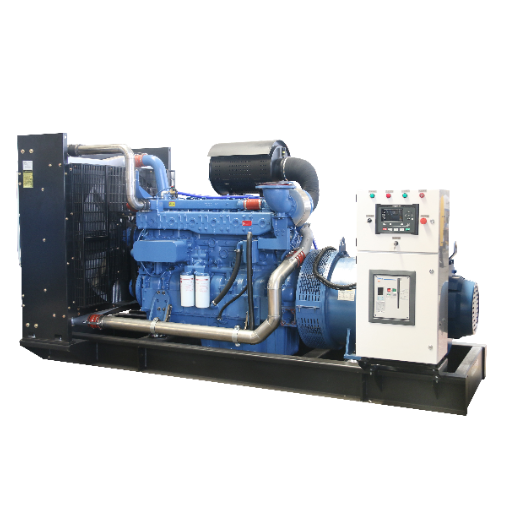
The engine does not know what voltage the alternator produces. A diesel needs the same oil analysis, the same coolant chemistry and the same valve clearances whether it drives a 400 V machine or an 11 kV one. If your schedule is a list of engine tasks, voltage class changes almost nothing on it.
What changes is the system the alternator feeds. At 11 kV the fault energy at a bolted fault is large enough that a loose termination is not an inconvenience, it is an event. The assets that carry that energy are the switchgear, the cable, the terminations, the earthing and the protection. None of them can be assessed by looking at them while the set runs.
That is why the annual service visit splits into two jobs at MV. One is the engine service, and it belongs in the that applies to any set. The other is an electrical condition assessment of the installation, and it is a different skill, a different toolkit and often a different contractor.
| Task | 400 V set | 11 kV set |
|---|---|---|
| Engine service | Same | Same |
| Insulation test voltage | 500 V DC | 2,500 to 5,000 V DC |
| Partial discharge test | Rarely specified | Standard from 5 kV |
| Switchgear work | LV breaker, panel isolated | HV switching, written permit, earthing |
| Thermal survey | Useful | Essential |
| Who may open the enclosure | Competent electrical person | Authorised HV person |
If the voltage class itself is still open, our guide to covers that decision. This article assumes the set is already at 11 kV and asks what maintaining it now involves.
Declan ran maintenance at a quarry in County Tyrone. The set had passed its annual service twice, and the sheet carried a tick for “visual inspection of connections”. In the second year, a thermographic survey found one cable termination running about 40 °C hotter than the other two phases at full load.
The joint was re-made in a four-hour outage. Left alone, it would have failed on a start, with the plant already running on standby power and nobody free to deal with it.
The Diagnostics That Change Medium Voltage Generator Maintenance
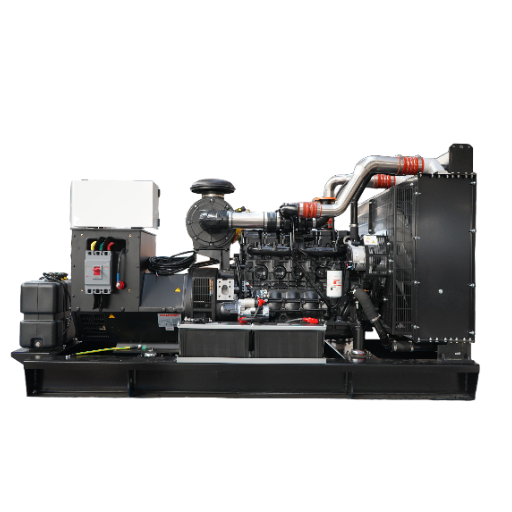
Run hours tell you when to change oil. They tell you almost nothing about insulation, which ages on a curve driven by heat, moisture, electrical stress and contamination rather than by clock time.
Insulation resistance and polarization index
An insulation resistance test applies a DC voltage between the winding and earth and measures the leakage current that results. IEEE 43 sets the practice, including the test voltage, which rises with the winding’s rating.
| Winding rating | DC test voltage |
|---|---|
| Below 1,000 V | 500 V |
| 1,001 to 2,500 V | 500 to 1,000 V |
| 2,501 to 5,000 V | 1,000 to 2,500 V |
| 5,001 to 12,000 V | 2,500 to 5,000 V |
| Above 12,000 V | 5,000 to 10,000 V |
An 11 kV winding sits in the fourth row. That is the first practical difference from low voltage. It is also the one most often missed, because a technician who tests everything at 500 V is following the instrument default.
A single resistance reading is a weak signal. The polarization index is stronger. It is the ten-minute reading divided by the one-minute reading, and it measures how the insulation behaves as the test voltage continues to polarize it. IEEE 43 practice treats 2.0 as the minimum for Class B, F and H insulation.
There is a caveat that most guides omit. If the one-minute reading is above 5,000 MΩ, the polarization index stops being meaningful and the winding can be considered acceptable on that criterion. Taking the ratio of two very large numbers produces noise, not diagnosis.
The other rule of thumb is a floor: minimum acceptable resistance is roughly the rated voltage in kV plus one, in megohms, corrected to 40 °C. For 11 kV that is about 12 MΩ. Healthy modern form-wound insulation usually reads far higher, so treat 12 MΩ as the line where you investigate, not the target you aim for.
Correct every reading to 40 °C before comparing it with anything. Insulation resistance roughly halves for every 10 °C rise, so an uncorrected comparison across seasons will invent a trend that is not there.
The sets out the practical order for these measurements, including how to discharge and reconnect the winding between tests.
Tan delta and capacitance
Tan delta measures dielectric loss. A healthy insulation system has a low loss that barely changes with applied voltage. Voids and delamination cause the loss to climb as voltage rises, which shows up as a tip-up between two voltage points.
IEEE 286 is the reference practice. The value of the test is not the absolute number but the shape of the curve and the direction it has moved since the last test.
Partial discharge
Partial discharge is the localized breakdown of small voids or surface defects inside the insulation. It is the mechanism that turns a good winding into a failed one, and it is the only common test that finds it while the machine is still working.
It is standard practice for stator windings rated 5 kV and above, which includes every medium voltage set. IEC 60034-27 covers the measurement on rotating machines, IEC 60270 covers the measurement itself, and IEEE 1434 is the guide many operators in North America work to. OMICRON’s introduction to rotating machine testing puts PD beside the other three stator measurements so you can see what each one answers.
The single most important thing to understand about PD testing is that the trend outranks the value. A machine that reads 800 pC every year for six years is a different asset from one that moved from 300 to 1,400 pC in two. The second one is degrading, whatever the absolute figure.
Do not accept a universal pC limit from a blog post, including this one. Acceptance levels depend on the insulation system, the winding type and the test method, and they belong in the machine’s documentation. A vendor who quotes a fixed threshold without asking what the winding is has not asked enough questions.
Specification note: require the test method to be recorded alongside the result. A PD measurement taken with a different coupler, at a different voltage or from a different terminal is not comparable with last year’s figure, and comparing them will mislead you in either direction.
The baseline problem
Here is the part that separates a maintenance programme from a set of test reports.
A polarization index of 1.6 means nothing on its own. Neither does a tan delta of 2.1%, nor a PD reading of 900 pC. Each becomes evidence only when you can put it beside the same machine’s readings from previous years, taken the same way, at the same temperature.
Sites that keep no records buy tests and receive opinions. The test was valid; the interpretation is guesswork. This is the cheapest failure in the whole regime to fix, and it is the one most often fixed last.
The Switchgear, the Cable and the Terminations
The generator is the asset everyone watches. At 11 kV the switchgear usually deserves more attention, because it is where the energy is switched and where the failure modes are both invisible and violent.
IEC 62271-200 is the standard for AC metal-enclosed switchgear above 1 kV and up to 52 kV, which is where the term medium voltage is defined for this equipment. It classifies boards by Loss of Service Continuity, or LSC, which describes what can stay energised while a compartment is opened.
| LSC class | What can stay live during maintenance access |
|---|---|
| LSC1 | Nothing is segregated; the board must be de-energised |
| LSC2 | Busbar compartment stays live; adjacent functional units may not |
| LSC2A | Busbar and adjacent units stay live while an accessible compartment is opened |
| LSC2B | Busbar, breaker and cable compartments are all segregated; a circuit can be worked with the busbar live |
This is a specification decision made years before anyone needs to maintain the board, and it is felt at every service. An LSC1 board cannot be worked on without shutting down the site. An LSC2B board lets a single feeder be isolated and worked while the rest stays live.
One caveat matters here: LSC categories describe service continuity only. They do not rank reliability or safety, and a higher number does not mean a better board. It means a board that is easier to maintain without an outage.
The between the set and the board gets the same treatment. Contacts, arc chutes, interlocks, heaters and torque values are checked on a schedule, not when something stops working.
The cable and its terminations are next. A exercise fixes the conductor, but it does not protect the joint. Terminations fail at the stress cone and at the lug, and they announce themselves in two ways: heat under load and partial discharge. A thermal survey finds the first, a PD survey finds the second, and neither is on a standard engine service sheet.
Protection is the last piece, and the least visible. A relay that has never been tested is an assumption, not a setting. Secondary injection proves the relay still operates at the values in the study, after years of sitting in a panel with no load on it.
Aisha inherited a plant where the 11 kV board had been specified as LSC1, probably to save money at construction. Every annual service needed a full site shutdown, and every shutdown was negotiated with production for weeks.
The maintenance work itself took two days. The scheduling took two months. When the board was eventually replaced, the business case was written on outage hours, not on failure rates.
Who Is Authorised to Do Medium Voltage Maintenance
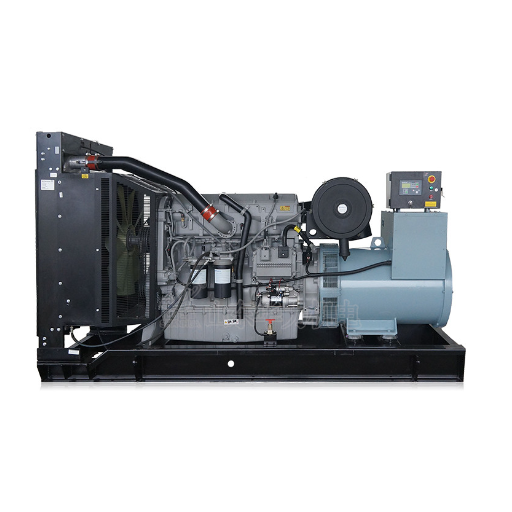
This is the section that most guides leave out, and it is the one that decides whether a medium voltage generator maintenance programme can legally happen.
Work on medium voltage equipment is normally controlled by a documented safety-rules regime. It defines who may operate and how a circuit is isolated, proved dead and earthed. It also names who signs the permit that allows work to start.
The terminology varies by country. The principle does not: an authorised person, named and appointed, works to written rules, and everyone else stays out.
The practical consequence is that competence does not transfer automatically across voltage classes. A technician who is excellent on your 400 V sets may have no HV authorisation at all, and should not be asked to acquire one during an outage.
Ask a prospective service provider four questions before signing anything:
- Who holds the HV authorisation, and under whose safety rules does it operate?
- Who writes the switching programme, and who approves it?
- What does the provider do when the work needs the board dead and your site cannot stop?
- Who signs the permit to work, and who signs it off at the end?
If the answers are vague, the provider is planning to subcontract the switching. That is not automatically wrong, but you should know it before the outage, not during it.
Tomás found this the hard way at a food plant in northern Portugal. The service contract named a generator specialist who could test the alternator, change the AVR and service the engine. On the first outage, it turned out that nobody on the crew could rack out the 11 kV breaker.
The plant had to bring in a second contractor at short notice, at short-notice rates, and the outage ran a day long. The generator work was fine. The contract was not.
What a Medium Voltage Generator Maintenance Contract Must Specify
A medium voltage generator maintenance contract should read like a scope of work, not a promise of care. These are the lines that make it enforceable.
| Task | Interval | Evidence produced |
|---|---|---|
| Insulation resistance and PI | Annual, and after any winding work | Per-phase readings at one and ten minutes, corrected to 40 °C |
| Tan delta and capacitance | Annual, or every second year on small sets | Tip-up value and trend against previous tests |
| Partial discharge | Annual from 5 kV upward; continuous monitoring on critical sets | Level, method, and comparison with the previous measurement |
| Protection relay testing | Annual secondary injection, and after any setting change | Signed test sheet against the setting study |
| Switchgear inspection | Annual | Torque values, parts replaced, interlocks proved |
| Thermal survey | Six-monthly, under load | Images per phase with ambient and load recorded |
| Battery and charger | Quarterly visual, annual capacity test | Discharge result against rated capacity |
| Earthing and bonding | Annual | Measured values against design |
Three clauses do most of the work.
Name the standards. A report that says “insulation tested” is not evidence. A report that says which standard, which test voltage and which method is evidence, and it can be compared with next year’s.
Require the trend. Every result should be presented beside the previous result for the same machine. A provider that cannot produce last year’s numbers is not maintaining a programme, it is selling visits.
Name the authorised persons. The names, their authorisation and the rules they work under belong in the contract, not in a site induction pack that nobody reads.
For the wider service side, the pages cover the engine and fuel work that applies at any voltage. This article deliberately does not repeat them.
Records That Make the Next Outage Cheap
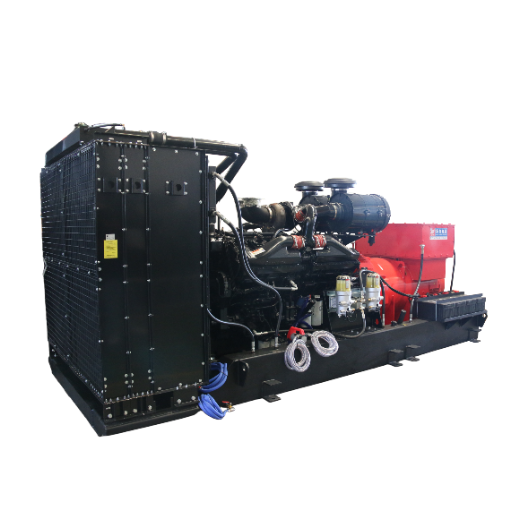
The output of a medium voltage maintenance visit is not the work. It is the record.
A usable test report contains the date, the winding temperature, the test voltage, each reading by phase and the instrument used. It also records the method and sets the previous reading beside the new one. Six lines of metadata turn a number into a diagnosis.
Two habits make the difference over five years. The first is to store reports against the machine, not against the contractor, so a change of provider does not reset the history. The second is to review the trend before the next test, not after it, so the test can be planned around a suspicion rather than done and filed.
The first year of data is always the weakest, because there is nothing to compare it with. Treat that year as the baseline, record everything, and do not draw conclusions from a single reading. From the second year onward, the programme starts paying for itself.
Frequently Asked Questions
How often should a medium voltage generator be serviced? Engine services follow the manufacturer’s hours-based schedule, exactly as they would on a low voltage set. The electrical condition tests are annual at minimum, and the switchgear inspection is normally annual. The switchgear is often the reason an outage is needed, not the generator.
What is a good insulation resistance for an 11 kV generator? About 12 MΩ is the usual floor, from the rule of rated kV plus one, corrected to 40 °C. Healthy form-wound insulation typically reads far higher, often in the hundreds or thousands of megohms. The trend matters more than the reading.
Do I need partial discharge testing on an 11 kV generator? Yes. PD testing is standard practice for stator windings rated 5 kV and above, and it is the only common test that finds incipient insulation failure while the machine still runs. Without it, you are relying on resistance readings that often fall only when the fault is already serious.
Can my normal generator service company maintain an 11 kV set? Only if it can show named, authorised HV persons working to documented safety rules. Many competent generator specialists cannot, and subcontract the switching. Ask before the outage, not during it.
What does medium voltage generator maintenance cost? It depends on switchgear scope, test equipment, outage length and spares lead times, so any figure quoted without a site survey is a guess. The costs that surprise people are the switchgear work and the outage itself, not the generator tests.
What should a medium voltage generator maintenance contract include? The tasks and intervals, the standards each test follows, the evidence produced, and the authorised persons. A contract that names standards and requires trends is enforceable. One that promises “annual servicing” is not.
The Four Changes, in Order
Medium voltage generator maintenance is a different job from low voltage maintenance, and the difference is not effort. It is attention.
The engine stays the same, so keep it on the schedule you already have. The insulation moves out of sight, so test it at the right voltage and trend the results. The switchgear becomes the asset that decides whether you can maintain anything at all. Treat its LSC class as a maintenance question, not just a specification one. And the authorisation regime decides who may work, so write it into the contract.
Get those four in order and the annual outage becomes predictable. Leave them in the low voltage order and you will keep servicing an engine while a termination cooks. Or you will discover during the shutdown that nobody on site can open the breaker.
If you are specifying a set for an 11 kV installation, send the single-line diagram, the board schedule and the existing test reports. Our engineers will check the generator data against the installation before the maintenance contract is written. That way the medium-voltage generator maintenance regime is settled before the first outage.