
Generator voltage class selection is settled by the alternator winding, not by a chart of standard voltages. A machine rated at 11 kV delivers its published kVA at 11 kV, at one frequency, in one connection. Change any of those three and the rating changes, even though the nameplate still reads 11 kV.
Most buyers treat the class as a single number: 400 V, 3.3 kV, 6.6 kV, 11 kV, 13.8 kV. Those values come from standard voltage lists rather than from generator catalogues. Reading them as interchangeable is fine for shortlisting and costly at the enquiry stage.
This article covers what the tolerance actually is, where the rating changes, how the 50 Hz and 60 Hz ladders map onto each other, and what to put in a specification so the quotations come back comparable. If you already have a quotation in hand, send it over and our engineers will mark the rating point on it.
Key Takeaways
- A voltage class is a winding with a tolerance attached. IEC 60034-1 sets the acceptable range at plus or minus 5% of rated voltage and calls for a derate outside it.
- The alternator winding itself is designed to operate over a wider range, roughly plus or minus 8% around its ideal output voltage, but the rating at the edges is lower.
- Output kVA changes near the edges, so a set rated 1,800 kVA at 11 kV is not rated 1,800 kVA at 11.5 kV.
- The 50 Hz and 60 Hz voltage ladders map on a 5:6 ratio, so 400 V at 50 Hz corresponds to 480 V at 60 Hz, and 380 V at 60 Hz is not a 50 Hz voltage at all.
- A 12-lead alternator gives you connection options. It does not give you a second winding.
The Rating Holds at One Point
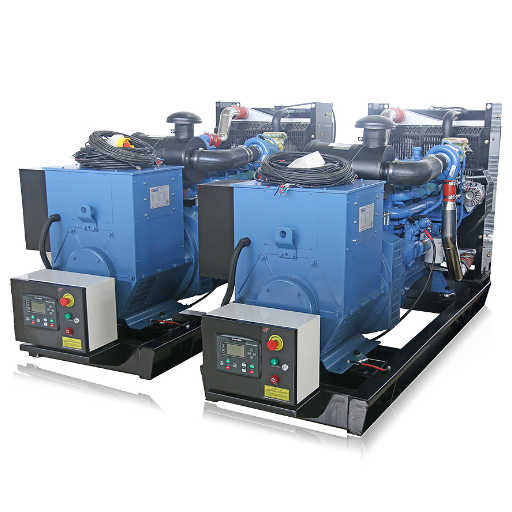
The tolerance exists because no generator holds its voltage exactly. The automatic voltage regulator (AVR) corrects within a range, the load moves, and the machine has to ride through both. Standards write that tolerance down as a percentage so buyers and manufacturers can agree on what “11 kV” means.
The 5% Rule and Where It Comes From
IEC 60034-1, the standard for rotating electrical machines, treats the acceptable voltage range of a winding as plus or minus 5% of rated voltage. Outside that range, a derate is required. Cummins states it directly in AGN 046, its alternator guidance note: the standard “identifies the acceptable voltage range for a winding as +/-5% and points out that a de-rate is required if a rotating electrical machine is operated outside this bandwidth.”
At 400 V, the band runs from 380 V to 420 V. At 11 kV, it runs from 10.45 kV to 11.55 kV. Those figures are arithmetic, and they describe what the machine accepts. The rating at each point inside the band is a separate document, and reading that document is a skill of its own, which is where an 11 kV specification sheet starts.
The Wider Range the Winding Can Reach
There’s a second number, and it’s wider. An alternator voltage range is set by the winding: roughly plus or minus 8% around an ideal output voltage. Past that range, the machine is under electrical and magnetic stress, and the derate is mandatory.
The two numbers answer different questions. The 5% is where the published rating holds without a derate. The 8% is roughly how far the winding can be pushed before it needs a different design. A set can run 6% above rated and keep working, but it has left the band the standard allows and it is no longer delivering its nameplate rating.
For a buyer, generator voltage selection narrows to three questions: which winding, at which frequency, in which connection.
Where the Rating Changes Inside the Band
This is the part buyers miss. A published kVA figure holds at a specified voltage. Near the edges of that band, the output changes, and the datasheet usually says so in a footnote.
So a set quoted at 1,800 kVA, 11 kV and a set quoted at 1,800 kVA, 11.5 kV are not the same offer with a different label. The second is a different rating point, and the alternator may not reach 1,800 kVA there without a derate. When two bids name the same voltage and different kVA, this is usually why.
If you’re comparing two quotations that named the same voltage and came back with different kVA, send both to our engineers and we’ll reconcile the rating points before you shortlist.
The Two Ladders Behind Generator Voltage Class Selection
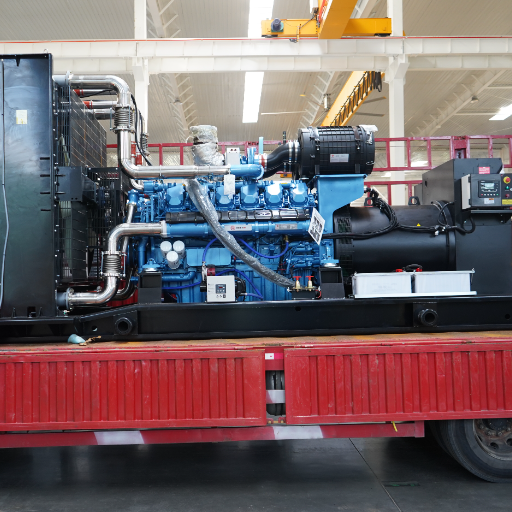
Voltage classes come in two families that don’t behave alike. The 50 Hz and 60 Hz generator voltage ladders share some values and separate on others.
380 to 440 V at 50 Hz Is Not 380 to 440 V at 60 Hz
The two ladders map on a 5:6 ratio, so a 60 Hz voltage sits one fifth above its 50 Hz counterpart. Four hundred volts at 50 Hz corresponds to 480 V at 60 Hz, and 415 V to 498 V. The alternator produces more volts per turn at the higher frequency, so the whole ladder shifts with it.
| 50 Hz | Matching 60 Hz, at 5:6 |
|---|---|
| 400 V | 480 V |
| 415 V | 498 V |
Cummins publishes this contrast in its alternator guidance, and the point is simple: the two ladders aren’t interchangeable, and a buyer who treats one voltage as universal will specify a pairing the winding wasn’t designed for. The frequency decision itself is separate. This one is about the voltage that goes with it.
Why This Catches Gulf and Brazilian Projects
Cummins names the case outright. A standard European winding run at 380 V, 60 Hz, a combination used in the UAE and Brazil, sits outside its designed operating range and loses performance against its published capabilities.
The trap is the order of the decision. A buyer picks 380 V from the 50 Hz ladder because that’s what the plant distributes, then picks 60 Hz because that’s what the country runs. Each choice is defensible alone. Together they land outside the band.
Renata Coelho found that out the expensive way at a food plant outside Campinas. Her standby set was specified at 1,000 kVA, 380 V, 60 Hz, and the quotation was accepted without anyone checking the pair against the winding design.
When the set arrived, the alternator could be operated at that voltage, but only with a derate that took the usable output below the 950 kVA the plant had sized for. Nobody had quoted that figure. The fix was a different winding, four months later.
What Makes a Voltage Available: Winding and Leads
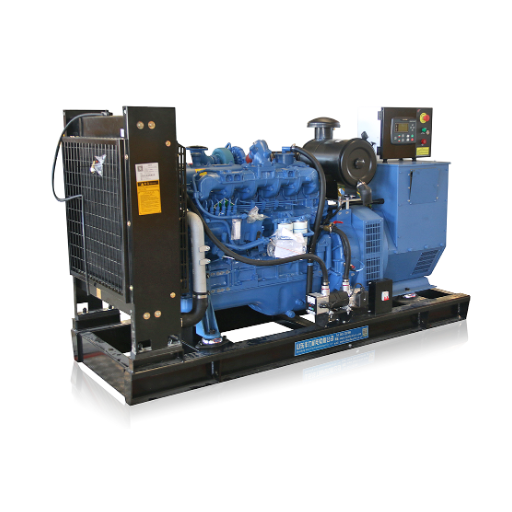
A voltage class isn’t a menu item bolted onto the alternator. It’s a property of the winding, and the leads are how that winding is presented at the terminal box.
Six Leads and Twelve Leads
Alternators come with six leads out or twelve. A twelve-lead machine offers four connections from one winding, which gives the specifier a small set of voltages. A six-lead machine gives fewer options, and in practice, two.
| Leads out | Connections | What it gives you |
|---|---|---|
| 6 | Star, delta | One winding, two voltages |
| 12 | Series star, parallel star, series delta, parallel delta | One winding, four connections, usually two voltage levels |
Cummins’ own table pairs each connection with a winding number. On STAMFORD alternators, winding 311 has twelve leads out, and winding 312, sometimes written 12, has six. The standard winding covers 380, 400, 415 and 440 V at 50 Hz in series star, and 440, 460 and 480 V at 60 Hz. Other regions get other winding numbers, which is why the same frame can be quoted into three markets with three different plates.
The practical answer to “can I get 6.6 kV from this machine?” is the winding the factory built, not the lead arrangement.
Why a Reconnection Is Not a Voltage Change
Reconnecting leads changes the connection. It doesn’t change the winding design, the insulation system or the rating.
The published rating doesn’t travel with the connection either. If the kVA at the new connection isn’t on a datasheet, it isn’t a rating, and the safe assumption is that it’s lower than the nameplate figure.
Marta Kowalczyk inherited exactly that problem at a plant near Poznan. A project note said the spare 400 V alternator could be reconnected to 690 V for a new pump starter. The machine had six leads, so the connection options were star and delta, and 690 V was never one of them. Nobody had looked at the terminal box before the note was written, and the pump order slipped three weeks while a replacement machine was quoted.
Matching the Band to Your Site
The tolerance doesn’t decide anything on its own. What matters is whether the machine’s range contains the voltage the site supplies at its own extremes, not only at nominal.
A site that holds close to 400 V and a machine wound for 400 V line up. A site that swings far enough to sit at the edge of the machine’s band will spend its life there, and the derate becomes part of the offer whether or not the quotation says so.
The supply has a band of its own. The IEC 60038 limits at 400 V run from 360 V to 440 V, so a set at the bottom of its own tolerance can meet a supply at the top of the permitted range. That gap is why the rating point matters more than the nominal number.
Whether the site should move to medium voltage at all is a separate decision, with its own arithmetic. The four variables that decide it are power, distance, site voltage and the ten-year view, and where the bus and fault limits converge explains why the crossover sits where it does. This article stops at the alternator.
What to Write in the Enquiry
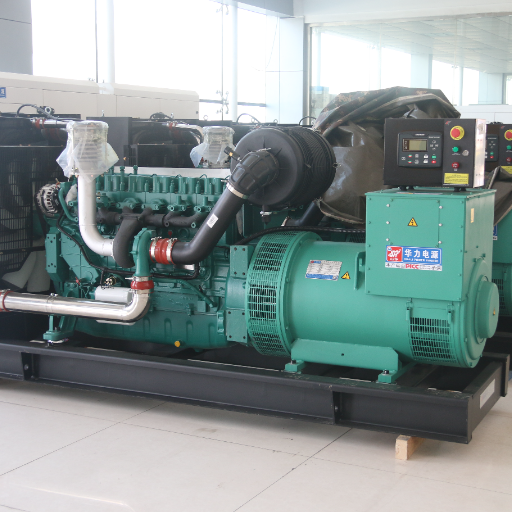
A voltage alone isn’t a specification. Six lines fix it.
| Line | Example | Why it matters |
|---|---|---|
| Rated voltage and tolerance | 11 kV, plus or minus 5% | Sets the band |
| Frequency | 50 Hz | Sets the ladder |
| Connection | Series star, 12 leads | Sets the options |
| Rating point | 1,800 kVA at 11 kV | Stops two bids being compared at different points |
| Site distribution voltage | 11 kV, existing switchgear | Confirms the class matches the installation |
| Standard | IEC 60034-1, not NEMA MG 1 | Fixes the test basis before prices are compared |
Without the rating point line, two suppliers can both answer “1,800 kVA at 11 kV” and mean different machines. Without the frequency line, the winding question never gets asked.
Tarek Haddad manages a plastics plant in Sharjah that learned the band the hard way from the other direction. The site ran at 400 V and the far end of one feeder sat about 15 V low, so his electricians raised the alternator’s AVR setpoint to 430 V to compensate.
It worked for a year. Then the alternator started running hot.
At 430 V it sat outside the 5% band, so its output no longer matched its nameplate, and the load it was carrying was above its derated rating. The winding failed early. The fix was a cable upgrade, not a voltage setting.
Frequently Asked Questions About Generator Voltage Class Selection
How do you choose a generator voltage class?
Start with the voltage the site supplies, then check that the alternator’s winding is designed for that voltage at your frequency, not merely tolerable inside its tolerance band. Where there’s no medium voltage on site, the class has to earn its place through load, distance and the growth path.
Can a generator run above or below its rated voltage?
Yes. The generator voltage tolerance under IEC 60034-1 is about plus or minus 5% of rated voltage. Outside that band the machine needs a derate, and the further it sits from its design point, the larger the derate. Running at the edge of the band for a year is not the same as passing a test at it.
Is a 380 V, 60 Hz generator the same as a 400 V, 50 Hz one?
No. The two sit on different ladders and don’t map onto each other directly. The ratio is 5:6, so 400 V at 50 Hz corresponds to 480 V at 60 Hz, and a 380 V, 60 Hz requirement falls below the 60 Hz range the standard winding was designed for. Specify the voltage and the frequency together, never one without the other.
What does a 12-lead alternator give you that a 6-lead doesn’t?
Connection options, not extra capacity. Twelve leads allow four connections from one winding, which is how a single frame gets quoted at several voltages. Six leads allow two. Neither arrangement creates a voltage the winding wasn’t designed for.
Generator Voltage Class Selection Ends in the Enquiry
Generator voltage class selection is finished when the enquiry names the rating point, not when the chart names a voltage. A voltage class is a range around a winding design, the rating holds at one point inside that range, and the 50 Hz and 60 Hz ladders are different ladders that only look alike.
The checklist is short. Name the rated voltage and its tolerance. Name the frequency. Name the connection and the lead count.
Then name the kVA at the rated voltage, not just the kVA. Check the whole package against the supply on site, not against the drawing.
Do that and the quotations come back comparable, which is most of the battle on a capital purchase. If you’d rather have the specification reviewed before it goes out, our engineering team can check it against the winding and the site, and tell you which of the six lines is missing.