
A medium voltage vs low voltage generator decision comes down to four variables: how much power you need, how far it has to travel, what voltage your site already runs, and what the site will look like in ten years. At 2 MW the generator itself is rarely the deciding cost. The cable and the switchgear usually are.
That surprises most buyers. A 2 MW set at 480 V draws about 2,406 A at unity power factor, so every conductor, busbar and breaker in its path carries four figures. Move the same 2 MW up to 4,160 V and the current falls to roughly 278 A, and the copper problem disappears.
But the copper saving is only half the arithmetic. The other half is what the higher voltage adds back, and the true answer sits somewhere between the two.
This guide works the four variables in order, prices the class decision, says when to use a medium voltage generator rather than a low voltage one, and names the cases where low voltage still wins.
Key Takeaways
- At 2 MW, moving a 480 V set to 4.16 kV adds roughly 40,000.Movingitto15kVaddsroughly40,000.Movingitto15kVaddsroughly100,000.
- Medium voltage switchgear costs about 50,000to50,000to60,000 per section, and a section typically holds one breaker.
- At 4.16 kV the alternator cost is close to low voltage. At 15 kV it is not, and a step-up transformer often wins instead.
- The transformer route has no redundancy. When the transformer fails, the generator behind it has no second path to the load.
- Medium voltage sets exist from about 500 kW but are typically applied from 1,000 kW upward, so small projects rarely face the choice.
Choosing between the two classes now? Send us the load, the route and the site voltage, and our engineers will tell you which variables actually bind in your case.
What Actually Changes Between the Two
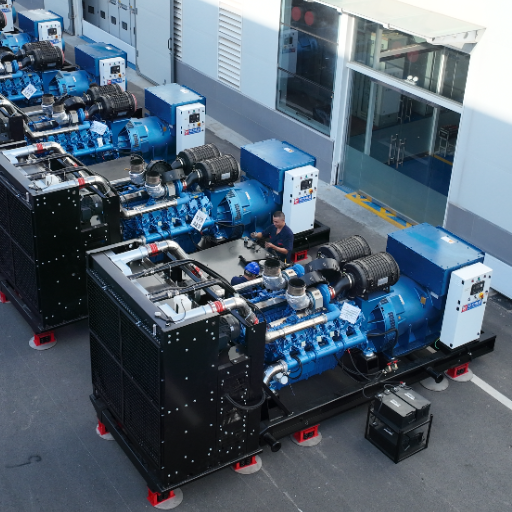
The phrase “medium voltage” has no single definition. European distribution practice puts it above 1 kV and up to 36 kV, a switchgear standard calls everything above 1 kV high voltage, and US usage splits further still.
What matters for a generator is narrower. Three parts of the package change, and one of them changes the people who can work on it.
| Element | At 400 V to 480 V | At medium voltage |
|---|---|---|
| Alternator | random-wound, round wire | form-coil, square wire, taped in roughly 1 kV steps |
| Switchgear | moulded-case or air circuit breakers | metal-clad, vacuum or gas insulated, about 50,000 to 50,000 to 60,000 per section |
| Cable | simple terminations, multiple parallel runs at high current | screened cable, stress cones, trained jointers |
| People | any competent electrician | authorised persons under a permit system |
The alternator is the smallest of the differences in cost terms. It is also the one buyers ask about first.
The cable and the switchgear are where the money actually moves, and they move in opposite directions. That’s why the answer isn’t a rule of thumb. The low voltage vs medium voltage generator question is settled one element at a time, and the elements disagree.
The voltage classes you will actually be quoted
Medium voltage spans a range rather than sitting at a single value, and the two market conventions are not interchangeable.
North American generator ratings commonly land at 4,160 V or 13.8 kV, with 15 kV as the equipment rating. IEC practice uses a different ladder: 3.3 kV or 6.6 kV below, 10.5 kV or 11 kV above. A buyer sourcing across markets has to translate, and the rungs don’t line up.
The cost of the step up isn’t the same at both ends. A quote for a 4.16 kV generator and a quote at 11 kV are not two versions of the same decision.
The Four Variables That Decide a Medium Voltage vs Low Voltage Generator
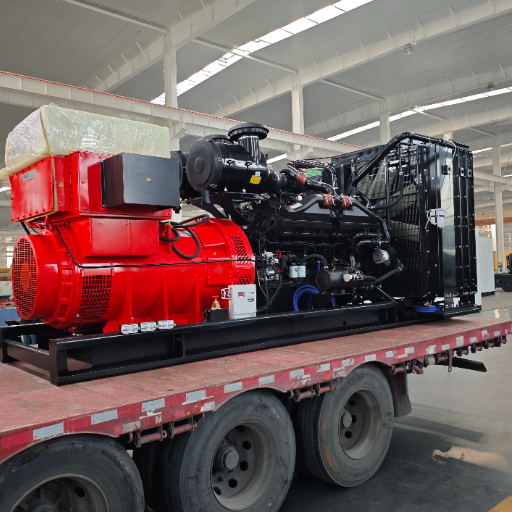
Four things move the answer. Most specification arguments happen because two people are weighing different ones.
1. How much power you need
This is the variable everyone starts with, and it is the one most often reduced to a slogan. The often-quoted “medium voltage starts at 2 MW” is a rule of thumb, not a limit.
The real limits are electrical: how much current a standard low voltage board can carry, and where the fault current forces a jump to heavier switchgear. Both usually arrive together. That is why the practical transition sits in a band, not at a number.
We work that arithmetic in full in our guide to when a generator needs medium voltage, including the bus and fault-current figures. The short version: a low voltage installation gives up somewhere between about 5 MVA and 10 MVA depending on how the board is built.
2. How far the power has to travel
Distance is the variable that most often flips the answer, and it is the one buyers underweight.
At low voltage, current is high, so voltage drop over a long run forces you to parallel more and thicker cable. The cost curve is not gently upward. It climbs.
Andres, a project engineer at a copper mine in northern Chile, priced a 3 MW low voltage installation in 2022 with the load centres about 700 m apart. The cable package came back costing more than the generator, the switchgear and the transformer combined. The mine moved to 11 kV distribution and kept the generation low voltage behind a step-up transformer, which was the cheapest of the three options once the cable was priced properly.
The lesson isn’t “go medium voltage when the site is big”. It’s that the cable quote belongs in the first comparison, not the last.
3. What voltage your site already runs
If the site already distributes at 11 kV, a set wound for the same voltage connects directly, with no transformer in the path and no second voltage to manage. That is usually decisive on its own.
If the site distributes at 400 V throughout, the medium voltage generator has to justify itself against a much lower bar, because every medium voltage machine needs medium voltage switchgear on its output whether or not the rest of the site speaks that language.
Greta, a procurement lead at a food plant in southern Sweden, inherited a tender written as a low voltage set plus a step-up transformer. The plant already distributed at 11 kV internally, so the transformer existed only to correct a choice made earlier in the specification. Re-tendering for an 11 kV set removed the transformer, one protection interface, and the question of which voltage her maintenance team had to be trained for.
4. What the site will look like in ten years
The last variable is the one that is hardest to price and easiest to regret.
If the load will grow, or if more sets will be paralleled later, medium voltage gets cheaper per megawatt as you add. Paralleling several large machines is cleaner on a medium voltage bus than on a low voltage one carrying enormous fault current.
If the load is flat and the site is finished, that future option is worth nothing, and you should not pay for it.
Two of those four are usually already fixed. The load and the future are known to you. The distance and the site voltage are known to your electrical engineer. If the four of them disagree, that is the conversation to have before the enquiry goes out. Send us the four →
What the Medium Voltage vs Low Voltage Generator Decision Costs
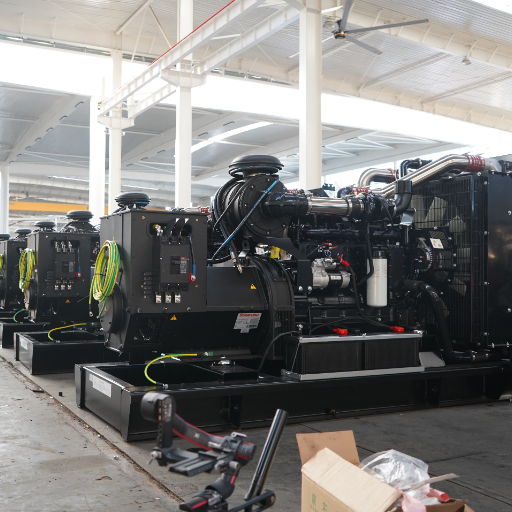
Here is the part that competitors leave out. The class decision has a price, and the price is not the same at both ends of the band. Medium voltage generator cost is not one number.
At 2 MW, the figures from a major manufacturer’s own engineering paper on medium voltage on-site generation look like this:
| Route from a 480 V, 2 MW set | Likely added cost | What drives it |
|---|---|---|
| Stay low voltage | baseline | Heavier cable, heavier busbar, more parallel runs |
| Move to 4,160 V | about $40,000 | Alternator cost is close to low voltage; switchgear is not |
| Move to 15 kV (roughly 11 kV class) | about $100,000 | 15 kV class alternators cost far more than 5 kV class |
Two more numbers apply regardless of class.
Medium voltage metal-clad switchgear typically runs 50,000 to 50,000 to 60,000 per section, and a section usually holds a single breaker. A three-breaker line-up is therefore a six-figure item before any cable is bought. Transfer and paralleling equipment generally costs about twice the low voltage equivalent.
Put those together and a pattern appears. At 4.16 kV the premium over low voltage is modest, and designers commonly accept it. At 15 kV the premium is large enough that many engineers keep the low voltage set and buy a transformer instead.
That’s the single most useful thing to understand about this comparison. The question isn’t really a medium voltage vs low voltage generator question at all. It’s low voltage, or the low end of medium voltage, or the high end with a transformer in front of it.
Two honest caveats. These are likely added costs for the generator and its switchgear at one rating, from one manufacturer’s paper, not installed project totals. And they are North American classes, so treat them as the shape of the trade rather than a price list for your site.
None of this is a special order at 2 MW. ABB’s product note for its HV compact engine generators covers machines from 1 to 8 MVA, so the whole decision sits inside a range manufacturers already build to.
Keeping Low Voltage and Stepping Up
There is a third route, and it’s often the right one: keep the alternator at 400 V or 480 V and raise the voltage on the load side with a transformer.
It preserves a standard, serviceable alternator. It lets you change your mind about voltage later without replacing the set. And at the top of the band, where the alternator premium is largest, it can cost less than the medium voltage machine itself.
The trade is real, though, and it is usually stated badly. A step-up transformer adds losses and footprint. More importantly, it adds a single point of failure that the medium voltage alternator does not have: if the transformer fails, the generator behind it has no second path to the load.
For a standby system, that is one component deciding whether the set can be used at all.
The route is worth taking when the transformer is also serving another purpose, or when the voltage is genuinely uncertain. It is a poor choice as a cost saving on a critical supply.
We compare the two build routes directly in our guide to generator step-up transformers versus medium voltage alternators, including the lead-time and footprint differences.
When Low Voltage Is Still the Right Answer
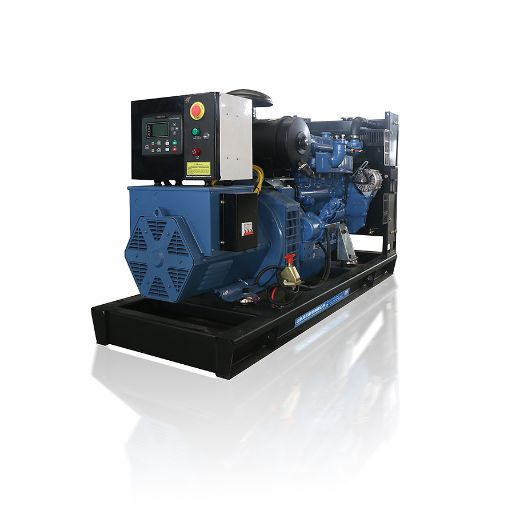
A comparison that only argues one way is not a comparison. In plenty of projects low voltage wins outright. The reasons are worth stating plainly.
The load is small. The 5 kV class exists from about 500 kW, but it is typically applied from 1,000 kW upward. Below that, a small site is not really choosing between classes.
The runs are short. If the set sits beside the switchboard it feeds, cable length is not a cost driver.
The site has no medium voltage anywhere. Introducing one voltage class for a single generator means new switchgear, new cable, new protection and new authorisation for the people who maintain it.
Nobody on site is authorised for medium voltage work. This is the one buyers forget. The authorisation is a local credential rather than a qualification the supplier hands over with the set, so a maintenance contract scoped to the engine and alternator usually excludes it.
In those cases a low voltage set is not a compromise. It is the correct answer, and the money is better spent on fuel capacity, enclosure or redundancy.
One clarification, because it causes trouble in tenders. Sales material sometimes labels a 600 V set as medium voltage. It is not: IEC practice places the top of low voltage at 1 kV, and US practice generally treats 600 V as that ceiling. If you need the definition itself rather than the generator decision, our guide to what counts as low voltage covers that ground.
If you are working through the low voltage side of the design, our guide to generator cable sizing and installation covers the calculation that decides whether distance is already a problem for you.
Working It as a Decision
The four variables collapse into a short table once you have the inputs.
| Your situation | Usual answer | Why |
|---|---|---|
| Under about 1 MW, short runs | Low voltage | The medium voltage class is rarely applied at this size |
| 2 to 4 MVA, loads close together, site is 400 V | Low voltage, or 4.16 kV if the site will grow | The low-end class premium is modest |
| Any size, loads far apart | Medium voltage, or low voltage plus a transformer | Cable cost dominates |
| Site already distributes at 11 kV | Medium voltage at the site voltage | Avoids a transformer and a second voltage |
| More sets to be added later | Medium voltage | Paralleling is cleaner and cheaper per MW as you grow |
| No authorised persons available | Low voltage | Unmaintainable protection is worse than heavier cable |
Whichever line you land on, three things belong in the enquiry and usually aren’t:
- Site distribution voltage. It tells the supplier whether a transformer is in scope or whether the set has to match an existing bus.
- Route length to the load. This is the number that decides whether cable cost dominates everything else.
- Power factor. Without it the current figures above are approximations, and two quotes won’t be comparable.
Voltage and frequency are set per order rather than picked off a shelf, so custom diesel generator builds treat the class as a line in the specification rather than a choice from a list.
Frequently Asked Questions
Is medium voltage better than low voltage for a generator?
No, not in general. Medium voltage is better above roughly 5 MVA, over long cable runs, or where the site already distributes at medium voltage. Below that low voltage is usually cheaper and easier to maintain.
What size generator needs medium voltage?
There is no single figure, and the answer depends on how the low voltage board is built. Our pillar guide to medium voltage generators works through the bus and fault-current limits that set it.
Is a medium voltage generator more expensive?
Yes, and the premium depends on which class. At 2 MW, moving from 480 V to 4.16 kV adds about 40,000,whilemovingto15kVaddsabout40,000,whilemovingto15kVaddsabout100,000. The cable saving can offset much of the lower figure.
Is 4.16 kV or 11 kV the better choice?
Usually 4.16 kV, because the alternator premium over low voltage is modest at that class and the switchgear is the only real step up. Go to 11 kV when the site already distributes there, or when the runs are long enough that cable cost dominates everything else.
Work the Variables, Then Ask for a Price
A medium voltage vs low voltage generator choice is a total-cost decision, and the total is not the generator.
At 2 MW the generator premium ranges from about 40,000toabout40,000toabout100,000 depending on which medium voltage class you pick. That is a small number next to a medium voltage switchgear line-up, and it can be smaller still than the cable package on a site with long runs.
So work the four variables before you ask for a price. The load tells you whether current binds. The distance tells you whether cable dominates. And the site voltage tells you whether a transformer is needed at all.
The ten-year view answers the last question: whether the option is worth paying for.
If the four disagree, the disagreement is the finding. That is the point at which a specification review is cheaper than a tender.
If you are working through a medium voltage vs low voltage generator decision now, send us the load list, the route and the site voltage. We will tell you which of the four variables binds in your case, and what we would change in the enquiry before it goes out.