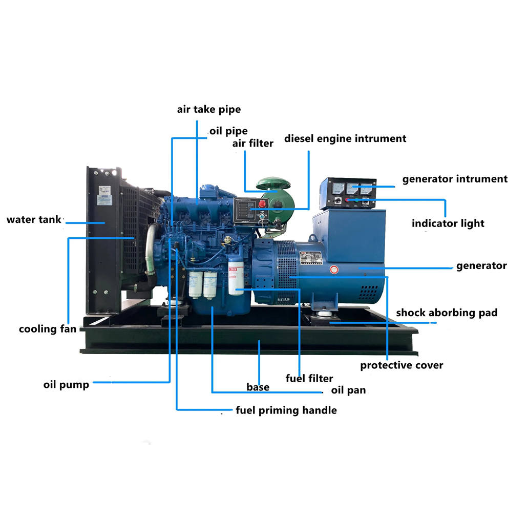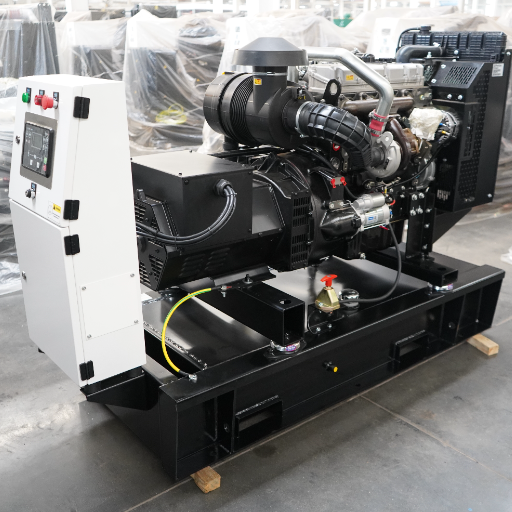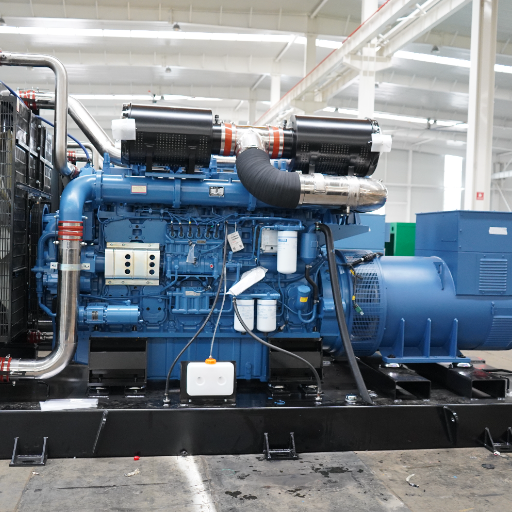

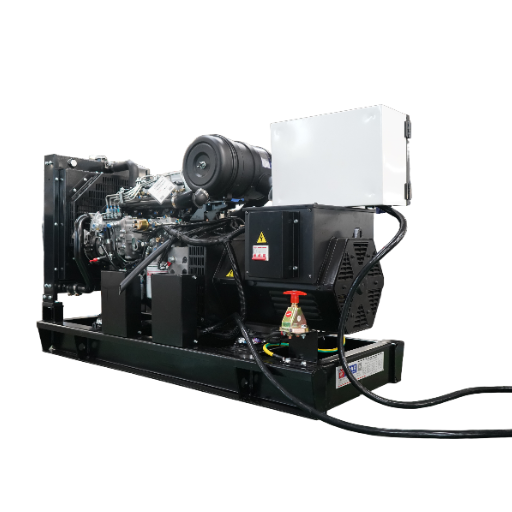
A workable generator spare parts list is seven consumable items plus whichever of about eleven components your site cannot afford to wait for. The seven cover ordinary service on any diesel set. Everything past them is a bet on how much a stopped generator costs you, and the size of the set changes how deep the bet goes.
That’s the short answer, and it’s shorter than most published lists. The reason is shelf life. Filters and rubber have a shelf life measured in years, and a standby set running fifty hours a year consumes one service a year. Stock three services’ worth and the third set expires before it’s fitted. A generator spare parts list has to be sized to the calendar, not to optimism.
This article gives you the list in tiers, shows how it changes across five power bands, and puts the arithmetic behind each line. If you have been handed a flat list of forty part names and told to buy them, this is the correction.
What this is not. It is not an inventory management tutorial. How to run a stock system, set reorder points across a fleet and choose between a spreadsheet and a CMMS is a separate job. This is about what earns a place on the list in the first place.
Key Takeaways
– Seven items cover routine service on any diesel generator: oil filter, primary and secondary fuel filters, air filter, one belt, one oil change and one coolant top-up.
– Instrument and control failures account for 25% of all diesel generator failures, the governor alone for 10%, so a controller spare outranks a third oil filter (NUREG/CR-5057).
– Most oil, fuel and air filters carry a six-year shelf life from the date of manufacture, and additive-dosed fuel filters only two years. A standby set rarely needs more than two of anything.
– The list grows with kW band, but the engine does not grow fastest. Fuel and cooling components carry the long lead times at 500 kW and above.
– NFPA 110 sets no spare parts quantity. It requires parts “as recommended by the manufacturer” and kept “in a secure location on the premises”, and leaves the decision with you.Already have a holding you suspect is the wrong shape? Send us the model list and an engineer will map it against the failure data.
What Belongs on a Generator Spare Parts List
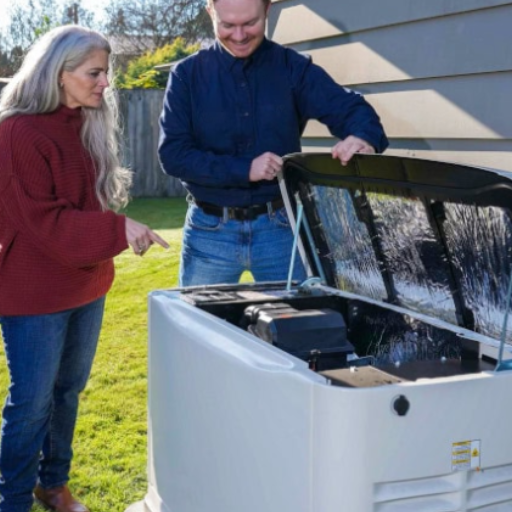
A spare part is a part you hold because you cannot wait for it to arrive. That is the whole test, and it rules out more than it lets in.
A filter you replace on a schedule is a consumable. A starter motor that fails once in eight years but takes five weeks to arrive is a strategic spare. An alternator is neither, because if it fails you are replacing a set, not a part. Three different objects, three different decisions, and most lists mix them into one undifferentiated column.
Once you separate them, the list builds itself in three steps.
Step one: decide whether to hold it
Every part faces one of three decisions.
Hold it. The part fails often enough, or takes long enough to arrive, that a shelf copy pays for itself. Filters, belts, an AVR on a life-safety site.
Order it on failure, but know the lead time in writing. Injection pumps, controllers, turbochargers. The capital is large and the failure rate on any single unit is low, so you do not stock it. But you should have the arrival time documented before you need it, because that is the number that sets your outage exposure.
Contract for it. Large or slow-moving items where a supplier agreement is cheaper than a holding. A rotor, a complete cylinder head.
The variable that sorts these three is not price. It is lead time against downtime cost. A filter at twice the price that arrives in two days is cheaper than one at half the price that arrives in six weeks, if the set is the only thing keeping a line running.
Step two: name the purpose
BRUSH, the alternator manufacturer, sorts spares into four categories by purpose rather than by component, and the distinction is worth borrowing. Published in its spare parts guidance, they are:
- Commissioning spares, consumed during installation and commissioning. BRUSH recommends they be maintained afterwards too, because the same parts get used in normal operation.
- Operational spares, covering machine protection and monitoring systems.
- Maintenance spares, replaced at scheduled outages.
- Strategic spares, components not expected to fail but held because their manufacturing lead time is long and the plant matters.
The practical consequence of the fourth category is the one most sites miss. Commissioning spares get used up during installation, and nobody re-orders them. Two years later the site discovers its filter holding is empty and assumes it was never set up.
It was. It was consumed before handover.
Rob found this out the hard way. He took over facilities at a cold-chain warehouse that had commissioned two 800 kW standby sets in 2023, and the commissioning scope had included a crate of filters, belts and gaskets. The commissioning crew worked through most of it during eight weeks of load testing. The crate left with the site rubbish, and nobody re-ordered, because the contract named nobody to re-order. The first scheduled service in 2024 found an empty shelf and raised a purchase order for parts that had been on site twelve months earlier. His fix cost nothing. He put the re-order line into the annual service contract, and named himself as the owner.
Step three: apply the test BRUSH states
BRUSH’s own formulation of the stocking decision is the cleanest published version: weigh “the likelihood of wear or failure, the consequence of failure, the replenishment time, and the opportunity cost during that time.”
Four inputs, one decision. Any list that ignores the second and third is guessing.
Tier 1: The Minimum Generator Spare Parts List
Seven lines cover scheduled service on any diesel set, at any size. Quantities assume one set.
| Item | Hold | Replace interval |
|---|---|---|
| Lube oil filter element | 2 | 250 to 500 hours |
| Primary fuel filter / water separator | 2 | 500 hours |
| Secondary fuel filter | 2 | 500 hours |
| Air filter, primary element | 1 | About 1,000 hours or 12 months |
| Fan and alternator belt | 1 set | On inspection, typically 2,000 hours |
| Engine oil, one full service | 1 change | 250 to 500 hours or 12 months |
| Coolant, premixed, one top-up | 1 | Per coolant test |
Two further items belong on this list and appear on almost none of them: a battery charger fuse and a set of control fuses. They cost almost nothing and they are among the most common reasons a perfectly healthy set refuses to start.
The intervals above are the common industrial ones. Your own manual overrides them, and for a standby set the calendar interval matters more than the hour count, because the oil degrades whether or not the engine runs.
Tier 1 of a generator spare parts list is cheap. For a mid-size set the whole holding is a few hundred dollars, and it converts a two-week parts wait into a two-hour service. There’s no argument against it.
Tier 2 and Tier 3: What Critical and Prime-Power Sites Add
Tier 2 exists for one reason: these are the parts whose failure stops the set outright. The order is not a matter of taste. It comes from NUREG/CR-5057, the US Nuclear Regulatory Commission study of diesel generator aging, where instrument and control accounts for 25% of all failures and the governor alone for 10%. Fuel follows at 11%, starting and switchgear at 10% each, cooling at 9%, lubrication at 7%.
That ordering is why an AVR and a magnetic pickup sit in Tier 2 ahead of a second set of filters, and why a fuel shutoff solenoid earns a line while a spare cylinder head does not. The data covers nuclear-service sets from the late 1970s and early 1980s, so treat the shares as directional rather than current. The ranking is the part that travels.
| Item | Hold | Why it is here |
|---|---|---|
| Automatic voltage regulator (AVR) | 1 | Cheapest way to restore output after an excitation fault |
| Magnetic pickup | 1 | No speed signal, no start |
| Oil pressure sensor | 1 | False reading can trip a healthy engine |
| Coolant temperature sensor | 1 | Same failure mode |
| Fuel shutoff solenoid | 1 | The most common single no-start cause after the battery |
| Starter relay | 1 | Cheap, and it strands the set |
| Battery, charged and rotated | 1 | Sits for months, fails on the day it is needed |
| Radiator and fuel hose set, with clamps | 1 set | Size-specific, and rarely in local stock |
| Thermostat and gasket | 1 | Cooling fault derates rather than stops, which is worse |
Tier 3 is for sets running continuously as prime power, where hours accumulate fast. A prime-power generator spare parts list looks different from a standby one, because the holding is sized against consumption rather than against the calendar. On most sites a genset spare parts holding is built around exactly the parts in these two tables.
| Item | Hold | Note |
|---|---|---|
| Injectors or nozzles | 1 set | Long lead, and a failed injector takes the cylinder with it |
| Water pump | 1 | Wear item at high hours |
| Starter motor | 1 | High-cycle duty wears it out |
| Turbocharger gasket kit | 1 set | Needed at any turbo work |
| Exhaust bellows and gaskets | 1 set | Cracks at temperature cycles |
| Filters and oil | Several services | Continuous demand, not standby demand |
The cost of a Tier 2 holding is real but bounded. One supplier publishes figures of USD 2,000 to 5,000 for a minimum on-site kit and USD 8,000 to 25,000 for a full inventory per generator. Those are indicative and market-specific, and the source gives no basis for them, so treat them as a scale rather than a quote. The point is this: a generator spare parts list at this level is a capital decision, not a purchase order.
Sizing a holding for one site or a fleet? Send us the model list and the annual running hours, and our engineers will tell you which lines belong in Tier 2 for your duty and which are wasted capital.
How a Generator Spare Parts List Changes With Size
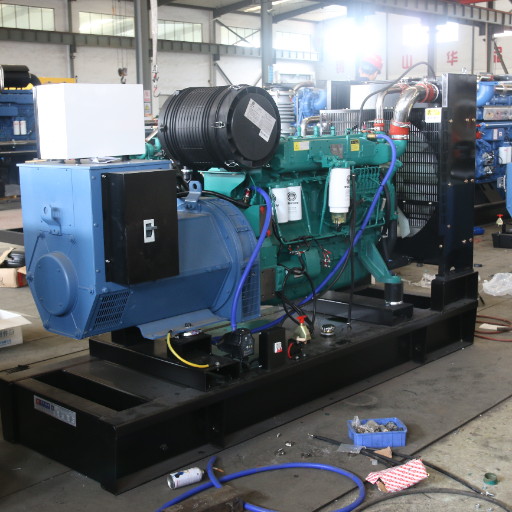
This is where published lists go quiet, and where the money actually moves. A 60 kW standby set and a 1,200 kW prime set do not share a parts list, and the difference is not simply more of everything.
| Band | What changes |
|---|---|
| 0 to 100 kW | Single fuel filter stage, one belt, one air filter. A spare AVR only if the load is life-safety. Injection equipment is cheap enough to order on failure. |
| 101 to 300 kW | A second fuel filter stage appears. Belts become a set of two or three. The AVR moves firmly into Tier 2. |
| 301 to 500 kW | Fuel and cooling components grow in both cost and lead time. Hose sets become size-specific and rarely stocked locally. An engine-mounted fuel pump is worth holding. |
| 501 to 1,000 kW | Two fuel filter stages as standard. Turbocharger and aftercooler parts enter Tier 3. Injectors are bought as a set, not as an item. |
| 1,001 kW and up | Component lead times dominate the plan. Strategic spares and a supplier contract replace most of the holding, because the capital tied up in a shelf is no longer small. |
The asymmetry is the point. The engine scales roughly with output; the ancillaries don’t. A 1 MW fuel filter isn’t five times a 200 kW filter, it’s a different part with a different supplier and a different lead time. That’s why a list copied from a smaller site fails at the moment it’s needed.
If you are specifying for a new installation, the 301 to 500 kW range and the 501 to 1000 kW range are where this stops being a consumables question and becomes a procurement plan.
How Many to Hold, and What Not to Hold
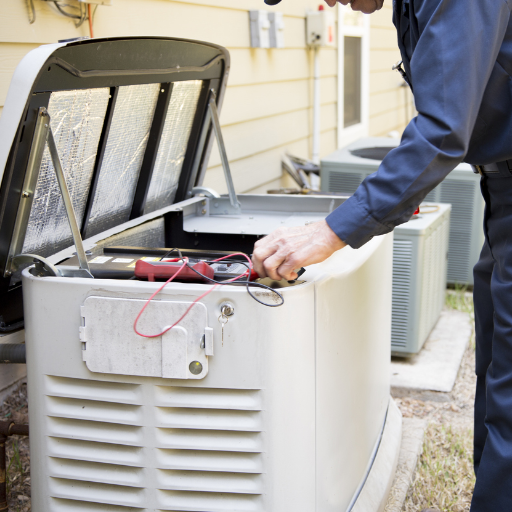
The quantity rule that works is the one Terex Diesel publishes: multiply replacement frequency by replenishment time, then add one for the unexpected.
Worked on a real shape of site. A 400 kW standby set runs 100 hours a year, and oil filters change at 500 hours, so consumption is 0.2 filters a year. The local distributor delivers in eight weeks, which is 0.15 years. Multiply and you get 0.03 of a filter.
The arithmetic says you need none.
Round up to one, and hold two. The second filter costs less than the purchase order that would replace it, and it covers the case where the first one is used on a weekend. This is the honest answer, and it is why the arithmetic matters: it tells you that holding three is not prudence, it is waste with a shelf-life expiry attached.
The two-bin method handles this without a spreadsheet. Two positions on the shelf. When the front one empties, you order; when the order arrives, it goes behind. You never count. For a generator spare parts list of seven consumables, that is the whole system.
What not to hold
Complete alternators and engines. Parts that only fit a model you are retiring. Anything where the failure means the set is replaced rather than repaired. And the third copy of a consumable.
Obsolete stock is worth naming separately, because it’s the most expensive mistake on this list and it feels like protection. BRUSH puts it well: obsolete inventory “gives a false sense of security”. It occupies capital and space, and it makes a holding look deeper than it is.
Two further checks belong in any review. Look for the same part stocked twice under different numbers, and check whether a part fits several sets in the fleet. Fleet-wide interchangeability is often the cheapest way to deepen a holding without buying anything.
Shelf Life Caps the List
Filters do not keep indefinitely, and the manufacturers are explicit about it. This is the constraint most generator spare parts lists ignore, and it is the one that quietly empties the shelf.
Cummins Filtration publishes shelf life by product category, counted from the date of manufacture. The figures below are from its guidance; the storage conditions matter as much as the number.
| Product | Shelf life |
|---|---|
| Oil, fuel, hydraulic and crankcase ventilation filters | 6 years |
| Air filters, metal end caps | 6 years |
| Air filters, polyurethane end caps | 5 years |
| Cooling system filters | 4 years |
| Fuel filters with additive dosing | 2 years |
| OAT coolant | 7 years |
| Conventional coolant | 5 years |
| DCA2 and DCA4 | 5 years |
| Fuel additives | 2 years |
| Cold-start aids | 3 years |
Storage conditions, as stated by the same source: dry, ventilated rooms at normal humidity, between minus 9 and plus 52 °C. Kept away from ozone sources such as transformers, arc welders and electric motors, and away from adhesives, solvents and oils. Packaging should be opaque if the shelf is exposed to light.
The shelf life runs from manufacture. The warranty runs from installation. Those are two different clocks, and the gap between them is where most of the waste sits.
Now put that against a standby set.
Dana plans maintenance at a textile plant, and she runs a 250 kW standby set at about 50 hours a year. A filter set lasts her a full year, because the calendar interval drives the change, not the hours.
Following the usual advice to “keep three services’ worth”, she bought three sets in 2024. The additive-dosed fuel filters have a two-year shelf life. The third set will expire before it’s ever fitted, and the oil filters will be four years old when they go on, with two years of margin left.
Two sets is the right answer for her, and it is the right answer for most standby sites. The buying decision should be driven by the calendar, not by the hour count, and the shelf life should be written on the box in marker when it arrives.
Specification note: shelf life assumes the stated storage conditions. A container that sits at 55 °C in summer, or next to a welder, does not get the full figure. If storage is poor, shorten the holding rather than trusting the label.
Bearings are the other item where the calendar misleads you. Alternator bearing life is quoted in thousands of hours, and a standby set that runs two hours a month will not reach the quoted figure in twenty years. Replace bearings on condition, not on a schedule you invented.
The Template, and Three Fields That Prevent a Wrong Order
A generator spare parts list is only useful if it is a document someone can act on. Eight columns are enough: part number, description, system, tier, quantity held, reorder point, lead time, and shelf-life expiry. Add the supplier, because the seventh time you need a part you will have forgotten who sold you the last one.
BRUSH names the four fields an order needs, and puts the serial number first for a reason: serial number, part number, part description, and quantity. Most wrong deliveries are not supplier errors. They are incomplete orders.
Three fields prevent almost all of them.
The engine serial number, not the model. A model identifies a family. The serial identifies the build, including which injectors, which turbocharger and which governor were fitted on that day.
The alternator frame and serial. Alternator parts are model-specific in a way engine parts are not. A bearing that fits one frame will not fit the next.
A photograph of the nameplate. One clean image answers more questions than an email of model numbers, because it shows the manufacturer’s own designation and the date of build together.
One more thing to expect: part numbers change. BRUSH states plainly that as designs and materials improve, the improved part carries a new number. A superseded number is not a wrong number. Ordering against the serial number is what lets the supplier resolve it correctly.
Marcus services sets on a mining site, and he learned why the serial number comes first. His parts order went out as a model number and a description, which is how most orders go out. The set had been built to a revised injector specification eighteen months after the model launch, and the parts arrived for the earlier build. Two of the four injectors fitted. The shipment had come by sea, so the correct parts took another six weeks, and the set ran derated in the meantime. The model number was right. The order was still wrong.
Frequently Asked Questions
What spare parts should I keep for a generator?
Seven consumables for routine service, plus any component your site cannot wait weeks for. The seven are oil filters, primary and secondary fuel filters, an air filter, a belt set, one oil change and one coolant top-up. Beyond that, add by lead time, not by price.
How many oil and fuel filters should I stock?
Multiply annual consumption by lead time in years, then add one. A standby set running 100 hours a year usually needs two of each. A prime-power set running 6,000 hours needs several services’ worth, and should be buying on a schedule rather than holding. The same rule sizes every line on a generator spare parts list.
Do generator filters expire in storage?
Yes. Most oil, fuel and air filters carry a six-year shelf life from manufacture, cooling system filters four years, and additive-dosed fuel filters two years. Belt and hose rubber is the shorter-lived item in most holdings. Write the manufacture date on the box when it arrives.
Is it worth keeping a spare AVR on site?
If the site cannot tolerate a week without power, yes. It is one of the cheaper Tier 2 items and it is the fastest way to restore output after an excitation fault. If the load is not life-safety and local supply is quick, order on failure.
What does a spare parts holding cost?
Tier 1 is a few hundred dollars and is almost always justified. Tier 2 runs into low thousands for a single set, and one supplier quotes USD 2,000 to 5,000 for a minimum on-site kit. Carrying cost is widely put at 15 to 30% of inventory value a year, so the depth of the holding is a capital decision.
Does NFPA 110 require spare parts on site?
Yes in principle, and no in quantity. The standard requires parts as recommended by the manufacturer or by experience, maintained in a secure location on the premises, and its recommended practice keeps them in a metal cabinet in the generator room with a set of manuals. No numerical list is mandated.
The List That Earns Its Shelf Space
A generator spare parts list is a set of purchase decisions disguised as a document. The parts are the same on every site; the judgement is what to do with them.
Four things are worth carrying out of this article.
Start with the seven. Oil filters, both fuel filter stages, air filter, belt, oil and coolant. That holding is cheap, it covers scheduled service at any size, and it turns a two-week wait into a two-hour job.
Then add by lead time, not by failure rate. Injection pumps, controllers and AVRs fail rarely. They also take weeks to arrive, and that is the number that decides whether an outage lasts an afternoon or a month.
Let shelf life set the depth. Six years for most filters, two for additive-dosed, less for rubber. A standby set rarely needs more than two of anything, and the third copy is usually waste.
Write the list down, with serial numbers. Not model numbers. A list that cannot produce a correct order on the first attempt is not a list, it is an intention.
If you are setting up a holding for a new installation, or reviewing one that has grown by accident, send us the model list and the site’s running hours. Our engineers will map the parts that matter to the risk they carry, and tell you honestly which lines are not worth the shelf space.
For the failure data behind these priorities, and for what is inside each assembly, see our generator parts index. The service intervals referenced throughout this article are set out in the generator service schedule, and the generator maintenance hub covers the work itself.