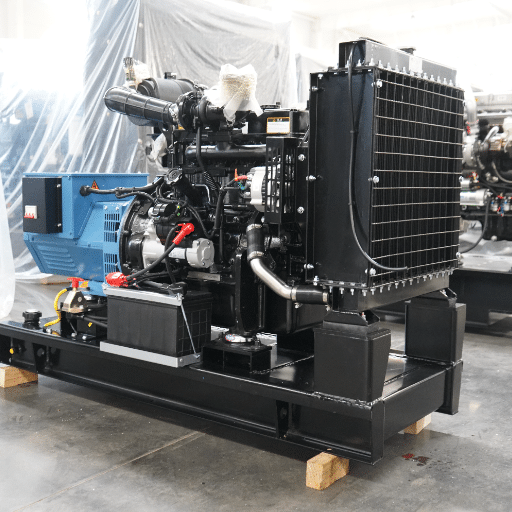


No matter if you run a ground-breaking building project or just look for the home appliances to work properly, the electric power system that never fails has now turned into one of the most important features. However, even though the reliance on electricity holds true, the two environments’ requirements could not be more different and thus demand the company of specialized solutions that work without failure. This article at hand gives a clear view of the differences between the construction-grade generators and the house generators with their common reference to the same device backed up by the functionalities, power capacities, durability, and affordable cost. It is going to be a power solution guide by means of which any professional in either the construction business or the homeowner category can effortlessly settle on one that just easily matches the needs, for their operation, whether they are a contractor or a house owner.
A Simple Understanding of Generators

A generator is one of the devices engineered to convert mechanical energy into electrical energy for the purpose of providing power in places where the standard electricity is not present. It uses an internal combustion engine and the rotor which is being spun within an electromagnetic system to produce electricity. The engine, alternator (generator head), fuel system, voltage regulator and cooling system are the main components of the generator. The collaboration of these parts is the one which generates and stabilizes the electric energy on the one hand and on the other hand creates the output as needed for various applications so long as they require electricity. Generators, be it for residential usage as a back-up system or on construction sites, are a very reliable power source especially when the electrical supply has been cut-off.
How Does a Generator Work?
A generator utilizes electromagnetic induction, which was first found out by Michael Faraday. Essentially, the generator changes the mechanical energy into the electrical one. This is made possible by the correct operation of its key parts. The motor provides the power to the generator and after being converted to mechanical energy in the alternator the energy rotates the alternator. A rotor fitted inside the alternator spins around a fixed magnetic field, hence electrical current is induced in the stator. The engine is refueled by the fuel system, be it gasoline, diesel, natural gas, or biogas.
The generated electricity would then be passed to the voltage regulator that makes it stable and safe for all the devices that are connected. Besides, a cooling system is responsible for avoiding overheating when the generator has to run continuously. Generators usually also come with automated controls and monitoring systems, the main goal of which is to increase the reliability and the efficiency of the equipment. Taking into account the above-mentioned, apparatus, the superb power is distributed all over the world in areas and situations that are totally user dependent.
Types of Generators
| Generator Type | Key Features | Best Use Cases | Fuel Source |
|---|---|---|---|
| Diesel Generator | High efficiency, durable, low operational cost | Industrial operations, backup power | Diesel fuel |
| Gasoline Generator | Portable, affordable, less energy-efficient | Home use, recreational activities | Gasoline |
| Natural Gas Generator | Clean-burning, low emissions, cost-effective | Hospitals, data centers, residential | Natural gas |
| Standby Generator | Automatic start during power failure | Commercial buildings, hospitals | Diesel, natural gas |
| Portable Generator | Lightweight, easy to transport, lower output capacity | Camping, outdoor events, small tools | Gasoline, propane |
| Solar Generator | Renewable, no emissions, requires sunlight | Remote areas, eco-friendly applications | Solar panels |
| Hybrid Generator | Combines fuel and renewable sources | Energy optimization, long-term use | Variable (fuel + solar) |
| Hydrogen Generator | Zero emissions, cutting-edge technology | Emerging hydrogen-based solutions | Hydrogen fuel cells |
| Wind-Powered Generator | Harnesses wind energy, location-dependent efficiency | Wind farms, remote power supply | Wind turbines |
| Biogas Generator | Uses organic waste, eco-friendly alternative | Agriculture, waste management systems | Biogas (organic material) |
Comparing Construction and Home Generators

Construction generators are made to be able to provide power for industry and construction. They are built to last longer, capable of operation for long periods, and able to handle the power requirement of several tools and heavy machinery at the same time. Such generators always have high wattage and can manage the fluctuating power that is an indispensable feature of the conditions of work in tough environments.
However, home generators are keeping residences in mind and so they could be seen as the opposites of construction machines. Their operation is silent, they are small, and they are specifically built for running easily only the fundamental appliances and equipment of a house such as the refrigerator, lights, and the HVAC unit. These generators do not have the same strength as the construction ones, but they are very simple for the users and they are made to cover the average power requirement of a home.
Whether to use construction or home generators depends on the specific purpose; the former are perfect for highly demanding and high-capacity venues, and the latter are more appropriate for residential backup needs.
Power Output Capabilities
Construction generators are made to deliver much bigger power output than home generators. It is usual for the power ratings of a construction generator to be between 3,000 watts and 20,000 watts or more, depending on the model and configuration. Their vast capacity to supply power equals heavy-duty equipment such as industrial tools, welding machines, and large compressors, which in turn makes the generators essential in the construction scene where power demands are both varied and huge.
On the other hand, home generators are intended to give more than enough electricity to power the essential appliances and systems in a household when there is no power. Their power capability can range from 1,000 watts to 10,000 watts depending on whether it is a portable or a standby version. They are the best versions of such systems to run efficiently within residential power needs, and they cover items such as refrigerators, water heaters, and certain lighting circuits.
An important point of difference is the present business operation. With industrial generators, one always goes for the highest possible power and long-lasting quality, while their output setting matches the moderate usage patterns of a typical dwelling. It is very much important for the purchaser to have a clear idea of the power measures in his surroundings plus the equipment that he wants to run more efficiently.
Portability Features
Construction and home generators differ in portability, which directly affects their use and deployment. Construction generators are customarily specified for harsh conditions and boosted with toughened frameworks and broad, heavy-duty tires that not only increase durability but also provide mobility on rough terrain. Thus, they can be carried along the construction site with little or no fear of damage no matter how big or heavy they are, on the whole.
Home generators, in contrast, focus on compactness, thus, making it easier for users to transport them in a residential area. Moreover, some models are designed with the handles and wheels integrated, and the wheels are smaller, making it easy to move the unit, for example, by placing it near a power source or keeping it inside a garage. In addition to that, the inverter technology in the world of electricity has been fostering the creation of very light home generators but which are as energy efficient as the old bulky ones, thus, giving the end consumer the choice between diesel generators and new age ones for either emergency situations or camping, etc. It is very critical to take into consideration the mobility needs and the environment conditions of the generator’s place of operation in order to get a generator that would be most suitable as well as convenient in terms of both performance and mobility requirements.
Cost Analysis: Initial and Long-Term
Construction and residential generators are both similar in terms of their financial considerations and differences. The initial purchase costs, operating costs, and maintenance over time are the three key categories that these financial considerations can be divided into. For heavy-duty and continuous use, construction generators are among the best choices, but their initial purchase cost will be more. The cost of such generators is generally between $1,000 and $10,000 which is a large range subject to the capacity and the amenities the generator comes with. Nonetheless, the consistent robustness and long life of these generators still translate to a good return on investment regarding professional or industrial applications.
The cost of a home generator is remarkably less at the point of sale, beginning at $500 for portable generators or $2,500-$5,000 for stationary models. Even though they are specifically made for households, state-of-the-art home generators are built with energy-saving technology, and this lowers their operational cost in the long run. The kind of fuel used is also a major player in the matter; for instance, construction generators can either be petrol or diesel powered, thus offer very reliable performance, albeit at a possibly higher fuel cost, especially in case of long-term usage. On the contrary, home generators are mostly powered by natural gas or propane, which can or cannot be as cheap as diesel and petrol but that solely depends on the regional prices and fuel availability.
The classification of generators by equipment complexity and servicing period also acts as a differentiator. Generator models used in industry require more frequent servicing given their high-caliber and more durable parts, as well as their usage which is more often diffused in time and commands a regular schedule of maintenance. On the other hand, residential or home generators usually last longer without requiring such frequent maintenance, especially the ones equipped with automatic diagnosis. Looking at these cost factors will assist the end-users to pick the generator that is best suited for their application, and that way they will be able to both save on costs right away and plan the long-term ones.
Installing a Generator

During any time one has to make the choice between a heavy-duty construction generator and a smaller home-use one, the first measure to take should be the one of specific power needs and its the usage environment of locations. Heavy-duty generator for construction sites work mainly on higher load and consumption than that of the small one that fits for domestic areas, where the power cut can happen any time.
For the most part, construction generators require only a small amount of set up but need to be sited outside in a space that is well-ventilated because of exhaust gases and noise. Quite often they will not be wired into the electrical system of the property. In contrast, home generators could have a more complicated installation process which might include connecting to a transfer switch and perhaps even permanent placement outside.
Considerations for Installing a Generator During Construction
During construction it is very important that site selection is done properly for the generator installation and it will help with safety, compliance and performance. The generator should be placed on the ground that is stable and level at a distance that is safe from windows, doors, and vents, so that fumes do not enter the building. Attention to the local building codes and regulations is a must, as these documents usually have minimum distance requirements and noise level limitations stated.
Furthermore, the generator’s ability must be of the same level as the power needed by the residence. The execution of a load assessment will allow us to select the most suitable generator for managing the loads of both types of facilities (that is, essential and non-essential ones). By putting in place an automatic transfer switch (ATS) far ahead of hand in the building process would make it easier for the power to smoothly shift to the load in case there are power outages and at the same time, it is very friendly with the building’s electrical system.
Besides, the role of ventilating and cooling is of great importance in providing a secure environment for the generator to operate. Not only will a proper airflow prevent overheating, but it will also help in increasing the lifetime of the equipment. Last but not least, is the scheduling of equipment for regular maintenance checks and the inclusion of service access points as part of the construction plan which will make generator upkeep a hassle-free activity and guarantee the reliability of the equipment in the long term. An intricate observance of these things during the building stage results in the increase of operational efficiency as well as the reduction of the adverse effects of emergencies.
Add a Generator to Your New Home
When you want to choose a generator for your new household, there are three main things you need to do in order to start: know how much energy you use, choose a fuel type, and follow the recent development of generator technology. Power essential production machines and systems during power cuts and roughly estimate the total wattage required. For residences, an automatic transfer switch and stand by generator might be the finest choice because the unit will provide power without you having to do anything. A lot of times, these generators are capable of being a support for the HVAC system, refrigerators, and security systems in the house.
Both propane and natural gas have been the most commonly chosen fuel types owing to their efficiency and accessibility. The long storage life and eco-friendliness are the things in favor of propane, while no need for refueling, which is the main point for natural gas, as it is directly connected to the municipal lines. In addition, the present generation of generators behaves the smart way through the smart technologies such as remote monitoring and self-diagnostic systems, which give convenience and reliability a boost. By making sure that the specifications of the generator are matched properly with your house’s necessities, you can ensure that despite prolonged blackouts, you are still under the same comfort and function.
Real-World Use Cases

Construction generators are required in all cases, without exception, in that they produce the needed electricity for driving the units at their worksites which are very much detached from the power sources. These generators help not only in the smooth carrying out of the operations but also in the enhancement of the efficiency of some through cutting, drilling, and welding. Additionally, they guarantee the right lighting to work at night or under bad weather.
Electricity generators for the house are necessary not only during power outages due to natural disasters, storms, or grid collapse but also in general as they help to keep the household systems operational. The smooth operation of heating, cooling, refrigeration systems and other critical stuff can be easily maintained with the help of the portable genset models and at the same time, the whole ordeal can be made comfortable for the occupants. What is more, the portable models of generators can be conveniently used for outdoor events or as the backup power source for individual appliances.
When to Use a Construction Generator
Construction generators are simply indispensable for powering construction sites in places where no electric power or very little has been developed. They are widely used on building sites for new buildings, roads, and other places far away from urban regions. They provide a constant power source for cumbersome tools, equipment, and the lighting system. Especially, power generators are very much needed during vast construction projects that require the continuous and very large power outputs, so saving time and energy is what they actually help the most apart from being the sources of energy. The new models are really friendly with the environment as they may be almost noiseless and consume very little fuel. They are used even more during times of emergency situations and disasters as they are devices for quickly restoring power in the infrastructure or utility networks that might have been down due to unexpected failures or natural disasters. The decision on which construction generator to buy will depend on the particular power needs of the site, the kinds of equipment in use, and the climate, and it hence becomes a pivotal factor in the whole project planning process.
Ideal Scenarios for Home Generators
Home generators function to be the most dependable and durable power source. There are different situations where the use of generators can be of great help. Some of these are maintenance situations, the home garden activities, garden parties, providing power to the cottage, power failure in remote places, among other things. In areas where power companies are not able to provide continuous power supply, the home generator is the best solution.
On top of those, homes in remote areas or rural locations with no stable electricity supply may derive great advantages by making generators the main or the subsidiary source of power. At the same time, the use of such systems gives a considerable impact on special events and commercial activities where extra power is needed. The more advanced units which come with automatic transfer switches and energy-saving inverter technology are a lot more reliable and easier to use. That is why besides designing modern residential energy systems, manufacturers consider home generators a must.
Successful Generator Installations
Proper generator installation is not possible without achieving through organized planning, the following of safety standards, and knowing in depth the power needs of the property. One of the most important aspects of this process is to have a load assessment done, which means the calculation of the energy required for all the key appliances and systems in order to choose the generator of the right size. Generators that are below the needed size will overload, but those that are too big will waste money on the cost of operation.
Right generator placement is a must. The laws of local zoning besides manufacturer specifications should always be complied with thus the placement of the generator should be in such a way that it is far from windows, doors, and ventilation openings thus preventing the gas ventilation from causing carbon monoxide to build up and become hazardous. Besides, the unit must be integrated with an automatic transfer switch to ensure the power supply from the generator goes on smoothly, blocking outages from causing disruptions in equipment use and similar.
Moreover, advanced technologies play an essential role in the modern official installations. For example, the monitoring systems operating in real-time make it possible for the homeowners to keep the performances, the levels of fuel, and the next maintenance via their devices. The monitoring systems not only guarantee the operational reliability but also make the generator strategies less consuming consequently prolonging the operational period of the generator in a given area.
The next and final step is that the installation of the generator is in the handle of the professionally trained workers and successfully completed. The trained labor force makes sure that the electrical codes are met and all the grounding and evaluation of the system readiness are in the best possible way. The homeowners have to do their part in solving all the above-mentioned issues for an efficient, durable and secure generator setup.
Energy Solutions and Sustainability

Renewable sources of power are the ones setting the way for an successful satisfaction of huge energy demands and at the same time lessening the injuries to the environment. Among perfect alternative are solar, wind, and hydropower resources. Solar power gets power from the sun with the help of photovoltaic (PV) cells to create energy and is suitable for use in housing and business areas with its flexibility. Wind power depends on wind turbines to change the wind’s motion into power and so is most suited for areas with steady wind pattern. Hydropower takes the kinetic energy of the flowing water to generate electricity and is usually done by means of dams.
These processes not only give eco-friendly solutions but also contribute to the minimization of the use of natural resources, hence, reduction of the greenhouse effect. What is more, many of the renewable energy sources have no or little operational expense in their lifetime, thus, the main emphasis is on the long term. If the government and even individual citizens can find the means of incorporating these sources of energy into the present power nets, they are, in fact, leading to a more earth-friendly and energy-efficient future.
Using Propane vs Gasoline Generators
| Comparison Factor | Propane Generators | Gasoline Generators |
|---|---|---|
| Fuel Availability | Propane widely available in tanks | Gasoline available at most fuel stations |
| Storage | Long shelf life, easy to store | Short shelf life, requires stabilizers |
| Environmental Impact | Burns cleaner, lower emissions | Higher emissions compared to propane |
| Cost of Fuel | Generally more expensive per gallon | Cheaper and widely accessible cost |
| Efficiency | Lower energy efficiency than gasoline | Higher energy output per gallon |
| Cold Weather Performance | Can struggle in extremely cold temperatures | Performs reliably in freezing conditions |
| Safety | Non-toxic and safer to store | Flammable and poses higher handling risks |
| Maintenance | Produces less engine buildup | May result in more carbon deposits |
| Generator Longevity | Lasts longer due to cleaner combustion | May have reduced lifespan over time |
Energy Efficiency in Generator Use
Combining the right type of maintenance, proper load management, and fuel type selection are the key elements in saving energy with generator use. The best efficiency of a generator is achieved when the unit is operated at 50-75% of its full capacity, as both very low and very high loads lead to energy losses and the generator performances are lowered. Maintenance practices as frequent oil changes, regular air filter replacements, and scheduled system inspections to a great extent keep the internal parts efficient and help to minimize fuel consumption.
Simultaneously, the type of fuel to be used plays a significant role in the topic of energy efficiency. Propane-powered generators are more often thought to be better for the environment owing to their cleaner combustion, whereas diesel-fired generators are more fuel-efficient in terms of fuel consumption per gallon due to the fact that diesel is more energy-dense. However, the long-lasting effect on the environment and functioning capacity of the plant should also be a part of the decision-making process.
By incorporating it with the technology corresponding to more efficient usage, the auto-start/stop or inverter functions will also be highly efficient. In this way, the energy consumption by the generator during the off-peak period will also be significantly reduced by these new trends. Thus, people can optimize performance while conserving resources effectively if they integrate these ideas into their systems, such as never overloading or always getting the right size of a generator for the application.
Future Trends in Generator Technology
The advancement in generator technology is unstoppable ever since by the increasing efficiency, sustainability, and reliability. One key transformation is the blending of renewable energy sources, like solar and wind, together with the normal generator systems. The usage of hybrid generators is more common now that it provides the facility to store the energy and meet the power requirements exactly, even if the weather is changing.
One more developing trend is the utilization of artificial intelligence (AI) and machine learning for the sake of predictive maintenance and operational efficiency. With AI existing and data analytics, the power units can automatically detect problems, optimize operation based on the load, thus reducing downtime.
It is also predicted that the industry would undergo a major transformation with the hydrogen powered generators’ emergence. Hydrogen, being a clean and rich energy source, is now the zero-emission alternative to the fuel-driven conventional systems. The fuel cell technology advancements make the hydrogen generators more affordable and within reach of both commercial and industrial sectors.
Last but not least, the smart grid connectivity, one of the significant technologies of the Internet of Things (IoT), is the way the future will see the generators intercommunicating with other energy systems in the most efficient way. This kind of merger increases the efficiency of the load balancing, brings about energy savings, and at the same time makes the power infrastructure more resistance. These technological breakthroughs are the calling of the high-performance, environmentally friendly solutions for the generator technology.
Reference Sources
- ScienceDirect – Applied Thermal Engineering: Access the article here
- ScienceDirect – Energy Policy: Explore the study here
Frequently Asked Questions (FAQs)
Can a portable generator be used during new construction or a new build?
Indeed, a portable unit is frequently utilized at a construction site for running power tools and temporary lighting while a dwelling is being built. It acts as a power backup and at the same time can be relocated to other areas of the house, depending on the needs, requiring, however, the preparation of the fuel-supply and safe connection to avert the use of many extension cords. When working on bigger projects, take into account the fuel tank facility and see to it that the generator is doing well based on proper maintenance. In all circumstances, compliance with local regulations and the necessity of a consultation with an electrician before it can be actually connected to the homeowner’s electrical system are of paramount importance.
Should I install a backup generator or a whole-home standby during construction?
Establishing a standby generator along with the building process helps with the smooth connection to the main panel and the reduction of installation expenses, unlike adding afterwards, which in its turn, helps to cut some of the cost. A standby generator for home and a whole-house generator usually run on a gas line or propane for back up power that is reliable and runs HVAC and sump pump loads. Selecting a standby unit provides secure and consistent power back-up, eliminating the need for the portable generator’s frequent fueling. You should have the size of the unit in (kw) done by an electrician with a license as well as the supervision of the location of the fuel line and the inlet of the house, which will be placed on the side of the house.
What are the differences between a generator and a portable generator?
Differences between a generator and a portable generator focus on the fact that while whole-house or home standby generators are made for automatic functionality and easy connection with the house’s electrical panel, a portable generator is most suited for temporary or partial loads. Standby generators are generally more durable and can even keep up very critical circuits like air conditioners and HVAC, the portable one might need to be manually started and carefully connected using extension cords or a transfer switch. Besides, take into account installation costs, the fuel source, and if you require a reliable backup source for sump pumps and essential circuits.
How does a generator impact HVAC and other heavy loads during construction?
It’s necessary to have a sufficient backup generator that will be able to provide power for air conditioners and the complete HVAC systems but you should be precise in calculating both the startup KW and the running KW. After all, the generator installation should be carried out through a qualified electrician to make sure the electric load board of your residence is applicable with the backup unit and that the fuel supply is adequate for a period of time when the power is out. The construction of the house will allow for the generator to be installed without spending much money and also afford the ingress point and fuel line to be located in a way that will provide the best results.