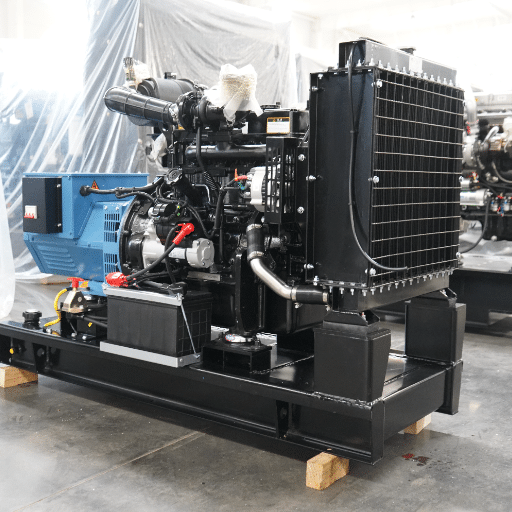


A diesel or gas powered generator is the most important component that decides the operational efficiency, performance and long term maintenance cost. Both diesel and petrol generators come with their own sets of advantages and disadvantages thus making it imperative to consider factors like fuel economy, reliability, maintenance requirements, and overall running costs before making a decision. The paper is therefore a diesel vs. petrol comparison on operationally and performance-wise, the place where the most important aspects of the engines meet and clash. When you have finished reading this manual, you will know very well which style of generator is the one you should be taking into consideration, for among other things power back-up at home, activities in the industry, or the enjoyment of recreation. Stick with our next paragraphs to find out which one of the generators we are going to compare is the one that will best match your specific needs.
Performance Comparison: Diesel vs Gasoline

Typically, diesel generators are more economical in terms of fuel in comparison with the gasoline ones, and hence they offer a higher energy yield per unit of fuel. This high energy yield of the diesel engine is the result of its greater energy density and the simultaneous less fuel per watt of power due to the fuel burnt in a more advanced combustion process at the lower engine rpm. Gasoline generators, however, consume more fuel if they are forced to have heavy loads, which is the case in total also, so those devices are outperformed by diesel generators even in the case of continuous or long-term use, from the cost standpoint.
Diesel engines are tough, heavy-duty machines capable of non-stop work, partly through the present-day natural wear and tear, and are outliving gasoline engines since the latter are operated with care. Diesel generators have a smooth construction and, at the same time, they run at lower temperatures, thus much less wear and tear is realized. Otherwise, gas-powered generators may be the lighter ones that are easy to carry around, so they are the best for temporary interruptions in the power supply or for generators for low demand loads that operate less frequently.
Differences Between Diesel and Gasoline Generators
| Feature | Diesel Generators | Gasoline Generators |
|---|---|---|
| Fuel Efficiency | More fuel-efficient, lower consumption | Higher fuel consumption |
| Engine Lifespan | Longer lifespan with proper maintenance | Shorter lifespan under heavy use |
| Operating Costs | Lower operating costs over time | Higher fuel costs, frequent maintenance |
| Power Output | Handles higher power demands consistently | Suitable for lower or intermittent power needs |
| Environmental Impact | Emits more particulates without advanced filters | Produces more carbon monoxide emissions |
| Noise Levels | Typically louder during operation | Generally quieter, especially in small models |
| Maintenance Requirements | Less frequent but specialized upkeep needed | More frequent general maintenance |
| Startup Performance | Reliable in colder temperatures | May struggle in extreme cold conditions |
| Portability | Bulkier, heavier design | Lightweight, portable for most models |
| Initial Cost | Higher initial investment | Lower initial purchase price |
Power Output and Efficiency
Diesel generators are known to deliver more power and greater efficiency than gasoline generators due to their higher power output and lower fuel consumption. Diesel engines do that with high thermal efficiency as a consequence of their compression ratios and diesel’s energy density. The same way this efficiency shows up to be the situation of lower fuel carbon on the same power water, continuously pumping in where the industrial use of diesel generators is an exception. Diesel generators’ working conditions are often stable and the flow rate is always reliable, even in the case of heavy loads, where the fluctuations are minimal.
Gasoline generators, even though not as economical in fuel use, are prompt with their initial RPMs and offer bursts of power that is compatible with uses like a small house or for residential areas. However, all that cannot be done symmetrically or too extensively for they will lose it all while working there, because of their basic structure and for gasoline’s energy density is lower than that of diesel. This reason gives them a lesser hand for the use in applications with the requirement of power that is consistently supplied over a long time. In a comparison of both, diesel generators usually win regarding being the better option for the fuel efficiency/severely needed continuous high power output tradeoff, especially in such scenarios.
Fuel Consumption Analysis
It is generally seen that the fuel consumption of diesel generators is less than the gasoline generators when physically operating at the same level, which eventually makes the diesel units cheaper for the longer time. Diesel engines work with quite high transmission efficiency, in general, they convert 45%–50% of the fuel energy to the mechanical power while gasoline engines only have an end-to-end BC efficiency of about 30%–35%. Thus, in terms of fuel consumption to yield the same electricity, diesel generators do so with much lower fuel compared to their gasoline counterparts.
And diesel fuel does itself possess a bigger energy density, with approximately 35.8 MJ/Ls as opposed to 32.4 MJ/Ls in gasoline’s case, hence making the whole diesel generator operating concept more straightforward. The combined effects of these factors make high-performance utilization particularly favorable in some cases, thus rendering diesel generators an economic and consistent choice for the longer run. However, there can be instances, especially when it comes to gasoline generators, where the kWh consumption per hour optics are higher than those of diesel indeed, primarily at or just about maximum capacity, due to the engines becoming less efficient in those conditions.
Fuel Efficiency Under Various Conditions

Diesel generators, in general, consume fuel more efficiently than gasoline generators, particularly when the latter two categories of load exist. The efficiency of these engines is mainly achieved through a combination of low RPM operation and high energy output per unit of fuel owing to the compression-ignition mechanism of the diesel engine. On the other hand, gasoline generators will typically consume more fuel because the engines of such generators must operate at higher RPMs to produce an equivalent amount of power, which in turn can lead to higher fuel expenses over time. In case of intermittent or light usage, the gap in efficiency may get smaller, yet diesel is likely to remain the king of fuel consumption. Overall, for instances where the need for a sustained, high-demand, power supply is the issue, diesel generators are most likely to be the best bet when it comes to the fuel efficiency factor
Performance in Different Environments
- High-Temperature Conditions: On the whole, diesel generators perform better than gasoline generators at high temperatures. Diesel engines are designed to run at higher compression ratios as a result they are less likely to exceed the heat range. Moreover, diesel fuel has higher energy density and less volatility, which lowers the possibility of vapor lock at high temperatures. On the other hand, gasoline generators are more likely to experience fuel evaporation and loss in performance in the same circumstances.
- Cold Weather Environments: Gasoline generators are usually better than diesel when it comes to the coldest of the cold places, where gasoline is flowing more easily than diesel at lower temperatures, and diesel may even freeze unless it is treated with special additives. Diesel generators would generally require preheating systems or the fuel to be treated to guarantee the continuity of operation, leading to an increase in the operational complexity in cold areas for example.
- Altitude Performance: Diesel generators are not affected as much by altitude change as gasoline engines since the former breathe in air under the pressure of blowing air into the cylinders by a turbocharger, which is the third or more engines installed on the former. Gasoline generators rely only on natural aspiration and mixing air with fuel for combustion, making them less adaptable in low pressure environments.
- Humidity and Wet Conditions: Since rain or high humidity will not deter operation with a diesel generator, the product is more versatile and practical in this respect, while a gasoline generator will be harder to maintain. Their electrical systems are comparatively more difficult, therefore short circuits might create more of a problem, resulting in a generator being used only for part of the day due to its performance fluctuation.
Factors Affecting Fuel Efficiency
- Engine Load and Usage Patterns: It is axiomatic that the minute one turns a generator on, it instantly starts to create power, one can immediately start using power. In the end, being in non-stop environments, we are going to develop a clear point, harsher for diesel because this kind of stress is in no way similar to continuous operation.
- Engine Displacement and Compression Ratio: The diesel engine’s higher compression ratio design helps it to have a more thorough fuel combustion and hence better thermal efficiency. Gasoline engines, with their smoother operation, on the other hand, can go up to a lower compression ratio and therefore, they can also take up more fuel for the same output, especially when they work under high loads.
- Maintenance and Engine Tuning: Air filter changes, fuel system cleaning as well as proper tuning are some of the activities that need to be done regularly and they are the key to the fuel efficiency. Diesel generators have to stick to the specific fuel injection system that is very sensitive and if not maintained well, could lead to a loss in performance. On the contrary, wrong tuning of gasoline engines leaves them with a higher possibility of incomplete combustion, thus, unutilized fuel and increased operating costs.
- Fuel Quality: Fuel quality is an important factor in the efficiency of the generator. Diesel fuel impurities can lead to the clogging of injectors and thereby the reduction of the performance, while insufficient octane in gasoline can lead to engine knocking, hence reduction in efficiency, and possibly long-term damage to the engine. The use of high-quality industry-recommended fuel becomes a major step towards keeping maximum efficiency levels.
- Environmental Conditions: Climate, altitude and humidity are factors that come into play. For example, engines running on gasoline can have the efficiency reduced in high altitude places because the thin air alters the air-fuel mixture. The diesel engines, on the other hand, are more prone to high altitude environments as they use turbocharging to compensate for air density which makes them the right choice to tackle the situation. It is also the case that either generator type may have its efficiency affected in terms of fuel combustion and engine performance due to the boundary conditions in which they operate.
Cost Breakdown: Upfront and Long-term

The main factor that is responsible for diesel generators to have a higher cost when being purchased in comparison to gas-operated generators is the more substantial-build construction which is characterized by an increased level of reliability and the cost of, as said, more complicated parts that are being produced to be able to stand high compression and continuous operation. The gasoline engines however are generally cheaper initially making them be the option for people who have a tight purse or weak need for the machine’s use.
Over time, diesel generators are generally more cost-effective due to being highly fuel-efficient and having a much longer lifetime. Diesel engine fuel is higher in energy per gallon, so therefore, these machines can go on and on using the same amount of fuel in comparison with the gasoline models. On top of that, they have been designed for heavy-duty applications, which in the end will secure lower maintenance and replacement costs as long as these are being properly operated.
Initial Purchase Costs
The beginning cost of a generator defines the option of different parameters including fuel type, output capacity, and brand. Of all the generators, the diesel ones are usually the most upfront expensive ones than their gasoline powered counterparts. To cite an illustration of that, the first cost of power output of 5000 Watts with a diesel generator can be either $3000 or $5000, while a generator with the same power of gasoline may cost about $500 – $2000. That’s just because the diesel engines are built with high-quality materials and are engineered to induce extra hardiness in addition to their having superior working mechanism which is required by the size and weight of the engines.
When gasoline-powered generators are usually cost-effective to buy, they often have the disadvantage of more frequent replacements and maintenance due to quicker wearing and tearing, especially in high-demand environments. On the other hand, the higher initial cost of diesel powered generators is typically compensated by their longer service life span and lower fuel bills throughout the years, thus, they are an economic choice for the long-term usage. Customers must make a thorough analysis of their power requirements and utilization patterns to conclude which type of generator gives the best equilibrium of not only initial cost but also running efficiency.
Maintenance and Operational Costs
Multiple elements should be thought about to provide a good understanding when you analyze the cost of maintenance and operation of both diesel and gasoline generators. Diesel-powered generators mainly stand for their long-term usage and time between maintenance. They need to be serviced less often compared with gasoline-powered generators because of their more straightforward structure and lower revolutions per minute (RPM). But when they do, servicing may well imply the use of costlier specialized parts and equipment.
Gasoline generators, in contrast, usually have lower initial maintenance costs while their servicing might be needed more often compared to others. The necessity of many different maintenance procedures is a consequence of the constant high revolutions per minute (RPMs) that result in excessive wear and tear on the internal parts. Furthermore, gasoline’s volatility as a fuel can block the passages and cause carbon build-up in the engine, thus demanding more frequent cleaning and tuning.
Running expenses have a direct relationship to the efficiency of fuel, as well as the consumption rate. Diesel is superior to gasoline in terms of energy density, and due to this, diesel generators can create more power per gallon; however, they also have lower fuel costs in the long run because of that during the time when the generator is greatly in use. On the other hand, gasoline generates a smaller unit of power per gallon, thus its use can be costlier especially in the areas where energy is required around the clock. Besides, diesel engines usually have a better thermal efficiency and hence the operational costs go down even more.
Environmental Impact of Diesel and Gasoline Generators

The environmental impact of diesel and gasoline generators has a large influence on the carbon dioxide (CO2) emission and fuel efficiency. Diesel generators in general are characterized by lower fuel consumption; which means that they have less carbon dioxide (CO2) emission for power production. The flip side is that they produce more nitrogen oxides (NOx) and particulate matter, which contributes to the air pollution, making this not good for respiratory health.
Gasoline generators are often reported to emit less NOx and particles. However, they indeed generate more CO2 because they have lower fuel efficiency. On the other hand, gasoline is more volatile, the fact that escalates the issue of fuel-related spillage or evaporation, which also increases the possibility of environmental contamination. Both gas-fired and diesel-engined generators use fuels that are the primary sources of greenhouse gases and not sustainable sources of energy.
Emissions Comparison
When looking at the emissions of diesel and gasoline generators, the efficiency and the total environmental impact should be taken into consideration. Diesel generators are usually more effective in fuel consumption and consequently they are capable of producing more energy for each gallon consumed. The higher percentage of efficiency leads to lesser emissions of CO2 per unit of electricity produced than that of gasoline generators. Still, the diesel engine is a major source of nitrogen oxides (NOx) and particulate matter (PM) emissions which are both harmful pollutants and as such, contributors to smog and respiratory health problems.
Nevertheless, what separates gasoline generators from the rest is that they are the best in terms of local air quality, having lower NOx and PM emissions when comparing to diesel and natural gas generators. Furthermore, their carbon footprint is so big that the lower fuel efficiency with unleaded petrol leads to a significantly higher level of carbon dioxide (CO2) emissions, thus worsening the greenhouse effect. Besides, the volatility of gasoline is becoming a key factor that affects the environment more since the very virtualized chances of fuel being evaporated and volatile organic compounds (VOCs) being released will definitely become harmful.
Sustainability Considerations
Diesel-powered generators are usually regarded as superior to gasoline-powered generators in terms of energy efficiency and lifetimes as well as cost of production of energy per kilowatt-hour. This extra efficiency comes from the fact that diesel fuel has a higher energy per volume than gasoline and that the power cycles of a diesel engine are at a higher thermal efficiency than the power cycles of a gasoline engine, i.e., compression-ignition vs. spark-ignition. Moreover, diesel generators generally have longer life spans and need fewer repairs per unit of the generated power.
Even though diesel generators are still very efficient in terms of power output, their toxic emissions are much higher due to the increased levels of nitrogen oxides (NOx) and particulate matter (PM) that cause health and pollution problems. On the other hand, gasoline generators might emit less particulates but at the cost of higher specific greenhouse gas (GHG) emissions in comparison to diesel generators due to their inefficiency in the use of fuel. Both generators’ energy sources are non-renewable fossil fuels, and their environmental impact is more than what can be attributed to the direct emissions they make; it also includes upstream activities like the extraction, refining, and transportation of the fuel.
Addressing the negative facets of such forms of technologies involves the incorporation of more fuel-efficient means and state-of-the-art systems for emissions control. An illustration of this is the application of biodiesel in diesel generators which could give a better environmentally friendly choice by the use of renewable feedstocks and the reduction of carbon emissions. Besides, improvements in particulate filters, catalytic converters, and engine design are needed to minimize the negative impact to the environment coming from the operation of both diesel and gasoline power systems.
Maintenance Requirements for Diesel and Gasoline Generators

- Regular Oil Changes – Diesel engines need regular changes of oil to make sure of proper lubrication and prevent getting worn or overheating.
- Spark Plug Replacement – It is suggested to check and repair spark plugs as necessary to ensure that the engine is in good condition and works efficiently.
- Fuel System Inspections – Replacing fuel filters, at first, will provide a maintenance-free experience and let the draining water be the problem of the past in terms of engine contamination prevention.
- Cooling System Checks – Monitor the coolant levels and confirm that the hoses and the radiator are in good condition to prevent overheating.
- Battery Maintenance – Regularly ensure that the battery in operation, supply energy, and only then startup is guaranteed.
- Exhaust System Assessments – Look for holes and obstructions that could result in poor performance of the vehicle or higher emissions.
Common Issues and Troubleshooting
- Engine Starting Failures: The events that happen when the engine is firstcrank such asand it is the most common of the vehicle problems. The primary causes are a low battery, a bad one, or difficulties due to the fuel filters or/and defective spark plugs. One of the ways to stop or at least reduce the problem is constantly to check the electrical connections and to change the filters too. Furthermore, keeping the fuel of the needed quality will prevent the engine from performing badly with impurities.
- Overheating: Overheating is often the result of not enough coolant, of blockage of the radiators, or of the malfunctioning of the thermostats. The monitoring of the coolant reservoirs and the cleaning of the radiator fins are indispensable. In case, after all these, the problem still exists, then the thermostat and water pump have to be checked and replaced if necessary.
- Reduced Fuel Efficiency: A very sudden worsening of the fuel efficiency is often because of securing dirty air filters, fuel injectors which were poorly serviced, or the car tires not having the right pressure. If the air filters are cleaned, the injectors are serviced properly at regular intervals, and the fuel efficiency level demands will be met. Tire pressure should be checked frequently and such that it not only aids mileage but also contribute to safety.
- Unusual Noises or Vibrations: Not common engine noise from the motor or unwanted vibrations sometimes point to an immediate trouble in some mechanical part such as damaged belts, bad bearings, or misaligned driving components. The failure rate can be determined just with a comprehensive diagnosis of the use of vibrating analysis devices and audio tests.
- Exhaust System Malfunctions: Detrimental effects on engine power due to leaks or blocked exhaust systems and at the same time heavy emissions of dangerous gases are coming out. It is a must to have inspections done regularly in the exhaust system by checking the pipes, the converters, and the mufflers. Any visible damage or noise indicating leaks should be stopped immediately to guarantee loss of performance does not go further.
Durability and Reliability Factors
Durability and reliability are the most crucial features in the evaluation of the mechanical system and components performances. The main factors that govern these features are the material, design, stress approach, and maintenance. The high-performance materials, such as the advanced alloys or composite materials, are designed in such a way to offer the maximum resistance to wear and corrosion, and hence a prolonged service life. Similarly, the next most crucial phase is the design where the proposed idea is converted into the product. Thus the design is considered more as a manufacturing undertaking than any other engineering specialty.
Natural forces are also risk factors, including temperature changes, humidity, and chemicals exposure. Special protection like coatings, thermal insulation, or sealed parts is necessary for equipment in harsh weather conditions. Moreover, by utilizing predictive diagnostic tools, the reliability of equipment is ensured through the step of early failure detection with the help of proper maintenance routines. On the other hand, real-time monitoring technologies such as IoT-enabled sensors provide continuous feedback on power system performance and thus reduce downtime and increase long-term reliability, according to industry data.
Reference Sources
- Research of Generator Gas Preparation System for Gas Usage as Motor Fuel
Read the paper here - An Empirical Cost Analysis of Electricity from Diesel Powered Electrical Generator
Read the paper here
Frequently Asked Questions (FAQs)
Which generator is right: diesel or gas for backup power?
The appropriate content that meets the “generator to buy dilemna” is highly based on individual power needs as in, these are due to the time when the generator is to be used and the availability of fuel to be used. Diesel generators are mostly in the situation of running the machine for a longer period and also they are generally heavy-duty units, and this makes it a bit costly in contrast with gasoline generators that are fit for light use and rather for occasional use. The choice of either one is a complicated process that involves a lot of, like the presence of gasoline and diesel being easier to store, safer in terms of volatility, and hence making the gas/diesel selection an important part of the backup plan construction.
Are natural gas generators or diesel generators better for home standby power?
There are merits to both natural gas-powered and diesel-driven generators as regards residential emergency power. The former can guarantee continuous power supply through the natural gas delivery network, while the latter are useful in situations where electricity is not available and there is no other utility network to rely on. If gas is readily available, one does not have to worry about the pollution that comes with fuel storage and usage, but with diesel, it is a different story as it still stands out due to the effectiveness and the durability of the engines during long-term power cuts. Furthermore, diesel generators prevail over natural gas systems because they offer stronger torque, which is a must for big loads, and also greater longevity in the long run.
How do fuel costs and efficiency stack up: generator fuel per gallon compared?
Diesel fuel is the fuel which is typically highly packed with energy and unequalled in volume, that’s why generators that run on diesel are usually more fuel-efficient when it comes to just the quantity of fuel consumed. A gasoline buying could be successful and gasoline might even be cheaper than diesel, yet diesel power generation would be the right decision that would guarantee savings in the long run as it has higher fuel efficiency. Therefore, it is a good move to apply the two types of fuel, gas, and diesel together plus other costs like storage and maintenance when you do the whole ownership cost calculation.