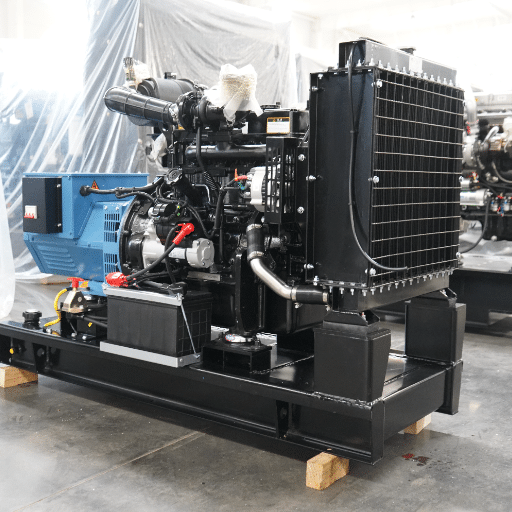


The choice between the two LPG (liquefied petroleum gas) and natural gas generator sets, as well as fuel mixtures, is one of the most critical considerations in the energy sector. The generators burn both fuels efficiently, making selecting the best fit extremely difficult due to the limited existence of other interrelated factors, the cost efficiency, environmental issues, etc. The idea here is to generate a descriptive evaluation of the differences in LPG and natural gas generators, which you can understand and weigh in confidently. Performance, sustainability or future expenses — whatever is your priority, this piece of work will enable you to decide the best suitable generator for a specific task.
Understanding Generator Fuel Sources

When looking closely at engine support systems being run by either LPG (Liquefied Petroleum Gas) and natural gas, it can be seen that they are both selected due to the capability to run effectively. There are marked differences in the properties of the two fuels. LPG is a fractionated product and comes in a liquid state, and it has high calorific value and is also non-bulky. It is apt in cases of remote areas, areas without infrastructure and where electricity is present. On the other hand, natural gas is transferred through pipe lines and repeatedly used gas has more economic value especially when there is an established supply system.
LPG (Liquefied Petroleum Gas) generators provide high flexibility and can be deployed quickly but they may need continuous refilling and suffer a limitation of fuel tank capacity. Natural gas generators, on the other hand, have relatively lower operating costs and cause less environmental harm because they emit less carbon, although they are limited to existing local gas infrastructure. This information is vital to determining the combustion mode compatibility compared to the number of hours of generator operation, area of utilisation and other concerns hence the credit specifications.
What is a Natural Gas Generator?
A natural gas generator is commonly referred to as a gen-set or just a generator because of its fuel that is natural gas in the production of electric energy, natural gas being a very good utility for the purpose. This generator will therefore be referred to as a natural gas fueled electric generating set. Natural gas is mainly composed of methane, which is CH4, and it is a clean fossil fuel that provides better energy conversion efficiency and lower pollution emissions, such as greenhouse gases and other hazardous wastes, as compared to other conventional fossil fuels, such as diesel.
Present-day natural gas gensets have been precisely calibrated for flexible use in terms of periods of redundancy and continous power, proving worthwhile for both households and for industrial complex. They undergo long testing procedures in most essential requirements systems like hospitals or computer records and control rooms. This is because they have an exellent track record of power supply during load shedding. New constructions are provided with additional features that are aimed at improving economy, reducing sound, and affordability. In addition, the available natural gas infrastructure means that refueling is no longer an issue for such plants.
What is an LPG Generator?
LPG generator is an example of power generation equipment that uses Liquefied Petroleum Gas as its raw material. LPG system is distanced where the gas is stored in a container under pressure, combines composed of propane, butane or the composite of these components, diesel fuel is converted into thermal energy by burning combustion in the system that produces electricity. This is a very convenient option because the use of LPG is very environmentally friendly, as it emits less carbon emissions compared to diesel or gasoline fuel. These devices are most frequently seen in both homes and places of business since they can easily be used to power home equipment and reduce environmental costs at the same time.
Moreover, LPG is easily available, economically efficient as well as can be stored for a long time without fluctuations which makes it a choice to protect the flow of energy for various applications. Modern LPG gensets are also equipped with additional technologies such as, self – start and other systems, remote control, increased fuel economy among other features which render them suitable for various scenarios.
Key Differences Between Natural Gas and LPG Generators
| Parameter | Natural Gas Generators | LPG Generators |
|---|---|---|
| Fuel Source | Piped natural gas supply | Stored liquefied propane gas (LPG) |
| Availability | Dependent on nearby gas pipelines | Widely available in portable cylinders |
| Storage | No on-site storage needed | Requires safe on-site storage |
| Cost | Lower fuel cost per unit | Relatively higher fuel cost per unit |
| Energy Density | Lower energy content than LPG | Higher energy content per unit |
| Environmental Impact | Lower emissions compared to diesel | Clean-burning with reduced carbon footprint |
| Initial Installation Cost | Typically higher due to pipeline setup | Generally more affordable upfront |
| Portability | Fixed to pipeline location | Portable and flexible for relocation |
| Maintenance Requirements | Moderate, depends on pipeline reliability | Higher due to tank inspections |
| Efficiency | Lower efficiency than LPG | Higher thermal efficiency |
| Lifespan | Longer lifespan, less fuel wear | Slightly reduced lifespan with higher wear |
| Climate Suitability | Performs optimally in moderate climates | Reliable in extreme cold or hot climates |
Cost-Efficiency Analysis

- Fuel Cost:
LPG is most often moreor less expensive than Natural gas in terms of use rates, making it an advantageous option, particularly where it is expected for long-run applications and if there is an existing gas grid. Although LPG can be more expensive in places without gas supply or on a temporary basis. - Maintenance Expenses:
Normally, running on gas makes it more viable due to cleaner burning hence reduced costs for internal parts not coated by soot. On the contrary, cleaning fuel lines of propane engines especially at the level of the edges may necessitate more servicing. - Operational Efficiency:
Out of gas generators are known to be more thermally efficient, that appreciably boosts their work ability to supply power to the end consumer at higher temperatures. Natural gas generators are not as efficient as stirred them but still provide good performance in use and economically more efficient in operation in the long run.
Long-Term Cost of Natural Gas vs LPG
A number of factors will be considered when comparing the cost of natural gas against the cost of LPG over a period of time of operation, which include the prevailing fuel prices, space constraints and useful coefficients. The location where the gas is available plays a role in reducing the cost as there are no transport costs or even costs of storage such as those incurred while using liquid gases and cylinder tanks. Conversely, when compared to natural gas which is generally more expensive on a unit basis, the LPG has the advantage of having high energy density and being movable. When there is insufficient access to natural gas pipelines, this move has to be taken to use the more costly fuel.
Further, employment resources is also playing an important part in the process of cost evaluation. With Standard heating value that is higher than natural gas, LPG contains each kilogram on weight more energy. This can therefore lower the demand of specific applications. However, the system is vulnerable to the high volatility of LPG prices and crude oil correlations which may expose the cost of the system to variations and create uncertainties in the budget allocations. Eventually, one has to consider the growing total cost of ownership, too. LPG systems normally need tank control processes and efforts to prevent possible leakages. Such measures are designed to help reduce the projected costs even further after LPG heating systems have been installed.
Initial Investment for Generators
When weighing the costs and benefits of installing generators to your premise several vital aspects come into play. The most basic cost related to the generator would be its scale which includes its capacity, model, fuel type, and any other extra features such as an ATS equipment or quiet technology. Most notably, portable standby generators for residential use may be found with prices ranging from between $500 and $2,000 while very large industrial generators, back-up generators for instance, cost anything between $10,000 and $50,000 depending on their power rating and features among other things.
Utility needs along the same line also contribute to the total cost for the cascade. Electrical wiring, fuel tanks, or small cylinders as well as the cost of well-performeding in the case of fixed engines where the system is being used of ventilation provisions can each double the typical purchase price. In addition, in the event of systems using diesel or LPG, there may be compliance audit fees levied which may necessitate the procurement of licenses and conduct of surveys by authorized applicable authorities which may need an estimated cost be entered into the budget.
In order to boost operational efficiency and promote the rapid expansion of companies, many firms see inverter-equipped generators and hybrid systems that include renewable energy sources. Although more expensive to buy initially, in many cases these options offer more economic benefits compared to traditional diesel generators because of the improved efficiency that they provide.
Fuel Consumption Rates and Costs
Fuel consumption levels by LPG generators can be reduced by either increasing efficiency or lowering running hours. Depending on such factors of the generator that is running on LPG, like the size, the load and the power rating of the respective generator, the LPG generator is estimated to consume, on average, 0.65 to 1.2 gallons of fuel per hour under a 50% load. That said, a generator that produces 10 kilowatts may consume up to 1 gallon of propane gas or even more during an hour, while larger commercial models with more power would consume nominally high values.
Some of the information required when dealing with costs would be to know what LPG sells at per gallon within the range of $2 and $4 in the many sites, and the fact that this costs can be enhanced by lack of uniformity by the dealers and the supply lines costs. For example, diesel generators weigh highly on energy content per gallon compared to the LPG and are more efficient however having higher gas emissions. In cases of long term use, calculating is crucial owing to the energy produced cost per kilowatt (kWh) as this steers the project in the direction of cost-efficiency. Fundamentally, the cost of LPG for generators per kWh may vary between $0.18 and $0.22 taking into account the local LPG prices and the generator efficiency values if available.
Environmental Impact and Carbon Footprint

As a rule, the emissions of methane discharge are lower when using natural gas compared to in the gasoline mode because gas burns more cleanly. The largest part of natural gas is made up of methane which is more efficient in combustion and thus has lower carbon footprint per unit of energy produced. On the other hand, LPG, although it falls under the category of cleaning burning fuels and unlike diesel or gasoline, has higher levels of carbon dioxide emissions than natural gas. Furthermore, there are potential methane emission concerns with Natural Gas as well, namely in the form of compromised systems fixtures, which would add to the project environmental fiber.
Natural gas is often recognized as more environmentally friendly, from a carbon perspective, especially if one takes gas storage and transportation factors into consideration. If any, LPG, on the other hand, may be more convenient to use in rural areas or in the case of portable generators because of easier handling, subsequent to its storage and transportation, though still with a relatively higher C02 emission when compared on a per kWh produced basis.
Comparative Emissions of Natural Gas and LPG
In the framework of the lifecycle emissions analysis of fuels like natural gas and LPG, several other considerations should be taken into account including extraction, processing, transportation, and use. Natural gas emits 56.1 kg of CO2 per million British thermal units (MMBtu) when burned, which makes it one of the low emissions fossil fuels. Hence, the biggest challenge in adopting this fuel is the possibility of methane emissions during its recovery to end uses and waste equipment thus as methane contributes over 25 times more global warming impact than CO2 levels over a 100 year time frame.
LPG, on the other hand, generates some 63.1 kg of CO2 per MMBtu during combustion. Despite somewhat higher combustion emissions compared to natural gas, LPG is at an advantage from a moderately low level of unavoidable upstream emissions, per primary energy content, it is often produced as a byproduct of crude oil refining or from processing of natural gas. This also signifies that the recovery process does not involve particular drilling activities, an aspect that potentially limits the environmental effect of the gas in distinct situations.
It is pertinent to appreciate that there is less impact on sulfur dioxide (SO2) and particulate matter emission from the use of both natural gas and LPG in comparison to coal or to heavy fuel oil; hence they serve as value additive fuels for transition as means of decarbonization. Nonetheless, the effect of each of these fuels on the environment can be great or marginal depending upon such factors as the efficiency of the infrastructure or the available methane regional management strategies and use of technologies. Detailed analyses are important to ascertain the best way of minimizing emissions in all cases.
Overall Environmental Considerations
When considering natural gas and LPG generators, a number of environmental factors should be taken into account such as greenhouse gas emissions, energy efficiency, and pollutants production. In most cases, natural gas generators emit less carbon dioxide per energy output when compared to LPG generators, particularly because natural gas burns better and has lower carbon-to-hydrogen ratio. Nonetheless, the gains may as well be eroded by any methane emissions that occur when the gas is extracted, processed, transported, or used to generate electricity. We cannot ignore that methane is a deadly gas and absorbs more heat as a greenhouse gas than carbon dioxide.
Although coming from the sources of origin of the crude oil, Liquefied Petroleum Gas as a by-product of natural gas and petroleum refinery, has been a crucial part of the raw material used in extraction, construction and therefore production of these waste streams. More particularly, compared to the use of diesel for domestic consumption or coal based power plants developed, LPG generators have the potential to be healthier alternatives since the particulate matter emissions are reduced and there are less sulfur oxides.
Also, new generator technologies can be regarded as significant development in fuel cell internal combustion engine market where the evaluation is focused on the area of the overall environmental performance. For example, high efficiency natural gas turbines can operationalize increased plant efficiencies while remaining stringent on pollutant emissions, and at the same time, present-day LPG systems are characterized by enhanced combustion schemes that aim at reducing excess hydrocarbons.
Generator Performance Metrics

When exploring metrics of efficiency in action between generators that use LPG and those that function with natural gas, there are factors that play a critical role:
- Energy Efficiency: Higher percentages of natural gas engines owing to the nature of the turbines and technology available are relatively more efficient. However, the latest advanced LPG-powered engines may be equally efficient.
- Environmental Impact: Natural gas is well known to have lower environmental pollution carbon dioxide emissions per energy unit compared to other energy sources such as LPG. However, LPG usually emits lower particulate and unburned hydrocarbon wastes, making it cleaner within certain limits.
- Fuel Availability and Cost: With natural gas, in places where there is gas pipeline coverage, the gas is easily accessible and hence much lower operational costs can be encountered. Nevertheless, for places where pipeline infrastructure is lacking, the high cost sometimes associated with the fuel takes a backseat to the image of the fuel being portable, so LPG usage is rife.
- Maintenance and Longevity: Both generator types require regular maintenance for it to work in excellent manner. However, LPG engines can be an exception where there is an extent of reduction on deposits build up and enhancing the longevity of the engine under the right maintenance schedules.
These metrics underline the importance of looking at the actual energy needs, environmental aspect and potential availability of the fuel in any given use case to decide between natural gas and LPG generators.
Energy Output Comparison
In terms of the energy output assessment, the performance of natural gas and LPG generators is determined by the energy content of the fuel utilized and the overall efficiency of the generator. LPG has a higher heating value than natural gas accounting to about 2.5 times more than the calorific value. LPG comes to about 46.1 MJ/kg while natural gas is significantly lower on a per unit energy basis at an average energy content of 38 MJ/m³. This makes LPG very productive because its generators possess the capacity to generate more power with less consumption of fuel.
However, natural gas is stored in massive tanks out in the open; on the other hand, the option of regular gas station visitation has to be considered when the gas is long-term. In the opposite direction, LPG is mostly contained in gas cylinders, and its energy release is only possible after the supply of another gas, which makes it a more valuable fuel source for the purposes of using it in distant areas or as an adjunct energy source better known as backup power. Moreover, to reduce fuel consumption and waste, generator maintenance is recommended, as the latest LPG generators feature optimal fuel use.
Maintenance Requirements for Natural Gas vs LPG Generators
Servicing of natural gas and propane gas engines and generators rest on the fact that the two fuels are distinct from each other in terms of practicality requirements that overtime impact the nature of the operation of the engine. For the most part, it is anticipated that gas-fired systems particularly effective those running on natural gas will call for less benefits to aging, because most of the appropriate fuel will be fed directly through long-distance pipelines thus on-site storage is not optimal while the chances of contaminants and degradation are low. Having admitted that, this essential contribution of gas pipeline network also means that a greater measure of care should be taken regarding such portions as pipes joints and regulators.
The LPG generators, however, like other alternative fuels, involve having some operating above-ground storage tanks where the fuel is stored, which, in turn, requires constant supervision of potential leaks, operational conditions, and the general state of the tank. Moreover, any LPG engines in question will burn fuel more completely than any gasoline engines, for they allow combustion of all carbon contained in them, unlike the latter; therefore, much of the heat goes to the LPG engine rather than to external surfaces. This means exhaust systems need less cleaning than petrol ones.
Durability and Lifespan of Generators
For various reasons, the lifespan and durability of natural gas engines and liquified petroleum gas engines vary, such as differences in fuel properties, maintenance practices and service conditions. The most important reason why natural gas engines last longer is obvious: of all known sources of energy, natural gas is the cleanest in terms of combustion. This eliminates the impurities brought about by carbon formation on various engine parts causing wear and tear more rapidly. Nevertheless, natural gas engines may face more difficult times with gas supply interruptions which may make their operation dependent on the location.
Whereas, on the other hand, LPG generators can be carried around, and are more favourable in places where there is no gas main. The burning of LPG, although it satisfies cleanliness, leaves more carbon byproducts when compared to natural gas, hence reducing maintenance periods. Modern systems of LPG with cleaner fuel usage and regulated gas combustion help to counteract these drawbacks, thereby the life of the engines. This is not to say, however, that as much attention needs to be paid to the fuel selection as well as the placement of the generator, because these elements inherently affect the system’s lifetime; something the Instruction provided is unhelpful.
Choosing the Best Backup Power Solution

If one has to choose between natural gas and LPG (propane) powered electric generators, the decision would in most cases be based on the consideration of the availability of the fuel, efficiency when it comes to cost and effect on the environment. Gas is an appropriate – rather than the only – option in a place where there is already a gas network ensuring a continuous supply of gas and no need for storage provision. It is also often significantly less expensive in such situations, especially in the case of cities and large towns.
Portable LPG generators would be handy for such sparsely populated regions where there is no pipeline network nearby. It is also worth noting that LPG can be stored in light cylinders and as such their appliances should be easy to install and maintain, offering some additional advantages. It can now also be noted that LPG has an unlimited lifespan, hence serving as an effective back up fuel source for less frequent utilization.
LPG vs Natural Gas: Which is Right for You?
In making the choice between gas and petrol for car engines, there are factors which you must weigh against some that you need, to see which will be more effective. The immediate factor is cost, which will probably be the influencing factor in making the final decision. The energy cost of LPG in relation to natural gas is often observed in many cases as high as one compared to any of the other options. However, the energy content of LPG per gallon is higher than that of natural gas. This welds some of this gap. On the other hand, unlike LPG, natural gas is transported through pipelines. This imposes costs if no pipelines already exist.
Another important factor is the ease of using the gas. Natural gas is a good choice in environments characterized by urban or suburban landscapes where gas pipelines are widespread. In contrast, liquefied petroleum gas is generally better suited to rural areas and places far from transportation because it can be furnished in or transported on the back of tanks or cylinders without pipes.
Another important factor is the environmental considerations which should always be part of the decision-making environment. Gas is also a conventional fuel that emits fewer emissions than the fossil fuels coal and oil. In particular, natural gas is a gas that is cleaner than the other gases. Nevertheless, LPG is so convenient and helps in lowering the amount of methane lost at the source in use, that it can be considered a good alternative in certain situations.
Final Recommendations for Homeowners and Businesses
The justification of use of either natural gas or LPG turbines at home or work presupposes that there are several aspects that have to be addressed in order to guarantee efficiency and cost-effectiveness. In some cases urban and suburban countries with well-established infrastructure often prefer to use natural gas generators due to in very high rates. They eliminate the need for supply of fuel without shipping tanks to the place of application reducing the amount of work involved and possible downtimes. The cost of natural gas as an energy source is also much lower in most cases, which makes it a more efficient choice for extended periods of use.
The issue of environmental friendliness and portability becomes particularly evident in the condition of limited pipeline connectivity or quite commonly referred to as LPG gensets. These can store gas and hold, until the time it is when a consumer needs it. In addition, LPG has a higher heat of combustion per gallon compared with other fuels which leads to better mileage but lower pathological emissions during very clean burning process. This factor enables LPG to successfully fit into situations where sustainable development and mobility prevail.
In the end, when choosing between natural gas and LPG generators, numerous factors should be taken into account among proximity to the gases pipe or infrastructure, sustainable concerns, and scale of work among other factors. In order for companies to estimate how applicable LPG power units for business buildings are, other factors such as advanced emission and tax policies on renewable energy may be considered. A comprehensive study of the above-mentioned variables prevents any bias and ensures that the solution chosen maintains both effectiveness and environmental stewardship.
Reference Sources
Frequently Asked Questions (FAQs)
What are the pros of a propane generator compared to natural gas?
It is very difficult to choose between hydrocarbon generators when it comes to cost per unit energy; it is convenient to eliminate diesel fuel-based generators from consideration. Air pollution and greenhouse gas emissions have been a major concern globally therefore replacing diesel fuel-based power production option with a cleaner one like propane units ought to be an introductory point in cost benefit and environmental accounting. Diesel emissions also cause health risks to workers who may inhale them or to residents living near a source of diesel fuel combustion.
How do natural gas generators compare to propane generators for backup generators?
Natural gas generators come with the ability to connect to pipeline systems, which is advantageous, especially when using them as standby power systems. This is because connection to such pipeline systems ensures that these generators get an uninterrupted supply of gas without having to organize for supplies to be transported to the site of the natural gas generator. Propane generators have been common in areas where natural gas is not readily available due to the lack of pipelines and regulatory or cost issues with cylindrical fuels. Furthermore, propane comes in a portable form, making it more accessible in large amounts than natural gas.
Which fuel type is more cost-effective: LPG or natural gas?
Economic feasibility takes into consideration factors such as the local fuel prices. For example, natural gas is more economical when piped through lines as opposed to shipping, whereas, in areas where natural gas distribution is not available, grants for the purchase of propane cylinders may be less costly. In terms of cost per hour (propane vs natural gas), the fee for propane to a propane generator is usually more than that for a corresponding natural gas generator due to various reasons such as energy density and the rate of energy extraction.
Can propane be stored indefinitely, and how does that affect generator running?
Propane can be stored indefinitely without spoilage which makes it a useful stored fuel variant for emergencies and for power outages. This is in contrast to gasoline and some other fuels as they mostly have shelf lives and would often require stabilization as well as more often refuelling or deliveries. And another thing is that unlike gas, a site that houses a propane generator will not trouble with tables when estimating the amount of residuals in the tanks. But as for which type of fuel it can run on, it is worth recalling that propane is delivered in tanks and it can be dismissed or linked with huge offshore storage tanks especially to prevent such malfunctions.