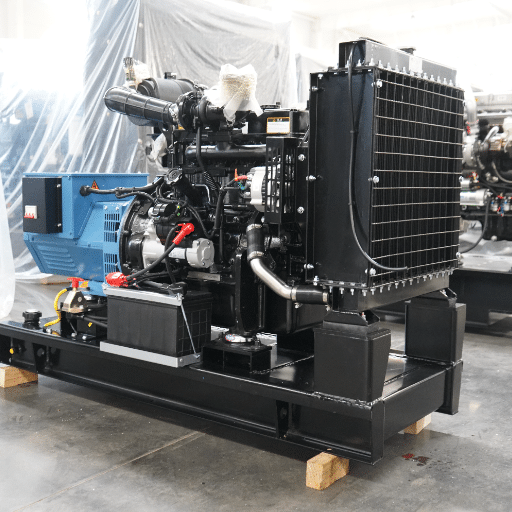


When choosing a power unit out of the range of generators displayed at a given technology store, the two most important factors to take into account are efficiency, reliability, and cost. In terms of power specificities, most potential buyers are lingering between 100 KW and 150 KW generators. They wonder what the comparison is and who can make the right choice. The economy is key to the selection of 100KW and 150KW generators. This paper seeks to highlight the differences between the two generators, providing a comparative analysis of 100 KW and 150 KW generators. Going from how they pay off to how well it works, with actual valuation from installation operational lifetime, this article takes you through all the key considerations that need to be taken into account for your investment and operation to stay balanced.
Introduction of Generator Sizes
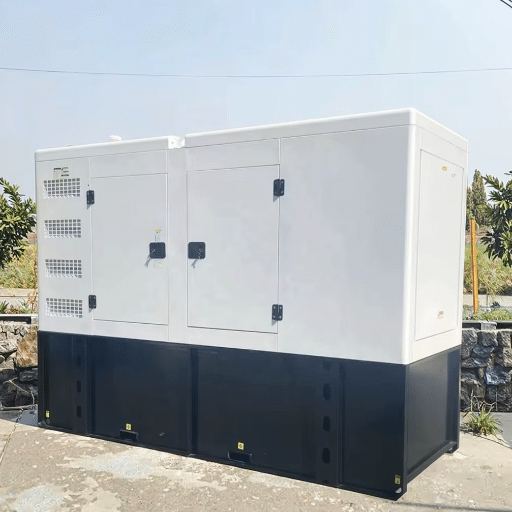
When establishing whether you require a generator of 100kW or 150kW, it is important to first establish a base of how much power the load requirement is in total. That will need to take into consideration the maximum demand load of all the facilities fed, the demand factors for the various facilities and expansion plans or any spares in the design for any eventual sudden increases.
For the purposes of the most cases, the 100kw generator is appropriate for houses and even industrial facilities that require less power and need to reduce running costs or capital expenditure. On the flip side, the 150kw generator is more popular with bigger projects, those run 24/7 or where there is need for more resistance to the heavy load.
Most importantly, the final decision will depend on the extent of your activities, the economic plays of the firm and the consumption tendency. Talking to a certified professional to carry out a structured review of the load can be very helpful as it will give the opportunity to rectify the design error of sizing.
What is a 100kW Generator?
A 100 kilowatt power generation system is a well-balanced unit developed to ensure an output of 100 kw at all times for this reason making it suitable for medium scale industrial/commercial, and backup applications. Such generators are common drive type of diesel and natural gas engines which make them highly efficient and reliable under different loads. This 100 kW rating shows that the generator is good enough to deliver 100 kW active power at normal operating conditions as required for energizing essential equipment, illumination and ventilation systems, HVAC as well as any other industrial equipment.
In the general statement above, the equipment features automatic voltage regulation (AVR) and other advanced functions providing a stable power supply suited for different systems as well as output protection. Moreover, in present times, 100kW gensets are often supplied with the remote monitoring system, which enables the user to keep track of their operational parameters and even diagnose some operational problems. These machines are engineered to withstand heavy duty utilization yet they can be applied in both prime and stand-by modes thereby serving as a reliable source of power. For any organization with power backup considerations, a 100kW is a ubiquitous power equipment. Proper sizing, selection, and maintenance of these systems is crucial in getting most benefits and ensuring that it lasts longer.
What is a 150kW Generator?
A 150kW generator is a strong power generation unit that is intended to provide 150 kilowatt hours of uninterrupted output for a certain period of time when used in medium to large-scale businesses. For instance, the utilization of such independent energy producers in industries like manufacturing, health sector, data centers, and places with many or even small businesses that need to operate on a regular basis, is still favoured than the use of the resident power. Modern, efficient generator 150kW capacity has the most sophisticated capabilities to include: automatic voltage regulators, digital controllers and also fuel management systems to increase efficiency whenever they are used.
These generators are bi-functional, which implies that they do contain operation modes as prime and standby making them useful for varying energy needs. Also, many models can be connected to gantry systems which allows for monitoring equipment performance and carrying out troubleshooting on the ground even when not physically present. It is important to bear in mind the care, maintenance and usage restrictions to ensure that the efficiency of a 150kW generator is not compromised and that its useful life is not shortened.
Key Differences Between 100kW Generator and 150kW Generator
Power Output and Load Requirements

The main distinction between 100kW and 150kW generators rests in the ability to maintain the flow of power at all emergency loads. For small scale operations with low power needs, 100 kW generator is adequate. It will find its purpose in smaller establishments serving as back-ups or as generators for moderate power. Such generators are not designed to run in containment houses. The 150 kW, on the other hand, is a generator specially made for bigger, more energy-consuming operations. This one is able to take in greater amounts of power and is more suitable in locations that have less monetary erratic power loads. This is especially useful when providing power to mechanical machines and multi-unit systems, such as the critical loads of the higher voltage.
Calculating Your Power Needs
Determining the actual power setting that is most suitable for you is not an easy task since such kind of endeavor involves several critical determinants. It is advisable that you begin by ascertaining the full flow of wattage for all appliances and systems that the generator is going to be of help to. This is both the important and all load but devices pull for an instance from the generator if possible. In addition, it would be necessary to inquire whether the application would be utilizing single-phase or three-phase power, since this kind of question will determine the choice of the generator.
Another vitally important consideration is the inrush wattage. Many electrical gadgets, especially those which are equipped with motors such as HVAC or compressors, often have a larger demand at the onset. Considering this demand will prevent the generator from being overloaded even at times of heavy loads. Moreover, in viewpoints incorporating continuous or prolonged use of the generator, the concern about fuel consumption and the capability to run also has to be recognized.
Subsequently, elevation and temperature can be regarded to alter generator operation. An increase in elevation or abnormal temperatures can largely decrease generator utilization thus lowering generator efficiency and capacity. In the latter case, there are generational performance loads and outputs for altitude and temperature that should be undertaken since the power system needs to have proper configuration based on the requirements of the operation.
Understanding Load Types: Starting vs Running Wattage
Amperage Considerations for 100kW Generator and 150kW Generator
For 100 kW and 150 kW machines, do not adopt the width of the amperage of these generators at 480v as there must be an estimation of what the total current will be at different voltages to conform to the load. Thus, the current expected to be produced by a 100 kW generator at 480v three-phase voltage is about as black as between around 120.28 amperes and that of a 150 kW generator omits around 180.41 amperes. The above mathematical equation has developed the concept of the next:
Amperage (A) = (Generator kW × 1000) / (Voltage × √3 × Power Factor)
Typically in most industrial loads, the power factor of most of the loads is expected to be 0.8. In the case of single-phase systems, the output amperage would have to be different; it would, in most situations, be more, owing to the fact that the phase multiplier (√3) is not present. It is critical to take into account power factor variations particularly on reactive loads, for instance operating electric machines or even inductive circuit systems that have dissimilar real power.
For facilities with extensive electrical consumption, it becomes necessary to carefully balance the generator’s capacity with the total current demand to prevent the generator from either being too much loaded, or being axially less loaded. Loading to the peak can also have this effect of overheating, inefficiency, or even breaking sensitive components while on the other hand the under loading can lead to what is known as wet-stacking, or more annoyingly improper combustion of diesel fuel in the engines. Accurate sizing of the generator considering the specific loads given in terms of detailed amperage is the most reliable way of protecting the plant and also ensures the long life of the generator.
The Fuel Consumption and Efficiency

Among the specific characteristics of engines, the consumption, the effectiveness, and the performance of the set are determined by the degree of operation of each of the aggregates of the power generation equipment. In this case, it will be assumed that more of the fuel will be consumed if a 100 kW generator and a 150 kW generator operating at the same fraction of power. On the other hand, a generator when operating near its maximum capacity that is typically due to a load of about 70-80% in most cases, consumes less fuel for each kilowatt produced.
- 100kW Generator:
For a 100kW generator designed to operate at full load or peak load about 7-8 gallons of fuel are required per hour depending on the fuel quality, the generator manufacturer and other conditions. However, it is less economical to operate the generator at a lower load, which in-turn can formulate undesired outcomes, such as wet stacking.
- 150kW Generator:
A 150kW generator consuming 10-12 gallons of fuel per hour under quarter load is unarguably justified. At the same time, it’s possible that even at low loads (for instance, powering 50kW of loads) fuel consumption on a per kilowatt basis may be much higher because of inefficiencies associated with underloading.
Recommendation: Depending on the scale of consumption, the more efficiently it caters to the needs, a 100kW engine might be preferable to a 150kW model as the former is better for steadier operations such as close to full loading. Arising from such necessity is the need to ensure the generator operates, taking into account specific factors that minimize fuel consumption, considering its specific range is in fuel interaction.
Fuel Types for 100kW and 150kW Generators
Comparing Fuel Efficiency
It is equally important to take into account the specific fuel consumption (SFC) in a liter per kilowatt hour and capacity of the generator when comparing the efficiency of fuels for operating with 100kW and 150kW generators. It should be noted that 100kW-rated nominal power generator working at the same 75% of power output with the new variable speed drives will consume fuel at the rate of about 0.2 to 0.25 L/kWh at 75%, 150kW 0.25 to 0.3 L/kWh, this will out at 150kW. However, sometimes the cost of operating the 150 kW generator may be an order of magnitude lower than the 100 kW generator, especially in the event of an undersized generator, because the larger generator will need more heat to purchase and operate.
Influence on fuel efficiency equally exists when it comes to output control. For example, using a generator at near or at its maximum loading angle would lessen fuel usage considerably more than running a generator at low loads, resulting in a specific increase in fuel consumption per effective generated power. To illustrate, if the operational load falls significantly below 100kW, for the 150kW machine, lowered efficiency will be noticed due to increased losses of proportional fuel.
There are a few other points for consideration such as the fuel type used and the advancements in terms of the generator. The latest version of these generators usually includes many aspects, such as variable speed systems and advanced fuel injection systems that can deliver fuel to the engine, which should ensure that fuel is used more efficiently in different sizes of generators. Nonetheless, in view of all intended uses, the operation environment is convenient not only to the technology; it is significantly geared toward what is used to the advantage of the technology, the pollution prevention of the technology.
Long-Term Cost Implications
It’s really crucial to focus on key distinction factors that drive costs in the long run and compare those in the context of a 100kW and a 150kW power generator. The most common distinctions examined in regard to return and comparison include fuel consumption, maintenance frequency and investment payback. Indeed, for a 100 kVA generator, you will pay less for fuel consumption per hour of operation, which is the more appropriate choice for low to moderate power demand steady state applications. Conversely, a 150 kWatt overall power output engine is most widely used as it is advantageous for the bigger percentage of load run hence reducing break even period due to its technological features that incorporate load optimization technologies.
The maintenance costs differ drastically. Despite being a 100kW generator, it might not need as frequent servicing as it is not as intricate in its operations, at the same time, it might not be as robust when used in highly aggressive demand conditions. On the other hand, a 150kW generator, which may have higher maintenance costs upfront, tends to have a longer longevity in service under extreme conditions because the components are of a more resistant kind.
Moreover, when the discussion is about funds, some factors regarding obsession and future flexibility come up as well. The entities that anticipate a rise in load requirements in the future are likely to find the 150kW generator more economically attractive because it cannot only deal with varying or increasing energy consumption but also the evolution of demand by simply reconfiguring new wheeled units or change-outs. In order to justify the total cost of acquiring the system, one has to consider the needs of the present and the requirements of the future by using a simple analogy of the present and the future states.
Applications and Suitability

The 100kW Generator is designed for the needs of a smaller scale, such as small business entities, residential buildings, or where only a specific level of energy is consumed. Being appropriate for people who focus on the initial expenses over recurrent simple needs, this solution becomes the least expensive. In contrast, the 150kW Generator is suitable for larger scale facilities or any kind of businesses with an increased and fluctuating power demand like factories, data centers or hospitals. Because the machine has a higher power than the former example, it has more options and can be applied successfully in instances of possible increase in energy consumption or for those applications that require a constant supply of electric power.
Ideal Uses for a 100kW Generator
A 100kW-rated generator may be seen as the best generator in the event there is a necessity to have large amount of power on a consistent basis. It is usually utilized in virtually all the industries whether they are in the manufacturing sector or any other sectors to help in the functioning of huge machines and appliances during power cuts within companies, especially during peak hours. In the case of site dispatches, machines for data storage and processing are used, and the peak requirement of this equipment is obviously the power supply which the 100kW generator backup is thought to fulfill the purpose.
Even in institutional power supply, it is still very much in cold standby demand for instance in most hospitals. This equipment is able to deal with the demands of power supply of vital equipment in a hospital. It inhibits endangering the life of any person whenever there is a loss of power. A 100kW can also be utilized in other fields, especially economic enterprises, where it is applied to power up the controlling system for irrigation, silos for grain, etc., and other machines. It is necessary in many cases of some usefulness.
Here, a different use case is the case of construction sites, drawing on portable 100kW industrial generators that are capable of silencing excessive noise caused by heavy construction machinery and lighting while in the innermost jungles or in rural areas with no power. And given that commercial structures are mostly crowded by many activities, generators mainly provide for heating, lighting and business essentials operations such as the manager’s office where its damage might interfere with customers’ confidence and revenue generation at any given time.
When to Choose a 150kW Generator
Likewise, 150kW power generating systems can be categorized as the rated power upper board and have aimed at providing reasonable, as well as continuous, sources of power to medium industrial enterprises, data processing centers, and large commercial buildings. The utilities help to cater for those businesses that depend on energy-sensitive systems like air systems, refrigeration facilities, and plant machinery. They are also very common in production industry, where it is necessary to ensure minimum interruptions as far as electricity supply is concerned in order to avert delays in production.
Moreover, less powerful units like 150kW generators is well-fitted for application as a backup power system for health care facilities which include small to mid-size hospitals or outpatient clinics. This is due to the fact that such facilities need a constant supply of power for running utility equipment which helps to care for patients, as well as for all power-intensive diagnostic devices. A 150kW generator is an unconditional savior if support is being provided by such events or temporarily prepared stands like trade shows which include the’ stage lights, loudspeakers as well as food vending’.
In the selection of whether a 150kW generator is applicable to the task, some points need considerable attention including the available part capacity, the possible amount of petrol or diesel to be consumed and the prospect of the plant being expanded for future heat demands. Research in the field of power generating equipment development has enabled the enhancement of efficiency and environmental friendliness of such power sources, thus making them economically viable for sustainable planning.
Residential vs Commercial Applications
Generators are a key piece of equipment in residential and commercial environments, mainly because these two set up vary in its power needs, purposes and different environmental ethics. In the case of residential generators, on Prime power, also referred to as true power, the size of these generators is reduced for the 5kW and 25kW to meet the basic requirements in the absence of electricity such as lighting, refrigeration, heating and so on. These generators tend to be small and operational either as moveable or, as preferred, as wall tools with automatic switches.
There is another view to these issues. Commercial generators are designed to manage much more severe stresses – of the order of 100 kW or more. They are very efficient in providing non-stop power for commercial centers, industrial plants, and critical places like hospitals. For instance, in most malls and factories, an effort is geared towards installing three-phase electric power supply so that the large machinery operating at high voltages or huge HVACs can easily be energized. Moreover, more development has been made in commercial buildings enabling a better adaptability as well as more remote operation and fuel economy to support enhanced working capabilities for a longer time.
Determining the power load profile, how often it should be running and examination of the compliance of the device with the prevailing local regulations is of great importance when evaluating the choice to select between a residential and a commercial generator. New technologies such as noise prevention and management, emission reduction methods, as well as alternative fueling options like propane, diesel and natural gas all have significant application with both residential and commercial generators.
Choosing the Right Generator Size

When looking to choose between a 100kW and a 150kW generator, one is required to ascertain the power demand precisely. This should be the case because one must start from assessing a number of factors such as the total electric load which will encompass both the critical and non-critical systems. A 100kW generator will be perfect for an establishment of average size, such as a small business or a condominium, where a somewhat reliable power source must be available. On the other hand, a 150kW generator would be ideal for a larger scale of establishment or high-powered activities like hospitals, data centers, or industries.
With that in mind, also ponder about the future growth strategies. In case you are expecting an elevation of power capacity than using a 150 kW generator is much better than having to change things later for higher wattage when need arises. . It is necessary to consider financial barriers of operating these generators, for instance, regarding fuel consumption. Consult a professional electrician or generator installer to assess your particular situation, taking local bylaws into account if applicable.
Factors to Consider When Sizing Your Generator
-
1
Load Requirements and Power Demand AnalysisPrecise estimation of loads is an important factor to determining the size of the generator to be used. A 100kW generator can be deemed suitable for small generators that have constant controls, whereas a 150kW generator can be used for peak loads because it has a larger capacity that can take care of sudden power surges. Several studies have mentioned that conducting a comprehensive load analysis is necessary in order to purchase a generator that can sustain peak load without any breakdown.
-
2
Efficiency and Fuel ConsumptionWhen choosing a generator, the consumption through accounting for these sizes is known. A 150kW generator typically uses more fuel than a 100kW power plant, but would be preferable in fuel cost management in the long run in high-energy-intensive equipment for optimum performance. Assess the numbers in the specific fuel consumption data of different generator types and compare the costs that will be taken over the longer run in order to meet power needs.
-
3
Physical Space and Installation RequirementsBe sure to take into account the amount of space and the weight restrictions on the site when purchasing the generator. The size of a 150 kW generator and the number of ancillary works may require more space and additional investment to provide special foundations or a casing. These logistical aspects should be taken into account when evaluating various options, especially for places where installing the equipment is difficult.
-
4
Compliance with Local Regulations and PermitsGenerators of 100 kW and 150 kW capacities are necessary to meet air pollution and location standards dictated by local laws. Determine whether there are particular rules regarding the noise in the area and if it meets certain environmental goals, then additional mitigation may be considered for such larger generators. Ensure the vendors and the consultants will assist in fulfilling the requirements before procurement and installation.
-
5
Future Expansion and ScalabilitySizing a generator correctly demands a strategic approach to cater to future prospects. In case there is a foreseeable growth in power requirements, the obligation to 150kW in a generator project can provide for expansion without additional expenses. On the other hand, fitting an overrated 150kW engine in any process plant where it is not required can have inefficiencies and increased cost of operation.
Using Load Banks for Testing Needs
Load banks, which are used to test and service generators, notably serve the need to compare 100kW with 150kW output units. Load bank systems are not only for the purposes of simulating electrical loads but also in understanding the dynamics of load characteristics and their effect on the loading of the generating set. By integrating load bank units together with the 100kW power source, it is possible to deduce the generator’s efficiency at multiple load conditions with ease and also pinpoint areas of concern. The use of load banks is also applicable in a 150 kW generator to assess the runtime capacity for increased handover of load.
Technical testing through the use of load banks is equally important as it enlightens on voltage regulation, frequency control and sharing of loads in the course of generation. This also provides for a thorough examination, guaranteeing that the generator under consideration produces the power that is essentially required for specific application. Also, the use of load banks is instrumental in preventing wet stacking and carbon deposits when the engines, especially diesel generators, are operated under load cycles. Load bank testing on a routine basis in industry will increase not only the dependability but also the productivity of the 100kW and 150 kW generators, in fact increasing their life span.
Reference Sources
- State of the Art in Research on Optimum Design, Reliability, and Control of Renewable Energy Microgrids
- The Use of Solar Energy by Households and Energy Cooperatives in Post-War Ukraine: Lessons Learned from Austria
Frequently Asked Questions (FAQs)
How do I size a generator for industrial applications?
Selecting the right generator for an industrial setting, between a 100kW generator and a 150kW generator can be very tricky. You should do an assessment of all power requirements by summing running loads plus starting current, especially for very large motors. Many industrial generators are 3 phase hence we also need to check the load in amps, number of breakers and wiring to present a good practical use of the unit meant for work and meeting regulatory issues. It is also relevant to determine the primary energy source or in the case of the fire outages assess the Kohler or Generac brand generators to ensure the blackout or long power cuts will not worsen the situation after the purchase of the generator.
What should an office building consider when choosing between 100kW vs 150kW?
The number of watts the office building will require needs an estimate, including HVAC (heating, ventilation, and air conditioning), lighting, IT loads in terms of VA and numbers, how long the watts will be used and when to determine the size infinitely, it is the duty of the commercial generator or carry all the loads. Determine which current shall be more convenient, whether it is single-phase or three-phase and ensure that all cables, wires, circuit breakers, switches, or any form of stagger strategies should assist in accommodating huge motors and servers. The rules governing the installation of the workplace and factors in ‘how long can an installation experience a blackout’, would influence the choice of generator.
How do I estimate the kVA and amps needed to size a generator?
One way to determine how much power is required is to perform a load study by current intensities of equipment to establish real power, which is the sum of active power and reactive power. Also, you need to consider the effect of the starting current of the motors on the required running kVA and ampacity which helps to establish whether a 100kW or 150kW set is needed. When a three-phase system is involved, then convert the total wattage into kVA by the power factor; however, check also the capacity of the breakers and the wiring.
Why does kVA matter when comparing 100kW vs 150kW generators?
kVA is related to and represents the concept of power in the form of which many generators are rated while the consumers or equipment, on the other hand, are rated in kW. Hence the generation of a power factor is essential in determining the capacity of a system. Distribution of true power with a coefficient less than one will result in the excessive production of apparent power. It may as well result in short capacity left due to the starting currents of the large motors or any other high inrush devices to the extent of the circuit breakers tripping.