
Putting a Generac generator in your home or office can be seen as a justified path to ensure that electricity is always available, even in the case when the electricity goes off, however, it is essential to be aware of how to actualize the related expenditures in order to come up with an informed decision. The charge that one might be required to pay for the installation can range significantly due to multiple aspects where the generator version, costs of site preparation, as well as expert labor charges play a big role. This helpful guide will break down the effectiveness of key factors that dictate this running up of costs, offer some examples of figures within which these costs tend lie, and present some pointers towards creating an operational budget.
Factors That Affect Generac Generator Cost
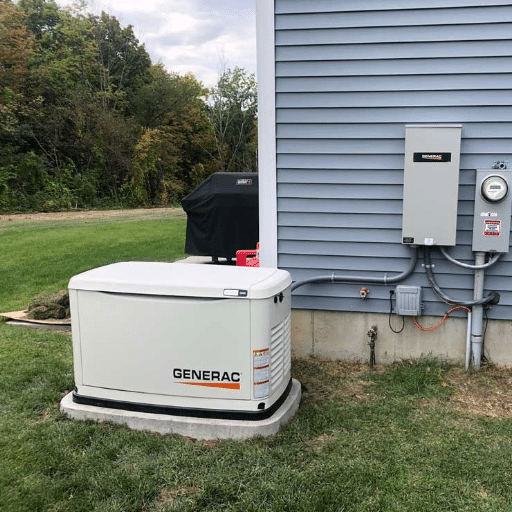
1. Size and Power Capacity
The bigger size and higher power capacity of a Generac generator play a significant role in the overall cost impacting its size and capacity. Generators that can produce larger kilowatt sizes generally cost more since they are made for more energy requirements. Home generators usually have ranges within the 7kW and 24kW mark; for commercial purposes, they can go well above that, which increases the cost.
2. Installation Complexity
One area of cost that could significantly raise or reduce its magnitude is the installation process. Some of the factors taken into account are the generator’s position, the distance to the electrical board and the power source, and the need to do any alterations or get approvals. More complicated places to install a generator will translate to more labor and possibly more material required.
3. Fuel Type
Generac generators are compatible with multiple fuel types, e.g., natural gas, propane, or diesel, necessitating different costs for installation and maintenance. For instance, natural gas systems tend to require connection to a utility line, whereas propane systems require an adequate tank.
4. Additional Features
Added functions such as an automatic transfer switch, a remote monitoring program, and an unregulated environment in an enclosure can raise the final price very easily. These additional fixtures are a good add-on, but must be chosen based on the comfort of the individual and their requirements.
5. Warranty and Service Plans
Each Generac generator has different warranty support and different service contract options. Considering the advantages and disadvantages of such a plan, while more expensive, extended warranties and ongoing maintenance agreements, which can be a significant burden, also provide a more secured environment and a more dependable power quality.
Generator Size and Capacity
Generators should have a directly proportional size and capacity with power needs. When it comes to residential settings, typical ranges are between 7 and 24 kilowatts (kW), which are enough to back up critical household systems like fridges, HVAC systems as well as lighting in case of power cuts. While we consider that the commercial or industrial buildings will require larger systems in addition to the 24 kW line, it is important to note that some generators are large enough to give as much kilowatts which exceed 150 kW. Alternatively, selecting an appropriate generator size is important in order not to compromise efficiency levels or create a situation that could cause damages to other appliances. Issues such as starting wattage needed for high demand equipment, continuous operating wattage at normal load, and bearing in mind the possible changes in load, among others, are considered.
There are many specific concerns for high-load equipment when discussing the need for a generator back up. Equipment like heating and cooling equipment, sump pumps and so on, take considerable surge load during startup which should be considered the generator is designed. A confirmed load calculation and recommendation from the experts help to determine A suitable size for the generator. Similarly, for a given generator power level, the type of fuel affects the efficiency of the system. For example, natural gas generators and propane generators are guaranteed better long-term and continuous operation as compared to gasoline generators which are meant for light and portable forms. Thus, users have to take these issues with their generator size into account so that they can purchase the one that will be most suited to them.
Type of Transfer Switch
| Type of Transfer Switch | Key Features | Best Use Case | Manual vs. Automatic |
|---|---|---|---|
| Manual Transfer Switch | Requires manual operation to activate. | Small-scale or temporary setups. | Manual |
| Automatic Transfer Switch | Automatically switches during outages. | Critical systems needing constant power. | Automatic |
| Standard Transfer Switch | Operates with a single power source. | Basic residential or commercial systems. | Can be either |
| Service Entrance Rated | Includes a main breaker for protection. | Direct connection to service panel. | Can be either |
| Dual Circuit Transfer Switch | Manages independent circuits separately. | Advanced systems with complex loads. | Usually automatic |
Labor Rates and Installation Complexity
The cost and time related to transfer switch installation include a lot of work. It, however, depends on the model of the transfer switch used. The case is mainly applied to individuals and contractors installing American transfer switches. The cost of installing the transfer switch will depend upon the design and complexity of the work. Ordinarily, charges will be $50 to $150 each hour and even more. This will depend on many factors ranging from the location of a company, the dexterity of its employees and even the nature of the services rendered.
The ease or rather the hardness associated with the installation of such machines and equipment depends on several conditions: the presence or non-availability of the existing electrical infrastructure, the location and the topography which the installation of the devices is about to be done and the adherence to the rules and regulations that are related to electrical appliance installation. The systems that require integration with the service panels or any extra element, such as the switch, will also take more time as well as costs when being put in place. This is referred to as bindings. Giving the right location can contributes in enhancing the safety precautious while still maintaining the cost as low as possible.
Average Cost of Generac Generators

The cost of a Generac generator is subject to various changes on the basis of the model and capacity of the generator. A portable Generac generator for home use alone is sold for anything between $500 and $1,500 whole house back up generator can retail at $2,000 to $5,000 depending on the rating or the brand. The cost for the installation of a standby generator is separate and is usually around the range of $3,000 to $5,000 most of the times, depending on how many factors in the site. For the most accurate estimates, please use reference materials from the official Generac website, as well as go to an approved Generac dealer.
Price Range for Different Models
Generac has a wide variety of generator designs that come to cater to these demands with the price dependent on the power output, features, and intended use of each generator. Those generators which are described as portable such as the GP Series are usually priced at $500 to $1500 providing lighting power for a temporary time and capacity. For private customers who require a total power system such us the customer standby Generators also known as the series premier models verily range from $2000 for the unit alone to $5000. Heavy machines with high power ratings plus customizations entil some much closer to $10000–$25000 and more. It is always advisable to consider the many other expenses such as including the installation, repair and guarantee considerations. Inorder to arrive at proper comparison and decision making under such circumstances it is usually advisable to go to the authorized dealer or consultant
Cost of a Generac Generator vs. Other Brands
Having looked into factors affecting the costs of Generac generators in comparison to other engines, this comparison often prove that engine size, the kind of features and what exactly the device is used for are all the factors that affect the price. It is quite common to find Generac’s residential generators priced within the range of $2000 up to $5000 depending on wattage in addition to any other capabilities such as Wi-Fi connections or monitoring from the internet. In contrast, other brands such as Kohler and Cummins are concerned with the quality of their products (equipment) and may call for sales ranks close to that of the other two, barring some variations from market to market.
The costs of portable generators are the most widely quoted prices with additional levels of the costs of the product. With base units such as portable inverter Generac over $500 are offered. At the same time, the same size of the more cost effective engines, for example the Honda or Champion, to hidden between $400 to $1,200 price. These factors mean that portable generators in the United States may vary because pumps may be imported or locally manufactured.
The cost of generators intended for commercial or industrial use is much higher on the high end than for the residential models. A Generac generator, for example, is intended for commercial use and equipped with the latest technology power management; it costs within the range of $10,000 and $25,000, while the same technology on a Cummins or CAT generator would drive the price to over $20,000 and up to $30,000 for some units with additional enhancements.
Average Cost to Install a Whole House Generator
The installation cost of a whole house generator isn’t fixed as that depends on such factors as the design, power rating, the brand, and the extent of the implementation required. As a rule of the thumb, expect to part with $5,000 to $12,000 to take home and install a residential scale generator system. This bracket includes both middle-level systems that cater to most standard installations and the higher end models which include features such as auto trans and load management.
The labor costs could range from $500 to $2000 if gas or electrical lines need to be dug out or a gas-powered generator needs to be connected to the home power supply and gas or any other fuel. Moreover, this could even generate an additional cost of between $1000 and $2500 or even more should there be any costs of doing electrical refixture or accommodating plumbing from their existing building structures. In this aspect, it’s important to enlist the services of a local contractor to maintain legal building practice and mechanical integrity.
Generator Installation Process

1. Site Assessment
Assess the power demand in the building and select the best generator size as well as location for fitting it. Choose an area that is in accordance with the local controls and maintains safe gap from the house and other buildings nearby.
2. Obtaining Permits
If needed, get the permissions, for all the works of construction, from the local authorities to comply with the construction codes and the codes applicable for electrical works too.
3. Preparing the Installation Site
Prepare the site by leveling or cleaning a surface prior to building up the generator space. This might entail the making of a concrete foundation or surface for the machine.
4. Connecting to the Power Supply and Fuel Source
Designate a location for installation of the generator and provide the transfer switch configuration. And being the case that every generator using any fuel provision like propane and natural gas will need a fuel line, it shall be arranged, put in place and made operational.
5. System Testing and Inspection
Run a full system test to ascertain that the equipment is in a proper working condition and accesses the backup power effectively during a power failure. Make arrangements for an assessment to be done, where necessary, by specified building officials prior to the construction commencement.
Initial Consultation and Site Assessment
In the prior dialogue during the first appointment, it is imperative to inquire from the owner the requested powers, cash and any likes peculiar to their households. Such proof is geared toward fitting into the request of the house. This includes critical load analysis of key energy consuming systems such as some appliances, HVACs, and the necessary power in relation to the size of the house. Once the rooms are over, one looks for the best placement of the generator in the premises during the site survey. Issues looked into here would include among other features, building regulations, distance from the utility, provision for ventilation and ground leveling in order to ensure the safety and efficiency of the equipment. Against this backdrop, it is important to examine every other aspect of the project so that a system that aligns with the house’s power arrangement and incorporates all the details of the regulations can be developed.
Permitting and Compliance Considerations
Getting the necessary permissions, as well as following all the local, regional and federal codes is crucial in installing a generator. The requirements for permits may sometimes involve the submission of a complete electrical drawing for the generator, complying with the community’s code for the prohibition of loud and disturbing noises, and seeking permission to install the generator in a specific area zoned to allow such installations. Another important consideration is to comply with the usual national codes and regulations, such as protection from noise and other materials.
For instance, it will be at the generator in compliance with the National Electrical Code (NEC) code and the Environmental Protection Agency (EPA) safety factors. It may also include checks at different points in the construction process to see to it that all construction and safety measures are within the requirements specified. If all these points are satisfied, it will guarantee the success of the installation and prevent future litigation and additional safety risks.
Final Testing and Commissioning of the Generator
The last examination and commissioning of the generator is critical due to the fact that it is aimed at testing and verifying standard operation of the system and that all safety and code requirements have been met. This step involves usually several tests, the first of which is the so-called no-load run to ascertain that the generator is properly on even though there is no electrical output. When this is established, load tests are done stepwise and increase the amount of the load to study how the generator accommodates that load at no load and even at full load.
Strict attention is paid to critical parameters, such as stability of voltage, synchronization of frequency, and generation of harmonics, while performing tests. Moreover, the measuring devices are equipped with the capabilities of efficiency and viable emissions controls ready to obey relevant in this case environmental legislation including EPA prescribed standards. Inspection of the generator stator winding insulation resistance is needed for predicting the functional ability of the in-situ windings and checking for the safety requirements.
The commissioning phase is set out to ensure that all subsystems, e.g., coolant, lubrication, and control mechanisms, are functioning effectively and are integrated. The commissioning goes further to include and use the emergency shutdown and safety systems so as to test them in order to ensure that a quick response is available in case of normal operation in the process. The detailed test logs, the exercise of keeping a test log is constant throughout the process and helps in keeping trail for the record for future use. Once all system is confirmed the generator is declared as installation ready attesting for performance and durability with restraint against fatigue and other stresses.
Understanding Generator Installation Cost Components

Calculating the expenses for the generator installation also considers the numerous building blocks, the analysis of which is essential to providing a more precise cost estimate:
1. Generator Type and Size
The type (portable, standby, or inverter) and scale of the generator play a large role in the increase in installation costs. Grade levels or permitting processes are more complex than soil tests and a more expensive investment for grading works typical for larger generators that have higher capacities.
2. Site Preparation Requirements
The geographical area where the installation will be carried out can also play a significant role in the final cost. Such jobs as ground leveling, pouring concrete bases, barriers coping or overcome problems such as special terrain or restricted access all add onto the final cost.
3. Electrical System Modifications
Linking the generator to your electrical system might require other actions to be taken, such as increasing capacity of circuit breakers, mounting the transfer switch, and replacing the wires. These can be done or not depending on the type of load the generator has and the state of the existing wiring.
4. Permits and Compliance
There are many places such as neighborhoods, towns, or cities that have this kind of regulations that are a must before the devices get installed. There may be charges depending on where this is done. One must pay for this so as to ensure that the building complies with the building codes, and safe for people as well as the environment.
5. Labor Costs
Hiring a professional often involves calling in electricians or contractors. As expected, labor costs will vary by region and the amount of work involved during an installation.
Considering these components makes it easier to plan for costs hence the unrealistic expectations of the client are tempered, while the completion of the installation work is made in line with the expected technical and regulatory standards.
Equipment and Material Costs
In any project budget, there is typically a substantial percentage of what is allocated to the purchasing of equipment and materials; this is variable depending on the project’s features and on the desired quality. For the electrical installations to work, there are things such as wiring, circuit breakers, junction boxes, conduit, switches, and outlets. The cost of all those things is also contingent on factors such as how superior the material grade is, the reputation of the brand and if the material has passed certain safety evaluations such as UL, or even conformed to standards of other safety certifications in the likes of CE.
In this context, newly constructed projects may also require innovative technologies, such as smart home systems, green devices, and alternative energy sources. Incorporating these innovations not only requires alternative materials such as inverters or batteries but also increases the overall cost while enabling the project to operate in a more energy-efficient state.
It is important to account for the prices of the main commodities that go into production and that are subject to frequent changes. In instances where it is necessary and if the developer is a large customer, it is always possible to negotiate wholesale discounts, ensuring at the same time the good quality and consistence of supplies. It is not difficult to calculate and estimate expenses and plan expenditures when one is managing a project budget.
Labor Costs Breakdown
The expenses are also greatly influenced by the labor costs which include a whole range of specifically calculated costs. Various factors that determine labor costs consist of the level of proficiency available and regional wage wear and tear rates in adition to the complexity of the duties. For example, such jobs as electricians, air conditioners and refrigerator mechanics, and structures are usually well paid within the job market because of the profession and the need of operations of a certificate issuing process.
Indeed, recent statistics on the market indicate that electricians are paid an average of between $25 and $40 an hour, whereas unskilled labor, such as general construction, is rewarded at a rate of $15 an hour on the low, $25 being a high – with much difference being as a result of geographic location and demand. In addition, the cost of labor should account for overtime pay, legal benefits such as medical and workers compensation, and costs of training. Nevertheless, it is possible for projects to minimize expenses on labor cost without endangering the quality of works by ensuring that proper planning and organization is done to avoid unnecessary idle time of the workers
Additional Expenses and Considerations
In the estimation of the costs of a given project, there is the consideration that there will be other “extra” costs that go above the direct material and labor costs among other additions in the budget. In some cases, there may be costs associated with renting or buying equipment, getting licenses and clearance as well as in transport services. The costs have a wide range of variation since the cost of purchasing equipment such as cranes and excavators on the one hand is not the same as others. It can also be very expensive to comply with the permitting requirement in other cases depending on the scale and location of the works.
Another important thing to take into consideration is the utilization of facilities during the period of construction, that is, the energy, water, and fuel. The energy utility costs that might be needed on the basis of a project mostly the big ones to be able to run the equipment could be very high and they need to be carefully picked in the financial scheduling. Also, the waste management and site cleaning expense is added to the operational budget and care should be taken to avoid it unnecessarily since offending disposal services may cause fines or even a suspension.
Then, the contingency reserves become so important in order to cover the uncertainties costs such as modifications in the design, changes in prices of material or even the situations which have not been anticipated during the setting of the cost plan. It is usually advised in the best practices to include about, 5% to 10% of the project budget as allowances for these variations. In this manner , by scoping and costing out these extras, project management can give a project’s team the boost in ensuring that the project will both achieve a fiscal breakeven and control funds.
Comparing Standby Generators for Home Use

To make sure the home standby generators meet the needs of house residents, it is necessary to study their characteristics such as model capacity, fuel type and reliability. Begin with counting the aluminum’s demand in your house like the heating, unit, refrigerator and any critical medical equipment. Generators have the normal kilowatts (kW) ratings, so you should take it off from your total load with some safety factor.
Following the power flow, the type of fuel available will be factored which is a critical component in the selection of the best generator. It is possible to use one of the three types of fuels, gasoline, propane, or diesel in most of the generators sold for house use. Natural gas is more desirable in most cases because it is always available and can be directly connected to the gas industrial networks, while propane has lower emissions, and almost does not degrade its quality over time. Diesel, on the other hand, is more effective and strong, but its efficiency comes with a price because of the fact that it has to be cleaned and put in good condition after some time.
Lastly, paying attention to dependability and imaging properties would be very beneficial. Quantifying aspects of a brand means evaluating automatic transfer switch generator market place for inclusion when analyzing on generators, product designs with low cost of maintenance and strong warranty protection of the consumer. The way how to know generators that are specifically used with facility construction or repairs and customer service reliability is to carry out a research and look at the feedback given on the brand.
Whole Home Generator vs. Portable Generators
| Key Point | Whole Home Generators | Portable Generators |
|---|---|---|
| Power Capacity | High, powers entire home | Limited to specific appliances |
| Installation | Permanently installed, professional | No installation, plug-and-play |
| Fuel Source | Natural gas or propane | Gasoline or propane |
| Maintenance | Requires periodic professional check | Minimal, user-performed |
| Portability | Fixed in one location | Fully portable |
| Noise Levels | Quiet operation | Can be loud |
| Cost | Higher initial and maintenance cost | Lower upfront cost |
| Automatic Operation | Yes, with transfer switch | Manual start required |
| Weather Resistance | Weatherproof design | May need shelter |
| Use During Emergency | Reliable for extended outages | Short-term, limited use |
Benefits of Choosing a Generac Generator
1. Reliable Backup Power
Generac generators are designed to prevent power supply shortages especially in long term downtime events as they have servicing aspects. Use of transfer switches in their designs guarantees comfortable running of the most essential tools and gadgets like air conditioners and freezers, as well as any life or health equipment.
2. Fuel Efficiency
Generac models are well-known for their usage of game-changing energy management systems that minimize the energy consumed as they can run for long hours on little fuel. A good number of the systems have the capability to simultaneously run on more than one fuel such as natural gas and diesel and liquid petroleum gases to compensate for the availability of the main fuel being low.
3. Weather Resistance
Generac generators are robust gadgets that can withstand energy fluctuations and in extreme cases, rain and snow let alone high-speed wind. This is because the casual everyday construction has been strengthened.
4. Automatic Operation
Generac builds their generators so that you do not have to operate them manually. Once a transfer switch is installed, the generator recognizes power failures without human intervention and starts working immediately, ensuring a seamless and stress-free switch process.
5. High Power Output
The range of Generac generators vary for apt sizes right from as low as 7.5 kW up to 150 kW plus, making it possible to cover almost any customer need. Both houses and businesses including high-rise buildings with large corporate offices can use these devices freely. The options are limitless.
6. Quiet Operation
Generac standby models operate at much quieter levels due to insulated housings and specially designed noise isolation technology. This is to ensure minimum distraction to those in the buildings.
Reference Sources
Frequently Asked Questions (FAQs)
How much does a Generac generator cost to install for a home generator?
The cost of installing any Generac generator will depend on the size being installed as well as how much work has to go into the installation. The price can also depend on if you need a natural gas delivery and if so, running a gas line is necessary or if a propane tank will be needed, or whether the electrical panel interruptions or service disconnect panels will be updated. You should be prepared to cover total installed cost including transfer switch and the expense within the region as it is usually a norm for generators to be installed through payment or in the form of charges for a permit. This sum may also go up when some extras are included such as remote or 10 year warranty.
What is the generator installation cost for a whole-house generator?
Whole-house generator installation costs come at varying price points and are dependent on the volume of the generator required to accommodate the entire house, also known as a 14kW or larger generator. There are additional costs that have to be considered proportionate to the task, such as running a natural gas line, potential panel upgrades, or licensing fees which are raising the bar of the total cost. Most of the time, the cost also includes, in addition to the generator and automatic transfer switch (ATS), the cost of the installation. However, in some circumstances, the installation may require more effort to be put in if the electrical panel is old. Homeowners’ reports have a certain extent of flexibility because of the said factors and the difficulty of the work involved.
What affects the Generac generator cost and installation cost?
Generating ideas such as the specific size of what generator is needed or whether the generator will run on natural gas or propane and if it is needed will render it to be rationally acceptable. Including the installation job, the services of manpower and permit experts become necessary and there is additional cost in the electricity panel or service disconnect upgrade which may be fix the generator to be determined. Other factors include the average cost in your area, as well as the additional features if any like remote monitoring or a 10 year warranty. Before including the cost of a generator installation in a policy review, client options and how they should be accompanied by an assurance of the availability of fuel and maintenance services.
How much will a standby generator cost, and what are the key cost components?
The costs of energy supply have different items, such as the generator, the location, paperwork issued by the local or land Development Authority gas connection electrical panel while the generator is being installed, or the labor cost to get the entire equipment installed. In addition, if the work necessitates that a customer be supplied with a propane tank or involves further extension of the gas line, these costs have to be added to the price. Installation price can however vary based on the difficulty level of establishing such facilities. This cost includes the cost of the generator that is necessary to power a house of that size as well as a house that is bigger than that, which demands a fixed full house generator within the new housing scheme.