
Industrial generator OEM service is not a list of things a factory can do for you. It is a set of three clocks that start at different moments, and none of them appears on the quotation.
The warranty clock starts on an event most buyers never write down. The approved state of a component lapses the moment a substitution is made. The evidence a claim rests on starts disappearing the day the unit ships.
Most buyers stop asking questions at the purchase order. That is precisely the point at which these three become answerable, and precisely the point at which nobody asks.
If you run a branded programme, you already know the commercial side: margin, territory, landed cost. What follows is the part that only shows up in year two. You will learn when coverage actually begins, what quietly resets an approval, what a claim needs to survive, and the six clauses that protect each clock.
Signing a programme agreement soon? Send us the market, the volume and the proposed terms, and we will tell you which clauses are missing →
الوجبات السريعة الرئيسية
- An OEM service programme is governed by three clocks: the warranty start event, the approved state of a component, and the claim evidence. All three can expire before anyone notices.
- The warranty start is a contract term, not a default. Our published standard is 12 months from commissioning or 18 months from shipment, whichever expires first, and the second number exists because the first one depends on a record someone has to file.
- ISO 9001:2015 clause 8.5.6 requires a factory to review and control changes and retain the records. It does not require the factory to tell you. Notification is a clause you negotiate.
- A first-article approval attaches to a configuration, not to a part number forever. A substitution can leave the nameplate, the rating and the paint unchanged.
- A claim fails in two predictable ways: no maintenance record, or no proof the failed unit is the unit. Both are the buyer’s records to keep.
What Industrial Generator OEM Service Covers, and What It Does Not
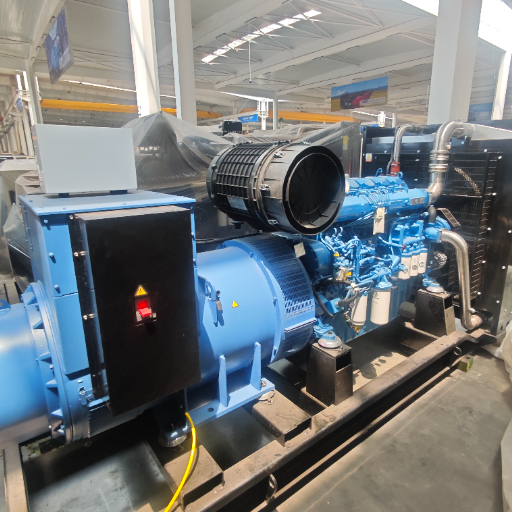
Industrial generator OEM service is the set of obligations that govern a branded generator after it leaves the factory. Those obligations cover four questions: who starts the warranty and when, who may perform work under it, how changes are notified and approved, and what evidence supports a claim.
That definition is deliberately narrow, because three different things get called OEM service and conflating them is how programmes go wrong.
The build service is what the factory makes for you: the branding and configuration work that turns a standard set into your product. It is what most supplier pages mean by the phrase, and it is a capability question you settle before ordering.
The supply service is what the factory sends you: training, spare parts with a stated lead time, an escalation path. It is what a distributor negotiates, and the support package a distributor should expect sets it out properly.
The in-service service is what happens to a unit in the field, years later, in a country the factory has never visited. Who diagnoses it. Who pays for the part. What happens when the machine no longer matches the one approved.
This article is about the third. The first two are visible, and you can compare them across suppliers. The third is invisible until it is expensive, which is why an OEM generator service programme belongs in the agreement rather than in the discovery.
The Warranty Clock: When Coverage Actually Starts
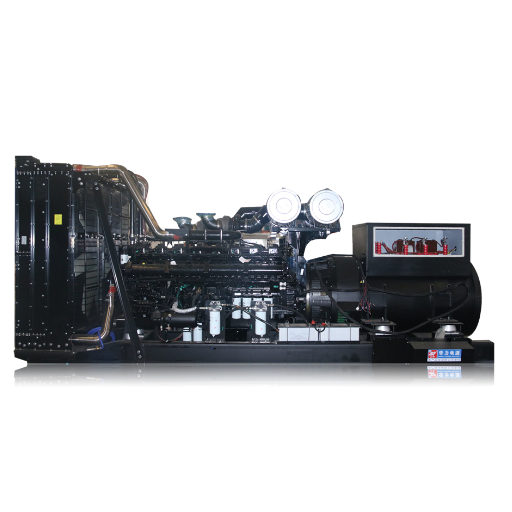
Every warranty has a term and a start event, and buyers negotiate the term while ignoring the start. The term is the number on the quotation. The start event decides whether you get the coverage you paid for.
Four events could plausibly start it, and they can be months apart:
- شحنة. The factory’s clock, starting when the unit leaves the works.
- الوصول. When the unit clears the destination port.
- التجهيز. When the set is installed, tested and placed in service.
- First load. When the unit first carries a real load.
A set that sits in a distributor’s warehouse for five months has consumed five months of a shipment-based warranty without a single running hour. That gap is structural, because the factory cannot see your warehouse.
Our own published standard is 12 months from commissioning or 18 months from shipment, whichever expires first. The first number gives the buyer a full year of service life. The second stops the clock running indefinitely on a unit that is never commissioned. A contract with only one of them has a hole in it.
Lucia found the hole. Her company took delivery of four 250 kVA sets in November for a project that slipped to the following spring. Nobody filed a commissioning record, because commissioning belonged to the installer and the installer was not her company.
When an alternator failed eleven months later, the claim was assessed against the shipment date rather than the commissioning date. Five months of coverage had gone to a warehouse shelf. The start event was never assigned to anyone, so the default applied.
There is a second layer, and it belongs to the engine rather than the set. Engine makers track a warranty start date against the engine itself, on the engine dataplate record. That is a separate clock on a separate serial number, so ask what it reads rather than assuming it matches yours.
ماذا أكتب: name the start event, name the long-stop, and name who records the date and where. A generator warranty start date that depends on a record nobody owns is a warranty that starts on the ship date.
The term itself, including what voids it, is set out with the standard construction here. What belongs in this article is the clock, not the term.
Why an Approved Component Stops Being Approved
A first-article approval feels permanent. You approve a sample, the run begins, and the machine you approved is the machine you get. In practice the approval attaches to a configuration: the specific combination of engine, alternator, control module, canopy and finish in the sample you signed off.
Change any one of those and the approval no longer describes the machine. The nameplate, the rating and the paint may all be unchanged. However, none of that tells you what is inside.
Substitutions arrive by ordinary routes: a different alternator maker because the original had a lead time, a control module revision because the supplier superseded it. Each is defensible on its own, and each is invisible from the outside.
Here is the part most buyers do not know. ISO 9001:2015 clause 8.5.6 requires an organization to review and control changes for production, and to retain documented information describing the results of the review, the person authorizing the change, and any actions arising from it.
Read that carefully. It obliges the factory to decide and to record. It does not oblige the factory to tell you.
That is not a loophole. 8.5.6 is a quality-management requirement, not a customer-communication one. But it means the notification you assumed you were getting is not automatic. It is a clause, and if it is not in your industrial generator OEM service agreement, it does not exist.
ماذا أكتب: notification before the change takes effect, not after; an approval right, so a substitution can be refused rather than merely reported; and a defined treatment of units already built, because a change approved in month nine does not help the forty sets shipped in month six.
Two of those are routinely dropped, and they are the expensive two. Notification without an approval right still leaves you receiving a substitution you cannot refuse. An approval right covering only future builds leaves the shipped fleet stranded.
The notification has a name in most supply agreements: the engineering change notification generator clause. It specifies how far ahead the factory must write, what the notice contains, and what happens if you do not respond in time. Ask to see the form before you sign, not the promise.
Ruben’s programme had all three, which is why he knows what they are worth. His factory notified him of an alternator substitution six weeks before it took effect, datasheet attached.
He refused it: the replacement had a different short-circuit rating, and his tender documents named the original. The factory sourced the original for the remaining run. Without the clause, he would have learned about it from a customer.
What this section is not: it is not parts continuity after a model ends, and it is not which surfaces carry your brand. Both are separate subjects with their own answers.
The Record That Decides an Industrial Generator OEM Service Claim
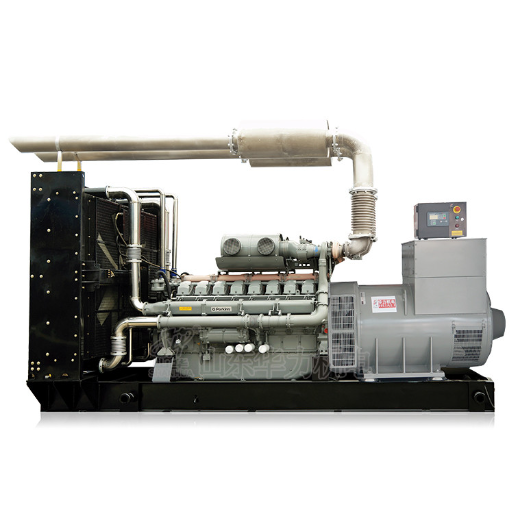
A claim is an argument, and it is won or lost on documents created long before the failure. The record has two halves, and only one is about the machine.
The first half is identity: which unit is this, and what is inside it. A generator carries four identifiers rather than one, and how to capture and map all four at build is covered separately. A unit that cannot be identified cannot be claimed against.
The second half is history: what happened to this unit, in order, since commissioning. Which fault, on what date, at what hours, with which part fitted and by whom. That is not a build record. It is a service record, and it is the one the factory will ask for first.
Identity tells you what the machine is. History tells you whether the failure is a defect or a consequence.
The evidence set a claim usually needs:
- The unit identification, including the engine serial.
- The fault, described as the controller reported it, with the code.
- The date and the hours at failure.
- The maintenance record covering the period before the failure.
- The failed part, retained rather than replaced and discarded.
- Photographs or logs showing the condition at discovery.
A claim fails in two predictable ways, and both are the buyer’s side of the table. The first is no maintenance record, which converts a defect into an unanswered question about care. The second is no proof of identity, which happens when the engine serial was never recorded against the set serial.
Neither is dramatic. Both are ordinary administrative gaps that look trivial at commissioning and decide the outcome at year four.
ماذا أكتب: the evidence set, named, and who holds each item. Generator warranty claim evidence is a short list, and a factory that specifies what it will require has told you what it will accept.
The technical file is a different document with a different owner, and who holds it, and for how long, is a compliance question rather than a service one.
Who Services the Machine in the Buyer’s Market
A generator sold into an export market is serviced by somebody, and the arrangement is rarely stated in the agreement. There are three, and most industrial generator OEM service programmes blend all three.
The factory sends an engineer. Right for commissioning on a large or critical unit. It does not scale to a fleet, and it does not solve a failure at three in the morning.
You service it. The distributor or brand owner employs or contracts technicians. This is the common arrangement and the one that puts the most weight on training.
A third party does. An independent service company, often the one the end user already uses. This is where the sharpest distinction sits.
Authorized is not the same as capable. An authorized third party has the factory’s blessing and, usually, the parts channel. A capable one who has never seen your controller may diagnose the engine correctly and misread the panel. The question is not whether they can turn a spanner. It is whether they can read the fault codes on the machine you specified.
That is why the controller choice made at the specification stage becomes a service decision. Generator service in export markets is partly a procurement decision made two years earlier, by whoever specified the panel. It is worth telling them so.
ماذا أكتب: who may perform warranty work, whether labour is reimbursed or only parts, what evidence the factory requires with a claim, and how a technician obtains and reads the fault log. That last item is the one that decides whether a diagnosis takes an hour or a week.
What to Write Into an Industrial Generator OEM Service Agreement
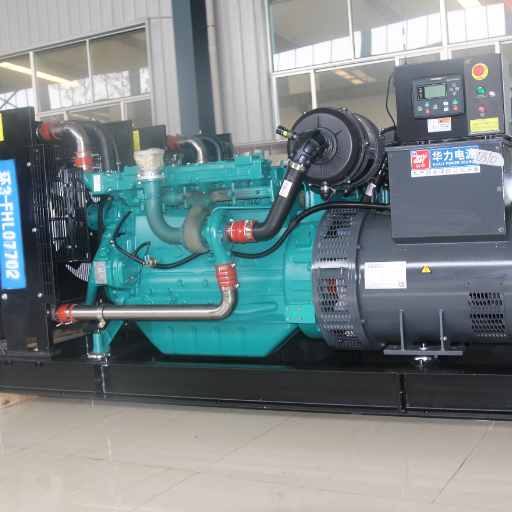
Six clauses across the three clocks and the service arrangement. None is exotic, and all are cheap at signature.
| بند | What it must say | Clock it protects |
|---|---|---|
| Warranty start | The start event, the long-stop, and who records the date | الضمان |
| أعمال الضمان | Who may perform it, what is reimbursed, what evidence is required | ترتيب |
| إشعار التغيير | Notice before the change takes effect, not after | موافقة |
| Approval right | The buyer may refuse a substitution, with a stated response window | موافقة |
| Units already built | How a change applies to units shipped before it | موافقة |
| فترة الخدمة | How long after the last unit the model is supported, and what notice precedes a part going out of production | الضمان |
Two are routinely omitted, and they are the two that cost the most. The long-stop is omitted because the start event sounds sufficient until a unit sits uncommissioned. The approval right is omitted because notification feels like enough until it arrives after the run.
A seventh clause is worth considering for critical applications: what happens if the factory cannot supply a part within the agreed lead time. Not whether it will try. What the alternative route is, and who authorizes it.
None of this requires a factory visit. All of it can be answered in writing before the first order, and a manufacturer who answers all six has told you more than a tour will.
الأسئلة الشائعة
What is industrial generator OEM service?
Industrial generator OEM service is the set of obligations governing a branded generator after it leaves the factory. It covers when the warranty starts, who may work under it, how changes are approved, what records support a claim, and who services the machine in the buyer’s market.
When does a generator warranty start?
It depends entirely on the clause, which is why it must be written down. Common start events are shipment, arrival, commissioning and first load, and they can be months apart. The usual construction pairs a commissioning-based term with a shipment-based long-stop, so a unit that is never commissioned still has a defined end date.
Can a manufacturer change components after first-article approval?
Yes, and ISO 9001:2015 clause 8.5.6 requires the manufacturer to review and record the change. It does not require the manufacturer to notify the buyer. If you want notification and an approval right, they have to be in the contract terms.
Who performs warranty service in an export market?
Usually the distributor, a third-party service company, or the factory’s own engineer for commissioning and major work. The agreement should state who is authorized to perform warranty work and whether labour is reimbursed alongside parts, because a capable technician who is not authorized can still leave you paying.
What voids a generator warranty claim?
Most commonly a missing maintenance record, or an inability to prove which unit failed. Both are documentation failures on the buyer’s side rather than defects, and both are avoidable by keeping a service history that links the set serial to the engine serial.
خاتمة
Industrial generator OEM service comes down to three clocks, and each one is set by a clause you either negotiated or did not. The machine is the same in both cases. The difference shows up in year three.
The warranty clock starts on an event, and the event needs an owner. Pair a commissioning-based term with a shipment-based long-stop, and name who files the record.
The approval clock starts when a component is substituted, and the standard will not tell you it happened. Notification before the change, and a right to refuse it, are the two clauses that close the gap.
The evidence clock starts at commissioning and runs down with every unrecorded service. Identity and history, kept together, are what turn a failure into a claim.
None of this is about the machine. It is settled in a single conversation before the first order rather than in an argument four years later.