
Whenever one’s electricity gets cut off, during the absence of power availability or for the anticipation in power cuts, the purchase of a generator is very important in the smooth operation of a business or home. However, it is confusing to know the precise size and how many watts a generator should be without direction, bear in mind that accurate information is no easy task to find. The information provided in this article is meant to provide a detailed assessment of the different ways in which generators are used to help you determine the right amount of power you need. Whether you’re looking to stay prepared from possible disasters, doing work with power tools onsite, or operating any type of non-essential equipment, this material shall educate you on the key variables, things to not do, and help you make valid determinations.
Understanding Generator Size

Determining the right size of the generator is important in achieving meeting all energy needs of the user by not causing the system to be overwhelmed. If you get a generator of the wrong size, it may turn out that there is not enough power to charge any devices, or worse, the equipment may burn out because there is too much power. A big generator may not be the most effective and cost effective solution as there could be wastage of resources involved by the energy produced.
The size of the generator will also dictate its efficiency and fuel consumption in the short-term and the long-term making it an important consideration in any sale. These calculations also involve taking the following into account; the number of appliances and power tools needed to determine the total wattage. This entails looking at both starting wattage and non-starting running wattage (the watts needed for operation once use has commenced).
What is a Generator Size Calculator?
The generator size calculator is a tool that focuses on helping individuals and even institutions find the proper and most suitable capacity of generators for their power requirements at a given point in time. Usually, the calculator comes pre-programmed with a wide range of factors such as watts that are seen as consuming appliances in the house, the total watts certain devices consume and any peak increased watts.
Using the load information on the electrification requirements of a household or building especially requiring immediate full load power for some specific items, results in fairly accurate estimates, which can be used to determine the size of the generator. These days, any attached data are embedded in most of the calculators; such that they will be able to incorporate the most recent changes and utilize new procedures in their calculations so that even the design of the generators can be fashioned to meet multiple purposes for residential to commercial use at any level, accordingly.
Importance of Choosing the Right Size Generator
Selecting the correct generator size is important in order to obtain the most out of the generator and also save cost while ensuring the safety conditions. An undersized generator may have poor output that may not even meet the power demand leading to overloading, malfunctioning or even pushing such equipment to possible short circuits burning up the generator or bursting the generator’s fuse. Oversized generators, however, can waste fuel, increase maintenance cost, and cause inefficiency out of overloading.
It can also allow for the buildup of carbon in the engine. Determining operation of the generator while include investigation of initial power demand of the motor driven devices, time dependent nature of the devices operability and the dynamic load characteristics to be supplied by the generator. Calculations of the power load using innovative computer program or methodologies gives real figures helping the user to make the decision based on other factors and keep the objective.
Different Types of Generators
| Generator Type | Fuel Source | Key Features | Ideal Applications | Maintenance | Efficiency Rating |
|---|---|---|---|---|---|
| Diesel Generator | Diesel | Durable, long lifespan | Industrial, backup power | Regular oil changes | High |
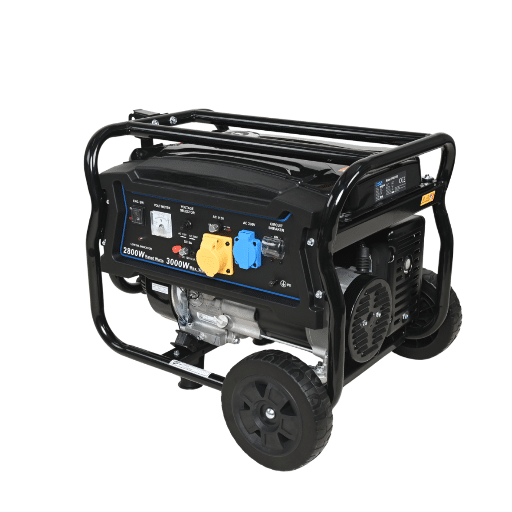
| Gasoline Generator | Gasoline | Portable, readily available fuel | Emergency home use | Moderate | Moderate |
| Natural Gas Generator | Natural Gas | Clean burning, efficient | Hospitals, data centers | Low | High |
| Propane Generator | Propane | Longer shelf life, eco-friendly | Residential, off-grid | Low to moderate | High |
| Solar Generator | Solar Energy | Zero emissions, renewable energy | Remote areas, eco-friendly setups | Minimal | Variable |
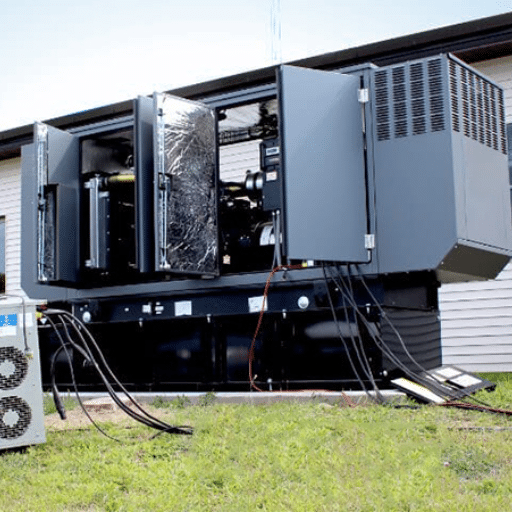
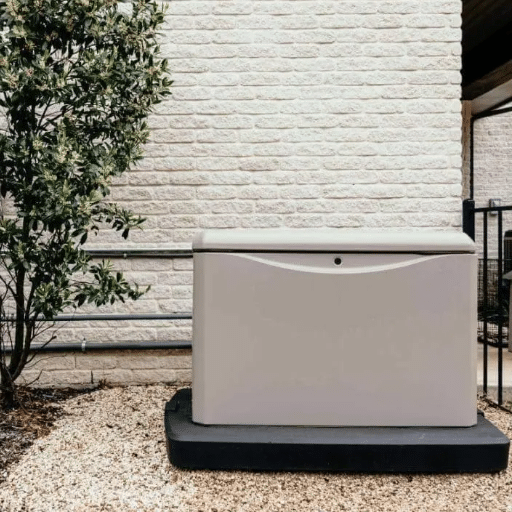
| Standby Generator | Various (Diesel/Gas) | Automatic operation during outages | Commercial, large-scale homes | High, infrequent use | High |
| Portable Generator | Gasoline/Diesel | Transportable, compact design | Campsites, small appliances | Moderate | Moderate |
| Inverter Generator | Gasoline | Stable power output, quiet operation | Electronics, sensitive devices | Low | High |
| Hydroelectric Generator | Water Flow | Renewable, highly efficient | Dams, water-rich areas | Low | Very High |
*Scroll horizontally on mobile to view the full table.
Factors Influencing Generator Size Requirements

-
1Total Wattage Needs
The number of watts for all devices, machines, or instruments to be used at the same time should be gathered. This aspect implies the need that you have to take the sum of the initial and operational watts on each equipment. For big devices like air conditioning appliances or refrigerators, large surge wattage needs are usually expected. -
2Application Type
It is also important to know the purpose of generating light—domestic, industrial or camping. Whereas large structures, or industries, may need powerful generating equipment, as small portable ones that can be powered with a battery or a generator will apply in simple camping or personal gadgets. -
3Frequency of Use
For instances where the generator is not used regularly, smaller and portable options are also adequate. Regularly utilized or standby generators should be of higher capacity and built solid for long service life. -
4Fuel Availability
The energy needs and the fuel usage may vary within regions, thus this also impacts the sizing of a standby generator to be installed. It is very critical in this case to analyse why you need a cumulative average yearly diesel load since large sizes could mean high consumption of diesel. -
5Environmental Conditions
Generators might have their performance reduced by altitude or even by temperature changes. This is because high altitudes and low temperatures require bigger size of generator in order to make up for the reduced efficiency.
Identifying Your Power Needs
If one wishes to know the power demand of a building, the first step entails estimating the power requirement for each of these activities in order to determine the total power watts to be consumed by the equipments/devices that will have to be used during such emergencies, or in case of no access to the grid. Such equipment typically carries a label or directive on power specifications in watts and current amps. In general terms, 120 watts represents the current in the system operating at 120 volts. When determining the rated power of appliances, consideration should be given to the running wattage, that is the energy required for operation over time and the peak wattage which is the excessive power necessary to start certain equipment such as refrigerators, pumps and air conditioners.
Let us consider a sample consumer unit. For instance, a fridge will require 800 watts when starting up, but 200 watts afterwards. These are the startup and working powers for any particular device. These two values must be summed up to give us the basic total power consumption figure necessary for such equipments. Moreover, expected losses and other power ineffectiveness are normally taken care of by having an extra 20 to 25% increase in the power output to the calculations hence the generator will be able to sustain a load higher than its usually normal operation range without endangering its equipment. Perceiving these issues in a phased approach will help you to match the generator that meets exact power requirements efficiently.
Understanding Appliance Wattages
When evaluating device watt patterns, individuals must always comprehend the energy amounts in working watt and in starting (or going forth) watt. Always, the former is the measurement in energy which has time duration untill which the device remains active. The latter, on the other side comes in imagining how much power is required for the first cycle or booting, for example, to electric drives or compressors for refrigerators or air conditioners. Thus, for instance, a standard refrigerator in its running state could use 600 watts but adding that there may be instances when it needs to increase its wattage to 1200 watts as it starts.
For example, such devices as power tools like circular saws may have a continuous wattage of approximately 1200 watts but a starting wattage of over 2000 watts. Knowing these differences is quite essential in efficiently estimating power usage, as this should clearly pinpoint the operational limits of all equipment that are to work and not interfere with provision of electricity. Compile actual power consumption data from user’s manual for each individual electronic equipment or study material designed for power saving.
Evaluating Your Intended Usage
Considering the use of the device, it is important to examine both quiescent current consumption and maximum power consumption ratings. The first step is to enumerate all devices connected to one another and to segregate these devices depending on their power consumption characteristics. For example, devices with motors such as an air conditioner or a refrigerator have a greater starting power in contrast to the operating power. Most electronic gadgets like computers and televisions have almost the same power factor throughout the entire operating period; however, the power factor at the beginning or during a very high load can be significantly lower than what is expected. Estimation of proper loads involves referring to reliable quantitative data including most current technical resources such as user instructions, manufacturer’s recommendations, etc.
The above information when integrated makes a good deal of sense. For reference, knowing the power cycle requirements of the various devices may be helpful in resisting the tendency to jam together many items and end up trailing the whole installation. This inclusive strategy can be used in rationalizing the flow of power in your premises using a bottom-up structure that bears in mind both power savings and safety measures in coming up with an ideal power supply.
How to Use a Generator Size Calculator
Using a generator sizing tool is easy and does not compromise the measurement of your power requirements list. Follow these steps:
01
02
03
04
05
After performing the given stages, one will have the ability to select a generator with the most adequate sizing power and that is safe to use.
Step-by-Step Guide to Using the Calculator
- 1
Access a Reliable Calculator — Utilize an applicable generator sizing calculator that is found online and proves useful to both the home and industrial needs. Many calculation tools would today easily ‘perform non-linear’ calculations using the ‘superior algorithms’.
- 2
Input All Required Electrical Data — Identify the main electricity consuming goods like the operating and starting energy appliances and equipment. Remember that you have to consider all devices out there, e.g., in this case, it is also important that you acknowledge the possible use of equally high consumptive items omitted in these calculations. In determining energy usage with some models it is possible to get the current and nodal values.
- 3
Consider Specialized Requirements — If any power requirements are presented for devices provided with power such as warehouse equipment or professional tools factoring in the starting involved power which is typically high motor. Some modern electric load calculators give some predefined options for major equipment which makes this easy.
- 4
Adjust for Load Variations — Account for the fluctuations in load profile where applicable depending on the behavior of the load. For some parts of the load, like the heaters, air conditioners, and such like appliances, they could come on and go off intermittently, hence their powers should be accounted for while determining the peak load.
- 5
Analyze Recommendations and Specifications — After the input is completed, one needs to assess the quality of the output provided and set another goal. Among other things, it provides guidance on the size of generator and that in kilowatts. Using this information, one will want to establish the working capacity of the generator with relation to the type of generators available in the market.
- 6
Apply a Safety Margin — Always bear in mind to incorporate a safety margin – 10 to 20% is suggested – to cater against the unexpected increase in loads or effect of introducing addition of the new appliances in operation. Overloading of the generator is eliminated when this margin is taken into consideration.
Key Inputs Required for Accurate Estimation
Calculating a generator’s size in a finely accurate manner involves the collection and study of a number of critical inputs. These inputs would include but are not limited to the following:
Peak Power Demand
The highest power drawing level that is envisaged when the activities are taking place. This will mean that all gadgets, machines and electricals are taken into account. The power ratings are to be indicated in kilowatts (kW) or kilovolt-amps (kVA).
Starting vs. Running Load
The running load and the inrush current draw exceeding the normal running conditions for motors, compressors all appliances or machinery that include motors, such as air conditioners and refrigeration systems, should be ascertained.
Operating Voltage and Phase
What kind of power supply the device operating power will be supplied, single phase or three phase power should be documented and the required power voltage should be stated to match installed generator models.
Runtime Requirements
Depending on the specific application, determine the expected running time following the specification of the fuel tank. Long continuous operation may also cause development of high fuel tanks to meet the high fuel demands.
Environmental Conditions
These include height, temperature, and the prevailing climate, as they may affect the natural performance of the generator with amplification in power limitation at higher altitudes or extremely cold climates.
Potential Load Growth
Make sure that future development strategies and utilization growth, such as energy consumption, foresee the system as one that suits future operational requirements.
Through taking a detailed look at all the information above, people should be able to locate a generator that provides operability, cost efficiency, availability and helps in planning for unforeseen contingencies a firm may be exposed to.
Interpreting the Results from the Calculator
The answers provided by the system stem from the information entered by the user as well as the historical data containing the commonly known values. These results are aimed solely at providing definite and implementable insight to the issues under investigation say, for example, the computation of loads or energy consumption. Despite the users being provided with accuracy and the comprehensiveness of the calculator concerning external sources and technical dimensions for conventional purposes, there is additional improvement that is needed. For instance, users should bear in mind various factors when looking at the data that goes beyond the input aspect, whether they contradict or suggest counters or elements that affect the work significantly. Such a system of analysis is designed to help in decision making process still with an objective way of representing data.
Selecting the Right Generator

When dealing with a generator, pay more attention to three important aspects:
Make an effectivity analysis to establish the aggregate energy demand calculated in the watts of all of the devices and systems the generator shall connect. Verify that the generator is not of greater power rating than the sum of the mentioned loads, with some additional portion in order to cater for any surges or overload currents.
Find out about the types of fuels, such as petrol, diesel, or propane, and whether these machines use dual-fuel butane. It is equally important to provide for the effects of costs in terms of fuel, in terms of administrative controls and constraints on the availability of the fuels and storage racks.
Choose between portable generators for short lived projects and annunciated engines designed to that location for all times depending on the use.
When these are aimed at and the uses are stabilized it becomes apparent that the efficiency and dependability of both types of operations are achievable.
Choosing a Generator Based on Size and Wattage
It is very important that the right size and wattage of the generator are chosen to be able to work properly, without either overloading or having a deficiency in power. The first step of the process is to calculate the wattage of appliances, tools, systems, etc. that the generator will be powered by. This calculation is generally divided into two prime categories, for instance, starting wattage which is necessary at the time of a load connection such as turning on the refrigerator or air conditioner and running wattage that denotes power which is needed at each and every second of operation. Consider a situation where an air conditioner might need 2,200 watts to start but only 1,500 watts to keep running.
In addition to that, it is recommended, where possible, to think about additional capacity for surge periods as to avert engine overloading. Generators are usually rated based on their overall wattage output, with the types ranging from lightweight models that generate 2,000 watts and are appropriate for minimal tasks, to commercial or complete household versions that produce more than 20,000 watts. Detailing on the generator’s load in addition to the first surge in wattage demand by powered devices disallows any hitches in delivery and use of electric power over time. Retaining such excess amount of wattage confirms that the operation and equipment to be energized is effective and continues to be used for a very long time.
Factors to Consider: Fuel Efficiency
Fuel efficiency is an important consideration when selecting generators because it determines their operating costs and environmental impact. Currently, generators are equipped with high-end engine technology that helps reduce fuel consumption by controlling the current supplied to the load. Propane and natural gas generators tend to have less pollution output which helps in having a cleaner energy system. Furthermore, automatic shut down in low load conditions or superior fuel injection system measures shown to enhance fuel miles per liter are also important. Additional factors even extend to considering the operational statistics of the power plant such as fuel consumption at any specific loads be it 25%, 50% or 100% – such figures are usually available in manufacturers’ data sheets. These perform a key role in assessment of the generators operational flexibility and whether it can be effectively used in other areas.
Consulting with Dealers for Recommendations
While considering a power supply option, it is important to involve experienced dealers, to ensure that the equipment works with the specified use. The dealers normally have the knowledge concerning the current generators on the market; for example, their performance and features that suit the task of them well in different circumstances. They can always give insights on how well they suit the use of the existing infrastructure, the amount of work needs to be done in order to be maintained and finally the expected utilization in intended operational condition. With such help, and cross-checking with the most current data, like the latest statistics and comments from customers among other sources of market information, procurement processes are undertaken with the essential details to back the purchasing decision well. Such an approach helps reduce the risk of equipment performance issues and ensures the investment is worthwhile.
Using Your Generator Effectively

For the effective performance of your generator, it is crucial that due care be taken by the user. This means that you should always examine and verify the functionality of your generator whenever necessary. To achieve this aim you need to carry out certain activities: checking the level of oils and coolants, replacing air filters if necessary, check for any possible fuel spills in the fuel systems and such. Do not forget to start the generator from time to time in order to ensure all the parts are still in working conditions and the fuel does not go stale. Moreover, always adhere to the manufacturer’s specifications in relation to every key action and put most of your emphasis on acquiring the best quality maintenance materials.
Best Practices for Connecting Appliances
Associated with a generator, it is a strict requirement to always consider the well-being of the gear and the efficiency of the power structures. Firstly, we have to face the generator and in simpler words establish and identify its power output and if it can power the entire fishing camp. A generator that is filled beyond the permissible limit will face serious jeopardy whether through operations or even damage. Utilize heavy duty outdoor rated extension cords to interconnect appliances and correct size so electrical should pass without excessive voltage drop. To avoid voltage drops and overheating, use lines with the finest possible cross-section. It should also be made sure that cables are thoroughly checked and are grounded and free of any breakage in order to avoid any important dangers associated with electricity.
You will require to install a transfer switch when attaching a generator to the power distribution of your house. This is necessary to guarantee secure work practice since the so-called backfeed generation endangers both utility workers and the power system as a whole. It is now in your hands to ascertain if the transfer switch and how it is fitted in the house even need to be checked against the local building codes and standards, or to involve the services of a professional. When hoisting more delicate equipment such as those that use backlit LCD monitors or displays, it is advisable to use either a generator with inverter or just in case install a surge protector to avoid surges. This ensures uninterrupted availability of electricity without damage to the items.
Safety Tips for Operating Your Generator
Reference Sources
Visit the source →
Visit the source →