
The collapse of the alternative power coverage mechanism at the assigned enterprise of a manufacturing plant near Hanoi during the production peak season was catastrophic as the damage was immediate and serious. The establishment burned $2.3 million just in production time in a mere 48 hours, failed to deliver the items that three significant contracts demanded in time, and even distress certain clients. The true cause was not equipment failure; instead, it was due to the miscalculation of the generator capacity that resulted in the inability of the plant to handle starting currents of several motors at the same time.
This is an issue that surfaces a lot when the purchasing managers and the engineers have to make decisions. Choosing an industrial diesel generator is fraught with technical complexities the wrong decisions of such can such implications that it carries significant financial implications. The incorrect decision does not only impact the initial capital expenditure but also affects the efficiency of the machine, the maintenance costs involved and the business operations continuity for some years amongst other considerations.
This comprehensive guide is aimed at presenting a detailed technical strategy for the selecting the right industrial diesel generator for your circumstances in terms of its size and purchase. By the end of the day, you will be up to date with power ratings, modes of operation, application peculiarities and those factors which are well-caused reliable performance courtesy of the selection procedure. The main goal of this technical guide is to provide a structured way to minimize the risks and expenses related to buying a diesel generator.
What Is an Industrial Diesel Generator?
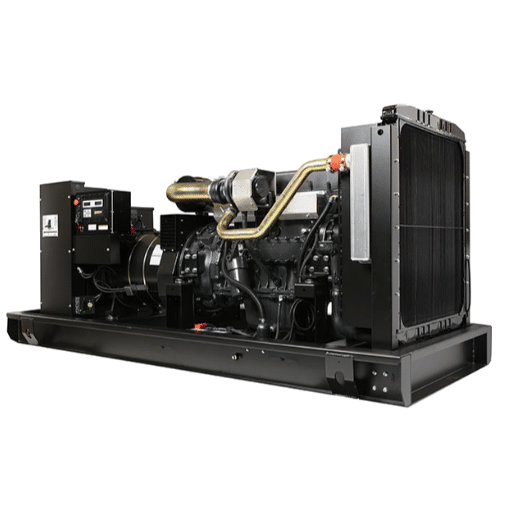
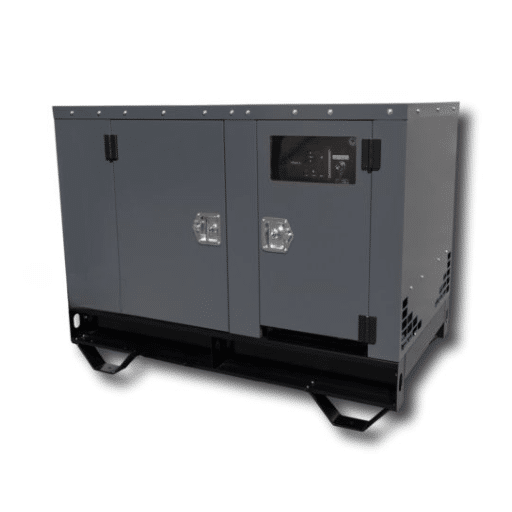
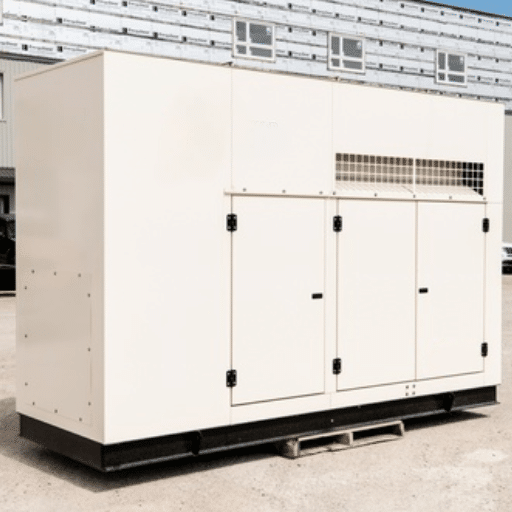
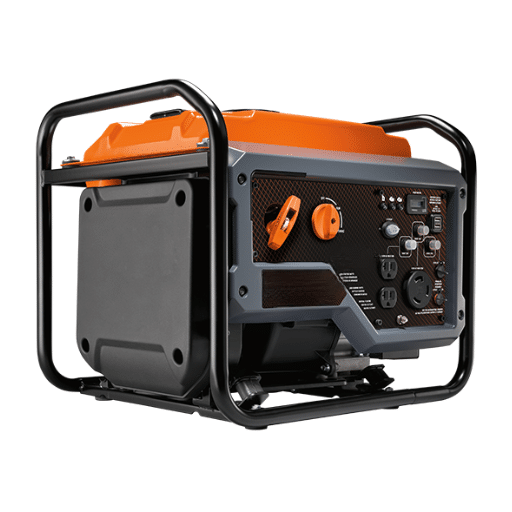
The phrase “industrial diesel generator” describes the nature of the diesel generator as an electrical source of power which is situated and refers to all types of diesel generators used either for carriages such as trucks, aggregations or any other kinds of equipment for that matter. While residential generators, are three major powers sources serve alternative back-up power systems, industrial generators are designed to meet stringent technical requirements that should be ensured right from the factory.
The global demand for industrial diesel generators cannot be overstated. For example, current projections indicate that the market size of this particular industry in 2024 may exceed the midpoint value of 19.7−21.08 billion and could very well become 30.32-36.33 billion by the end of 2030. The increase which is about 5.4-7.5% annually. This upsurge is a result of heightened interests from such sectors as data centers, expanding manufacturing industries, and construction and modernization of infrastructure in emerging economies.
The core components of industrial diesel generators that any smaller unit on several key fronts. They run at 1500 RPM (50Hz) or 1800 RPM (60Hz) for longer life and better fuel economy. The engine displacement covers from as little as several liters to more than 50 liters in the case of the larger installations. The cooling systems are liquid cooled and the radiators are quite sturdy as they are meant to work continuously in the dirtiest of environments. The control systems are provided with digital panels; they have remote monitoring features, automatic transfer switches and very comprehensive fault detection.
The major components of an industrial diesel generator set also called genset, include quality failed to include the most important factors of the diesel engine, alternator, fuel system, cooling system and exhaust system in the first sentence. Each of these components should be adapted to particular needs of the application and the site, as well as operational inputs.
Power Ratings and Operating Modes Explained
Understanding Power Measurements
Two power factors that are responsible for evaluation of industrial diesel generators are indicated as kilowatts and kilovolt -amperes and narrated as kW and KVA respectively. For better and efficient sizing of the gensets, it is important to comprehend the difference between the two measures.
kW (Kilowatts) is the real electrical power that is being supplied by the electrical equipment under perfect conditions to perform the useful work. This means this is the electricity that powers aims hardware devices such as motors, lighting and heating elements.
kVA (Kilovolt-Amperes) stands for kilovolt amperes represent the apparent power of a load which is real power (kW) plus reactive power. In the case of some appliances, especially motors and transformers, there is a need for reactive power to produce magnetism.
Power Factor (PF) is the ratio between real power and apparent power. Most industrial diesel generators operate at a power factor of 0.8 (80%). This means a 100 kVA generator can deliver 80 kW of real power. The conversion formulas are:
- kW = kVA × PF
- kVA = kW ÷ PF
Specifications of voltage and frequency differ from area to area as the region of North America mostly uses 480 volt, three phase, 60Hz power while the regions of Europe and Asia utilize 400 volt, three phase, 50Hz power. A typical generator used in an application must conform to the electrical requirements of the facility and the loads being used.
Operating Mode Classifications (ISO 8528-1)
The International Organization for Standardization (ISO) 8528-1 standard defines four operating modes that determine how a generator is rated and used:
Emergency Standby Power (ESP)
- Maximum power available during utility outage
- Operating limit: 200 hours per year
- Typical load factor: 70% of ESP rating
- Application: Emergency backup for critical facilities
Prime Power (PRP)
- Variable load unlimited hours per year
- Typical load factor: 70% of PRP rating
- 10% overload capability for one hour in twelve
- Application: Primary power where grid is unavailable
Continuous Power (COP)
- Constant load unlimited hours per year
- No overload capability
- 100% load factor
- Application: Base-load power plants, remote mining
Limited Time Running (LTP)
- Variable load with specified hour limits
- Typically used for seasonal or temporary applications
- Application: Construction projects, temporary facilities
Power Rating Categories
Industrial diesel generators are categorized by power output:
| Category | Power Range | Typical Applications |
|---|---|---|
| Small Industrial | 20-150 kVA | Small manufacturing, commercial buildings, telecom |
| Medium Industrial | 150-500 kVA | Factory backup, mid-size data centers, hospitals |
| Large Industrial | 500-1000+ kVA | Heavy manufacturing, large data centers, mining |
| Heavy Duty | 1000-3000+ kVA | Base-load plants, major infrastructure, utilities |
Driven by new data center and infrastructure for artificial intelligence, the >750 kVA capacity market subsegment is forming the final fastest-growing perspective epoch. By 2034, this section is estimated to grow beyond $2.5 billion in the US market.
Industrial Applications by Sector

Manufacturing and Factory Operations
Hence, for emergency in such locations as well as primary one as a help to no-power regions diesel generators for industrial purposes are preferred. The expense resulting from downtime without power necessitates expensive backup systems. Somewhere for example in an automobile or electronics industry such, the cost of loss due to operation stoppage can be in excess of $100,000 per hour.
So in the case of Mr. Chen Wei, who is in charge of production operations at a precision-machined products factory in Dongguan, there was a need for a new genset for his new product line. He arranged that request for 23 CNC high peak current machines, so the inrush current could be easily regulated. If he could not manage that, affordable voltage protection was put at risk. Hence sufficient sizing of generators provided while cooling them were the hidden working that helped in protecting the production and the equipment maintenance.
Key considerations for manufacturing applications include:
- Motor starting requirements (inrush currents 2-3x running current)
- Power quality for sensitive CNC and PLC controls
- Redundancy requirements for critical production lines
- Integration with building management systems
Mining Operations
Diesel generators contribute to approximately 72% of energy consumption in mining context globally. The absence of grid support in distant areas, the tough inclement weather and the 24-7 working beyond any shadow of a doubt make diesel the most widely used energy source in industry.
Over in the mining sites, generators are expected to offer high power essential to the heavy work. Electric shovels, dumpers and processing machines require a lot of power that should not fail. For instance, the Fekola Gold Mine uses a combination of six Caterpillar diesel generators which produced 30.4 MW of solar power and 17.3 MW of battery power in Mali. This combination dispensed around 13 million liters of diesel in 2024 and cut down carbon dioxide emissions by 38,000 tonnes approximately.
Healthcare Facilities
Hospitals and healthcare facilities are critical facilities that require the highest level of power quality commitments. The National Fire Protection Association (NFPA) 110 provides specific requirements for emergency power systems in healthcare facilities. Power to the life-safety devices should preferably be restored within 10 seconds or when the utility fails for a given period.
Hospital-grade industrial diesel generators feature:
- Automatic transfer switches with sub-cycle transfer capability
- Paralleling systems for redundancy
- 96-hour minimum fuel storage for critical facilities
- Regular testing protocols (monthly load testing, annual 4-hour continuous tests)
There are zero errors allowed in healthcare, and this is why choices for generator equipment tend to be with maximum reliability. It is common practice to the extent and elaborate to enhance redundancy including premium engines, dual cooling systems or comprehensive monitoring to ensure maximum uptime.
Data Centers
The rapid growth of cloud computing and artificial intelligence infrastructure is contributing to lack of high-quality diesel generators. The OpenAI/Softbank/Oracle Stargate initiative that costs between $100 billion and $500 billion is a large project driving the demand for the use of high-capacity diesel generators whose power rating is more than 750 kVA.
Data center continuous ratings refer to the ability of the generators within the data center to be used 24/7 without interruptions until demand drops. In other words, data center always on generators run concurrently with main utility plant in most cases over the time as a peak shaving measure or the main source in the event of planned outages.
Data center generator requirements include:
- N+1 or 2N redundancy configurations
- Fast start capability (10 seconds to full load)
- Low harmonic distortion for sensitive IT equipment
- Integration with UPS systems for seamless power transfer
Construction Sites
Construction applications call for the use of effective and timely generator solutions and therefore site managers deploy portable and mobile generators for easy operations. Fast deployment across the working area with minimal time consumption is possible due to the presence of trailer-mounted units with forklift pockets and lifting eyes. Power utilization in different stages of the project source varies considerably, starting from the establishment of the site to the completion of the project.
Typical construction power demands include:
- Tower cranes (100-300 kVA)
- Concrete pumps and batching plants (50-150 kVA)
- Welding equipment (10-50 kVA per unit)
- Temporary offices and lighting (20-50 kVA)
When it comes to construction, in order to be able to shift generators as work moves from one stage to another, CNC generators available with modular configurations, become indispensable. This equipment is often rented out for short-term projects, but for long-lasting infrastructural projects, it may be bought.
Key Technical Specifications

Engine Characteristics
Tempo power generators are made from such kind of ICEs operating in heavy duty conditions. They are 4-stroke and turbocharged and mainly designed for industrial type of works, are air-cooled. The kind of engine used significantly determines the fuel efficiency, availability and the operational requirement.
RPM for 50Hz systems and 1800 RPM for 60Hz systems. These speeds optimize the trade-off between fuel efficiency, engine longevity and alternator performance. Towards this end, lower speeds shall experience a lower wear and tear in the engines, increasing the life of the engine. On the other hand, consideration of the high speeds may allow the use of less metallic components in the design hence low weight.
Displacement is the primary feature used to determine the power output of a generator. A 500 kVA generator is controlled by an engine which has a displacement of 12-15 liters while that of a 2000 kVA generator may reach over 50 liters. Principal manufacturers of engines for industrial generators are Cummins, Caterpillar, MTU, Perkins, and Volvo Penta.
Fuel System
Operating costs are influenced by the rate of fuel consumption and is therefore an imperative decision to be made. Modern industrial diesel generators achieve specific fuel consumption of 180-220 grams per kWh. A 500 kVA generator (400 kW) under 75% load would consume diesel at the rate of 75-90 kilograms per hour.
Fuel tank sizing must support required runtime between refueling. Common configurations include:
- Base tank (8-hour runtime at 75% load)
- Extended tank (24-hour runtime)
- External tank (72+ hour runtime for critical facilities)
Product dependability is affected immensely by fuel. C10 diesel degrades by 26% within 30 days because of oxidation, water contamination, and the presence of microorganisms. Therefore, fuel manufacturing companies install fuel treatment systems and additives to increase fuel quality levels for emergency use.
Control and Monitoring
Today’s industrial diesel generators come with some modern features equipped with advanced fault diagnostics. For example, the Deep Sea Electronic’s DSP-8000 digital controller offers wide range of monitoring and control options:
- Real-time parameter monitoring (voltage, current, frequency, power)
- Engine diagnostics (oil pressure, coolant temperature, RPM)
- Event logging and alarm management
- Remote communication (Modbus, SNMP, cellular)
- Automatic transfer switch control
The system allows for automatic operation with remote control and remote control design that requires Internet connection. Application of such a device in a centralized monitoring system on fixed location or on rotating shift basis is more likely to increase in production of these devices in the future.
Environmental Compliance
Emissions regulations significantly impact generator selection and operation. In the United States, EPA Tier regulations specify maximum allowable emissions:
- Tier 2: Baseline standards for older equipment
- Tier 3: Intermediate standards
- Tier 4 Interim: Reduced NOx and particulate matter
- Tier 4 Final: Current standard requiring advanced after-treatment
The use of diesel oxidation catalysts (DOC), diesel particulate filters (DPF), and selective catalytic reduction (SCR) systems extensions with the use of diesel exhaust fluid (DEF) is necessary to meet the Euro IV and V emissions. These are known to increase maintenance costs and the degree of difficulty, but they make it possible to function in some limited areas of operation—regulated ones.
The demands of European Stage V are analogous to those of Tier 4 Final. All-terrain non-road machinery regulations are concerned with engines which are prepared to move, while the international boundaries of such laws are those of stationary engines.
How to Select the Right Industrial Diesel Generator?

Step 1: Calculate Power Requirements
Accurate load calculation is the foundation of proper generator sizing. The process involves:
Load Inventory
List all electrical equipment that will connect to the generator, including:
- Motors and pumps (note starting vs running current)
- Lighting systems
- HVAC equipment
- Production machinery
- Control systems and IT infrastructure
Motor Starting Considerations
Electric motors draw 2-3 times their rated current during startup. Simultaneous motor starting can overload an undersized generator. Solutions include:
- Staged starting sequences
- Soft starters or variable frequency drives (VFDs)
- Oversizing for peak starting requirements
Future Expansion
Industry best practice recommends sizing for 120-125% of current requirements. This accommodates future growth without requiring generator replacement.
Step 2: Determine Operating Mode
The operating mode selection depends on how the generator will be used:
Standby Applications
- Limited annual runtime (<200 hours)
- Rapid start requirement
- Standard ESP ratings sufficient
- Lower priority on fuel efficiency
Prime Power Applications
- Continuous or extended operation
- Unlimited annual hours
- Fuel efficiency critical for operating cost
- Higher-grade engines and cooling systems
Continuous Operation
- 24/7 base-load operation
- Maximum reliability requirements
- Premium components and redundant systems
- Extensive maintenance planning
Step 3: Consider Environmental Factors
Site conditions significantly impact generator performance:
Altitude Derating
Engines are detuned under load by roughly 3% for every 300 meters above sea level. Generators operating in excess of 3km above sea level require a drastic frequency increase or high-altitude engines with turbochargers.
Temperature Extremes
While the hot weather reduces the efficient operation of the cooling system. Countries receive higher feet of ambient temperatures, cooler gets hotter and most tower coolant systems may need extra large radiators or supplementary cooling. Moreover, in order for the generator to be able to start up in cold weather, the block heaters, battery warmers, and fuel preheating provision should be present.
Dust and Contamination
Step 4: Evaluate Total Cost of Ownership
Initial purchase price represents only a portion of lifecycle cost. Total cost of ownership includes:
Capital Costs
- Generator set purchase
- Installation (foundation, electrical, fuel system)
- ATS and switchgear
- Enclosure or building
Operating Costs (Annual)
- Fuel consumption (typically 60-70% of operating cost)
- Maintenance (oil, filters, parts, labor)
- DEF for Tier 4 Final systems
- Insurance and permits
Reliability Value
Indeed, when it comes to vital software applications, the price of utility outage is always the key challenge as in most cases, all costs connected to time lost in such circumstances outweigh all other expenses that may be embodied in the case. For instance, a situation whereby a data centre has to suffer $50,000 hour worth of downtime, the control measures put into the drier, monstrous gadgets will always save their cost first and all.
Step 5: Verify Compliance and Certifications
Generator installations must comply with multiple regulatory requirements:
Electrical Codes
- National Electrical Code (NEC) in the United States
- IEC standards in international markets
- Local utility interconnection requirements
Environmental Permits
- Air quality permits for emissions
- Noise ordinances (may require sound-attenuated enclosures)
- Fuel storage regulations (spill containment, fire codes)
Insurance Requirements
Many commercial insurers require specific generator ratings, testing protocols, and maintenance records for business continuity coverage.
Certifications to Verify
- ISO 9001 (quality management)
- CE marking (European conformity)
- EPA certification (U.S. emissions)
- UL listing (electrical safety)
Maintenance Best Practices for Reliability

Routine Maintenance Schedule
Preventive maintenance programs reduce unplanned downtime by 30-50% and decrease overall maintenance costs by 18-25% compared to reactive strategies.
Weekly Tasks
- Visual inspection for leaks and damage
- Check fuel level and coolant level
- Verify battery charger operation
- Exercise generator (run unloaded or at light load)
Monthly Tasks
- Load test at minimum 30% rated load for 30+ minutes
- Check oil level and condition
- Inspect air filter condition
- Verify control panel readings
- Test automatic transfer switch
Semi-Annual Tasks
- Inspect drive belts and hoses
- Check coolant concentration
- Test battery specific gravity
- Inspect electrical connections
- Check enclosure ventilation
Annual Tasks
- Change engine oil and oil filter
- Replace fuel filters and air filters
- Flush and refill coolant
- Load bank test (2-hour progressive load)
- Fuel quality testing and polishing if needed
Common Failure Prevention
Fuel System Management
The biggest reason for generator malfunction happens to be the generation-based power system flaws. The diesel becomes adulterated when kept for a while, gathering slush, water, and microbial within it. Best practices include:
- Fuel testing every 6 months
- Fuel polishing for systems with infrequent use
- Water separator maintenance
- Tank cleaning every 3-5 years
- Use of fuel stabilizers for standby applications
Battery System Maintenance
Batteries are the leading cause of generator startup failures. Lead-acid batteries typically last 3-5 years in standby service. Maintenance includes:
- Monthly voltage and specific gravity checks
- Annual load testing
- Terminal cleaning and connection tightening
- Scheduled replacement before end of life
Cooling System Care
Overheating is a common cause of engine damage. Maintenance includes:
- Coolant level checks (only when engine is cool)
- Coolant concentration testing
- Radiator cleaning (external fins)
- Hose inspection and replacement
Professional Service Requirements
While facility staff can perform routine inspections, qualified technicians should handle:
- Major service intervals (oil changes, filter replacement)
- Load bank testing
- Emissions system maintenance
- Control system calibration
- Warranty service
From the standpoint of protecting warranty and regulatory compliance, all scheduled maintenance work must be correctly documented as is the common fault with standalone machines, which shall shortly be increased by fixed duty machines.
Market Trends and Future Outlook

2024-2025 Market Data
The industrial diesel generator market demonstrates robust growth driven by infrastructure investment and grid reliability concerns. Key market statistics include:
- Global Market Size: $19.7-21.08 billion (2024)
- Projected Growth: $30.32-36.33 billion by 2030
- CAGR: 5.4-7.5%
- Standby Power Share: 72.5% of market
- Asia-Pacific Market Share: 45% of global demand
The industrial diesel generator set segment, specifically valued at 15.85−16.15 billion in 2024, is expected to 27.46-30.74 billion by 2032.
Key Industry Trends
Hybrid Power Systems
The future is now and it is blending in diesel generator technology with that of solar PV and battery system for the industrial applications. This advancement enables up to 20–40% reduction in fuel usage without having to worry about reliability which is well within the flexible tolerances. The project installed in country cite is illustrating how solar 30 MW with 17.3 MW battery can cut fuel use with a reasonably acceptable power availability.
IoT and Predictive Maintenance
The advanced generator products have significantly improved with the incorporation of cellular and Ethernet connectivity to ensure they are monitored from a distance. By allowing the monitoring of key performance indicators of the equipment/machinery such as the engine parameters, performance trends, and even fuel consumption, it is possible to conduct maintenance in lieu of facing the more costly problem of equipment failure.
Stage V and Tier 4 Final Compliance
There are stricter standards for emissions worldwide and in the EU, the standard is known as stage V. Moreover, in North America, the after treatment system must meet the standards of Category 4 Final Cumuli there are strict regulations that even propose to clean the particulates expelled from diesel engines. These factors may affect the sales of generator sets for companies that produce diesel engines.
AI Infrastructure Demand
The use of such hardware has become normal and thus this trend will push the requirements for the capacities of generators used in data centers to the highest point ever. Gigawatts of power are necessary in order to guarantee access to data in hyperscale data centers hence the need for prime movers with capacities overhead of 750 kVA or higher increases.
Regional Market Insights
Asia-Pacific
The Asia-Pacific holds the largest portion of the world market, capturing up to 45% of the market shares and it is driven by highly industrialized environments in countries like South Korea, China and India, countries in South East Asia that are investing in infrastructure and also countries like Australia that is currently investing in mining. The rate is higher than that in the world.
North America
The demand keeps growing because of the grid aging and poor design. It was caused by the realization that by the year 2030, the U. S. would be in shortage of 78GW according to US department of Energy in dispatchable power. The reshoring of manufacturing or demand growth for industrial backup is also in high gear.
Europe
The market is driven by very adaptive and competitive technology and equipment adoption. Regulation at emission level reduced and may be even higher for product-based emissions (e.g., Stage V). Growth is reasonable, with the emphasis on hybrid systems and environmentally safe technologies. In contrast to the Western economies, the demand in the Eastern European markets is on the rise.
Middle East and Africa
Conclusion
The identification of the right industrial diesel generator for your application necessitates an in-depth analysis of the technical requirements, performance qualities, and the total cost of ownership. The selection approach based on five simple guiding points presented herein tries to plan strategies for the consumers making a choice of generator.
Key takeaways for B2B buyers include:
- Accurate sizing is critical: electing a generator that is too small will lead to its failure as well as damaged equipment hence such a move should be avoided. If a generator is too large however, capital will be wasted as well as efficiency decreased.
- Operating mode determines specifications: Unless redefined, there are different ratings for generators used in auxiliary, standby and base load applications.
- Total cost of ownership exceeds purchase price: Account the losses due to incorrect fuel usage, higher operation and maintenance costs, and increased loss of assets over the life of the generator, etc. for the next 15 to 25 years.
- Maintenance ensures reliability: PIn almost all cases, preventive maintenance practice will reduce failure of equipment by over 30% to 50% as well increase the overall life of equipment.
- Environmental compliance is non-negotiable: Understand local emissions requirements and factor after-treatment systems into specifications and operating costs.
The innovations in industrial diesel generators have supplemented hybrid structures, internet of things couplings, and fuel efficiency measures among others. These developments are aimed at increasing the return of the technology while ensuring the same level of dependability and performance that is expected in diesel generators in various industrial settings.