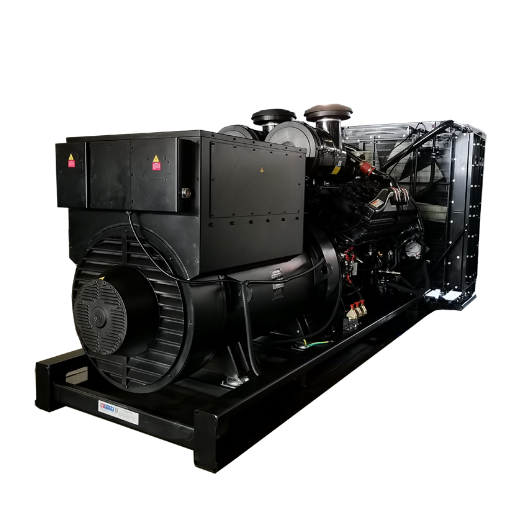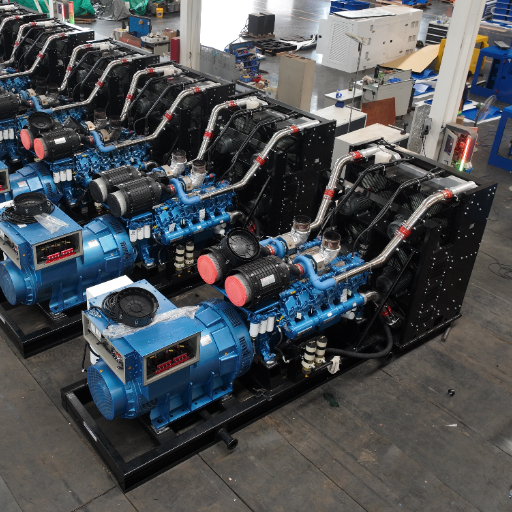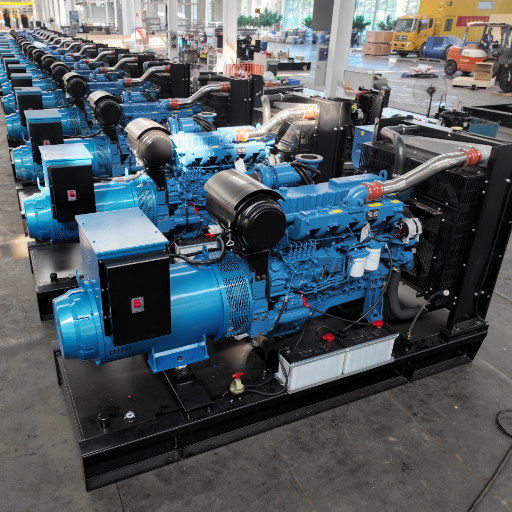

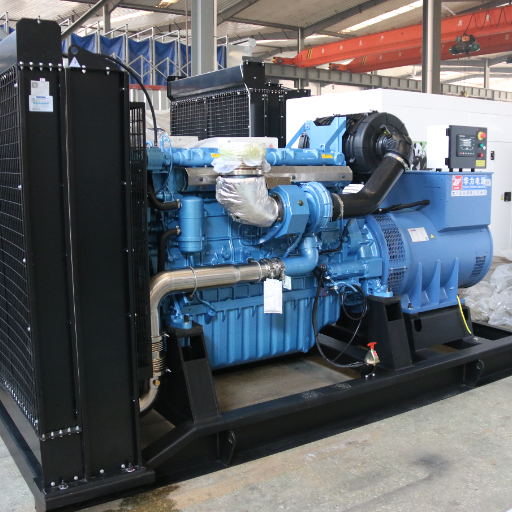
A generator factory direct supplier removes one party from the chain and one margin from the price. It also moves four obligations onto your desk, and they are usually still unwritten when the container arrives.
The margin is the part buyers compare. The obligations are the part that decides whether the saving survives the first problem.
Here is the pattern that matters more than any number. A direct quote is lower because the party who used to absorb import, compliance and dispute risk is no longer in the transaction. Those risks didn’t disappear. They were reassigned by default to whoever is left.
This article covers the four reassignments that cost money, and the clauses that put each one somewhere deliberate. If you are weighing factory direct vs distributor pricing, it will tell you what to add to the direct side before the comparison is fair.
Comparing a factory-direct quote with a dealer quote? Send us both and the destination market, and our engineers will show you which obligations the direct price leaves with you →
Puntos Clave
- A direct purchase does not eliminate the importer’s obligations. It usually makes you the importer of record, and a customs broker filing on your behalf does not take that liability.
- Under DAP the buyer clears import; under DDP the seller does. The Incoterm decides which, and it is the most consequential line in the quotation.
- An engine maker’s warranty and a set maker’s warranty are two warranties on two serial numbers. Neither is automatically collectable in your country.
- A letter of credit pays against documents, not against a working generator. A factory acceptance test is what connects the payment to the machine.
- The governing law and arbitration clause decides where a dispute is heard, and whether the award can be enforced where the factory holds assets.
What a Generator Factory Direct Supplier Actually Removes
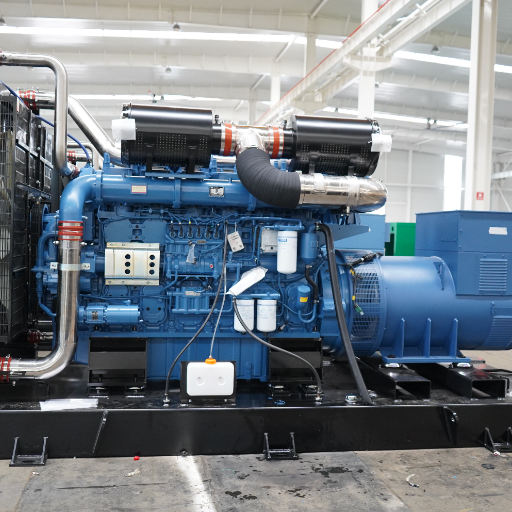
A factory direct generator supplier is a manufacturer selling to the end buyer without a distributor in between. That definition is accurate and almost useless on its own, because what changes is not the identity of the seller. It is the number of parties available to absorb a problem.
In a distributor sale, four functions sit with the distributor. They hold the import relationship, the local compliance position, the warranty labour and the commercial dispute. Each is a cost the distributor carries and recovers in the margin.
So remove the distributor, and each function must go somewhere. Some go to the factory, some to a service partner, and some to you. The quotation doesn’t say which.
As a result, two direct quotes for the same set can differ by 30% and both be honest. One includes the factory clearing import in your market. The other is an ex-works price with nothing behind it.
| Function the distributor held | Where it lands without one | ¿Qué lo decide? |
|---|---|---|
| Import relationship and duty | Normalmente el comprador | The Incoterm and who is named as importer |
| Local compliance and certification | Normalmente el comprador | Who places the machine on the market |
| Warranty labour in your country | Buyer, service partner, or nobody | The warranty clause’s named obligor |
| Commercial dispute and enforcement | A court or tribunal you must choose | Ley aplicable y arbitraje |
Therefore, read the table as a checklist rather than a warning. Each row has a clause that settles it, and none of the four is exotic. They are ordinary terms a distributor would have handled without you noticing.
When your own brand goes on the plate, the compliance duty moves differently again, and the OEM and ODM service models compared here set out who carries it. This article assumes you are buying for your own use or resale, and asks what the direct channel does to everything else.
The Import Position a Generator Factory Direct Supplier Transfers
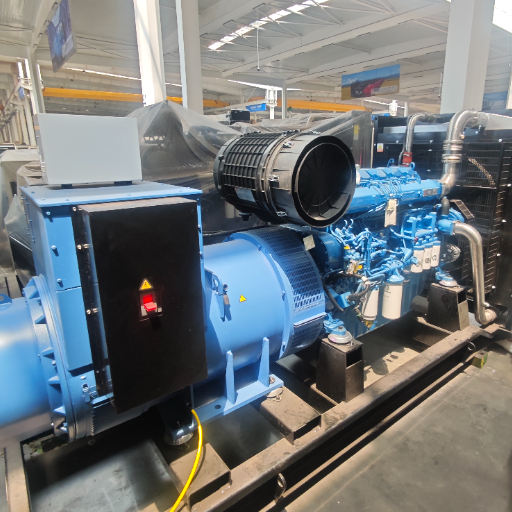
The importer of record is the party a customs authority treats as the importer: the one answerable for the entry, the classification, the declared value and the duty. It is a legal position, not a job description.
US Customs and Border Protection states it plainly. A licensed customs broker may prepare and file the entry, but the importer of record stays responsible for the documentation and for all applicable duties, taxes and fees (CBP, Tips for New Importers and Exporters).
That sentence dismantles the commonest assumption in a first direct purchase. Buyers hear “our broker handles it” and conclude the broker owns the risk. The broker doesn’t own the risk. It owns the filing, and you own the declaration.
Because the position is created by whoever is named, it can be your forwarder, your local entity, or you. What matters is that it is named. An unnamed importer of record becomes whoever the manifest says when the vessel arrives.
Where this turns expensive: duty is assessed on declared value and classification. If the invoice describes a 500 kVA set and the nameplate says 550 kVA, the discrepancy is yours to answer. The factory wrote an invoice. You signed a declaration.
Ilkay found this on a first direct order into Turkey. Her company bought two containerised sets and appointed a broker to handle entry. The invoice described the units by model number, and the plates carried a different rating designation. The broker filed what the invoice said.
The mismatch surfaced at inspection. The correcting entry, the storage and the re-inspection were charged to the importer of record, which was her company. The factory had not misdeclared anything. It had never been asked what the plate said.
The Incoterm Decides Who Clears Import
If one line in a quotation decides how much risk you have accepted, it is the three-letter delivery term. The International Chamber of Commerce publishes the rules, and the 2020 edition sets out eleven of them (ICC, Incoterms 2020).
The distinction that matters for a generator is not freight. It is who clears import.
SALTO means the seller delivers to the named place and the buyer handles import clearance and duty. Ventas al por menor (Indica Si o No) means the seller delivers duty paid, so the seller clears import. Those two terms can sit on otherwise identical quotations and produce a price gap that looks like a negotiation and is actually a transfer of the customs position.
Therefore a factory quoting DDP in your market is either holding an import structure there or describing something it hasn’t done. Ask which, because a DDP promise the factory cannot perform surfaces at the port, in your name.
A warning that belongs here. Incoterms govern delivery, risk and cost between buyer and seller. They don’t govern title, and they don’t govern payment. Buyers routinely assume a DDP term means the goods are theirs and the money is protected, and neither follows.
Rui compared three direct quotes for a 400 kVA set into Portugal and chose on price per unit. Two were FOB and one was DAP, and he read the difference as freight. The DAP quote was cheapest by 4%, so he took it.
What he had bought was a price excluding import clearance. The clearing agent’s invoice arrived after the vessel. The set cost the same as the other two, and the comparison had never been like for like.
Qué escribir: name the importer of record, state the Incoterm and the named place in full, and confirm which party clears import. The generator export documents are the other half of that entry, and they belong on the same list. Treat a quote with no named term as unquotable rather than cheap.
Two Warranties, Two Serial Numbers, One Country
A generator is assembled from an engine, an alternator and a controller. The warranty on the machine is not the same instrument as the warranty on the engine.
They are issued by different companies, they attach to different serial numbers, and they can carry different terms and start events. This is where the direct channel differs most sharply from a distributor sale, and where the difference is least visible.
A distributor usually holds the local relationship with both issuers. Buy from a generator factory direct supplier instead, and you hold two claims rather than one, in a country neither issuer may operate in.
The engine warranty belongs to the engine maker and is administered through that maker’s authorised service network. The network is the mechanism: an authorised dealer in your country can process a claim, while a workshop that is not authorised generally cannot, however competent it is. So the first question is not what the warranty covers. It is which authorised service point will accept the claim.
The set warranty is the factory’s, and its shape is a contract term. Our own published standard is 12 months from commissioning or 18 months from shipment, whichever expires first. The second number matters because the first depends on a commissioning record someone has to file.
The two can also start on different days. The engine carries its own serial number and its own record. A set built from engines held in stock can carry an engine clock that began before your order existed, so ask what that record reads rather than assuming it matches the invoice.
Qué escribir: name the authorised service point for the engine and for the set in your market, and confirm both start events. State who pays labour as distinct from parts. A warranty covering the part but not the technician costs you the difference.
What a Letter of Credit Actually Protects
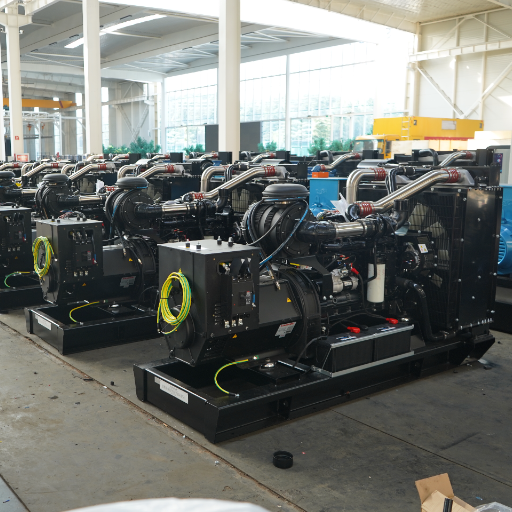
The payment mechanism is the fourth reassignment, and the one buyers over-trust. A letter of credit is a strong bank undertaking. It is also narrower than it feels.
The rules governing commercial documentary credits are the ICC’s Uniform Customs and Practice for Documentary Credits, known as UCP 600. It entered into force on 1 July 2007 and replaced UCP 500 with 39 articles instead of 49 (USCIB summary of UCP 600).
The operative idea is in the name: un documental credits. The bank pays against documents presented and examines them against the credit’s terms. It does not inspect the generator.
Consequently, a credit satisfied by a clean set of documents will pay for a set that arrives with the wrong alternator. The documents were never about the alternator, so they can’t catch a substitution.
That isn’t a flaw in the instrument. It is the boundary of what it does, and knowing the boundary tells you where to put the protection. Standard letter of credit payment terms are a deposit with the balance before shipment, or an L/C for larger orders. Neither arrangement inspects the machine.
The chain that connects payment to the machine:
- The credit names the documents it requires, and the sale contract specifies those documents.
- A factory acceptance test runs before shipment and produces a report with the set’s serial number.
- That report, or a certificate referencing it, becomes a document the credit requires.
- The bank won’t pay without it, so payment is now conditional on the test having happened.
Without step three, the credit protects you against non-shipment and against a dishonest document. It protects you against nothing else.
Kwesi learned the boundary on a 900 kVA order. His credit required an invoice, a packing list, a bill of lading and a certificate of origin, and it performed exactly as designed. The set arrived with a controller model different from the one specified.
Every document was accurate, because none of them described the controller. The substitution was resolved commercially, months later, on the strength of the relationship rather than the instrument.
Qué escribir: list the acceptance-test report among the credit’s required documents, and require it to carry the set and engine serial numbers. A generator factory direct supplier that has never been asked this will usually agree, because it costs nothing to add.
Governing Law, Arbitration and the Clause Nobody Reads
The last reassignment only matters once something has gone wrong, which is exactly why it is settled last and read least.
A distributor sale usually settles the forum by accident: the distributor is local, so the local courts apply. Buy from a generator factory direct supplier in another country, and the forum becomes a line to negotiate. Left unnegotiated, it defaults to something worse than either party intended.
Nevertheless, the practical question is not which law is fairer. It is where the award can be enforced. A judgment from your courts against a factory holding no assets in your country is a document, not a recovery.
Arbitration is the usual answer, and its advantage is a treaty. The Convention on the Recognition and Enforcement of Foreign Arbitral Awards, made in New York in 1958, requires contracting states to enforce awards made in other contracting states.
China has been a party since 1987. Its entry on the UNCITRAL status table carries reservations, including one limiting the Convention to differences from relationships considered commercial under its national law.
A generator supply contract is a commercial relationship, so that reservation does not exclude it. The point isn’t that the reservation is a trap. It’s that enforceability has an answer you can check in an afternoon.
Qué escribir: name the governing law, name the seat of arbitration, and confirm that both countries are parties to the New York Convention. A generator factory direct supplier may propose its own home courts, and that proposal is worth declining before it becomes a clause. If the counterparty is a distributor rather than a factory, the territory and project-protection terms sit in the same part of the agreement.
What a Generator Factory Direct Supplier Should Put in Writing
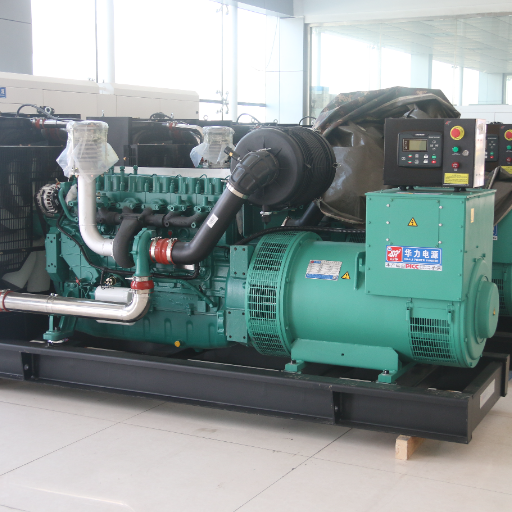
The four reassignments produce four clauses. None is unusual; moreover, they are all cheaper to negotiate than to litigate.
| Cláusula | The question it settles | The answer that transfers risk back |
|---|---|---|
| Importador registrado | Who is answerable for the entry and the duty | Named party, with a correction-cost allocation |
| Plazo de entrega | Who clears import, and where risk passes | A named Incoterm and a named place, in full |
| Garantía | Who performs the work, and in which country | Named authorised service points, both warranties |
| Disputa | Where a claim is heard and enforced | Governing law, seat, and a Convention check |
A fifth item is not a clause but belongs beside them: the acceptance test as a payment document. It sits between the delivery term and the warranty, and it is the only one of the five that protects you at the moment money leaves.
A generator factory direct supplier that answers all five in writing before the first order has told you what kind of counterparty it is. One that answers three and defers two has told you something too.
If you are still choosing between channels, the comparison of supplier types, dealers and marketplaces is covered in our guide to diesel generator suppliers. This article starts after the channel is chosen.
Preguntas frecuentes
Is buying from a generator factory direct supplier cheaper?
The equipment usually is, and the total often is not. A direct price excludes the distributor’s margin and also excludes the import, compliance and warranty-labour functions the distributor performed. Compare against a dealer quote only after adding those costs, or confirming in writing that the direct quote includes them.
Who is the importer of record when I buy directly from a factory?
Usually the buyer, though it depends on the delivery term and on who is named. The importer of record is responsible for the entry, the classification and the duty. Appointing a broker to file does not transfer that liability.
Does DDP mean the factory handles everything?
It means the seller delivers duty paid, so the seller clears import. It doesn’t transfer title, and it doesn’t protect your payment. Those sit in the sales contract and the payment clause. A DDP promise from a factory with no import structure in your market is worth confirming before the shipment books.
Does a letter of credit protect me if the generator is wrong?
Not by itself. A letter of credit pays against documents presented, and the bank examines the documents rather than the machine. To tie payment to the equipment, make the factory acceptance test report one of the documents the credit requires.
Whose warranty covers a generator bought directly from a factory?
Two warranties, usually. The engine maker warrants the engine through its authorised service network, and the factory warrants the set under its own terms. They attach to different serial numbers and can start on different dates.
Conclusión
A generator factory direct supplier is not a cheaper distributor. It is a different allocation of four obligations, and the price difference is partly the cost of those obligations moving to you.
The import position moves by default, and naming the importer of record is the act that stops it moving by accident. The delivery term decides whether you clear import. The two warranties are two claims in a country neither issuer may operate in, so the service network matters more than the coverage. The dispute clause decides whether a win is worth anything.
None of the four is technical. All are answerable in writing before the first order, and a factory that answers them has separated itself from the ones that quote a price and wait.
The discount is real. The question is only what came with it.