

In the lack of clean or stable power, the choice of the correct generator size is essential as it is closely related to the performance and cost aspects. In case you are between a 12kw and a 15kw generator, these are common areas of concern in households, small enterprises and other professionals who have a need to ensure a continuous flow of power in the event of power dips or when far away from a power source. Some of these include performance expectations, scenarios where one is likely to use the units, and additional parameters like power demand, energy efficiency and expected lifespan of the units. By the time you are through reading this article, you will have the perspective and the requisite knowledge to manage your power needs by selecting the perfect type of generator.
Introduction to Generator Sizing
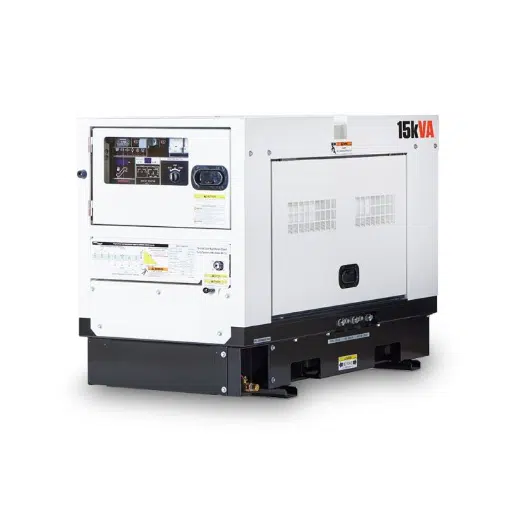
When picking a generator, proper size should not be compromised as it is of the utmost importance in ensuring that the generator will work without experiencing any kind of equipment failure. Generator size is a process of the selection of the right size of the generator to meet the demand. This will involve among other factors, the total wattage of all devices and systems that consume power and the consumption levels at peak times and also the wattage demand at electrical startup of bigger devices such as air conditioners. Inadequately sized generators pose a risk of overloading and damaging them, while those of larger size are likely to contribute to avoidable wastage of fuel and hence higher costs.
Importance of Selecting the Correct Generator Size
Deciding on the right capacity for a power generator is not easy and entails numerous aspects to clear out. For starters, it is necessary to make a sum of the power and concurrent power of all electrical appliances. It might be worth noting that some equipment, particularly motors and other devices with high starting loads like pumps or compressors, have a significant difference in the starting watts and the running watts. A failure to consider such temporary rising current pulses may result in operational inabilities and destruction of the generator and the devices tied to it.
Besides, sizing the generator considering any future aspirations or new loads is a necessary step that has to be fulfilled to prevent making an initial wrong investment. In supporting this point is the consideration that the generator may perform differently under two mainly permissive extremes like high altitude or extreme temperature such that there is a decrease of output at higher altitudes and under extremely hot conditions. These will also need to be taken into account during the selection process so as to achieve acceptable availability and reliability.
According to industry experts, practicing the use of the operational limit reserves should be between 10 to 20% higher than the projected maximum peak load which helps in enhancing operational flexibility which in turn, minimizes the possibility of overloads while maintaining fuel efficiency. This accuracy issue most particularly applies to load forecasting and the urgency of addressing the demand in certain areas over others under identical conditions.
Differences Between 12kw and 15kw Generators
| Feature | 12kW Generator | 15kW Generator |
|---|---|---|
| Power Output | 12,000 watts | 15,000 watts |
| Ideal for | Medium-sized homes and small businesses | Large homes and medium-sized businesses |
| Fuel Consumption | Lower fuel usage | Slightly higher fuel usage |
| Physical Size | Compact and space-saving | Larger, requires more installation space |
| Initial Cost | Lower upfront cost | Higher upfront cost |
| Common Applications | Basic household appliances | Heavy-duty equipment and larger appliances |
| Noise Level | Moderate | Similar or slightly higher |
| Load Capacity | Handles moderate loads | Handles high-demand loads |
| Fuel Tank Capacity | Smaller tank | Larger tank |
| Runtime Efficiency | Slightly shorter runtime | Longer runtime with same load |
| Maintenance Requirements | Lower due to smaller size | Higher due to larger capacity |
| Portability | More portable | Less portable |
| Backup Duration | Suitable for short outages | Suitable for long-duration outages |
| Price-to-Performance Ratio | Cost-effective for basic needs | Higher value for demanding applications |
Factors Influencing Generator Size Selection
- Power Load Requirements
The total power consumption, which includes wattages needed to start up and maintain power supply by the devices, is very important. Devices like motors or refrigeration appliances that have high inrush oscillatory currents, generally need much larger power during the startup process. The mode of operation will also affect the level of power consumption. For example, an average refrigerator may require 1200 watts on starting up but when it is running, 200 to 700 watts is adequate. - Fuel Efficiency and Availability
The type and amount of fuel also affect the operation of such an equipment. For example, silent generational units which are larger often operate more economically by fuel consumption in the presence of optimal loads, but spend more fuel in peak load conditions. Also, availability of such a supply will determine access to gasoline, diesel or propane among others, as refueling stations differ; they may be present or absent. - Operational Duration
The backup time is determined by the volume of the fuel tank and the efficiency of the generator. The smaller generators can be used on an event of short outages effectively but when they run, they may require fuel in the middle of the whole process. Large systems have the ability to back up for a long time but also have some apparent demerits like high costs for acquisition and maintenance. - Environmental Considerations
In addition to these, standards levels as well as noise levels and requirements of ventilation are also taken into consideration. Again, depending of the intended usage, be it residential or commercial or industrial, preference might at times be given to generators which have suitable design with low decibel noise and low emissions. - Scalability and Future Proofing
Considering the possible development of events, it makes sense to prevent the use of an improperly sized power generator. It is better to select a generator that has very marginal additional capacity as it can be usefully employed to cater for future modifications or applications instead of buying numerous more units and in the process risking system overloading aspect. - Budget Constraints and Cost Calculations
Price-performance balance has to be struck. Smaller units may seem reasonably priced for the first purchase. However, if the number of units is reduced due to the loads, it might turn out to be costly. Bigger systems, correspondingly, give ease of expansion and stability but imply final investment growth. Considering other factors such as maintenance and fuel use costs over the life of the equipment can be the right way to make the decision.
Power Output Capabilities

In terms of power output, the primary contrast between 12KW and 15KW generators is in their ability to output power. This signifies that a 12KW generator is crafted with the capability to carry a maximum of a 12,000 watt electrical load hence the ability to power essential appliances within systems.
On the other hand, 15KW generators have a higher power rating up to 15000 watt running full load. This implies that bigger use of society’s equipment in places such as residential areas and industrial machinery may consume more power, and hence the recourse to the 15 KW generator at least in redundancy situations where there have to be multiple appliances working at once.
Understanding Wattage and Power Needs
A solid knowledge of how much power is being used by all the gadgets/systems in question is imperative when doing wattage and power consumption estimates. What this implies is addition of that of the list with the powered equipment. Furthermore, that has to account for the so-called surge power. This term refers to the power that is needed to turn electric plug -in equipment on, either motors or even a compressor in an air conditioning plant. For instance, devices like an air conditioner, refrigerator, or a sump pump do draw much attention since their power requirement at the moment of switching on is higher than that in operations.
Formula: The values of these essentials are best known from the manufacturer specifications or the data on nameplates which give power requirements in watts or amperes. Sometimes they provide the current value and the voltage instead of the power consumption value in watts. The formula should be used in such cases Watts = Volts × Amps. In addition to the above, one must also consider the type of power supply, whether single phase or three-phase which affects the generator or the compatibility of the power system.
Operating a power solution effectively means that load demand has been controlled not only within the limit, but that the top limits are reached; in this, the operation is economical and the power system or generator last longer. An accurate power audit or load calculation can be very helpful to understand how best to plan, rather than just guessing. Overlapping of these figures assists in targeting actions with assured competence, preventing over-taxation or supplemental legislation.
12kw Generator Output: Ideal Applications
When dealing with residential, commercial, and light industrial energy needs, a generator of 12kW power is enough. This particular generator can be used for this, or that ends with room to spare for air conditioners, refrigerators, water heaters, lighting, some kitchen appliances, and more in the event of power outages. The commercial part is the one the small business, retail and food service facilities will find beneficial. With power consumption varying upwards for commercial purposes, buildings are along with basic power come commercial refrigerators and cooking equipment.
In addition, a 12kW generator may also help in the construction sites or remote areas, by providing sufficient energy to operate equipment like cutting machines, drills, air compressors and illumination installations. This ability in a working generator to keep working and having efficacy in the kept work, makes the whole vision a very practical one in various venues such as production plants that are aggressively target-oriented, thus demand loads that do not fluctuate. Its wattage is tailored to address many power requirements and still observes guidelines of safe generating
15kw Generator Output: Ideal Applications
A 15 kilowatt generator is a reliable power equipment that is able to support multiple commercial and residential uses. The load carrying power of this capacity can be sufficient for medium sized construction sites, powering numerous appliances such as large-scale concrete mixers, welding machines and heavy-duty circular saws at the same time. This essential capacity can also support backup power solutions for mini- and small- scale corporate locations such that critical systems like the server room, the cooling facility or the security system do not fail during a blackout.
Since 15kW is enough to power residential appliances, more than the energy any HVAC, water heater, kitchen’s appliances and lighting would use can be produced in a lot more rooms as household power. At the same time, the use of this power Tagen proves very effective in remote properties and ranches, as one can comfortably keep farm animals thanks to being able to activate irrigation pumps and electric fences. Recent 15kW machines have implemented advanced features including Load Shedding, which helps them serve the changing loads without over straining. They are long-lasting machines, and this factor clearly indicates that they are perfect for cases where the power should be constant and plentiful and should cater to even higher power forms.
Operational Efficiency Under Various Loads

When it is reported that the efficiency of 12kW and 15kW sets has been evaluated at various load points, one cannot ignore such parameters as fuel consumption and store load control. For instance, when loads are within 25-50% of their rated capacity, 12kW generators are more efficient in as far as they will need lesser fuel for the same rated conditions. But when the loads are above 50% and reach 75-100% or maximum capacity, 15kW engines are better as they have more overall efficiency and power performance without the use of emergency power source limitations.
Distributed energy resources are both generator generators while benefiting from load management system that aim to reduce fuel consumption on light loads, eliminating lost operation time. On the other hand, please remember that continuous under loading of the genset below 30% of its rated capacity for long periods will lead in deterioration of the equipment performance and increases in maintenance expense irrespective of the displacement. Proper sizing of the generator for conditions is important in order to achieve highest possible fuel efficiency and exploitation costs.
How Generators Work Under Different Load Conditions
It is no mystery that the less load there is, the less efficient the generator works in the given range, within low or high operating conditions in particular. When the output power levels decrease and move below the generator’s rated capacity of 30% load range, the fuel consumption is feared to be less efficient; hence, other factors, particularly carbon deposits from part of the engine due to poor combustion, will also have significant impacts on the operation of the generator. In the long run, such effects can lead to reliability problems and increase the serviceability loss.
The latest designs of generator systems that come along with Automated Voltage Regulators (AVRs), along with load management systems, are equipped with high-end electronics for minimizing the voltages and frequencies within the fluctuations of the load conditions and increasing the reliability of the electricity prepared for use. However, the recent tests corroborate that short intervals of starting operations at the full capacity of the generators also add to the performance enhancement of the engines because the excess soot/ other byproducts that have been settled during no load and temperatures close to zero are burnt off quickly.
Efficiency Comparisons: 12kw vs 15kw
When it comes to the assessment of 12kw relative to 15kw generator sets, a number of important things as outlined in the following will define it. For instance, its capacity to adapt to different loads, the fuel consumption, as well as the service life of each after their purchase must be considered. Right after the consumption limit is reached, the 12kw system will have very high performance levels because most internal combustion engines work best at a certain load line, either maximum or very close to it. In fact, the cost of operation will be too high because the service maintenance of a 15 kw unit under such circumstances will be exorbitantly high.
On the other hand, a 15kw generator is more suitable for use where the demand would be higher. This is because it is a machine that one can increase the load without increasing the physics of the system. Even though the fuel consumption at low load levels may be slightly high than that of a 12kw unit, the freedom to operate after a load has been shifted and when a heavier electronic load is present can be an advantage especially where the energy consumption pattern keeps on changing. Besides, the 15kw generator is generally known to last longer when such conditions have been met, due to the built design which is to last through more stringent conditions away from normal operations.
Impact of Load on Performance
The ability of the 12kw and 15kw generators in performing is not the same for both sizes of loads. The performance of the 12kw generator is apparently the best when moving the load between 50-75% from the rated power, the fuel consumption and power output is a combination of the two. However, when carrying minimal load, the consumption of fuel changes for even maintenance of the generator will consume electricity leading to high cost of electricity in the long term. On the other hand, too much load will strain the generator, heat it up and engrave the various parts hence cause wearing out and reducing the lifespan of the machine both in terms of efficiency and physical reliability.
Featuring a higher power rating the 15kW unit can better cope with extreme and fluctuating loads. What is more, it can perfectly address the problems of short-term overloads or peak power requirements without destabilizing voltages or resulting in unacceptable performance levels for each electric consumption equipment. Thus, it can be said that although this model is the 15 kW variant which is larger in the same WAUI dimensions than the 12 kw model it may result in slightly more fuel savings at light load conditions than the latter but this is eliminated by increased ability to work in conditions of high electricity consumption, without substantial decreases in the reliability or efficiency of the unit.
Fuel Consumption Rates

It is important to note the fuel consumptions of both 12kw and 15kw generators differ with the power outputs. The estimate for fuel consumption in a 12kw generator for instance varies from 1.1 to 1.3 gallons of fuel at 50% load going to around 2 gallons per hour at maximum loading capacity. In contrast, in a 15kw generator the estimated range of 50% fuel consumptions is from about 1.4-1.6 gallons per hour and increases to 2.5 gallons when the generator is completely loaded. Although the figures may change depending on the fuel quality and generator settings, they are useful in comparing different fuel utilization.
Comparative Fuel Consumption: Propane vs Diesel
Analyzing the rates at which various elements such as efficiency, power (in the generator), and the rates of consumption of the two fuels can explain as to the not very high similarity of the diesel mode with the propane one. The diesel mode is more suitable with higher efficiency. The hopping from one high energy content chemical to a lower energy increase tends to increase the fuel flow, making it less or more inefficient. For example, a 50%-active diesel generator machine used 5- to 10-kilowatt engines could consume 0.4 to 0.9 gallons of fuel per hour, while the same 15- to 20-kilowatt engines demanded 4.5 times more energy, 2.5 gallons per hour.
Propane, while its energy density is lower than diesel, its combustive action is always more thorough and is a clean mode of fuel. Running on propane, a generator generally uses about 1.1 to 1.8 gallons at 50% load. The gallon that is expected to be exhausted can be as high as 3 gallons under full load. Although this seems higher than diesel engine, this is very useful in that propanes long lifespan from the time they are purchased coupled with its clean burning aspects are highly beneficial for residential and stand-by purposes as well as in domestic used as energy.
Fuel Efficiency for 12kw and 15kw Generators
Different types of fuel, how much it is likely that something will be used, design, and other factors impacting the effectiveness of power. Assume that a 12kw generator is powered by propane. The estimated consumption rates are between 1.3 units and 1.5 units, per hour for a 50% load condition but increases to about 2 units, per hour for a fully loaded unit. For the diesel triggers with the same power rating, the triggers tend to burn fuel more efficiently as they require about 0.9 units to 1.1 units, per hour at a 50% load and their fuel consumption increases to 1.6 units, per hour at 100% load.
As for 15kw generators, fuel tends to show a similar trend. Propane models use around 1.4 to 1.6 gallons an hour at 50% loading and at 100% loading, using approximately 2.5 gallons a minute. Speaking about the diesel equivalents, they offer better performance since the fuel need for half load is between 1 and 1.2 gallons an hour and a maximum load is limited to 1.8 gallons an hour. These discrepancies, however, are a result of diesel fuel burning more efficiently and vice versa, the volume and burning rate of the combustion process of the fuel result in less and more efficient fuel consumption, making diesel generators a better selection for low fuel use efficiency emphasis applications.
Cost Implications of Fuel Choice
Versatile diesel generators work best for businesses and other purposes because of the fuel price effect. Comparing the use of diesel and gasoline to produce the same amount of power volume, diesel is usually more energy efficient compared to gasoline hence results in less fuel consumption in a given duration. As an illustration, a diesel generator running at 50% load uses potentially 25-35% less fuel as compared to its gasoline corresponding model during the same period. As for outcomes, there is significant benefit in total operational cost savings especially to those industrial or commercial cases where the power usage is continuous.
In addition to this, any operational costs associated with maintenance should also be taken into account. Diesel engines tend to last much longer and have much stronger components than gasoline engines but maintenance of diesel generators costs more as it involves more technical work like frequently changing oils and air filters. Gasoline generators, on the other hand, may not cost as much to repair initially. However, due to the more frequent breakdowns and damages – particularly when the generators are subjected to a lot more workloads, it could have adverse implications on their maintenance costs over the long run.
After all, the ramifications of fuel type in terms of expenses need to include these factors: the price of the fuel in its original form including its benefits, the way it is utilized during the operations, the extent preventing the breakdowns with the substitutes, and the service environment. In many instances for heavy duty load supply, diesel gensets prove to the more cost effective method notwithstanding a higher cost earlier on, while gasoline gensets may take the top in simple and light working conditions.
Initial Purchase and Long-Term Running Costs

- Initial Purchase Price: Probably, one may says that a 12 kW generator that provides power is cheaper than a 15 kW generator. The price difference between two common models is usually within 10% to 20% for most of them, it is going to depend on the make, sophistication and other factors.
- Fuel Efficiency: Fuel consumption comes as a big deal over an extensive period of time having a 12kW generator operating efficiently, can utilize less fuel in relation to a 15kW unit that consumes more fuel, which makes it practical for tasks that do not require greater amounts of power.
- Maintenance Costs: Maintenance expenditures to be incurred are generally close for both sizes when the conditions hold normal since operation is normally placed in equal life and there are comparable costs of the damages. However, it is important to note that if the performance is low, the 15kW may suffer from increased wear, which will make the maintenance costs go higher, especially if the average wear sets in.
- Application Suitability: The point of power generation and integration with the application is important for attaining the lowest possible cost effectiveness. It may be more financially sound to purchase a 15kW generator if the power load repeatedly rises over the 12kW line since running at maximum loads can cause equipment damage and increase the money spent on repairs.
Cost Analysis of 12kw and 15kw Generators
When purchasing a 12 kW and 15 kW power generating system it is important to be cautious about only looking at the capital expenditure since there are operating costs that affect lifetime cost of the system. It is true that a 12 kW generator will immediately cost less, thus it should be the go-to generator for systems with loads that are far below that unrestricted limit. Further, systems that are consistently used at particular loads especially near the upper limits are subject to wear and tear and thus negatively affect fuel efficiency which may lead to costs of maintenance in the long-run.
In contrast, a 15kW generator, although costlier to acquire at the beginning, provides enough tolerance for surge or peak loads than a 12kW does. This extra capacity provision can be the most effective strategy to staying below overload levels which in turn can save a significant portion of the fuel and defer the likelihood of many breakdowns. Further to this, more modern and better engineered 15kW models can be equipped with such functions as integrated tools of supervision and exploration of demand of energy.
Engineers and the sales teams are to work in collaboration, and critically evaluate the cost to fuel in some extend accumulated for the useful period of time in the particular application, since the productivity in this case will vary due to distinct level of load at the engines rated capacity For example, a 15kW capacity generator that is used only at 4kW output will be uneconomical inducing higher fuel consumption per Unit kW. On the contrary, a right-sized generator, that is usually in its optimal load range even around 50% up to 75%, will help reduce the cost of usage of the unit.
Factors Affecting Long-Term Running Costs
The issue of the availability of those generators besides the 12 and 15kW generators in calculating the long-run costs should be taken into account. The general examination of the generator does play a role in the cost of maintenance by way of maintenance bonds help raise the treatment costs. Putting all these factors in to perspective it become quite evident that there is bound to be an increase in the cost of functioning of the machines outright.
Moreover, the down times in the normal operational lifespan of the generator are influenced by the service and use levels. Generators run under light or high loads are generally affected in a faster manner as the mechanical stress increases wearing and reduces wear life of the device. In the event that the generator is maintained properly and the load is within allowable levels, the running hours that can be expected should be between 10,000 and 30,000, and changes with who made it and the use thereof, as it has a significant impact on the whole life costing of such equipment in the long run.
Reference Sources
- Design, Construction and Testing of a 15kVA Fuel-Less Generator
Access the study here - A Model Predictive Control with Grid-Forming Capability for Back-to-Back Converters in Wind Turbine Systems
Access the paper here
Frequently Asked Questions (FAQs)
How do 12 kW and 15 kW generators affect my home size and power needs?
Comparing the 12 and 15kW generators largely depends on the wattage that can be consumed when operating the generator and the appliances that you anticipate to connect. A 15kW generator provides extra power on a continuous basis, as well as much greater surge watts to start equipment such like well pumps or central air. In a large home such as a square foot house or even full home backup, the bigger engine decreases the chance of having any need to shed loads however it could be beyond the required capacity for a smaller home.
Can a portable generator meet the whole-house needs for 12 kW and 15 kW scenarios?
While it is true that whole house portable generator capacity is largely an optical illusion, a 12kw portable generator may do the essentials, while a 15kw generator may do a 4-ton HVAC and power some distinct appliances at once, nonetheless. Many users consider full house back-up especially when working with bigger loads such as electric water heater or central air. They will prefer using a home standby or whole home generator that has an automatic transfer switch. For medium power levels, you may opt for an alternator, or reconfigure its positioning using a generator inlet and a transfer shifted its aspect within the load model.
When is a whole-house 12 kW or 15 kW generator recommended?
If a power outage is in any way destructive and there is a demand for immediate contingency measures then, buying an entire house inverter appears to serve as the best solution, especially considering its automatic features. Should 15kw and 12kw be in demand alternatively, based on the load restraint and electric appliances available on the ground, i.e., the electric water heater, well pump, and central air, among other things, the 15kw in-entry mode rack mount ups is the better product for handling bigger loads or future requirements. Or, for smaller houses or selected areas, a 12kw is enough.
How do I use a generator sizing guide to choose between 12 kW and 15 kW?
A good generator size manual facilitates making a list of devices, their initial and continuous power consumption, then adding together the power of all the devices to determine the size of the generator that will be the best fit for you; account for the surge power of such devices as the pump motor and the HVAC compressor and the generator size in continuous power mode of the load. In order to get a good idea about sizing for a house, compare the sum totals with the 12kw and 15kw continuous power ratings and build in additional capacity for simultaneous motor starts and future expansions.