
When choosing the right generator to meet your electricity requirements, it is great to know the variations between model offerings. Two common considerations: 20kW and 22kW generators are suitable for power usage during outages or in off-grid situations. Each model differs in performance, fuel usage, and capacity. These differences determine how they can best be used. This guide is written to offer a comprehensive and technical comparative analysis, helping you derive the needed information to come up with a well-informed decision. From variation in size to its real capacity and use, we will be dissecting every inch to ensure sufficient value for the anticipated investment. Stay right here to explore inquiries commonly asked, crucial distinctions to remember, and decide which generator suits your expectations.
Understanding Generator Power Ratings

For a generator, the power rating states the maximum amount of electrical power that it can generate, usually in kilowatts (kW). This rate reflects the capacity the generator can be operated in a connected device or system during operating hours. For example, a 20 kW generator can deliver 20 kilowatts of continuous power under normal operating conditions. These ratings would be really crucial when it comes to checking if the unit would be able to cater to your cause on your domestic loads, on your business activities, or based on any other associated application. It will be required to calculate a demand load in kilowatts that never exceeds the generator at large, as the only setup that consumers ought to seek is when it barely surpasses minimal loads close to or equal to zero. Overloading a generator can very well cause inefficiency or damage to it over time, hence the sizing would be critical for any application.
What is a 20kw Generator?
A power supply of 20 kW is a critical power supply system capable of supplying 20 kW of electrical energy under standard operating conditions continuously, and this quality is particularly well appreciated in residential, commercial, and light industrial situations alike. Diesel, natural gas, and propane engines are the common prime movers of this unit, converting mechanical power into electrical power that the alternator can use.
Most of the latest 20kW generator models are already endowed with integrated systems, which provide dynamic data and telemetry to help improve load balance or make an automatic start during power problems. Depending on the design, such machines will incorporate features, such as weatherproof enclosures, soundproofing for quietness, and interfaces in the form of transfer switches for seamless integration with power distribution systems of buildings. Proper generator servicing that includes sticking to schedules for changing oil and replacement of air filters is a must if desired longevity and efficiency are to be derived from the generator.
What is a 22kw Generator?
Using a 22kW generator in a power generation system will allow the provision of 22 kilowatts (kW) of electrical power. This level of power output can be used for residential or light commercial applications. In this setup, the generator would operate a number of household appliances, heating and cooling systems, and appliances that would be likely to be used within a short span, for example, during a power outage. Fuel types shall remain flexible between natural gas, propane, and diesel. Control upgrades like real-time monitoring enabled by a centralized control system, automatic voltage regulation for the protection of sensitive electronics, and load management technology are usually included in today’s 22kW systems to increase their optimized performance in the face of the ever-changing electrical demands. Its power-carrying size will enable it to keep larger homes or even small businesses in energy supply during utility disruptions.
Comparing 20kw Generator with 22kw Generator
| Feature | 20kW Generator | 22kW Generator |
|---|---|---|
| Power Output | Up to 20,000 watts | Up to 22,000 watts |
| Typical Applications | Small to medium-sized homes | Larger homes, small businesses |
| Fuel Options | Natural gas, propane, diesel | Natural gas, propane, diesel |
| Load Capacity | Moderate | Higher load-bearing capacity |
| Efficiency | Standard fuel consumption | Slightly higher efficiency |
| Dimensions | Compact, space-saving design | Slightly larger, bulkier design |
| Noise Levels | Generally quieter operation | May produce marginally higher noise |
| Voltage Regulation | Regular voltage stabilization | Advanced automatic regulation |
| Maintenance Frequency | Annual or as needed | Annual or as needed |
| Cost | Generally lower price point | Higher upfront cost |
Fuel Consumption and Efficiency
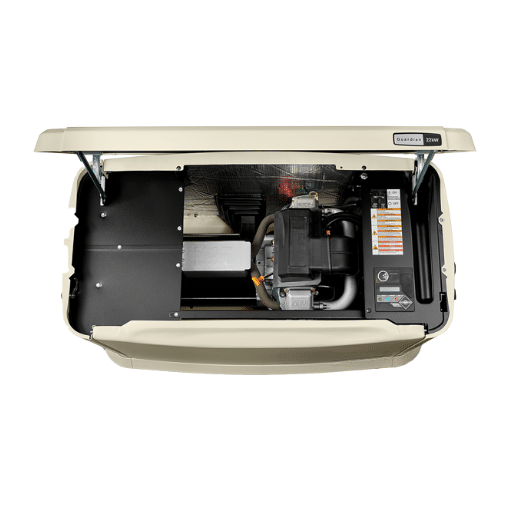
Fuel efficiency and consumption will be greatly affected and primarily depend on the equipment design and application. The less advanced optimization features of the standard models, however, are the reasons that they usually consume more fuel, but are nevertheless adequate for rudimentary functions. Top-market models are specially designed to be efficient: they employ innovative and fuel usage-reducing systems while producing an almost similar output level. Therefore, for most of the applications, the initial costs of the high-end models would be compensated by the cost savings on fuel consumption and the operation during the rest of their lifetime, thus, over a longer time period, more cost-effective. Fuel optimisation, being one of the main contributors to operating expenses, should be the most important consideration when purchasing any of the equipment.
Fuel Types for Generators
| Fuel Type | Energy Efficiency | Operating Cost | Availability | Storage | Environmental Impact |
|---|---|---|---|---|---|
| Gasoline | Moderate | Relatively High | Widely Available | Short-Term Storage | High Carbon Emissions |
| Diesel | High | Moderate | Widely Available | Long-Term Storage | Lower than Gasoline |
| Natural Gas | Moderate to High | Low | Good for Fixed Use | Not Suitable for Storage | Clean Burning |
| Propane (LPG) | High | Moderate | Widely Available | Long Shelf Life | Clean Burning |
| Solar | Low (Weather Dependent) | High Initial Cost | Renewable, Weather Based | No Storage Required | Zero Emissions |
| Hybrid (Dual Fuel) | High Versatility | Varies by Combination | Flexible | Depends on Fuel Used | Optimized for Clean Operation |
Fuel Efficiency Comparison between 20kw and 22kw Models
It is very important to look at the performance metrics of 20kW and 22kW generator models under different loads when their fuel efficiency is compared. Normally, a 20kW generator will consume about 1.6 gallons of propane per hour at 50% load and become a 2.9-gallon-per-hour consumer at full load. Nonetheless, a 22kW model can be found with a little higher fuel consumption showing an average close to 1.7 gallons per hour at 50% load and almost 3.1 gallons per hour at full load.
The mere difference in fuel usage between the two types underscores the need to properly align generator capacity and power demands. Although the 22kW model indeed looks mighty in power, still the fuel economy is a bit of the price to pay. However, the decision between the two should be based on a broader perspective, considering the operational requirements, the required runtime, and the likelihood of increased fuel costs over the long term. For maximized efficiency and performance, it is suggested that a deep assessment of the power consumption, as well as the needed kW loads, be done. The use of either of the models will surely deliver clean and reliable electric power as long as maintenance is also carried out.
Cost of Operation: Fuel Consumption Analysis
The fuel consumption is a very crucial aspect of the cost of running the equipment or machine as it affects the overall expenses in the long run. In line with the new engine technology, the fuel efficiency has been greatly enhanced by the use of combustion processes, and at the same time, preventing the waste of heat. For example, the diesel generators that experience standard load conditions consumes 0.4 to 0.6 liters of fuel per kilowatt-hour (kWh) which is really efficient compared to the modern gas generators consuming slightly more at 0.5 to 0.8 liters per kWh, although it is still on the lower side in terms of load variability and environmental factors influence.
Besides, the influence of external factors like temperature, altitude, and the maintenance frequency is one of the most important to finally define the actual fuel efficiency. The research in the area of the energy system was such that it demonstrated that a schedule of regular preventive maintenance, always followed by the replacement of filters on time and the calibration check of meters, will help to prevent the loss of fuel that goes as high as 15%. One is likely to come across the best deal among the different options by considering the entire life cycle costs, which include fuel and maintenance costs. Thus, by employing the advanced monitoring systems, fuel consumption patterns can be even more exactly described by operators, thus ensuring the sustainability and economic operations in the long run.
Cost Considerations

The cost consideration of 20kW and 22kW generators carries in the first place the matter of initial purchase price, fuel consumption, and maintenance expenses. Normally, a 22kW generator comes at a slightly higher cost at the beginning than a 20kW one, but a higher capacity may well be more cost-effective if your power demands are close to the upper limit of a 20kW system. The difference in fuel consumption between these two options is, in most cases, very little, especially if they are both operating at the same load levels, but the 22kW model’s availability of higher power might prevent the system from getting strained, and this, in effect, could subtly increase the longevity and efficiency of the system. The maintenance costs are the same for both sizes and they can be different depending on the brand and the model. It is the power needs and future requirements examination that will help the majority of the customers to get the picture of their better investment option.
Initial Purchase Price of 20kw vs 22kw Generators
The purchase price of 20kW and 22kW generators typically differs marginally due to such factors as brand reputation, build quality, and included features rather than the power output. On the other hand, 20kW generators normally cost a bit less because they do not provide as much power output, which makes them very convenient for people with moderate power requirements. The case is very different with 22kW generators that come with extra power; hence, they are usually 5% to 10% more expensive. That extra price is in most cases related to the fact that the price also includes the new power deliveries and on top of that, new technologies, such as more sophisticated monitoring systems and quieter operation features, come as a boon to the users. Of course, shoppers should ask for possible price cuts and other incentives such as service guarantees or easy payment schemes, which could increase the competitive advantage of either model. The whole financial picture needs to be taken into account after an analysis of power needs and usage patterns over the long run when they decide what is the most budget friendly alternative.
Long-term Maintenance Costs
When evaluating the costs that will come with maintaining a 20kW and 22kW generator over time, one would have to take into account a number of significant things, such as the amount of fuel used, the durability of the parts, and the time between services. Because the 22kW generator creates more power, a larger amount of fuel is usually required. Nevertheless, owing to the new technology of motor efficiency, this difference can be, in fact, somewhat negligible, particularly in the top brands. Both small and large sizes of the generators will have the same duration of oil and filter replacement, spark plug repeats, and inspection works, which are quite frequent, ranging every 100-200 hours based on the manufacturer’s recommendation. But it is well worth mentioning the issue of wear and tear; frequent maximal capacity operation of 22kW generators may cause components like alternators or transfer switches to have a shorter lifespan than otherwise might have been the case. While warranty and access to parts may affect costs later on, depending on the brand and model, some manufacturers offer extended warranties or service bundling. It is vital to factor all these variables into the cost structure to be able to forecast the total cost of ownership accurately and to make sure that the generator which has been picked is a match for the user’s energy demands and budget desires.
Return on Investment: Is the 22kw Worth It?
During the study of the yield of a 22kW generator, which is usually done by comparing the initial cost, efficiency in operation, and savings in the long run, it is important to consider a number of other factors. The 22kW generator will be relatively cheap with installation cost averaging between $8,000 and $12,000 in comparison to the cost of other units and besides, it is capable of serving mid-to-large homes or small business places with just the small saving or no obvious loss on a sunny day.
The output capacity can be said to be more now than in the past, which leads to improved reliability especially in cases of severe weather and the like. These are just some of the reasons why the newer 22kW models that have been recently released stand out because they are packed with advanced fuel and load management technologies making perfect use of energy and consequently the lowest fuel costs over the long run. The sources in places with high probabilities of system failures also often cite the benefit of savings when it comes to no spoilage of food, no disruption of the commercial activities, and no moving costs.
Moreover, the provision of smart home systems and the monitoring technologies is reliable to connect with and it makes people’s lives more convenient. Additionally, this technological comparability might also have a share in the growth of property value in the long run because homes for sale take homes with built-in backup power solutions more and more. Consequently, the 22kW generator can be seen as a wise investment since it will deliver both immediate energy security and a future cost-wise system when combined with all functional and financial benefits.
Advantages of 20kw and 22kw Generators

The generators with a power of 20kW and 22kW can be distinguished based on the level of control, their consumption, and their price. A 20kW generator is often good enough for lighting up all the vitals in a house, like heating, cooling, kitchen and lighting. On the other hand, it results in slightly lower fuel consumption, which can be a plus in a long hours of outage situation where the key is efficiency, and that can be an advantage. The 20kW models require a smaller initial investment, are therefore more accessible, and, for the above reasons, are recommended to households with moderate-to-low energy needs.
Conversely, a 22kW generator serves as a power backup in residences or properties with higher power needs through additional power. The extra capacity allows for devices and systems like super advanced HVAC systems or other odd appliances to operate at the same time without any breaks. By the time a 22kW unit comes with slightly more fuel consumption and a higher initial outlay, it actually is just the complete opposite because it is a great product for those with broader power needs and those who only want to have one power backup product instead of two or more.
Benefits of 20kw Home Standby Generators
- Reliable Power Supply: A 20-kilowatt generator for homes of a high standard will be your safe harbor during a time of power failure. This quantity is enough to feed all the most important appliances such as fridges, sump pumps and lighting neatly and properly.
- Supports Multiple Appliances: 20-kilowatt generators can also run the most power-consuming appliances simultaneously and all at the same time even heavy electrical equipment like central air conditioning units and electric heating systems, making them of great use to medium to large homes.
- Automatic Operation: Some 20-kilowatt standby generators are sold with an automatic transfer switch (ATS) and this combo makes sure that power will be back on in no time with no human interference. This characteristic in its turn addresses and drives the sensitive equipment households, i.e., the ones with medical devices or security systems, mostly.
- Fuel Efficiency: The modern generators with advanced 20kW generators though quite powerful are generally eco-friendly each model having its own way of cutting down on the operation cost. Moreover, this ultimately results in a more pocket-friendly solution while making the setup reliable and cheaper to operate in the long run! A good example is that some models make use of 2–3 gallons of propane or 190–220 cubic feet of natural gas for every hour under a 50% load.
- Quiet Operation: The use of modern technology has reduced the noise level of 20kW generators to the level that the units are barely noticeable in terms of noise pollution. The most common noise levels are in the range of 60–70 decibels, which is quieter than the noise from regular home or business portable generators.
- Durability and Weather Resistance: It is very common for such generators to be made from materials that have high corrosion resistance. Meanwhile, some are also certified by the UL to withstand harsh weather conditions by being installed outdoors.
Advantages of 22kw Home Standby Generators
- Power Capacity for Large Homes
A 22 kW home standby generator can supply enough electricity to accommodate the vast majority of large homes without compromising on convenience. It can take heavy electrical loads such as central air conditioning systems, refrigerators, and multiple lighting circuits, resulting in an uninterrupted power supply during emergencies. The horsepower provided by this power capacity is equivalent to running several 240-volt appliances at the same time. - Automatic Operation
Home standby generators of 22kw are connected to automatic transfer switches (ATS). They are programmed to shift the power source from the utility to the generator in a matter of seconds without any human interference. They are also programmed to self-finalize once the grid power is back, which assures you of both convenience and safety. - Fuel Efficiency and Options
These machines are built in a way that they can achieve the least fuel consumption possible and are usually compatible with both natural and propane gas. A 22kw generator, for instance, at half-load, consumes roughly 2.1 gallons of liquid propane (LP) per hour or 228 cubic feet of natural gas (NG) every hour at the same load. This function of the generator allows it to run for an extended period with little interruption from refueling (or even better, NG supply if the unit is adapted for gas). - Connectivity and Smart Monitoring
In terms of technology, the 22kw generator, which is more efficient and a bit more expensive, operates on liquid propane. These sorts of units are considered more cost-effective because they require fewer setup costs than the others. If all industrial, agricultural, and rural dwellers made the change, the demand for natural gas in the city would be less than the annual production of natural gas. Also, if you have this sort of fuel in the city, the demand for using liquid fuel will be zero. - Long-Term Reliability
There is solid evidence that the generators were made using powerful engines that are generally of the commercial-grade pedigree, and they have been specifically put together in a way that makes their operation continuous without having to stop long-term. For example, the majority of them have something like an air-cooling or liquid-cooling system that is quite advanced and therefore helps in the prevention of overheating, thereby contributing to the longevity of the engine. - Compliance with Local Codes and Standards
A great majority of the 22-kilowatt home standby generators that are actually used in homes have to comply with the emissions and also the safety regulations; that is, through the approval of the likes of EPA (Environmental Protection Agency) and CARB (California Air Resources Board). Consequently, this means that they become fully up to the government set standards, and so, in a way, they act as a form of regulator, which, in turn, gives peace of mind to homeowners during the process of installation and usage.
Choosing the Proper Generator for Your Needs

The aspects outlined below ultimately determine which generator is to be chosen:
- Power Output Requirements
You have to figure out the total wattage necessary for essential appliances and systems to be supplied during a power outage. For a regular residence, a 22 kW generator is enough for most of the major domestic needs as well as the heating, ventilation, and air conditioning (HVAC) systems. - Fuel Type
Select the fuel variety that you would prefer, since the majority of home standby generators are either fueled by natural gas or by diesel or propane. The choice will be determined by factors such as the availability of the fuel, the cost of the fuel in your area, and how to store the fuel. - Noise Levels
Keep in mind the operating noise levels of the generator, especially if it is to be placed near residential areas. A significant number of models have been designed with a quieter system to meet the requirements of local noise laws. - Automatic Features
Buy generators with automatic transfer switches (ATS), among the characteristics, to be assured of an uninterrupted operation during a power cut. This product will be very handy as it does the whole process without the help of human labor when the power goes off. - Budget and Maintenance
Remember to calculate the money you will spend at the beginning and the future maintenance costs. Make sure that the generator falls within your budget and, at the same time, gives you a reliable, low-maintenance performance. - Local Installation Compatibility
Look for compatibility with both the local building codes and the climate. This will ensure a correct and secure installation as well as the maximum efficiency of the system in the long run.
By considering and acting upon these standards, you have the power to go for a generator that perfectly matches the specific energy needs of your residence and the scenario under which your household is functioning.
20kw and 22kw Generators for Residential Backup Power
It is important to highlight the evaluation of 20kW and 22kW generators concerning residential backup power, using the concept of their ability to supply the electric energy demand imposed by modern households as the basis. Generators that fall within this capacity are the most sensible and practical choices for big to small houses, effectively working on multiple appliances at once, such as refrigerator systems, and the lighting, among other things.
Modern 20kW and 22kW generators nowadays typically present themselves with several new and advantageous features, such as automatic transfer switches (ATS) that ensure smooth switching of the power supply, remote control and monitoring systems that keep the users updated in real-time, and their fuel drain is made as economical as possible to keep the running costs in the future low. In many cases, they appear as relatively quiet-running machines because of the use of an insulated enclosure and the employment of the latest technology in the muffler system to keep the noise level down.
In addition to this, the choice of fuel is pretty important to consider, i.e., different fuel types such as natural gas, propane, and even dual-fuel systems can provide a better and more affordable power source for homeowners in their area. Another issue to watch for is that of maintenance and total time of operation, as these have a direct impact on reliability and the generator’s life span. A 22kW generator, for instance, may have a slightly higher capacity, which means that there will be an extra amount of power available in case demand exceeds the supply or if the house gets expanded in the future.
Commercial Applications: Which Generator is Ideal?
According to the needs of a particular application, the right generator for a commercial environment may vary in power rating from around 50kW to 150kW. Manufacturers of equipment that have high startup power requirements, like air compressors, refrigeration units, and other industrial machinery, constantly rate the generators in that power band. In addition, for the smaller commercial sector, such as retail stores or offices, a backup generator with a rating of somewhere between 20kW and 50kW may be regarded as sufficient for minimal needs, which may include lighting, computers, and the point of sale system.
At the same time, the type of fuel is also crucial in industrial areas. Diesel generators are still the common devices due to their performance, long-lasting life, and the capacity to handle large amounts of energy. Nevertheless, generators operating on natural gas give a pollution-free and thus a more environmentally friendly power source with lower emissions, which must be the best choice in the case of a company targeting sustainability goals. Besides, the new bi-fuel system technology that has appeared lately has made it possible for very quick and easy changes of fuel to be made by businesses whenever they consider it advantageous from the point of view of cost and fuel supply.
Moreover, the amalgamation of up-to-date control systems and ATSs guarantees uninterrupted power during electricity cuts. Abilities such as remote control are of greater importance for upper and small locations running businesses to have control over operations. If you are selecting a generator, you must not only look at the cost at the start but also take into account issues that may occur over time, i.e., maintenance costs, fuel efficiency, and compliance with regulations that will give you the required performance, while reducing costs in the long run.
Reference Sources
- Prototype of a 20 kW Cogenerator with Reduced Global Cost
Link to source - Design Process and Simulations for the Rotor System of a High-Efficiency 22 kW Micro-Gas-Turbine Range Extender for Electric Vehicles
Link to source