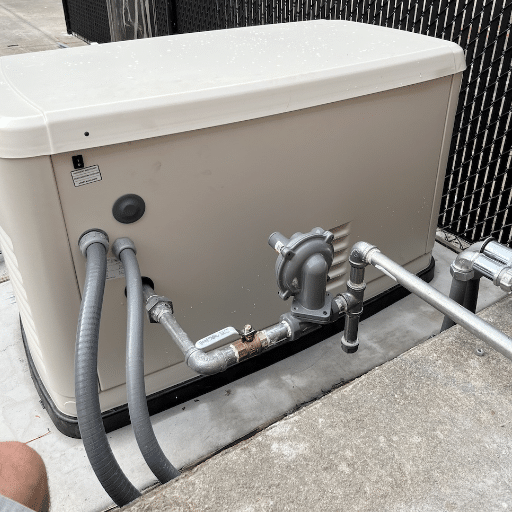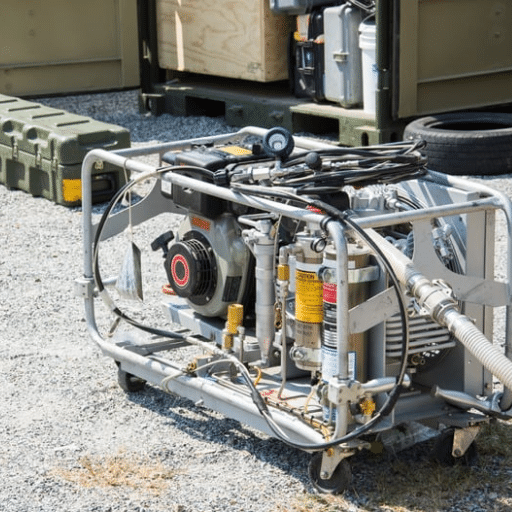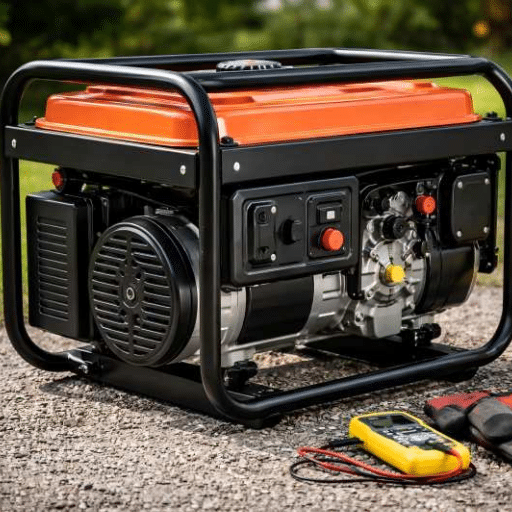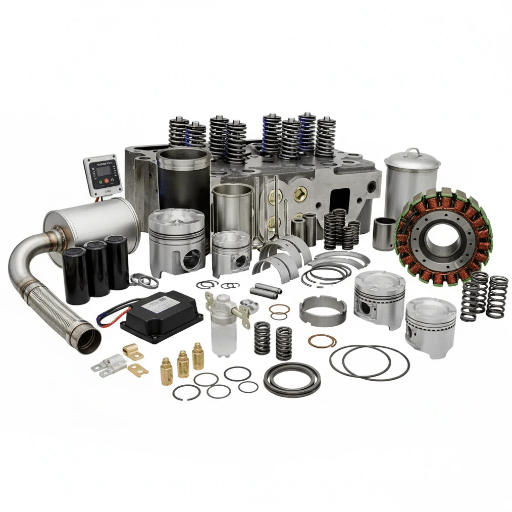

Choosing the best generator for your needs may prove to be difficult when choices are made horizontally, for example, between a 3500-watt and a 4000-watt generator. Both tend to be top choices for running essential appliances, tools, and recreational equipment; however, little differences in performance, capacity, and technicality may influence their suitability from your standpoint. Our review gives you an exhaustive comparison of the generators in line with their features, power output, fuel efficiency, and noise levels, among other things. By the time one finishes reading this piece, he or she will be in a position to make informed choices full of wise decisions for continuous power in a home, on the job site, or any other onset of adventures.
Understanding Power Ratings of Generators

Generator power rating stands for the amount of electrical power that a generator can produce, mostly measured in watts (W) or kilowatts (kW). The two major definitions of this rating are continuous wattage and starting wattage. Continuous wattage is the power that the generator can deliver continuously over the running time of the devices. Starting wattage is the additional power required while starting motor-operated devices such as electric refrigerators or compressors. Wattage should be calculated through the total of all the devices that you plan to power up, and then choose a generator that fits the requirements satisfactorily so that running wattage and starting wattage can both be met.
What Does 3500 Watts Mean?
3500-watt generator indicates its capacity. Therefore, it states the total electrical output it renders during operation, which consists of both running watts and starting watts. An average 3500-watt generator is capable of generating enough power to make sure all important household appliances and equipment can function during power outages or the operation of tools and small machines at working sites. As far as the context goes, normal things like refrigerators require either 600 or 800 running watts, and 1200–1500 starting watts, and just about 800 or 1000 watts in the case of microwave ovens. In short, a generator at an output of 3500 watts is capable of running several appliances at the same time.
What Does 4000 Watts Mean?
A watt refers to a unit of power, so long as much energy is being consumed or put in when referring to a 4000-watt generator. That means that a generator could power appliances that jointly consume up to 4000 watts of power, at any given moment. For instance, if one runs upon around 600 up to 800 with some 1200 up to 1500 running watts, a refrigerator and an expected 800 to 1000 watts, then providing two home appliances running together, cutting a distinction with a five-cluster mattress scenario. However, it is good to remember the starting watts, for many appliances draw higher charges when started. A generator with 4000 watts provides a great supply of energy for the most important jobs that need light-worked sites, or for leisure activities; be sure you calculate your total power necessity accurately before hooking up multiple devices.
Power Requirements for Various Applications
Determining the wattage required for one household would largely depend on the devices and appliances you want to run with the generator. From the essentials, such as refrigerators consuming 600-800 running watts and freezers requiring 500-700, in addition to that, while running watts, microwaves approximately use 800-1200, and the regular air conditioner may need from 1000 to 2000 watts, depending on the BTU size. Always keep in mind when wattages switch on, including surge wattage, that may be steeply rated as the wattage for an appliance, such as refrigerators or air conditioners, about 2-3 times over their wattage.
Users using generators for fun demand, on the whole, are reasonably related to smaller, portable appliances. A laptop calls for like fifty to a hundred watts of power, while a portable cooler calls for around 60-80 watts. In case one were camping with someone who had electric kitchen appliances like toasters or induction burners, the required power could rapidly shoot up to the range of 1500-2000 watts. Such small electric appliances as string lights or decorative lights would add but a slight load commensurate with 100 watts per string or fixture.
Comparing Features of 3500 and 4000 Watt Generators
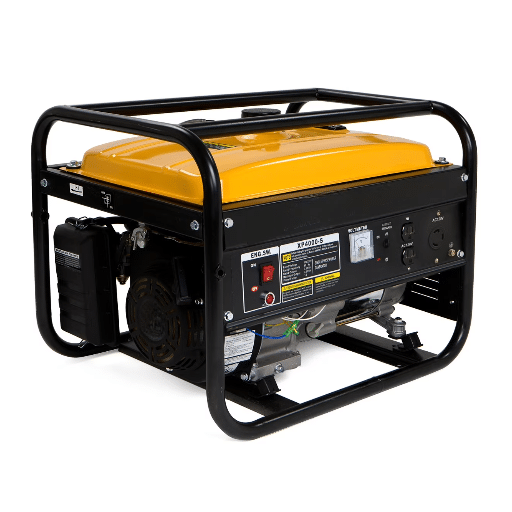
The main contrasting point between 3500-watt and 4000-watt generators is the difference in power outputs and their purposes of use. A 3500-watt generator caters to smaller loads like a small refrigerator, lights, and small electronics concurrently. It is the best machine for moderate loads, balancing portability and ability, thus perfect for usage on sites or in training for emergency backup
On the contrary, a 4000-watt generator can supply more power for heavier loads or multiple small tools and devices at once. This is the best thing for those with a high power requirement to serve multiple electrically intensive appliances or power tools. Additionally, having a higher wattage may assert the flexibility to be operated for longer during power outages or at building sites.
Key Differences of 3500 and 4000 Watt Generators
Runtime and Fuel Efficiency
As far as the ultimate consideration in hours of operation and fuel economy for a 3500-watt generator is concerned, the operational specifications and manufacturer claims should be in full light. Normally, operating at lower loads is the key strength of the unit- without a shadow of a doubt- with a runtime between 8 and 12 hours on a full tank of fuel (e.g., 3 to 4 gallons)-depending on load conditions and engine design. This makes this genset an acceptable choice for applications in longer-term moderate power requirements.
On the other hand, a 4000-watt generator, due to higher fuel consumption rates and increased power output, can run for fewer hours with the same quantity of fuel under a similar condition, say, the figure would be 6-9 hours. The improvement in fuel injection systems and engine technology has optimized its efficiency at providing decent run times at lower loads. Even though the 3500-watt generator is best in fuel consumption, the 4000-watt generator performs great considering peak power demand situations. Users should be able to size their requirements so that a decision can be reached in consideration of the runtime, fuel efficiency, and power requirements.
Design and Build Quality
The design of the 3500- and 4000-watt generators’ robustness and functionality probably lies in their portability, but it has come true. They are designed for smaller, ultra-portable applications, just like camping, tailgating, and minor household power losses. Users will find, based on readily available resources, that a 3500-watt generator is composed of a relatively small aluminum or steel alloy frame for lightweight disposition, with extra rubberized feet and handles serving exact movements and vibration absorption.
On the other hand, the 4000-watt model comes with increasingly tougher chassis frame materials per the increased mechanical stress owing to its higher potential watts. While a majority of models incorporate heavy-duty steel chassis structures that boost the generator’s stability, they are also designed to have some weight benefits from modern engineering. Major design prerequisites like insulated design and noise-reducing techniques have already come to be largely accepted in modern constructions of generators, where the equipment can be used with lower noise levels without compromising the generator’s output level.
Both sorts of generators also possess control panels, often with user-friendly graphical interfaces for users to perform voltage adjustment, track the running hours, and monitor the amount of fuel, all effectively and safely. Thus, there are additional safety aspects within the system, introducing an “oil low” shutdown and overload protection detailing a situation of quality for survival in the world of that power device. Lastly, it is evidenced from engineering and materiality that it reflects builders’ intention of producing sturdy goods capable of adhering to varying power generations.
Noise Levels and Their Impact

Noise levels have a significant effect on the usability of 4000-watt generators (irrespective of the fact that this would pose an issue, especially when the generators would be used in residential/locality or recreational settings). 3500-watt generators(in contrast) are found to produce noise levels varying between 57 and 70 decibels (dB), depending on the brand, model, and load. On one side or the other, 4000-watt generators are known for their noise levels from 63 to 72, the latter variation depending almost entirely on the size of the engine and design, as well as its noise-dampening features such as insulated enclosures.
In general, anything above 65 dB, which is around conversational magnitude, will be loud, especially with very long hours of activity, such as a campsite or a period of prolonged absence. For the minimal power loss, choose the ones marked as “quiet noise” or with enhanced mufflers and inverter technology-they would mostly run quieter than regular generators. The location of any generator itself becomes very important at any hour in maintaining this peace of noise; for this reason, positioning it behind soft surfaces and barriers that act as soundproofing shall reduce the noise thereof.
Decibel Ratings Explained
When you look through the noise levels of 3500 and 4000 watts, the dB (decibel) level would be checked because it directly evaluates the sound intensity generated while in operation. These watt capacities have been known in normal operation to have noise levels ranging from 57 dB to 70 dB, depending on other factors, including the load, engine type, and sound-damping technology. The models with inverter technology typically go on the side of the slow sound with noise levels of 57-60 dB while carrying a 25% load, making it about the right level of noise in a normal conversation. In contrast, non-inverter models under the same conditions will entail much higher noise levels, with about 68-70 dB noise when operating under their full range, producing very busy street-level noise.
The cooling and muffler systems contribute considerably to the decibel ratings. Some products implement this with casing and muffling designs in a manner that really makes all the noise go away. Yet, the link does not get started until you traffic in these arts projects, beneath the real bidding of condolence interludes with proponents of silence and calm. It is important to emphasize that each 10 dB increase means that perception works so hard to wake the phenomenon squarely to the noise level. Therefore, buying a generator with a lower decibel level makes a big difference in producing a relatively peaceful environment, a subject that is palpably more important in domestic use situations or in highly sensitive noise zones such as campgrounds. The manufacturer’s specs provide for the accurate specification of dB values for both full and combined load conditions, giving rise to an informed judgment relative to precise performance and conditions.
Real-World Examples of Noise in Different Environments
The sound produced by generators operating in the range of 3500 to 4000 watts is appreciably dependent upon a number of factors, such as the surrounding environment and the nature of the load. For instance, in a residential situation, a 3500-watt generator running in a 50% load situation would typically generate noise levels of about 60 to 65 dB(A), which is more or less equivalent to the volume of a regular conversation that might actually be heard. In an open environment, say a campsite, the same generator might not seem as loud compared to a confined environment, due to the absence of reflective surfaces.
Conversely, when a 4000-watt generator’s output approaches half of its capacity, starting at 70 decibels, that is the time to get into the same approximate range you can expect to hear in traffic jams. Probably the quiet polling booth is a plausible example where some regulators probably view it at the point of exchange against different noise constraints or home zoning for low noise contours. Further intervention occurs from source-related variables, such as terrain under operation details, conditions of reflective nearby sources, and things like inverter systems designed for sound minimization.
Choosing Based on Noise Levels
The noise will play a significant influence on the stairs of a customer in the 3500 and 4000-watt group, but even more so on the applications that require minimal location and operation disturbance. Noise volume of a generator is mostly measured in decibels (dB) at a standard distance of 23 feet. On a 3500-watt generator, one would often address the contributions extra for any inverter treatment it has, which must be on the lower noise front, since the noise will apparently register between 57 and 65 dB, resembling the sound of an average conversation. By virtue of their difference in design, these mechanized motors, not having been built for quiet performance 4000-watt models convert sound to a range anywhere from 65 to 70 dB, which is similar to a vacuum cleaner’s.
The advanced design of current-day products in both categories now conceives of insulation materials, soundproof enclosures, and adjustable eco-mode settings for quieter operation. The user must identify how these noise differences would fit the intended use. For example, when camping or RVing, backing up power in populated neighborhoods, a lower-decibel generator may be the best choice. This may serve as the standard medium for small back-up units having 1600 to 1800 watts. But at 4000 watts, there are not many options that allow for higher watt output and high-volume performance without being too tight on the bank balance. There are many important considerations to weigh.
Portability Considerations

Portability of the 3500-watt generator and the 4000-watt generator indeed varies due to features like weight, design/various adjustments in weight, design, and purpose of the unit. Being slightly lightweight, 3500-watt generators are built in with wheels and foldable handles that make the generators easy to lift, transport, and push around. They are suitable for tasks that have major shifts, such as job sites or special outdoor events.
On the other hand, the heavier construction of 4000-watt generators, which becomes heavier owing to higher power capacity and a big fuel tank, reduces mobility. Even if the generator comes with wheels and a foldable handle for pushing into position, the generator has a bulkier design that makes frequent displacement less likely. Possible usages of such generators could be said as for semi-permanent installation or stationary use, as one can know sufficiently well to handle a variety of power requirements, such as running numerous appliances during outages.
Weight and Dimensions of Each Generator
The 3500W and 4000W generators undergo significant weight and dimensional changes due to the designs, materials, and additional features employed in them. 3500W generators basically weigh anywhere from 90 lbs to 120 lbs with a length of some 24-28 inches, a width of about 18-22 inches, and a height of 20-24 inches. Their design is such that they can be taken to-and-fro as needed and, therefore, make an ideal choice for many applications that would require them to be moved frequently, such as RVing or a mobile working place.
On the contrary, 4000W generators tend to be larger and heavier, owing to higher power availability with a larger tank. Typically, they weigh around 110 to 150 pounds, are about 26-32 inches long, 20-24 inches wide, and 22-28 inches tall. While designs could or could not facilitate these generators with wheel kits plus some strong handles made for carting them around with ease, they usually look bulkier than those that might fit the stationary or semi-permanent application.
Ease of Transport
Mobile or transportation of the 3500 and 4000-watt generators depends mainly on their integrated design features as well as their distribution of weight. In modern times, these special features that engage enhancement and common handling techniques are equipped with folding handles and heavy-duty wheel kits so that, with little effort, they can be pushed across flat surfaces. Yet, depending on their overall weight, which could clock in at 120 pounds, this may still become a problem if one needs to be heaved on an unstable surface or up stairs. A pleasurable trip with smaller units needs to be considered, but of high-quality construction materials that are light and yet durable, such as a modern aluminum option. On that note, under designs, now comes the slouch that provides enhanced mobility stability on a lighter element without forfeiting a good power input. Such adjustments really do help you reach equilibrium on the issue of high power capability without giving up on that small detail of easily transportability.
Storage Considerations
For the generators of 3500 and 4000 watts, proper storage is vital for their performance and longevity to be preserved. To avoid any damages caused by the moisture, like the corrosion of the important parts, the generator with proper ventilation stored in a dry room environment. It is important to use a storage location that maintains stable temperatures because huge fluctuations in temperature can wreck the battery or hurt the sensitive electronics. Whenever there is a long period of non-use, fuel needs to be drained in order to prevent gumming and varnishing of the fuel system, especially with ethanol-blended fuels, which are more susceptible to depositing.
New advancements in storage include generator covers made from materials resistant to weathering that protect against dust and dirt while providing ventilation. On the other hand, some manufacturers offer storage solutions that have an assured lift-assist handle, fitting into space requirements and allowing for a minimum size without endangering use. The implementation of the proper storage techniques would ensure a long-lasting operation with the least likelihood of failure and high efficacy whenever the generator is needed.
Price Comparison and Value for Money

Comparison of the investment amount and the benefits obtainable from the investment of 3500-watt and 4000-watt generators reveals that the following major aspects merit consideration:
- Cost: The average prices for 3500-watt generators range in the $400-$800 range, easily the cheaper options, compared to the 4000-watt generators, where you would have to spend somewhere in the tune of at least between $500 and $1000.
- Output Difference: This is nothing much in terms of price, but the extra 500 watts of output with the 4000-watt generator allows the user to power more appliances or tools together, therefore making it a better as well as useful option under high-demand circumstances.
- Fuel Efficiency: 3500-watt generators are typically more fuel-efficient when it comes to smaller-scale needs, hence they are the better option for users who are more concerned about the runtime as opposed to absolute power. However, when it comes to powering some heavy equipment, the 4000-watt choice can prevent overload and distribute pressure from the engine.
- Intended Use: Value for money when the model is expected to provide a duty cycle from light to medium, one that includes a home appliance full backup. The 3500-watt model is a good value. The 4000-watt model is also available at a large premium for a big job or multiple devices.
In the end, the best fit for you depends on your sound power needs. Very conscious energy users usually pay for the 3500 watts as an everyday in-cost runner, although the 4000 watts for its processing of higher power demands is recommended for a regular worker.
Price Ranges of 3500 vs 4000 Watt Generators
When comparing the prices of a 3500-watt and 4000-watt generator, one should take into consideration a variety of factors, including the base cost index and increments due to extra frills given in each unit. A 3500-watt generator, for example, might be anywhere in the $400 – $700 price range on an average basis; factors that determine the range include brand image, power source, and input technologies, among others. By the same token, these models’ designs lack sophisticated technological features, which could possibly suffice in modest power circumstances without straining one’s pocket.
Contrastingly, 4000-watt models range from $500 to $1000 in price. The higher price tags, however, are deemed fair because of higher outputs, portability to more energy-intensive gadgets, and often better build quality. Some 4000-watt models can possess extended run-times and a dual power system as a two-fuel source or quieter operation to juggle pricing within the high limits of the range.
Ultimately, the price variant relies on consumer intent to a considerable extent, with the 4000W generators being used by users wanting better functionality and longer haul or heavy load circumstances.
Cost-Effectiveness Over Time
Several factors are considered when deciding on a 3500-watt or 4000-watt generator based on its cost and efficiency. Among these may be included the initial purchase price, fuel efficiency, durability, and maintenance requirements for the generator. With the 3500-watt generators, their lower initial cost provides many customers who use less power with a significant advantage. Another considerable advantage might be the fact that, due to these particular models’ lean-burning configuration, they indulge in cost-effective operation when lightly employed but at high rates of energy security, which can be of application throughout innumerable diversified users for hours together without any real problem.
On the contrary, 4000-watt generators, though initially costly, stand out in terms of adaptability and maximum power output. This is highly important to ensure these generators meet higher quality standards, as they are suited to harsher operating conditions and to critical use over extended periods. Moreover, the provision of the best engine technology and solid manufacturing often results in a longer running life, so that the rather high initial cost can be overshadowed. When properly taken care of, 4000-watt generators can still be a good value for money when used by clients needing durability and higher performance in the long run.
Both types of generators show their unique value in different scenarios, with the 3500-watt ones suited for cost-effectiveness for moderate use and the 4000-watt ones standing as reflective of durability and performance for emergency use. Ultimately, the driving factors would depend on aligning the generator’s specifications, performance, design efficiency, and the particular requirements of the power needs of the user.
Reference Sources
- Stanford University: A 1 KW Thermoelectric Generator for Low-temperature Applications
- Colorado State University – Center for the New Energy Economy (CNEE): Load Growth, Data Centers, and AI Electricity Needs
- Duke University: Energy Needs Analysis Final Report
Frequently Asked Questions (FAQs)
Can an inverter generator handle a power outage and run a refrigerator?
The Inverter generators are devised to provide a stable source of power adequate for sensitive appliances like a fridge and ac, and a refrigerator and a couple of other circuits can run on a lot of portable generator inverters. If one has a generator of a proper size and its startup watts do not exceed the running watts of the fridge, it should be enough. On the one hand, smaller inverter generators are much quieter and significantly less fuel hungry, but on the other hand, 3500 running watts is the lowest you have to have so as not to trip the circuit breaker on the compressor start.
How do I select the right portable generator size for an RV or whole house backup?
Which generator suits your needs the best? Add up the wattage of all your working simultaneously devices, the high startup amps appliances and 240v only loads like a window AC, microwave, or well pump. To power an RV, most people purchase a 3000 or 4000-watt generator to run the necessary comforts and appliances with a good margin, but residential backup power typically requires a whole-house generator with much bigger output capacities that would mean running a lot of circuits. A transfer switch is a necessary part of the installation to safely isolate home circuits and prevent power backfeeding into the grid.
Are small inverter generators much quieter and more fuel-efficient than gasoline generators?
In addition to being quieter – since the generator can adjust the speed of the engine to correspond to the output – the small inverter generators also present a situation where their fuel use is minimal and they become the perfect choice for camping or RV use. Steady power is supplied by the inverter generator, which is not only safer for electronics but also saves on gasoline by using fewer gallons for the same period. Nevertheless, they might not have the power rating necessary to run a complete house or a large air conditioning unit thus it is advisable to know the running watts before purchasing one.
How do different generator types compare for backup power and running appliances?
There are three types of generators, namely the inverter generator, the conventional portable generator, and the solar generator systems, offering a variety of balances between steady power, noise, fuel type, and output power. Steadier power output is the major advantage of the inverter generator and the same time it is much quieter. On the other hand, Solar generator systems that consist of solar panels and batteries can be quieter, cleaner; however, largers battery capacity will need to be bought to the power the fridge and heater compare the power available in the solar panels. The choice must take into consideration aspects like rebuilding the carburetor in gas-driven engines, the available fuels being either propane or gasoline, and the need to use two large-capacity heavy-duty devices simultaneously.