
In order to guarantee seamless whole-house power during outages, the correct generator size is one of the most crucial decisions to be made. The two options most commonly talked about are the 8kW and 12kW generators, but picking the right size involves a lot of your family’s power needs and preferences to be taken into account carefully. A thorough comparison focusing on generator sizes will be provided in this article in an easy-to-understand way. Our main comparison points will be the power capacity, efficiency, installation cost, and the adaptability of the various home setups. After reading the whole text, the odds are you will be presented with a good fit for your house and lifestyle, and the choice will come with all the rationale and certainty you need.
Understanding of Generator Sizes
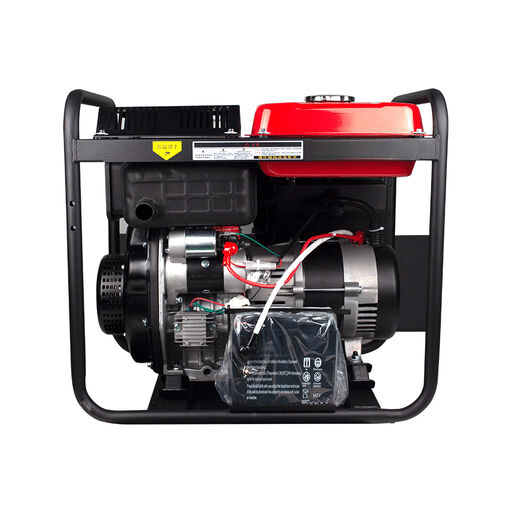
The generator size is the term that indicates the amount of electric power that comes from the generator, either in watts or in kilowatts. It is linked directly to the quantity of equipment or appliances that can be used at the same time. By choosing the right size, you are providing that energy demands of your home can be met by the generator without too much load or low performance. A generator of less capacity will expose to frequent overloading, while an excess capacity one will result in unnecessary costs and inefficiency. Look at your total wattage requirements including both the absolute and the high-power appliances, to figure out the right generator size for your situation.
What is an 8kW Generator?
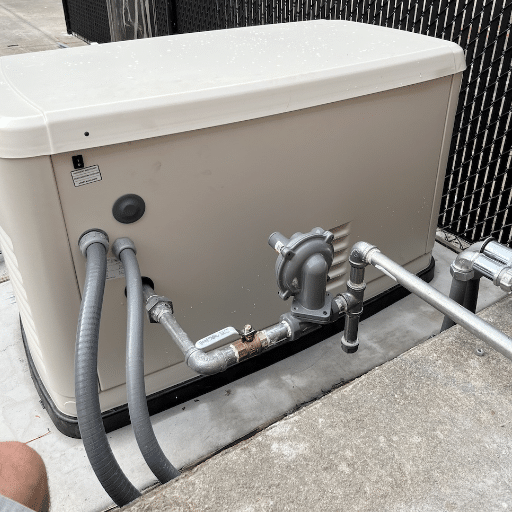
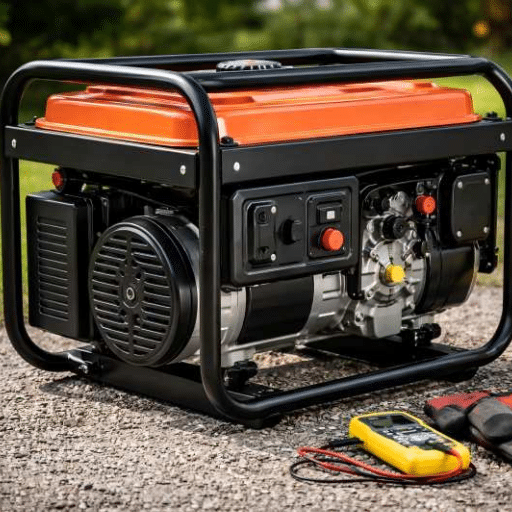
A power solution Generator 8kW, that falls in the middle range, is made to generate up to 8000 watts (8 kilowatts) of electric power. This is useful for homes, small businesses, or even recreational purposes and can cover the necessity of basic appliances and systems for a certain period of time. An 8kW generator is usually good for various appliances working at the same time, for example, a refrigerator, lights, AC units, and also smaller electronic devices, just depending on their joint wattage consumption.
In general, these generators normally come in two kinds: portable and standby. The portable type of models can be easily moved without much ado while the standby generators that are stationed in one place are automatically turned on when the power supply goes off. The fuel choices for 8kW generators can be gasoline, propane, or natural gas, and each type of fuel affects the running time, fuel consumption, and cost significantly. Also, the present-day 8kW generator units are often equipped with technical sophistication like quieting systems, internet-based monitoring, and political switches, and all these are to guarantee non-interrupted and trustworthy service.
What is a 12kW Generator?
There is slightly a higher possibility that the larger generators like the 12kW ones may cost a little more on maintenance than the regular ones as they have more parts and higher operational demands. This fact might be contradictory to the public’s perception during the first purchase of a machine and it may result in significant maintenance charges over a longer period of time if this was not taken into account when budgeting for the purchase.
Nowadays, 12kW generators come with many advanced features such as automatic voltage regulation (AVR) that keeps the electricity output stable, digital monitoring systems that help in the tracking of performance, and weather-resistant cabinets that help in the extension of life in tough conditions. Automatically, the product cut-off switches are available where many but not all models have this feature to transfer the electrical power from the grid to the generator when the grid is down to keep the energy flow constant and therefore the transfer will have only a short time. 12kW is a perfect example where it is not only the most conservative way of going about things but it is also very easy to use, so it is quite a versatile choice for many applications.
Key Differences Between 8kW and 12kW Generators
| Feature | 8kW Generator | 12kW Generator |
|---|---|---|
| Power Output | 8,000 watts | 12,000 watts |
| Ideal for | Small homes or limited appliances | Larger homes or higher energy demands |
| Fuel Consumption | Lower fuel usage | Higher fuel usage |
| Weight | Lighter | Heavier |
| Cost | More affordable | Higher initial cost |
| Run Time | Shorter on full load | Longer on full load |
| Noise Levels | Slightly quieter | Moderate noise increase |
| Installation Complexity | Simpler and quicker setup | May require more specialized installation |
| Supported Appliances | Basic essential appliances | Multiple heavy-duty appliances |
| Backup Duration | Suitable for short outages | Supports longer outages |
Power Requirements and Efficiency

If you are thinking about the power and efficiency of 8kW and 12kW generators, it is a crucial step to finding out the need of energy and the capability of operation. An 8kW generator is perfect for the most basic things in the house, like a refrigerator, light, and heating system for a short-term outage. It is good to have a small-sized unit for those users who have a former need, but under moderate loads the generator still keeps the fuel efficiency.
The 12kW, on the other hand, is the brainchild for those who need a lot of power, we are talking about a big pair of tongs here. For those who are in the need for a high power source, such as for the case of a very big house, a farm with a lot of machines, then the 12kW generator is the king. Not only is it not a very big house, but it is also one with a big demand for power, which can be served by this generator’s potential, and even in this space, there is no big issue of fuel consumption. The 12kW model, being the latest, even allows homes with high-tech gadgets and circuits to be sustained by the ever-reliable and robust power delivery system.
The selection between variants is regulated by the meter of power consumption, the length of probable outages, and the value of the utilization of heavy-weight appliances during the power cuts. For the majority of users running low to moderate usage, 8kW should be more than enough to back up their needs, though, 12kW will suit well the broadest range of requirements.
Total Power Output: Starting vs. Running Wattage
Among the most important characteristics of a generator, one can indicate not one but two wattages that can be even strikingly different. The starting wattage, also recognized as the surge wattage, is the extra or so-called boosted power that is taken by the appliance when first turning on, especially those types of appliances that need a quick flow of energy at the beginning. The continuous power to keep the appliances functioning should be less than the above mentioned power and it is still called a running wattage.
A generator with the power rating of 8kW mostly comes with a starting wattage of approximately 10,000 watts and a running wattage of 8,000 watts. Though it is still a relatively large power source for home use, some of the most important appliances such as refrigerators, lights, and select small air conditioning units would be able to run during the emergency. On the other hand, a 12kW generator would be the best as the starting wattage is up to 15,000 watts and the running wattage is 12,000 watts. This equipment will serve as a supporting system for the main, heavy-duty HVAC or several high-demand appliances working at the same time.
In terms of power provision, both 8kW and 12kW generators are known to be consistent tools, whereas the major difference is the starting and running wattage that shapes the overall usability of specific appliances or systems, particularly those with high initial energy demands. To sum up, thorough recognition of these criteria helps in making an informed choice for anyone depending on the type of electricity needed.
Fuel Efficiency Under Varying Loads
Fuel economy is a major issue to be taken into account for the comparison of 8kW versus 12kW generators when operating with different power loads. As a general rule, the smaller generators, such as the 8kW model, show better economy at lower to medium load levels because of their lower rates of consuming fuel. For example, an 8kW unit at 50% load usually burns 0.8-1 gallon of fuel per hour, which is model and fuel-type-based and a good choice for moderate power requirements.
On the contrary, 12kW generators that are meant to be utilized for the huge amount of loads that they can handle seem to be consuming more fuel, especially when they are running at less than full capacity. In the case of a 50% load on a 12kW generator, the fuel consumption could be somewhere between 1.3 and 1.5 gallons per hour. However, the bigger units frequently achieve better fuel efficiency at higher loads or that is 75% to 100% where the engines are tailor-made to the application of continuous power. The efficiency difference between the two models shall be even more during the extended time of operation and more particularly at variable loads where a situation can arise that there is an excessive fuel used due to a mismatch between the demand and generator capacity.
Cost Analysis of 8kW vs 12kW Generators

When it comes to cost, the main concerns that come to the forefront in the case of both 8kW and 12kW generators are the initial cost and operational cost.
- Initial Purchase Price:
With respect to the generators’ cost, the 8kW units are the cheaper of the two, their cost being generally in the range of $2,000 to $3,500 depending on features and brand. Conversely, 12kW generators are usually priced between $3,500 and $5,000 because of their higher capacity and more advanced parts. - Operational Costs:
Fuel economy actually becomes the biggest cost factor in the genset units’ economy at last. The 8kW model uses some gasoline, but it is really small, so it will not be that expensive, but it is still the perfect match for the cases where the power source is not big and also only a bit demanding. On the other hand, the engine gets the best power when the 12kW model has to work under a heavy load, this way making it more budget-efficient. - Maintenance Costs:
It is indispensable for both types to perform regular check-up routines, and even though that is the case, this 12kW might have a slightly higher repair bill than the average one as a result of the fact that the former one has a bigger number of components and is working at a higher level. This issue is likely to be missed when the generator is purchased, hence the repair cost may be much more unless it is considered in the budget.
In the end, the decision to buy either an 8kW generator or a 12kW generator should be made based on the power load requirements and the time the generator will be on. If they try to alter the power demand, the 8kW is a less expensive choice for intermittent or light usage. On the other hand, a 12kW generator would be the best option for peak power draws or more extended usage for maximum value over the long term.
Upfront Costs Comparison
After taking a considerable amount of factors into consideration, it becomes clear that the initial costs of not only an 8kW but also a 12kW generator has to be assessed. An average 8kW generator that seems to sit in the lower end of the price range will bring you a bill of around $2,500 to over $3,000 on several payments which will depend on the company, the game and the attributes that have been put into it. Meanwhile, the 12kW generator is more often than not a hefty amount on the initial payment side being in the range of $4,000 to $6,000. The reason for this substantial price difference is that the bigger power capacities needed more complex engineering.
One of the other costs that will be incurred could be the installation cost, which would largely depend on the complexity of the generator and the site conditions. For example, if you need to install a 12kW generator, some of the things that might need to be done are the replacement of the electrical systems or even the enlargement of the transfer switches thereby increasing the labor and material costs that will have to be incurred. The choice of fuel is another factor that can contribute to the total upfront investment; the reason is that natural gas or propane-powered generators usually have a slightly different installation requirement than gasoline or diesel.
Long-term Maintenance Requirements
Primarily, the distinct requirements for operational capacity, component sizes, and overall workload makes high power generators of 8kW and 12kW to have differing long-term maintenance. Essentially, the physical properties of a smaller 8kW generator make it more delicate to run continuously near or at its maximum power level. This might make it necessary to carry out oil changes, filter replacements, and checks of wear-prone parts such as the alternator or a motor more often which would be related to the increased strain. The average of 100 to 200 hours of operation hours would be the best interval for maintenance of an 8 kW generator.
Conversely, there might be improved durability and less stress in the case of 12kW generators, designed for bigger power consumption while being managed properly. However, with their size, the engines and components also comes a more than slight maintenance effort. These might be the necessity of more oil and closer inspection of cooling systems to see the way out of the high heat output in operation, as in the case of the bigger capacity these units operate at. Moreover, the cost of spare parts, i.e., spark plugs or air filters, can be a tad higher in the case of a 12kW unit because of their size and tasking control complexity.
Both generator types require the implementation of preventive maintenance procedures that should be done on a periodic basis, which includes the load bank testing yearly, battery health checks and diagnosing the system to help prevent unexpected downtime. The number of maintenance tasks needed along with their intensity levels may also be affected by environmental elements such as dust, humidity, and temperature fluctuations. Following the schedule correctly will result in longer life and better performance for both the 8kW and 12kW generators and thus the decision as to the selection of the generator will not only be dependent upon the capacity requirement but also be based on the long-term maintenance consideration.
Total Cost of Ownership Calculation
The total cost of ownership (TCO) of the 8kW and 12kW generators must be worked out in terms of the price at the beginning of the purchase, expenses on fuel, maintenance, and the period of operation. Typically, the acquisition cost of 8kW generators comprises between $2,500 and $4,000 on average, but for some brands and specifications the price may fall below the lower limit or exceed the upper one. In contrast, 12kW generators usually require a minimum of $3,500 to $5,500 for the top model with regard to their higher capacity and cutting-edge features.
The fuel consumption of power sources is a very important factor, as it has a direct impact on the running costs. Normally, an 8kW generator will consume roughly 0.8 to 1.1 gallons of fuel every hour when operating with a 50% load, while a 12kW generator consumes something like 1.2 to 1.5 gallons per hour under the same load. With operation lasting a long time, the fuel cost can get problematic when one is utilizing generators with different fuel-efficient rates. Another point to consider would be the fact that the maintenance procedures required with the bigger generator are much more expensive in terms of the overall cost, but at the same time, the bigger generators are better at handling the increased load at a lower cost.
Moreover, there is a question of durability and operating time. The 12kW generator with high capacity is less strained when paired with a larger load, and as a result, it will have a longer life when it is kept in the right maintenance cycle all the time. On the other hand, an 8kW generator with its maximum load always would see the wearing out ahead and would have the cost saving for the maintenance costs smaller than being in the maintenance pool, regardless of time.
In conclusion, the total cost of ownership (TCO) is predominantly affected by external factors like installation costs and load requirements. An 8kW generator would be enough for smaller residential setups but a 12kW one would be a better choice for larger homes and higher power demands, which could be the case during a prolonged outage.
Real-World Usage Scenarios

An 8kW generator would serve well a small household or a place with an average power need. It generally happens when the generator is used to power up the main electric appliances such as refrigerators, lights, a furnace, and some more devices during a power failure. Also, people who are energy-conscious or have little electrical loads would consider these units as the best money-saving option. Yet, having an 8kW generator as a power supply for events that more often than not go beyond its peak output could be linked to suboptimal performance and shorter lifespan.
A 12kW generator is a great pick for bigger homes or properties with high electricity consumption. It even handles the operation of various power-hungry devices at the same time by providing electricity, e.g. HVAC systems, water heaters, or electric ovens. Besides, it safeguards reliable performance during long power outages, and also a 12kW generator offers a more substantial effect on the future-based smart grids and hence, it is a relatively promising option for increasing energy needs.
Powering a Small Cabin with an 8kW Generator
Evaluating how an 8kW generator could best power a small cabin, it is absolutely vital to take into account both the power demands of normal cabin appliances and the operational capability of the generator. An 8kW generator can provide more than enough power for important systems and appliances when these are carefully used, including but not limited to lights, cold stores and refrigeration, pumps, and heaters. A standard refrigerator, for instance, consumes energy in the range of 600-800 watts, while an efficient LED bulb only needs 10-15 watts. The 8kW generator can manage the essential house loads very easily, that is, a (round) microwave of 1000 watts during its operation or a water pump with a consumption of 400-800 watts.
Furthermore, modern 8kW traditional power plants regularly have advanced features such as automatic voltage regulation (AVR), and the most recent power supply equipment shows low harmonic distortion, meaning continuous, stable, and clean power for delicate electronics like laptop computers and communication appliances. In addition, for example, in case there is no electrical power grid connection, a combination of 8kW generators and efficient energy management practices, possibly with solar panel installations, is a way of having a green energy solution. Nonetheless, the role of the total wattage needs to be rigorously considered by taking into account the start-up surges of each appliance to ensure that the generator does not overburden and therefore will work non-stop.
Powering a Medium-Sized Family Home with a 12kW Generator
Regularly, the 12kW generator will be the most reasonable and adaptable choice for the supply of energy to the basic equipment in the small or medium-sized family household, including lighting, entertainment systems, and smaller electronics, and for the support of all of them while the system is not overpowered. The owner will do well to purchase the highest quality components such as the HVAC systems, refrigerators, water heaters, and electric ovens all drawing the largest possible electrical power at the same time while the generator takes care of the rest and at the same time lighting, entertainment systems, and smaller electronics are run with the support of the generator. A 12kW generator providing a power of 50 amps at 240 volts, which is the modern home energy need, is the general power output of a 12kW generator.
In order to enhance the performance, generators installed in houses can come with an automated transfer switch that makes the transition from grid power to the operation of the generating set trouble-free and likewise back to the grid when the outage is over. The 12kW generators that are now available in the market usually include noise reduction technology, fuel injection, and remote monitoring of the unit through smartphones that contributes significantly to reducing not only the cost of fuel used but also the process of maintenance, thus also giving the homeowner the advantage of having real time information on the status of fuel, repair code and the run hours of the unit.
12kW generators used in conjunction with load management systems are able to save energy more by cutting off non-critical appliances and prioritizing critical ones providing at the same time a full-power backup with controlled fuel-consumption at the same time. To green-friendly citizens, adding a 12kW generator such as the one in a hybrid system with green sources like wind or solar will help out in beating emissions and at the same time, to reduce the overall consumption of fossil fuels. According to the above-mentioned article, this is a large-scale and discussed problem that only energy consumption predictions can solve.
Generator Needs for Whole House Power

As a prerequisite to powering a whole household with a generator, it is very crucial to figure out the combined power consumption of all the important machines and devices so that the generator can meet those requirements. A 12kW generator is usually enough for the majority of people’s homes that need to have things like heating and cooling systems, refrigerators, lights, and water heaters powered, including at the same time the use of other smaller devices. It is advisable to put on the top of the list the appliances which demand the most power because they will use the larger part of the generator’s supply. The owner’s best way to get the right wattage of the appliances and devices needed is to ask an electrician or better still make use of an energy assessment tool. This way one will be sure that the right generator matching the specific power requirements of the household is bought.
Assessing Your Power Needs
When deciding on an 8kW and 12kW generator for your specific power demand, it is necessary to understand their output characteristics or else the generator will not suffice your power needs. On average, an 8kW generator can supply your house with enough electricity to keep the fundamental systems operational. The main systems of a home, as well as a few additional ones like a microwave or a small air conditioner, can be powered by it. Its ability, however, may be compromised if there is the simultaneous use of, for example, one high-needs device or other high needs devices like a central air conditioning system or an electric water heater.
A 12kW generator, on the other hand, is a big jump in power and it can be of great help in case of large houses at places where electrical loads are very high. Most of the time, this size of generator can manage to support big appliances like a bigger HVAC system, multiple fridges, and/or even an electric stove, besides the essentials. On top of everything, a 12kW generator sets free more than the 8kW people. In this way, there is less necessity of load shedding and even the higher levels of comfort can be enjoyed using the excess capacity of the 12kW generator.
When making a choice we have to consider the size of the load, which is very important. To be exact, the starting and running wattage of your appliances should be taken into account, because the starting wattage- especially in the case of motors- can momentarily be higher than the running wattage. An 8kW generator might be enough for regular uses, but a 12kW unit is normally suggested for those who want the best reliability with the least agreement on power distribution. Identifying your household’s peak usage scenarios will help you decide if going for a bigger generator through the extra investment is a must.
Typical Appliances and Their Power Requirements
- Refrigerator/Freezer:
Modern energy-efficient refrigerators are known to sustain operations consuming power in the range of 100-800 watts, with the extreme case of the startup wattage going up to 1200 watts due to the load of the compressor. - Air Conditioner (Central):
Most of a house’s central air conditioning system power consumption occurs at between a 2000 to 4000 Watt range, and it puts a huge demand for a startup wattage that sometimes could be even 5000 Watts. - Washing Machine and Dryer:
Heating water in a cycle is when washing machines consume the most power, with a typical range of 500-1300 watts. On the other hand, dryers register some of the highest power consumption statistics with a mean wattage of 1800-5000 watts. - Microwave Oven:
Commonplace microwave ovens come in at about 800-1200 watts, while the most powerful models’ wattage may reach as high as 1500 or more watts. - Television:
LED or OLED televisions in today’s time have their consumption at 100-400 watts, smartly adjusted to what the consumer prefers (but one thing you might need to take care of are those huuuuge plasma screens consuming tons of energy). - Lighting:
A traditional incandescent light bulb needs 60-100 watts of electricity but an equivalent brightness can be achieved with only 5-20 watts of LEDs which are much more energy-efficient dieses verbrauchen nur lesen begs or dresses other within bieten.
Calculating Total Power Consumption for 8kW vs 12kW Generators
It is, in fact, the most important thing to do, taking into consideration both the individual appliance power loads as well as the total ones to assess the total power consumption per generator with respect to 8kW and 12kW capacities. In other words, an 8kW generator can provide an 8,000-watt load, while a 12kW is a power house donating 12,000-watt loads for very high energy consumptions. The foremost step is to enroll high-use appliances like air conditioning units that can be 2,000-5,000 watts, refrigerators in the range of 600 to 800 watts, and water heaters that require about 4,500 watts. Summing up these loads gives the users a clue about the largest energy intake in a rather generalized way.
For illustration purposes, powering a central air conditioning system (3,500 watts), refrigerator (700 watts), and several lighting systems, adding up to 500 watts, will bring about a total demand of 4,700 watts. An 8kW generator is adequate for fulfilling these basic requirements. However, it may not be able to handle simultaneous device addition like the electric stove (7,000 watts) or the washing machine (1,200 watts). A 12kW generator comes in the larger safety margin category, providing better grid performance regardless of the range of loads.
In the end, whether to have an 8kW or a 12kW generator should be based on the load calculations and future energy demand projections, so as to deal with the maximum usage scenarios well and to be highly reliable.
Reference Sources
- A Discrete PLL Based Load Frequency Control of FLC-Based PV-Wind Hybrid Power System with Real-Time Data
Link to source - Adoption of an Effective Control Scheme for Wind Energy Conversion Systems Using Maximum Power Point Tracking
Link to source