
Selecting between an air-cooled and a liquid-cooled system for your house or business is one of the major decisions you will have to make when buying a generator. Each one of them has certain types of power abilities, costs, and applications in the market that depend heavily on the user’s power requirements, budgets, and long-term needs. This discussion will be oriented towards the technical differences, performance capabilities, cost implications, and typical applications associated with each cooling system. At the end, the reader will have all the necessary information they need to select the one that fits their requirements the best as far as an undisturbed power supply is concerned. Whether you are trying to save operations that are crucial or simply looking for some comfort during blackouts, being familiar with this main difference is the first step to having a dependable power solution.
What is a Standby Generator?
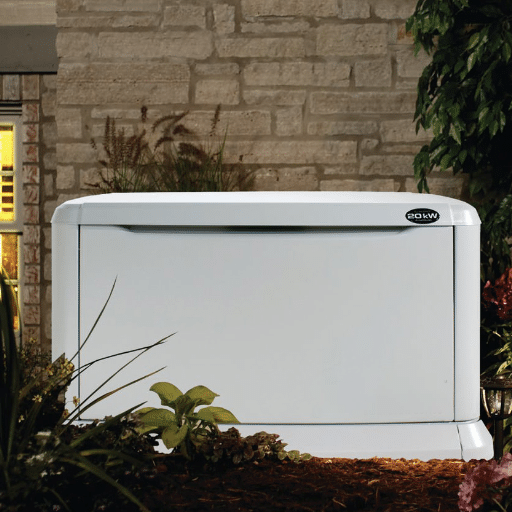
The backup generator is specifically a power system that supplies power whenever a power cut happens. In the event of a power failure, it detects and starts immediately as well as creating power for the chosen circuits or entire building. Diesel, natural gas, or propane are usually the types of fuel used to power standby generators and they are usually located outside of a building. They have a feature that automatically changes the power source from the grid to the generator by the time the electricity is gone and that saves the internal electrical system installation. This majorly application is in life-supporting establishments, e.g., hospitals, data centers, and residential houses, which require the highest level of power security.
Importance of Generators during Outages
Generators are an indispensable part of the power system, they serve as a shield to operations and a way to avoid risks during blackouts. There is a new revelation from the industry that power interruptions have caused businesses in the United States to lose billions of dollars annually because of the downtime, equipment damage, and lost productivity. In healthcare settings, where power is very crucial for life-support equipment, or in data centers, which rely on continuous power supply to prevent a large-scale data loss or security breaches, generators will still make a difference. Besides, for domestic users, power generators are a source of comfort and security by running essential home appliances and systems during prolonged outages caused by severe weather conditions or grid failures. These powerful systems are a key to the control of functionality and the hint of cascade effect reduction in both the industrial and household sectors.
Overview of Cooling Systems in Generators
| Cooling Type | How It Works | Key Advantages | Common Applications | Maintenance Focus |
|---|---|---|---|---|
| Air Cooling | Uses air flow to dissipate heat | Simple design, cost-effective | Small generators, portable use | Periodic cleaning of vents |
| Liquid Cooling | Circulates coolant through engine | Efficient heat removal | Medium to large generators | Coolant replacement, leak checks |
| Oil Cooling | Oil absorbs and dissipates heat | Durable, dual lubrication function | Industrial applications | Oil level and filter checks |
| Hydrogen Cooling | Hydrogen gas absorbs heat | Highest efficiency, lightweight | Large power plants | Leak prevention, gas purity |
| Heat Exchanger Systems | Transfers heat to secondary fluid | Adaptable to specific requirements | High-output generators | Heat exchanger cleaning |
| Fan-Assisted Cooling | Mechanized air circulation ensures cooling | Boosted air cooling capability | Higher temperature regions | Belt and fan inspections |
Air-Cooled Generators

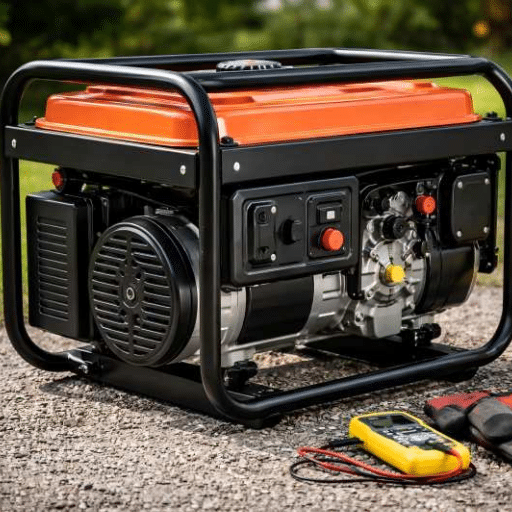
Their cooling is based on air from the atmosphere and thanks to this, the generators are consistently reliable. It is possible to supply the whole cooling only by air, so there is no need for liquid cooling. Furthermore, the systems with air-cooled generators have a smaller number of components as far as cooling is concerned. This means that they will also be less complex and therefore less maintenance will be needed. Thus, it can be concluded that the generators are the best solution for not only small fishing boats and marine applications but also onshore locations and other difficult places.
How Air-Cooled Generators Work
The principle of operation of air-cooled generators involves the presence of internal fans and ventilation systems that dissipate the heat produced during power generation. These fans, during the generator’s operation, suck in the incoming air, which is an ambient one, through circulation, making it pass through the system and thus cooling the engine, alternator parts, for example, by extracting the heat. The hot air finds its way out of the system through the air vents thus keeping the temperature in the system constant and within the limits of the operation.
It is not rare for the more modern generator models to incorporate advanced fan concepts and better places for vents resulting in cooling efficiency maximization. The ventilation design’s enhancement is based on the thermodynamic principles that control. Hot air is the engineer’s best friend in this case. The presence of hot air in the engine compartment while the alternator is running is the best condition the engineer can aim for, and with no hot spots at all the same time. In the case of already big units or units that are expected to grow in the near future, airflow can be more distributed if there is an air-guiding structure installed.
The balance between airflow efficiency and noise reduction is a design problem that is very dominant for air-cooled generators. With the application of sound-dampening materials or unique fan blade shape designs, the cooling operation is made quieter without compromising performance by some modern air-cooled generator systems. Proper maintenance, including the cleaning of air filters and fan blade geometry check, is crucial to prevent sudden halting of performance and/or overheating, particularly in atmospheres with high temperatures and a lot of dust.
Advantages of Air-Cooled Generators
- Cost-Effectiveness
Air-cooled generators are commonly more cost-effective to buy and set up when compared to liquid-cooled systems. The straightforward design of them excludes the necessity to have complicated parts like radiators, water pumps, and cooling jackets, which then leads to a cut in the costs both upfront and for their life maintenance. - Lower Maintenance Requirements
In air-cooled generators, liquid cooling systems are not present, so the risks of leaks or corrosion are significantly reduced. As for the scheduled maintenance, it is mainly about cleaning up air filters and checking fan mechanisms, which is considerably easier and less time-consuming in comparison with the maintenance of liquid-cooling systems. - Compact Design
Air-cooled generators are typically designed in such a way that they are lighter and more compact. Consequently, they are well-suited for applications in smaller spaces or for as portable as camping equipment; and therefore recreational vehicles (RVs), camping equipment, and backup power systems for residential use are a few of the primary applications. - Operational Reliability
As the case may be, standard conditions are perhaps the best example to start from for air-cooled systems working decidedly well without extra fluids or external cooling components. Thus, a simpler and more reliable system is provided by air cooling without the cost of performance in typical and not too complex applications. - Energy Efficiency
These units operate through the cooling of air from the surroundings, which requires the installation of neither the energy-consuming pump nor the complex cooling infrastructures. This type of simplicity, however, turns the effective output of the engine into a more actual utilization of the energy, thus promoting global energy efficiency. - Ideal for Intermittent Use
The air-cooled generator is very promising for applications with the use of one or a few units only and for short/less frequent use because the design is specifically adapted to these conditions and the cooling system does not experience a lot of wear as in the case of longer operation durations or frequencies.
Common Applications for Air-Cooled Generators
- Residential Backup Power
The air-cooled generators are a top solution for domestic use as they can feed the essential power during blackouts with a lower risk of the utility system being interrupted. Smaller and cheaper, these units are typically installed on the property of the owner and have capacities within the range of 5 kW and 20 kW as their capacities which are enough for the operation of the essential appliances and some of the systems like light, fridge, and heating, ventilation, and air conditioning (HVAC) units simultaneously. - Recreational Vehicles (RVs)
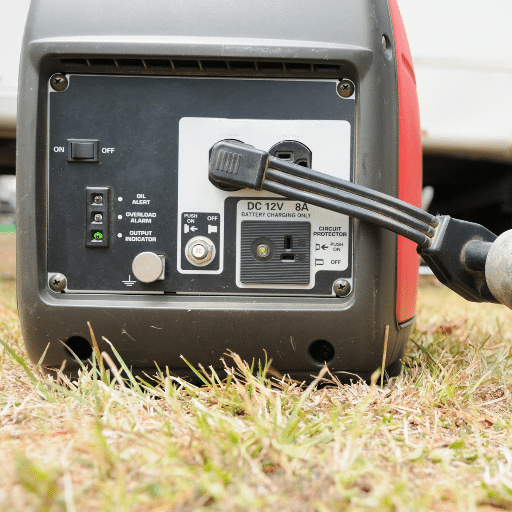
RV owners frequently use the set as the source of energy for all the gadgets and tools on board. These units are light and can do their job during a short period of work, thus they are the best choice for all people who love to travel, serving the output range from 2 KW to 7 KW. - Construction Sites
Air-cooled generators are a preferred power source of most construction sites where the work is far from any power-grid service and the usage of electrical tools is large. Their chances of being used in different places and their simple operation are indisputable advantages for projects requiring temporary power solutions. - Small Businesses
A power breakdown will not affect the performance of small businesses such as offices, shops, and restaurants when the air-cooled generator is there to keep everything running smoothly. For computer systems, lighting, and some other equipment, many of the models can be safely employed, and they can consume up to 20 KW power loads. - Agricultural Applications
It is not uncommon that air-cooled generators are selected by farms and agricultural operations for various applications like driving the irrigation systems, operating small machinery, or chilling units. And the ability of these machines to be reliable under any possible working conditions can be a great asset, especially in rural areas. - Events and Outdoor Activities
Generators of the air-cooled kind are usually running during outdoor events such as weddings, exhibitions, and concerts for the purpose of lighting, sound systems, and so on. This way of serving those last mentioned is between 3 and 10 kW.
Liquid-Cooled Generators

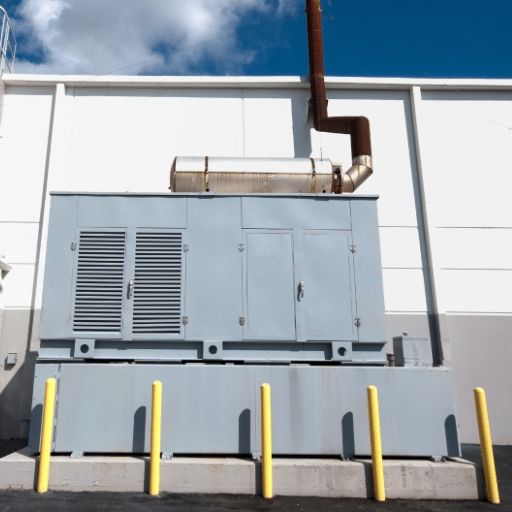
The liquid-cooled generator is built with a closed-loop cooling system that is used to circulate a liquid coolant (which usually consists of water and antifreeze) that helps to keep the engine at its best temperature. The configuration proves to be very efficient and suited to the requirements of huge, endlessly-running uses, e.g., outage protection during the long-term operation. Large-scale business establishments, data centers, and industrial facilities are few among the places still dependent on the seamless provision of power to be poorly serviced without them. The power ratings usually begin from 20 kW and go up into the megawatt range with the largest models being able to back up the HVAC units, manufacturing equipment, and the power needs of massive buildings.
How Liquid-Cooled Generators Work
Liquid-cooled generators function by using a cooling system that moves liquid coolant—a mixture of water and antifreeze in most cases—via the engine and essential components to quench the heat. There are various parts in this system and the most important ones are pump, radiator, thermostat, and hoses. The pump pushes the coolant into the engine block of the generator to take away the heat generated by the operating machines. The coolant is then led to the radiator to be cooled; the fan here is used to blow air over the radiator and remove the heat from the coolant. After the decrease in temperature, the coolant goes back to the engine for the whole process to be repeated.
This particular technique is extremely well suited to thermally managing loads and is especially useful in the case of big generators that emit a significant amount of heat for a long time. The principle advantage of liquid cooling over an air-cooled system is that it offers better stability and reliability, as it prevents the occurrence of temperature peaks high enough to eventually damage the engine or limit the performance. Moreover, liquid-cooled systems of high tech level incorporate the temperature precisely being regulated by means of thermostats, thereby supporting constant operation in even the most extreme climates. For these reasons, liquid-cooled generators are the best choice for high-reliability applications with a need for constant power output.
Advantages of Liquid-Cooled Generators
- Superior Heat Dissipation
There is an enhancement of the heat dissipation of liquid-cooled generators in order to transfer heat from inside to the surroundings of the machinery more quickly and effectively than the air-cooled method. Liquid-cooling systems are, for example, the only systems up to now able to handle a 30% excess in the heat load in comparison with the air-cooled ones thus keeping the equipment in a continuous and safe operating state always. - Enhanced Durability and Longevity
On the other hand, liquid cooling brings benefits to component lifetime as it does not expose them to any sudden heat waves, thereby making generator cooling systems the main factor behind the machines’ long life. According to some research, with the right cooling, a generator may outlast one that runs without cooling by 20%-30%, even in the case of the most demanding of industrial environments. - Quiet Operation
Fans that have high speeds are the main source of cooling in air-cooled systems, but quieter operation is the rule for liquid-cooled ones. To be clear, in habitats where there is a need for air-conditioning that comes in the form of a liquid cooling system, this advantage is greatly appreciated. For such applications, the noise comfort level can be reduced by 40%, contributing to a quieter and more convenient surrounding. - Performance in Extreme Conditions
Liquid-cooled systems are the true operators as far as environmental conditions are concerned, man-made or natural. By not letting their conditions dictate and by instead, being the ones to determine the temperature, they have it so that the other units? external conditions could then so easily become variables which would cause strain on them, non-liquid-cooled systems. - Support for High-Capacity Applications
Liquid-cooled generators are built to handle bigger power loads and hence to be the best choice for tue industrial field, data centers and critical infrastructures as well. They are the systems that can handle higher capacities of kW and at the same time their power output is always stable since they are not bringing the risk that they might get too hot. - Reduced Maintenance Over Time
Although liquid-cooled systems may be more expensive initially, they generally need less maintenance because of their cooling mechanisms that are more effective. Due to less wear on parts, the number of breakdowns is kept to a minimum and the overall maintenance of the system is lower, hence the whole-life cost situation is much more favorable.
Common Applications for Liquid-Cooled Generators
- Industrial Facilities
Liquid-cooled systems are universal in power plants, factories, and oil refineries. A steady supply of electricity is essential in such industries to operate the large machines and crucial operations. The cooling system is designed in such a way that it will allow the generator to be running continuously day and night without the fear of it getting overheated; even in extreme heat conditions. - Data Centers
In order to prevent downtime, data loss, or hardware damage, data Centers definitely need constant power Supply. Therefore, the use of high water-cooled generators means the power requirements of servers and network systems are readily being met, and they also offer big help in supporting workloads that may go up in the hundreds of kilowatts. - Healthcare and Hospitals
In order to keep people alive and assist them when it is necessary, healthcare facilities have to backup their main power with a very reliable energy source which is the case with a liquid cooled option. Generators with cooling systems are the most effective as well as the safest solution to provide uninterrupted support in the case of a power cut and to protect the safety of a patient. - Commercial Buildings
By the strength of the liquid-cooled generators, shopping malls, office buildings, and other large-scale commercial properties maintain that the happening of a power failure does not result in them shutting down. Therefore, the liquid-cooled generators are a perfect match in the end because of their capability to support varying needs. - Military and Defense
Military settlements and their operations in the defense sector are normally located in areas that have no electric power supply or places of service, but in places where the reliability of service is of importance. This service will be effectively given through the ability of the liquid-cooled generators to be long-lasting and to stand the rough and extreme conditions. - Remote Mining Operations
The usual equipment needed for mining facilities to work includes power supply for the biggest machines, air conditioning, and other critical infrastructure. Liquid-cooled generators are a solution that can bear the heavy power and environmental demands typical in these inaccessible and unfavorable environments.
Compare Air-Cooled and Liquid-Cooled Generators

- Cooling Method
Air-cooled generators depend on fans to drive air and thus to cool down, but in contrast to them, the liquid-cooled generators use a fluid to carry the heat, vent the engine, and cool it solidly. - Performance in Extreme Temperatures
In hot climates, and the liquid-cooled generators are the best solution because water-based cooling systems are better at carrying the heat off the engine. It’s common for air-cooled units to find it a very hard task under similar conditions. - Noise Levels
Liquid-cooled generators are usually less noisy because the cooling system of liquid helps to minimize engine noise. The fan-cooling Air-cooled apparatus, however, are generally much noisier. - Maintenance Requirements
Air-cooled machines come with simpler set-ups that don’t need a lot of work done on them. But, on the other hand, the liquid-cooled machines are still a hassle. The liquid-cooled ones need the coolant checked often times, the coolant to be replaced sometimes, and a more comprehensive maintenance due to extra parts to be carried out. - Cost and Complexity
Liquid-cooled generators are generally tougher and require a more sustained operation condition because of the nature of the complex nature of their maintenance. Air-cooled generators are more economical and specific to the needs of small and fluctuating power supplies.
Key Differences Between Air-Cooled and Liquid-Cooled Generators
| Feature | Air-Cooled Generators | Liquid-Cooled Generators |
|---|---|---|
| Cooling Mechanism | Air circulation around engine components | Coolant circulates through a dedicated system |
| Maintenance Effort | Requires less frequent inspections | Needs regular coolant checks and replacement |
| Cost | Generally more economical | Higher upfront and operational costs |
| Complexity | Simple design, fewer components | Advanced technology, more complex |
| Best Use Case | Light-duty, intermittent operations | Heavy-duty, continuous operations |
| Durability | Less effective in extreme or high-demand conditions | Highly durable under continuous workloads |
| Size and Weight | Smaller and lighter build | Larger and heavier due to cooling system |
| Noise Levels | Typically generate higher noise | Quieter due to efficient cooling |
| Heat Dissipation | Limited cooling capacity | Superior at dissipating heat during operation |
| Environmental Impact | May struggle in high-temperature environments | Performs well in extreme conditions |
Maintenance Requirements
The needs for the care of the air-cooled and liquid-cooled generators are quite different because they have different structures and operational designs. Air-cooled generators have to have their cooling vents and fans kept clean and free of dust to allow the flow of air. There are situations in which problems such as blockages, dust, debris, or even worse can lead to the unit shutting down due to overheating and become less efficient. Also, one must not overlook the crucial role the fan components play and hence, it is a must to regularly check them to make sure no malfunctions happen during a continuous period.
Liquid-cooled generators, to the contrary, require more intricate maintenance work, which is mainly due to the coolant system. Some of the tasks are such as coolant level checking, leak detection, and coolant changing according to manufacturer’s recommendations. The pumps, hoses, and radiators of the cooling system ought to be checked and serviced from time to time as well so as to avoid the deterioration of parts and their impact on the system’s working. It may happen that the liquid-cooled systems will be more expensive in terms of maintenance and also of a higher technical complexity, but in the case of the said applications, for instance, the highly resilient ones, they will offset their initially known requirements by better performance values.
Cost Considerations
In the process of studying the price differences among air-cooled and liquid-cooled generators, one has to take into consideration both the costs of the initial eastward movements and the prices of the ground operations during a period of time. Air-cooled generators are the ones whose price is most advantageous at the beginning mainly because of their simplicity in design and their lower manufacturing complexity. Furthermore, they are less frequently maintained which reduces expenses for regular inspections and part replacements. Nevertheless, their effectiveness might drop if they are used constantly in high demand, leading to possibly the highest fuel consumption over time.
In terms of Liquid-Cooled Generators, they actually emerge as the best among the rest, from technical points of view as they require more ruggedness and ultimately give much better continuous-running, full-load performances and resistance to the toughest environmental conditions. Their cooling systems are cutting edge and more in detail made for industrial applications, so they will be, no doubt, the very first choice for a business or facility that is in need of the continuous and reliable operation. Furthermore, we have to point out that the operating costs of liquid-cooled systems are much higher because maintenance is a frequent requirement, mainly in connection with the coolant system that needs to be kept in good condition and to prevent any leaks or inefficiencies.
Selecting the Right Generator for Your Needs

Choosing an electric generator according to the cooling system – the main natural way of air or the other liquid cooled one also considering the power usage rate, location of the generator, and budget is very crucial. Of the two, the air-cooled generator is the best one for residential and small scale applications and it is in a lower price range being the top reason for it. Still, air-cooled ones might not be able to keep up under continuous or extreme load conditions.
For the liquid-cooled generator, its use is most suitable in areas having high power demand and where the generator is the main power source because it requires a low maintenance system and gives a continuous power supply that lasts for a long time. From the beginning, they are a costly option and maintenance costs may also become big, but their cooling system is far superior to the one in air-cooled generators and thus the power output can be kept constant regardless of the use of the generator. Hence, the power interruption risk and performance differences should be weighed against purchase and installation costs.
Factors to Consider When Choosing a Generator
- Power Output Needs
Generally, in uses that demand lesser loads, such as home electric use or light machinery, air-cooled generators can be taken as a good and affordable solution in the distribution of energy of as much power as very great demand may be. Whereas liquid-cooled generators have been and are still the king of power due to their ability to take higher loads and there where power has to be uninterrupted and highest peak loads are needed for a longer period of time, in short the large commercial, industrial, or mission-critical sectors. - Operational Environment
The generator’s location and exposure to the elements are the major factors that determine the system type. Air-cooled systems are not suitable for very low or very high altitudes/weather conditions, which is quite common as cooling is one of the main concerns. Conversely, liquid-cooled systems are operational under any condition because of the very low possibility of overheating due to the cold environmental conditions.
- Maintenance and Longevity
In general, the design of air-cooled generators is not so complicated, and that may indeed result in lower initial expenses and more easily manageable maintenance requirement which can be achieved in the whole equipment lifetime. Nevertheless, these are the machines that may be subjected to frequent malfunction as a result of long usage or heavy-load periods. Conversely, liquid-cooled generators, in spite of requiring much more and a special kind of maintenance, will last much longer and suffer less mechanical stress during the prolonged operating periods.
- Noise Levels
Considering noise can be a very important factor for those who want to use a generator in a residential area or near places where people work and it is also very important if people are looking for an environment that is sound pollution free. Air-cooled models usually make more noise because they use air that is constantly moving to dissipate the heat. The liquid-cooled generator which is the one with the closed cooling system will be heard only barely thus presenting a nois-free solution for noise-sensitive areas. - Cost Analysis
Although one-time investment and maintenance expenses are considerably less with a liquid-cooled generator, its running costs in the long run may name it more economic to use the appliance for an extended period especially for high-demand businesses. It is crucial to take into account the total ownership cost—installation, maintenance, and fuel efficiency—so as to make a wise choice financially.
Making an Informed Decision
In the criteria of the genset type to be selected, the judgment taken should be closely related to the power source, the location restrictions, and the usage of the genset in the long run. Normally, the air-cooled gensets, which are cooled by the surrounding air, are selected for low power applications because of their simple and cost-effective nature. These systems are small, have less moving parts, and are regularly easier to set up and conduct maintenance.
On the contrary, liquid-cooled generators are made up of a coolant system with very fine temperature control, and therefore, they are very good in carrying out high loads and working in extreme conditions while at the same time being nearly optimal in performance. Hence, it is common to find them in industrial areas or places where outputting the same amount of power over a long period of time is very crucial. Also, they are in most cases quieter during their operation compared to the air-cooled type due to a more sophisticated cooling system.
In the end, the selection process has to be closely related to specific operations such as the need for power output, the conditions of the environment, and the limits of budget. To choose a unit that provides both reliability and good performance through cost-effectiveness for its lifetime, it is imperative to consider such detailed data as load efficiency, heat dissipation rates, and maintenance schedules.
Reference Sources
- Flow of Cooling Air in an Electric Generator Model – An Experimental and Numerical Study
- Ventilation Cooling Design for a Novel 350-MW Air-Cooled Turbo Generator
Frequently Asked Questions (FAQs)
What are the main differences between air-cooled and liquid-cooled generators?
A single fan makes a big difference in the whole process of air-cooled generator operation as it helps to circulate the air that is taking out the engine heat. On slower air-cooled generators, the liquid cooler as a measure, with its mixed liquid, drained inlet and radiator as the lifeblood of this compounded liquid-cooled arrangement. Although, the liquid-cooled units are of a different level of sympathy for use in extremely high capacities like the extended power outages because they are so quiet, whereas the air-cooled units are to be generally less expensive and less difficult to reach. With the case of the home backup power scenario, the residential standby liquid-cooled generator might give a longer run-time and maintain temperature much more even as compared to the air-cooled units.
When should I choose an air-cooled generator versus a liquid-cooled generator?
When the need is for a simple and economy generator that will be used occasionally or in places with weight and maintenance considerations, the air-cooled one is the choice. Select a liquid-cooled generator if the configuration is for household backup, or a larger one, where these parameters are very important in addition to being of less noisy and more stable for longer outages. For both diesel generators and propane-fueled models, there are liquid vs. air-cooled options, thus relate the cooling system to your fuel choice and expected load. Furthermore, the choice between a transfer switch and propane tank, or diesel supply must also be reasonably assessed for your home generator situation.
Are cooled generators more expensive to maintain than air-cooled units?
Liquid-cooled appliances often require a great deal of attention because they contain coolant, radiators, and hoses that need to be inspected, unlike air-cooled generators which are simpler and have fewer parts in their cooling system. The act of replacing coolant and detecting the leaks of the liquid-cooling system are two common maintenance procedures for the generator which is intended to extend engine life, but also to protect them since the system is much more efficient in an engine-cooled case when compared with air-cooled. Air-cooled generators are in addition to their easy positioning, being high efficiency and low-cost solutions in the portable power generation market.
How do air-cooled and liquid-cooled systems affect generator noise and vibration?
Liquid-cooled generators are more often than not rated higher for their quietness which can be attributed to the noise-deadening properties seen in the liquid-cooled engine and radiator that operate in a similar way to a fan. However, in the case of the air-cooled generators, noise can be much more pronounced especially in the portable and smaller units, as air-cooled engines are obliged to utilize forced air through fans and this can bring high noise levels and strong generator’s noise. For the situation of residential generators and standby units, preference should be given to the liquid-cooled system to save neighborhoods and the tranquility of residents even during prolonged or short-term electricity cuts.