
When it comes to the issue of the provision of power and energy to any given place, there is potential for most of the people to feel lost and somehow demotivated even when deciding on the right type of the generator depending on individual preferences. In a nutshell, the issue is always about the wide range of brands and manufacturers available for most generators in the market. Instead, it is all about the supplement one intends to buy to satisfy the power requirement ranging from a simple generator to the most sophisticated machines. this article will delve into high-end residential and professional models to enable you to come up with the right decision easily. In both cases (Such as, when there is an off-grid situation and you need this power or on a daily basis for the perfect service), we would explain the discrepancies in relation to these two kinds of energy competitors. After you read this, you will easily be able to segment them in terms of power or voltage rating and source, and where to get them wherever you are.
Consumer vs Professional Generators
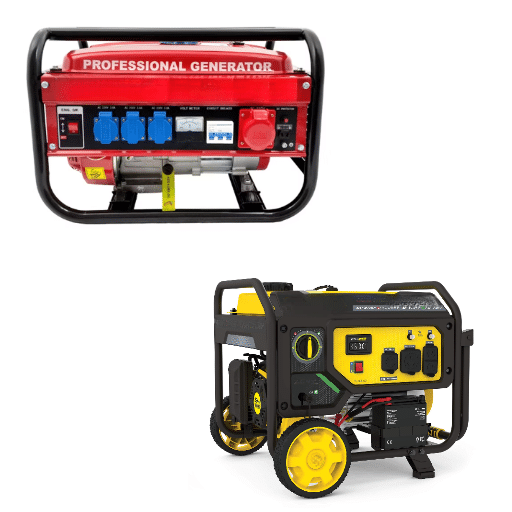
Sometimes there are types of power generators that need to be understood with how they work under light to medium application, such as for instance powering a backup source for a residential house or campsite applications, or even any of these recreational tasks. These generators are not ideal for commercial use at Saturday market mom and pop shows where big commercial loud sources are wasting fuel. They are designed for convenience of mobility and operation with compact fuel containers, less hefty noise emission and fewer buttons.
These generators are entirely different from the general ones, and their focus is to ensure that they do not undergo any challenges during use, such as installation in a standard building or an industrial workshop environment. They have an enhanced capacity of wattage to operate many loads and can last longer. Such aspects as improved frame design, increased toughness and adherence to occupational health and safety requirements facilitate the use of these types within commercial spaces.
Defining Consumer Generators
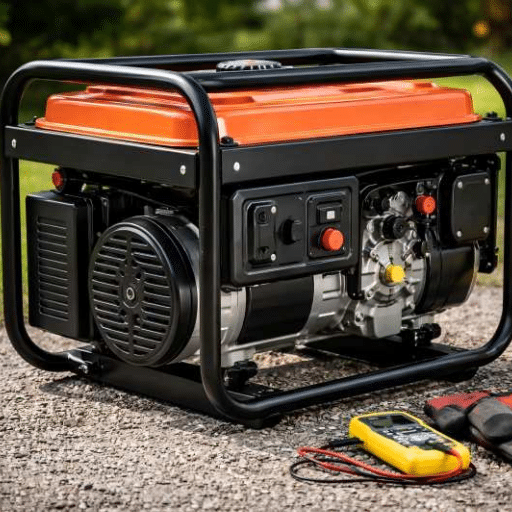
Due to their design, consumer power units are aimed at solving the problem of lighting or providing electricity to minor consumers-they are easy to use, mobile and cheap. Note that these power generators emit less watts when compared to power generators made for professionals hence can be considered as the most appropriate to power small house appliances, small electronics or maybe standby for power outages. A variety of consumer power unit models have a number good things going for them, among them, a push button start, features of being light and not being loud and other such within-reach conveniences.
The highest level of technology has seen the introduction of inverters which can deliver power even to the most delicate appliances like laptops and mobile phones and at the same time improve on the consumption rates of fuel. Nonetheless, there are certain restrictions on the use of such power units, such as they may not be used for powering heavy-duty equipment or for a long time, mainly due to the small fuel tank or the poor endurance performance of the device. Such limitations may occur.
Defining Professional Generators
Professional generators, often called industrial and even commercial-quality generators, are especially built for the purposes of big operations. In terms of quality, their advantages include high constructional endurance, increased power output, and a longer service life. Therefore, in the future, such machines can be incorporated in a range of capacities, such as on building sites, large-scale factories, hospitals, and data centres. Most of the time, no lack of power is experienced when a professional generator is present since these generators are installed permanently due to the fact that they are diesel or natural gas powered.
Some notable achievements in professional generators lie in automatic transfer switches (ATS) that are mostly used in grid fail scenarios, and the ability for the generators to work in parallel with other generators to increase power. Furthermore, these generators are also often equipped with advanced control systems, which allows for additional functions such as real-time monitoring, and remote control and access, enhancing the latter’s overall safety. User power outputs range from 20 kWs for domestic generators to multiple megawatt outputs required for industrial applications, in some cases enabling equipment to become useful for a wide range of uses.
Differences Between Consumer and Professional Generators
| Key Point | Consumer Generators | Professional Generators |
|---|---|---|
| Power Output | Lower, typically below 10 kW | Higher, up to several megawatts |
| Primary Use | Home or light-duty applications | Industrial, commercial, or critical loads |
| Portability | Compact and lightweight | Larger, often stationary |
| Runtime | Limited, suitable for short durations | Extended runtime for continuous use |
| Durability | Moderate, for occasional use | Highly durable for intensive applications |
| Noise Levels | Generally louder | Designed for quieter operation |
| Fuel Efficiency | Moderate | Optimized for long-term efficiency |
| Maintenance Requirements | Low, less frequent maintenance | High, requires regular servicing |
| Advanced Features | Basic or minimal technology | Sophisticated controls and diagnostics |
| Cost | Affordable for personal budgets | Higher investment, for professional use |
Power Requirements and Systems

Consumer generators are notable for operating on a standard 120V power source, or more often, on a dual 120/240 volt system which is more than enough to power several household appliances and a few workshop tools. Their power-capacity ranges between 1,000 and 10,000 watts, which enable their use during emergency power interruptions or for camping, tail gating, and other outdoor activities.
Professional-grade generators, on the other hand, differ significantly as they are intended to supply larger loads. They may operate on three-phase systems and have output rates that often exceed 10,000 watts and may even go beyond 50,000 watts. These output levels render them reliable for usage when and where an uninterrupted supply of power is crucial, i.e., on job sites with heavy machinery or industrial equipment applications.
Understanding Power Needs
When it comes to judging the power requirements of a civilian or a professional generator, the intended use, the necessity of the load, and the frequency of the use should ideally be taken into account. Consumer-grade generators are usually designed to manage a small number of wattages, which are usually confined to 1000 to 10000 watts only, and thus are used for household applications, recreational vehicles (RVs), and light tools. Conversely, professional generators are optimized to take care of high wattage applications, more than 20000 watts as a rule, and they are intended for such environments as industrial facilities where heavy appliances are used and the engines are run for long periods continuously.
The type of load is also a critical factor as a result of the necessity for a generator to have varied capacities for different equipment. It is easier to power equipment with resistive loads such as incandescent lights, heating elements, etc. because these devices require continuous supply of energy. On the other hand, inductive or self-excited generators load elements such as air tools, air conditioners, or pumps require a large amount of current to start – hence the name, inrush or starting watts. For this reason, there are power generators designated for business that are more adapted in completing the tasks and which can carry as much starting loads as possible without affecting the operation of the generator.
Assessing Power Systems
Generators that are used by consumers may not be fitted with as many sophisticated devices as industrial power plants, as the devices may generate power to charge household apparatus and tools in lesser measure. The devices are usually supple and tend to have a limitation on the output variations ranging from 1000 to 7500W, which is adequate to run a refrigerator, a small heater or a few lights in a blackout. Nevertheless, it cannot be ruled out that these systems and related equipment may start having difficulties if there are high loads over long periods or rapidly swinging voltages as is often the case with large apparatuses or even hand tools.
Professional generators, on the other hand, are built for heavy-duty requirements, with most of the models giving power of more than 10,000 watts, and some heavy engineering models going up to 20,000 watts and above. The advanced inverter technology or reinforced alternators are used in these systems to ensure stable and consistent power, particularly when managing very delicate or high power-hungry equipment. Besides, the professional-grade systems often come with the said functions of automatic voltage regulation (AVR) and low total harmonic distortion (THD) so that they do not get damaged by abrupt changes in voltage, and are hence more suitable for business-use, construction-type work, and so on. This capacity of the machines to keep running under load for an extensive time testifies on their endurance in critical situations.
Calculating Your Power Requirements
Calculating your true power demand is crucial in distinguishing between residential and industrial grade of power generators. Determine the exact amount of the wattage required to function every connected appliance; also, what an input surge characteristic is for devices (like those including motors or air compressors). These kind of installations are the basics, with commonly used items such as refrigerators, and air conditioners, and washing machines having huge starting watts which need to be provided as an input as well.
When designing a power generation system, the most important task is to prepare a device catalog including running and starting wattage, combine these figures, and approximate the total power demand. Prime power generators are more appropriate in industrial settings with many heavy tools that demand higher generation and endurance under harsh conditions. On the other side, the consumer type of generator fulfills the needs of lower voltages that is perfect if there is a power shortage in home or when outdoor activities are involved outdoors.
Also, assess the possibility of spikes or over-voltages in your count. It is recommended to pick a generator that has a 20-25% more on the capacity indicated by your numbers in order to ensure that a consistent power source is maintained. This addition takes into account the changes in the load as well as the balancing of the generator which is necessary to prevent overuse of it, for example restricting the contributed output to 75% to spare the rated capacity and extend its lifespan for good performance even at the end of its life.
Fuel Types and Engine Types

Fuel Types:
- Consumer Generators: Most of these machines employ petrol as the primary medium of fuel. This is because petrol is easier to find. It is also cheaper to manufacture and use. Some consumer models support the use of more than one kind of fuel, such as propane, for convenience.
- Professional Generators: The purpose of the generators mentioned above is to cater for industrial needs; they have better capacity and powerful diesel engines as most of these generators run on diesel due to their greater efficiency and ability to run for longer periods of time without overheating.
Engine Types:
- Consumer Generators: Most consumer gas generator model uses single-cylinder petrol fuel and are air-cooled which is enough for usage in small units with short time scales.
- Professional Generators: The advanced Professional models employ liquid cooling and have much larger multiple-cylinder engines frequently adopted for those tasks that require maximum power and continuous operation, such as construction sites.
Diesel Generators vs Gasoline Generators
| Parameter | Diesel Generators | Gasoline Generators |
|---|---|---|
| Fuel Efficiency | Higher, suitable for prolonged operation | Lower, consumes more fuel over time |
| Initial Cost | Higher initial purchase cost | Lower initial purchase cost |
| Maintenance Requirements | Requires regular servicing for optimal performance | Moderate maintenance required |
| Durability | Built for heavy and long-term use | Limited durability under heavy load |
| Fuel Availability | Diesel fuel widely available globally | Gasoline readily available in most locations |
| Noise Levels | Louder due to larger engine size | Quieter operation compared to diesel |
| Startup in Cold Weather | Performs better in colder temperatures | Harder to start in cold conditions |
| Environmental Impact | Produces more emissions without advanced filters | Cleaner burning compared to diesel |
| Application Suitability | Ideal for industrial and heavy-duty applications | Best for small-scale or temporary use |
| Lifespan | Longer operational lifespan under proper conditions | Shorter lifespan with heavy or prolonged use |
Advantages of Diesel Engines
- Higher Fuel Efficiency
When we look at gasoline engines, diesel power plants are much better since they consume much less energy, even though they function more efficiently because of their high compression and air-to-fuel ratio. Diesel engines operate in the 20-30% full throttle range, which is significantly different from carburetor-operated gasoline engines in which more than half the throttle is used. - Durability and Longevity
Diesel engines construction involves the use of high-quality materials and components that can deal with high compression and pressure with ease. This makes them stronger and allows them to last longer term-wise. Such engines, for example, have another disadvantage, which is the fact that they need overhaul after approximately 15,000 hours of such operations in service. - High Torque Output
Diesel engines have high torque at low RPMs, thus are useful in machines that have a lot of work, like trucks and construction vehicles, rather than vehicles. Today’s large bore diesel truck engines can develop around 1,800 lb-ft of torque and also more pulling and punching power. - Cost-Effectiveness Over Time
The cost to acquire a diesel engine is typically more expensive than a gasoline engine at the time of purchase to the much reduced use of fuel and the fact that they last for a long time also plays a role in reducing the overall cost in the long run. For businesses and operations that require a lot of time driving around, this could not be any better. - Better Performance in Industrial Applications
Diesel engines are versatile in that they are not only suitable for the transportation of bulk fluid materials but have also found application in applications such as generating sets, backhoes and boats. Their capacity to generate power of specific ratings as well as taking on such tasks as high lifting and pushing work, allows and assists in the performance of these tasks. - Lower Risk of Ignition Hazards
Diesel is a safer fuel than gasoline because diesel engines are less flammable than petrol engines, so diesel engines are chosen in industries with increased fire danger, for example, coal mining and the oil sector.
Compare Common Fuel Types for Generators
| Fuel Type | Efficiency | Cost | Availability | Environmental Impact | Storage Requirements | Maintenance Needs |
|---|---|---|---|---|---|---|
| Diesel | High fuel efficiency | Moderate | Widely available | Moderate emissions | Requires stable temperature | Regular filter changes |
| Gasoline | Moderate efficiency | Low | Highly accessible | High emissions | Short storage lifespan | Frequent carburetor cleaning |
| Natural Gas | Steady efficiency | Low to moderate | Depends on infrastructure | Cleaner than diesel/gasoline | Continuous supply required | Minimal maintenance |
| Propane | Consistent performance | Moderate | Readily available in tanks | Lower emissions than gasoline | Pressurized tank storage | Periodic regulator checks |
| Solar | No fuel consumption | High initial cost | Weather-dependent | Zero emissions | Requires battery storage | Minimal hardware maintenance |
| Bio-diesel | Similar to diesel | Varies based on region | Increasing globally available | Lower emissions than diesel | Decomposes over time | Clean fuel lines regularly |
| Hydrogen | High energy potential | Very high | Limited infrastructure | Zero emissions | Needs specialized tanks | Advanced technology required |
Emergency Power Solutions

Generators differ greatly in terms of many aspects such as the capacity, life expectancy, potential consumer and use-case scenarios. Whereas consumer-grade generators are used normally for low duty cycle and short-term power usage to power devices and utensils within the household during blackouts, but they’re also feasible / cost-effective, portable, and to a greater extent simpler to work with, albeit extended use or heavy load application could pose a problem.
In contrast, robustness and the long-term expectation of improved service leads to the manufacturers producing generators that are in use in industrial, commercial and emergency power back up. Such units have an enhanced power output, more durable housing and sophisticated functions such as telemetry and automatic activation at the push of a button. The only catch is that they would require a higher initial outlay and regular maintenance to maintain their performance adequacy.
Importance of Backup Power
Power backups are systems where there is energy storage in the form of a battery or diesel generator which could be used to supply electric power in case the main supply is interrupted. Historically, most consumer generators were designed for temporary and low power demand users, that is, they are meant for powering basic household appliances such as the fridge, some lights, and the colorless hand electronics. These are very practical and user-friendly models on average from about 3000 watts to 7500 watts of power. However, such models may not always be cost-efficient and may not have enough run time for effective operation over lengthy periods, or with heavy loads.
However, professional gensets are meant to handle such challenging circumstances, because these are designed for meeting the industrial promotional needs most likely to be used on large machines, sensitive medical equipment or bigger operational processes. Many professional models are equipped with such modern gadgets as inverters that help generate electricity within and reduce the dependence on fuel. These types of equipment are mostly rated at a power output of greater than 10000 watts and are designed to operate on a continuous basis for long periods which makes them apt for use in critical areas like hospitals, certain data centers, and commercial setups.
Standby Generators for Emergency Power
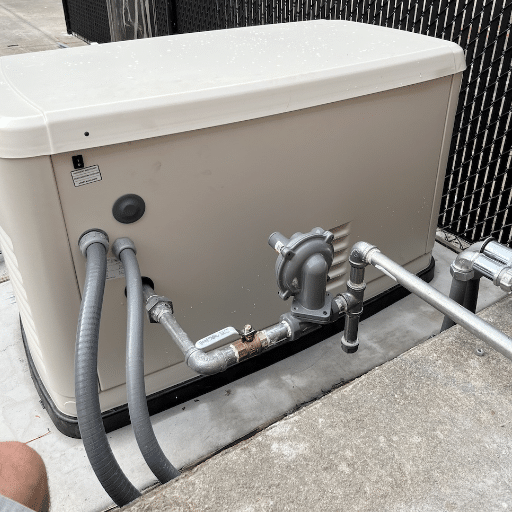
In case of instances of power outages, the presence of standby generators is to be sure, placed within standby generator sources that power systems and equipment that must stay on even during power failures. These generators are usually prepared and fixed in a particular facility. Moreover, in the present day, most standby generators are made more sophisticated with the improvements of technology. Standby generators are even more advanced and provide complete flexibility by including advanced features such as automatic transfer switches (ATS) or automatic transfer switches which help redirect the load to the generator in the event there is a drop in the current; all without human intervention.
In the recent past, the evolution of standby generator has become evident in terms of efficiency and effectiveness. In some cases, working models are fitted with remote observation amenities for utilization by the technicians thus enabling them to check parameters of the performance, the levels of fuel and any other maintenance needs in specialized applications. These outputs include small portable residential generators that produce an output between 7,000 to 22,000 watts as well as very big industrial systems that are designed for power outputs exceeding 150,000 watts which are used in very large industrial set ups. These generators are manufactured with the ability to produce power in a manner that is within acceptable environmental requirements, maintains low noise levels and uses relatively cheap fuels.
Comparing Emergency Power Options
Assessing the different options for emergency power supply, the primary difference between consumer and professional level generators is in their structure, capabilities and areas to apply them. First, there is a consumer generator, which is more likely for short-lasting but very insignificant power requirements. Mostly, they are small, movable, and capable of generating about a range of 1,000 to 10,000 watts, meaning that they are used as backup energy for homes, small enterprises, or farms. These generators most commonly use petrol or propane as their power source, require no installation, and lack some features of electric generators.
Meanwhile, Professional engines are designed for high performance and large energy consumption. Systems incorporate, for example, up to 15,000 Watts as a generator or use even 100,000-watt machines to cover power supply for some critical infrastructure or large plants. Besides, their construction includes special components like automatic transfer switches (ATS), rugged, weather-protective casings, and management technologies for system supervision.
The selection of a consumer or a professional electric power generator will lean on a number of variables like the amount of power needed, how frequent the power will be used as well as the environmental aspects. Household consumers who may only be looking for a temporary way to keep their electricals on when the lights go out will find that the consumer-grade generator will be just fine.
Choosing Between Consumer and Professional Generators

- Power Output Needs
Use of consumer and industrial-grade generators can vary, and this is determined by the type of equipment being powered. For instance, there are the consumer-type sets of generators which are used mainly for household appliances, and this has low wattage, whereas the professional hardly has a specification on that, as it offers higher wattage to cater to sophisticated machines and even a larger supply for general power uses. - Usage Frequency
For home applications and cases such as camping out or events where the power is required only temporarily, it is more reasonable to have consumer generators than professionally-made generators. In addition, professionally made generators are for systems that require power continuously, making them suitable for use in workplaces or other environments that require power for extended periods. - Durability and Build Quality
Although consumer-grade generators are usually easy to handle, portable, and convenient, deployment of them in harsh environments may be unsuitable. Conversely, purpose-built industrial-grade power generators are made from high strength material that can resist even further degradation in use; ensuring their continuous and efficient operation within any industrial or outdoor settings. - Fuel Efficiency and Run Time
Towards being adopted as a long-lasting solution, professional generators tend to be more flexible in the amount of hours that they can run on a gallon of fuel. In case the need is urgent, personal generators will possibly run till the fuel tank is empty, but at a lesser monetary cost.
Factors to Consider Between Consumer and Professional Generators
- Power Output and Capacity
This consideration power output also known as the watts is significant when discriminating the consumer and professional generators. Commercial generators are expected to have more power output of capacity in terms of wattage and possibly exceeding 10,000 watts hence making it possible to run several heavy duty electrical equipments at the same time. Consumer application is power-conductive, such that the available power is typically between 2,000 watts and 7,500 watts, which is mostly used on bye-laws for household requirements when lights are out. - Durability and Build Quality
The use of such power plants can be highly convenient due to the use of strong materials such as iron or steel. In order to cope with such use, these units have reinforced steel frames, high-grade engine fittings, and many other components. This makes them an excellent choice for construction sites or other intensive tasks. Meanwhile, consumer generators, for example, are for projects like using power drills in one’s cottage, or maybe an open market, presumably using less energy or other non-aggressive applications. - Initial Cost vs. Long-Term Value
On the one hand, consumers have a truckload of spending on professional generators, mainly because projects are highly specific based on these sturdy power generating units. On the other hand, the high efficiency of the use of these generators and the low costs associated with them result in the generation of lower operational costs. On a different note, the initial cost might be lower for consumer generators, although it would probably result in additional long-term costs in maintenance or purchase in case the generator is overused. - Operational Noise Levels
One thing that is often never factored in is the noise coming from the generators. It may be different in each location and the noise output can be crucial depending on the conditions of usage. For gasoline-powered and other noisy domestic, commercial, and professional devices, engine mufflers are used to lessen the noise up to 70 dB. Premium units on the market can provide features that help the user, and therefore the unit’s noise level to the surroundings is limited to 70 dB. - Additional Features and Technology
High-end models tend to have extra storage tanks, so they run for longer and are of better quality, which forces stability, as well as allows the generator to operate without a person. Such models are usually specifically designed to work with diesel or gas or electricity. A typical consumer-grade model is better suited for those who have minimal technical awareness, such as restrictions on the types of actions that can be carried out before the machine can be considered functionally capable.
Comparing Costs and Benefits
When it comes to comparing user and professional generators, both the upfront and long-term costs have to be considered. On its part, user-grade generators are generally cheaper to buy at the outset as such machines are more affordable to people with limited budget or for special purposes only. The user-designated mechanisms are usually made to work to the minimum, i.e., produce enough energy to run some basic applications, where generators are used inside the homes and may be for a short run. Such models will be unable to support applications that require more time to be run because of their lower supply of energy and less durable construction which may need to be maintained more frequently.
Although more costly than consumer-grade models at the onset, mid-range petrol engines were designed with functionality and endurance in consideration like the latter. These are most often designed with the use of heavier components, run for long hours at a single stretch and can provide more power output and capability such as powering heavy equipment or for prolonged power needs. Enhancements similar to automatic voltage control, enhanced mixed fuel usage can help improve their flexibility and the assurance of operation. Firms, including businesses or facilities with heavy dependency on constant power supply, for professionals’ equipment, might be able to realize lower operational breakdown during the equipment’s life cycle, which could also equate to cost savings.
Reference Sources
- Digital Generators and Consumers Buying Behavior
Read the paper on IEEE Xplore - The Next-Generation US Retail Electricity Market with Customers and Prosumers—A Bibliographical Survey
View the paper on MDPI
Frequently Asked Questions (FAQs)
What should I know about portable generator options?
Convenience is the key advantage when it comes to a portable generator that is usually called a backup. It is often powered by gas, which is propane, so that the propane models and gas or propane combinations become quite popular and efficient for the common householder. They can introduce power to the most needed areas with the help of a transfer switch, or go to each necessary device to connect it. But in most cases, they allow for much less power compared to that permitted by the stationary, fixed equipment power systems. Many homeowners prefer a portable power source since it is a good option for camping or during light power outages.
Which types of generators are best for emergency power?
Although also having different designs and functions, generators for emergency power also provided as portable generator units, standby devices, diesel and gas generators in that each one of them has features for any given emergency situation. Portable generators are adaptable and best for temporary disruptions whereas standby power systems and permanently installed ones are more reliable with longer outages. Diesel generators are preferred among the commercial business industries since they are designed to function effectively under high load situations, whereas other homeowners might benefit from using propane models or natural gas models for the reasons of convenience.
How do I choose the right generator capacity for my home or business?
Estimate the volume of electricity necessary by going through the specifics for the items having the heaviest consumption, including the overall power requirements of the home. This assessment will make it possible to choose the right cut-off at which the gases disconnect the power provision equipment’s output to disallow the overvoltage for the home equipment. Homeowners underestimate the capacity they may use and, eventually, many of us find ourselves in situations where we have an impressive sine wave generator that everyone can see, but no wattage to power the connected electric appliances.
Are diesel generators better for commercial premises?
As for the new question, diesel emergency power supply is widely installed at commercial structures chiefly due to the reliability of diesel engines, their overload capability, and durability, along with the requirements of the uninterrupted availability of operational commercial power and compatibility with high-energy and available fuel types. Some businesses, however, install diesel generators due to having more space to keep the generators and diesel fuel, as well as to save time and money on refills; yet, given the availability of gas, though steady, they decide to put in a gas generator.