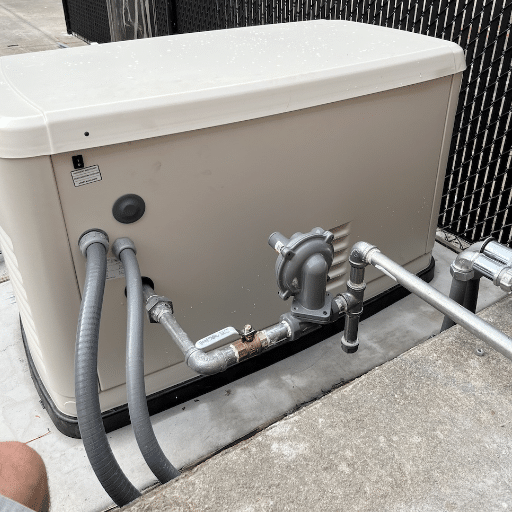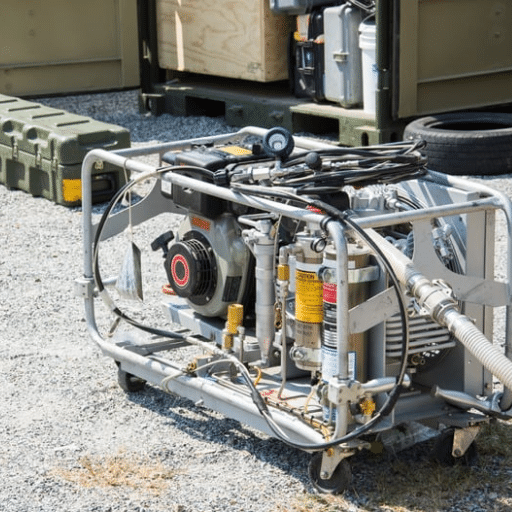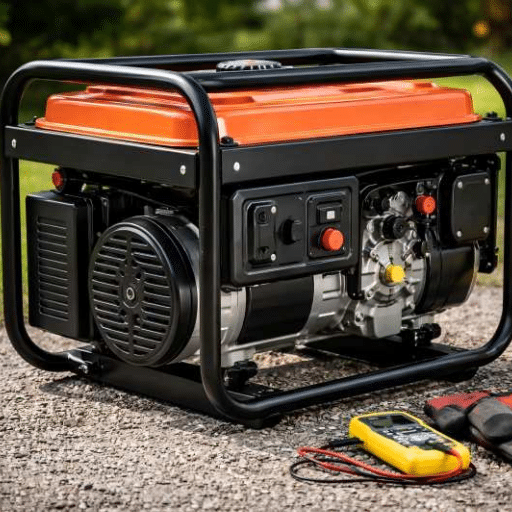


Whether you are out camping in the wilderness, or simply for use in the house, a portable generator will make sure that you have electricity when you need it. There are two broad types of portable generators: the conventional generator and the inverter generator, save for powers arising out of necessity. The challenge a user faces is in being able to choose one that suits their needs when comparing several makes and models with differing specifications. Enlisted here are some of the most pertinent distinctions between the two types which we believe will aid you in making a well informed choice. You can also find out the other things about such provisions, such as their efficiency rate, noise limits, portability, and the extent of technology that is used, as just a few of the aspects that make these generators different from one another.
Simple Introduction to Generators

Generators are a conduit whose purpose is to transform energy in the form of mechanical energy into energy in the form of electricity. They provide a much-needed power source in the event that the grid fails. They are generally used in cases of power outage or in construction sites that are far away or in outdoor activities where there is no electricity. Generators can be classified in two different ways as ‘traditional generators’ and ‘inverter generators’ depending on the power requirement, their use, and the ease of using those devices. It is critical to gain an understanding of the underlying technology in order to choose a suitable system according to the particular purpose.
Types of Generators: Conventional vs Inverter
| Parameter | Conventional Generator | Inverter Generator |
|---|---|---|
| Power Output | Higher, steady output | Lower, suitable for sensitive devices |
| Efficiency | Less efficient, higher fuel consumption | More efficient, optimized fuel consumption |
| Portability | Heavy and bulky | Lightweight and more portable |
| Noise Level | Louder, minimal noise insulation | Quieter, designed for reduced noise |
| Cost | Generally cheaper | Higher upfront cost |
| Usage Scenario | Large-scale industrial or home backup | Camping, small appliances, sensitive electronics |
| Fuel Type | Gasoline, diesel | Gasoline, sometimes dual-fuel |
| Startup Method | Manual or electric start | Usually electric or automated |
| Maintenance Needs | Requires regular maintenance | Fewer maintenance demands |
| Energy Stability | Produces inconsistent energy waves | Provides stable, clean energy for electronics |
Applications of Portable Generators
- Emergency Backup Power for Homes
In severe circumstances of power loss like those that arise from a power outage or rather failure of the grid supply as a result of natural circumstances, portable generators are the calming grace in such a calamity. The things are the life saving appliances such as freezers, heating and air conditioning and light sourcing that can come as household items for use in the case of a disaster of this nature. - Job Sites and Remote Work
It is not a secret that the step of power and light service of construction is caused by the efforts to construct buildings, roads, and stadiums, and many other infrastructure projects, and that is why they are usually coming up with the site. In particular, portable generators are a type of power equipment found at about 7000–10000 watts to power heavy-duty items such as air compressors, circular saws, and welding machines, facilitating construction and other activities. - Recreational Activities
Ideal for outdoor enthusiasts and outdoor activities, the inverter generator has found acceptance not only in its quiet operation but also for its environmentally conscious design. Its convenience in terms of running small cooking appliances or even electrical gadgets cannot go unnoticed. In such cases the power output of the generator tends to be around 2000 watts due to its flexibility and cost effectiveness. - Mobile Businesses
Another practical example is transportable power generation equipment at places like canteens on wheeled platforms, a company organizing outside events, or in the case of a fleet of vehicles that consists of stagehands. It is used for supplying power to cook food, point of sale as well as refrigeration. In fact, there are occasions when on board cargo hold use one cylinder units with more than twenty-four hours operational cylinder fitted to the ship’s sides against the bulkhead. - Disaster Relief and Emergency Response
Natural disasters and emergency situations require the use of portable generators for power to supply communications, medical equipment, and lighting. Infrastructure services are run by these generators even in times of great necessity. In such cases, most of the generators which are required for these purposes have a power rating of more than 10,000 watts. - Agricultural Use
The issues of portable generators are not reserved for emergency services. For example, farmers can have their irrigation systems in operation, provide heating for raisers and even refrigerate meat and milk if they use an alternative power source by using the help of the mobile generators. An agriculture that wants uninterrupted operations must have a generator with a full tank and of proper capacity within reach.
Understanding Inverter Generators

The Intrepidity inverter is a notable generator type due to the clean and stabilized electrical energy available in them, as the name suggests. As opposed to typical systems, the energy released as a result of the inverter generator is different in regard to its production change in aspects of converting AC to DC and then back to the original form of AC. In simple terms, a stable energy in any form can be provided from the generator and feeding the load such as delicate equipment like laptops, TVs or medical equipment.
Moreover, these units are very reliable, adjusting their engine speed to suit the load, and in turn, the units burn less fuel and also emit less noises because of the low load. Such units are often created compactly and weighed less compared to the standard generators, hence are preferred in such places as homes or even camping areas and other auto applications because they can make quiet insulations. However, as a less powerful and more expensive option than the normal ones, inverter models should be selected with great care according to needs.
How Inverter Generators Work
When a Portable OEM Inverter Generator is running, what it does is invert the generator set output from raw (unstabilized) power and deliver it as clean output power. This is achieved by the generator generating, as a first step, high frequency alternating current (AC). The next step involves the AC being transferred through a rectifier, which changes it into direct current (DC). From there, the inverter works to transfer the DC back to manageable AC power, stealing no energy from it and ensuring it fluxes in a clean and steady sinusoidal waveform.
The appeal of this particular design is the levels power management— it is capable of feeding a low total harmonic distortion (THD) power. This feature makes the inverter generators very useful for servicing electronic gadgets such as phones, laptops, computers, and medical appliances where Power without Power Errors is required. This is where this comes in the market. In addition to what has already been discussed, such incorporation of effective controls in driver elements and the engines themselves permits real-time adaptation of engine speed, calibration of the optimal performance level, reduction of noise, and optimal fuel usage.
Advantages of Inverter Generators
- Clean and Stable Power Output
Unlike standard generators, inverter generators provide a clean energy supply to the equipment and the devices connected to the output, with a high level of THD not exceeding 3%. This is rather important for use with various types of equipment. - Improved Fuel Efficiency
Inverter generators are capable of achieving a system where engine speed is varied in proportion to the amount of electrical power being required at the moment. By employing these modifications, they can claim a reduction in gas usage compared to conventional generators, with some reductions as high as 20-40%. - Quiet Operation
Under normal operating conditions, inverter generators lie in the range of 50 – 65 dB, thus 55 dB to 70 dB levels decrease as opposed to the standard generators doing 75 to 80 dB. For this reason, there is a probability that these generators are likely to be used in residential, camping, or any music event that has no restrictions on relocation. - Portability and Compact Design
Most inverter generators feature lightweight materials and compact designs, with many units weighing between 40 to 60 pounds. Their weight and height size makes it both easy to move or transport them to distant places due to the built-in handles on either side of the device. - Parallel Capability
Many inverter generator models include the capability to “parallel up”, or connect two generators using a parallel connection kit, effectively increasing power output by two. This aspect will especially be liked by those servicers who need to perform some heavy loads which would rather use two small inverters than employing a larger one. - Environmentally Friendly
Owing to excellent fuel efficiency and adherence to emissions regulations, such as those of the Environmental Protection Agency (EPA) and the California Air Resources Board (CARB), inverter generators show promise in becoming a less polluting alternative to older generators.
Exploring Conventional Generators

Traditional generators are an effective tool for creating electrical energy through internal combustion engines that are connected to an alternator. When combined, these generators are fitted across various industrial, commercial, and residential buildings to act as a back-up source of energy for the principal electrical equipment or used operationally on premises situated in the countryside where there are no electrical transmissions. They are higher wattage compared to the limits of the inverters, and can do the heavy work or control the bigger machines.
Typical generators usually compromise between eco-friendly and therefore efficient power efficiency, often leading to excessive consumption of fossil fuels, increased noise and emissions. Also, most ordinary generators of the internal combustion engine type work at a constant speed which may mean that excessive amounts of fuel will be burnt when the load is low. It is worth knowing that special tempos of emission levels that engines are supposed to emit, otherwise they are not fit according to the emissions’ clarity models of specific engines.
How Conventional Generators Function
The main function of typical power plants is based on operation of an alternator, driven conventionally with internal combustion engine. This engine usually operates at constant speed, mainly 3,600 RPM, to ensure the generation of electricity at 60 Hz frequency, which is within the range acceptable by domestic or industrial electrical installations. In between the fuel supply to the engine the fuel, which can be gasoline, diesel or propane, is inducted into the engine’s combustion chamber and burnt, as it is in the case of IC engine. The resultant kinetic energy is supplied to the field of the alternator, which converts it to AC.
Traditional electricity generators have a significant feature which is mechanical governors being used to regulate the speed of the engine to maintain a certain output frequency when the load changes. This guarantees fairly constant voltage and frequency but does not deliver the same level of accuracy as more innovative load-sensing systems. As such, traditional electric generators are very reliable for continuous power requirements but pose a threat when operating at very light loads given that the machine is usually set at its full speed without regard to the load demand.
Pros of Conventional Generators
- High Power Output Capabilities
Customarily, conventional generators are built in such a way that they produce power consistently and over prolonged periods. In other words, they are designed to handle heavy work. For instance, it is not surprising that industrial-grade diesel generators have been constructed to give out power outputs as low as 5KW and as high as 500 kW, and that these are the best sources of electricity for building or any other such energy-intensive activities. - Cost-Effective for High Demand
The acquisition costs of the usual generators are low when compared to the modern inverter-based machines with the same power capacity. The reason for this is that the production process was developed with the introduction of more advanced technology, unlike any other industry, and the components are readily available, producing in return a high level of output that is quite economical for conveyors of high and steady power volume. - Durability and Longevity
Such generators are made from tough materials and with fewer electronic components that are susceptible to damage and wear and tear thus intended for use in such a way that it lasts long. The long life, for instance, is particularly useful for any installation that needs these generators under any condition. France for example can come in handy for use where there is less access to maintenance and repair services. - Immediate Start-Up and Performance
Conventional power generators are designed to start producing power immediately once turned on, regardless of the type of load. This is because they show consistent power output which makes them ideal more so for applications like backup power generation where power is needed at the moment of need. - Reliable Operation Under Heavy Load
Unlike the inverter type power generators, which might have performance decrements with loads that change a lot in a short time, the basic device, power generators, treats the case of a steady state. This is very important because it allows the use of many devices with high power in terms of cutting function without compromising functionality and efficiency in raising the power of the equipment. - Low Complexity in Design and Maintenance
The structure of mechanical and electric systems used in obsolete engines is less complicated than that of inverters. This fact contributes to the ease of repairing and servicing them; in addition, standard tools can be used for the fixing of the generators, as opposed to more technologically advanced equipment, which requires qualified personnel in order to make repairs.
Key Differences: Generator vs Inverter

1. Power Output and Quality
Generators convert mechanical power to electrical power in the form of unregulated voltages and frequency, which means that the power cycles. Whereas inverters transform DC power to AC power at a set frequency and voltage eliminating the ripples and consequently power values which are more preferably best for the usage of the equipment.
2. Fuel Efficiency
Generator sets normally want more gas than is required due to continuous speed of the engine runs irrespective of the load being applied. However, inverter generator technologies have benefits of fuel economies since they enable the engine’s speed and power output to be adjusted to the particular load.
3. Noise Levels
Generators are typically noisier because of their use in high-speed operations. On the other hand, inverters are often quieter because of their capability to operate at variable speeds as well as the presence of noise reduction designs.
4. Portability and Size
Generators also have a larger footprint and are heavier. They are feasible for applications where they are to remain stationary. On the other hand, Inverters are light and have a low volume. They are portable devices and excellent for use at home during camping or in motor homes.
5. Cost Considerations
While generators are available at a cheaper upfront cost, there can also be a bigger maintenance and operational cost as they consume fuel. Inverters on the other hand may have a higher cost at the beginning but the recuperation is there as they are effective and cause less wear and tear energy-saving device.
Fuel Efficiency Comparison
It is an important feature for most inverter generators, also called “eco-mode” or load-dependent operation. Engaging this mode results in adjustment of the engine RPM, to match the power requirement at any given time. Because of this feature, fuel is saved in instances of light application. The power equipment and generators in the home, on the other hand, consist of a fixed engine that does not change or modulate depending on the generator load, i.e., horsepower. In this case, there is a wastage of fuel as one operates the equipment.
Overall, an inverter generator uses 20% to at least 40% lesser fuel than the traditional generator when comparing the same usage overall. In this 2,000-watt inverter generator, this equates to 8-10 hours running on one gallon of gas or even more depending on the load, while a non-inverter of the same wattage would be limited to 6-8 hours on the same amount. There are other benefits to the inverter generator technology – environmental grounding; the inverter technology because less gas consumes less gas will emit fewer greenhouse gases during specified use so that within the mitigation intervention context, the consumption is such a benign technology. The utility of the inner product is significant in areas where fuel supply is precarious or low cost is appropriate.
Noise Levels: Inverter vs Conventional
There are numerous advantages to inverter generators other than the quietness. Most significantly, it operates on much lower noise compared to an ordinary generator. Regardless of design, technology invoked such as the variable-speed engines, proper choice of material and sound insulation solutions help in keeping inverter generators quiet to as low as 50-60dB which is around the intensity of normal communication. However, this is not the case with regular generators, as they often produce anywhere from 65dB to 85dB or even more depending on their type and the prevailing usage of the machine. It implies that conventional batteries will produce more noise hence disturb the peace of residential or quiet zone areas.
When it comes to camping, outdoor concerts, or midnight backups to ensure power is restored, inverter generators are of great advantage. These quieter modes occur because the engines run more efficiently, and it is more convenient to reduce the power when necessary, as opposed to ordinary generators which operate continuously at high speeds irrespective of the output. This cutting-edge feature certainly raises the attractiveness of inverter generators to those who do not want to compromise performance for silence.
Portability and Weight Considerations
Many inverter designs take size into consideration in their construction making them useful for a wide variety of purposes and situations. Housing these light switchboards are compact and they are quite light due to the latest equipment and new designs of internal attachments. For example, the most sold light generators are around 40 to 60 pounds while some are so light-weight that they can be reduced to even 20 pounds or less. On top of that, due to the provision of hand or handle grips as well as the chunky shapes of this equipment, which support easier movements, all this is made viable since the customer can easily take it to his jobsite, his camping grounds, or to his other outdoor activities. Because of this aspect, they remain versatile not only in terms of their power output but also, conversely, in the circumstances where they can or will be used especially when there is the risk of constant moving or small spaces.
Choosing Right Generator Based on Your Needs

The following aspects are critical in order to effectively select the appropriate model of a generator:
- Power Requirements: Know how many watts all the main items in your home use since they have to be plugged. If the load senses detection is below voltage, look for models that have a rating of 5000 watts within inventory stock. And whilst operating, if you are using sensitive devices invest more in inverter generators due to its advantages.
- Fuel Type and Efficiency: Propane should be selected over gasoline provided it can be used and if it is sold, depending on duration of use. It is ideal to use Propane as fuel since it emits very few pollutants, and there are many devices that use gasoline or petrol, which may need a greater number of safety measures to be incorporated in those devices.
- Portability and Noise Levels: Count aloud or systematically within audible limits up to 60, nuance each of the units in this set of items, or choose on the other hand a little bit with your concrete facial expression.
With these focus areas in mind, it is possible to identify the suitable power source for the kind of task and environment one is in.
Assessing Your Power Needs
The power utilization of electronic equipment is crucial for effective selection of a generator which matches the demands of the connected load without intermittent break of supply. Creating a list of all the gadgets and machines that you will hope to run using the generator is a good idea. Examples include but are not limited to fridges, air conditioners, life-support equipment like used in hospitals, telecommunications items, and the like. Surge wattage and operating wattage numbers are provided for each device and are usually found in data sheets for the product. Add these figures to calculate your required energy.
As an illustration, in comparison to 200 running watts, approximately 1200 surge watts may be used up by a usual refrigerator, yet big house cooling system will require approximately 3000 surge watts. In order to deal with sudden increases in user’s loads as well as occasional spikes of demand for the gen that go above and beyond the limits set by the calculations, it is recommended to provide a reserve of between 20% and 25% to the requirements. Considering how much energy is used and at what times, allows the acquisition of the right capacity generator for the purpose of sustainability of good performance and rate of development of the system.
Cost Considerations: Inverter vs Traditional Generators
When looking at buying inverter generators, this requires a comparison to the costs and benefits of the traditional generator to know if it is cost-effective or not. In most case scenarios, inverter generators tend to have a higher purchase price compared to other traditional models. As an example, a normal 2000-watt inverter generator is priced between $500 and $1500 depending on the make and extras added but conventional generators with the same performance costs are usually in the range of $300 to $800. This cost can be justified because inverter generators have lower operational costs as they are more fuel efficient, and an efficient mode of operation arose from the fact that they can adjust the engine speed equally to the load demand.
Moreover, inverter generators have electronics, which are electric parts of a motor that create electricity, which is relatively clean and which has the power stability that can be used to run communication and electronic equipments. This feature is very important to the majority of users and justifies the fact that they are more expensive but are reliable. On the other hand, gas confidential or fuel-oriented devices, although quite cheap at first sight, have a higher consumption of fuel and a higher level of nonlinear distortion (total harmonic distortion or THD), which makes them less suitable to be used in combination with advanced electronics. In terms of comparative costs, including life-time fuel consumption and any possible wear, inverter generators put a very good case for use in the future, which compensates for the increase in the initial costs as it has already pointed out.
Reference Sources
- “Enhancing power stability and efficiency with multilevel inverter technology based on renewable energy sources”
Read more on ScienceDirect - “Advancements in Power Converter Technologies for Integrated Energy Storage Systems: Optimizing Renewable Energy Storage and Grid Integration”
Read more on MDPI
Frequently Asked Questions (FAQs)
What is the difference between an inverter generator and a regular generator?
One of the most obvious advantages of utilizing an inverter-generator in place of the ordinary type in the case of generators is the fact the method is used- this involves converting the AC power to DC power and remodeling it again into the AC power gentle. The power output is cleaner, which is a pure sine wave. As a reminder, versus an ordinary generator there is an output power, which is slightly modified and usually dirtier. For a large backup, say a commercial or an industrial backup, using a larger power generator, capacities, or a larger tank generator, or using a transfer switch separately should be done so that the backup generator hooks up and counts within the household supplies.
How do inverter generators run differently from many portable generators?
Unlike portable generators, which run at maximum engine speed regardless of the power capacity of the load, inverter generators are designed to adjust engine speed according to the power demand. Due to this feature inverter generators consume lesser fuel and create lesser noise, which allows them to be used along with RV’s and during camping which demand portable and light weight constructs. The clean energy output generated by an inverter generator, coupled with the production of a clean and often a pure sine wave, means that they pose no danger to sensitive equipment. Standby generators are usually high-frequency and low-voltage generators.
When should I buy a generator: dual fuel or a single-fuel inverter?
The choice between a dual fuel generator and a single fuel generator is contingent on the purpose you need each for; dual fuel generators including some Duromax models provide propane and gasoline options which can be used to a great advantage once one of the fuels experiences a shortage post power loss. In the pursuit of minimizing greenhouse gases, inverter generators have high fuel efficiency and contain low emissions performance characteristics, but for a dual-fuel generator, as opposed to this, you can consider one which has a higher fuel tank capacity and a longer running hour per one fill-up.
Can a regular generator be connected to a whole-house system with a transfer switch?
Typically, both conventional portable generators and inverters are designed for integration with home energy systems, provided a transfer switch is in place. In this case, it is recommended to verify whether a designed for a generator is adequate for the purpose and your electrical distribution system complies with the load and safety standards. The traditional generators are larger, for use in the whole house, and they achieve the high power outputs despite their size, and they can even be fitted with fuel tanks that last long.