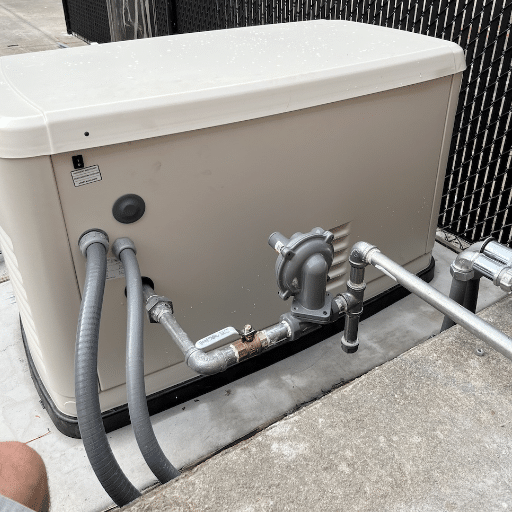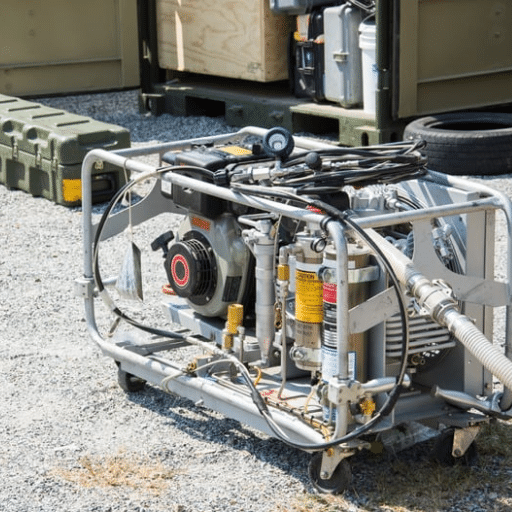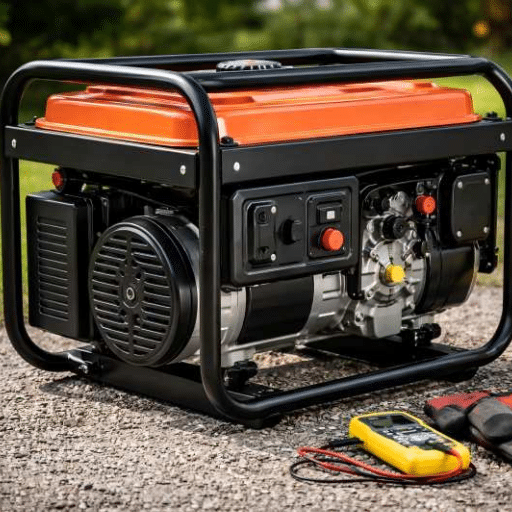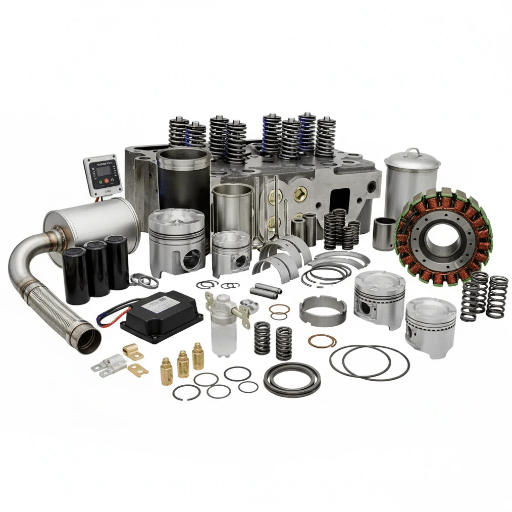


The type of fuel used by a generator has a very significant impact on the three main things – performance, efficiency, as well as features. Dual-fuel and single-fuel generator models are both suitable for intermittently providing power for a building that is off the grid or connected to a weak power supply. Yet, each has distinctive benefits to itself and trade-offs, making the decision subject to the actual power needs, how the power is to be used and what the owner can afford. We will undertake the difficult task of making a detailed comparison of dual-fuel and single-fuel generators, and in the end, you will be well versed to make a sound and educated choice which matches your power needs and energy goals in the long run. Keep following us to identify the generator category most likely to be the solution that fits the issue.
Understanding Fuel Options

1. Gasoline
Gasoline could be easily bought and used with portable generators. Nevertheless, it has a short period of use and gives off more pollutants than other types of fuel. It is most effective for short-term or occasional use.
2. Propane
Propane is a greener fire that burns off all the gas from it and even more. It takes longer for propane to go off than gas, and it is very good for residential standby generators. Nonetheless, a major factor might be the external tank that is necessary for it which could contribute to the installing being complicated
3. Diesel
Diesel generators stand out for their fuel economy and robustness. Diesel’s power density makes it possible for it to be used in very high-power applications for long periods. Yet diesel may be more expensive and require preventative measures for storage treatment in the long run.
4. Natural Gas
Natural gas is a cheap and environmentally friendly choice of fuel for residential generators that happen to be linked to the mains. In case there is no issue of the gas line, then it is supply of fuel would be unlimited. However, the use of this kind of fuel depends on infrastructure and is unlikely to be used in the wilderness.
Single-Fuel Generators
Single fuel generators are different from the others in that, like the name implies, they use only one fuel type, such as diesel, gasoline, propane, or natural gas. Their main selling points are simplicity and fuel efficiency, due to the fact that their engines and systems are primarily designed for the fuel which is best in the case. This kind of a setup helps to limit the repair problems as well as makes the process of maintenance easy, since all the components are made to work with only one kind of fuel’s combustion characteristics.
A major benefit of single-fuel generators is that their performance is quite consistent and can be easily predicted. Apparently, propane being a fuel that does not degrade over time is the perfect example, so there will be no need to worry about any issues with the energy delivery. On the other hand, diesel technology excels in two areas, that is, in the energy output and the fuel consumption which means diesel is the right choice for applications where power is needed most of the time and heavily loaded operations are often carried out.
However, single-fuel generators using one single type of fuel also face issues such as the availability and proper storing of fuel. For example, gasoline-powered generators may need the addition of a stabilizer for storage periods to prevent the fuel from degrading while natural gas generators are connected to pipelines – a situation that may be problematic in places where the infrastructure is easily disrupted. Regardless of these kinds of problems, single-fuel generators are still a good solution for the types of applications where the most important things are keeping the power supply on and using it efficiently.
Dual-Fuel Generators
Two different kinds of gases are used to power the dual-fuel generators. Commonly, these are gasoline and propane. These kinds of setups allow the engine to run neatly and without breakdowns even if one fuel type is not present; consequently, these types of generators could provide the most suitable option for individuals who reside in regions that could be affected by disruptions in the delivery chain or natural disasters. Propane, for example, is better-known for its longer shelf life and lesser environmental pollution than gasoline; however, it may be more of an effort to obtain it in some places where gasoline is the opposite.
One of the most remarkable benefits of dual-fuel generators is that they can switch between fuels without even the smallest of interruptions, thus maintaining the output of power. The injectability that this makes possible allows users to get the highest efficiency and cost-effectiveness according to the availability and price of fuel. Furthermore, the progress in technology resulted in better designs that make the most out of the combustion for both fuel types thus lowering the waste and improving the overall toughness of the generator. These are the types of generators that one would typically prefer for reasons such as emergency preparedness, remote job sites, and recreational use on account of their rugged design and operational flexibility.
Differences Between Dual-Fuel and Single-Fuel Generators
| Feature | Dual-Fuel Generators | Single-Fuel Generators |
|---|---|---|
| Fuel Options | Compatible with two fuel types (e.g., gas, propane) | Operates on one specific fuel type |
| Fuel Flexibility | High adaptability to fuel availability | Limited to a single fuel source |
| Performance Consistency | Maintains performance across various fuel types | Consistent but reliant on one fuel quality |
| Initial Cost | Generally higher upfront costs | Lower initial purchase costs |
| Fuel Cost Efficiency | Optimizes cost with fuel-switching ability | Efficiency depends on single fuel pricing |
| Maintenance Requirements | More complex due to dual fuel components | Simpler systems with fewer parts |
| Operational Range | Extended range with dual fuel choices | Fixed range limited by fuel capacity |
| Weight and Portability | Heavier due to additional components | Lighter and more portable |
| Durability | Robust design supports variable fuel usage | Built for single optimal fuel durability |
| Use Cases | Emergency, off-grid sites, recreational flexibility | Consistent use in specific scenarios |
Cost Analysis of Dual-Fuel and Single-Fuel Generators

One needs to take into account not only the immediate but also the long-term costs when choosing between a dual-fuel and a single-fuel generator. Typically, the cost of the former is more expensive when buying it for the first time since it comes with high-quality parts and the ability to run on more than one kind of fuel. However, the fact of using different types of fuel, for example, propane or gasoline, is what makes this kind of generator cost-effective in terms of operations in the long run, especially when fuel prices are volatile.
However, there is another side to the story. Single-fuel generators are a good option that is easy on the first wallet, but they are also limited in the sense that they are operating only on one type of fuel, so the fuel price and its availability stand as the main reasons for high operational costs.
Dual-fuel generators allow the user to be versatile and cost-effective for a long time, while single-fuel generators, which are cost-effective at the very beginning, would be the best choice for predictable and stable-use situations.
Initial Purchase Costs
To assess the initial buying price of dual-fuel generators versus single-fuel generators, one has to take many things into account, such as possible capacity, the reputation of the brand, and if the product has certain features. The initial cost of dual-fuel generators is usually higher due to the fact that a lot of additional engineering has to be done to make the unit support different kinds of fuel. However, the advanced fuel-switching technology and the increased all-purpose value make the extra cost worth it according to some buyers. Normally, the price of dual-fuel generators varies from $500 to $1,500 for household models, and afterwards the cost rises substantially for the bigger industrial-grade units.
In comparison, generators that run on one type of fuel only are normally cheaper to buy at the start because they are made to run on only one type of fuel – which happens to be easier to distribute than mixed-fuel. This results in the availability of cheaper types of electricity generators. For the sale of residential single-fuel generators, the run-of-the-mill price for the first, entry-level choices ranges from $300 to $1,000, and even in these cases, prices will still heavily depend on the power and quality of the generator.
While purchasing a generator the primary factor can be the asking price, it is necessary to factor in and compare long-term operational costs and future savings on fuel as well. As a result of a higher initial cost, the dual-fuel generator may not necessarily be the preferred choice even if it is the most popular in the industry. Nonetheless, when looked at from the saving point of view, if the energy price fluctuates drastically, flexibility will be crucial. Homogeneous energy generators may seem cheaper to run at the beginning, but they can have a slower running performance as a downside if their dedicated fuel costs more or is not available.
Operational Costs: A Comparison
It is highly important to consider the fuel efficiency of dual-fuel vs single-fuel generators during the evaluation of operational costs. Dual-fuel generators provide the benefit of being able to switch between fuel types, which is usually done from gasoline to propane. The use of propane is also a practical option as it is very often much cheaper per gallon and cleaner-burning, results in less carbon build-up, and hence makes the engine require less often the maintenance. Therefore higher costs on the fuel market might be partly offset in this way. For example, propane with its consistent pricing and long storage life is a very good and economical solution for continued usage in the case of emergencies.
Conversely, generators that are designed to use only one type of fuel even when it is gasoline or diesel, are frequently more energy-efficient for the chosen fuel. For instance, among the diesel-powered generators, the ones with the highest energy density and the best fuel economy are the most efficient under heavy loads. Yet, the cost advantages of these perfect machines can be wiped out by the increase in price per gallon of fuel and the maintenance troubleshoots that come with diesel-powered machines. Moreover, in places where the supply of fuel is problematically unreliable, the consumers of diesel fuel face the matter of accessibility of this kind of fuel.
Maintenance Considerations
It is absolutely important that one performs regular maintenance in order to be able to have reliable operation and a longer life of both dual-fuel and single-fuel generators. As the main advantage of the dual-fuel generators, it is possible to change the kind of fuel from natural gas to diesel and visa versa. So, there is a decrease in dependency on one fuel source. However, this feature also introduces maintenance difficulties, where the operation of the dual-fuel system demands constant checking of intricate parts, such as the fuel selector valves and dual injection systems, and their maintenance.
In contrast, single fuel generators need more maintenance due to one reason: the main fuel. For example, maintenance of the diesel-powered single fuel systems includes the need often to change the oil and to flush the fuel supply system to avoid problems such as sludge accumulation and to a lesser extent, injector clogging. The same goes for gasoline and natural gas systems, as they might need to clean the carburetor or replace the spark plug to promote continuous ignition.
Furthermore, it is significant that maintenance schedule is affected by environmental factors. That is to say, generators working under very humid or dusty conditions may need to have their air filters replaced and anti-corrosion treatment done more often than usual. It is critical to always test the generator under load conditions, regardless of generator type when the installment of the backup power system into the main grid is necessary.
Performance and Reliability

Dual-fuel generators operate on two different fuel types, usually natural gas and diesel, enabling them to run continuously for as long as there is no fuel outage. The fact that they can adapt to the different kinds of fuels adds a great deal to the dependability of those processes in places where fuel availability is irregular. Being a little inferior to the single-fuel generators in terms of the power output level, however, triggers increased complexity of the fuel mixture management process and makes the calibration for the optimization of the efficiency more dependent on the preciseness that they can only provide.
On the other hand, Single-fuel generators are typically more efficient and easier to take care of as they are consistent in the utilization of one source of fuel, thus leading to fewer mechanical intricacies. The other aspect that comes with their robustness is that the primary fuel is more of a mainstay and that the flow of energy is not to be cut off rendering them so easy and convenient for utilization in such places.
Power Output of Dual Fuel vs Single Fuel
To draw comparisons on the power output of dual-fuel and single-fuel generators, it is very important to take into account the operational flexibility and efficiency under various load conditions. Dual-fuel systems, as a rule, provide smoother performance in very critical power demand situations by using both fuels to their full extent thus producing more energy. This feature, therefore, makes them the most suitable option for the applications that need a lot of power or have varying power demand situations.
Generators that supply energy by burning a single type of fuel indeed ensure reliability in providing a constant amount of power but usually offer a fixed maximum operating capacity due to their use of only one type of fuel. This constraint can create a situation where the fuel, whose energy density, may not be able to provide enough power to meet the requirements of a peak load. For example, one of the latest single-fuel-based generator models that use diesel is an excellent choice for continuous operation since the diesel combustion is a very efficient process, however, it may not be a good fit when the demand for the energy suddenly rises and the situation calls for an adaptable energy source.
Performance Under Different Conditions
Generators operated by two fuels are a great example of adaptability under various conditions, which has been achieved through using two fuel sources, namely diesel and natural gas. This feature makes the generators run much more economically and lessen the costs of operation. For example, the natural gas can be made a priority during the low demand times such that it becomes cleaner and is also much cheaper per unit of energy compared to diesel. Conversely, when there are high loads needed, the diesel combustion process can be introduced into the system to keep the power output consistent and strong and still be able to take advantage of the better energy density of the diesel fuel.
Generators that are powered by only one type of fuel, although universally regarded to be simpler in terms of the equipment and the activities needed for the maintenance, may encounter obstacles related to their performance when the demand fluctuates. The use of one energy source only can lead to inefficiencies happening when the load requirements are quite far from the optimal operating range of the generator. For instance, a diesel-powered generator can only be fully efficient if it is consistently run at a capacity near its design operational level; otherwise, there will be too much fuel burned and excessive wearing at lighter loads.
Fuel Switching Mechanisms
Dual-fuel generators are created to switch fuel sources effortlessly and this is typically done by mixing diesel and natural gas at different rates to give the best performance for varying load conditions. The control system that controls load demand, fuel availability, and engine performance monitoring is the technology that allows this. Say, for instance, the natural gas at low-load periods will be chosen by these systems to be the main focus to keep the performance up and reduce emissions, whereas diesel can also be added to get a lot of power and steadiness for high loads. The control system is responsible for making very exact changes, thus controlling combustion temperatures within a very small range and preventing faults like knocking and incomplete combustion.
Single-fuel generators, to the contrary, do not have this flexibility, yet possess exclusively their perfect fuel control system. Such systems are created to fluctuate the fuel supply according to the engine requirements, and also the environmental factors like temperature and height. Gas only, generating sources are having responsive valving mechanisms in order to maintain the constant flow and pressure, specifically in the areas where the pipeline network is poorly established. Diesel-only, on the other hand, frequently apply electronic fuel injection (EFI) systems that improve the fuel atomization and combustion efficiency thus are able to run well even in very rough conditions.
Fuel Availability and Storage

Dual-fuel generators offer versatility and efficiency in energy production by making use of two types of fuels at the same time—typically natural gas and diesel. Consequently, still being operative during a scarcity of one of the fuels or its supply chain being disrupted. Diesel, in particular, needs to be kept in safe on-site tanks, which should meet safety and maintenance requirements to avoid the contamination or deterioration of fuel. Conversely, natural gas is transported over pipelines so there is no need for storage but that requires continually having access to infrastructure.
Generators powered by a single fuel type are solely set up for example diesel or natural gas. In comparison, a diesel generator demands having the storage facilities nearby, thus being appropriate for remote areas with no access to the pipeline. To assure the most effective operation of the generator, considerations of proper storage such as tank maintenance and fuel rotation are especially important. On the other hand, natural gas gen-sets absorb the fuel by pipeline only and this may be an advantage in urban settings but a challenge in regions without extensive pipeline networks.
Comparison of Common Generator Fuel Types
| Criteria | Gasoline | Diesel | Propane | Natural Gas |
|---|---|---|---|---|
| Availability | Widely available, easy to source | Easy to source, commonly available | Readily available in propane tanks | Dependent on pipeline access |
| Energy Efficiency | Moderate efficiency | High efficiency, long runtime | Moderate efficiency, moderate runtime | Less efficient than diesel |
| Cost | More expensive than diesel | Cheaper per unit of energy | Higher cost per unit | Low cost if pipelines exist |
| Storage Requirements | Portable, but short shelf life | Needs tanks, long shelf life | Requires dedicated storage tanks | Continuous supply via pipeline |
| Maintenance | Requires frequent refueling | Requires regular fuel rotation | Minimal, but tank maintenance | Low, consistent pipeline supply |
| Environmental Impact | Higher emissions, less eco-friendly | Moderate emissions | Cleaner burning, lower emissions | Cleanest fossil fuel option |
| Suitability | Smaller, portable generators | Industrial, heavy-duty generators | Both residential and commercial | Urban settings with pipelines |
Storage Requirements and Safety
To evaluate the storage needs of hybrid and regular fuel generators, many things have to be taken into account. The usage of two different gas types in hybrid generators means that the storage facilities have to be prepared in such a way that they can store both types of fuel. Gasoline, albeit readily available, is very flammable and needs to be kept in airtight, certified containers, preferably in well-ventilated places far from heat sources so as to prevent a fire. Its shelf life of only 3-6 months is another disadvantage that requires constant rotation to avoid inefficiency. On the other hand, propane has a much longer shelf life but still, the needed storage is in specialized, pressured cylinders or tanks which have to meet strict safety regulations to prevent gas leaks or explosions.
Single-fuel generators are generators that are narrowly powered by either petrol, diesel, or natural gas, leading to different storage problems. Diesel, the longest-lasting type of fuel, lasts up to a full year under ideal storage conditions and with the help of stabilizers, but still needs to be kept away from moisture and prevented from oxidation. Natural gas not only reduces the cost of on-site storage but also completely removes the necessity for it, or in other words, it is a power system that requires no storage facilities on-site; however, the higher the dependence on pipelines, the bigger the risk to interruptions in the emergency.
In terms of safety, both types of generators need to be handled and stored with the utmost care to minimize the risks. Anyway, generators using two types of fuel are more demanding because users should always be careful with the particular storage and transportation requirements of two very different fuel systems. Other things to take care of are that the generator has proper ventilation to avert carbon monoxide hazards and that strong fire preventive measures are in place at the storage site.
Environmental Impact and Emissions

Dual fuel generators are usually more environmentally friendly than single fuel generators because they are not limited to one business using clean fuel. For instance, it is possible to execute a lot of occasions by utilizing natural gas and therefore cleaner burning fuel than diesel or gasoline which reduces the particulate matter and greenhouse gas emissions. On the other hand, IMI generators generally need less investment to be made as they are powered by one type of fuel; their setting requirements are minimal as well. But at the same time, they will not be able to use low-emission fuels as easily as dual-fuel systems which will result in the emission of higher amounts of carbon dioxide and nitrogen oxides.
Emission Differences Between Fuel Types
By and large, gasoline-run generators are connected with the majority of the emissions compared to the diesel-run analogues. This is mainly because the combustion is not complete and also because the fuel efficiency is lower. The combustion of gasoline produces a huge amount of carbon monoxide (CO), hydrocarbons (HC), and particle matter (PM) besides the still large amount of carbon dioxide (CO2). In contrast, the diesel is a better burner, that is to say, emits less CO and HC, but a much higher nitrogen oxides (NOx), which is the major contributor to the creation of smog and respiratory diseases.
Natural gas and propane systems are both considered to be very clean energy sources. In comparison to diesel and gasoline, the combustion of natural gas results in much less NOx, CO, and almost no particulate matter which makes the total environmental impact of the gas much smaller. Propane is in the same emission trend, though it produces fewer greenhouse gases per unit of energy consumed.
No matter how much natural gas and propane would be of help, the way to diminish emissions of any kind of fuel greatly depends on the technology and design of the generator with its fuel combustion optimization and exhaust treatment regulation being the main features. The more sophisticated systems, which include those already with catalytic converters or having selective catalytic reduction (SCR) technology, are able to cut emissions to a great extent, even for diesel models which are known to be traditionally high output.
Long-term Sustainability
Advanced in terms of energy efficiency, innovations in the field of emission reduction technologies, and the availability of compatible fuels are the main drivers of the sustainable existence of both dual-fuel and single-fuel generators. Compared to single-fuel units, the dual-fuel ones are considered more environmentally friendly since they can be fed by any combination of fuel and have low carbon emissions when their usage is mostly based on natural gas. Thus, these generators have the so-called feature of using both diesel and, when required, natural gas, so that a less expensive and more environmentally friendly operation can be chosen and the diesel issue can be at least partially overcome.
Nevertheless, there is also a possibility for the single-fuel power generators, mostly the ones that run on renewable or low emission sources of fuel, to operate sustainably if they are equipped with the latest technologies. For example, the single-fuel generators that are biodiesel-compatible will be able to use renewable biomass feedstocks and that way will also cut both the greenhouse gas emissions and the reliance on fossil fuels. Moreover, evolved fuel injection systems and exhaust after-treatment components such as diesel particulate filters (DPFs) and exhaust gas recirculation (EGR) systems also improve the sustainability of the single-fuel generators towards environmental control under the challenge of very strict standards.
Economic conditions are very important for the environment, as they directly affect the environmental costs and the long-term needs for maintenance. Even though the dual-fuel facilities can be a big money saver by the fact that they switch over to the cheaper fuel at a particular time, their initiation price and complication of operation might turn out to be a problem. In contrast, the single-fuel systems generally possess more simple designs, which means the cost at the very beginning is less but the operational costs could go north if the fuel chosen is from a volatile market.
Reference Sources
- Experimental Analysis of a Diesel-Engine Generator Fueled with Syngas and EGR in Dual Fuel Modes
- The Impact of Diesel/LPG Dual Fuel on Performance and Emissions in a Single Cylinder Diesel Generator