

Choosing the best generator for powering your house, RV, or worksite can be a crucial decision. The market today is mostly ruled by two main types of generators—conventional and inverter generators—that have both managed to outrun the previous generational technologies. It is certain that each of them is a winner in different aspects and of course, every option is now very much sought after due to the same reasons of efficiency, power, and use in varying places. It is very crucial to know these differences so as to be able to select well whether you are more into fuel efficiency, portability, noise levels, or power output. There is an article that delves into the technical and practical differences between inverters and conventional generators, which will surely aid you in evaluating which option is the best fit for your particular power needs.
Overview of Generators

Generators are equipment, whose purpose is to transform mechanical energy into electricity, hence becoming the main source of power when the direct connection to the grid is not present or is not stable. Such devices are available in various forms, with the most popular being the conventional generators and inverter generators. Conventional generators are usually powered by an internal combustion engine connected to an alternator, thus supplying a constant power level at a fixed speed. On the other hand, inverter generators create cleaner and more stable electricity by transforming AC power to DC and then DC back to AC; thus, they are good for powering the most sensitive electronics. Even though both types of electrical devices have distinct functions, they can still be used in the same area, the choice being defined by their load requirements, the ease of their transportation, high fuel efficiency, or the level of noise created.
What is an Inverter Generator?
An inverter generator is a highly sophisticated and consumer electronics device that produces cleaner and stable electrical power than traditional generators. This machine is operational through a sequence of steps where the first is the conversion of alternating current (AC) to direct current (DC), and after that, inverting the DC back to AC by using advanced electronics. The use of two switches for the conversions guarantees that the power output will be constant and free from big ups and downs or harmonic distortions, and thus, this technology is mostly used for providing power to the delicate and easily damaged devices like laptops, smartphones, medical equipment, and many others.
The inverter generators that are currently on the market are made in such a way that they are really fuel-efficient. Through the act of automatically adjusting the engine speed according to the power demand, rather than running at a constant speed regardless of the load, the new versions of inverter generators stand out as the major pattern. The noise levels become much lower by virtue of this feature, bringing about a much quieter operation in contrast to the traditional generators. Furthermore, there are many benefits related to compactness and lightness of inverter generators, which are portrayed through their portability and convenience for a wider range of activities, such as emergencies, recreational use, and the job site. When it comes to inverter generators, they would have been totally different without technology’s help, as there are now these remarkable features such as parallel connectivity, where people can have their power more robustly with the connection of two units, this of course, adds to their versatility and productivity further.
What is a Conventional Generator?
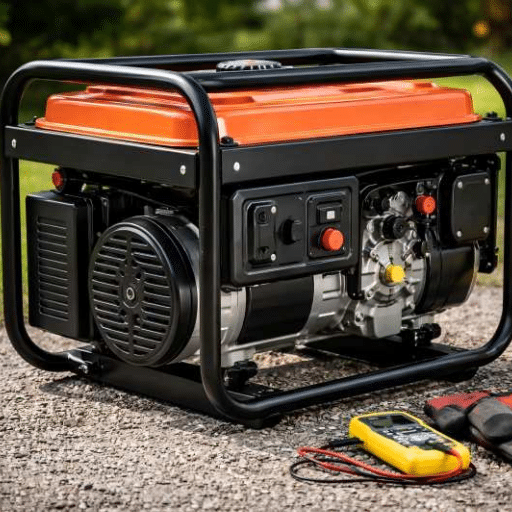
A conventional generator that typically uses an internal combustion engine powered by gasoline or diesel as its main source of fuel is a standard power production tool. It functions by transforming mechanical energy into electrical energy through an electromagnetic induction process; the standard AC power is produced as an end product. Opposing the inverter generators, the conventional generators are equipped with a fixed-speed engine, which enables the generators to run the power output at 3600 RPMs to produce a regular flow of power, generally 120 volts at 60 Hz for the USA market.
On the other hand, as powerful and capable of supporting heavy loads as conventional generators are, there are still some disadvantages associated with them in a few aspects. Their size is generally bigger, their weight is more than the inverter type, and if compared by fuel consumption, they are less economical. In addition to these drawbacks, they run noisier during operation and, for most of them, parallel connectivity and pure power output for sensitive electronics are not available options. Still, traditional generators are a common choice for industry, building sites, and any scenario calling for power, like complete power solutions at home during a power failure that lasts for a while.
Key Features of Portable Generators
- Power Output and Capacity
There is a vast array of portable power generators, starting from 1,000 watts and going up to as high as 10,000 watts. The wattage being the unit of measurement for the power output, the choice for the equipment should be in tune with its purpose—lower for small appliances or tools, higher for the powering of multiple devices and/or larger equipment. - Fuel Types
As a rule, these machines are powered by gasoline. However, it is now common that there are models that allow for gasoline-propane dual fuel operation thus giving users the choice to alternatively feed the machine with gasoline or propane, which brings a lot of (senseless) money. Besides this, some models at the premium end come with natural gas and diesel fuel options. - Run Time
Most of the portable generators fall within the run time specifications in the range of 8 to 16 hours at 50% load. This varies with the size of the fuel tank and the fuel efficiency. Fuel tank sizes generally range from 1 to 10 gallons, directly influencing the operational longevity. - Portability Features
Characterized by wheels and foldable handles, they are crafted according to the plan of making them witty and companionable to be taken everywhere. On one side, lightweights with short and tiny frames are ideal for solo jobs, whereas on the other side, the sturdier models come with heavy-duty wheels in the package for ease on rough roads or off-road conditions. - Noise Levels
The noise level of portable generators is within the range of 50 dB to 90 dB; it changes according to the brand and the wattage. The majority of the new models of noise levels have noise-cancellation features integrated, for example, mufflers or inverters during the quieter period. - Electrical Outlets and Compatibility
Most units include no less than two types of outputs, which are 120V receptacles for the home, 240V receptacles for high-energy tools and machines, and USB ports for cellphones and other small devices. There are also some generators that can be used in parallel for power output multiplication.
Compare Inverter and Conventional Generators

- Power Output Quality
Inverter generators are way ahead of conventional models because they produce clean electricity that is perfect for sensitive electronic devices like computers and smartphones. On the other hand, conventional generators produce primary electricity with the same level of precision, if any; hence, potentially, they can ruin delicate devices. - Fuel Efficiency
On the one hand, inverter generators manage the engine speed through power demand, which tremendously enhances fuel efficiency. On the other hand, the constant speed operation of conventional generators results in higher fuel consumption even for low power demands. - Noise Levels
Inverter generators, with their advanced technology and insulated enclosures, operate much more quietly than conventional units. Conventional generators are, as a rule, noisier, and this is especially true at higher loads, so they are not a good choice for noise-sensitive areas. - Portability
In comparison to conventional generators, inverter generators are both lighter and more compact, which in turn makes them more mobile and easier to store. The bulkier and heavier conventional generators, however, are the choice for either stationary or high-energy-demand scenarios. - Cost
On one hand, inverter generators cost more due to their high-end technology and efficiency. On the other hand, the traditional generators are relatively less expensive and can be a cost-effective solution for intermediate power requirements.
Key Differences Between Inverter and Conventional Generators
| Feature | Inverter Generator | Conventional Generator |
|---|---|---|
| Power Output | Lower, suitable for sensitive devices | Higher, supports heavy-duty equipment |
| Fuel Efficiency | More efficient with variable engine speeds | Less efficient with constant engine speed |
| Noise Levels | Quieter due to advanced design | Louder during operation |
| Portability | Lightweight and compact | Bulkier and less portable |
| Cost | Higher, due to advanced technology | More affordable for basic needs |
| Power Consistency | Produces clean, stable power | More fluctuations in power output |
| Environmental Impact | Lower emissions, eco-friendlier | Higher emissions |
| Durability | Ideal for lighter, intermittent use | Better for continuous, demanding use |
| Maintenance | Requires less maintenance | Needs more frequent maintenance |
| Application | Suited for home, RVs, and camping | Suitable for industrial or high-demand tasks |
Noise Levels and Operation
When you’re examining the effective running and noise output, you should keep in mind the decibel (dB) rankings and the efficiency metrics of the equipments in the usual operating conditions. New generators, especially inverter models, have gradually become the primary sources of power, reaching up to between 50-60 dB, the same as a normal conversation, so much so that they are more suitable for residential or recreational applications. On the other hand, non-inverter generators can go beyond 70 dB, which is much noisier and may cause disturbance in sensitive noise categories.
Operational efficiency relies heavily on the kind of fuel, the percentage of load, and the design of the engine. Inverter generators, which are of quite small or moderate power, are built to shift the engine speeds automatically according to the power demanded, thereby saving fuel and reducing emissions. However, regular generators generally work at a constant speed, hence provide stable power but at the same time consume much more fuel and make more noise upon long-time operation. The compounds of the operational factors, having been made with patient-equipment selection, ensure that distinct and specially prepared performance is achieved accordingly.
Portability and Design Considerations
The most recent generators are increasingly made with portability and adjustability in mind to cover the requirements of a diverse range of applications. Being small and weightless, sometimes having ergonomic handholds or wheels, the easy transport and set up in different places, from building sites to remote outdoor installations, are all possible with such models. Furthermore, product longevity and consistency are enhanced through the use of tough covering, weatherproof enclosures, and vibration-softening tech. In addition, the noise levels are reduced by the way and, also, more models through it, they still produce the same power. Makers are able to give the end-user both portable power and the best of both worlds through the usage of smart materials and the application of engineering concepts.
Benefits of Inverter Generators

- Fuel Efficiency: The engine speed of the inverter generators is regulated by the power demand, which in turn leads to the cutting of fuel usage in comparison with the traditional generators, and this means a lesser cost of operation too.
- Stable Power Output: They are and the very same time supplying a power output that is both smooth and without any interruptions, which simply makes their performance top-notch especially when it comes to supplying the most sensitive electronic devices such as laptops, smartphones, and medical equipment.
- Portability: Using a very smart and sleek material-scheme and of course the design itself, inverter generators are very easy to hand and move around and also can be kept with least storage space that all together contributes to the higher use of the devices in different areas and types of application.
- Noise Reduction: The overall design of the machine and inserting absorbent and other noise-deadening features all contribute to the lessening of the noise level hence the operation is very silent and thus the users are the residents, the gamers, and the people using the generator as part of the job.
- Environmental Friendliness: Since they consume less fuel, they release fewer emissions and thus inverter generators play a key role in lessening the environmental footprint that all counts into their compliance with the contemporary efficiency standards.
Fuel Efficiency and Runtime
Inverter generators are especially famous for their better fuel efficiency than regular generators because they can control the engine speed as per the electrical demand. And this feature is among the most sought after – the load-dependent throttle is a very friendly and effective way to save money on fuel and therefore to make the generator cost-effective. Thus, it is possible for a range of inverter generators these days to work very economically even at low load; in fact, they might consume as little as 0.1 gallon of fuel per hour and still manage to keep the necessary devices operating
The runtime of an inverter generator is in close relation with its fuel tank capacity, operational load, and engine design. High-efficiency gensets with enhanced fuel systems can go in a single tank for 10 hours or more at 25% load capacity. Also, the fuel injection technologies invention with hybrid engine integration has pushed the performance and longer runtime boundary to more closely line up with each other, a feature that no longer makes inverter generators only a short-term power solution but also a long-term power solution on which one could rely.
Safety Features and Electronics Compatibility
Present-day inverter generators are made with the very latest safety features that are put in place to guard and protect not only the operation itself but also the devices connected to them. Overload protection circuits and the shutdown of the generator and electronics if the power demand is in excess are some of the many automatic safety systems. One of the usual add-ons is the low-oil sensors that are wired to the automatic engine shutdown, thus taking a step ahead in stopping any engine damage that might be an outcome of poor lubrication.
By adding to this, inverter generators are quieter and more beneficial when it comes to the power they supply than their traditional generators counterpart through the total harmonic distortion (THD) it normaly kept below 3%. It facilitates the use of synergetic electronics like laptops, cell phones, and the like. It keeps the sensitive devices from being harmed by power surges or negative voltage by having just 3% THD. They also boast the standard ground fault circuit interrupters (GFCIs), which further improve safety for the user and the equipment as they help in reducing the risk of being electrocuted. These are the latest technologies in the industry to make sure that users and their electronics are well-protected in a variety of ways and all the time.
Advantages of Conventional Generators

- High Power Output
Conventional generators have always been manufactured to provide high power outputs which make them the prime choice for heavy-duty tasks like construction sites, industrial plants, and the power for the large backup systems. - Fuel Availability
Generators of this type usually operate using fuels that are readily available. For example, they can use gasoline or diesel to do so. Thus, there is no problem in moving the generator and also reducing the time of maintenance. - Durability and Longevity
Traditional generators are strong and can work non-stop for long hours continuously with minimum maintenance since they were made to withstand harsh environments. - Cost-Effectiveness for High Loads
For needs of the sort, where high power has to be generated continuously for a long time, the conventional generators are often the best choice because they outperform the alternatives in cost due to the lower watt cost of the unit at high power capacities. - Proven Technology
These electric generators have been tested in the field for many years and thus have proved their reliability. They work with technology that is simple and known to all, so in the situation of any type of power cut, they can be used swiftly and without any obstacles.
Initial Cost and Maintenance
When one takes the initial investment into account, the odds are that, compared to the tiny and portable alternatives, or residential renewable energy systems, conventional generators usually have a higher cost at the start. Nevertheless, this initial high expense can be easily excused by their capability to carry the heavy loads and deliver a steady performance during the long run. Moreover, the routine maintenance of conventional generators is founded on very plain and well-tried methods, among which are regular oil changes, checks of fuel systems, and filter replacements. The maintenance costs of these generators are commonly found to be between $ 0.02 and $0.04 per Kilowatt-hour of energy produced. The situation is primarily governed by the time frame of the use and the local service rates. These numbers are ones that scream for the necessity of regular servicing. Overlooking service could mean more costly repairs and less effectiveness in the long run.
Powering High-Demand Appliances
Performing high-demand appliances like HVAC systems, heavy machines, or commercial-grade refrigeration units is a must to really know the power source’s capacity and reliability. There are certain generators, specifically assigned to help those heavy applications, that should include highly sophisticated voltage regulation systems to prevent activities that can be harmful to easily-spoiled parts or interrupt critical operational processes. It is said through the market that standby generators of the current times, having an adaptive load management feature, are more efficient, by not letting the load overpower electricity.
Moreover, these systems, when smartly controlled by the smart monitoring device, are good for immediate fault location and optimal performance, thus giving the coming high-demand power conditions a very smooth reliance. The power will never be disrupted, and industries that are fully dependent on the running of their business will find such solutions as the best to deal with downtimes, only during times of heavy peak demands. Also, you can wear earplugs and start working again.
Choosing the Best Generator for Your Needs

When it comes to choosing the right generator, consumers should first make a calculation of the power they need to support all their important appliances and gadgets. Then they should ponder on what type of fuel would be best for them as well as gas, diesel, solar, etc., and every type of fuel has different costs, availability, and consequences on the environment. They should also check the capacity and fuel efficiency of the generator to determine if it can be used for a very long period and only very rarely will be required to be refueled.
Last but not least, they should put the emphasis on the units with the safety measures, such as shutdown receivers and extra protection devices for both the equipment and the gadgets in question. However, it is still necessary that they make a judgment of the noise output and whether it is easy to transport the generator. For the cases where the generator will be used in a quiet or airport-like setting, the choice of which the generator will be sold and circulated should also be made after determining the use.
Assessing Your Power Requirements
Power requirements assessment is a primary task in finding the right generator for the job. You should begin by identifying and estimating the wattage of every tool or machine you wish to run from the generator. For example, the popular home appliances, e.g., the refrigerators, always consume about 600-800 watts, or the air conditioners, which can be up to 2,000-3,000 watts depending on their size. Besides, you also need to account for the gadgets that have motors or other mechanical components, as they often have a higher initial wattage — in some cases, up to 3 times their running wattage.
Make sure you include the peak power demand in the total requirement and add a further margin for future equipment or additional load. For the industrial sector or commercial businesses, the load summation during the most demanding operational time must be evaluated in order to avoid generator overloading. After obtaining this data, buy a generator that has a power reserve greater than what is calculated; for instance, this will be a margin where unexpected loads or new machines can be added without problems. The utilization of the above method is not just reliable performance but also the optimization of the electricity generator capacity.
Considerations for Portability
The assessment of generators with regard to their portability reveals that several technical benchmarks warrant attention to match the equipment to the operational requirements. One of the most significant factors is the weight of the generator ,which can vary from 50 to over 300 pounds depending on the power rating and fuel type of the portable units. To make the transportation easier, many models come with hermetic handles and wheels that are made up of very tough materials such as solid rubber and pneumatic designs to help in the transport between different terrains.
The dimensions of the generator should also be considered in relation to the storage and usage areas. If the location does not have enough space, a compact design is required. On the other hand, there are implementations such as foldable or retractable components that can be added to the generator to make it more portable. And the noise levels, typically measured in decibels (dB), are another factor influencing a generator’s portability, especially when transportation occurs in residential areas or when noise must be kept to a minimum.
When assessing the generator’s portability, fuel efficiency, and tank size should be considered simultaneously. Smaller tanks on a light generator may need to be refilled more often, but more refueling can be done on larger units, which may reduce their mobility. So, by systematically identifying, analyzing, and defining these factors, the users can choose the portable generator that is within the functional and ergonomic limits.
Long-Term Usage and Reliability
Several key factors affect the long-term use and trustworthiness of portable generators, including the quality of construction, the frequency with which they are serviced, and the durability of their components, among others. On one hand, because materials like these make the generators stronger, it is highly possible that they can last for long periods of time before showing significant signs of fatigue under various conditions. The durability of the engine is another crucial thing to be considered because the machines with top-notch performance statistics and high-grade parts tend to have fewer faults as time goes by.
For one thing, besides the mechanical factors involved, the maintenance practices required are what will actually help you extend the life of a generator. One of the ways this is achieved is by regular oil changes, spark plug inspections, and filter replacements. The next thing that will help a generator to last longer is; to have it fitted with automated parts including low maintenance features such as voltage regulation mechanisms and low-oil shutoff systems, is to have generators that last longer, and the automatic features are one way to do so.
According to the empirical data, it is very important to choose the generators with the latest overload protection and thermal management systems. That way, the risk of overheating disappears and the generator is able to work continuously in the way it is expected. Brands with very good warranty policies and customer service lines, online or based in the physical world, on the other hand, are often equated to the most reliable products, thus making users feel secure about the product in terms of quality and durability. The users can, by analyzing these points with great care, be perfectly content with their selection and be able to have the best possible functioning of the generator within its operation period.
Reference Sources
- Inverters: A More Effective Alternative Compared to Petrol Powered Generators for Meeting a Residential Load Demand in Nigeria
Read the paper here - Solar AC Generator without Inverter
Read the paper here - Research on Modifying Inverter Controls in Utility-Scale Renewables
Read the abstract here
Frequently Asked Questions (FAQs)
Which inverter generator models or traditional generators suit home backup power best?
The choice between the different kinds of generators is neither hard nor easy when it comes down to the need for a home backup power system. It all depends on the intended use and the appliances you plan to run during the power outage. For the former, portable units are a must, and for the latter, built-in models are the only right way. Both types of systems have their own pros and cons, and here we can discuss the “inverter generator” type and the “Traditional Generator” type. The high walls of the smart grid landscape are getting higher with the advent of renewables and the related microgrid planning.
What are the key differences between an inverter and a conventional generator for portable use?
Various techniques help inverters and conventional generators become unique. First, as they turn, inverters alter the RPM of motors by regulation so that a quieter engine is more fuel-saving, and one that runs at a uniform speed is noisier and consumes more fuel. Inverter generators are not designed to be the connectivity of electronics with alternating current (AC) but instead with a regular frequency, also when the engine spins at various RPMs. The other conventional generators with no electronics have amplifiers to bring the electricity to a good quality. The inverter-fed motors are quieter, consume less fuel, and are selected by the user to work with high electronic circuits and recreation, while the non-inverter or the standard powered generators can possibly be good for very big loads.
How does a conventional generator compare to the best inverter for running household appliances?
Conventional generators render higher peak power quite frequently, which is good for kicking off motors and large appliances; meanwhile, the best inverter will offer the most stable voltage and cleanest power for electronics and fine appliances. As for the practical use of inverters in homes, typically the engine speed of the inverter generator is adjusted to the power demand, so the noise and fuel will be lower, while the traditional portable generators work at a constant RPM and may use more fuel. Before installing a home backup power system, the performance of the system, particularly in supplying the initial load requirement, such as running HVAC or large fridges that require high startup amps, should be considered.
Are conventional portable generators or inverter units better for camping and recreational portable use?
Inverter units and small inverter generators are the most popular for camping and recreational portable use since they are quieter, lighter, and provide cleaner power for phones, laptops, and small appliances. The raw power that conventional portable generators may offer and the lower upfront cost can be the advantages, but they are more likely to be noisier and less fuel-efficient under the light loads that are typical in recreational scenarios. Those with plans to use solar generator hybrids or to run sensitive electronics will enjoy the reduced risk of damaging devices through the cleaner power of inverter technology. A lot of users of portable generators are very impressed by the unique selling points of inverter generators, which mainly include low noise, parallel capability, and less fuel consumption on long trips.