
When it comes to solar power systems, knowing the difference between off-grid systems or grid-tied systems can make or break the progress that individuals or corporations who want to go solar may be experiencing at present. This post intends to explain how these two kinds of approaches work and what benefits and disadvantages are associated with each of them. Whether someone wants a completely off-grid system or the convenience of a grid-tied solar power system, this information can help guide a thoughtful decision adherent to their energy consumption. This article explores the different consumption practices that accompany the aforementioned systems, explaining how active elements work, the economic expenses involved, and finally provides an insight on which is better between the two systems taking into account sustainability and life priorities.
Introduction to Solar Power Systems

Solar power systems are for generating electricity or heat using light energy as the source of power. They are comprised mainly of solar panels, a charge controller, an inverter, a mounting structure, and, in certain cases, energy storage units like batteries. The core of solar power systems is its configuration, in which energy is generated in photovoltaic cells, which are contained in a module, modules in an array, and several arrays are mounted on a rooftop or ground-mounted. The two major categories of solar powered devices are bulk energy systems and solar photovoltaic systems. In a bulk energy system, the energy flows through the solar collectors into a single containment structure and a power shipment facility, from where it is distributed to the required location.
Importance of Choosing the Right Generator
Picking the appropriate generator is vital in maintaining an electric power backup system. These are commonly used for either domestic, commercial, or industrial applications. Today’s generators are as varied as they are effective. They come in a wide range of different sizes, fueled combustion methods, and technological advancements depending on their intended area of utilization. For instance, in the event home usage, there are certain concerns involved in making differentiation especially with regard to the frequency of use, power ratings, fuel consumption and maintenance. In heavier-duty applications, such as industrial machinery, more powerful generators, combined with the advanced load management features of larger gensets with longer operating time, are sought after.
A prudent selection process should also consider the fuel type, which comprises diesel, natural gas, or bi-fuel, and also considers the compliance with emission standards. Furthermore, advances in the technology of the generator, like automatic transfer switches and remote monitoring systems, have been a salutary effort to reduce downtime while improving its safety and operational convenience. Sizing and selecting the correct generator not only allows for the proper supply of power when there are blackouts but also extends cost benefit and system life.
Overview of Off-Grid and Grid-Tied Systems
Both off-grid and on-grid systems have a place in today’s modern energy systems, with distinct operational approaches. An off-grid electrical system, for example, is not linked directly with the primary grid system, instead has power sources such as solar energy, wind energy or fuel cells for all systems in its place, installation and operation areas. Most commonly used are advanced lithium ion battery systems, combined with fuel cell technologies of water and oxygen. Many people live in places where there is hardly energy from the electricity lines and in case of power failure rate can be quite high all without the need for electricity. However, it shall be a concern that the energy meets requirements in such a case, and this goes toward a dependable energy storage system in case of events such as prolonged rain or calm conditions during the design of the structure.
Conversely, grid-tied configurations directly link to the energy grid of a region, thus furnish the facility of harnessing electricity from the main grid when the produced energy is not enough while also promoting the electricity to the grid in excess of the demand. Apart from that, these configurations are combined with what is known as the net-metering policy, which is just a structure that enables the system user to cut down the energy costs by making energy supply to the grid even in situations when the house is in excess of the energy required. Therefore, off-grid setups are more cost-effective and do not require the installation of numerous and costly energy storage equipment, which is why many people are using or prefer applying on-grid systems.
Key Terminology in Solar Energy
| Term | Definition |
|---|---|
| Photovoltaic (PV) | Technology converting sunlight into electricity. |
| Solar Panel Efficiency | Percentage of sunlight converted into usable energy. |
| Kilowatt-Peak (kWp) | Maximum output under standard test conditions. |
| Solar Inverter | Device converting DC to AC electricity. |
| Net Metering | Billing mechanism for returning excess solar energy to the grid. |
| Energy Storage System | Batteries storing excess energy for later use. |
| Solar Irradiance | Power per unit area received from the Sun. |
| Capacity Factor | Ratio of actual output vs potential maximum output. |
| Grid-Tied System | A solar setup connected to the utility grid. |
| Off-Grid System | Solar setup operating independently from the utility grid. |
| Feed-in Tariff (FIT) | Policy incentivizing renewable energy, offering payments for generated energy. |
| Balance of System (BOS) | Non-module components including inverters, wiring, and mounting. |
| Tier 1 Solar Panels | Panels manufactured by financially stable, established companies. |
| Solar Tracker | Mechanism adjusting panel angle to follow the Sun. |
| PERC Technology | Enhanced PV efficiency via Passivated Emitter Rear Cells. |
Understanding Off-Grid Solar Systems

Off-grid solar systems are characterized by the fact that they work without connecting to the electricity utility grid hence their high reliability in locations cut off from the grid. Normally, such systems involve solar panels as energy converters, conversion from direct current to alternating current by use of inverters, built-in or external battery storage systems for power conservation, and a charge controller for battery charging control. Such components integrated in the system ensure a steady energy network in that the battery continues to be charged at all times, energy is generated, and ends up into load at all times in an off-grid home or other facility.
Definition and Functionality of Off-Grid Systems
It is a well-known fact that areas not connected to conventional power grids will require off grid solution even with adequate accessibility. The solution here is off-grid systems, which are most appropriate for such vital and remote geographic locations, as they assist in achieving energy freedom by utilizing solar, wind, and hydropower, among other available alternative energy resources. Sophisticated off grid systems have emerged and are aimed at improving effectiveness, along with the regular energy conversion and energy saving equipment, such as hybrid inverters that allow several power sources to be built into one device without any difficulties, and advanced battery storage systems made of lithium-ion with a much higher storage capacity compared to lead-acid batteries.
In addition, these systems are highly extendable making it easy for them to be increased accordingly as there is energy consumption. Some recent advancements in the field have proven that battery technology together with smart electricity use inventions has proven that one can achieve more efficiency and reliability on the installations. Therefore, such improvement means that off-grid systems can perform an uninterruptible power supply in a variety of ways, including households, vehicles, and even remote industries.
Components of an Off-Grid Solar Power System
| Component | Description |
|---|---|
| Solar Panels | Collect sunlight and convert it into electrical energy. |
| Charge Controller | Regulates voltage and prevents battery overcharging. |
| Battery Bank | Stores energy for use during non-sunny periods. |
| Inverter | Converts DC from batteries to usable AC electricity. |
| Mounting System | Secures solar panels in place at optimal angles. |
| Wiring and Connectors | Ensures safe and efficient energy transfer. |
| Monitoring System | Tracks system performance and energy production. |
| Backup Generator (Optional) | Provides energy during extended low-sunlight periods. |
| System Fuses and Breakers | Protect components from electrical overloads. |
| Energy Appliances | Devices powered by the solar energy generated. |
Advantages of Off-Grid Solar Systems
- Energy Independence
To start with, it is imperative to understand that there is no use waiting for the power utility grid to fail before you implement the off-grid systems. Based on the information gathered from surveys, the number of consumers exposed to power interruptions annually such as outages is estimated to be over 30%. With such statistics, a consumer would find the off-grid systems fairly appealing. - Environmental Sustainability
The implementation of solar off-grid systems helps in reducing emission of greenhouse gases. A solar power system with a 5kW capacity is estimated to save the atmosphere from 3 to 4 metric tons of CO2 on an annual basis which is almost the equivalent of planting more than 100 trees each year. - Remote Accessibility
Off-grid solar system is a good option when it comes to areas that are far from the reach of the electricity grid or where grid extension charges are too high. On the other hand, constructing the grids in such places may cost around $15,000 and $50,000 per mile. But with off-grid solar system, the costs will be far lower thus providing an efficient and cheap means of power supply for rural homes or other isolated constructions. - Energy Cost Savings
Conversely, whilst the capital investment in off-grid solar may be relatively large, the systems in the long run do not attract energy consumption charges on a monthly basis. For example, a 20–25 year life span of the system can result in a saving of between $ 50,000 and $ 100,000, depending on the energy consumption and the current utility tariffs. - Scalability and Customization
Off-grid systems are intentionally designed to meet energy needs. It is possible to improve its capacity as and when the increasing needs of energy arise using modular constructions such as additional solar panels and energy storage. - Resilience to Grid Instability
In contrast to systems that require grid connectivity, off-grid solutions operate independently or autonomously as a backup energy source, which can assist in mitigating the effects of energy disasters and energy cost and availability concerns.
Exploring Grid-Tied Solar Systems

Solar power systems that are linked to the power grid have a direct line to the grid and are able to serve as supplementary energy sources to residences or enterprises that are still closely connected to it. It is often cheaper than stand-alone solar panels because there are no expensive energy storage systems, such as batteries. The surplus electricity produced during sunny hours can be sold into the grid. This can be cost effective in cases of net metering use and the same electricity used in the day that the household buys the grid is free.
In addition, grid-tied designs aim to address challenges that arise at night or when solar radiation is low by converting electrical energy conventionally as the loss of sunlight does not affect performance. However, grid-tied designs are not independent in nature when there is a domino effect as the energy flow is regulated by the utility grid’s configuration.
Definition and Functionality of Grid-Tied Systems
The advantages and disadvantages of the grid-tie solar systems are financial, system time, and others. These systems can save costs on energy, increase use of renewable resources, and keep circuits safe from all hazardous chemicals thanks to the grid tie technology, whose uninterrupted power supply does not require batteries. Grid-tie systems are also compatible with existing utility grids, and are easily expandable to meet future energy requirements.
Besides the upside provided by the possibility to utilize an even larger percentage of green electricity than before, which is a step backwards in the fight towards reduction of greenhouse gas emissions, there is also the fact that the new grid-tied systems rely less on the burning of fossil fuel. There are also no guarantees that after constructing grid-tied systems they will remain in favorable and constructive states of operation for the required operational time rather than evolve into problematic status. These are the types of grid-tied systems that are most convenient and productive to the house or home occupants or building occupants.
Components of a Grid-Tied Solar Power System
| Component | Description |
|---|---|
| Solar Panels | Capture sunlight and convert it to electricity. |
| Solar Inverter | Converts DC electricity to AC for grid use. |
| Mounting System | Secures solar panels to the roof or ground. |
| Combiner Box | Combines outputs from multiple solar panel strings. |
| DC Disconnect Switch | Isolates the DC power side for maintenance or emergencies. |
| AC Disconnect Switch | Isolates AC side for maintenance or grid shutdowns. |
| Net Meter | Measures bidirectional power flow to track energy usage and export. |
| Monitoring System | Tracks system performance and displays key metrics in real-time. |
| Battery Storage (Optional) | Stores excess energy for use during non-sunny hours. |
| Surge Protector | Protects equipment from power surges or lightning strikes. |
| Wiring and Cabling | Connects all components for seamless power transmission. |
| Utility Grid Connection | Necessary to enable energy export and import dynamically. |
Advantages of Grid-Tied Solar Systems
- Cost Savings on Electricity Bills
Harnessing sunlight to generate electricity on a small scale means that such systems are much less dependent on power obtained from grid electricity supplies. Grid-connected photovoltaic systems allow users to cut electricity costs substantially by up to 50%–70% because of the variable level of solar insolation and the system’s robustness. These cost savings, as a result of the extra energy generated, can pay back the costs of the solar modules initially installed. - Net Metering Benefits
Excess electricity generated during peak sunny periods can be fed back into the grid provided there is utility grid connection, often earning credits through net metering programs. These credits can be utilized to offset energy consumption during non-productive solar hours, i.e., nighttime. Some states allow their residents up to 100% recoverable export credits, among which is a 1-to-1 structure. - Reduced Installation Complexity
While in an off-grid solar system, the grid-tied system has fewer system components. Since batteries are not a part of the grid-tied system, it’s easy to install these systems and they are cost effective in terms of maintenance and replacement. This does not increase the size of the grid but rather helps in improving efficiency at a lower capital expenditure. - Enhanced System Efficiency
Embedded grid systems are more efficient as one does not have to pass through storage systems and the associated losses (about 5% – 15% during the charging/discharging process), and hence utilizes more solar power. - Scalability and Modularity
Grid-connected systems are intended to be expanded in a hassle-free way; thus there will be no issues with the increase of energy capacity as it is required. This aspect is especially beneficial for establishments that foresee increasing their energy consumption in the future. It is also possible to extend the field size of inverters, panels or additional parts without recabling the whole network. - Minimal Maintenance Costs
Tending to have fewer operating components and not using a storage battery also dominates the scene: less care is required for the normal functioning of a grid-connected device. Such is the case with solar energy modules which, for the most part, require very little intervention to function. Most of them would require inspection at least twice a year with only cleaning being needed for optimum output.
Comparative Analysis: Off-Grid vs Grid-Tied
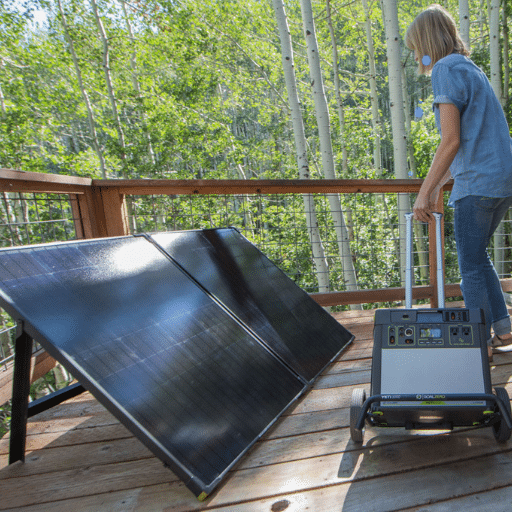
As far as distinguishing the off-the-grid system from the grid-tied one is concerned, in the long run, particularly attention should be paid to the question of energy security, the money needed for the development and use of such systems, and the issue of their functioning.
- Energy Independence
Off-grid solar systems tend to offer a higher return on investment to the investor, as batteries require more advanced technology to develop into battery banks leading to higher cost. Solar special order systems do not cost much at the beginning but might result into bills afterwards. - Upfront and Long-Term Costs
The off-grid full battery energy storage facilities are expected to generate a smaller return on investment than solar batteries, solar glass films and other solar PV components. On the other hand, there is a higher interest of grid-tied solar systems. These are grouned in the fact that the installation involves the generation of electricity but not storage. - System Maintenance
Grid-tied systems are very comfortable to stay with or even live in, as there is no need for periodic replacement or even routine maintenance of the batteries. Off-grid systems need less maintenance than the former since the leading cause of servicing is cell servicing by simply replacing the batteries. - Reliability and Energy Availability
Off grid systems risk of power outage particularly when there is a problem of low sunshine like during winter or overcast days, unless the capacity of the storage is compromised by an excessive number of batteries. The grid tied photovoltaic system counteracts this danger since it has capabilities to enable solar power when the sun is not sufficient for the system to work.
Differences Between Off-Grid and Grid-Tied Generators
| Key Point | Off-Grid Generators | Grid-Tied Generators |
|---|---|---|
| Primary Power Source | Independent, relies on stored energy | Supplements grid power |
| Energy Reliability | Dependent on energy storage size | Highly reliable with grid support |
| Solar Dependency | Fully reliant during operation | Less critical, grid serves as backup |
| Battery Requirement | Essential for energy storage | Not always needed |
| Installation Costs | Higher due to storage systems | Generally lower, no storage systems needed |
| Maintenance Needs | More frequent, battery servicing is critical | Requires less maintenance overall |
| Operational Complexity | Higher due to standalone setup | Simpler with seamless grid integration |
| Energy Efficiency | Can face conversion losses | Efficient with direct grid usage |
| Adaptability | Suitable for remote locations | Best in areas with reliable grid access |
| Initial System Design | Customization essential based on energy needs | Easier setup with standard configurations |
Reliability and Efficiency
When examining the effectiveness of off-grid and grid-tied emergency energy supply systems, the following aspects should be emphasized: continuity of power, the logical organization of in-built safety systems within the main system, and external factors. Off-the-grid power plants, which are equipped with energy storage battery packs, can maintain an energy supply even when there is no electrical grid or in areas where there is a pull of the grid or a grid-topping problem. Apart from their advantages, they also have demerits. For example, they cannot be easily fueled, require maintenance, and the battery has a life span. Grid-tied systems on the other hand, benefit from the backup provided by the large interconnected electric grid as any failure of the system operation would only take place if there is a black out in the city or town.
Besides effectively handling energy consumption, another facet that needs addressing is enhancing the overall efficiency levels. As more off-grid options have evolved, a high level of power output loss has been registered for off-grid technologies as opposed to grid system technologies mainly due to the use of inverters and a storage device. Hence the design should look in this direction to first address the BOS components and then incorporate efficient power electronics in particular inverters during the design phase of the system. Therefore, it is evident that grid-connected generators have better energy loss performance compared to off-grid generators assuming that the former does not possess a storage unit other than the grid.
Maintenance Requirements
Without proper maintenance, both off-grid and net metering generators cannot be reliable or reasonably effective over time. Off-grid generators, which are frequently used in energy supply islands and work all the time, require component inspection principles such as fuel filter, lubrication, and electric systems to be carried out regularly. Frequent changes of oil and checking of the system for flashing and contamination are to be carried out in order to avoid blockage in less favorable conditions where the quality of the fuel is not of consistent nature. In addition, off-grid systems may require testing and also replacement of battery kits since capacity of the batteries reduces considerably with continued operation, affecting recharge of the batteries and how long the batteries can support a system.
In contrast, grid-tied generators have much wear due to overuse especially during stages when grid connections are lost or at peak load times. Key maintenance activities of these plants are mostly designed to reflect preparedness and unimpeded connection to the existing grid. Among these are inspection of automatic synchronization controls, automatic transfer switches and their protective relays. Also, compatibility with smart grids necessitates regular system upgrades in order to retain or enhance operating efficiency and effectiveness of grid-tied systems, too. These two types are known for their reliance on advanced monitoring methods, like on-board condition monitoring systems, which enable the detection of potential faults before they occur so as to optimize outage schedules during the periods where both electrically and mechanically generating sets are operational.
Recommendations and Conclusion

There are clear advantages to both off-grid and on-grid power generation systems and the appropriate choice mostly depends on the specific operation. Where self-contained systems are required, or the utility grid is missing or undefined, the off-grid energy sources offer superior flexibility and ease of integration with the energy storage systems, such as batteries, for energy sine-quo-non. On the contrary, in places where the grid power can be supplemented or sapped, these kinds of systems are more appreciated especially in regions that operate under net metering regimes.
Generators are selected considering the required power capacity, fuel consumption, efficiency and longevity of the systems. Of the various considerations for the off-grid systems like the robust energy storage and renewable integrations, or benefits seen as grid-tied systems. Lastly, in the use of systems, the focus should have a bearing on compatibility with the grid standards and advanced reliability monitoring. Besides, normal service activities, effective technical and economic system monitoring and ensuring the effectiveness of regional tools also adds positively to the service life and efficiency of the system. Both systems are required to be valued on the basis of the whole need as well as the specific objectives, costs, and adjustment to the environment.
Factors to Consider Based on Lifestyle and Goals
Applied to the selection of an energy system, there are some crucial aspects that should be looked into, largely depending on an individual’s life trends and prospects. For users with increased wicker energy usage, for example those operating large electric cars or utilizing high energy consuming devices, the more efficient and expandable systems are significant in ensuring that the demand is sustained without disruption. On the other hand, for less energy consumers smaller systems maybe appropriate in order to reduce over-investment and excess capacity.
It could be argued that the position on the planet is also a determining factor, as places where there is more sunlight available naturally tend to takeover solar installations, whereas those that have more unpredictable sunlight have to be content with using both wind or incorporating storage mechanisms. These can be very binding and often force the use of some cleaner technologies, e.g., batteries with lithium iron phosphate or the zero emission systems. The same goes for lifestyle features – there are those people who do not want to rely upon the grid while others do not mind, and the question of which type of system is better takes cost involved, the availability of the system and how well it remains functional when power cut occurs.
How to Choose the Right System for Your Needs
Selecting alternative energy is one area that demands consideration and inclusivity of power consumption, the local weather patterns and the financial expenditures. This is because, for example, off-grid systems’ design would be effective for areas rich in solar or wind energy where the public grid infrastructure as not been wholly subjected to the inhabitants. The application of batteries and charge controllers is used in the storage and power efficiency enhancement which results in proper energy flow in periods of peak usage or harsh weather conditions.
On the other hand, those that are connected to the grid on the other end will pay full electricity tariffs, but selfishly benefit from effective net metering strategies. The grid is now more complex than ever before due to the introduction of smart inverters alongside interactive capabilities to manage energy more efficiently in a dynamic world, hence aiding businesses in scheduling daily operations and finding ways to reduce burst charges. With the help of the advanced technologies that have sprung up year on year and the available energy policies such as the regional incentives, there are better strategies that can be adopted by clients in order to acquire the same goals of environmental conservation alongside business profit effectively.
Reference Sources
- Comparison of the Grid and Off-Grid Hybrid Power Systems for Application in University Buildings in Nigeria
Read the paper here - Analysis and Cost Optimization of On-Grid and Off-Grid Solar Systems
Read the paper here