
The decision on the appropriate type of generator application is alarmingly important, conceptually, because it is of paramount importance in power production and service. Some of the accessible generator designs include the open type and silent type generator, which aids the user needs differently based on their needs. Yet, anyone can question how they be able to ascertain the one that will meet their desires out of the generators. This essay focuses on open and silent generator types; it sets out their features, advantages, differences, and their most useful applications. If you have been looking for a heavier and long-lasting type of power supply machine for basic home use, office use, or any other activities, then you can focus on this portion of the article.
Overview of Generator Types
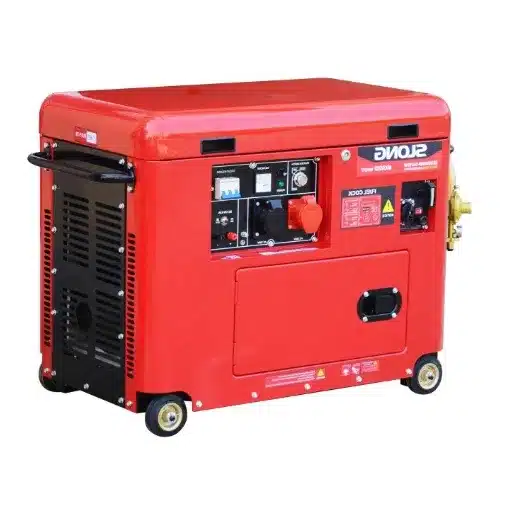
What is an Open Type Generator?
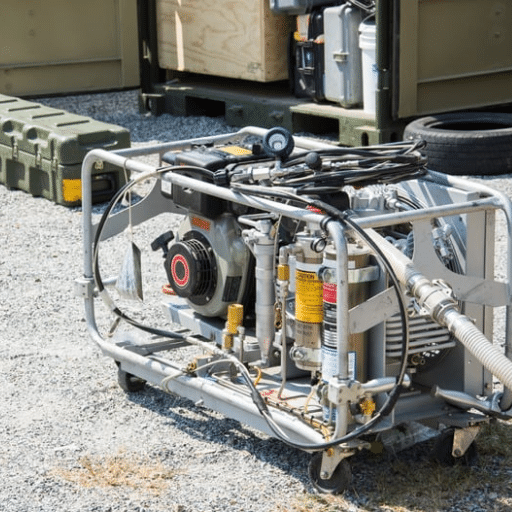
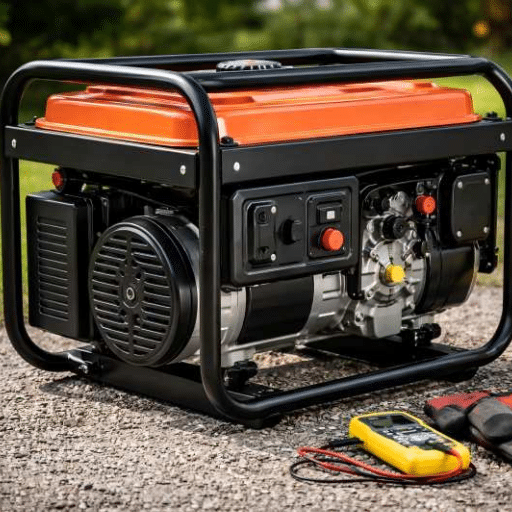
Open types of generators are, therefore, more effective since the unit is not covered, and the engine as well as other components, are exposed. This favors enhanced cooling of the resultant generator, as there will be airflow such that even when the generator operates for a long time, the possibility of overheating is reduced. These open-type gensets are mostly good for construction or industry settings in which noise does not matter very much, but these generators are also much appreciated since they are silent, and as a result, most of them are air-cooled.
These devices are also easier to work with and service due to the open nature of the components. For example, carrying out basic maintenance such as oil changing, filter replacing, and inspecting will not necessitate removing any protective covers. There are a lot of these for the open type generators, ranging from nearly 10 kW small units to very megawatt large industrial power units that are of an open type vs a silent type generator with many megawatts.
The same system of generators is applicable during the processes of preparing mineral and ore for the raw materials processing field, like industry, agriculture or manufacturing. These types are more economically viable and efficient in places where noise does not matter or if environmentally protected materials are not obligatory. Considering the features of this generator, it should be noted that the installation is required in the shed or in the cases of open spaces, it should be protected against rain, dust, or high heat, as they destroy the generator.
It is compulsory to consider the condition of use sufficient for the proper functioning of an open type vs silent type generator within the desired construct.
What is a Silent Type Generator?
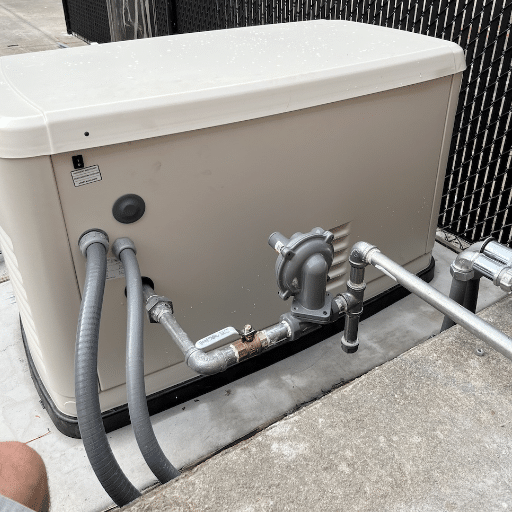
A soundproof, also known as a low noise generator, contrasts with an open type vs a silent type generator, which is fitted with a jacket to protect it from elements, and at the same time reduces excessive noise emanation during operations. Such a type of generator is ideal for installations in homes, hospitals, offices, and other similar institutions. In such solutions, the generators are encased in an acoustic shell or canopy, which helps in reducing noise further – some can operate at levels of 50–75 dB, depending on the make, which is almost equal to that of a conversation.
To reduce noise during operations, all such power generators with quite silent additional properties incorporate so-called fine exhaust systems, spectrum analyzers, and vibration break isolators, respectively. There are several sizes of these generators, from small personal generators to large commercial ones for home or equipment.
According to recent studies, silent generator units have a very friendly nature with the fuel, and most types have automatic control systems that maximize the engine efficiency while conserving the fuel as much as possible. Moreover, silent generators are designed with emissions standards guaranteed – if they are made in the U. S., Tier 4 emissions, if in Europe, Stage V. Therefore, both types of power solutions, temporary and permanent, favorably use them.
It is recommended to use silent generators in various places, ranging from external concerts or cities requiring standby power to residences or commercial and industrial applications, where the noise factor is crucial. Once electricity is needed, one should consider the power output and the conventional parameters, including operating time, fuel consumption, size, ease of transport, to make the most of the open type vs silent type generator debate.
Basic Functions and Common Uses of Generators
Generators represent a category of machines that generate electricity from an external mechanical power source. They are highly applicable in situations of power blackouts as they provide backup and restore the lost utility services to residential, commercial, or even industrial places. Within this category of generators, there exists the silent type, which is currently gaining popularity owing to its ability to run silently without causing any alarm noise, which creates a peaceful environment in residential areas, during open-air functions, and even in hospitals where there is a need to cut off any noise levels.
Reports suggest that the sound output of silent generators is often less than 75 decibels (dB), while some extreme cases of open-type generators are more than 100 decibels. These levels of decibels are thus in construction, where measuring hours of pair fallouts is not tolerable. On the one hand, one cannot produce typical fiberglass open box solutions, because it will be impossible to provide noise-reducing enclosures for sound sources that would allow one to obtain the low noise levels required. Such a generator will be made of certain materials, such as a complete sound blank octinoxate evaluated by noise level cans, with additional materials and preparation in order to reduce vibration and noise from the cooling phase.
One cannot simply choose the first generator that he comes across. Instead, the determined power capacity of the needed equipment should be evaluated as well. According to reports in the energy industry, a silent generator between 10–20 kW (kilowatts) is actually for a medium-sized enterprise or a high-standard residential property owner. In these examples, the industrial application will most likely require several hundred kilowatts up to a couple of megawatt generators, which are quite expensive and heavy.
Apart from these, other major elements include parameters such as fuel consumption and the autonomous runtime of a generator in question. In the modern generator market, people use diesel, natural gas, and sometimes propane fuels, but mostly the diesel generators are more fuel-saving, especially for long hours. A good example is a 10 kW diesel generator, which consumes only 0.8 gallons per hour, meaning that its running cost is much lower than the other type presented in the previous options.
In conclusion, the user’s requirements determine which model, the silent or open type generator, is preferable in any particular circumstances. If the use case gives preference to low noise levels and environmental sound balance, then silent types are used; otherwise, when noiselessness is not the main issue, open types, which are mostly cheaper in production costs, can be used as they can be mounted in the outdoors/industries or remote areas.
Key Differences between Open Type and Silent Type Generators
Noise Levels and Their Impact
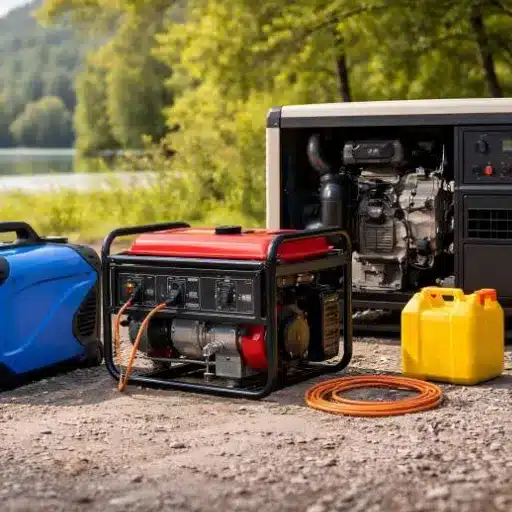
Among the many factors associated with the consideration of open type vs silent type generator units, noise levels are one of the most important issues, both from the consumer and the environment, which will house the said unit. Open-type power generator machines have almost always been incorporated to work between the sound level ranges of 80 to 100 dB or even higher. Such sound levels will be equipped with annoyance problems predominantly for domestic and low sound installations, thereby, if poorly managed, may cause disturbances and even be a source of noise pollution.
In the opposition, a quiet version of a generator is programmed to produce lower amounts of noise, with some designs ensuring that the customer uses the product with minimal noise. The aim here is accomplished by the use of sound attenuating and absorbing engine enclosures, which enable the sound levels to come down to around fifty to seventy decibels in such kinds of generators. For this reason, silent generators measure significantly less than 60dB, which is how couples talk with one another mostly. However, in the current scenario, this case study suggests that the top vendors provide a wide variety of silent generators that are all noisy yet still within the limits set by or exceed the noise standards imposed by the EPA and/or other such entities.
The psychology of excessive noise is relevant to this matter, too. Such open type generators produce, should they generate a lot of sound, as seen in the stress a person experiences, the lack of productivity, or even an adverse health outcome when exposed for a prolonged period. Therefore, though open type generators are found everywhere in hospitals and in interiors of the buildings, the silent types are considered the most appropriate. Since they open type vs consuming generators are quiet, the ever increasing number of people living in communities with rumored ordinances in their jurisdictions are already looking for such things, consume minimal energy, hence preferred by power-seeking individuals.
Design and Portability Considerations
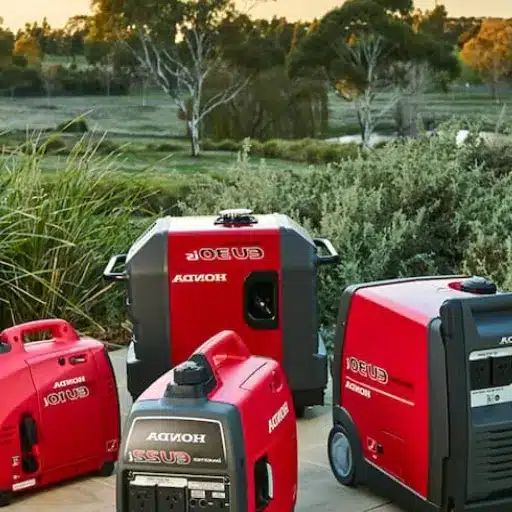
By intervention of the Legislatures and regulatory sector with respect to climate change, the open type vs silent type generator trend has remained almost unchanging. It is on this scope that some countries have fewer areas that can be assumed to be silent. As an illustration, some other products like a Honda EU2200i are about 47 lbs and have some integrated handles for the convenience of carrying. Additionally, larger generators such as Westinghouse iGen4500 are equipped with handles that are collapsible, and you have to pull them to wheel. A handle is also available, and the wheels are quite robust for portability.
As a convenience service Designing of products has improved to achieve simplicity and organic use of the products. As an example, the quantity of fuel in, operation, and output consumption can be managed via the command control systems incorporated in the digital or LED display in the respective systems. Such models are, therefore, compact and portable, and nevertheless, they are often designed in such a way that the noise level is reduced and the durability of soundsis increased. For example, recent reports indicate that some sets are supplied with very advanced noise suppression devices, which can be lowered to as low as 48dB (at one-fourth load and a distance of 23ft, or one would almost have to whisper while talking).
This is the consumer-friendly function, which, for reasons of mobility, is included in each and every modern silent generator and gives solutions to the problem of open type vs silent type generator by making use of aseptic precautions.
Efficiency and Fuel Consumption
Modern silent generators incorporate contemporary design and enhanced engineering, enabling higher levels of fuel economy while playing down the more detrimental effects of generator usage. For instance, inverter generators are the least fuel-consuming in their class, owing to load-dependent engine speed control. They cannot drive the engine like an open type vs silent type generator, and for solid concrete reasons too – the fuel costs of the engine are quite high. However, with the currently most widely used generators, one can bring it up within 10-12 hours on a single gallon of fuel, consuming at 25%.
Nonetheless, the additives of the present generationgreen settings add lactate to milk by altering the sustained engine speeds when underutilized. As such, one of the FMC known examples is the Honda EU2200i, where at quarter load usage, the cost of fuel per hour is only 0.1 gallons – an efficiency that many of its peers simply cannot reach.
As far as pollution is concerned, these advanced generation models adhere to both EPA and CARB norms, which ensures that the exhaust is minimal. This efficiency is beneficial to the costs of production and operation, but also enhances the energy landscape in a greener, more sustainable way. These models are designed in such a way that the open type vs silent type generator does not matter, even with energy-conscious users who look for a pocket-friendly and environmentally conscious power product.
Pros and Cons of Open Type and Silent Type Generators
Advantages of Open Type Generators
When it comes to performance enhancement, availability, and cost reduction at all costs, open-type generators will have an upper hand over silent models. Below are some of the pros of such systems:
- Simple Maintenance and Repairs
The openness of the design makes it possible for someone to reach all the elements for better inspection, repair, and upkeep should a problem arise. This brings down the time a power system can be out of service and consequently the cost of owning a power system over enclosed units. - Economically Viable
In most cases, open type or silent-type generator is cheaper, thus where not much money is available for industrial or construction purposes, these generators are the most recommended. Since the structure is very basic, the costs of production are low, and hence, part of the cost is extended to the customer. - Enhanced Cooling Technology
The open frame provides better circulation of air, and therefore the engine is cooled naturally, thus contributing to the prevention of the overheating of the generator and leading to the stabilized operation of the generator. This improved cooling mechanism may lead to an improvement in the service life and constant behavior of the machine under high loads. - Power Output Range is Higher
As per the current market situation, open-type generators, especially diesel engine-powered, cover the complete spectrum of power output, starting from small handheld devices all the way up to 500 kVA industrial equipment. This allows them to be utilized in various scenarios, including construction and manufacturing. - Perfect for Areas with Good Circulation of Air
These generators are best suited for places with good aeration, like an outdoor worksite, a mining area, or an isolated setup located far away. They are so designed that their performance is efficient without any sort of containment to avoid noise or forced ventilation.
There are instances where the open type generators must either be installed outside or shielded with cases so as not to be subjected to unfavorable environmental conditions; however, in situations of budget, efficiency, and user-friendliness, people working in sectors that demand reliable energized systems find them more favorable than open type vs silent type generators.
Disadvantages of Open Type Generators
Silent type generators, on the other hand, are favored over the enclosed cover type because the former provides a wide range of savings and adequacy; however, there are limiting factors as well. Unfortunately, they perform rather poorly when it comes to sound control or attenuation.
These cannot conceal the working noises of the machines effectively. It possesses elements that make it an open type vs silent type generator, and because of this, in such designs, the noise level is much more significant than in usual designs or those whose noise exceeds 85 dB due to the increased echoes produced within the enclosure, which makes it difficult to use such a structure in areas including hospitals and even homes.
There exists one more challenge to be addressed, and it has something to do with the position of the equipment in the surroundings. To simplify, for an open-type generator to be utilized, it has to be outside; hence, its use is limited to night cooling only. Also, the technique aims at avoiding damage, wear, and tear of the machines in a general sense because some elements of the machine or mechanisms used on the machine will permit the protection of the machine, for instance, using weather protection covers, constructing around or inside guard rings, and other such activities.
In addition, we have specified generators that are open to the air. Furthermore, no heating of open-type generators takes place in the inner or outer gases, causing tremendous levels of energy waste. It is said that open type vs silent type generator in use under intensive conditions may reduce efficiency by nearly 10% or so.
Finally, consider safety not in the last turn – if it is a reversible requirement, well, let’s admit it, there is no way one can rest on thinking of cutting back on this source. All generators are out in the field, and this includes all components, including the power unit after the alternator, which can be readily accessed, and that is bad news because all this can be handled by people, and such can cause injuries, damage, or trouble. It should be channeled towards the need to impose or rather, advocate for very stringent cautionary measures, and if need be, enclose cases it is located in crowded areas.
For this reason, it is necessary to keep these views on open type vs silent type generators in mind before making a choice. They fit nicely into some industries and open-air applications; however, such users must bear these limitations in mind regarding their roles and safety.
Advantages of Silent Type Generators
Quiet generators, otherwise referred to as low-sound, noise reduction, or soundproof generators, bring with them a host of benefits that suffice in most instances where they are deployed. In this regard, enumerated below are a few of the known merits associated with them:
- Noise Mitigation
To a large extent, it is noise reduction that makes silent type generators a better option. These types of generators contain sophisticated enclosures that insulate the sound and change the dynamics within the device in such a way that the sound emission is only in the range of 50-60 dB or less. This depends on the model; for instance, it may be similar to a normal talking level. Such strains are best installed in homes, hospitals, schools, and office buildings, etc., where the aspect of noise elimination counts. - Enhanced Comfort
The attenuation of sound is a favorable shielding and could reduce any eruptions of noise pollution, which is perfect in any working place since users have a tendency to create less stressful and distracting surroundings. This is why in events, construction sites, and industrial operations located within towns and cities, silent type generators are most ideal. - Strength and Protection
Silent generators are usually enclosed in a waterproof and soundproof casing. The enclosure that is used not only reduces the noise but also shields the internal part of the device from environmental factors, which include dust, water, or even excess heat. Such characteristics are sometimes seen as enabling the reduction in the cost of maintenance as well as in helping the operators, as it does not require operation as much as the open type vs silent type generator. - Regulations Adherence
Architectural or industrial designs in most regions or cities are subjected to controls such as noise regulations to ensure that they do not affect the people living in that community in a negative way. Businesses and individuals who wish to utilize silent generators have the opportunity to do so without having to flout the silent zone if this silent zone prohibits such use. - Technology and Fuel Economy
Silent generators are designed with modern technologies, such as an Automatic Voltage Regulation system and remote control panels, among others, that enable optimal functionality. Certain designs come with eco-modes, which control the output depending on the demand, thus allowing the consumption of less fuel, leading to lower operational expenses. - Innovations and Industry Developments
The global market for the silent generator is reported by market research as experiencing an increase in demand, with a concentration of population attributed to rapid urbanisation, and an increase in industry levels. Research and Markets reports present that in this context, the silent generator’s market will experience a CAGR of more than 5 percent from 2023 to 2028 based on its use for various functions.
Silent-type generators come with low-noise technology amongst other advanced features, and they are durable and environmentally-friendly. Therefore, silent-type generators are in line with the current energy generation trend. Considering both open type vs silent type generator advantages, the silent generator sounds better to most people.
Disadvantages of Silent Type Generators
While silent type power generators have several advantages, they also have a few disadvantages that should be considered before purchasing. One of the disadvantages is that the silent type generators come at a higher price compared to the open type generators. Since the silent generators are built efficiently to reduce the operation sounds, have a desirable design that makes this open type vs silent type generator a little expensive, which, on the other hand, is not as beneficial to the users or small businesses.
Another disadvantage is that there are computerized balancing systems already employed in the design stages, making any repair work or machine servicing quite problematic. These elements include, but are not limited to, sound absorbing materials and acoustic enclosures in order to lower the level of noise generated, and such typically require specific maintenance to be done after a period. Besides, it is also incredibly hard to work on such broken systems due to their structural compactness, thus rendering access to the inside parts of the machine almost impossible.
Also, other specific conditions will pose a performance issue. Such open type vs silent type generator are often more expensive when the load on the generator is high. This is facilitated by the fact that some of the energy will be used up by silencers as well. This might be expensive in some cases, especially where people tend to use such equipment for a long time.
Therefore, because the encapsulation provides, these gensets are relatively heavy and big, such that their transportation and gaging require more handling. As compared to a similar silent generator of the same capacity, it has been observed statistically that an enclosed silent type generator is approximately 20-30% heavier than the equivalent open one.
This, in turn, may necessitate the use of specialized services while moving or installation, which may be detrimental to the company since more costs will be incurred.
And lastly, all the above threats in mind and thoroughly worked out cost-effective strategy will help the prospective clients of the product understand whether it is resourceful to go for the open type vs the silent type generator at that particular time.
Use Cases for Open Type vs Silent Type Generators
Best Applications for Open Type Generators
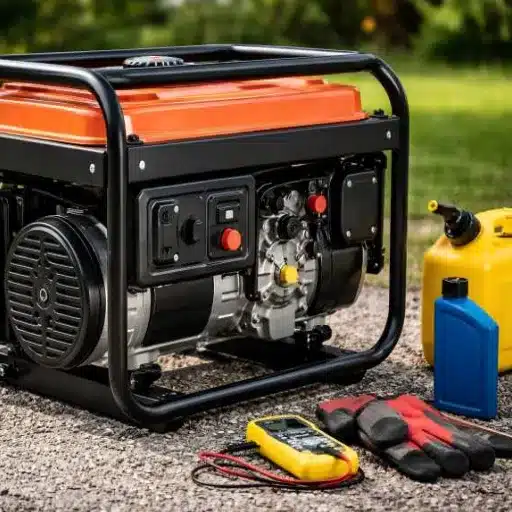
When deciding which generator to select, open enclosures are best suited for areas where, there, noise levels are not a problem or the surroundings are thoroughly ventilated. Specifically, these types are very common in areas like industrial establishments or agricultural fields because they are cheaper to purchase, run, and handle even heavy load production. Even on construction sites, such features as should open type vs silent type generator power the tools and machines, can be seen as they provide an uninterrupted supply of energy even in a tough working environment. High performance open typeeth miners are also quite popular because they are designed to withstand and fight rough conditions.
Available data suggests that open-type gen sets may save costs in the range of 25 percent to 33 percent against the silent type as they are bereft of soundproofing. Besides that, in the open type of generator, heat dissipation is not an issue owing to its cooling capability or simplified operation, and the maintenance cost is low. However, it is well known that the efficiency of the open type vs silent type generator decreases with a decrease in size, an open type generator is in most cases considered better than the silent generator for larger units, as it is understood that silent generators are quite thirsty over extended periods of time.
While these have their advantages, there is one aspect that is quite bothersome when it comes to these machines – they should be operated in an open environment, without the presence of offices or people around to avoid any disturbance. For this reason, in the context of residential buildings or even the town, they are not recommended, although they are suitable for outstations and where heavy-duty works are involved.
Best Applications for Silent Type Generators
Generators that operate quietly are specifically manufactured to produce electricity without causing a lot of noise, which makes them perfect for specific environments. Such generator sets are incorporated with noise-absorbing enclosures and new generation silencers that can reduce their sound levels by around 50 – 60 dB, which one can estimate by the sound of normal conversation. Also, silent type generators have seen growth because they are necessary in particular segments, and that too for reasons of ascetic $. Applications that can be considered as the most appropriate for the subject type generators are stated below:
- Domestic Utilization
Domestic Use Silent type generators are intended to cover basic power requirements in case of power outages in private houses. The units are eco-friendly since they don’t create much noise pollution while running. It is also expected to change the interior dynamics of a neighborhood in the years to come. The Silent Generator Market is expected to grow at a CAGR of 5.1% annually during the forecast period. The increasing demand for less noisy and efficient backup power options drives this growth. - Healthcare Institutions and Hospitals
Electricity is one of the main, if not the foremost, things that are required in hospitals, clinics, and health facilities. In such a setting, power backup units should be less noisy, given that patients tend at times to require psychological and emotional support, and they could also be having other numerous nursing activities in place, which also calls for the components of this whole setup to be very careful to avoid minimizing their safety and comfort. - Business and Office Premises
Most of these quiet generator models are commonly used in the workspace, retail outlets, and offices where quiet enables employees to work, and other reasons, such as convenience in terms of marketing, are considered. It is worth noting that essentially these lineups also include generators in the 50-300 kVA capacity as part of the office items, which can be employed in carrying out the business but in perfect silence. - Meeting Places and Places for Entertainment
When it comes to Functions that take place in the outdoors, like musical performances and weddings, among others, noiseless power generator systems become prominent as they do not have to contend with unwelcome disturbances since luminaires, other sound aids, and support facilities are provided. Recent trade estimates dating back three years of a given market are persuasive for the fact that more than average efforts have been made in making sure that this quiet operation equipment will be addressed to the customers, especially considering that there was a 4.7 per cent surf on the usage of noiseless power generators in the market noted. - Schools and Educational Institutions
There are certain things that schools and institutions focus on, such as noise. Study and other activities, including the administrative work if there are no power failures, will be done with minimal noise through certain stand-by noiseless power generators in an ethical learning environment. - Hotels and Resorts
With the existence of splendid resorts in specific arable zones, the advent of power blackouts comes, and with it, the need for silent generators to cater to tensions, especially from power shortages during the operation of hospitality services.
Comparison of Settings: Residential, Construction, and Outdoor Events
The usage of a silent type generator is found in practical applications in numerous cases, including but not limited to homes, worksites, and outdoor events. Following is the list of how exactly these generators satisfy the needs of particular settings:
- Residential
In residential areas, a silent type generator is a perfect solution with low noise levels of 50-60 dB on average, which is exactly like light rainfall or commonplace communication noise. People don’t need to panic when electricity is cut in one’s residence for a few days, because a modern, silent type generator can be operated for days without causing unnecessary discomfort to neighbors. In addition, advanced units come with auto start enabled for power failure and low fuel consumption, so as to ensure a continuous power supply. A case in point is a 10 kw generator that supplies vital loads such as a fridge, lighting, and air-conditioning, which is why family houses tend to go for this kind of generator nowadays. - Construction
One goes to various suppliers to replace an open type vs silent type generator whenever necessary, since neither of them is the same in the construction industry. The requirement for a silent type generator on a contract is very reasonable, because it is much harder to meet the power requirements for open type vs silent type generator and cater to additional power requirements for heavy machines such as cranes, drills, and welding guns. This generator is quite sophisticated and has a larger capacity, ranging from 20kW to about 500kW. The most important considerations in this case are portability and robustness, which are necessary because the equipment will be exposed to very harsh conditions. Such techniques are very important, especially in compliance with noise ordinances in urban and even suburban construction sites, as too much noise may constitute a lawsuit or an outcry from any member of society. - Open Air Events
For events which are held, such as concerts, weddings, or festivals outdoors, silent type of generators provide both the availability of power as well as sound interference. These events are normally worked out without the inclusion of high noise levels, careful selection of generators is necessary. In most cases, the output required for the generators in this application is between five and fifty kilowatts, depending on the magnitude of the event. In most cases, power is required to power lighting, sound, and food systems. Further, current silent generators operate on clean energy and utilize cleaner fuels, which help to decrease the emission levels – this feature is extremely desirable to planners who focus on green-themed events.
In every use case, the adaptability and usefulness of silent type generators is apparent. Whether it’s preventing inconveniences in polyclinics or due to construction or decorating guests in open-air festivals, there is always an application of generators for these purposes, and at the same time sound is low.
Reference Sources
-
Simulation of a PEMFC stack for a portable power generator application
- Key Findings: Discusses the use of a PEMFC stack with an open cathode system for portable power generation, emphasizing its efficiency and self-humidifying features.
- Methodology: Simulation-based analysis of a 200W PEMFC stack for portable applications.
-
Comparison of different types of generators for wind energy conversion system topologies
- Key Findings: This study compares various generator types used in wind energy systems, focusing on their efficiency, durability, and operational costs. It highlights the performance differences between open and enclosed systems in terms of energy output and maintenance requirements.
- Methodology: The research uses simulation models and real-world data from wind farms to evaluate generator performance under different environmental conditions.
Frequently Asked Questions (FAQs)
How can people differentiate between an open type vs silent type generator?
In open-type generators, there is no noise generated by their engine design, which could be called a cage-like structure. They are not installed in most remote places, especially in industries and manufacturing considerations. On the other hand, silent generators arrive with a box, which is better than the above generators. Naturally, where there are structures that are 24-hour operational, generation is silenced, for all the units, residential blocks, public entertainment locations, and so on.
Which category saves more energy, silent or open type generators?
Both modes, silent and open type generators, have their own efficiencies; however, in this particular case, it is preferred to use only one. This is often because the engine efficiency is dependent on the application and the generator application. Over time, this concept may change with the advent of more inventive technologies that allow the reduction of the engine size of silent generators, hence, upgrading their efficiency limits.
Are there any cost differences between open type vs silent type generator?
Yes, there is indeed a cost differential, and it is because of the fact that silent type generators come with extras such as sound shields and exhaust systems, making them more expensive than one would expect. Yet, judging by how many more soundproof features stargazers surely provide, the cost may not prove to be formidable. This is especially so if the spaces designated for such devices have regulations on the decibel level of noise a generator can produce. The cost outlay of purchasing the open type generator is much lower, but instead, their work cannot be done due to working conditions requiring the sound level to be in a tolerable range.
How Do You Decide Between an Open Type Generator and a Silent Type?
Consider factors such as location, noise sensitivity, budget, and application of the generator when making this decision. For instance, if a generator will be used in a residential area or for a public event where noise levels must be minimized, a silent one is suitable. Also, where the noise level will not be a great cause for worry, one can opt for an open type one that is more affordable since it will be in environments such as factories and remote work locations for instance.
What changes does one expect in the servicing of open type vs silent type generator?
As a rule, each of the mentioned generator types is serviced to keep it functional and efficient for as long as possible. However, in the silent type, these activities are performed with more diligence. Some components, for example, the soundproof panels and air conditioning units, may require inspection of any defects caused by dormancy. Maintaining the open type is much more convenient, and it can be easily disassembled in case of damage, but these specialized devices are more unserviceable than most other ones, especially in more severe climates and open environments.