
The determining factor in the correct operation or maintenance of a resident generator is the selection of one. Without this, it will be difficult to perform such a responsibility. The consumer has a variety to choose from – whole house generator, on-site standby generator, portable generators, etc. One may use different types for different purposes. It is therefore important for the consumer to know the features and use of different types of generators in order to choose the best one for the specific situation. This article is dedicated to understanding what each generator does and how it does it and spending time comparing the different types of generators. The information provided in the article is reliable enough to help the reader to come to an informed decision.
Brief Introduction of Generator Types
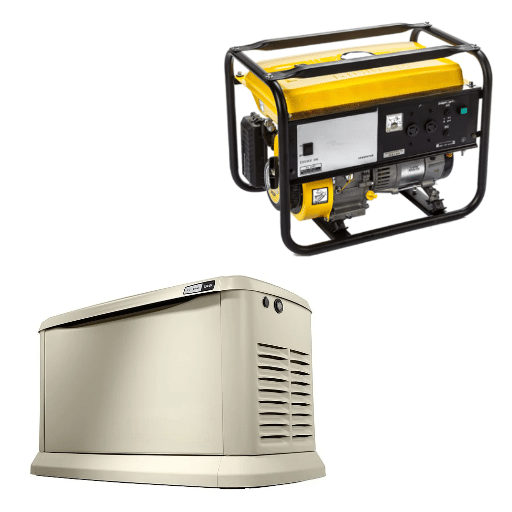
The portable generators are used for a variety of applications and are often used as temporary standby power sources when there’s no regular power supply, during camping, for medical home care patients, etc. They depend on fossil fuels such as gasoline and liquid propane gas to operate. This kind of generator usually has a capacity to power essential equipment such as lighting, refrigeration systems, and life-sustaining medical equipment. Portable gas and propane generators are especially easy to transport and install and are used when a solution without any weight is required.
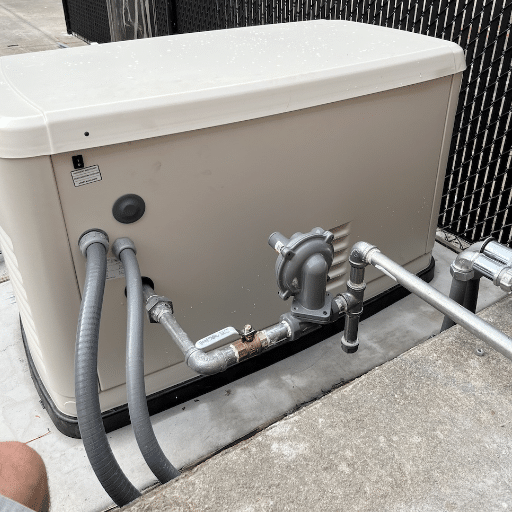
Standby generators, on the other hand, as the name suggests, are installed permanently and developed to start and supply power automatically during a power interruption. These units will comfortably power a whole house or business depending on the availability of the gas among other things. Most standby generators are self-run, allowing for cost-effective round-the-clock operation with minimal downtime. Moreover, despite being pricier than many other options, due to these advantages and offering essential help during blackouts, they become an especially convenient option for expanded electricity deficit situations within a longer-term perspective.
What is a Portable Generator?
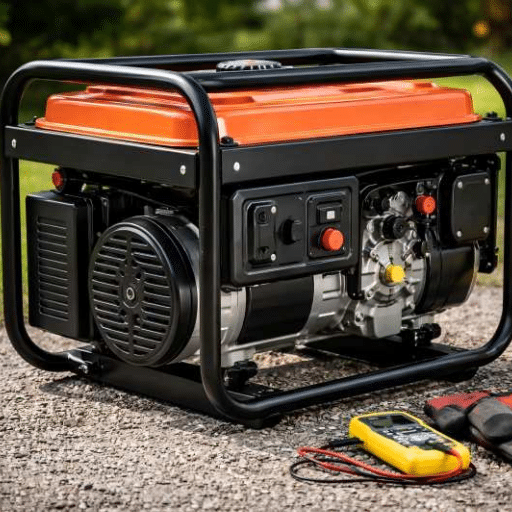
A portable generator is a small electrical generator that comes in handy during power outages enabling one to power electricity in cases where electricity is off or in emergency situations. It generates AC electricity from mechanical energy through an internal combustion engine and an alternator and operates mostly on petrol, diesel or LP gas. Other accessories that come along with these outlets are portable and allow the user to power tools, electric appliances, or even parts of the building directly.
Tend to come in different models regarding their power a portable generator for instance could range from a few watts to hundreds of watts to ensure that all outdoor activities are well adapted and maintained. Also, portable home backup generators are included in this power range. In portable generators, safety is also increased by the inclusion of overload protection, low-oil shutoff and surge protection– this helps in enhancing the safety of users of these gadgets.
What is a Whole House Generator?
A whole house generator, also termed as a Standby Generator, is a fixed system that gives consistent power to all the facilities/compartments within a home during an operation. These devices are often fixed to the main electrical supply lines of a house and are able to start delivering power in a matter of seconds when there is no electricity. Moreover, unlike other portable generators, whole house generators are demand-bulky and can use standard gas natural or bottled gas for delivery of power continuously for numerous days or weeks without the need to be filled daily.
Nowadays, complete generators contain hi – tech facilities, that is, an automatic load management system for prioritizing important stuff whenever it is in use, which enhances the optimal utilization of power. This kind of a generator comes in handy in covering certain fundamental functions such as heating and cooling appliances, fridges, or even doctors’ equipment in the case of a severe shortage of energy. Indeed, the capacities of these devices – generators – have been increased with high electricity consumption. The capacity is usually between 10 kilowatts (kW) and 50 kW or even possibly larger, and so it can indeed be a perfect remedy for all sizes of homes, too.
Key Differences Between Portable and Standby Generators
| Parameter | Portable Generators | Standby Generators |
|---|---|---|
| Power Output | Typically 2-10 kW | Typically 10-50+ kW |
| Installation | No installation required | Requires professional installation |
| Operation | Manual start required | Automatic start during outages |
| Power Source | Gasoline or propane | Natural gas or propane |
| Size and Portability | Compact and movable | Fixed and stationary |
| Noise Levels | Noisier operation | Quieter operation |
| Maintenance | Minimal and user-conducted | Regular professional maintenance |
| Cost | Lower upfront cost | Higher upfront investment |
| Usage Duration | Limited runtime | Long-term continuous operation |
| Power Supply Coverage | Partial power for select appliances | Whole-house power coverage |
| Suitability | Temporary power or outdoor use | Permanent home backup solution |
| Connection to Home | May require extension cords | Direct connection to electrical system |
Cost Comparison

Prime cost comes as an aspect of differentiation in the comparison of portable and standby generators. For instance, portable generators are cheaper as they retail at $500 to $2,500 depending on the power and the features of the design. In cases of the latter, however, the high upfront costs are evident as most of them cost from $2,000 without being limited to about $10,000 plus past the installation. Also, there is a difference in the cost of running each of the generator types. Portable results mostly work on gasoline or propane, and these may require constant refilling after some time, especially during continuous usage, leading to increased running costs. In contrast to portable generators, generator rigs work on natural gas or propane, which is far cheaper for a longer time and does not require a person to keep refueling, as it is a gas.
Upfront Costs of Portable vs Whole House Generators
When it comes to backup power supplies, such as portable generators, costs range between $400 and $2000. Essentially, they are more pocket-friendly in the short run than the whole house generators because they can be bought to meet the need of a specific occasional or emergency situation. In contrast, a standby generator typically referred to as a whole house generator, is significantly more expensive repair beginning at around $2000 for the smaller subsystems and escalating to as much as $10000 for the larger size systems that can support all the activities and amenities of a house.
Such expansions are more affordable due to extensive add-ons such as automation capabilities, transportable devices, and capacity for higher voltage, all of which contribute to the overall high expense associated. Finally, the attachment of whole house generators usually requires further designated causes with an estimated cost of $2000-$5000, which implies the accessible cost would be greater than that stated cost.
Long-Term Expenses and Maintenance Costs
When assessing long-term operating costs, long-duration power providing machines often incur greater maintenance costs due to the nature of their construction and the need for experts to perform the servicing. Taking care of a standby generating set, on the other hand, not only changes the fuel oil and air filters, and checks on the fuel system, such gentle maintenance procedures average from $200 to $400 per year depending on the brand of the generator and the maintenance company.
Portable generators, on the flip side, are normally less difficult to maintain than other types of generators, mainly due to their minimalist architecture. Typically, maintenance procedures for portable generators involve periodic oil and spark plug replacement, cleaning of air filter as well as less often filling the tank with fuel stabilizer. The said procedures of maintenance can for the most part be executed by the end user without needing the help of professionals thus lowering the yearly maintenance budget to a range between $50-$150.
Before making a choice between the portable generator and the standby generator, it is essential to evaluate factors like cost of fuel consumption and capital inventory costs. Standby generators that are typically tied to natural gas or propane pipelines can promise a constant flow of fuel for longer periods, but this can be determined by established prices for fuel within the region. However, portable generators can resort to the use of the reasonably-priced petrol or diesel. Nevertheless, prolonged operation enhances fuel usage and, more importantly, preserving the hazardous fuels requires taking more measures, which will come at a price, as well as assisting in ensuring the safety of the generators.
Potential Savings with Backup Power Solutions
There are immediate economic benefits in investing in back-up power solutions. It is about energy requirements and aims of a particular project. Standby generators require a fairly large amount of money to buy and install, but provide for smooth business continuity, avoid damage to the costly service equipment, and prevent loss of profits by the business. Conveniently, those generators that come in bundles with automatic changeover switches tend to ensure the low raking of fuel usage whenever operated hence saving the operating costs in the long run.
For homes where there is a power cut, the portable generators prove to be quite effective in solving the problem. This is usually because they make it possible to power particular appliances without necessarily powering others hence saving on power. And with some of these portable generators utilizing inverter technology, these devices ensure that energy is good enough. This, in return, lowers the user’s electricity bills.
In some regions, subsidies or rebates may be accessed when energy-efficient or eco-friendly electrical systems are used to cover any power outages. This will be added to the perpetual savings that can be realized. Given these considerations, the advances in modern generator technology can significantly reduce the costs and also secure an efficient power system during critical times.
Power Capacity and Output

Portable generators can typically support power outputs within the range of 1000-10000 watts which means that you can use them effectively for the supply of power to small applicances, tools or few household circuits during a blackout. They are made to be used at short notice or within a specific time period, and therefore, they must be operated and refueled manually.
On the contrary, Generators with emergency or backup power are generally rated for more power and can produce, on average, from 10,000 to 50,000 watts or even far more. These are generators that are fixed, and they automatically go on whenever there is a power shutdown, thereby keeping the occupants with all the power they need. Consequently, it becomes possible for this facility to maintain or supply power for continuously long hours or cater for the needs of more than one place.
Assessing Your Power Needs
As one plans to set up their backup power systems, they will need to take stock of just about how many watts are taken up by the most important gadgets in case of an outage. You will first need to determine the list of devices that you need electricity for including the likes of refrigerators, air conditioning systems, medical machines, lights, phones and many more. For each one of them, there is usually a specification on the device or packaging which states the watts; hence, this information can aid in obtaining even the continuous kilowatt requirements, which includes the starting load as well.
Characterizing a house, some of the common loads include fridges which use more power when on in an average of 600 watts, provide warmth in winter by consuming power heaters run at a rough 1500 watts, as well as safety lights, which if under energy saver mode or tungsten filament, will consume an average wattage ranging between 60-300. On the whole, these estimates give a starting point for selecting a generator. The knowledge of the power requirements of all the household appliances when all are switched on continues to grow. This idea for example allows a gentle rater to select the appropriate size of a generator without underperforming or overloading the generator at the same time.
Power Output of Portable Generators
Their ability to function in different capacities helps portable generators to deliver power that is ideal for both domestic and commercial applications. Correspondingly, they are engineered to produce from around 1,000 watts for smaller less heavy duty models, and 10,000 watts for the more substantial generators. By design, this means that the most suitable type of generator for specific requirements can, indeed, be obtained for instance for tools and equipment, and even small jobs. For example, a 3000-watt generator is likely to handle running such appliances as refrigerators, lights, and fans, while an 8000-watt generator may easily accommodate some high-energy-consuming devices like air conditioners and more than one power tool at once.
Nowadays, portable generators with state-of-the-art equipment are not inferior to full-scale power systems, emphasizing inverter use. In its turn, inverter ensures enough power for sensitive gadgets like the notebook and even medical equipment are protected against the risks of damage due to power surges. Power inverters usually have multiple charging points to help distribute load evenly across different equipment units. With such advantages as the above and the other enhancements in the fuel efficiency and noise, they have literally risen to the top of the list of the mobile power sources that are helpful.
Power Output of Whole House Generators
Whole house generators are crafted to generate an ample amount of power needed to support all functions and activities within a residence even during a break. The weight of the power they provide falls approximately between 10 kW and 50 kW and differs with the design of the generator and the dwelling’s demands level. In the case of small households with normal home appliances, a 10 kW generator can be sufficient, whilst bigger buildings comprising more high-energy-consuming equipment such as centralized air conditioning units, electrical heaters, or more than one such piece of equipment may require up to 50 kW-rated machines.
Many generators now come with intelligent control options that maximize their usability by providing power to the essential circuits in times of low voltage. Running on natural gas, diesel or gasoline, these devices have thus a high degree of flexibility helping to save on the fuel. These generators, in addition, have a high frequency stability and can provide a safe and stable frequency power supply to sensitive electronics with their state-of-the-art power conversion technology. As companies are nowadays forced to consider the environment, they manufacture these devices to produce less energy in power production and allow the satisfaction of consumers’ consumption demands.
Fuel Types and Environmental Impact

Most portable generators usually rely on gasoline as the main power source due to its availability despite the high pollution compared to other categories of fuels. Sometimes, the design makes it possible to use propane or the so called dual-widget, which is more environmentally friendly and increases the versatility aspect. Unlike portable generators, the operation of standby generators usually uses natural gas or propane both of which are in turn less environmentally harmful than gasoline.
In the context of environmental sustainability, a comparatively better performance in terms of standby generators is due to the fact that they make use of cleaner fuels and are aided by improved exhaust systems. On many accounts, portable generators have a worsening effect on the environment due to higher levels of global warming as a result of flawed combustion of fuels and reliance on petrol that has a higher environmental impact.
Common Fuel Types for Portable Generators
- Gasoline: Gasoline is the most common fuel used in portable generator sets because of its availability and ability to be used with small, efficient engines. However, the use of gasoline is discouraged because it has significant negative externalities – especially releases of unpleasant natural gas – compared to other fuel sources. In addition, gasoline has a short shelf life and should be stored properly with additives to ensure it does not deteriorate.
- Propane (LPG): Using propane-based fuels is the topic to follow because of its environmental friendliness regarding pollution and also how long it’s available upon storing without deterioration. Very appropriate for eco-conscious (green) people, propane generators usually requires less maintenance and operations. Yet, one of the most distinct disadvantages of propane usage is that it requires external tanks for its storage and rehabilitation.
- Diesel: Diesel generators have been celebrated for their superior fuel consumption, perform exceedingly well even after exhaustive running hours. For instance, one gallon of diesel provides more energy than one gallon of gasoline hence the latter will be more effective when used in overwhelming numbers. On the contrary, its utilization with some diesel operated engines results in inferior air pollution due to the larger and particularly harmful PM emissions that exceed the latest emission standards.
- Natural Gas: Many portable generators operate on natural gas as this energy is easy to find closer to an industrial site It is a possibility that this option can be mixed with other types of gases so that the machine can produce electricity of a specific power monoxide content To the better Tonight the form of mutual for friendly spaces which also understand crafting geoneutrals according to schedules special surfaces can be used.
- Dual-Fuel Options: Certain sophisticated portable electric generators found in the market are the ones that are dual-fueled and use gasoline as well as propane as a source of power. This immersion offers increased flexibility for the user as they can switch to the second fuel in any time of need or owing to prevailing circumstances. Sometimes their cost can be higher, but in most cases additional expenses are incurred over an extended period of use due to their increasing popularity.
Common Fuel Types for Whole House Generators
- Natural Gas: This fuel is widely preferred by people having whole house generators as it allows for constant supplies instead of having to carry and refuel containers. It, therefore, saves much cost because there is no need to refuel as would in a container. Furthermore, natural gas is considered more environmentally friendly than other sources of energy because it does not discharge much greenhouse gas when burned.
- Propane: Available for long periods without deterioration, propane has been improved for its cleaner type of fuel. It is kept in special tanks and can be taken to locations where there are no gas mains. Propane generators do not have many breakdowns because no residue is left behind when it burns. Their downside is, however, that one has to buy tanks and change them occasionally after being used up.
- Diesel: High quality in terms of the work accomplished and the safety factor for the equipment are the major characteristics of diesel fuel. Diesel generating sets usually provide better power ratings and can work even in severe conditions. Such is why the fuel’s durability and convenience is optimally employed in back-up power supply over a prolonged range. Diesel motors require constant maintenance, and their waste is something worth taking heed of if efficient purification systems are not in place.
- Gasoline: In the same breath, gasoline powered generators are associated with availability and mobility as one can always get gasoline without much hustle. Such generators are suitable for homes, smaller scales and not massive supplies since gasoline is not safe for storage due to its properties, hence may pose a danger, especially in the case of utilities. It is prone to exhaustion much faster than the rest of the forms of fuels; therefore, there is a need for regular refilling.
- Bi-Fuel Systems: The modern gensets are able to perform the bi-fuel function, able to work with more than one fuel such as natural gas or LPG. This is an advantage since it offers users an option to choose two different type of fuels depending on the cost or the fuel availability. While the advanced type of generators, which are dual fuel, may require greater amounts of investment and a more complicated infrastructure, they enhance usage by conserving the fuel already in use and by improving the range between refills.
Cost and Environmental Impact of Fuel Options
Due to the type of fuel being used, Diesel is quite often the most reasonable one as it is the highest when compared to the other fuels, due to the high energy that it possesses, which allows equipment to run for a longer time using a limited amount of fuel. Furthermore, the costs attached include high environmental fuel subsidy. Nonetheless, this fuel tends to emit more particulate matter and nitrogen oxides further worsening the situation. Conversely, the use of natural gas registers low particulate and carbon emissions, but this comes with pure energy subsidies, particularly when the gas is to be sourced from gas wells and transported over certain distances.
Another option is propane gas, which enjoys favorable reviews because of its clean nature with no soot and for its durability, which often makes it a safe back-up domestic appliance. While its numerous advantages abound, it is still one of the competitive types of fuel mainly due to how much it costs. Besides being relatively expensive, it requires specialized cylinders for one to utilize effectively, thus escalating the cost. On the other hand, bi-fuel generators that are powered by a blend of natural gas and diesel bring about an interesting perspective, mitigating the drawbacks of using either diesel or natural gas.
Durability and Maintenance

Normally, the durability of a portable power plant is inferior to that of a permanent power plant in design and purpose usage. Due to their quality, durable manufacturing, Standby power plants are normally long-lasting and are constructed to stay in one location, often providing a fantastic view of continual use since they are often set up for permanent safe operation mode. Nevertheless, they tend to be more costly to purchase, and they need to be serviced professionally but again the user stands to enjoy a long period of service from them when upkeep is made.
Rather, portable generators are made with users who require power for limited and recreative purpose. Moreover, though easier and more ergonomic, quick wear is the case especially when massive usage is the norm. Such common tasks as system cleansing, air filter replacement, oil change, and testing of a plug function. All in all, the decision lies in what the generator is intended to do and how much time it is expected to last without any failures.
Maintenance Needs for Portable Generators
Portable generating systems must be serviced at regular intervals so as to last long and continue to function reliably. The top item on the to-do list is regular checking and replacement of the engine’s lubricating oil, a process normally done every 50-100 hours of use per the manufacturer’s directive. Air filters are also to be monitored for wear and tear or replaced after every few hours of use in order to avert any performance threats due to the filters becoming clogged up. It is also advisable to take care of fuel stabilization processes since raw fuel will decay and build up deposits which will disturb the operation of the carburetor and may cost expensive repairs.
Before keeping the generator, it has to be flown for some hours and fresh fuel has to be emptied from the fuel tank and a conditioner has to be used. The spark plug has to be serviced and replaced in case of malfunction, as a failing spark plug contributes to the failure of starting the generator. Finally, to reduce overheating or mechanical challenges during use, it is good practice to regularly clean the outside of the generator and ensure it is free from dirt and other foreign objects. Following these very simple service measures will ensure that the portable generator that you bought is still intact, and functional after storage time is often used for other things.
Maintenance Needs for Whole House Generators
Because of this, systems installed in the house need regular care for proper use during power outages. Changing the oil in the machine regularly is a very important component of maintenance because lubrication which is provided by the oil helps reduce friction on the machine sections. Some service instruction manuals will suggest that the oil in the generator be changed every 100 to 200 hours of operation; however, the period usually depends on other factors, such as the model of the generator.
Inspecting and changing the air filter is an equally important function as well. A dirty air filter may restrict airflow in the engine, thereby causing the engine to fail in actual performance or overheat. Normally, the air filters will have to be examined every 200 – 250 hours and changed as and when needed. The maintenance of fuel systems is of importance as well. Looking for any leaks, cleaning the fuel lines, and using stabilized fuel are the fundamental methods of keeping the fuel systems blockage-free.
Moreover, other than periodically cleaning and inspecting, the battery also needs to be regularly tested to avoid it from failing in situations when the engine would not be able to start. Any attached wires should be secured and covered in a protective box, especially the standby system that is not in use for long periods, otherwise rust may also reduce the efficacy of the terminals and hence power. The transfer switch, which is integral in the setup of a whole-house power system, is another component that calls for use after installation. This is the attendant that can only be proven during the last testing before commission on the system.
Reference Sources
- Small-Scale Combined Heat and Power Systems: The Prospects for a Distributed Micro-Generator in the ‘Net-Zero’ Transition within the UK
Read more here - Second-Stage Challenges and Opportunities for Renewable Energy and National Variation in Adoption
Read more here
Frequently Asked Questions (FAQs)
What is the difference between a whole-house generator and a portable generator?
A home backup generator, also referred to as a standby or whole house generator, is a generator that is usually installed outdoors and is used to power all of the equipments in your house when the grid fails. They are the alternate to standby generators and consequently, they are so versatile that if you need to move them to different places they can be used. More than Portable generators, unlike the latter ones, need an extra manual installation and connecting power extension cables or a device known as a transfer switch. It is very common that many people consider a generator system to use in their homes, mainly because it is meant to power the house completely.
Which factors matter when choosing the right generator for whole-home power needs?
When shopping for a suitable power source, one should consider the rated power of the generator and what needs power in order to determine how far one should go in terms of purchasing a whole house generator or whether a small portable or inverter one would be adequate. Additional factors to consider include the price of the generator, whether your entire house is a consideration and whether full power to the entire house is required. Many efficiently operating households turn to a competent electrician who handles such issues because he or she will help allocate the generator load and calculate for the eventuality of installing an automatic transfer switch, as well as the completion cost.
Is generator installation different between a whole house generator and a portable unit?
Yes, the installation of an automatic generative power supply at home before a larger size installation unit, often permanently installed outside the house, is very common; that is, an outside installation unit connected to natural gas or propane, with its automatic switch from the generator is eventually put in place through this process! When we talk about portable generators, there can be a minimum or zero installation with maximum functionality, yet power cords are needed in other cases, or you can use only power cords, with automatic disconnection of power, which is very often needed.
Can a portable generator power your entire home during an outage?
Smaller portable generators and possibly most movable generators are unlikely to operate all of your household without some restrictions. Portable generators are used either to power specific circuits via a transfer switch or to regulate power to critical home appliances by plugging them in, whereas an electricity system designed to cater the whole house is usually a home backup generator. Portable generator use is dangerous, so electricians are called for may, and an appropriate transfer switch is erected to avert such incidents. If you need to provide electricity to all the electrical equipment in his home, it is usually the best fit to install whole house generators or a whole home generator.