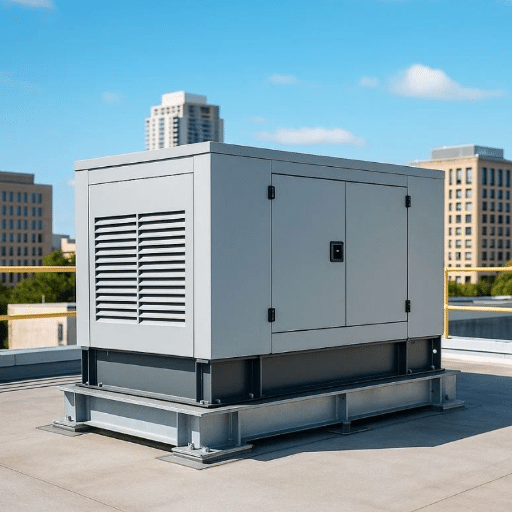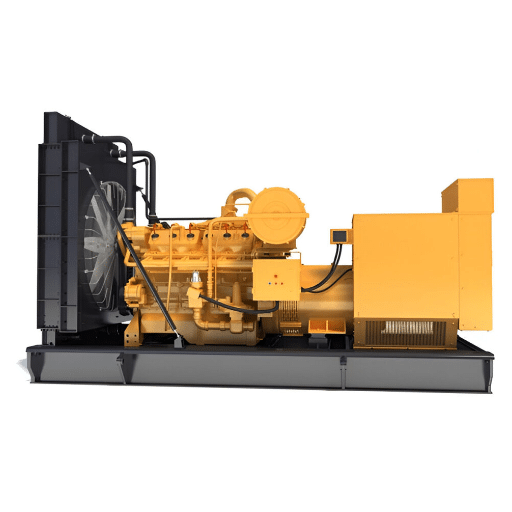

The siting of high-capacity windows cannot just happen, especially windows bigger than 1001 kW require staffing planning, accurate engineering performance, compliance with tight rules and standards imposing such requirements. These systems, on the other hand, are necessary for the safe operation of any large-scale commercial, industrial, and institutional facilities with any regular disruptions more on the causes consequences operational and financial impacts for example. This text reviews all the facilities and financial issues to be considered at the stage of Architecture and Construction while analyzing such facilities inside business tourism objects. Whether you are a project manager, an engineer, or the person in charge of the deployment of large power energy capacities, these very construction principles will help to explain and provide instructions for effective installation processes.
Initial Planning and Site Assessment

Forgetting effective site assessment and planning stage can sabotage installation of power systems with capabilities such as high capacity. The best approach is to commence with the conducting of the scientific survey of the site. This research implies a study of factors such as physical conditions, climate and climate change, plant and animal habitats, as well as services obtainable in a certain area. This also involves looking into soil configuration, the availability of the land and its sources, and if at all there are transmission lines close by. Knowing the extent of power usage during peak and future growth levels is a key consideration in the determination of the size of the system.
Further on, it is essential to establish the requirements of the code for construction, zoning rules as well as environmental policies that are relevant to the site. Such ventures may ease the process of obtaining permission and speed up the processes of authorization and implementation. Finally, take into account such project constraints as the ability of the system to connect to the grid, the distribution of the load for the power requirement and the compatibility of the design with new technologies in power application. With these in place, the design will effectively enhance aspects like reliability, safety or adaptability of the technology to more load levels and grid situations.
Understanding Power Needs and Capacity Requirements
Assessing the needs of large electrical power systems that are high in capacity entails several complex analyses, such as those on load profiles, work schedules, and peak periods of consumption. Initially, all analyses are simple load calculations; moving dynamics, both active and reactive powers, will participate in the energy balance. Thus, how to entail base load where essential equipment operation goes on, and, on the other side, variable load whose consumption increase-rate is associated with purposes similar to seasonal interviews, demonstration of schedule and cyclical demand.
One must anticipate and accurately forecast the evolution of load to ensure that the facility will continue to meet the demand in the future. It will be pertinent to measure such factors as power in kilowatts (kW) for peak capacity and kilovolt-ampere reactive power (kVAR) for power factor losses on the network to achieve maximum network utilization with minimal power losses.
The increased importance of energy to the companies’ future and investment requirements, above and beyond the responsibilities to meet counsumption and sustainable usage levels, encompasses also understanding an enterprise should understand and undertake energy related trends, such as renewable energy implementation, which calls for energy storage and necessary space management. Advanced computer models and simulation techniques can help understand how one can possibly share power in heavily loaded networks with nodal pricing.
Site Selection Criteria for Industrial Generators
The optimal industrial site selection for installing a high power generating capacity power plants considers very high voltage systems and generators. When selecting an appropriate site for the power generators, many vital things should be taken into account to ensure efficient and reliable operation. The proposed site must also be close one of the energy sources or load centers for higher efficiency due to energy losses as well as system flexibility. In addition, it allows logistics to be possible due to existing features of the system such as use of transportation facilities to transport equipment, communication linkages and other related facilities.
Locations are assigned to this due to environmental restrictions, also geographic settings, such as height, climate or other factors are among factors hindering generating facilities from functioning normally and in the event these facilities are blocked, creation/restoration processes should take over.
An important consideration is that the new generation facilities should fit into existing grid complexes. This means that each project should have connection opportunities for supply voltage of an extra high level and use advanced solutions to control the operation of the grid, implement “smart grids” and ensure interworking between different areas or microgrids. The location of the country is justified by the availability of databases with spatial data, which are impossible without the availability of modern technology.
Regulatory Considerations and Compliance with NFPA Standards
When it comes to creating and building high-capacity power devices, operational safety restrictions are key, and this is not necessarily logarithmic. A lot of work remains in building capacity power devices that function within the stipulated conditions. The National Fire Protection Association (NFPA) provides a more precise way of ensuring electric safety than the IEC with its NFPA 70 (National Electrical Code) and NFPA 110 (Standard for Emergency and Standby Power Systems). When it comes to high-capacity systems, these regulations are expected to be followed to minimize them and other risks like overcurrent and short circuit, and arc flash hazards.
NFPA 110 lays out a vast range of recommendations on the performance, reliability, servicing and operation of emergency and backup power systems. Provisions include fueling system requirements and inspection of ventilation systems, as well as the maintenance of batteries often used in standby or UPS systems. NFPA 70, on the other hand, is used to explain the best practices in electrical system design and installation and fault calculations to the point where high capacity design can be utilized safely.
Design and Engineering Considerations

- Load Assessment
Give due consideration to the parameters of power requirements, including the peak and continuous load current. It is to be ensured that the system’s limits on the current load do not go out of hand with the possibility of future increase in the load and the current load. - System Redundancy
N+1 redundancy can be applied to diminish the system’s fault-tolerance. To this end, it will be necessary to introduce some extra elements, like backup power systems or UPS systems, which will ensure continuous operation both during maintenance and power failure. - Scalability
You should have the goal to build the system in such a way that it can be enriched without any major disturbances in the existing balance. Scalable infrastructure does not interfere with proposed development plans at present as it requires only updates and alterations. - Voltage Regulation
Design the system in such a way that accurate voltage control mechanisms are used with regard to these sensitive devices and power is seamlessly delivered throughout the network. - Thermal Management
In powerful devices, there is a critical need for the end to be released safely, which requires an engineered approach. Employ and introduce an advanced ventilation or cooling method of the system that works with the intended heat dissipated. - Compliance with Standards
Adherence to some most important benchmarks such as NFPA 70 and IEEE-based guidelines is beyond reproach. These standards encompass all performance, safety, and reliability requirements that would be considered in the design.
Key Components of High-Capacity Generator Sets
|
Key Component |
Description |
|---|---|
|
Engine |
Converts fuel into mechanical energy efficiently. |
|
Alternator |
Generates stable electrical output from mechanical energy. |
|
Fuel System |
Supplies, stores, and regulates fuel flow to the engine. |
|
Cooling System |
Maintains optimal operating temperatures under heavy load conditions. |
|
Lubrication System |
Reduces friction and wear within engine components. |
|
Control Panel |
Monitors and controls generator operation and performance. |
|
Battery and Charger |
Provides startup power and ensures battery readiness. |
|
Voltage Regulator |
Maintains consistent output voltage under varying conditions. |
|
Exhaust System |
Safely removes harmful gases and reduces noise levels. |
|
Frame and Mounting Base |
Supports all components and minimizes vibration transmission. |
|
Automatic Transfer Switch |
Seamlessly transfers power between generator and primary source. |
|
Enclosure |
Protects components and reduces noise during operation. |
Integration of Emergency Power Supply Systems
To effectively incorporate an emergency power supply system in power systems that have high capacities, it is very important to undertake specialized planning in conjunction with the employment of contemporary technologies for that purpose. In up-to-date systems, load management systems are active during grid emergencies in order to best manage and distribute the generated power. For example, in case of an obligation to preserve power as a last resort, load shedding techniques may be used in order to optimize the operation of critical loads and avoid inefficient use of fuel in the event of an extended emergency supply.
Additionally, the interfacing of the primary power grid and the emergency power system is extremely important. This increases the up-to-dateness of ‘black start’. The essence lies in generating signals that restore power supply when there are no other operational sources of power. This requires synchronization between the generator into the system and this is achieved through efficient means of power system stability such as digital governors and automatic voltage regulators. Such measures enable the smooth running of the system without any interruptions in its operation.
In the end, it is axiomatic that the issue of environment and safety compliance must also not be bypassed. Utilizing the technology, innovations are made and solutions are found that contribute to the improvement and betterment of the existing situation. Such as the development of diesel particulate filters (DPFs) and noise control enclosures that are built more securely for standard industry guidelines to lessen the environmental and noise pollution. This establishment also involves the use of easily adaptable structural designs that can be applied on small or extensive plant structures and functional elements with minimal trouble.
Transfer Switch Design and Implementation
Presence of transfer switches is very vital in high power systems as these play a significant role of changing over from the primary source of power to the reserve source. Existing modern transfer switches include and are usually controlled by a sophisticated microprocessor-based control system, which provides accurate timing and synchronisation to prevent power loss. Primary selection criteria for designing of these devices mainly depend on the switch type – namely open-transition, closed-transition, and static switches, each having a certain application range and load to be served. However, in practice, with higher power ratings, automatic transfer switches (ATS) become common since they allow very fast transfers when the primary power source fails. Besides, these systems are high fault current break and fault-clearing enabled, which makes them very useful even when the resources are exceeded.
All that being said, the more feature-rich monitoring options come with troubleshooting for businesses and systems’ health status checks instantly whenever it is needed, implying prevention and no more surprises. When there is consideration of growth, then modularity of the ATS units will allow for future changes so as to increase it in the direction of improving the power transfer matching the capabilities of the equipment to meet the demand. High-capacity power systems that treat energy include efficient and stable delivery of power to vital building equipment by transparent equipment selection, implementation of advanced automation and design of monitoring equipment that complies with the best practices of safety and reliability standards.
Generator Installation Procedures
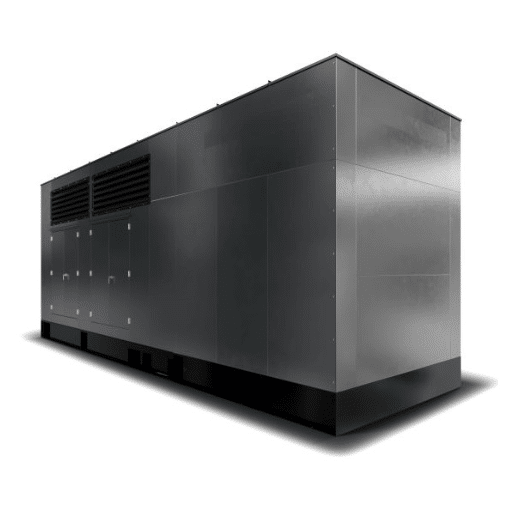
- Site Preparation
Please prepare the location for generator positioning by flattening it without barriers. The necessary features of the installation must be such that it provides enough safety to the generators and air requirements. - Foundation Setup
For such installations, a reinforced concrete structure or a foundation might be preferred, making preferred boundaries for the weight of the generator to minimize vibration whilst it operates. - Electrical Connections
Also, connect the generator to the electrical system using the proper wiring and ensure that the system is properly grounded to avoid any electrical issues as well as any system sabotage. - Fuel System Installation
In addition, ensure diesel, natural gas, or other fuel supplies in the building, such as an external storage tank. Also, check it meets environmental and national standards, and has a fully available backup system. - Exhaust and Cooling System Configuration
It is necessary to install a duct system so that the exhausted gases do not harm people who are nearby, even after they have been removed. Mount the cooling system so that it does not become unmanageably hot during long periods of usage because it is tilted or situated incorrectly. - Control System Calibration
The generator control system is configured to be modified periodically and is operational at all times to achieve the performance of load transfer, load requirements, and remote monitoring as regulated. - Inspection and Testing
A thorough assessment shall be carried out during testing and a load test shall be undertaken to validate the functioning of the machine and adherence to the standards. Ensure that all required safety measures, including, and not limited to, shut down and alerts are working properly. - Documentation and Training
Make records of the step-by- step implementation of the project, impart the knowledge of service routines, and instruct people on handling the basic problems that may disturb the work of the generator.
Best Practices for Generator Installation
Deliberate steps are required in placing high-powered generators in their perfect positions. Such installations often have to observe certain code requirements, safety and economic concerns. When placing generators, it is crucial that the site is chosen carefully for the ventilation ensuring that the location is not too far away from the outside environment to minimize objections. In case there is no good ventilation, the generators can overheat and may malfunction prematurely. Proper and precise load calculations have to be done so that the generator output will be in accordance with the designated usage and at the same time allow for expansion in the future.
In order to optimize efficiency, it is recommended that advanced control systems, such as electric transfer systems, and full protection be meshed with maintenance monitoring method. As a practical consideration, compliance with external regulations such as the National Fire Protection Association (NFPA) and Underwriters Laboratories (UL) by the entity itself is also a vital pre-condition as it assesses whether the system in operation fulfils the safety requirements and is in compliance with the law or not. With a reduction in the huge number of sudden system shutdowns, it becomes very necessary to engage in preventive maintenance activities such as system checks, and most importantly, fuel quality control for the generator’s components.
Safety Protocols during Installation
The successful establishment of expansive power grids commanding high levels of voltage requires a proper attitude towards safety practices that is aimed at eliminating the effects of electricity related hazards, equipment breakdown or environmental effects. This spans on the undertaking of high level qualitative site survey that ensures the selection and grounding of the electrical system in a manner that eliminates adverse currents or maintains the system in proper condition. This means that all connections must be insulated according to relevant regulations and cables and conduits must be run in a manner that they remain cased in walls to the lowest level possible or close to the ceiling so that they avoid physical damage or water.
Moreover, the alignment of surge suppression equipment into the facility makes it probable for the system to protect the place from preventable breakdowns. This implies that labeling of equipment, integrating emergency shutdown systems, and issuance of lockout-tagout cast training to employees enhance safety up to a point. Thus, application of advanced safety measures in the subject process guarantees compliance but also promotes the safety of the workers and the equipment as well.
Ensuring Compliance with NFPA 110 Standards
It is paramount that all high-capacity electrical systems comply with NFPA 110 fire protection systems. Failure to do so can compromise the reliablility and safety of the system installed in a building that serves a critical mission. It is because of instances of such practices that particular requirements concerning emergency and standby power systems were carefully defined in these NFPA 110 standards. Some of these requirements include those on the class of generator performance, installation conditions and operation and maintenance of the system. In cases of high capacity, the requirements all combine as follows: Incorporate in the system either Type 10 or Type U configuration class of generator set. It must have a seamless transfer in less than 10 seconds to a critical load.
Final Commissioning and Testing

The process of final power systems set-up aims at running of a broad scale of tests in order to check validity, performance and compliance with the established norms. You have to perform essential activities such as load bank tests that investigate how the system functions in different loads, even action and tester’s transfer verification and inspection procedure for all protective devices. Regular maintenance checks are also executed to account for any displacements or damages which insists that components must work together once again under the permissible loads. While a few practical approaches are put into practice while still others focus on the concept of system performance as witnessed in the structure of enclosures and control equipment used. For that, NFPA 110 is important during such processes because it will ensure the system certification and subsequent ongoing reliability.
Operational Testing of High-Capacity Generators
Evaluation of the high-capacity generators under full operational load involves a number of careful procedures to be performed so as to see how virtuous and trustworthy these powerful cars can be in complicated circumstances. Almost always, in the course of this testing, load banks are employed in accordance with power input to reach maximum possible load just as would occur in actual load, always ensuring the equipment performs without any permitted deterioration. Primarily, transient response tests determine the extent to which the generator is capable of accommodating large variations in load without jeopardizing either the voltage or the frequency at levels beyond certain established standards.
It is paramount to verify the normal operation of major components like automatic voltage regulators (AVRs) and governors for the achievement of primary goals, that is safety and efficiency. Indeed, they are particularly critical in ensuring that the electrical power is maintained within the expected range since disturbances are always part of any system. Other relevant tests conducted are those that involve checking for power plant automatic protection from faults by which the system trips in case of fault to prevent equipment damage. This way, with the help of these programmed methods, it becomes easier to address issues such as acute power quality situations as provided in the ISO 8528 or other requirements according to the IEC 60034 norm, thus increasing the generator’s dependability and adaptability to the harsh operating environments.
Documentation and Compliance Verification
Having a lot of documentation is crucial if you are dealing with large power systems since most of the requirements are compliance-related. Certainly, this documentation has to be extensive and include among other things, design characteristics, operation and pre-commissioning test data, the maintenance plan, risk management program, failures and the reasons behind them in order to satisfy the requirements of the laws or recommendations. On the other hand, for standards such as the implementation of ISO 50001 on energy management systems or NFPA 110 Standard for Emergency and Standby power systems, well-documented information is necessary to articulate the consequent performance and risks.
Verification of compliance is facilitated by high-tech lab equipment and live feedback systems so that the organization meets its objectives and requirements. Contemporary well-structured power system also have measurement devices and IoT applications capable of tracking and controlling every feature, from load, temperature profile and energy efficiency. That way, any deviations are recognized and remedied in good time, thereby leading to the minimization of time lost and boosting the resilience of operating environments. It is complemented by advanced simulation techniques involving finite element analysis (in short FEA) and computational visualization, which enable auditors to ascertain how well the equipment is functioning with respect to the changing operational conditions.
Training Personnel on Emergency Power Solutions
It is important for training for those individuals who are charge of managing high-voltage electrical grids to be effective so that they can be able to respond qualifications during any operation-related emergencies, even under high pressure scenarios. On top of that, the training programs have to cover every detail of the equipment and technology including configuration of generators, transfer switches and uninterruptible power supplies (UPS). In addition to this, training should enable the trainees to know how and what to check; more importantly, how to check and read control diagrams and line interactives in case of any issues during the operation.
To improve the previous version, the concept of using advances in maintenance activities including online monitoring-based systems using IoT devices should also be added. Such technologies significantly simplify the process of diagnosis by providing troubleshooting parameters such as hydraulic pressures fuel levels, battery voltage, environmental effects such as high temperature or vibration and possible troubled conditions. It is very important that the personnel have adequate experience in various senerios where there’s no electricity, so that they learn procedures and cost of making errors, as well as decision making.
It is worth noting that in ensuring compliance with certain measures in operation and maintenance practices, security controls are adopted that educate the staff on the risks they are likely to encounter. In the case of these many approaches, organizations observe reduced length of time under which the system is non-operational and available including safety factors that involve legal and ethical elements in relation to technology control.
Ongoing Maintenance and Support

Maintenance and support of high-volume power systems are an ongoing process which involves the consistent inspection, diagnosis and improvement of systems in a timely fashion to ensure the system performs at an optimal level and for a long period of time. These include: checking out and looking into serious components like transformers, circuit breakers and protective devices among others so as to prevent possible troubles for example before a bud grows into a tree. These programs should be observed at all times whenever required to shield such devices from failure which otherwise would shorten their life.
In addition, the use of effective service procedures with the complete availability of technical experts is very important in order to respond to the unexpected breakdown of equipment. It is also important for companies to provide positive support structures such as facilities pools and spare parts warehouses. Besides, companies should have in place trained personnel to conduct continuous training of industry developments and technology trends among employees.
Generator Maintenance Best Practices
To uphold the efficiency of large-scale power generation units, it is essential to invest on strategic approach in order to mitigate risks and boosts performance in enhancing the systems’ overall efficiency. This involves performing weekly checks whose primary objective is failure prevention and entails such routine activities as machinery lubrication servicing, inspection of the underlying crop out areas of the machinery for any unusual condition such as contamination, loose parts and assemblies and any other visible sign of wearing the machine. Such monitoring also includes the use of non-destructive diagnostic tests for such systems as: insulation resistance measurement, partial discharge, vibration analysis, oil cleanliness and other oil tests, etc.
Having said that, the ability that comes along with prognostic maintenance technique regarding the IoT sensors and on-the-fly records enhances the critical areas like rotors, generators and cooler components. These methods involve further data on some predictive maintenance schedules so that all maintenance tasks are done on time. Tappiee has this advanced tools implementation where they can do more than the usual maintenance and therefore increase the run life of their assets. For petroleum-based generators, fuel quality and filtration are given the utmost importance. For stored fuel, with time, it will be contaminated with water or, because of oil stored there with microbial organisms, thereby reducing the generators’ power levels and needing fuel polishing and tank cleaning. The latter in particular also increases the probability of clogs and increases the fuel oxidation ratio by lesser percentage.
Monitoring and Performance Evaluation
Effective monitoring and performance evaluation of high-capacity power systems derives great help from the use of advanced technologies, real-time data acquisition, and strategic analysis. The most advanced of the systems on the market also utilize Supervisory Control and Data Acquisition (SCADA) systems which constantly monitor such operational settings as load frequency, voltage and power levels within the grid. Besides, power quality meters are basic in acquiring values like Total Harmonic Distortion, voltage swell, and peak or high impulse wave distortion among others, detecting unfavorable operational conditions and ensuring acceptable standards are met.
Leveraging current advancement in the field of medical technology, the processes of predictive maintenance and failure prevention show consistent improvement with the ideas and help of established machine learning routines. System behavior patterns can be estimated and with the use of smart software, the failures may be anticipated and handled before they worsen thus reducing the time and expenses associated with repair. Visual and vibrational methods of reliability checking of such components as transformers, switchgears and rotated equipment can be carried out as well.
Long-Term Energy Management Strategies
There are several reasons why long-term energy planning is currently at the center of power systems development in high axial tilt. In the classical tradition, resources are efficiently used to meet the required demand using technologies suited to particular situations. New sustainability practices and advanced eco-technologies enhance the chain of those and other solutions. An energy system can be combined with other equipment based on lithium-ion or flow batteries. Thus, it can be used to compensate in the course of end load control, to stock excess amount of energy during low load periods and to release it in high load periods. One of the most current trends in the area is also the development and introduction of new forms of energy consumption management systems.
Reference Sources
-
IEEE Xplore:
Title: A review of power conversion systems and design schemes of high-capacity battery energy storage systems
Link: IEEE Xplore -
MDPI Sustainability Journal:
Title: Enhancing Sustainability in Power Systems: A High-Capacity Testing System Based on a Power System
Link: MDPI Sustainability
Frequently Asked Questions (FAQs)
What electrical clearances, grounding, and bonding standards must be met?
In order to prevent common electrical accidents and injuries, it is important that electrical clearances are designed to ensure that all local and national codes and standards are followed, thereby keeping workers safe from shockable distances and access pathways for service and drilling are maintained. To prevent extreme violations such as electric shock, the size of the system’s grounding and bonding system should be adequate to prevent overheating and control both touch and step voltages, and in this case, it should be protected by an overall system that guarantees the protection of the building surge protection. Specification of transformers and their sizes as coordinated with protective relays and insulated buses for areas where they are to be installed.
How should cooling, ventilation, and thermal management be designed?
In order to ensure that the system remains at its best performance and avoid the reducing its thermal level due to the heat produced by the electric machines should be carried out with a clarification of issues such as the evacuative assessment of ventilation a split ventilating system in the central one pushed up by the parallel additional elements – a heating system, a ventilation system, etc. This will also get the workers even more involved in the protective measures against noise. Make provision for evaluation of extreme temperatures in the environment: the requirements for ventilation, the usage of additional heaters and such control-ventilatory systems as air distributors.
What are the grid interconnection and protective relay requirements?
Interconnection of the grid is governed by specific processes that involve a joint system study, implementation of measures in accordance with the requirements of the utility, and the installation of functioning protective power relays, kWh meters and synchronizing devices, to avoid instances of an islanding event and to observe safe parallel running. Parameters for protective relaying, adequacy of circuit breakers with respect to both fault clearing ability and system restoration, and maintenance of N+1 arrangements also need to be developed and implemented during the execution of a project. Releasing the unity protection on the grids and preparation of necessary test witnessing, in response to specific requests, is also part of the protection philosophy.