
Understanding of Portable Generators

In times of emergency, people almost always find it useful to have portable generators, which are small in size but capable of generating electricity for a number of hours either using gasoline or gas until the operational power supply has been restored. The intensified effects of motion can be well appreciated if we were to suppose that most portable generators run on gasoline, propane, or diesel fuel that are easily converted into electrical energy and contain conveniences such as sockets and switches in order to facilitate household use. Placing a portable generator in an appropriate area is necessary so as to avoid adverse consequences such as exposure to carbon monoxide gas, refueling the machine, and grounding it to prevent electrical dangers.
What is a Portable Generator?
A portable generator is essentially a small, handy machine that is intended for generating electric power when there is none, or for use during extended practices or in locations without electricity. Working usually on small fuel-engines, either petrol, gas or diesel, these appliances convert mechanical power to electric one by virtue of an e.g. alternator which will be affixed to them, thus allowing powering reach to various devices, tools or even household appliances. The latest portable generator devices come fully equipped with the most current capabilities, such as filters which provide a stable voltage, especially for the most delicate devices thus making them unperturbed.
This again demonstrates that portable generators are appropriate for indoor applications as well. The user’s equipment may range in use from very small units of a few hundred watts to very large generator plants of several thousands of watts. Versatility is clearly indicated in both residential and industrial needs. There are very many psychological and safety considerations, reliability concerns, and compliance matters that must be remembered while operating or acquiring a portable generator.
Common Uses of Portable Generators
Portable power generators are tools that have a popular usage in several industries and settings. One of the crucial applications of such equipment is ensuring the uninterrupted supply of energy to such devices as refrigerators, medical equipment, and communication devices, among others during failures. Again, for construction works, the use of portable generators is frequent especially when there is no stable power from the grid to operate machines, lights or drills.
Furthermore, they are versatile for open-air programs like fairs, exhibitions, or weddings, where the need to use loudspeakers, lights, and cooking devices is temporarily installed. It is not surprising that many people go for their leisure time in the remotest corners of the Internet since, in doing so, they can easily take with them a generator and power an electronic device while there is no ordinary source. Natural calamities, catastrophes and emergencies of human activity (both local and regional) usually require special response plans and activation of emergency response teams providing for the deployment and use of specific equipment such as mobile or outpatient hospitals or communication networks. Wherever there is a need for even small amounts of power and electricity nowadays, their portability and flexibility are advantages in terms of approach and utility.
Types of Portable Generators
| Generator Type | Power Source | Ideal Use Case | Noise Level | Efficiency | Portability | Maintenance Required |
|---|---|---|---|---|---|---|
| Conventional Generator | Gasoline/Diesel | Home backup, job sites | Moderate to High | Moderate | Bulky, less portable | Regular oil changes |
| Inverter Generator | Gasoline/Diesel | Electronics, camping trips | Quiet | High | Lightweight, compact | Minimal |
| Solar Generator | Solar Panels | Eco-friendly applications | Silent | Low to Medium | Portable, but dependent | Panel maintenance |
| Dual-Fuel Generator | Gasoline/Propane | Flexibility in fuel choice | Moderate | High | Usually portable | Moderate |
| Battery-Powered Generator | Rechargeable battery | Light indoor or travel use | Silent | Low, limited runtime | Very portable | Minimal |
Importance of Proper Grounding

The adequate use of portable generators involves proper grounding for the end user safety and elimination of electric-related accidents. Correct sustaining prevents the exposure of such undesired electrical currents in order to prevent incidents of a short circuit to the ground or even the house. Lack of grounding may expose naked live wires when flaws or breakages occur due to commercial electricity appliances that are frequently used with no proper insulation especially in water and outside areas. Procedures on how to ground an ungrounded portable generator may be a little complicated since sometimes one has to check if there is a place to let a ground wire out in the generator or whether its neutral is fused to ground. For units that require grounding, it is advised that the grounding down to the spikes driven into the ground is done using the specified wire connected to the grounding terminal.
What is Grounding and Why is it Important?
Grounding is a required precaution for portable generators to prevent chances of electrical issues and accidents among users. The concept of grounding is to facilitate a low resistant path for electrical current to reach the ground outside within case of a short circuit or a sudden surge of electrical power. This type of operation is usually distributed principally in grounding the frame of the generators or their approved grounding facilities which allow for connection of the grounding system to ground through a regulating rod which is usually sunk in the earth.
Grounding is very important when dealing with very high overvoltage, especially in the presence of humid conditions where improper grounding could lead to higher chances of getting an electric shock hazard. When there isn’t a proper grounding in place high risk exists due to the likelihood of accidental contact between electrically live structures and the generator frame. As long as the system is grounded properly, any wayward current is safely pulled into the ground with a great decrease in any threats to equipment and people. Moreover, there are other reasons as to why the local electrical safety code and the safety codes include the grounding requirements.
Ensuring that a generator is properly grounded helps not only to prevent any damage to the loads in the circuit but also allow the circuit breakers or fuses to work as expected during any faults as these are very essential elements of protection in any electrical system. Maintenance of the grounding system is essential to safety and regulation compliance and users should inspect junctions for continuity, adhere to manufacturer’s recommendations, and call a professional electrician for help with installation in complicated cases.
Grounding Techniques for Portable Generators
Mitigating and preventing electrical accidents requires proper connection and bonding of portable equipment in accordance with safety regulations. The process commences with determining whether the backup portable power source in use is a separately derived system (SDS) or a Not Separately Derived System – a distinction that has implications on their grounding issue. In the case of SDS configurations, it is required that the neutral wiring is connected to the generator structure and grounded in a proper manner using a grounding electrode such as a ground rod, inserted into the earth. The distinction points to SDs configuration which normally requires a bond to the grounding when being fed with a neutral already derived to the grounding level, an example being connected to a building electrical panel hence posing a different set of problems.
It is crucial to emphasize that when implementing grounding techniques, the grounding cables and connectors are supposed to be utilized are those that are qualified for use in outdoor and heavy-duty applications. The conductors shall meet the American Wire Gauge (AWG) ratings with respect to the power output of the generator and once in place, they shall be attached to the grounding rods with clamps to ensure contact is maintained at all times. Ground rods are inserted into the ground to a depth of between 8 to 10 feet in order to lower resistance to fault currents, where this is achievable depending on soil type. Additionally, conducting regular testing for resistance is also very possible by the use of tools such as earth testers or other related tools which are convenient and since this is known, the resistance values can be checked to ensure that the state of the ground is still at an acceptable condition, to establish good grounding practice.
Common Grounding Mistakes to Avoid
- 01
Improper Ground Rod Installation
The use of portable generators is a common practice, and unfortunately, the installation of ground rods is often done the wrong way. Ground rods are inserted deep into the soil within a facility to ensure optimal conductivity. When ground rods are set up in such a way that they are not deep enough, whether the rod itself has not much length or is driven into the ground at a lesser depth than recommended, there are chances of high electrical resistance. - 02
Failing to Test Ground Resistance
The other risk is the failure to regularly test the grounding resistance. Advanced tools such as earthing resistance testers may be used to ascertain that the system remains very low in impedance. Immense resistance values can implicitly suggest either some sort of corrosion or the soil or both of which will however, have to be attended to with urgency to avoid giving unwanted electric shocks. - 03
Connecting Neutral and Ground Improperly
Another frequent issue to avoid is incorrectly attaching the neutral and earth wires. In some types of provisions, it is quite necessary to connect the neutral and earth in systems, whereas in others, they should be left floating. Incorrect fixing of this aspect can lead to improper operation of the protection system and the equipment as the case may be. - 04
Ignoring Soil Characteristics
An oversight that many technicians make is neglecting how the soil in question might impact the conduction of the grounding system. Soils that have a high level of resistance, i.e., sands or rocks, could prove to be challenging and require extra measures such as additional grounding rods or treatment of soil with grounding chemicals, if any. A correct assessment of the ground properties is very crucial in improving the isolation of the ground within the structures. - 05
Using Undersized Wires or Faulty Connections
Inadequate support cables, or poorly joined equipment, could alter the effectiveness of the lightning protection system, especially its capacity to safely discharge ground faults. The size of all wires should either be as per the National Electrical Code (NEC) standard or larger than the standard. Moreover, all such connections should be securely in place to avoid arcing or burning. - 06
Operating Without Considering Environmental Factors
Subsequent to these considerations, different other factors like changes that include soil finishes that freeze and ground become ice or finishes that gets saturated due to water, may occur thereby minimizing the effectiveness of grounding. It therefore becomes essential to anticipate and accommodate the effects of long-term environmental changes in the form of ground enhancements such as enhanced grounding during harsh climatic conditions.
Safety Precautions When Using Portable Generators

- 1
Operate Generators Outdoors
Use only the portable electric stations outside, with doors and windows closed and away from the home entrance and exhaust pipes behind the ventilation outlets. This will reduce the risk of harmful carbon dioxide fume build-up which can be encountered in a closed area. - 2
Protect From Moisture
Ensure the equipment is situated close to the ground so that it can be safeguarded from the rain and any moisture and that no device is set outside in the rain or storms. Do not touch electrical elements or wires in the presence of wet hands to avoid any electrical casualties. - 3
Use the Correct Extension Cords
Do use heavy extension cables that are intended for outdoor use and that come with grounded prongs. Ensure the lack of any damaged parts of the cable and its suitable output to the power of the generator. - 4
Refuel Safely
Deactivate the generator and let it cool off entirely before filling up the tank. Under no circumstances should one fill the fuel in the facility near the fire or where there might be danger of sparks or flames. - 5
Avoid Overloading
It is advisable to ascertain the vehicle’s generator wattage capability and compare it with the power requirements of the appliances to be connected to avoid tripping of the fuses. Running a lot of appliances simultaneously exceeding the capability of the generator may lead to damages either for the generator or the appliances. - 6
Disconnect From Utility Lines
It is dangerous to use a generator in the home’s wiring without a transfer switch for such a purpose. This will expose utility employees as well as pole workers more connected to the grid to unexpected danger.
General Safety Guidelines
Always remember to put the principles of safety first when it comes to using a portable generator to avoid possible cases of accidents and to guarantee a functional generator. Usually, ensure that the generator is also used outside, preferably in an open area and kept well-ventilated because carbon monoxide poisoning can instantly kill. To ensure the safety of the user and in electrical insulation and performance purposes, always earth generator. Elevated electrical hazard can also compromise the generator and reduce efficiency levels when applied. Machinery should undergo regular checks, especially the generator, to check for any deformations as in the case of issues including wear out and damage.
In addition, it is recommended to only use the fuels which have been recommended by the manufacturer and to keep them in clearly labelled and tightly closed containers, well out of reach of any heat producing devices. Never miss the maintenance program and its guidelines in the user’s guide/manual for the generator especially the one made for your generator to help achieve safe working environment as well as enhance the performance of the generator in use.
Understanding Carbon Monoxide Risks
⚠ Safety Alert
Carbon monoxide is a colorless, odorless gas that is formed from fuel gases such as gasoline and propane by incomplete combustion. In rooms like that, the concentration of CO can get to dangerous levels in seconds.
Portable generators come in handy as a quick substitute to the energy providers when power is out at any given time in any continuous operation. When operated inadequately, these generators pose a significant risk to a human organism, such as exposure to carbon monoxide (CO). High CO content in the air can result in health manifestations including dizziness, headache, disorientation, etc., or in more serious cases can be fatal as well. According to data by organizations in charge of workplace health and safety, such faults as inappropriate usage of generators especially in conditions of the household is a major cause of fatality linked to generators.
As for lowering the risk of CO poisoning, the need for appropriate placement of generators cannot be overemphasized. As if any technician, it is a rule of common sense accepted across the board that independent gas portable generators must stay outdoors, a minimum of 20 feet from the walls, with the exhaust side facing away from the windows, doors and other crevices without obstruction. More specifically, it is also recommended to include Carbon monoxide alarms or on the other hand put battery Carbon monoxide detectors having plug-in components as back up so that in every situation when the CO level in the room is up, the residents are able to take cautions, which is very considered important. These strategies, when integrated with more awareness on exposure risks of CO, can effectively reduce cases of injury as well as foster the harm-free installation of petrol alternatively mobile power sources under abnormal conditions without power rationing while there are other eventualities.
Fire Safety for Portable Generators
Portable generators are very useful during blackouts but could also lead to fires if used improperly. One way a generator can be overloaded is through overheating, which could quite possibly result in the occurrence of fire. This is why it is important to place the generator on a firm flat surface to prevent any physical distortion as well as protect it from tipping over fire hazards such as paper, leaves or more importantly, fuel. Using the generator with petrol is a more precise application—never fill the tanks without letting the engine cool since burning is also probable after the fall of any fuel from the engine or the tail pipe.
Petrol is supposed to be stored in proper containers whose lids are always closed and they should be somewhere far from heat and the generator in particular, inasmuch as it can be stored inside a room. The recent recommendations on Health and Safety also suggest that, to avoid the generator overheating and a dangerous fire, heavy-duty outdoor rated extension cables should be used when necessary. Adherence to the safety guidelines provided together with planned servicing, periodic examination of electrical wires and their connections, and the absence of unignited fuel or wear out of resistant parts thus decreases the risk of toxic fire hazards considerably.
Setting Up Your Portable Generator

-
1Choose a Proper Location
Put the generator in an open area, then make sure it is at least 20 feet from the house, windows and doors. And also, it should be kept on a dry area surface so it does not get tipped over or wet by a cycle of rain. -
2Check Fuel and Oil Levels
You should check whether there is enough fuel in the generator and also check if there is enough oil in it. Also, you must assure the kind of fuel and oil to use, depending on what the manufacturer recommends. -
3Inspect for Damage
You should check each and every part of the generator. If you find any damaged parts such as frizzy wires or components falling off the generator or fuel leakages address them before use of the generator nine times out of ten. -
4Connect Appliances Safely
When using generators, it is important to use heavy duty extension cords of the proper gauge and power rating and extension cords approved for use in the outdoors. Moreover, never exceed the total wattage of the appliances that the generator is powering unless its designed to. -
5Start the Generator
Follow the given steps in the instructions manual which includes turning the fuel source on, setting the choke, and cranking the starter or beginning the electric generator key. -
6Monitor Operation
Keep an eye on the operation of the machine and do proper service. Whenever it stops, it should be cooled down before being refueled to avoid fires.
Choosing the Right Location for Setup
It is quite clear that some factors such as security, operations and effort efficiency have to be born in mind when deciding where to set your portable generator for that matter. It is important to remember that certain ventilation systems be made available in order to install the generator 20 feet or more away from any opening, doors and windows not to lie flat of carbon dioxide. A deck or a flat surface close to the ground can be employed so that the generator remains in place and dryers are not disturbed especially when the weather is rainy. Also make sure that the placement keeps it away from sources of fire and areas that are prone to flooding among others. Proper installation will help in the prevention of accidents, as well as minimize disturbances when served as heat retention or the removal of the controlled gases.
Connecting Your Portable Generator
To safely and effectively link your portable generator, you need to understand clearly the load requirements of equipment and which systems you expect to drive from the generator, at the Concept level. This is how the effective capacity of the generator is determined for prevention both overloading the generator capacity or causing damage to the connected equipment. Then you should install a heavy-duty, outdoor-rated extension cord of the correct gauge for the current ratings of the attached equipment. Interlock each connection properly in all junction points to avoid any inappropriate contact which may result in electrical risk.
To supply power to devices in the house, if there is a transfer switch use the generator to do that, an appropriate generator cable can be used to link the transfer switch to the generator, and make sure the switch is of the same voltage and current rated as the generator. This set up effectively separates the connection between the system and the utility hence preventing any electricity coming back into the system which could pose a danger to the employees of the utility. Be sure to perform a double check on the connections before turning on the generator and also follow the specific instructions on the procedure to switch operations in order to help in achieving the performance goal and the safety measures.
Essential Accessories for Safe Setup
The other essential unit that ensures that portable generators can be used safely is the transfer switch. What the device does is to ensure that there is no effort shifting the power from the portable generator to the system of the house which is technically called the electrical system so that power does not go back into the electricity grid. High quality power extension cables for usage with generators are also fairly useful for making the power transfers happen when they are broken down into their various categories.
Using protective caps in this case is also a must because it helps protect the power-saving unit from water, snow, dirt and so on, which ultimately means increasing the reliability of the device. At the same time, when silence is required, especially at homes, an additional arrangement such as sound-isolating chambers or baffles can be attached in order to remove the operating noise due to the presence of the generator. Lastly, the presence of toxic gases which cannot be easily seen, smelled, or heard, can still pose health risks upon exposure due to generator installation cracks, due to generator placement within with no adequate ventilation. Purchase of these accessories should not be viewed as an expense but as a way of minimizing environmental health and efficiency effects of particle contaminants in a power-saving unit or generator.
Maintenances of Portable Generators
- 01
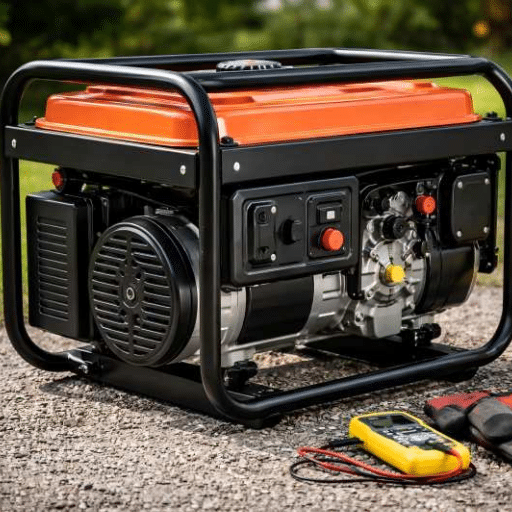
Regular Oil Changes
Monitor the oil level and the quality of engine oil before the start of each use. Rather, it is preferred by many manufacturers to perform oil changes in the range of 20 to 50 hour increments, based on the kind of generator being used.
- 02
Filter Inspection and Replacement
Replace or clean the air filter to prevent pipe blocking thus preventing a reduction in the engine unit’s performance.
- 03
Fuel System Upkeep
Make sure that the new gas tank is used together with the refillable liquids in order to prevent the decomposition of the fuel. Empty all the fuel from the generator if it will not be operational for a longer time after the last day has been used.
- 04
Battery Maintenance (if applicable)
The battery should be properly examined in terms of its proclivity to wear and charged at all times.
- 05
Spark Plug Checks
Check and change spark plugs at intervals of 100 hours or when they become faulty.
- 06
Scheduled Professional Servicing
Plan for professional servicing in addition to the manual services after some time in order to keep the generator in the best condition of mobilization and operation.
Regular Maintenance Practices
What cannot be compromised is that both vegetable or portable generators or compressors require faithful observance of upkeep services. The normal check-up should aim at detecting any leaks in, or worn out items and possible or clear dangers in wiring to avoid malfunctions which can result from the very problems. Regular or periodic air filter cleaning is very important because anything that causes blockage in the filters will consequently make the machine overheat or not function effectively.
Moreover, studying the conditions of operation of the exhaust pipelines is important in terms of reducing the risks of carbon monoxide poisoning. One must ensure that proper earthing exists in order to avoid the possibility of receiving electric current, especially in an environment with high humidity. The connections are checked for lack of damage and cords are also fastened for proper security; this has to prevent even connected devices from being damaged beyond repairs in the event of crashes or voltage surge. By using the appropriate methods as well as paying close attention to the practices contained in the manufacturing directions, the outcome will be a highly operational piece of equipment which takes care of the user happiness with the quality of care.
When to Seek Professional Help
Portable generators are complex devices that need an expert during repairs and minor adjustments too, besides usual care. It is recommended to consult specialists if the equipment runs incorrectly: is taking too long to start even though there is fuel and oil, delivers electricity of unequal strength, or shows other worrying symptoms that may be due to faults deep in the device, like failures in the carburetor, the fuel injection system, or the alternator. Likewise, any signs of electrical issues, or within the generator when it experiences such behaviors as the breakers caused by the working generator or noise from the generator, warrant an instant requirement to detect an expert, the advancement of such damage becomes evident.
In the same vein, when there are issues relating to the emission of exhausts or gas leakage, the public is also encouraged to involve a qualified technician since this can lead to severe health conditions, and it is not legal. Up-to-date gensets come equipped with IBM technologies for instance digital panels and AVRs, which, by the way need some experience in troubleshooting in order to resolve the issues effectively. Efficient restoration work should be undertaken in due course to maintain outstanding standards, minimise harm, and preserve the operational capacity of the generator for a longer period.
Reference Sources
- →
Grounding Requirements for Portable Generators
Read the PDF here - →
Portable Generator Safety Tips
View the document here
Frequently Asked Questions (FAQs)
How do I safely start and stop a portable generator?
Carry out maintenance work on the network only after receiving recommendations from the licensed suppliers. Turn on the power generator only after it has been assembled. Location of room: currently unavailable; windows, doors and ventilation: minimize so that fumes do not spread. Do not plug the generator into the power network immediately unless you hire a professional for the installation of a switch. Prior to immediate use, cool down the generator and prevent the occurrence of a fuel spill or potential fire hazard while at the station. Do not mishandle petrol and exhaust gases as potential dangerous substances.
Can a portable generator be run inside a garage or shed?
Operate a generator outside your house, outside a garage or a shed, because a kicked-in machine, like a generator, produces exhaust gas which will be dangerous and that is in form of carbon monoxide. Work around the exhaust pipes with a distance of at least 20 feet from any place with the open exhausts and where there may be a flow of working or any doors or windows. Besides, it does not hurt to have a CO detector inside to monitor the inside which becomes a warning alarm in case of any gases inside. Work with the generator should also include the usage of proper ventilation. Take into account the safety of other people and keep flammable substances from the apparatus or any place where it is.
How should I ground a portable generator?
Carry out all necessary checks to ensure that the grounds in the mat are properly maintained. However, read and follow the instructions found in the own generator’s manual: since not all will mandate that one except in those cases where double insulation is made. Always ask if another independent ground rod should be driven in the earth, or if a better option is to use a copper wire of the right size for that purpose, to bond the generator and be sure to engage a certified electrician if not sure. An error in grounding can make electrical conductors energized and present an electric shock to anyone against the frame. It is not allowed to modify the generator’s grounding system unless proper authorization has been sorted out.
Is it safe to plug appliances into a portable generator directly?
Use a generator only in the required applications connected to the designated outlets, or otherwise recommended in the use of appropriate extension cords, such as those designed for outdoor use, as opposed to extending the generator outputs to the wired portions of the building. When circuits are to be powered within a premise, a transfer (that is, two-way) switch is necessary to ensure that the circuits are not backfed to the utility; this shall be done by electricians only. Moreover, running the generator on its maximum load may destroy the equipment connected to it and even start a fire. It is important that you know every formula of each appliance before you connect it to determine if it is within the limit of a generator that you have.