
Understanding Common Generator Issues

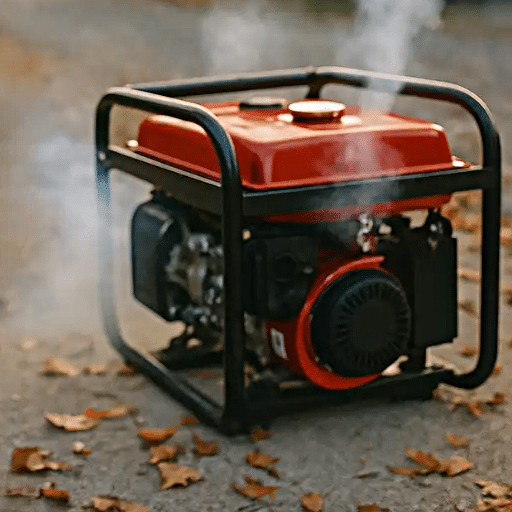
Single-phase generators would often experience overheating as a result of poor system ventilation, excessive LOD (Load On Demand) or when the cooling system fails to function correctly. Other reasons due to overheating are as a result of the clogging of the air intakes, dust accumulation or the ineffective fan due to worn out blades, all causing reduced temperatures within the generator. Overloading is the ultimate primo here because the generator system is made to work outside its boundaries and hence added to the stress is the excess temperature. Over and above that, a low level of the coolant or a leakage of all the above will ensure that the process of heat regulation is ineffective, prolonging the overheating. Also, periodic upkeep by changing air filter and checking the coolant is highly favorable in arresting these problems.
Comparison of Single-Phase Generators with Other Generators
| Parameter | Single-Phase Generators | Three-Phase Generators | Portable Generators | Standby Generators |
|---|---|---|---|---|
| Power Output | Up to ~240V | Up to ~415V | Varies (often limited) | High, supports large loads |
| Usage | Residential/light commercial | Industrial/commercial | Outdoor/recreational use | Emergency backup power |
| Efficiency | Moderate | High | Moderate | High |
| Cost | Relatively low | Higher | Low to moderate | Higher |
| Weight | Lightweight | Heavy | Lightweight/portable | Heavy |
| Installation Complexity | Simple | Complex | None/minimal | Professional setup required |
| Reliability | Adequate for basic needs | Highly reliable | Moderate | Highly reliable |
| Power Consistency | Fluctuates under load | Stable under heavy load | Less stable for devices | Stable |
| Maintenance Requirement | Low | Higher | Low | Moderate to high |
| Typical Applications | Homes, small shops | Factories, large equipment | Camping, outdoor events | Hospitals, businesses, homes |
↔ Scroll horizontally on smaller screens
Identifying Common Generator Problems
Generators, as it is known serve as a secondary source of power, and in case of power failure, generators sometimes offer more problems rather than solutions. Generators fall victim to various issues such as blockages in the fuel system, particularly in the case of generators that utilize petrol or diesel. Fuel may turn sour or leave impurities after some time, which block the fuel lines, hence the filters, leading to inefficiency or failure of the generator to start.
Over-reliance on standby generators also poses challenges as battery failure is common. Batteries can serendipitously run out of energy or get corroded at the terminals, interrupting the generator’s autostart function. Poor maintenance may also result in trouble like with oil contamination which leads to wear of the engine and blocked air filters resulting from too much heat.
Power loss can be caused by blown fuses or faulty wiring. Blown fuses, trips and loose cables are some of the extensions of the concern. These problems mostly exist when the generator is overloaded and installed incorrectly. It is a key to regular inspection, using the apparatus within specified limits and following the servicing schedules provided by the manufacturer in order to guarantee the effective functioning of the equipment. Neglect not only diminishes availability but also decreases the operational life of the equipment.
Importance of Troubleshooting Common Generator Issues
Maintaining the stability of operations and the prevention of any untoward electromagnetic appliances is solely dependent on being able to effectively diagnose even the slightest of cracks in the generator system. Fixing problems such as cranking problem, erratic power output, and adverse sound levels demand that one develops a scientific technique. The very first step in such an exercise would be to check the level and the quality of the fuel since most of the failures of the generator are due to either of these. Furthermore, look at the air or fuel filters to check whether they are covered and thus cause a decrease in the amount of clean air or fuel that enters the combustion chamber of the engine. In addition to the aforementioned effects loss of spark and weakening of the battery significantly affect power and ignition.
Moreover, it is vital to monitor sump oil levels and the condition of engine cooling to avoid scorching or inflicting wear and tear to one or more parts beyond which lubrication can assist. Employing diagnostic equipment such as a multimeter to measure current in electrical circuits or a compression gauge to in final stages of inspecting engine performance aids in accurate diagnosis of problems at hand. These diagnostic methods and the solutions will help operators to keep their equipment operating smoothly without breakdown and extend its life span.
Common Reasons for Generator Overheating
Insufficient Cooling
In the operation, cooling such as air or liquid cooling is mandatory for the protection of the generators. Such conditions as but not limited to lack of wind motion and resistant road ring engine cooling the iron core are a must to prevent overheating.
Overloading
When a generator is operated beyond its capacity, the engine and other components are forced to run more than intended leading to excessive heat generation above the cooling capacity of the system.
Poor Maintenance
It is common to experience unusual engine operating temperatures resulting from dirty filters and lack of proper redressing flaps orientation or increasing temperatures from not following the right engine oil levels.
Environmental Factors
Operating a generator in high ambient temperatures, or when there is an absence of adequate ventilation to remove the heat generated, can result in heat self-heating in the generator and hence overheating of the system.
Faulty Components
Sometimes, the heating and cooling components, such as thermostats, pumps, fans can fail to keep an optimum temperature, consequently affecting heat regulation.
Cooling System Problems
In this respect, generators should have a proper heat exchanger in order to achieve the desired results. Local components may undergo some irreversible harm or suffer from inefficient operation without proper cooling. The main problems related to the cooling of generators are the following:
- 01
Coolant Leaks
Deviating from expected operation, arguably, there is coolant loss due to connections, tubes or the heat exchange too. This can also be the problem of the said system, and it should not be tampered with completely. Sometimes, such discharges are often very constraining if the flush is not checked. Therefore, inspection measures should actively look for wear or cuts of the plumbing or the couplings in order to address this concern. - 02
Blocked Radiators
There is an accumulation of dirt, impurities, lime-scale and general deposits in the radiator that take place over a short time. This accumulation is not conducive to the passage of air to the radiator, and means that the effectiveness of the process of heat transfer is compromised. Consequently, there is poor heat dispersion, and the machine becomes overwhelmed. - 03
Pump Failure
A water pump serves us with a purpose of moving coolants from the engine through the radiator. Rupture of this pump through a fault not improved, either a leak in the seal or wear occurring within restrictions, causes the circulation of the coolant to discontinue, leading to engine overheat. - 04
Thermostat Malfunction
In case the thermostat is broken or does not open when the required temperature is reached, overheating can happen due to the restricted flow of the coolant. More often than not, immediate replacement of the thermostat is necessary in order to restore the full operation of the cooling system. - 05
Improper Coolant Levels or Mixtures
When the amount of the coolant in the system is not enough or the proportion of the anti-freeze to water is imbalanced, proper heat control cannot be achieved. It is important to use the actual percent composition for each coolant without changing it as in manufacture recommendations for its composition in such a system not to cause any system inefficiencies.
Regular scheduled service and early detection of these radiator-related issues must be practiced to preserve the generator’s continued functioning, increase its lifetime and avert the risks of expensive corrective actions.
Clogged Cooling System and Its Impact
Investigations have shown that even the most basic of blockages that come clogging may result in up to a 30% decrease in the capacity of the cooling system, hence, the generator is unable to operate well when load is applied.
Potentially veritable culprits include blocked coolant, which is attributable to disruption of the performance and life span of the generator by interfering with regulated temperatures. Such protocols can frequently be obstructed owing to dirt, muscle or rust deposits, and more so a restricted flow of cooling fluid that is necessary for efficient heat dissipation is witnessed. The increment in the working temperature forces the engine and its components to bear more pressure and therefore considerably erodes the useful life of the engine and increases the chances of fatigue.
In addition, a malfunctioning cooling system can also contribute to the malfunctioning of the system by making the engine work more in order to maintain the required level of efficiency. If left unaddressed for a long time, such an overheating condition, which is a direct consequence of choked channels, can eventually cause the generator to damage its quite expensive parts like the cylinder head or gaskets. Regular checking and cleaning of the cooling system, as well as the proper timing of the servicing, are extremely crucial in order to avoid blockages, retaining the effective heat exchange for the generator.
Preventive Maintenance to Avoid Overheating
Take practical measures and keep the good risks associated with thermal maintenance within the estimated values, irrespective of the design parameters. All this should be preceded by regular examination of all key parts of the generator that affect its ability to maintain a constant temperature. Radiation, coolant level and hoses are to be checked the first meaning to look for problems connected to leaks, wear, and corrosion on the generator ventilation and cooling systems. It is also important to use the particular specifications put in place by the manufacturers; misuse or even the use of the incorrect type of coolant is highly likely to result in a scaling build-up and thus will inhibit effective transfer of heat in the system.
It is vital to clean the radiator regularly to avoid any obstructions because of the accumulation of debris as well as dust and grease. Cleaning the radiator is also not hard as one may think or ever refer to when dusty and/or obstructed. It is this engine that water or radiator cleaning uses air either compressed or a pipe reversed in order to restore place/pace for bringing in more air that is not harmful is obviously the simplest and mechanical way of unclogging the system.
Investigate the water pump efficiency and thermostat performance for generators operating on diesel power in an effort to provide adequate coolant circulation. Substitution of defective parts may be done when firefighting stepwise, with the replacement of such parts being done using, typically, original equipment methodologies. In addition, the installation of temperature gauging systems allows for a prompt evaluation of the possibilities of overheating, which in turn makes it possible to take necessary actions as quickly as possible in case of an emergency, when these thresholds are figuratively stepped on and crossed.
Diagnosing Power Output Issues

In case you are trying to figure out why the single-phase generator is not producing power, follow these steps:
Placing attention in these specific areas systematically will usually help in addressing the problem of the power level. In cases where the problem persists involving a generator, professional help must be sought to avoid damage to the generator.
Starting Problems and Solutions
A common problem preventing the generator from running is not enough fuel in the tanks or any other obstacle in the fuel line. This requires fuel to be filled in the fuel tank and removal of any blockages or air in the fuel line as an intervention. Another common cause for this problem is the dead spark plugs that disrupt the ignition process. These spark plugs are prone to getting dirty, getting wet, breaking or wearing out through years and this causes ignition to fail. Another aspect to assess is the battery status of especially the models which have an electric start. Lack of proper battery could be a menace to start the generator hence, check the battery levels or voltage, and replace or recharge if not satisfying.
In addition, an obstruction in the carburetor or the choke such as accumulation and misalignment, can result in limitation of the control over the fuel mix due to the percentage of air in it. Such measures against dirt in the carburetor and bringing the choke to correct operation may be enough. Lastly, strict caution must be exercised so that the power sources are not run in excessive ambient temperatures and that the necessary amount of oil has been stored, as some of the newer generators usually do not permit to operate with low oil or under load conditions.
Dead Batteries and Their Effects on Performance
A discharged or malfunctioning battery in a single-phase generator affects the generator’s capacity to start the unit since there is no option as to allow for an electric start. In this case, the battery serves the purpose of providing the required initial energy that could make the starter operate, thus engaging the combustion process. On the other hand, it will be impossible for the starter to energize if there is inadequate energy as the starter will remain unresponsive, in other words, the generator will not start.
In connection with this improbable revelation, we also need to account for the remedial actions that can be taken in the event that the battery malfunctions – the auxiliary circuits or devices of the generator, such as the logic controls, the LEDs, and the regulators, are sometimes dependent on the battery while in operation. Precautionary attention in this case, such as checking the battery terminals for corrosion, monitoring the levels of the electrolyte with due account of the studs of the battery (non-sealed batteries), overhead information about the assessment of the discharge skill of the load test, greatly influences the improvement of the generator’s reliability. It is also recommended that the reciprocal cracks should be prevented through the use of automatic trickle charges or maintenance of full cycles of charging, as the most common cause of battery failure is deep discharge without monitoring.
Fuel Level and Its Importance in Power Generation
Sustaining adequate levels of fuel in a single phase generator is essential in maintaining continuous electricity while increasing the resource effectiveness and output of the device especially when it has been in use for extended work hours. Without enough fuel, a generator is likely to experience an early power off, thus interference with the transmission of critical loads and worse still, it can cause shortened life to the equipment that needs voltage stability. Generators with fuel level monitoring, which can be modern fuel level sensors like the ultrasonic sensors or the electronic volume sensors, allow real-time viewing of the levels of fuel in the tanks thus allowing the users of the generator to take steps and prevent unscheduled downtime.
So as to prevent complications brought about when the fuel is depleted, runs can resort to running a generator until all the fuel is finished, however, this may mean that air has now entered the fuel tanks and bleeding or priming maybe needed for the engine to start again. In other words, further studies have suggested that running at low-levels probably facilitates more of the impurities being sucked by fuel tank bottom, thus fuel injectors and filters might be destroyed. It is a good practice to calculate fuel use in the context of various loads required as it is a reliable way of assessing the period of operation and scheduling for the next refilling. Care for fuel quality, store conditions and maintenance within certain intervals enhance the reliability features and durability of the self-excited generators.
Addressing Generator Cooling System Issues

Effective cooling must be provided to ensure that a single-phase generator does not overheat, which is optimal in performance. The most common problem that can arise with cooling of such devices is lack of proper airflow within the enclosure thus increasing the temperature of the system. Remove any restrictions near air vents where the generator is installed. Rearrange the enclosed area where the generator is installed so that cool air may flow readily without any hindrances. Find ways to service the cooling fan as well as inspection of the air vents without any dust blocking them. If the generator features a cooling system, check the coolant levels and also perform flushes as necessary. Moreover, it is necessary to adhere to the guidelines for reasonable operation of those components in line with established manufacture schedules practically.
Common Cooling System Problems and Fixes
Regular Inspections for Cooling System Efficiency
With a single-phase generator maintaining the efficiency of the auxiliary cooling system is associated with carrying out periodic inspections and respecting due work practices. In this context, the first stage of any task should be the maintenance of the blades of the fan cooler – this means that the latter should be free from cracks, deformations, or any obstacles causing no turbulence of the medium. Latches retainers have to be evaluated and any spares examined, together with the belt – which should not be frayed, inelastic or under undue stress as these are directions that can prevent effective cooling.
Other places which may need checking are the air filters and regular checking and changing of parts if necessary will help to keep the system clear of foreign matter. If they get clogged and slow down the generator breathing the high temperature rises. Last but not least, ever thermostat should be checked at least annually to make sure that it opens and closes in proper temperature positions.
There is a need for inspecting the presence of any spills in the feed pipes of the chillers and the assurance of the establishment especially if the hoses, clamps, and joints are in order and not degraded. In the event that the radiators have had any bending or obstructions, it is futile to try to eliminate the heat fast as it deserves. It is also needful to monitor the level of cleanliness of antifreeze. If there is water in the system, it can cause freezing and corrosion of the same system. A hydrometer is used to ascertain antifreeze strength e the amount of protection the doe assists from reaching its boiling and freezing points, respectively.
Using Block Heaters for Cold Weather Performance
Block heater is a vital element for proper functioning of single-phase generators in cold temperatures. They warm up engine operators/preheating of engine coolant to have engine capable of starting/responding even in extremely low temperatures. Block warmers are vital in anti-dead-cox as they are helpful in allowing the lubricants to flow smoothly during cold temperatures hence reducing the wear and tear in the engine. Comparative studies show that engines with preheated upstream fluids disallow the cold start effect, operationally waste less, emit fewer emissions, and reduce the chances of such phenomena trying to avoid the cold start load.
When you purchase a block heater, one should consider the requirements for block heaters such as wattages and compatible engine model, and also external conditions like temperature conditions. Take higher wattage block heaters for example, there is quite a good demand for such block heaters as they warm the engine faster than the smaller wattage block heaters, but they are considered to be an ultimate extravagance since they consume so much electric energy. On the other hand, lower-wattage block heaters are more efficient and can consequently operate in cold regions that are not extremely cold.
For an engine to serve its full capacity and serve for a longer period, it is necessary for the heater block to be installed and positioned correctly. To fully reap the benefits of the block heater, it is advisable to hook it up several hours before putting the generator to work, else it is so as to keep the generator warm from inside arises quite unnecessary expense. This method not only helps conserve energy, but also constructively prepares the generator to immediately turn on even at extremely low temperature. Also, routine inspection of the block heater connections and cords reduces downtime in important tasks.
Advanced Generator Troubleshooting Tips

TIP 01 —
Inspect the Load Connection
Make sure the generator is not overworked and it can handle the power of the generator and all the devices that it is connected to. Drawing in more power than the capacity of the generator can strain it, making it highly unstable with regards to the voltage output level.
- TIP 02 —
Examine the Voltage Regulator
Look for any fault in the automatic voltage regulator (AVR) equipment as it could be one of the main factors affecting the output voltage levels.
- TIP 03 —
Check for Worn Brushes (if applicable)
In case your generator has worn-out brushes, please look for excessive wear and tear of such brushes. In this case, ensure that all the worn brushes are replaced instantly, as worn brushes usually tend to destabilize the generator hence the voltage drops.
- TIP 04 —
Inspect Electrical Connections
Inspect the sectors this device connects and confirm that the connections and terminals are in good condition. If some electrical cables are moved or damaged or any earthing connection is loose to another terminal, then the compact regulation of voltage is impossible.
- TIP 05 —
Measure Rotor and Stator Output
Both rotor and stator voltage should be tested using a multimeter to identify any voltage discharge problems because voltage fluctuations in the machines may indicate the presence of complicated problems with the electric machine components that would require professional help.
Exhaust Issues and Their Impact on Performance
The exhaust of a single-phase motor has a lot of importance when it comes to the proper utilization and efficiency of the motor. A faulty exhaust system can have a negative effect on the systems performance in very many ways from poor engine performance to engine overheating and in most cases, very high levels of emissions can be experienced. Any kind of build-up or blockages in the exhaust system will present a high back-pressure effect which leads to very little airflow in and out of the system. This coming together of elements infringes on the combustion processes within an engine leading to less generated power.
Moreover, it is of utmost importance to consider the concerns brought by heat generation due to exhaust gases. It is also important due to the fact that the excessive gases are not expelled properly, as it is better to say that the end gases are not pumped out — there are changes in pressure and temperature, and there is a real issue with the generator. This may involve internal components and vents producing negative health effects, for instance, itching and respiratory irritation. The generator or its elements may breakdown if the exhaust system is not maintained which may give rise to environmental hazards, health issues or property damage.
It is important to take note of the fact that compliance with emission standards involves ensuring that the exhaust systems are in full working condition. Defective exhausts impede not only the functions but may also be detrimental to the defenses of performance against violations of environmental standards in terms of fines and operational restrictions. Therefore, necessary checks, dust extraction, and timely replacement of exhaust components that came off of a turbo are quite essential when it comes to maintaining the reliability of single-phase generators and their performance.
When to Seek Professional Help
Typically, most problems with single-phase generators can be remedied by simply looking through maintenance records and common fault diagnosis of some malfunctions. In such cases, professionals have to be involved since the problem must be deeper than what a layman can handle. More often than not, there are cases when the generator experiences issues such as the vibrator not working correctly, irregular voltage being noted among other huge machine faults that appear complex and pronounced. Furthermore, the fact that the device is facing an above-average almost burnt temperature, the need to keep on resetting the machines for current flow purposes or abrasions on the essential parts like the alternators or rotors are present generally will imply that the generator is experiencing a termination error and needs in-depth analysis.
Another reason to call in a specialist will be the case of burnt or broken wiring, that brings along the risk of a hazard. Experts have sophisticated diagnostic facilities and skills at their disposal which will guide in uncovering the specific issue and correcting it without overlooking safety or the specifications given by the manufacturer. Again, organizations that bank upon single-phase generators to provide them with electricity, often primary or as a backup, will have minimum downtimes, comply with the standards, and ensure that the equipment is in use for a longer time. Regular consultations with professionals not only solve the problem at hand but also reduce chances of overuse of the equipment, since this structural damage affect the asset in the longer term.
Reference Sources
- [01]
“Single-phase microgrid power quality enhancement strategies: A comprehensive review”
- [02]
“Heat management technology for solid‐state high voltage and high repetitive pulse generators: Towards better effects and reliability”