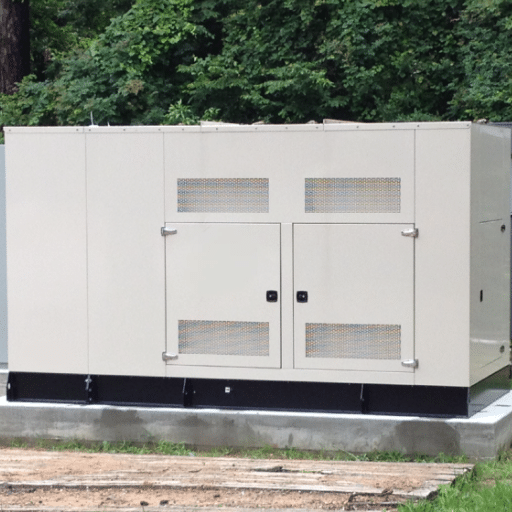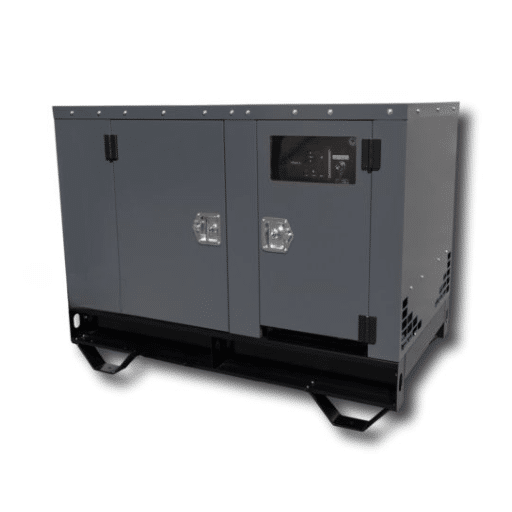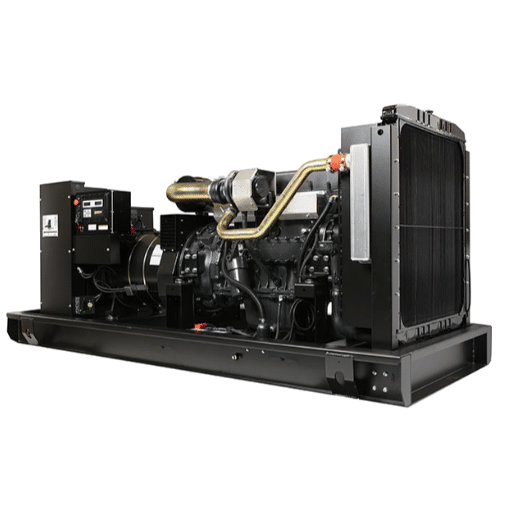

It is important to consider that the diesel generator you install today will largely be in operation until 2040. Stationary generators mostly outlive all other machines within a facility because they have longer service life that ranges from 15 to 30 years. Make the wrong decision here and you are not just acquiring an equipment component. You are effectively signing in fuel contracts and long-term service agreements for maintenance of the generator and fuel storage especially if it is run on the grid.
This was exactly the choice that the facilities manager of the Riverside Medical Center in California faced with in 2018, when the hospital planned expansion. The quoted price for 2,000 kW diesel stationary generator, which amounted to $380,000 was claimed too high. Three years later, during the time of wildfires that caused 72-hours grid power loss, the generator did not stop working, thriving in doing so. The hospital was still operational as other hospitals ran out of power and had to find alternatives. An investment that was seen as expensive while buying it became priceless in existence.
The main aim of this document is to provide a technical framework for selecting stationary generators suitable for either industrial or commercial use. This article mainly focuses majorly on how to determine available fuel options, adequately size systems, meet all requirements for installations and how to correctly calculate the actual cost of the equipment and installation. Whether you are providing electrical load requirements for a new building, or replacing the old power system, this tool is a major contributor to any decision in the organization.
What Is a Stationary Generator?

Definition and Key Characteristics
A stationary generator is an electrical power generation unit that is anchored to a particular site and cannot be moved. These don’t operate like portable units need to be carried from one place to another but instead these security generators are set on the ground as a fixed application, connected to structures with the building’s power and integrated with the building’s other needs like fuel delivery, air direction and usage of the generators facility.
Key characteristics distinguish stationary generators:
- Fixed installation: Mounted on engineered foundations with permanent electrical and fuel connections
- Higher capacity: Typically 25 kW to 3,000+ kW for commercial and industrial models
- Integrated systems: Connected to automatic transfer switches (ATS), remote monitoring, and building management systems
- Extended runtime: Designed for operation from hours to weeks with proper fuel supply
- Compliance requirements: Subject to local building codes, emissions regulations, and electrical standards
The term “stationary generator” might include any fixed or stationary generators but is used for both standby generators and prime power units. It is essential to know the application you require to direct design concept.
How Stationary Generators Differ from Portable Units
Stationary and portable generators do not differ only in terms of where they are installed. Below are key dissimilarities one should be aware of.
Power Output: Stationary units provide increased amounts of power. For example, while portable facilities usually provide up to 10-15 kW power range, stationary systems’ power begins at 25 kW for basic applications and rises to several megawatt range for industrial use.
Fuel Systems: Small capacity tanks of portable generators are filled with fuel manually whereas household-size propane tanks, bulk diesel tanks or natural gas piping is used for continuous refueling of the stationary units.
Installation Requirements: There is no major setup required for a portable unit. For a stationary unit however, you require an engineer to make a foundation for the generators, install cabling to connect the power, install fuel pipes and an exhaust system, and at times also install a soundproofing material.
Operational Integration: Stationary and automatic transfer switches, supervisory systems are the bases for the seamless transition of power in the systems. The capabilities of the purpose of remote monitoring enable management at the place of work and other preventive maintenance activities.
Regulatory Compliance: Fixed generators face strict laws, such as NFPA 110 for emergency equipment, air pollution permits for the U.S. Environmental Protection Agency, and local regulations in noise pollution. In contradistinction to portable units, domestic sound equipment is almost undermined.
Cost Structure: Fixed and portable generators may cost as little as 500 to as much as 5000 dollars. The stationary structures can vary widely from as low as 8,000 dollars for simple commercial uses and exceed 500,000 or more for big industrial installations, not to mention the additional expenditure on the necessary infrastructure.
Types of Stationary Generators
Stationary generators fall into categories based on fuel type and operational purpose:
By Fuel Type:
- Diesel stationary generators
- Natural gas stationary generators
- Propane (LPG) stationary generators
- Bi-fuel and dual-fuel generators
By Application:
- Standby generators (emergency backup)
- Prime power generators (continuous operation)
- Peak shaving generators (demand management)
- Combined heat and power (CHP) systems
Each type serves specific operational requirements, which we’ll explore in subsequent sections.
Stationary vs Portable Generators: Key Differences

Power Output and Capacity
The capacity gap between stationary and portable generators is substantial. Understanding this difference clarifies which applications suit each type.
Portable Generator Capacity:
- Residential/light commercial: 2-10 kW
- Heavy-duty portable: 10-15 kW
- Maximum practical portable: ~20 kW
They act as backup power sources for certain circuits, for light loads or equipment or for temporary outdoor tools. The power rating is given in running kilowatts (kW) and higher in surge kilowatts for motor starting.
Stationary Generator Capacity:
- Small commercial: 25-75 kW
- Medium commercial: 100-300 kW
- Large commercial: 350-500 kW
- Industrial: 500-3,000+ kW
In the case of stationary systems, the capacities are given with respect to one phase in kilowatts (kW) whereas for three phase industrial systems, the capacities are given in kilovolt-amperes (kVA). The rating takes into account continuous operation at specific environmental conditions.
For some perspective, a 100 kW backup generator can be used in everyday scenarios such as small offices or restaurants; on the other hand, a 1,000 kW one is needed for medium manufacturing processes. In contrast to that, data centers or hospitals normally have a bunch of 2,000+ kW units operated in unison for reliability.
Installation and Infrastructure Requirements
The installation complexity represents one of the most significant differences between generator types.
Portable Generator Installation: Such equipment is meant to be positioned and used immediately. Only in a few cases does the portable equipment require grounding of the low impedance micro-current or the provisional supply of fuel.
Stationary Generator Installation Requirements:
- Site Preparation: Level, compacted ground or engineered foundation (concrete pad or raised platform)
- Foundation: Concrete pad typically 6-12 inches thick, engineered for generator weight and vibration
- Electrical Connection: Hardwired connection to transfer switch and building electrical panel
- Fuel Infrastructure: Diesel storage tanks with containment, natural gas pipeline connection, or propane tank installation
- Exhaust System: Engineered exhaust piping with appropriate clearances and weather protection
- Ventilation: Adequate airflow for cooling and combustion air supply
- Noise Control: Acoustic enclosures or barriers to meet local noise ordinances
- Permits and Inspections: Building permits, electrical permits, and final inspections
The installation process usually is quite complex because electricians, plumbers (as there might be a necessity for fuels), concrete workers and possibly acoustics need to be together at the same time. The projects may be completed as small jobs for example in two week or one month, if very huge and complex, covering the industrial installation.
Cost Comparison
Understanding total cost of ownership reveals why stationary generators represent fundamentally different investments than portable units.
Initial Purchase Cost:
| Capacity Range | Portable Generator | Stationary Generator |
|---|---|---|
| 5-10 kW | 500−500−2,500 | Not typically available |
| 25-50 kW | Not practical | 8,000−8,000−20,000 |
| 100-200 kW | Not available | 30,000−30,000−75,000 |
| 500+ kW | Not available | 150,000−150,000−500,000+ |
Installation Costs:
- Portable: 0−0−500 (transfer switch for residential)
- Stationary: 20-40% of equipment cost (typically 5,000−5,000−200,000+)
Operating Costs (per 100 hours of operation):
- Portable (gasoline): 300−300−600
- Stationary (diesel): 400−400−800
- Stationary (natural gas): 300−300−600
Maintenance Costs (annual):
- Portable: 100−100−300
- Stationary: 1,000−1,000−15,000+ depending on size and hours
Lifespan:
- Portable: 5-10 years with proper care
- Stationary: 15-30 years with proper maintenance
Lifetime cost analysis overwhelmingly supports the use of stationary generators for long-running duties that do not require a lot of generation and distribution operation, notwithstanding the acquisition cost of stationary generators.
Applications Best Suited for Each Type
Portable Generators Excel For:
- Construction sites without permanent power
- Temporary events and outdoor activities
- Emergency home backup (basic needs)
- Remote locations requiring mobile power
- Supplemental power for specific equipment
Stationary Generators Required For:
- Healthcare facilities with life safety systems
- Data centers requiring uninterrupted power
- Manufacturing with continuous processes
- Commercial buildings with tenant safety requirements
- Critical infrastructure (telecommunications, water treatment)
- Applications requiring automatic startup
- Locations needing extended runtime (24+ hours)
Types of Stationary Generators by Fuel

Diesel Stationary Generators
One of the reasons diesel stationary generators are overwhelming industrial applications. This is why they are the main source of power for all critical backup systems reaching the point of being flooded to the exclusion of any other solution.
Advantages:
- Fuel efficiency: 35-45% thermal efficiency, lower fuel consumption than alternatives
- Reliability: Compression ignition engines are robust and proven
- Power density: More power per unit of engine size
- Global availability: Diesel fuel available worldwide
- Rapid startup: 10-15 seconds to full power
- Long lifespan: 20,000-30,000+ hours with proper maintenance
Considerations:
- Fuel storage requirements: On-site tanks require containment and maintenance
- Emissions regulations: Modern Tier 4 Final/Stage V standards require aftertreatment
- Noise levels: Higher than natural gas equivalents (mitigated with enclosures)
- Fuel degradation: Stored diesel requires treatment and periodic rotation
Diesel stationary generators are meant to be used in different locations where the necessity of safe and continuous power sources that have no power dependability on grid is most needed. It is in general hospitals, data centers and where metalwork of heavy industrial buildings is done, that they are mostly found.
Natural Gas Stationary Generators
Natural gas stationary generators are found to be extremely beneficial where pipeline businesses are also available. For example, in certain applications, the application of such engines may be beneficial enough given the low emissions involved and their potential to run indefinitely.
Advantages:
- Clean emissions: Lower particulate matter and NOx than diesel
- Unlimited runtime: Pipeline connection eliminates fuel supply limits
- Lower maintenance: Spark ignition engines require less frequent service
- Quieter operation: Typically 3-5 dB quieter than diesel equivalents
- No fuel storage: Eliminates tank maintenance and contamination risks
- CHP compatibility: Ideal for combined heat and power applications
Considerations:
- Pipeline dependency: Vulnerable to pipeline interruptions
- Higher initial cost: 20-30% more than comparable diesel units
- Lower power density: Less power per engine displacement
- Slower startup: 15-30 seconds to full power
- Altitude sensitivity: Performance degrades at elevation
- Fuel pressure requirements: Needs adequate gas pressure from the utility
Natural gas stationary generators excel in continuous operation scenarios, urban environments with emission restrictions, and facilities with existing gas service.
Propane (LPG) Stationary Generators
Propane offers a middle ground between diesel and natural gas, particularly where natural gas pipelines don’t reach but cleaner emissions than diesel are desired.
Advantages:
- Clean burning: Lower emissions than diesel
- Long storage life: Propane doesn’t degrade like diesel
- No contamination risk: Sealed system prevents fuel contamination
- Versatility: Works where natural gas is unavailable
- Quieter than diesel: Comparable noise to natural gas units
Considerations:
- Fuel storage: Requires on-site propane tanks
- Fuel cost: Typically more expensive per kWh than natural gas
- Lower energy density: Less runtime per tank volume than diesel
- Limited large sizes: Fewer options above 500 kW
- Cold weather: Propane vaporization challenges in extreme cold
Bi-Fuel and Dual-Fuel Options
Bi-fuel and dual-fuel generators provide operational flexibility by using multiple fuel types.
Bi-Fuel Generators:
Start on diesel and transition to primarily natural gas operation (70-90% gas, 10-30% diesel pilot). They offer pipeline economy with diesel backup security.
Dual-Fuel Generators:
Can operate on either fuel independently, switching based on availability or economics.
Advantages:
- Fuel flexibility and supply security
- Potential cost optimization based on fuel prices
- Reduced diesel storage requirements
- Emissions benefits of natural gas when available
Considerations:
- Higher initial cost
- More complex maintenance
- Limited availability in larger sizes
- Requires both fuel infrastructures
These systems suit facilities prioritizing fuel security over minimum first cost.
Fuel Selection Decision Matrix
| Factor | Diesel | Natural Gas | Propane |
|---|---|---|---|
| Initial Cost | Lower | Higher | Medium |
| Operating Cost | Medium | Lower (with pipeline) | Higher |
| Emissions | Higher | Lower | Lower |
| Runtime Potential | Tank limited | Unlimited | Tank limited |
| Startup Time | Fast (10-15 sec) | Medium (15-30 sec) | Medium |
| Maintenance | Higher | Lower | Medium |
| Noise | Higher | Lower | Lower |
| Storage Required | Yes | No | Yes |
| Best For | Critical backup, remote sites | Continuous operation, urban | Clean backup, no gas pipeline |
Regulatory Compliance and Standard

Electrical Codes and Standards
Stationary generator installations must comply with multiple electrical codes and standards.
National Electrical Code (NEC):
Article 445 – Generators: Basic installation requirements including overcurrent protection, disconnecting means, and grounding.
Article 700 – Emergency Systems: Requirements for systems legally required for life safety. Includes:
- Separate distribution from normal service
- 10-second maximum restoration time
- Periodic testing requirements
- Specific signage requirements
Article 701 – Legally Required Standby Systems: Systems required for property protection (not life safety). Similar but slightly less stringent than Article 700.
Article 702 – Optional Standby Systems: Non-required backup systems. More installation flexibility but still requires safety compliance.
NFPA 110 – Standard for Emergency and Standby Power Systems:
Comprehensive standard covering:
- System classification (Type, Class, Level)
- Installation requirements
- Acceptance testing
- Maintenance and operational testing
Type Classification:
- Type 10: Requires power within 10 seconds (life safety)
- Type 60: Requires power within 60 seconds
- Type 120: Requires power within 120 seconds
Class Classification:
- Indicates minimum fuel supply (Class 2 = 2 hours, Class 48 = 48 hours, etc.)
Level Classification:
- Level 1: Life safety applications (hospitals, high-rise emergency systems)
- Level 2: Less critical applications
Emissions Regulations
Stationary generators face increasingly strict emissions standards.
EPA Standards (United States):
Tier 4 Final (for engines >560 kW):
- NOx: 3.5 g/kWh
- PM: 0.03 g/kWh
- Requires aftertreatment (SCR, DPF)
Tier 4 Interim (for engines 130-560 kW):
- NOx: 2.0 g/kWh
- PM: 0.03 g/kWh
Spark Ignition Engines (natural gas/propane):
- Less stringent standards than diesel
- NOx limits vary by engine size
Emergency Generator Provisions: EPA provides limited exemptions for emergency-only generators regarding non-emergency operation hours.
EU Standards:
Stage V (current standard):
- Comparable stringency to EPA Tier 4 Final
- Applies to both mobile and stationary engines
State and Local Regulations:
- California CARB standards often exceed federal requirements
- Some air quality districts restrict generator operation
- Non-attainment areas may have additional requirements
Noise Ordinances and Permits
Local jurisdictions regulate generator noise to protect community quality of life.
Typical Noise Limits:
- Residential zones: 55 dB daytime, 45 dB nighttime
- Commercial zones: 65 dB daytime, 55 dB nighttime
- Industrial zones: 70+ dB daytime, 60+ dB nighttime
Measurement Points: Usually, the property line or nearest residence
Permit Requirements:
- Building permits for installation
- Electrical permits for connection
- Mechanical permits for fuel systems
- Noise permits in some jurisdictions
- Environmental permits for large installations
Plan Review Process: Most jurisdictions require:
- Site plans showing generator location
- Equipment specifications
- Noise calculations
- Electrical diagrams
- Fuel system details
Plan review typically takes 2-8 weeks depending on jurisdiction complexity.
International Certifications
Global markets require compliance with international standards.
ISO Certifications:
ISO 9001: Quality management systems
- Ensures consistent manufacturing processes
- Required by many industrial buyers
ISO 14001: Environmental management
- Demonstrates environmental responsibility
- Important for sustainability-focused organizations
ISO 8528: Reciprocating internal combustion engine-driven alternating current generating sets
- Defines performance classes and testing
- International standard for generator specifications
CE Marking (European Union):
- Indicates compliance with EU safety, health, and environmental requirements
- Required for generators sold in EU member states
- Covers machinery directive, EMC directive, low voltage directive
Other Regional Certifications:
- CCC (China Compulsory Certification)
- GOST-R (Russia)
- SASO (Saudi Arabia)
- Soncap (Nigeria)
Specifying certified equipment simplifies international projects and demonstrates quality commitment.
Cost Analysis and ROI
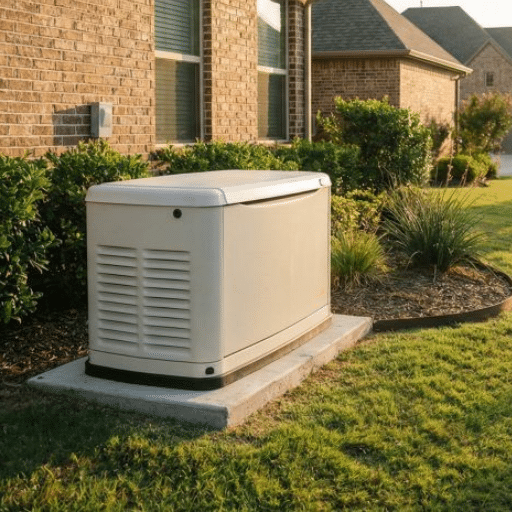
Initial Investment Breakdown
Understanding complete project costs prevents budget surprises.
Equipment Costs (representative pricing for quality industrial generators):
| Capacity | Diesel | Natural Gas | Propane |
|---|---|---|---|
| 50 kW | 15,000−15,000−25,000 | 20,000−20,000−30,000 | 18,000−18,000−28,000 |
| 100 kW | 30,000−30,000−45,000 | 40,000−40,000−60,000 | 35,000−35,000−50,000 |
| 250 kW | 60,000−60,000−90,000 | 80,000−80,000−120,000 | 70,000−70,000−100,000 |
| 500 kW | 120,000−120,000−180,000 | 160,000−160,000−240,000 | 140,000−140,000−200,000 |
| 1,000 kW | 220,000−220,000−350,000 | 300,000−300,000−450,000 | 260,000−260,000−380,000 |
| 2,000 kW | 450,000−450,000−700,000 | 600,000−600,000−900,000 | N/A (limited availability) |
Installation Costs (typical ranges):
- Small commercial (50-100 kW): 10,000−10,000−30,000
- Medium commercial (250-500 kW): 40,000−40,000−100,000
- Large industrial (1,000+ kW): 100,000−100,000−300,000+
Installation Components:
- Foundation and pad: 5,000−5,000−50,000
- Electrical connection and ATS: 10,000−10,000−100,000
- Fuel system: 10,000−10,000−100,000
- Exhaust system: 5,000−5,000−30,000
- Enclosure (if required): 10,000−10,000−100,000
- Engineering and permits: 5,000−5,000−25,000
Total Project Cost Examples:
- Small office (100 kW): 60,000−60,000−100,000
- Manufacturing plant (500 kW): 250,000−250,000−400,000
- Hospital (2,000 kW): 900,000−900,000−1,500,000+
Operating Cost Factors
Annual operating costs include fuel, maintenance, and monitoring.
Fuel Costs (annual, assuming 100 hours operation):
| Capacity | Diesel ($3.50/gal) | Natural Gas ($5/MMBtu) | Propane ($2.50/gal) |
|---|---|---|---|
| 100 kW | 4,000−4,000−5,000 | 3,000−3,000−4,000 | 5,000−5,000−6,500 |
| 500 kW | 20,000−20,000−25,000 | 15,000−15,000−20,000 | 25,000−25,000−32,000 |
| 1,000 kW | 40,000−40,000−50,000 | 30,000−30,000−40,000 | 50,000−50,000−65,000 |
Running costs of the operation are directly proportional to the number of working hours put in. Some industrial plants that report frequent breaks or are into continuous manufacturing will spend a lot of money on petrol.
Maintenance Costs:
Maintenance is elaborated here, a cost will be 1,000−1,000−20,000+ a year, usually, which also depends upon the size of the unit as well as on the coverage of the service contract.
Insurance:
The existence of power generation equipment in a company’s premises could lead to an adjustment of insurance calculations in the case of property insurance. Some insurance companies do provide rebates to clients for installing standby power systems that minimize the interruption of business processes.
Regulatory Compliance:
- Emission testing (where required): 500−500−2,000 annually
- Permit renewals: 100−100−500 annually
- Fuel tank inspections: 300−300−1,000 annually
Maintenance Cost Projections
Maintenance costs increase as equipment ages.
Years 1-5: Lower costs, primarily preventive maintenance
- Annual cost: 1-2% of equipment value
Years 6-10: Moderate increase, some component replacement
- Annual cost: 2-4% of equipment value
Years 11-15: Higher costs, major component overhauls possible
- Annual cost: 3-6% of equipment value
Years 16+: Significant maintenance or replacement decisions
- Annual cost: 5-10% of equipment value or major capital investment
These projections assume normal duty cycles. Severe service (frequent starting, continuous operation, extreme environments) increases maintenance requirements.
Total Cost of Ownership (10-15 Years)
Lifecycle cost analysis provides accurate comparison between options.
Example: 500 kW Diesel Generator, 100 hours/year operation
| Cost Category | Initial | Year 1-5 | Year 6-10 | Year 11-15 | Total |
|---|---|---|---|---|---|
| Equipment | $150,000 | – | – | – | $150,000 |
| Installation | $75,000 | – | – | – | $75,000 |
| Fuel | – | $22,500 | $22,500 | $22,500 | $67,500 |
| Maintenance | – | $7,500 | $15,000 | $22,500 | $45,000 |
| Major Overhaul | – | – | – | $75,000 | $75,000 |
| Total | $225,000 | $30,000 | $37,500 | $120,000 | $412,500 |
Annualized Cost: 27,500−27,500−41,250 depending on replacement vs. overhaul decision
Compare this to the cost of business interruption from power outages to determine ROI.
ROI Timeline for Different Applications
Return on investment varies dramatically by application.
Data Centers:
- Outage cost: 5,000−5,000−10,000+ per minute
- Generator prevents 1 hour outage: ROI achieved immediately
- Typical payback: First prevented outage
Manufacturing:
- Outage cost: 10,000−10,000−100,000+ per hour (lost production, material waste, restart costs)
- 8-hour outage prevented annually: 2-5 year payback
- Multiple outages: <2 year payback
Healthcare:
- Outage cost: Patient safety risk, regulatory penalties, lawsuit exposure
- Financial ROI secondary to regulatory compliance
- Often required by code regardless of economics
Commercial Office:
- Outage cost: Lost productivity, tenant satisfaction, and lease implications
- Multiple 4+ hour outages annually: 5-10 year payback
- Primary benefit often risk mitigation rather than direct ROI
Retail:
- Outage cost: Lost sales (especially perishable goods), security concerns
- Frequent short outages: 3-7 year payback
It was during the abovementioned phenomenon, which happened in the year 2019 and was known as California PSPS (Public Safety Power Shut Off), that is when activities of competitors came to a standstill, but businesses with installed stationary generators were up and running. The significance of those operations was much higher than the loss of supply.
Selecting the Right Stationary Generator

Decision Framework
Systematic evaluation ensures selection of appropriate equipment.
Step 1: Define Application Requirements
- Standby, prime, or continuous power?
- Life safety or optional standby?
- Required runtime?
- Transfer time requirements?
Step 2: Determine Electrical Requirements
- Total load calculation (running and starting)
- Voltage and phase requirements
- Power factor considerations
- Future expansion needs
Step 3: Evaluate Fuel Options
- Natural gas pipeline availability
- Diesel fuel logistics
- Propane delivery options
- Local fuel pricing
- Emission requirements
Step 4: Assess Site Conditions
- Available space
- Environmental conditions (temperature, altitude, humidity)
- Noise restrictions
- Flood elevation
- Foundation requirements
Step 5: Define Integration Requirements
- ATS specifications
- Remote monitoring needs
- Building automation integration
- Maintenance access requirements
Step 6: Establish Budget Parameters
- Initial capital budget
- Operating cost expectations
- Maintenance budget
- Service contract preferences
Step 7: Vendor Evaluation
- Manufacturer reputation and experience
- Local service support availability
- Parts availability
- Warranty terms
- References from similar installations
Vendor Evaluation Criteria
Selecting the right vendor matters as much as selecting the right equipment.
Manufacturer Qualifications:
- Years in business and financial stability
- Manufacturing certifications (ISO 9001)
- Product certifications (EPA, CE, UL)
- Industry experience and reputation
- Technology and innovation track record
Local Support:
- Authorized service dealer proximity
- Technician training and certification
- Parts inventory and availability
- Emergency response capabilities
- Service contract options
Product Quality:
- Engine brand and specifications
- Alternator brand and specifications
- Control system capabilities
- Enclosure quality (if applicable)
- Factory testing procedures
Commercial Terms:
- Warranty duration and coverage
- Extended warranty options
- Delivery timeline
- Payment terms
- Performance guarantees
References:
- Similar installations in your industry
- Long-term customer satisfaction
- Problem resolution track record
- Maintenance cost experience
Specification Checklist
Use this checklist to ensure comprehensive specification:
Electrical Specifications:
- Rated kW/kVA capacity
- Voltage (120/208V, 277/480V, etc.)
- Phase (single or three-phase)
- Frequency (60 Hz or 50 Hz)
- Power factor rating
- Voltage regulation (%)
- Frequency regulation (%)
- Motor starting capability (kVA)
Engine Specifications:
- Engine manufacturer and model
- Displacement and cylinder count
- Aspiration (naturally aspirated or turbocharged)
- Fuel consumption rates (100%, 75%, 50% load)
- Cooling system type
- Emissions compliance tier
Generator Specifications:
- Alternator manufacturer and model
- Excitation system
- Insulation class
- Temperature rise rating
- Bearing type and life rating
Control System:
- Controller manufacturer and model
- Display type and capabilities
- Communication protocols
- Remote monitoring capability
- Data logging capability
Mechanical:
- Fuel tank capacity (if included)
- Cooling air requirements
- Exhaust flow and backpressure limits
- Noise level (dB at specified distance)
- Dimensions and weight
- Mounting configuration
Codes and Standards:
- NFPA 110 classification achieved
- UL 2200 listing (where required)
- EPA certification
- CE marking (for EU projects)
- Seismic certification (if required)
Warranty and Service:
- Warranty duration
- Warranty coverage details
- Startup and commissioning included
- Operator training included
- Service agreement options
Conclusion
A person choosing the location of a backup generator is responsible for one the most significant investments within the infrastructure of their site. The system put into place at present will shield your processes even beyond 2040. This book has been the map to give you the assurance to activate that investment.
Key considerations for your stationary generator selection:
Match the Generator to Your Application: When designing with emergency, reserve, and peak shaving power sources, different technological solutions must be applied. It needs clarity on within which mode of operation the technology is going to be utilized before considering specific equipment.
Size Carefully: Estimation of the power should be hydraulic to load requirements rather than numbers. Fitting dimensions for various loads, provisions for starting operations of such motors and the possibility of expansion ought therefore to be provided for items to be sized.
Consider Total Cost of Ownership: The initial cost price of the equipment only constitutes 30-50% of the whole investment. Any unit’s economy is always defined by the efficiency of energy use, though other combustible operational costs are budgetary issues countered by its robustness.
Plan for Installation Success: The grounds, fuel tanks, electrical rooms and papers have to be specifically designed. This seems to be a functional representation of the room or building where desire service would take place for its design was earlier than the design of the service.
Don’t Neglect Maintenance: Emergencies lose their sense when generators are considered as equipment designed to operate once or for only couple of times. In case of a generator budget the operations start from the day of procurement.
Choose Partners, Not Just Products: The manufacturer and service provider relationship still plays a major role for about 15-30 years so the hospital had to select vendors with proven records and local support capabilities.
It was the illusion of saving money that led the Ohio gas company, which mainly deals with logistics, to choose the cheap stationary generators as opposed to the ones that are considered very efficient and also enhance their performance. With one such generator having been used for more than 3 years and two major breakdowns to which the repair cost was nothing, the users over that time have saved the amount that exceeded the purchase price for the higher cost generator and even that has been quite effective despite the design of the control.
Just like any other component of your business, the right power infrastructure calls for serious scrutiny. A properly installed stationary generator brings a good measure of trust, continuity of operations guarantees as well as several forms of insurance against the high unexpected costs of power failure.
Ready to specify a stationary generator for your facility? Our engineering proponents with an experience of two decades in the power industry are waiting to serve you. As per the specifications of the inverter, we carry out site visit, perform the load study and provide our tailored options in such a way that fits the specific, frequent requirements of even the most demanding customer, so let your Generators work for decades without failure. Contact us to discuss your project needs.