
A generator step-up transformer and a medium voltage alternator reach the same 11 kV. The difference is what you buy to get there. One route uses a commodity low voltage alternator and adds a second machine. The other asks the alternator to produce medium voltage directly and adds nothing.
The right answer depends on four things: the size of the set, the distance the power travels, whether your alternator frame offers a medium voltage winding, and how much programme time you have. None of those are exotic.
All four get ignored, though, because most quotes default to a transformer without asking whether it is needed.
Petrov found this out on a water treatment project in 2025. The enquiry went out with a generator step-up transformer already written into the specification, because the previous phase of the plant had used one. Six weeks into the programme, the transformer’s lead time came back longer than the generator’s. The site had also allocated a footprint that the civils package had never priced.
The fix was not dramatic. It was a redesign to an MV winding that removed a machine, a plinth and a coordination meeting from the project. Nobody had asked the question at enquiry stage, so the default answer stood.
This article compares the two routes honestly, including the cases where the transformer is clearly the better buy. It walks through cost, losses, footprint, lead time, spares and failure modes, then gives you a decision procedure and the RFQ lines that make competing bids comparable.
關鍵要點
- Both routes deliver medium voltage; the transformer adds a second machine that consumes energy and can fail on its own.
- A step-up transformer wins when the low voltage alternator is cheaper, more available, or the only frame offered at your rating.
- An MV winding wins on footprint, losses and simplicity, but locks you to the alternator frames that offer one.
- Lead time is often the deciding factor, not cost, and it is the number least often requested at quotation stage.
- Whatever the route, the protection and switching on the medium voltage side is a separate design task you must specify.
What a Generator Step-Up Transformer Actually Does
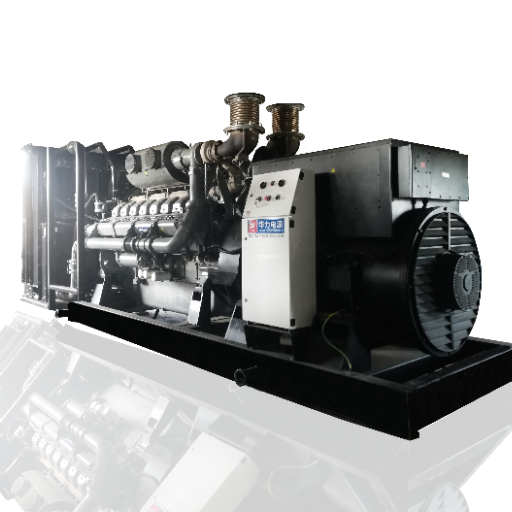
A step-up transformer takes the alternator’s low voltage output and raises it to a higher voltage for distribution. The transformation is set by the turns ratio between the primary and secondary windings. A common industrial pairing is 0.4 kV on the generator side and 11 kV on the distribution side.
Transformers of this kind are specified and tested against the IEC 60076-1 power transformer standard, which sets out the rating, temperature rise and test requirements a supplier should be able to demonstrate. If a quotation arrives without a declared standard and a type-test reference, that is worth questioning before the order, not after.
The transformer sits between the generator breaker and the site distribution board. Everything downstream of it, including the cable, the switchgear and the protection, operates at medium voltage. Everything upstream, including the alternator, the AVR and the generator breaker, stays low voltage.
That split matters more than it first appears. It means the generator is a standard low voltage machine, which is a well understood and widely available product. It also means the medium voltage side of your installation begins at a transformer rather than inside the alternator.
The principle is the same one that governs utility generation. Hitachi Energy describes the generator step-up transformer as the unit that “takes the voltage from the generator voltage level up to the suitable transmission voltage level,” and notes that in power stations these transformers run day and night at full load. Your 1 MW set is not a 765 kV power station, but the reasoning is identical.
The scale is where the analogy stops being useful. A utility GSU is a bespoke item built for one plant. The generator transformer on an industrial genset is closer to a distribution transformer with a specified ratio, available as a catalogue item across a wide capacity range. That is exactly why it gets specified by default.
The Alternative Nobody Quotes: an MV Alternator
The same 11 kV can come from the alternator itself. Instead of a low voltage winding, the machine is built with a winding that produces medium voltage directly, and the transformer disappears from the single line diagram.
This is already published practice. Medium voltage builds “add a step-up transformer or use a winding directly at MV,” as we describe in our guide to custom genset builds. Both routes are real, and both are built today.
A medium voltage alternator is not just a low voltage machine with more turns. The insulation system, the winding clearances and the terminal arrangement all change, because the machine now has to withstand medium voltage stress inside itself rather than only at its terminals.
That is why not every alternator frame offers one. It is also why the option can vanish at the exact rating you need. Our guide to 發電機交流發電機規格 explains what each of those lines means on a low voltage machine. At medium voltage, every one of them tightens.
This is the point most often missed at quotation stage. A supplier may build medium voltage alternators across its range and still have a gap at 1,250 kVA, because that frame was designed for a low voltage winding and the clearances will not fit. So the question is not “do you build them.” It is “do you build one at my rating, and what is the lead time for that frame.” Ask the second question. The first one gets you a brochure.
Check the MV winding option early, before the design is frozen around it. If it is unavailable at your rating, you have lost nothing by asking. If you find out after the single line diagram is issued, you have a redesign.
The Comparison That Decides It
Here is the trade laid out across the factors that actually move a project. Treat each row as the question to ask, not as a fixed score. The answers vary by rating, supplier and site.
| 因子 | 升壓變壓器 | MV alternator |
|---|---|---|
| 資本成本 | Low voltage alternator plus a transformer and its enclosure | Higher alternator cost, no transformer |
| 損失 | Transformer adds a continuous loss on top of alternator losses | No transformer stage, so one less loss element |
| Footprint and civils | Transformer, bunding, fencing and clearance all need space | No extra equipment, no extra civils |
| 交貨時間 | Alternator availability plus transformer lead time | Dependent on the specific frame offering an MV winding |
| Spares holding | Second machine to stock parts for | Single machine, but specialist winding repair |
| 故障模式 | Transformer and alternator fail independently | One machine, but a winding fault is a full rewind |
| 保護複雜性 | Protection split across two voltage levels | Protection concentrated at one level |
| Future voltage change | Transformer can be replaced to change ratio | Ratio is fixed by the alternator winding |
Two rows deserve more than a table cell.
損失。 A transformer is not free energy. It has a no-load loss whenever it is energised, and a load loss that rises with current.
Over a standby set’s life those hours are few, so the penalty is small. Over a prime power installation the same transformer runs thousands of hours a year, and the loss becomes a real operating cost. That is the distinction to apply, not a generic efficiency figure.
We deliberately are not quoting a percentage. The loss depends on the transformer’s design class, its core material and its loading, and a figure lifted from a different class would be worse than no figure at all. Ask for the guaranteed no-load and load losses in watts for the unit being offered. Those are testable numbers, and they belong in the enquiry alongside the ratio.
交貨時間。 This is where projects actually fail. A transformer is a separately manufactured item with its own production queue, and its lead time is not the generator’s lead time. Ask for both, in writing, against the same delivery date.
Lead time also behaves differently from cost. A transformer is often the cheaper item and the slower one, so a project comparing equipment prices can choose the route that misses the programme.
Specifying an MV installation? Our engineers can walk your single line diagram and tell you which route fits your rating and site. 聯絡我們的工程師.
Where a Generator Step-Up Transformer Wins
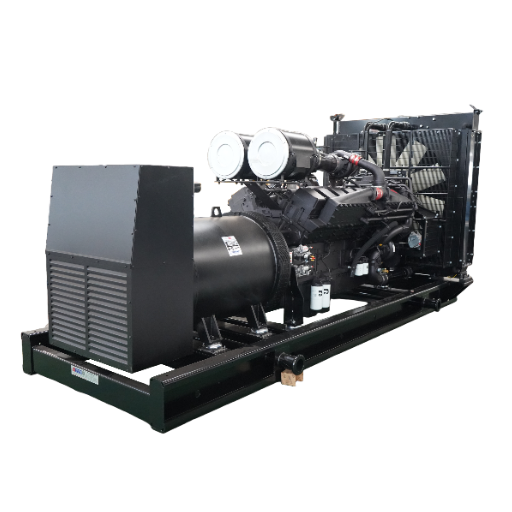
The transformer is the correct choice more often than its reputation suggests, and it is worth being direct about why.
Low voltage alternators are cheaper and more available. The low-voltage machine is the volume product. It is built in far greater numbers, offered by more suppliers, and stocked in more ratings. When your required rating sits in the middle of that range, the low voltage alternator plus a transformer is usually the faster and less expensive route.
This is why an 11kV generator often turns out to be a low voltage set with a transformer bolted to the package, rather than a machine wound for 11 kV. The enquiry says 11kV generator. The equipment inside may be a 400 V alternator and a transformer.
It is worth knowing which one you have been quoted. The two are not interchangeable when the site layout changes.
The transformer isolates faults from the set. A fault on the medium voltage side is separated from the alternator by the transformer’s impedance. That reduces the fault duty the generator breaker has to interrupt and can simplify the protection coordination study. It is not a free benefit, but it is a real one.
The transformer can be replaced independently. If the transformer fails, you replace a transformer. If an MV winding fails, you rewind or replace the alternator. For a critical installation, being able to swap the cheaper, more available component is worth something.
It keeps your options open. If the site’s distribution voltage changes during design, a different transformer ratio is a much smaller change than a different alternator winding.
Where the MV Alternator Wins
The case against the transformer is equally concrete.
Footprint and civils. A transformer needs space, and it needs the civil works that go with it: a plinth or bund, clearances, fencing and often fire separation. On a constrained site, such as a basement plant room or a containerised package, that space may not exist. This is the single most common reason the MV winding wins.
That civils cost is easy to miss because it does not appear on the transformer quotation. It appears in the building package, weeks later, when someone realises the transformer needs a bund and the bund needs drainage.
簡單。 One machine means one set of terminals, one protection interface and one item in the maintenance schedule. Every additional machine is an additional thing to inspect, test and eventually replace.
Efficiency in continuous duty. With no transformer stage, there is no transformer loss. For a set running prime power or continuous duty, that difference compounds over the year.
Sibanda ran the numbers on a mine site in 2024 and the answer surprised the project team. The site had assumed a transformer route because the distribution network was medium voltage throughout. When the duty profile was actually totalled, the set was running more than 6,000 hours a year as prime power, not standby as the original brief had assumed.
At that duty, the transformer’s continuous loss stopped being a rounding error and became a line item the operations team could measure. The route changed to an MV winding, and the space the transformer would have occupied became a maintenance access aisle instead.
The lesson is not that MV windings always win. It is that the duty profile decides the loss question, and the duty profile is frequently assumed rather than calculated.
Fewer interfaces to get wrong. A transformer introduces a coordination question between the generator protection and the transformer protection. Removing it removes a whole class of design error.
The Decision in Practice
Work through these steps in order. Stop at the first one that gives a definitive answer.
- Establish the distribution voltage the site actually needs. Not the voltage on a previous project, and not the voltage on the enquiry template. Confirm it with the utility or the site’s own distribution design.
- Check whether your chosen alternator frame offers an MV winding at your rating. This is a supplier question, and the answer can be no at the exact kVA you need even when it is yes one frame up or down.
- Compare total installed cost, not equipment cost. Include the transformer, its enclosure, its civils, the additional protection, and the additional cable termination work.
- Compare lead times against the same delivery date. Ask for both in writing.
- Check the site has the space. If it does not, the decision is made for you.
- Confirm who is responsible for protection coordination across the voltage boundary, and put it in the contract.
If steps one to three point the same way, take that route. If they conflict, lead time and footprint usually break the tie.
Step two deserves a warning. It is the step people skip, because it requires a conversation with the alternator supplier rather than a look at a price list. A generator step-up transformer quotation is easy to obtain and arrives quickly. An answer about MV winding availability at a specific frame rating can take days, because the supplier has to check a production drawing.
The easy answer arrives first and wins by default, which is how so many projects end up with a transformer they did not really choose.
What to Put in the Enquiry
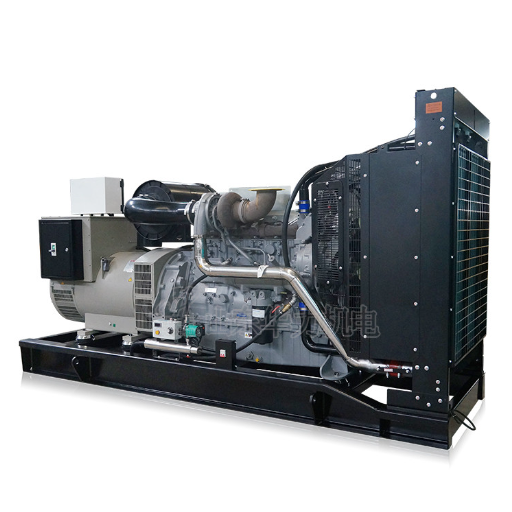
Whichever route you choose, the enquiry has to make bids comparable. For a step-up transformer, specify the voltage ratio, the vector group, the impedance, the tapping arrangement, the cooling class, the enclosure rating and the protection interface. On the cooling class, name it explicitly (ONAN for oil-immersed, or dry-type cast resin where fire risk rules oil out) rather than leaving the supplier to choose. For an MV alternator, specify the voltage, the winding insulation class, the terminal arrangement and the earthing method.
The general structure of a specification is covered in our guide to 發電機組規格. What matters here is the medium voltage lines specifically, because those are the ones that get left off and then argued about later.
Two lines are worth adding to every enquiry of this kind. The first asks the supplier to state whether an MV winding is available at the quoted rating, and at what cost and lead time. Even if you intend to buy a transformer, the answer tells you what the alternative would have cost. It also tells you whether the supplier actually checked.
The second asks for the guaranteed losses in watts, not an efficiency percentage. An efficiency figure quoted at full load tells you almost nothing about a set that spends its life at 40% load, and the no-load component is what dominates at light load. Watts are measurable and comparable; a percentage at a single point is neither.
常見問題
Can a low voltage generator feed a medium voltage system?
Yes, through a step-up transformer. The generator stays low voltage and the transformer raises the output to the distribution voltage. The alternative is to buy an alternator wound for medium voltage directly, which removes the transformer.
Does a step-up transformer reduce generator efficiency?
It adds losses that would not otherwise exist, in the form of a no-load loss whenever the transformer is energised and a load loss that rises with current. The size of that penalty depends on the transformer class and the load profile. On a standby set the annual effect is small; on continuous duty it is a real operating cost.
Why do large generators generate at medium voltage?
At high power, the current at low voltage becomes very large, and large current means large conductors and high resistive loss. Raising the voltage reduces the current for the same power, which reduces both. The crossover point where this matters depends on the rating and the distance the power has to travel.
Is 11 kV medium voltage or high voltage?
It depends who you ask. Terminology varies by market and by standard, and the boundaries between low, medium and high voltage are not applied consistently across regions or industries. Confirm the convention used on your project rather than assuming a universal definition.
What is the difference between an MV winding and a step-up transformer?
Both deliver medium voltage. An MV winding is built into the alternator, so the medium voltage is produced inside the machine. A step-up transformer is a separate machine that raises the output of a low voltage alternator.
The first removes a component. The second adds one.
How do I size a generator step-up transformer?
Size it to the generator’s apparent power rating at the specified power factor, then confirm the transformer’s continuous rating covers the site’s duty, whether standby or prime. The transformer should not become the limiting item in the chain. Confirm the basis of the rating with the supplier, because transformer ratings and generator ratings are not always stated on the same terms.
The Choice Is Architectural, Not Commercial
The transformer versus MV alternator question is usually presented as a purchasing decision. It is not. It decides how many machines sit in your plant, where the voltage boundary falls, who owns the protection coordination, and how much floor space you give up before the set is even delivered.
Both routes are legitimate. A generator step-up transformer is the safer default when the rating is mid-range, the site has space, and the alternator you want does not offer an MV winding. The MV winding is better when space is tight, duty is continuous, or simplicity matters more than the lowest equipment price.
What is not legitimate is choosing by habit. Ask the two questions that settle it: does my alternator frame offer an MV winding at this rating, and does the site have room for a transformer and its civils? Get both answers in writing before the purchase order, not after.
If you are working through this decision on a live project, 我們的工程團隊 can review the single line diagram with you and confirm which route fits your rating, your site and your programme.