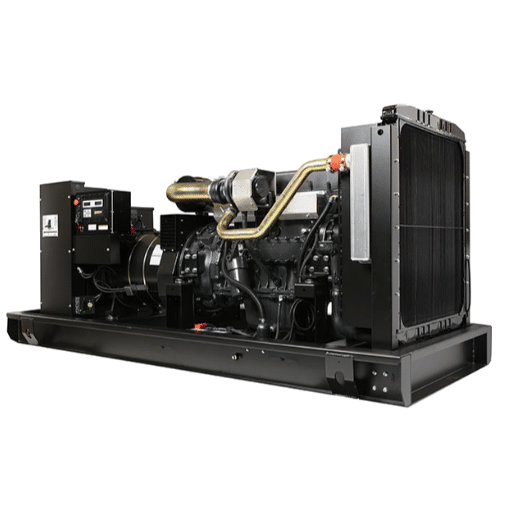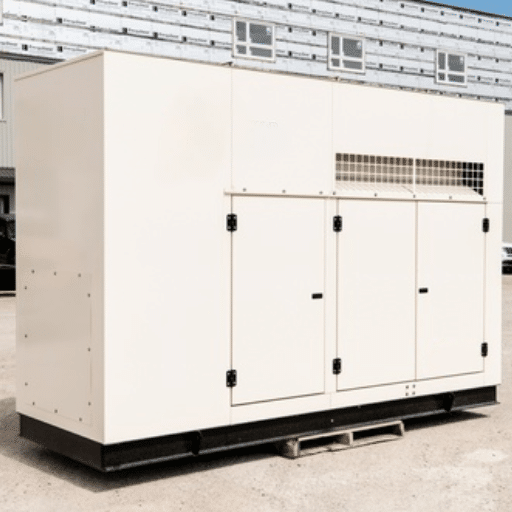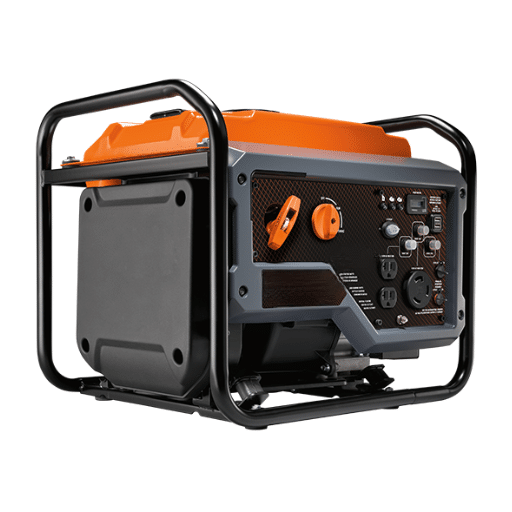

Some standby-rated generators were purchased from Western Australia to provide additional power to a remote refinery in 2023. The procurement section was content because they achieved savings for the power that was to be produced and the work that was done by this powered equipment. After six months, mechanical failure incidents triggered problems and power containers were running for 16 hours supporting crushing and screening operations. Bearings seized up, the engine block was cracked and the entire system had to be exchanged for more than $800,000. This was not attributable to manufacturing defects, but a routine operation of the generators from their ratings was a prominent issue.
One of the common errors in the procurement of power plants, for example, generators, will be trying to use a power plant with a wrong power rating, which is probably the most expensive. In a series of ‘inside look’ presentations over four years, we provided a deep dive on the different and ready to conquer ISO 8528-1 ratings with attention to all differences and specificities based on General MS and Cummins engine designs. Defect prevention often prompts the customers to ignore necessary distinctions between these modes of operations. attributed for such execution occurred in the container end developments.
In this article, a broad technical document that enables the analysis of ISO 8528-1 power ratings is presented, along with the guidelines about categorizing diesel generators by application. You will be provided with the main features, the functioning scope as well as the expense of each capacity rating variation. By the end, you will have a context-based mechanism to ensure that performance in generator machinery is effective in all circumstances.
Understanding ISO 8528-1 Power Ratings

The ISO 8528-1 standard governs the terms and techniques used in the performance of Alternating Current generators by engine engines on reciprocating basis. Efficiency Engineering is a major concern for the engine manufacturers who have to comply with International requirements as shown by this standard.
Why ISO 8528-1 Matters for Procurement
The provisions of ISO 8528-1 relate to the extent to which the generator requirements are put into practice and do not depend on the producer of the generator. As far as the primary power, that is, ESP (Emergency Standby Power), PRP (Prime Rated Power), LTP (Limited Time Power), or COP (Continuous Operating Power), is specified, the ratings are closely defined with reference to relevant test methods.
For procurement managers and engineering teams, understanding these ratings is essential because:
- Warranty validity depends on proper rating selection. Use of standby generator over 200 hours annual limit annuls product sponsor-warranties and places such a blemish entirely on the owner.
- Equipment lifespan varies dramatically by rating. A standby power generator under Prime Power rating, in particular, is exposed to a higher risk of deterioration resulting in failure, up to three to five times higher per annum compared with rated equipment usage.
- Total cost of ownership calculations require accurate rating data. Fuel consumption, maintenance intervals, and major overhaul schedules all vary significantly between rating categories.
The Four Power Rating Categories
ISO 8528-1 defines four distinct power rating categories, each designed for specific operational profiles:
| Rating | Full Name | Annual Hours | Load Profile | Overload |
|---|---|---|---|---|
| ESP | Emergency Standby Power | ≤200 hours | Variable | None |
| PRP | Prime Rated Power | Unlimited | Variable | 10% for 1hr/12hrs |
| LTP | Limited Time Power | ≤500 hours | Constant | Per manufacturer |
| COP | Continuous Operating Power | Unlimited | Constant | None |
The Four Generator Power Ratings Explained

ESP – Emergency Standby Power
Emergency Standby Power (ESP) represents the maximum power available during a utility outage. This rating is designed for situations where grid power is normally available, and the generator serves exclusively as backup for emergency situations.
Technical Specifications:
- Operating Limit: Maximum 200 hours per year (some manufacturers extend to 500 hours)
- Load Factor: Average load must not exceed 70% of the ESP rating over a 24-hour period
- Overload Capability: None—ESP-rated generators have zero overload tolerance
- Maintenance Interval: Based on time (annual) rather than operating hours
Engineering Characteristics:
ESP-rated generator sets generally operate at 1,800 RPM (60Hz) or 1,500 RPM (50Hz). The alternator windings have been designed to withstand high temperatures experienced under limited conditions. Sizing of the cooling systems is based on short face times that are common in emergency applications.
Applications:
- Hospital life safety systems requiring NFPA 110 compliance
- Data center emergency backup for Tier I-II facilities
- Commercial building emergency lighting and fire systems
- Telecommunications infrastructure backup
Critical Limitation: ESP generators cannot operate for long. Back in 2022, all facilities experienced the issue of heat overload and the anticipated multi-day use was not practical even with a backup generators. Users who do not have external power supply and so need to operate various equipment should preferably request PRP or still high COP levels.
PRP – Prime Rated Power
Prime Rated Power (PRP) is made for those installations where grid electricity is either unavailable or inadequately supplied and in such circumstances the generator acts as the key power source applicable. This rating is intended to accommodate a full range of loads and is not limited by the number of hours of operation based on the annual operation.
Technical Specifications:
- Operating Limit: Unlimited hours per year
- Load Factor: Average load must not exceed 70% of the PRP rating over any 24-hour period
- Overload Capability: 10% overload permitted for one hour in every twelve-hour period
- Variable Load Required: Must not operate at constant load for extended periods
Engineering Characteristics:
There’s more to say, a greater part of prime power generators – altogether – do bother with rotational speeds that are cheaper (say in the vicinity of 900-1,200 RPM) for their better fatigue and fuel efficiency record in the long run. Alternators come in with Class H insulation offering a temperature rise of 105°C compared to standby units that use either Class F (80°C). This translates into the development of enhanced cooling systems with bigger radiators and more powerful cooling fans.
The 10% overload capability provides operational flexibility for motor starting and temporary demand spikes. This capability is essential for applications with large motors that draw 2-3 times their rated current during startup.
Applications:
- Mining operations without grid access
- Remote construction sites
- Oil and gas exploration facilities
- Manufacturing plants with unreliable grid connections
- Off-grid industrial facilities
Cost Implications: A Prime-rated generator may cost 20-50% more as compared to another standby-rated generator that has the same capacity and is made by the same manufacturer. This is because of all the additional expense enhancements including advanced ventilation and even new alternators as well more aggressive engine operation modes consistent with prime power operation.
LTP – Limited Time Power
Limited Time Power (LTP) applies to applications requiring constant load operation for specified periods, typically seasonal or temporary installations.
Technical Specifications:
- Operating Limit: Maximum 500 hours per year (specific limit defined by manufacturer)
- Load Profile: Constant load at rated capacity
- Overload Capability: Defined by manufacturer specifications
- Application: Seasonal peak shaving, utility parallel operation, temporary facilities
Engineering Characteristics:
LTP-rated generators bridge the gap between standby and continuous applications. They can handle constant loads that would damage ESP-rated equipment while avoiding the cost premium of COP ratings for applications with defined operational seasons.
Applications:
- Peak shaving during high-demand seasons
- Grid stabilization during temporary supply constraints
- Construction projects with defined timelines
- Agricultural operations during harvest seasons
- Emergency response to extended outages exceeding ESP limits
COP – Continuous Operating Power
Continuous Operating Power (COP) is designed for applications requiring constant load operation at rated capacity for unlimited hours.
Technical Specifications:
- Operating Limit: Unlimited hours per year
- Load Factor: 100% continuous operation at rated load
- Overload Capability: None—designed for steady-state operation
- Priority: Maximum reliability and efficiency at constant load
Engineering Characteristics:
Cop-rated generators illustrate the best construction available in a particular manufacturer’s catalogue. These components are equipped with the finest quality engine components, even better cooling and custom made alternator that is expected to generate electricity with no significant harm to its coils due to heat. The priorities are reverse in terms of powering.
For the same construction of a certain physical generator, the availability of different nominal power generators has the following order: COP < PRP < LTP < ESP. An 800 kW COP rated generator is more exposed to operate under 1000 kW PRP, 1,100 kW LTP, and 1,200 kW ESP. Such a sequence is dictated by the fact that thermal and mechanical stress decreases as the accumulated operating hours and load fluctuation increases.
Applications:
- Base-load power plants
- Remote mining operations with constant processing loads
- Island power systems for isolated communities
- Continuous industrial processes
- Utility grid support applications
Standby vs Prime Power: Key Comparison

The constructive approach to requirements depends on the type of work that needs to be supplied by the unit in question, and how it is to be supplied to it: standby (ESP) and prime (PRP) ratings. Proper understanding of these two ratings is carried out as the very basis for any specification.
Technical Specification Comparison
| Factor | Standby (ESP) | Prime (PRP) |
|---|---|---|
| Annual Operating Hours | ≤200 hours (or 500 per manufacturer) | Unlimited |
| Load Type | Variable | Variable |
| Average Load Factor | ≤70% of rating | ≤70% of rating |
| Overload Capability | None | 10% for 1 hour per 12 hours |
| Engine Speed | 1,800 RPM (60Hz) / 1,500 RPM (50Hz) | 900-1,200 RPM (typical) |
| Alternator Rating | Class F insulation (80°C rise) | Class H insulation (105°C rise) |
| Cooling System | Standard capacity | Heavy-duty enhanced capacity |
| Air Filtration | Standard | Heavy-duty with pre-cleaners |
| Cost Premium | Baseline | +20-50% over standby |
Engineering Design Differences
Cooling Systems:
What is unique about a prime power generator unlike a standby generator, is that a prime power requires a cooling structure which can handle the maximum continuous thermal load. Radiators are more pronounced, aerodynamics are improved, and the cooling fans are larger and stronger. Standby generators can balance the need for cooling with the use of the thermal energy store provided and are required to work in a shorter time span in any given operational concept.
Alternator Windings:
The difference in insulation class is, of course, a very critical one. Insulation Class H in the prime power generators has the capacity to operate at 25°C higher temperatures than Insulation Class F. When comparing the two insulation classes along with the continuous rating for over 15 years of service that difference in thermal capability finally makes a difference in life and reliability of the winding and in other associated parts.
Engine Speed and Durability:
Reduction in operating speeds as much as possible with prime power units is useful in cutting down mechanical wear and tear on components such as bearings, pistons, and crankshafts. There is much less mileage covered by wear and tear when an 900 RPM rotor is spinning as compared to a 1,800 RPM rotor which in turn means time between overhauls is prolonged.
Air Filtration:
Prime power applications in mining, construction, and remote locations expose generators to dust and contamination. Adequate air cleaning mechanisms that are usually enhanced with cyclonic pre-separation are installed to protect the engine at tough atmosphere for extended periods.
Cost Analysis by Rating
The cost difference between standby and prime power generators varies by power class:
Entry-Level (40-50 kVA range):
- Standby: $9,000–14,000
- Prime: $20,000 (approximately 2x premium)
Mid-Range (150-250 kW range):
- Standby: $35,000–60,000
- Prime: $45,000–60,000+ (20-35% premium)
Large (500+ kVA range):
- Both ratings: $100,000+ (prime commands smaller percentage premium at higher power)
The entry-level price differential reflects the proportional cost of enhanced components relative to base manufacturing costs. At higher power ratings, the premium represents a smaller percentage of total cost while delivering essential reliability for demanding applications.
Common Applications in Industry

When to Choose Standby Power (ESP)
Standby power ratings are appropriate when grid power is normally available and the generator serves exclusively for emergency backup.
Healthcare Facilities with Reliable Grid:
Urban hospitals with stable utility infrastructure specify ESP ratings for life safety systems. The 200-hour annual limit accommodates typical outage patterns while minimizing capital investment. NFPA 110 Level 1 systems require 10-second transfer times, which ESP-rated generators achieve without the cost premium of prime power ratings.
Data Centers:
Tier I and II data centers in metropolitan areas with reliable grid infrastructure typically specify ESP levels. The Uptime Institute classifies these facilities as having single distribution paths and sufficient standby power support for all availability targets.
Commercial Buildings:
Office buildings, retail centers, and hospitality facilities in stable grid regions benefit from standby ratings. The generators support emergency lighting, fire systems, and limited operational capacity during outages without requiring prime power investment.
Emergency Life Safety Systems:
High-rise building egress systems, fire pumps, and alarm systems require ESP-rated generators per NFPA 110. These systems prioritize rapid start and transfer over extended runtime capability.
When to Choose Prime Power (PRP)
Prime power ratings are essential when generators serve as the primary power source or when grid reliability cannot support business operations.
Mining Operations:
Remote mining sites without grid access rely on prime power generators as the only source of power. This implies that production runs continuously without resting, and the planned downtime is production loss. The cut-off criteria on the other hand, the variable load of the mining equipment, i.e., crushers, conveyors, pumps, and ventilation systems as will cater to the PRP rating.
Remote Construction Sites:
Large infrastructure projects in undeveloped areas require prime power for construction equipment, batch plants, and site facilities. Project timelines of 2-5 years justify prime power investment over rental arrangements.
Oil and Gas Exploration:
There are a number of systems that are established in areas that are far from the reach of electrical grids. Fuelled by high-quality power generators, these systems support a myriad of load requirements, in addition to powering various equipment, lifting machines, oil, water, and living quarters in the field.
Manufacturing with Unreliable Grid:
It is also important to clarify that all the existing facilities in the regions with an influence of grid instability administratively support prime power functioning in order to uphold their productivity plan which also includes activities about prevention of grid dependency.
Off-Grid Industrial Facilities:
Timber processing, mineral extraction, and remote manufacturing operations depend entirely on prime power generation.
Real-World Selection Scenarios
Case Study 1: Hospital with Reliable Urban Grid
A 450-bed regional extended hospital in Chicago had an expansion project to consider new generators for the emergency power system. Even though utility service quality is higher than 99.9%, and the maximum duration of the historical power shortage does not go beyond 48 hours annually, the engineering team installed ESP-rated generators of 1,500 KW size. This choice also complied with the NFPA 110 standards without great effort of the facility management requiring the annular Alternate ratings given the cost-savings of avoiding the $180,000 premium of the peak rated machines.
Case Study 2: Remote Mining Operation
In the middle of a desert, without any nearby power lines, the Fekola Gold Mine in Mali is still operational. To power the crushing activity, plant work, and infrastructure and amenities, six prime-rated Caterpillar generators were utilised. The machines were configured for primary rated power (PRP) hence, generators had to have the PRP rating. The program was dominated by the variable process loads and the unlimited-hour PRP requirements of the caterpillar generators. These generators are able to operate 7000 hours plus in a year, which is far above the minimum ESP guidelines.
Case Study 3: Manufacturing with Frequent Outages
A textile manufacturing facility in Bangladesh experienced 400+ hours of grid outages annually. Their initial ESP-rated generators failed within two years due to overuse. Replacement with PRP-rated equipment provided the reliability needed for continuous production, with the 10% overload capability accommodating motor starting demands from spinning machinery.
Cost Analysis and Total Cost of Ownership
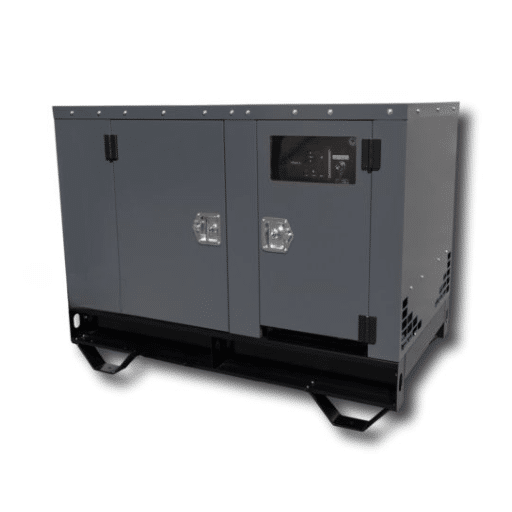
Initial Purchase Price Comparison
Generator ratings significantly impact initial capital expenditure:
| Power Class | Standby (ESP) | Prime (PRP) | Premium |
|---|---|---|---|
| 40-50 kVA | $9,000–14,000 | $20,000 | ~100% |
| 150-250 kW | $35,000–60,000 | $45,000–60,000+ | 20-35% |
| 500+ kVA | $100,000+ | $120,000–150,000+ | 15-25% |
The percentage premium decreases at higher power ratings, but the absolute cost difference remains substantial. For a 1,000 kVA installation, specifying prime power over standby adds $40,000–75,000 to the initial project cost.
Operating Cost Considerations
Fuel Efficiency:
Prime-rated gen-sets are optimized for continuous operation and have often much better fuel/energy performance in kWh than standby units that are optimized for on-and-off operation. Obviously, this occurs when you’re doing at least 8000 operating hours in a year and those 2% run hours a generation cycle improvement would mean quite the savings on fuel.
Maintenance Frequency:
The scheduled maintenance of Standby Generators is based on time-oriented independent of the hours of operation while the maintenance of Prime Generators is based on the hours of use. Estimated annual maintenance costs for a generator are based on wear and tear, rather than age.
Failure Cost Risk:
Application of standby-rated gensets as prime power units exposes them to high risk of failure. The earlier described case on mining operations in Western Australia even more telling of such error in selecting the right rating, which led to $800,000 or more unplanned costs, or four times higher than what the client would have spent on paying the additional cost for correct design and equipment procurement.
Warranty Implications:
The manufacturers’ warranties specifically limit the generators which have been worked beyond their operating limits. The design and operation of any ESP-rated generator is rendered null and void, inter alia, specifically within the 1,000-hour period mandated in the operating conditions from such time. Warranties of all engines and alternators are rendered void and repair liability is transferred to the consumers only.
Return on Investment Analysis
The business case for prime power ratings depends on expected utilization:
ESP Rating Justified When:
- Annual operating hours <200
- Grid reliability >99.5%
- Outage duration typically <48 hours
- Cost of downtime <10x generator replacement cost
PRP Rating Required When:
- Annual operating hours >500
- Grid reliability <99%
- Generator serves as primary power source
- Cost of downtime >50x prime power premium
For a manufacturing facility calculating $100,000 per hour of downtime cost, preventing a single 8-hour outage justifies the prime power investment. The premium pays for itself through avoided downtime on the first significant failure event.
How to Select the Right Rating: Decision Framework

Step 1: Assess Grid Reliability and Availability
Document historical outage data for your location:
- Annual outage frequency (events per year)
- Average outage duration
- Maximum recorded outage duration
- Grid reliability percentage
If your facility has no grid connection, proceed directly to prime power or continuous power evaluation.
Step 2: Calculate Expected Annual Operating Hours
Estimate generator runtime based on:
- Historical outage patterns
- Planned grid maintenance schedules
- Peak shaving requirements
- Future grid reliability trends
Decision Rule: If expected annual hours exceed 200 (or 500 per manufacturer specifications), ESP ratings are insufficient. Specify PRP or COP ratings.
Step 3: Analyze Load Profile
Variable Load Characteristics:
- Motors starting/stopping (2-3x inrush current)
- Equipment cycling on demand
- Fluctuating power requirements
Constant Load Characteristics:
- Continuous processing equipment
- Base-load power plants
- Steady-state industrial processes
Variable load profiles suit PRP ratings. Constant loads at rated capacity require COP ratings for continuous operation.
Step 4: Evaluate Overload Requirements
Calculate motor starting demands:
- Largest motor locked rotor amps (LRA)
- Simultaneous starting scenarios
- Voltage dip tolerance of connected equipment
If your application requires frequent motor starting or periodic overload capability, PRP ratings with 10% overload allowance are essential.
Step 5: Consider Budget and Lifecycle Costs
Compare total cost of ownership:
- Initial capital cost differential
- Expected operating hours
- Cost of downtime per hour
- Maintenance cost variations
- Warranty coverage value
Critical Warning: Never select ESP ratings based solely on initial cost savings if operational requirements exceed rating limits. The warranty void and failure risk create unquantifiable liability.
Common Selection Mistakes to Avoid
Mistake 1: Using Standby Generators for Prime Power
This is one of the most costly mistakes generator users can commit. That is, they use ESP-rated generators for over 200 hours per year, experiencing the faster equipment wear, canceled warranties and increased equipment rejects. It is advisable to have factory assurance for the mechanical limits applicable to the generator load of the station.
Mistake 2: Undersizing for Actual Load Requirements
Generators must handle not only running loads but motor starting inrush currents. Calculate using the largest motor LRA plus running watts of all other loads. Undersizing causes voltage collapse during motor starting, damaging both generator and connected equipment.
Mistake 3: Ignoring Load Factor Requirements
Both ESP and PRP ratings require average loads ≤70% of rated capacity over 24-hour periods. Continuous operation at 90% of rated load violates rating specifications and accelerates wear.
Mistake 4: Not Considering Future Expansion
Ensure that baseload generators grow for 120-125% in addition to the engineering calculations of load. Replacement of small generators before losing out on their durability results in unwanted depreciation of the assets.
ISO 8528-1 Performance Classes (G1-G4)

In addition to the power definition, the national standard ISO 8528-1 describes the performance levels which are based on the permissible voltage and frequency deviation and stability characteristics of the generators. [Escort words removed] Such classifications will influence the choice of a suitable generator necessary in sensitive applications.
Performance Class Definitions
| Class | Application | Voltage Deviation | Frequency Deviation |
|---|---|---|---|
| G1 | General purpose | ±5% | ±2% |
| G2 | Lighting systems | ±2% | ±1% |
| G3 | IT and telecommunications | ±1% | ±0.5% |
| G4 | Data processing | ±0.5% | ±0.25% |
Matching Performance Class to Application
G1 – General Purpose:
Suitable for resistive loads, motor starting, and general industrial applications where moderate voltage variation is acceptable. Standard construction site power and general manufacturing loads.
G2 – Lighting Systems:
Required for applications where lighting flicker from voltage variation would be objectionable. Commercial building emergency lighting and retail applications.
G3 – IT and Telecommunications:
Necessary for server equipment, telecommunications switches, and medical imaging equipment. Requires electronic governor controls and high-quality alternator voltage regulation.
G4 – Data Processing:
Critical for hyperscale data centers, high-frequency trading, and pivotal computer resources. Application guidelines demand advanced stabilizing solutions in the form of precision governors and voltage regulation systems with over-enthusiastic wheel tolerance
Data Center Note: Tierly III and Tierly IV data centers require IT equipment to comply to G3 (G4) performance classes responding to the specified prime power rating. Free increased levels of both voltage and frequency values over such putative values and 24-hour operation require adequate attention to the demanding admissible and prime rating concepts – issues dealt with in the premium generator units only.
Conclusion
It is not merely a matter of choosing between one system or using the other. The installer must mediate the two systems according to where the equipment will be placed considering such variables as warranties and even financial implications for the use of the equipment over its lifetime. The power ratings provided by the standard exist to allow the selection of the appropriate generator to the attendant’s use to ensure the generator performs within the design limits.
Key takeaways for generator procurement:
- ESP ratings support ≤200 hours annually for emergency backup in grid-connected facilities. Exceeding these limits voids warranties and creates failure risk.
- PRP ratings provide unlimited hours for primary power applications with variable loads. The 20-50% cost premium reflects essential engineering enhancements for continuous operation.
- Power rating hierarchy matters: The same physical generator delivers different capacities depending on rating—COP < PRP < LTP < ESP. Understand the trade-offs between output and operational limits.
- Performance classes (G1-G4) add another dimension: Sensitive IT and medical equipment requires G3-G4 voltage and frequency stability, adding specification requirements beyond basic power ratings.
- Total cost of ownership calculations must include downtime risk: For critical applications, the cost of a single failure event often exceeds the capital cost differential between standby and prime ratings.
The Western Australia mining operation’s $800,000 failure represents a preventable outcome that proper rating selection would have avoided. When specifying generators, always match the rating to the maximum expected operating profile, not the minimum cost option. The investment in proper specification delivers returns through warranty protection, extended equipment life, and operational reliability.
Ready to specify the right power rating for your application? Reach out for a free-of-charge assistance in selecting the most appropriate solution → our company offers client-oriented services in the form of generating sets, compliant with the ISO 8528-1 standards, including assistance in capacity ratings determination, the provision of technical documentation on dimensions and specifications, consulting at the first meeting, support during the installation and regular operation, as well as in the keeping with the post installation over the complete cycle.