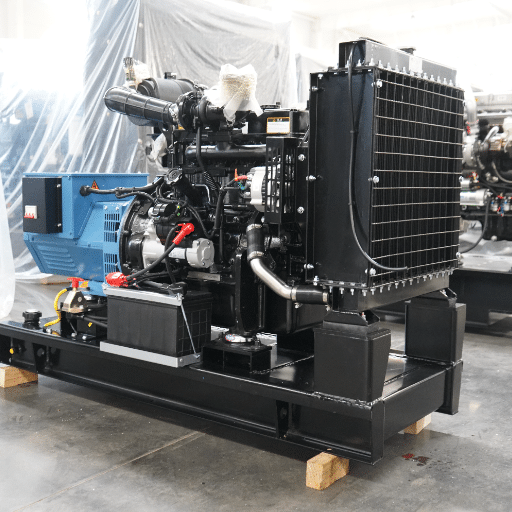


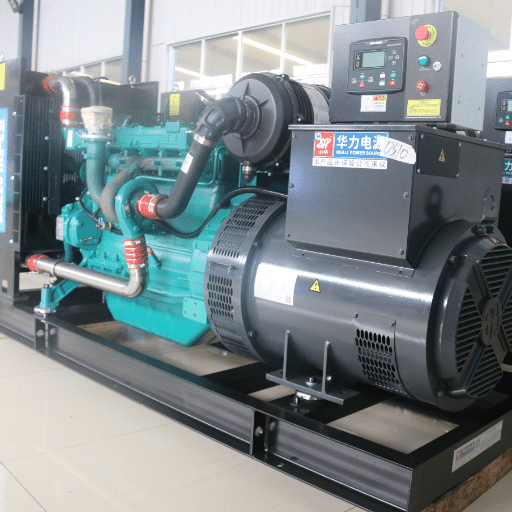
The 2026 most fuel efficient generator requires three elements which include inverter technology and electronic fuel injection or eco-throttle controls together with the correct fuel type required for your specific needs. The Honda EU2200i serves as the top choice for compact recreational purposes while the Westinghouse iGen4500DFc functions as a mid-range home backup solution and the DuroMax XP16000iHT provides whole-home tri-fuel capabilities and the Generac GP18000EFI delivers the highest portable output capacity. The Shandong Huali natural-gas standby gensets provide continuous operation for industrial and commercial applications which exceed 25 kW at the most economical rate for every kilowatt-hour used.
This guide compares the 10 most fuel efficient generators on the market in 2026, explains the engineering behind their savings, and helps you match a model to your wattage, runtime, and budget needs.
Mini case study, Why fuel efficiency matters at scale. Mark, a property manager in central Florida, runs three rental homes through every hurricane season. After two seasons of refilling 7-gallon tanks every 6 hours on his older open-frame Generac, he switched to a Westinghouse iGen4500DFc inverter. His fuel bill dropped from roughly 190peroutageweekto190peroutageweekto112, and the noise dropped enough that his tenants stopped complaining. Same 4,500 watts. Different generation of engineering.
Key Takeaways
- The best fuel efficient generator is almost always an inverter model with EFI or eco-throttle, which adjusts engine RPM to match load instead of running flat-out.
- For typical home backup, a dual-fuel or tri-fuel inverter in the 4,500-11,000-watt range delivers the best balance of runtime, cost, and flexibility.
- Inverter technology saves 30-40% on fuel compared with conventional open-frame generators at partial loads.
- For continuous-duty use above 25 kW, natural gas standby units outperform any portable model because they tap utility supply directly.
- Always factor in carbon monoxide safety: the U. S. CPSC reports about 90 generator-related CO deaths per year.
What Makes a Generator Fuel Efficient in 2026?

A fuel efficient generator squeezes the most usable kilowatt-hours from every gallon, pound, or cubic foot of fuel. Three engineering choices drive most of the savings.
Inverter Technology
The generator operates its engine at a constant speed of 3,600 RPM which it maintains throughout its power output range. An inverter generator, by contrast, varies engine speed to match the load. The engine maintains idle speed when you connect a phone charger. The system increases operational speed when you connect a 2 hp well pump.
The result produces fuel savings of 30-40% which inverter generators achieve at 25-50% load through their operational efficiency. The system produces sound levels between 52-59 dB which stand in contrast to open-frame systems that operate between 70-80 dB. The system generates cleaner electricity because its total harmonic distortion (THD) remains below 3%, which safeguards delicate electronic devices.
The trade-off requires you to choose between two options. A comparable inverter model often costs 1.5-2× more than its open-frame equivalent. The premium expense becomes beneficial for you when using the product during two to three extended power outages.
Electronic Fuel Injection (EFI)
Most portable generators still use carburetors, which are simple but imprecise. EFI replaces the carburetor with a computer-controlled injection system that meters fuel based on real-time engine demand. The benefits compound:
- 10-20% better fuel economy under variable load
- Reliable cold-weather starts (no choke fiddling)
- Lower emissions and easier compliance with EPA Phase 3 / Tier 4 Final standards
- Reduced maintenance because there is no carburetor to clean or rebuild
The Generac GP18000EFI is the highest-output portable EFI generator on the market in 2026. EFI is also standard on most natural-gas standby units from Generac, Cummins, and Kohler.
Fuel Type Selection
Even the most efficient engine cannot fix a poor fuel choice for your application. Each fuel has a different energy density, shelf life, and operating cost:
- Gasoline is widely available but goes bad in 30-90 days without stabilizer.
- Propane stores indefinitely, burns clean, and is available at any hardware store.
- Natural gas delivers unlimited runtime when tied to a utility line.
- Diesel has the highest energy density per gallon and the longest service life.
Dual-fuel and tri-fuel generators give you flexibility to switch fuels based on availability, which is why they dominate the best fuel efficient generator category in 2026.
10 Best Fuel Efficient Generators of 2026: Comparison Table
This is the at-a-glance ranking. Detailed reviews follow below.
| Rank | Model | Running W | Peak W | Fuel | Runtime @50% | dB @23ft | Weight | MSRP |
|---|---|---|---|---|---|---|---|---|
| 1 | Honda EU2200i | 1,800 | 2,200 | Gasoline | 8.1 hr | 48-57 | 47 lb | $1,099 |
| 2 | Westinghouse iGen4500DFc | 3,700 | 4,500 | Dual fuel | 18 hr | 52 | 105 lb | $1,199 |
| 3 | DuroMax XP11000iH | 9,000 | 11,000 | Dual fuel | 11 hr | 64 | 226 lb | $2,299 |
| 4 | DuroMax XP16000iHT | 13,000 | 16,000 | Tri-fuel | 9 hr | 67 | 326 lb | $3,499 |
| 5 | Generac GP18000EFI | 18,000 | 22,500 | Gasoline (EFI) | 9 hr | 72 | 422 lb | $4,799 |
| 6 | Yamaha EF2200iS | 1,800 | 2,200 | Gasoline | 10.5 hr | 57-65 | 55 lb | $1,199 |
| 7 | Briggs & Stratton P2200 | 1,700 | 2,200 | Gasoline | 8 hr | 59 | 55 lb | $599 |
| 8 | Champion 2500W Inverter (201490) | 1,850 | 2,500 | Gasoline | 11.5 hr | 53 | 39 lb | $549 |
| 9 | Ryobi 6500W Inverter | 5,500 | 6,500 | Gasoline | 13 hr | 62 | 175 lb | $1,499 |
| 10 | Generac/Kohler/Cummins NG Standby (10-22 kW) | 10,000-22,000 | 10,000-22,000 | Natural gas | Unlimited | 65-72 | Permanently installed | $6,000-19,000 |
Quick selection guide. Camping or RV use: pick #1, #6, or #8. Mid-range home essentials with dual fuel: pick #2 or #3. Whole-home backup: pick #4, #5, or #10. Industrial/commercial continuous duty: pick #10.
Detailed Reviews of the 10 Best Fuel Efficient Generators

1. Honda EU2200i, Best Compact Inverter
The 2026 Honda EU2200i establishes itself as the standard for small generator systems which operate with high fuel efficiency. The system combines the 121cc Honda GXR120 commercial engine with the Eco-Throttle system which reduces engine speed to match the electrical load. The system provides a runtime of 8.1 hours with a 0.95-gallon tank at 25% load or 3.2 hours with full system output according to Honda.
The device weighs 47 pounds and operates between 48-57 dB which makes it suitable for tailgating events while its size enables users to carry it with one hand. The system enables two units to produce 4,400 starting watts when users require additional power. The product costs approximately $1,099 which makes it more expensive than open-frame products that offer similar wattage output. The EU2200i generator stands as the most efficient fuel-based generator solution for users who need power below 2,500 watts and plan to sell the product later.
2. Westinghouse iGen4500DFc, Best Mid-Range Home Backup
The Westinghouse iGen4500DFc activates essential home functions through its dual-fuel inverter system which stands as the best home appliance inverter for 2026. The system operates at 4,500 starting watts and 3,700 running watts on gasoline while delivering similar power output through propane to run multiple home appliances including a refrigerator and sump pump and lighting circuit and window air conditioner. The system provides 18 hours of operation at 25 percent capacity through its 3.4 gallon fuel tank.
At 52 dB, it is among the quietest inverter generators of its class. It includes parallel capability, electric and remote start, and a CO Sensor automatic shutoff system. For most homeowners who want one fuel efficient generator that handles essentials without breaking the budget, the iGen4500DFc is the right answer.
3. DuroMax XP11000iH, Best Whole-Home Inverter
The XP11000iH functions as a power solution which connects mid-range portable systems to full standby power setups. It delivers 9,000 running watts on gasoline (8,300 on propane) and 11,000 starting watts, which is sufficient to power typical central air conditioning systems and well water pumps. The dual-fuel system functions as an essential feature which enables users to operate their systems with bottled propane during the first 24 hours of an outage before they need to switch to gasoline when fuel stations resume operations.
DuroMax provides a complete safety package which consists of a CO alert system and ground-fault circuit-interrupter (GFCI) outlets and a transfer-switch-ready 50-amp outlet. The weight of the item reaches 226 pounds which makes it difficult to move yet the wheel kit enables users to handle the product. The system represents one of the most fuel-efficient generator solutions which provide complete home backup power without requiring the expenses associated with standby system installation.
4. DuroMax XP16000iHT, Best Tri-Fuel Flexibility
The XP16000iHT is a 2025-2026 release that pushes tri-fuel design into the high-output portable category. The system operates with three fuel types which include gasoline (16,000 starting / 13,000 running watts), propane (15,200 / 12,350), and natural gas (14,400 / 11,400) to provide users with exceptional operational flexibility during long power interruptions. You use the natural-gas connection when the utility line is functional but gasoline supply is limited. You switch to propane when the local farm supply offers propane at a lower price.
This level of fuel flexibility traditionally required custom-built industrial gensets. The XP16000iHT brings it to the consumer market at roughly $3,499. It is the most fuel efficient generator in its output class because it eliminates the single-fuel dependency that has historically forced homeowners to keep large gasoline reserves.
5. Generac GP18000EFI, Highest Output Portable
The Generac GP18000EFI serves as the ideal 2026 solution for homeowners who require gasoline power and maximum efficiency. The generator produces 18000 running watts for operation and it provides 22500 starting watts from its 14.2-gallon fuel tank. The EFI engine enables better cold-weather starting performance while extending operational time to 9 hours when using 50% of its capacity.
This system serves as the ideal solution for your home which includes central air and heat pump and electric water heater systems that exceed 5,000 square feet. The system functions as transfer switch ready because it connects to entire house electrical systems via interlock devices and manual transfer switches. At 422 pounds, it is permanently positioned in a generator shed or pad rather than rolled out for use.
6. Yamaha EF2200iS, Most Reliable Compact Inverter
The compact inverter segment includes two competing products which are the Yamaha EF2200iS and the Honda EU2200i. The EF2200iS operates for 10.5 hours with its 1.24-gallon fuel tank while Yamaha’s “Smart Throttle” system competes against Honda’s Eco-Throttle system. The product receives consistent independent reviewer assessments which result in a 4.5 star rating for its build quality and durability.
The product costs $1,199 which makes it more expensive than the Honda. The EF2200iS stands as the most fuel efficient generator option which Honda offers in the compact category for customers who own Yamaha equipment or need additional fuel capacity to extend their operation time.
7. Briggs & Stratton P2200, Best Budget Inverter
The Briggs & Stratton P2200 is the value pick. The system operates using a 110cc OHV engine which includes Quiet Power Technology that adjusts engine speed according to the current load. The system delivers 1,700 running watts and 2,200 starting watts while providing approximately 8 hours of operation at 25% load.
It delivers most of the Honda and Yamaha features at a price of 599 dollars which equals half their cost while maintaining a noise level of 59 decibels. The system provides lower fuel efficiency during full load operations because it consumes 10 to 15 percent more fuel than the Honda model. The generator operates at the highest fuel efficiency among generators in its price range, which makes it suitable for both weekend camping and backup power needs.
8. Champion 2500W Inverter (201490), Best Featherweight
At 39 pounds, the Champion 201490 is the lightest entry on this list. It produces 1,850 running watts and 2,500 starting watts and runs 11.5 hours on a 1.1-gallon tank at 25% load. Champion has aggressively closed the quality gap with Honda and Yamaha over the past three years, and the 201490 is the clearest example.
It is parallel-capable, EPA III certified, and CARB-compliant for sale in California. At $549, it is one of the most fuel efficient generator options in the entry-level inverter category. Recommended for tailgating, RV use, and emergency backup of essentials only.
9. Ryobi 6500W Inverter, Best Mid-Size Inverter for the Money
The Ryobi 6500W inverter generator targets the gap between handheld inverters and full-size home backup units. The device generates 5,500 operating watts and 6,500 initial watts while running for 13 hours at 25% operational capacity and its idle-down function decreases engine power during minimal operation. The system comes with built-in carbon monoxide shutdown protection.
Reviewers note that the Ryobi handles tool-startup surges (such as a 12-amp circular saw) more cleanly than open-frame competitors at the same price point. The generator which costs $1,499 becomes the most fuel efficient option within the 5,000-7,000-watt mid-range category because it operates best on job sites that already use Ryobi tools.
10. Generac, Kohler, and Cummins Natural Gas Standby, Best Continuous-Duty
Nothing portable power systems achieve better fuel economy than properly sized natural gas standby systems. Generac Kohler and Cummins provide 10-22 kW residential standby units which connect to existing natural gas lines to provide unlimited operational time. The total costs for the system range from 6000 to 10000 while installation and transfer switch and gas plumbing expenses range from 2500 to 9000.
Because natural gas is delivered through utility infrastructure, fuel cost per kilowatt-hour is typically 40-60% lower than gasoline. Modern standby units use EFI or stepper-motor fuel control and can ramp from idle to full output within 8-10 seconds of utility loss.
For commercial buildings, factories, and data centers above 25 kW, industrial-grade natural-gas generator sets and diesel generator sets deliver still-better cost-per-kWh because they spread fixed engineering costs across larger output. Shandong Huali ships standby and prime-power units in this class.
How to Choose the Right Fuel Efficient Generator
The selection of the most fuel-efficient generator for your needs requires you to answer four fundamental questions which are: How much power do you need? How long does it need to run? Which fuels can you store or access? And what is your noise tolerance?
Step 1: Calculate Your Wattage Requirement
Start with what you actually need to power, not what you might someday want.
- Essentials only (5,000-7,500 W): Refrigerator (700 W run / 2,200 W start), well pump (1,000 W / 2,000 W), sump pump (800 W / 1,300 W), lighting (300 W), window AC (1,500 W), microwave (1,000 W).
- Whole home minus central AC (10,000-12,000 W): Add HVAC fan, electric range, garage door opener, and home office.
- Whole home with central AC (15,000-22,000 W): Add 3-5-ton central air, electric water heater, and heat pump.
Always size to starting wattage, not running wattage, because motor-driven appliances draw 3-7× their rated power for the first 1-2 seconds.
Step 2: Estimate Runtime
For power outages that last between 4 to 12 hours, any fuel-efficient generator which has a 3 to 5-gallon fuel tank will meet our needs. The dual-fuel inverter system with permanent propane storage or the natural-gas standby system which connects to utility supply and operates indefinitely should be selected for hurricane and ice-storm regions which experience multi-day power outages.
Step 3: Match Fuel to Availability
Gasoline provides easy access until all gas stations within a 50-mile radius stop operating due to regional fuel shortages. Propane offers permanent storage and broad availability but requires users to transport tanks from their current location. Natural gas provides the highest convenience for users who have access to a utility service at their residence. For commercial buyers with utility-tied infrastructure, natural gas wins. The year 2026 will see dual fuel systems which combine gas and propane as the optimal choice for most homeowners.
Step 4: Account for Noise
Open-frame generators run 70-80 dB at 23 feet. Inverter generators run 50-65 dB. The difference is the difference between waking the neighbors at 3 a.m. and not. For HOAs and dense suburbs, an inverter is essentially required.
For a related comparison of two of the most popular inverter sizes, see our 2,000 vs. 3,000 watt inverter generator guide.
Fuel Type Deep Dive: Gas, Propane, Natural Gas, and Diesel
| Fuel | Energy Density (BTU/unit) | Storage Life | Cost per kWh* | Best For |
|---|---|---|---|---|
| Gasoline | 124,800 / gallon | 30-90 days | $0.45 | Portable, short outages |
| Propane | 91,500 / gallon | Indefinite | $0.55 | Home backup, RV |
| Natural Gas | 1,030 / cubic foot | Utility-tied | $0.18 | Standby, commercial |
| Diesel | 138,700 / gallon | 12+ months | $0.40 | Industrial, prime power |
*Approximate U. S. residential rates, May 2026. Cost per kWh varies by region.
Gasoline
Gasoline is the default fuel for portables because it is universally available. Modern formulations contain 10-15% ethanol, which absorbs water and shortens storage life. Add a stabilizer like Sta-Bil to extend stored gasoline shelf life to 12 months. Without stabilizer, expect carburetor gum and starting problems after 30-90 days.
Propane
Propane is the most reliable backup fuel for residential use. It does not degrade in storage, burns 30% cleaner than gasoline, and is sold in 20-lb, 30-lb, 100-lb, and 500-gallon tanks. The trade-off is energy density: a gallon of propane delivers about 73% of the energy of a gallon of gasoline. For dual-fuel generators, expect 10-15% lower output and runtime on propane vs. gasoline.
Natural Gas
Natural gas wins for permanent residential and commercial standby installations. It is delivered through utility lines, eliminating refueling. Cost per kWh is the lowest of any portable fuel option, typically 40-60% below gasoline. The catch: it requires a permanent utility connection and a licensed plumber to run the gas line. For fuel efficient generator buyers planning a 10+ year horizon, natural gas standby is almost always the cheapest path.
Diesel
Diesel dominates above 30 kW. Its high energy density delivers the longest runtimes per gallon, and modern Tier 4 Final engines are far cleaner than diesel of a decade ago. For continuous-duty applications such as data centers, hospitals, and factories, diesel is the standard. Our industrial diesel generator guide covers selection criteria for commercial and industrial buyers.
Carbon Monoxide Safety: A Critical Buyer Consideration

Every fuel efficient generator review in 2026 should address CO safety, because portable generators kill roughly 90 Americans per year through carbon monoxide poisoning .
Three rules apply:
- Never operate a portable generator inside a home, garage, basement, or covered porch. CO is invisible, odorless, and accumulates quickly.
- Place the generator at least 20 feet from any door, window, or vent, with exhaust pointed away from the structure.
- Buy a unit with CO shutdown. ANSI/PGMA G300-2018 and the new federal standard adopted in 2024 require automatic shutoff if dangerous CO levels build up. Every model on this list except the entry-level Champion 201490 includes CO shutdown.
Install a CO detector on every floor of your home regardless of generator placement.
Maintenance Tips to Sustain Fuel Efficiency
Fuel efficiency degrades over time without maintenance. A neglected generator can lose 15-25% of its rated efficiency within 2-3 years.
Schedule Preventive Service
- After break-in (first 25 hours): Change oil and filter.
- Every 50-100 hours: Inspect spark plug, air filter, and fuel filter.
- Annually: Replace spark plug, clean carburetor (carbureted models only), and check valve clearance.
- Every 2 years or 500 hours: Replace fuel lines and inspect alternator brushes.
Use Real-Time Monitoring When Available
Many 2025-2026 generators include Bluetooth or Wi-Fi modules that report runtime, load percentage, and fuel level to a smartphone. Use this data to track efficiency trends. A sudden drop of 10%+ in runtime per gallon usually signals a clogged air filter or a failing carburetor.
Calibrate System Components
Out-of-spec components destroy fuel efficiency. The system identifies three main reasons for engine performance problems which are incorrect engine valve clearance and loose air-filter housing and dirty spark plugs. A licensed technician can recalibrate these in 30-60 minutes.
Adopt Predictive Maintenance for Standby Units
Standby generators benefit from predictive maintenance. Oil-condition sensors, vibration analyzers, and load-bank tests catch problems before failure. For commercial deployments, our generator maintenance guide covers full preventive schedules and load-bank testing.
Maintain a Clean Operating Environment
Dust, sand, and debris cut into fuel efficiency. Mount the generator on a stable concrete pad, keep the air intake clear, and inspect the cooling fins after every 25 hours of use.
Train Operators
Most efficiency loss in commercial fleets comes from operator error, not equipment failure. All operators need training on cold-start procedures and load-balancing and fuel-stabilizer operations.
Industrial-Scale Considerations: When a Portable Is Not Enough
The 10 models above cover residential and light-commercial needs from 2 kW to 22 kW. Beyond that, the calculus changes.
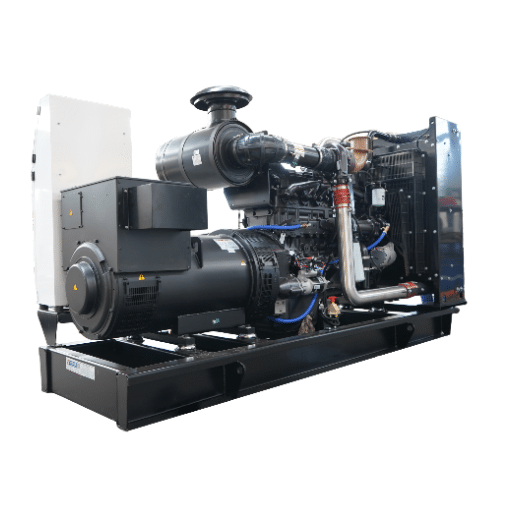
For continuous-duty applications above 25 kW, factories, hospitals, telecom infrastructure, schools, and data centers, purpose-built industrial gensets deliver lower cost per kilowatt-hour, longer service life, and stricter emissions compliance. For schools specifically, see our generators for schools guide.
Three engineering choices matter at industrial scale:
- Duty rating: Standby (ESP), prime (PRP), or continuous (COP) per ISO 8528-5.
- Tier 4 Final emissions: Required for new diesel installations in EPA-regulated regions.
- Paralleling capability: For load growth and N+1 redundancy.
Shandong Huali Electromechanical supplies industrial natural-gas, diesel, and dual-fuel gensets in the 25-2000 kW range. Our installing a backup generator guide walks commercial buyers through site preparation, transfer switches, and fuel system integration.
Frequently Asked Questions
What is the most fuel efficient generator type?
The most fuel-efficient generator type for 2026 consists of inverter generators which use either EFI technology or eco-throttle system. The system shows 30-40% fuel savings compared to open-frame models because its engine adjusts power output according to actual demand rather than maintaining constant maximum speed.
Are dual-fuel generators more fuel efficient than gasoline-only models?
The operating efficiency of dual-fuel generators needs practical testing because they show no efficiency advantage with their dual-fuel capability. The system operates without wasting fuel because it maintains complete gasoline storage for use. For buyers who run fewer than 50 hours per year, dual-fuel almost always delivers lower lifetime fuel cost.
How long can a portable inverter generator run on one tank?
Most portable inverter generators run 8-18 hours on a full tank at 25% load. The Westinghouse iGen4500DFc (18 hours), Ryobi 6500W (13 hours), and Champion 201490 (11.5 hours) are among the runtime leaders in 2026.
What size fuel efficient generator do I need for a 2,000-square-foot home?
A 2,000-square-foot home with essentials (refrigerator, lights, sump pump, well pump, window AC) needs roughly 5,000-7,500 running watts. The installation of central AC and an electric range requires a power capacity of 10,000-12,000 watts. The installation of a heat pump or electric water heater requires a power capacity of 15,000-22,000 watts.
Does an EFI generator save money over a carbureted model?
Yes, but the payback depends on use. EFI generators run roughly 10-20% more efficiently and require less seasonal maintenance. Over 5 years of moderate use (50-100 hours per year), the fuel and maintenance savings typically cover the 300−300−500 EFI premium.
Is a natural gas standby generator more fuel efficient than a portable?
A natural gas standby generator wins on cost per kilowatt-hour because natural gas is utility-priced. It is not inherently more thermally efficient than a comparable EFI portable, but the lower fuel cost makes it the cheapest path to long-term backup power for anyone with a natural-gas line.
Can I run a portable generator continuously for several days?
Most portable generators support 24-hour-a-day operation if you stop every 50 hours to change oil and let the unit cool for refueling. For genuine continuous-duty operation (1,000+ hours per year), step up to a prime-rated industrial generator instead.
Which fuel efficient generator is quietest?
The Honda EU2200i (48-57 dB), Westinghouse iGen4500DFc (52 dB), and Champion 2500W Inverter 201490 (53 dB) are the quietest fuel efficient generators in their respective output classes for 2026.
Conclusion: Choosing the Best Fuel Efficient Generator for Your 2026 Needs
Your optimal fuel-efficient generator needs to fulfill your power requirements while utilizing available fuel sources and meeting your operational duration needs without requiring payment for unused capacity. Homeowners find that dual-fuel inverters between 4,500 and 11,000 watts provide sufficient power to operate essential devices, air conditioners, and create propane storage options, which produce fuel savings through inverter performance that exceeds 33 percent.
The Honda EU2200i and Yamaha EF2200iS provide exceptional value as the leading generators for portable recreational and emergency backup needs. The Westinghouse iGen4500DFc provides homeowners with affordable home backup power solutions because it operates in the mid-range capacity. The DuroMax XP11000iH and XP16000iHT generators provide complete home power solutions through their dual and tri-fuel capacity. The Generac GP18000EFI provides the highest level of portable generator output. Generac, Kohler, and Cummins offer natural gas standby units for residential or commercial use, which provide the most economical electricity costs in kilowatt-hours.
For commercial and industrial applications above 25 kW, the calculus shifts to purpose-built industrial gensets. Contact Shandong Huali for sizing assistance and quotes on natural-gas, diesel, and dual-fuel systems from 25 kW to 2 MW.