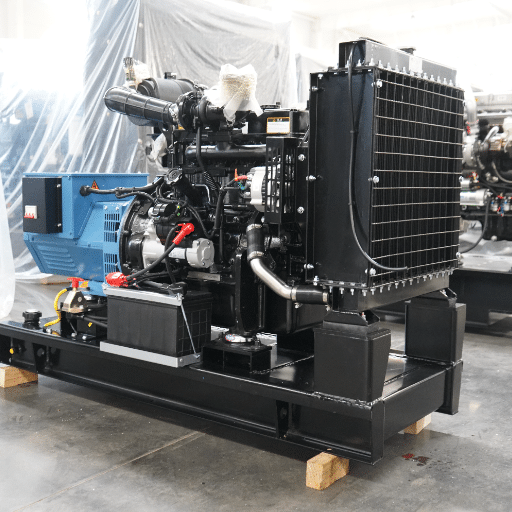

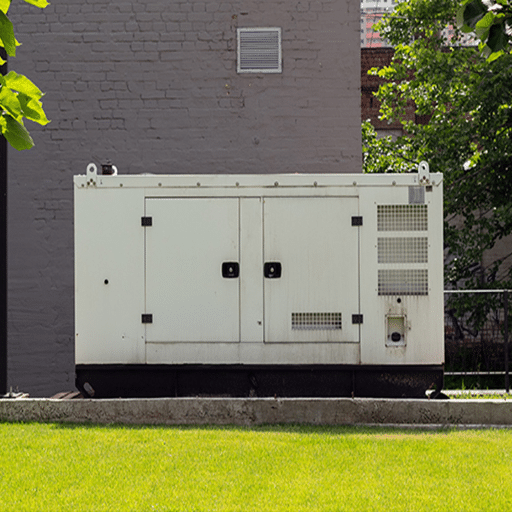
Schools need backup generators to maintain lighting, HVAC, security systems, and critical technology during power outages. A properly sized standby generator ensures student safety, protects perishable food, and prevents the loss of instructional time when grid power fails.
This guide covers everything school administrators and facilities managers need to know about selecting, sizing, and maintaining backup generators for educational facilities. We explain NFPA 110 compliance, compare fuel types, break down costs, and identify funding programs that can offset your investment.
When a severe thunderstorm knocked out power across the Houston Independent School District in May 2024, twelve schools lost electricity for between six and fourteen hours. Three of those schools had standby generators with automatic transfer switches. Their lights stayed on, their cafeterias kept serving, and their security systems never went down. The nine schools without backup power sent students home, lost refrigerated food worth thousands of dollars, and faced a full day of make-up instruction. The difference was not luck. It was planning.
Key Takeaways
- NFPA 110 requires Level 1 emergency power systems for schools with assembly occupancies over 1,000 persons.
- Most K-12 schools need standby generators rated between 100 kW and 500 kW, depending on building size and HVAC load.
- Diesel generators dominate the school market for reliability and fast startup; natural gas offers cleaner emissions and unlimited runtime via pipeline.
- Average installed cost for a 200 kW school standby system ranges from 75,000to75,000to125,000 including the generator, automatic transfer switch, and installation.
- FEMA and state hazard mitigation grants can fund up to 75% of generator project costs for qualifying schools.
Why Schools Need Backup Power
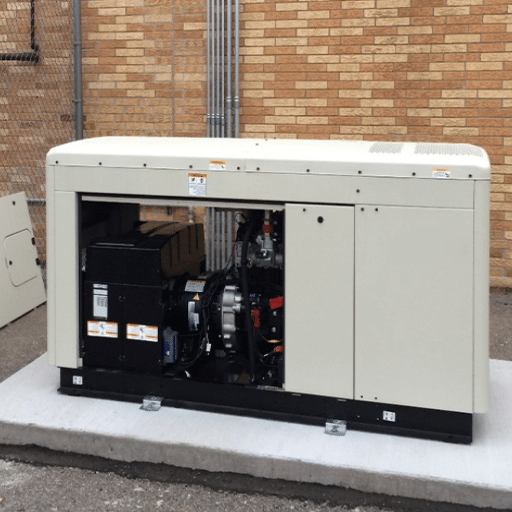
Power outages disrupt more than lesson plans. They create safety risks, financial losses, and regulatory compliance issues that school districts cannot afford to ignore.
Student Safety and Security
Emergency lighting, fire alarm systems, security cameras, and access control systems all require continuous power. When these systems fail during an outage, students and staff are left in dark hallways with no way to monitor building access or summon help. A standby generator with an automatic transfer switch (ATS) restores power within 10 seconds, keeping safety systems operational.
Instructional Continuity
Modern classrooms depend on interactive whiteboards, projectors, computers, and wireless networks. A single hour of lost power can disrupt a full day of curriculum. Schools with backup power continue instruction without interruption, preserving the instructional calendar and protecting standardized test schedules.
Food Service Protection
School cafeterias serve hundreds or thousands of meals daily. Refrigerators and freezers must maintain safe temperatures to comply with USDA and local health codes. A four-hour outage without backup power can spoil an entire week’s inventory, forcing the district to discard food and reschedule meal service.
HVAC and Indoor Air Quality
Heating, ventilation, and air conditioning systems are not optional comfort features in many climates. In extreme heat or cold, loss of HVAC can force school closure within hours. In humid climates, loss of dehumidification can trigger mold growth that requires costly remediation.
NFPA 110 and Regulatory Requirements
The National Fire Protection Association Standard 110 (NFPA 110) classifies emergency power systems into two levels. Schools with assembly occupancies exceeding 1,000 persons, or those that serve as designated emergency shelters, typically require Level 1 systems. Level 1 systems must start and accept full load within 10 seconds of a power failure.
Level 2 systems, which allow up to 60 seconds for startup, may be acceptable for smaller schools or non-life-safety loads. Your local authority having jurisdiction (AHJ) and state building codes determine which level applies to your facility. Always confirm requirements with a licensed electrical engineer before specifying equipment.
The NFPA 110 standard also mandates:
- Fuel storage sufficient for the legally required runtime (typically 48-72 hours for emergency systems)
- Monthly exercise under load
- Annual load bank testing
- Written maintenance and testing records
How Power Outages Affect Schools
When the grid fails, the cascade of problems begins immediately.
First 5 minutes: Emergency lighting battery backups activate. Security cameras switch to UPS power. Network routers on battery power remain online. If the outage is brief, normal operations resume when power returns.
After 30 minutes: UPS batteries deplete. Network connectivity drops. Interactive whiteboards and projectors shut down. Cafeteria refrigerators begin warming.
After 2 hours: Food in refrigerators reaches unsafe temperatures. HVAC systems are offline. Indoor temperatures shift toward outdoor conditions. Students and staff become uncomfortable and distracted.
After 4 hours: The district must decide whether to evacuate or continue sheltering in place without power. Food must be discarded. Evening activities are canceled. Parents begin arriving early for pickup.
After 8 hours: If the outage extends overnight, the building may be uninhabitable the next morning due to temperature extremes, sanitation issues, or security concerns.
A standby generator eliminates this timeline. Power is restored automatically in seconds. The building continues operating as if nothing happened.
In January 2024, an ice storm left a rural high school in northern Arkansas without power for 31 hours. The school had a 300 kW diesel standby generator installed in 2019. The generator started automatically, ran the full building load, and kept 840 students safe and warm through the storm. The only operational change was a switch to paper lesson plans when internet service (which travels on separate utility poles) went down. The principal later told the school board that the generator paid for itself in a single event by preventing a full week of snow-day make-up instruction.
Sizing a Generator for Your School

Correct sizing is the most important technical decision in any school generator project. An undersized unit will overload and shut down. An oversized unit wastes capital and operates inefficiently at partial load.
Step 1: Calculate Your Essential Load
List every electrical system that must remain operational during an outage:
- Emergency lighting (egress paths, stairwells, exit signs)
- Fire alarm and suppression systems
- Security systems (cameras, access control, intercoms)
- HVAC (heating, ventilation, air conditioning for occupied spaces)
- Cafeteria refrigeration and cooking equipment
- Network infrastructure and server rooms
- Administrative computers and phone systems
- Elevators (if applicable)
- Sump pumps and water booster pumps
For each item, record the running wattage and the starting wattage (for motor-driven loads like compressors and pumps).
Step 2: Add Starting Surge
Motor-driven loads like HVAC compressors and well pumps draw three to seven times their running current at startup. Your generator must handle the highest simultaneous surge without voltage collapse. A licensed MEP engineer will perform a load analysis to identify the worst-case starting scenario.
Step 3: Apply Safety Margin
Add 20 to 25 percent to your calculated total load. This margin accommodates future load growth, voltage drop in long feeders, and temporary overloads. For example, if your calculated essential load is 160 kW, specify a 200 kW generator.
Typical School Sizing Guidelines
| Building Type | Approximate Size | Typical Generator Rating |
|---|---|---|
| Elementary school | 30,000 – 60,000 sq ft | 100 – 200 kW |
| Middle school | 60,000 – 100,000 sq ft | 200 – 350 kW |
| High school | 100,000 – 200,000 sq ft | 350 – 600 kW |
| Multi-building campus | 200,000+ sq ft | 600 kW – 2 MW |
These are rough guidelines. Your actual requirement depends on HVAC capacity, kitchen equipment, and life-safety loads. Always hire a licensed engineer to perform a formal load calculation.
Need help sizing a standby unit? Explore our industrial diesel generator range from 20 kW to 3,000 kW for educational and commercial facilities.
Fuel Type Comparison for School Generators

The fuel you choose affects startup reliability, runtime, emissions, operating cost, and maintenance requirements.
Diesel
Diesel is the most common fuel for school standby generators. Diesel engines start quickly, handle large motor-starting surges well, and store fuel on-site for extended runtime.
Advantages:
- Fast cold-start capability
- Long engine life (10,000-20,000+ hours with proper maintenance)
- Fuel stores on-site in sub-base or remote tanks
- Lower capital cost than comparable natural gas units
Disadvantages:
- Fuel degrades after 12-18 months without treatment
- Requires periodic fuel polishing and tank inspection
- Higher NOx and particulate emissions than natural gas
- Fuel must be delivered by truck for refueling
Natural Gas
Natural gas generators connect directly to the utility gas pipeline, eliminating on-site fuel storage and delivery logistics.
Advantages:
- Unlimited runtime via pipeline (no fuel delivery needed)
- Cleaner emissions (lower NOx and particulates)
- No fuel degradation or polishing required
- Quieter operation than diesel in most configurations
Disadvantages:
- Slower cold-start than diesel
- Lower motor-starting surge capacity
- Higher capital cost
- Pipeline disruption during a major disaster can cut off fuel supply
Propane (LPG)
Propane offers a middle ground between diesel and natural gas, with on-site storage and cleaner emissions than diesel.
Advantages:
- Fuel stores indefinitely without degradation
- Cleaner burning than diesel
- Good cold-weather performance
Disadvantages:
- Lower energy density than diesel (larger tanks needed for equivalent runtime)
- Fuel delivery required for extended outages
- Higher fuel cost per kWh than natural gas
Which Fuel Is Best for Schools?
Most K-12 schools choose diesel for standby applications because it offers the fastest startup, best surge capacity, and lowest initial cost. Schools in urban areas with strict emissions regulations sometimes choose natural gas to meet local air quality standards. Propane is common in rural areas where natural gas pipelines are unavailable and diesel delivery is difficult.
For a detailed fuel comparison, see our diesel vs natural gas generator guide.
Generator Brands for Educational Facilities
Not all generator manufacturers design products for institutional applications. Schools should prioritize brands with proven track records in mission-critical installations.
| Brand | Power Range | Best For | Notes |
|---|---|---|---|
| Generac | 10 kW – 2 MW | K-12 schools, small campuses | Strong residential and light commercial line |
| Cummins | 8 kW – 4 MW+ | Large campuses, district-wide projects | Global service network; vertical integration |
| Kohler | 8 kW – 4 MW+ | Mission-critical applications | Strong in data center and healthcare; applies to schools |
| Caterpillar | 10 kW – 4 MW+ | Large campuses, universities | Premium industrial-grade equipment |
| MTU | 200 kW – 4 MW+ | Large institutions | High-performance engines; longer lead times |
For most K-12 schools, Generac, Cummins, or Kohler offer the best combination of product availability, service support, and compliance documentation.
Cost Breakdown and Return on Investment
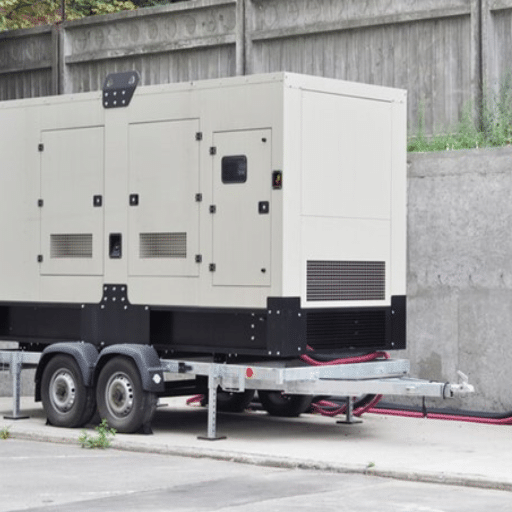
A school standby generator project involves more than the generator itself. The total installed cost includes the generator set, automatic transfer switch, fuel storage, electrical installation, concrete pad, sound-attenuated enclosure, and commissioning.
Capital Cost by Size
| Generator Size | Generator + ATS | Installation + Pad | Fuel Tank + Enclosure | Total Installed Cost |
|---|---|---|---|---|
| 100 kW | 25,000−25,000−35,000 | 15,000−15,000−25,000 | 8,000−8,000−15,000 | 48,000−48,000−75,000 |
| 200 kW | 40,000−40,000−55,000 | 20,000−20,000−35,000 | 12,000−12,000−20,000 | 72,000−72,000−110,000 |
| 350 kW | 65,000−65,000−85,000 | 30,000−30,000−50,000 | 18,000−18,000−30,000 | 113,000−113,000−165,000 |
| 500 kW | 90,000−90,000−120,000 | 40,000−40,000−65,000 | 25,000−25,000−40,000 | 155,000−155,000−225,000 |
Annual Operating Cost
| Expense | Annual Cost (200 kW diesel) |
|---|---|
| Fuel for monthly exercise (1 hour/month) | 800−800−1,200 |
| Oil and filter changes (2x/year) | 600−600−900 |
| Annual load bank testing | 1,500−1,500−2,500 |
| Extended warranty (optional) | 1,200−1,200−2,000 |
| Total Annual | 4,100−4,100−6,600 |
Return on Investment
The ROI of a school generator is measured in avoided losses, not revenue. A single extended outage can cost a school district:
- Lost instructional time: 5,000−5,000−15,000 per day (substitute teachers, extended school year, transportation rescheduling)
- Spoiled food: 2,000−2,000−8,000 per event
- Emergency repairs and cleanup: 3,000−3,000−10,000
- Reputation damage and parent complaints: difficult to quantify
For a district that experiences two significant outages per year, a $100,000 generator investment can pay for itself in avoided losses within five to seven years.
Maintenance Requirements for School Generators
NFPA 110 and manufacturer warranties require a documented maintenance program. Neglecting maintenance is the leading cause of generator failure during actual outages.
Monthly
- Visual inspection of the generator, enclosure, and fuel tank
- Exercise the unit under load for at least 30 minutes
- Check oil and coolant levels
- Verify battery charge and terminal condition
- Record exercise log in maintenance binder
Quarterly
- Inspect air filter and replace if dirty
- Check fuel level and test for water contamination
- Inspect belts and hoses for wear
- Test automatic transfer switch operation
- Verify control panel indicators and alarms
Annually
- Change engine oil and all filters (oil, fuel, air)
- Replace coolant if due
- Perform load bank testing at full rated load for at least 2 hours
- Inspect and clean fuel tank
- Test battery capacity; replace if below 80%
- Professional inspection by a certified service technician
Every 3-5 Years
- Major overhaul inspection ( valve adjustment, injector service)
- Fuel tank internal inspection and cleaning
- Coolant system flush
- Control system firmware update
Running a large campus or district-wide project? See our commercial backup power solutions for multi-building installations.
Funding and Grant Programs
School generator projects qualify for several federal and state funding programs that can reduce out-of-pocket costs by 50-75 percent.
FEMA Hazard Mitigation Grant Program (HMGP)
After a federally declared disaster, FEMA makes HMGP funds available to states for hazard mitigation projects. Standby generators for schools are eligible if they reduce the risk of future disaster impacts. Funding covers up to 75% of project costs, with the remaining 25% coming from state or local matching funds.
FEMA Pre-Disaster Mitigation (PDM) Grants
PDM grants fund mitigation projects before a disaster occurs. Schools in flood-prone, hurricane-prone, or winter-storm-prone areas can apply for generator funding through their state emergency management agency.
USDA Rural Development Community Facilities Program
Rural school districts with populations under 20,000 can apply for low-interest loans and grants through USDA Rural Development. The Community Facilities Direct Loan and Grant Program funds essential community infrastructure, including emergency power systems.
State and Local Programs
Many states operate their own hazard mitigation, resilience, and school infrastructure grant programs. Check with your state department of education, state emergency management agency, and public utility commission for current opportunities.
Utility Rebate Programs
Some electric utilities offer demand-response or resilience rebates for schools that install backup generation. These programs typically require the generator to participate in utility-controlled peak-shaving events in exchange for upfront rebates or ongoing payments.
When to Contact a Generator Manufacturer Directly
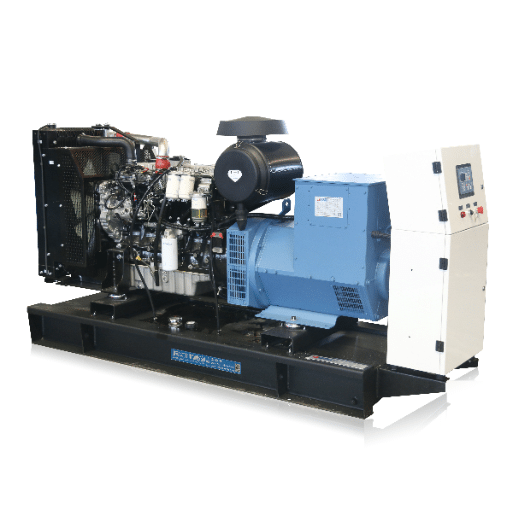
Most K-12 schools work through local electrical contractors or generator dealers for procurement and installation. However, there are situations where contacting the manufacturer directly makes sense:
- Large campus or district-wide projects requiring multiple units or paralleling
- Custom specifications such as tropical cooling packages, sound-attenuated enclosures, or specialized control systems
- OEM or private-label partnerships for educational equipment distributors
- International projects where local dealer support is limited
- Lead time pressure when standard dealer channels cannot meet your schedule
Shandong Huali Electromechanical Co., Ltd manufactures diesel generator sets from 20 kW to 3,000 kW+ for commercial, industrial, and institutional applications. The company integrates Cummins engines, Stamford alternators, and DSE control systems into ISO9001-certified packages for export markets and OEM customers worldwide.
In 2023, a school construction contractor in Southeast Asia needed forty 250 kW standby units for a new K-12 campus program. Standard dealer channels quoted 44-week delivery. The contractor worked with Shandong Huali to configure Cummins-powered gensets with tropical cooling, tropical-grade enclosures, and local-language control panels. Delivery was 18 weeks. All units passed load bank testing on arrival, and the campus opened on schedule.
Frequently Asked Questions
What size generator does a school need?
Most elementary schools need 100-200 kW. Middle schools typically need 200-350 kW. High schools and multi-building campuses often need 350-600 kW or more. The exact size depends on your HVAC load, kitchen equipment, and life-safety systems. A licensed MEP engineer should perform a formal load calculation.
Does every school need a standby generator?
Not every school is legally required to have one, but NFPA 110 mandates Level 1 emergency power for schools with assembly occupancies over 1,000 persons. Even smaller schools benefit from standby power for food safety, security, and instructional continuity.
How long can a school generator run?
Diesel generators can run as long as fuel is available. A typical sub-base tank provides 48-72 hours of runtime at full load. Natural gas generators can run indefinitely as long as the gas pipeline remains pressurized. For extended outage preparedness, many districts specify oversized fuel tanks or arrange fuel delivery contracts with local suppliers.
What is the difference between a standby and a portable generator for schools?
A standby generator is permanently installed with an automatic transfer switch. It starts automatically within seconds of a power failure and requires no staff intervention. A portable generator is wheeled into place, connected manually, and started by hand. Standby generators are the standard for schools because they respond faster and do not depend on personnel being present during an outage.
How often should a school generator be tested?
NFPA 110 requires monthly exercise under load for at least 30 minutes. Annual load bank testing at full rated load for at least 2 hours is also required. Many school districts schedule monthly tests during low-occupancy periods (early morning or evening) to minimize disruption.
Can a school generator power the entire building?
Yes, if it is sized correctly. Most school standby generators are sized to power the entire building including HVAC, lighting, and kitchen equipment. Some districts install smaller generators sized only for emergency loads (egress lighting, fire alarms, security) to reduce capital cost, but this limits operational continuity during extended outages.
Conclusion
Backup power is not a luxury for schools. It is an operational necessity that protects student safety, preserves instructional time, and prevents financial losses during grid failures.
The key decisions for any school generator project are:
- Size it correctly with a licensed engineer’s load calculation.
- Choose the right fuel based on local codes, emissions requirements, and runtime needs.
- Budget for the full installed cost including generator, ATS, fuel storage, and electrical work.
- Maintain it diligently with monthly exercise, quarterly inspections, and annual load bank testing.
- Explore funding through FEMA, USDA, state programs, and utility rebates.
A well-specified standby generator turns a power outage from a crisis into a minor operational note. Students stay safe. Classes continue. Food stays cold. And the district avoids the cascading costs of closure.
Have a school generator project that needs engineering support? Shandong Huali designs and manufactures industrial diesel generator sets from 20 kW to 3,000 kW+ for educational institutions, commercial facilities, and OEM partners worldwide. Contact our engineering team for a free project consultation.