

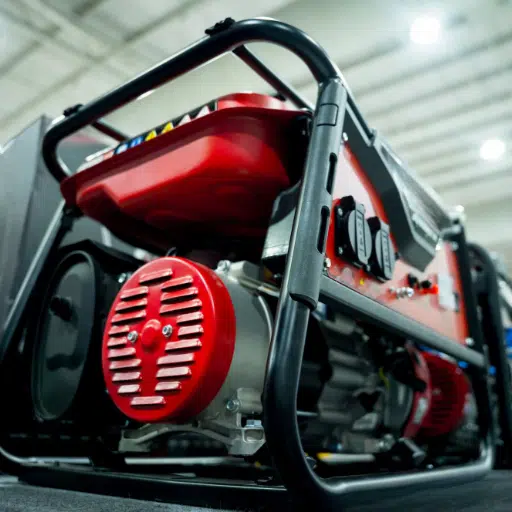
A 2000 watt inverter generator is the right choice for tailgating, light camping, and powering RV essentials like lights, a small microwave, a fan, and device charging. A 3000 watt inverter generator is the right choice when you need to start a 13,500 BTU RV air conditioner, run multiple appliances at once, or supply a small job site. The split between the two sizes comes down to one number that most buyers overlook: the surge wattage your largest appliance pulls at startup.
This guide compares 2000 vs 3000 watt inverter generators on real appliance loads, noise levels, fuel economy, parallel capability, and price. It also covers when a portable inverter generator stops being enough and when you need to step up to a larger diesel standby unit.
When Marcus Reyes hauled his new 21-foot Class B RV to a state park in Tennessee in June 2024, he brought a 2000W inverter generator he had used for tailgating. The first afternoon, his RV air conditioner refused to start. The generator displayed an overload fault every time the compressor tried to kick in. The lesson was simple: his roof-mounted 13,500 BTU air conditioner needed roughly 2,800 starting watts, and his 2000W unit topped out at 2,200W peak. He returned it the next week and bought a 3000W model. The air conditioner started on the first try.
Key Takeaways
- 2000W inverter generators deliver 1,600-1,800 running watts and 2,000-2,200 starting watts. Best for camping, tailgating, CPAP, lights, fans, and device charging.
- 3000W inverter generators deliver 2,500-2,800 running watts and 3,000-3,500 starting watts. Best for RV air conditioners, small power tools, refrigerators, and multi-appliance loads.
- Inverter generators produce less than 3% total harmonic distortion (THD), which is safe for laptops, CPAPs, and medical devices.
- Two parallel-connected 2000W units can substitute for a single 3000W unit and add portability flexibility, but at higher total cost.
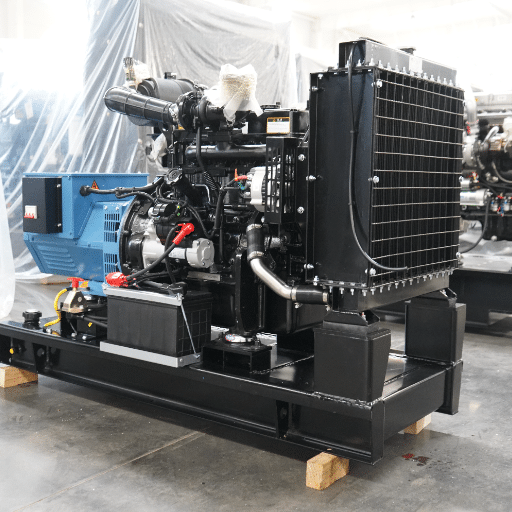
- When portable power is not enough, a standby diesel generator from 20 kW and up provides commercial and industrial backup.
How Inverter Generators Work

An inverter generator combines a small gasoline or propane engine with an electronic inverter module. The engine produces raw AC power at variable frequency. The inverter rectifies that power to DC, then converts it back to a clean, stable AC sine wave at exactly 60 Hz (in North America) or 50 Hz (in most other regions).
This two-step conversion delivers three advantages over conventional open-frame portable generators:
- Clean power: Total harmonic distortion stays below 3%, compared with 25% or more for conventional units. Sensitive electronics such as laptops, CPAP machines, and medical devices operate safely.
- Variable engine speed: The engine runs only as fast as the load requires. At 25% load, fuel consumption drops by 30-40% compared with a constant-speed conventional generator.
- Lower noise: Most consumer inverter generators run at 50-60 dBA at 25% load, similar to a normal conversation, compared with 75-85 dBA for an open-frame unit.
The trade-off is power density and cost. A conventional 5,000W open-frame generator costs significantly less than a 3,000W inverter unit. For applications where clean power and low noise matter, the inverter design earns its premium.
2000W vs 3000W: Side-by-Side Comparison
The fastest way to compare the two sizes is at a glance. The table below summarizes typical specifications for popular consumer-grade units in each class.
| Specification | 2000W Inverter Generator | 3000W Inverter Generator |
|---|---|---|
| Starting watts (surge) | 2,000 – 2,200 W | 3,000 – 3,500 W |
| Running watts (continuous) | 1,600 – 1,800 W | 2,500 – 2,800 W |
| Fuel tank capacity | 0.9 – 1.1 gal | 1.6 – 3.4 gal |
| Runtime at 25% load | 7 – 9 hours | 14 – 20 hours |
| Noise at 25% load (23 ft) | 48 – 58 dBA | 49 – 60 dBA |
| Weight | 45 – 55 lb | 75 – 145 lb |
| Parallel capable | Yes (most models) | Some models |
| Typical price (2026) | 550−550−1,200 | 1,500−1,500−2,800 |
| THD | < 3% | < 3% |
The 2000W class is built for portability. A typical Honda EU2200i weighs 47 pounds and can be carried by one person. The 3000W class is heavier; a Honda EU3000iS weighs 144 pounds and is usually moved on its built-in wheels.
What Each Size Actually Powers

Generator sizing depends on two numbers: the running watts a device draws during normal operation, and the starting watts (also called surge watts) it draws for one to three seconds when an electric motor kicks in.
The table below lists typical wattage ranges for common appliances. Use it as a starting point, then check the nameplate label on your specific equipment.
| Appliance | Running Watts | Starting Watts |
|---|---|---|
| LED light bulb (10W equivalent) | 10 W | 10 W |
| Laptop | 50 – 100 W | 50 – 100 W |
| CPAP machine | 60 – 90 W | 60 – 90 W |
| Smartphone charger | 5 – 20 W | 5 – 20 W |
| Box fan | 100 – 200 W | 200 – 400 W |
| Mini fridge | 80 – 150 W | 200 – 400 W |
| Full-size refrigerator | 150 – 300 W | 600 – 1,200 W |
| Microwave (700-1,100 W) | 700 – 1,100 W | 700 – 1,100 W |
| Coffee maker | 800 – 1,200 W | 800 – 1,200 W |
| 13,500 BTU RV air conditioner | 1,300 – 1,500 W | 2,500 – 3,000 W |
| 15,000 BTU RV air conditioner | 1,500 – 1,800 W | 3,000 – 3,500 W |
| Power tools (drill, sander) | 600 – 1,200 W | 1,000 – 2,400 W |
| Sump pump (1/3 HP) | 800 W | 1,500 – 2,000 W |
What a 2000W Inverter Generator Can Run
A 2000W unit handles:
- Several LED lights, a fan, and device charging together
- A mini fridge plus a laptop plus phone charging
- A CPAP machine overnight (10-12 hours on one tank)
- A small microwave OR a coffee maker (not both at once)
- A tailgate setup with a TV, fan, and grill ignitor
It does not reliably handle a 13,500 BTU RV air conditioner. Starting wattage exceeds the unit’s peak capacity, which is what Marcus Reyes discovered in Tennessee.
What a 3000W Inverter Generator Can Run
A 3000W unit handles:
- A 13,500 BTU RV air conditioner plus interior lights and a fan
- A full-size refrigerator plus a microwave (running sequentially, not simultaneously)
- A small jobsite with a circular saw, lights, and a battery charger
- Multi-appliance home backup for essentials during a short outage
- A 15,000 BTU RV air conditioner (at the top of its surge capacity)
For RVs with two air conditioners or all-electric appliance suites, even 3000W is undersized.
Brand and Model Comparison
Most buyers choose between four manufacturers in the 2000W-3000W class. The table below summarizes 2026 product positioning.
| Brand and Model | Class | Starting / Running W | Weight | 2026 Price |
|---|---|---|---|---|
| Honda EU2200i | 2000W | 2,200 / 1,800 | 47 lb | 1,150−1,150−1,300 |
| Yamaha EF2200iS | 2000W | 2,200 / 1,800 | 55 lb | 1,000−1,000−1,200 |
| Champion 200988 | 2000W | 2,500 / 1,850 | 47 lb | 700−700−900 |
| Westinghouse iGen2500 | 2000W | 2,500 / 2,200 | 48 lb | 650−650−850 |
| Honda EU3000iS | 3000W | 3,000 / 2,800 | 144 lb | 2,400−2,400−2,800 |
| Yamaha EF3000iSEB | 3000W | 3,000 / 2,800 | 154 lb | 2,200−2,200−2,600 |
| Champion 100302 | 3000W | 3,500 / 3,150 | 95 lb | 1,200−1,200−1,500 |
| Westinghouse iGen4500 | 3000W+ | 4,500 / 3,700 | 98 lb | 1,500−1,500−1,800 |
Honda and Yamaha lead on noise, build quality, and resale value. Champion and Westinghouse offer comparable peak output at a lower price point with shorter expected service life and more variable noise performance.
For sensitive applications such as medical equipment or recording gear, the Honda and Yamaha units consistently deliver lower THD and tighter voltage regulation. For occasional recreational use, Champion and Westinghouse provide solid value.
Two 2000W Generators in Parallel vs One 3000W

Most 2000W inverter generators include a parallel kit option. Two units linked together share load and double the total running and starting watts, which raises a real buyer question: parallel two 2000W or buy one 3000W?
| Factor | Two 2000W in Parallel | One 3000W |
|---|---|---|
| Combined starting watts | 4,000 – 4,400 W | 3,000 – 3,500 W |
| Combined running watts | 3,200 – 3,600 W | 2,500 – 2,800 W |
| Total weight | 90 – 110 lb (split into two units) | 95 – 154 lb (one unit) |
| Portability | Each unit one-person carry | Wheels usually required |
| Redundancy | Yes (one fails, the other runs) | No |
| Total cost (Honda example) | ~2,300(2xEU2200i)+ 2,300(2xEU2200i)+ 300 kit | ~$2,500 (EU3000iS) |
| Fuel logistics | Two tanks to refill | One tank |
Parallel two 2000W units if: You want maximum portability, occasional surge capacity for an RV air conditioner, and redundancy.
Buy one 3000W unit if: You want a single fuel tank, longer runtime on one fill, and lower fuel logistics during extended use.
For most RV owners, the parallel route gives more flexibility. For job sites and home backup, a single 3000W unit is usually more practical.
Cost, Noise, and Fuel Economy
Capital Cost
A high-quality 2000W inverter generator costs 700−700−1,300. A high-quality 3000W inverter generator costs 1,500−1,500−2,800. The 3000W class is roughly 2x the price of the 2000W class for 50-60% more usable power.
Noise
At 25% load and 23 feet, both classes operate in the 50-60 dBA range. At full load, the 2000W class reaches 60-65 dBA and the 3000W class reaches 60-67 dBA. Campground rules typically allow units below 65 dBA at the property line. Both classes meet most public-land noise limits when run at part load.
Fuel Economy
A 2000W unit at 25% load consumes 0.10-0.12 gallons of gasoline per hour. A 3000W unit at 25% load consumes 0.16-0.20 gallons per hour. Per usable kilowatt-hour, the two classes are similar; the 3000W class wins on extended-runtime applications because of its larger tank.
For long-term cost projection, fuel and oil dominate the total cost of ownership after two to three years of regular use. Buy quality once, maintain it, and the lifecycle cost favors the better-built unit.
Emissions
Both classes meet EPA Phase 3 emissions standards for portable spark-ignition engines. Some 2026 models also meet California Air Resources Board (CARB) requirements for sale in California. Confirm CARB compliance before purchasing if you live in or operate in California.
For larger backup needs? Explore industrial-grade portable and standby generator options when consumer inverter units fall short.
When a Portable Inverter Generator Is Not Enough

Inverter generators in the 2000W-3000W class solve a specific problem: clean, quiet, portable power for recreational and small-scale residential use. They are not designed for:
- Whole-house backup: Most homes need 7,500-12,000 W to run essentials including HVAC, refrigeration, well pumps, and lighting.
- Commercial backup: Offices, retail, and small industrial sites require 10-50 kW with automatic transfer switches.
- Construction sites with multiple tools: A framing crew running compressors, saws, and lights needs 5,000-10,000 W of conventional output.
- Continuous prime power: Inverter generators are designed for intermittent use, not 24/7 operation.
When recreational and light-residential applications expand into commercial or industrial territory, the right answer is a standby diesel generator with the runtime, durability, and engineering certifications that portable inverter units cannot provide.
Shandong Huali Electromechanical Co., Ltd manufactures diesel generator sets from 20 kW to 3,000 kW for commercial, industrial, and OEM customers. The company integrates Cummins engines and Stamford alternators into ISO9001-certified packages with DSE digital control systems. For projects that have outgrown portable inverters, an industrial standby unit provides the reliability, runtime, and code compliance that recreational equipment is not built to deliver.
In 2024, a construction contractor in Southeast Asia replaced a fleet of 3000W portable inverter generators with twelve 100 kW diesel standby units across three new commercial sites. The portable units had been failing at roughly 600 operating hours each from continuous prime-power duty they were never designed to handle. The diesel replacements, configured for tropical operation and local-voltage standards, were rated for 20,000+ hours of service. The contractor recovered the capital cost in fuel and replacement savings within 18 months.
Frequently Asked Questions
Is a 2000 watt inverter generator enough for a camper or small RV?
Yes, if you are not running an air conditioner. A 2000W unit comfortably handles RV lights, a fan, device charging, a small microwave used briefly, and a CPAP machine overnight. For a 13,500 BTU RV air conditioner or larger, you need a 3000W unit or two parallel-connected 2000W units.
Can a 3000 watt inverter generator run a microwave and refrigerator at the same time?
Yes, in most cases. A typical full-size refrigerator draws 150-300 running watts and 600-1,200 starting watts. A 700-1,100W microwave plus a running refrigerator stays under 2,500 watts continuous. The refrigerator’s startup surge could briefly push total demand to 2,800 watts, which is at the edge of a 3000W unit’s running capacity. For comfortable simultaneous operation of both appliances plus lights, plan for 3,500W or higher.
How long can a 2000W or 3000W inverter generator run on one tank?
At 25% load, a 2000W unit runs 7-9 hours per tank. A 3000W unit with a larger fuel tank runs 14-20 hours per tank. Some 3000W models with extended 3.4-gallon tanks reach 24 hours at low load. Always shut down to refuel; never refuel a running generator.
What is the difference between an inverter generator and a conventional generator?
A conventional generator produces AC power directly from the alternator at a fixed engine speed (typically 3,600 RPM). An inverter generator first produces variable-frequency AC, then converts it to DC, then back to clean 60 Hz AC through an electronic inverter. The result is cleaner power (less than 3% THD), variable engine speed (lower fuel consumption at part load), and quieter operation. Inverter generators cost more per watt but are safer for sensitive electronics.
Are 2000W or 3000W inverter generators safe for medical equipment?
Yes, both classes produce pure sine wave output with less than 3% total harmonic distortion, which is within the safe range for CPAP machines, oxygen concentrators, nebulizers, and other home medical equipment. Always confirm compatibility with your specific device manufacturer before use during a medical emergency.
Can I parallel two different brands of 2000W inverter generators?
No. Parallel kits are designed for matched units from the same manufacturer, often the same model. Mixing brands or models can damage the inverter electronics or produce out-of-phase output. If you need parallel capacity, buy two identical units and the manufacturer’s matching parallel kit.
Conclusion
Choosing between a 2000W and a 3000W inverter generator comes down to the largest appliance you need to start. If your loads top out at lights, fans, device charging, and small kitchen appliances, a 2000W unit delivers all the power you need with maximum portability and lower cost. If you need to start an RV air conditioner, run a refrigerator, or power a small jobsite, a 3000W unit is the right starting point.
The key decisions for any portable inverter purchase:
- Identify your largest starting load and match the generator’s surge rating to it with a 10% safety margin.
- Choose pure sine wave output if you run sensitive electronics or medical equipment.
- Consider parallel-capable 2x 2000W if portability and redundancy matter more than fuel logistics.
- Verify EPA Phase 3 and CARB compliance if you live or operate in regulated markets.
- Plan for the lifecycle, not just the purchase price. Quality units last longer and resell for more.
A portable inverter generator handles recreation and short residential outages. When your power needs exceed 5,000W of continuous output, run 24/7, or require code-compliant emergency power, the right answer is a larger diesel standby generator engineered for industrial duty.
Have a power project that has outgrown portable equipment? Shandong Huali designs and manufactures industrial diesel generator sets from 20 kW to 3,000 kW for commercial, industrial, and OEM customers worldwide. Contact our engineering team for a free project consultation.