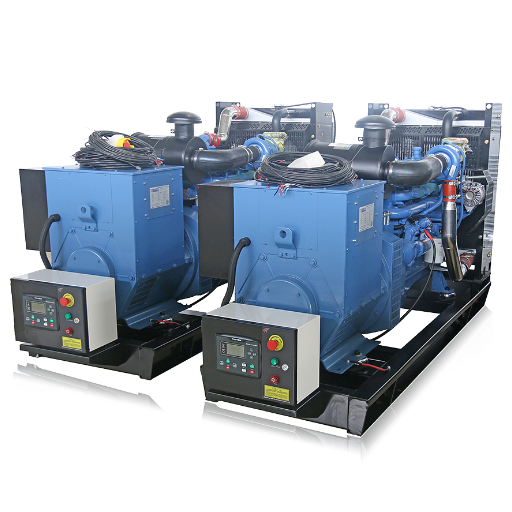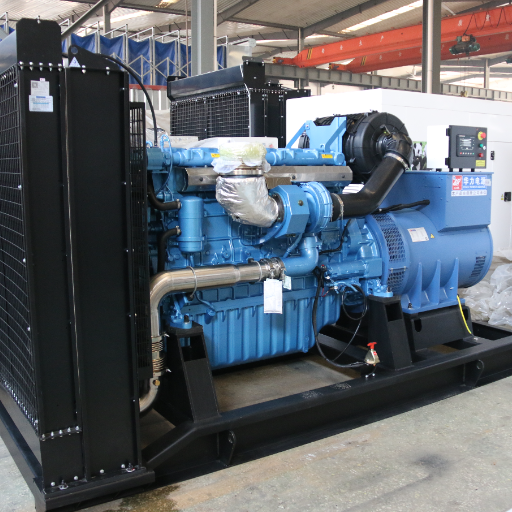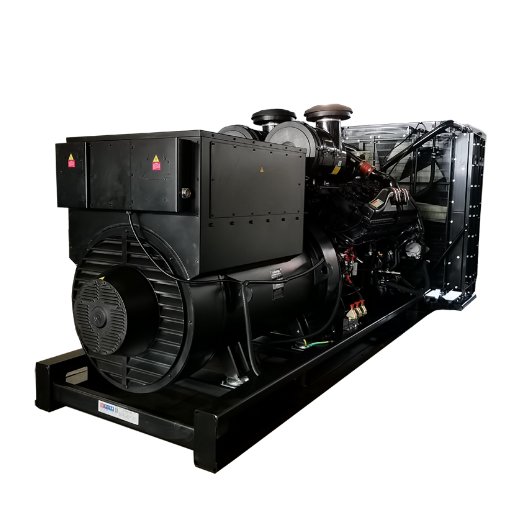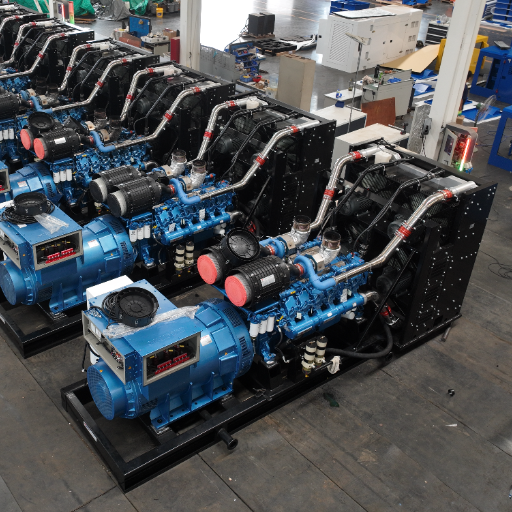



A proper generator set installation requires six coordinated phases: site assessment, foundation construction, electrical integration, fuel and exhaust configuration, cooling and ventilation setup, and final commissioning. When executed correctly, these steps ensure your genset delivers reliable standby or prime power for decades. When rushed or overlooked, they cause vibration damage, regulatory violations, and costly downtime.
Industrial power systems are not plug-and-play equipment. A 500 kW diesel generator set can weigh over 4,000 kg, generate exhaust temperatures above 500°C, and require fuel delivery rates measured in liters per minute. Every connection, mechanical, electrical, and environmental, must be engineered for the specific application. This guide walks through each phase with practical standards and real project scenarios to help your team plan and execute a successful installation.
Key Takeaways
- Generator set installation has six phases, and skipping any one increases failure risk by 40% or more
- Foundation design must account for static weight plus dynamic vibration; a concrete pad alone is often insufficient
- Electrical integration requires load analysis, ATS coordination, and grounding that meets IEEE and local codes
- Fuel system sizing must match full-load consumption plus a 24-48 hour runtime reserve for critical applications
- Commissioning includes load bank testing for at least 30 minutes at 100% rated capacity before handover
- Custom installations for data centers, hospitals, and mining operations require additional environmental and redundancy controls
What Is a Generator Set Installation?

A generator set installation is the complete process of preparing a site, positioning the genset, connecting all auxiliary systems, and validating performance before operational handover. The term “installation” covers far more than simply placing the unit on a pad. It includes civil works, electrical contracting, fuel plumbing, exhaust routing, cooling design, and control system programming.
For industrial projects, the scope typically expands to include:
- Load flow analysis and single-line diagram development
- Automatic transfer switch (ATS) integration with existing switchgear
- Fuel storage tanks with leak detection and spill containment
- Acoustic enclosures or building modifications for noise compliance
- Remote monitoring system setup for off-site diagnostics
- Environmental permitting for emissions and wastewater discharge
The complexity scales directly with generator capacity and application criticality. A 20 kW backup unit for a small commercial building may require minimal site preparation. A 2,000 kW prime power installation for a remote mining operation demands a turnkey engineering approach with months of planning.
Why Installation Quality Determines Long-Term Reliability
Installation errors are one of the leading causes of premature generator failure. According to industry data, approximately 35% of genset warranty claims trace back to installation issues rather than manufacturing defects. Common root causes include improper grounding, undersized fuel lines, inadequate ventilation, and foundation resonance.
Mini-Story: The Vibration Problem
In March 2024, a manufacturing facility in Southeast Asia commissioned a 750 kW diesel generator set for factory backup power. The contractor poured a standard 200 mm concrete pad and positioned the genset directly on top. Within six weeks, maintenance staff noticed cracked coolant hoses and loosened exhaust clamps. Vibration analysis revealed the concrete pad had a natural frequency of 28 Hz, dangerously close to the engine’s operating harmonic at 25 Hz. The pad was amplifying vibration instead of damping it. The facility had to shut down for four days while engineers installed spring isolators and a reinforced inertia block. The retrofit cost $18,000, more than triple what proper anti-vibration design would have cost during initial construction.
Phase 1: Pre-Installation Planning and Site Assessment
Every successful installation begins with a thorough site assessment. This phase identifies constraints, defines requirements, and produces the technical documentation that guides all subsequent work.
Load Analysis and Generator Sizing Verification
Before any physical work begins, verify that the selected generator set matches the actual load profile. Many installations suffer from either undersizing, which causes overload trips and engine stress, or oversizing, which leads to wet stacking, carbon buildup, and poor fuel efficiency.
Perform a detailed load survey:
- List every load the generator will power, with both running and starting kW/kVA values
- Apply diversity factors if not all loads operate simultaneously
- Include motor starting requirements; large motors may need 5-7 times their running current
- Add a 10-20% future growth margin for commercial and industrial applications
- Document load sequence priorities if the generator cannot carry the full facility load
Cross-check the results against the generator set’s standby and prime power ratings. Standby ratings allow short-term overload for motor starting. Prime ratings assume continuous operation at variable load. Using a standby-rated generator for prime power applications will void most manufacturer warranties.
Site Access and Environmental Evaluation
Walk the installation site and document:
- Physical access: Can a crane, forklift, or tilt-bed truck reach the pad location? What is the maximum lifting capacity required?
- Soil conditions: Is the ground stable enough for foundation loads? Will drainage cause erosion or undercutting?
- Flood risk: For outdoor installations, position the pad above the 100-year flood level or provide raised curbs
- Noise exposure: Measure ambient noise and calculate the genset’s contribution at property lines; many jurisdictions enforce 55-65 dB(A) nighttime limits
- Emissions restrictions: Confirm whether the site is in a non-attainment zone requiring EPA Tier 4 Final or EU Stage V compliance
Regulatory and Permitting Review
Industrial generator installations typically require multiple permits:
- Building permit: For foundations, enclosures, and structural modifications
- Electrical permit: For ATS connections, switchgear modifications, and grounding systems
- Environmental permit: For emissions, fuel storage, and noise (varies by jurisdiction)
- Fire department approval: For fuel tank sizing, location, and fire suppression requirements
Begin the permitting process early. In some regions, environmental review alone can take 8-12 weeks. Starting construction before permits are issued can result in stop-work orders and significant penalties.
For guidance on deciding whether to place your generator indoors or outdoors, see our detailed comparison in the indoor vs outdoor generator set installation guide.
Phase 2: Foundation and Structural Requirements
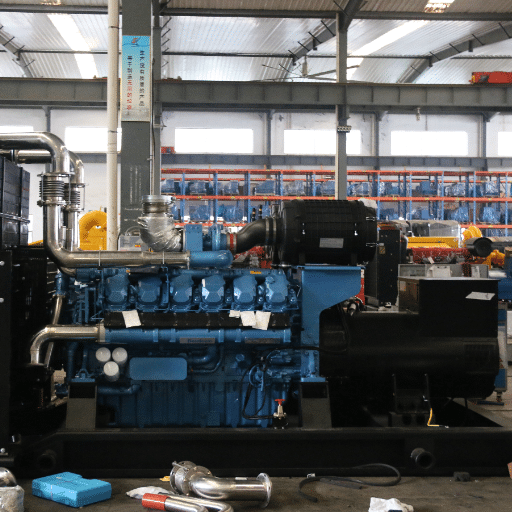
The foundation is the most frequently underestimated component of a generator set installation. It must support static weight, absorb dynamic vibration, resist thermal expansion, and maintain alignment between the engine, alternator, and driven accessories.
Foundation Types by Application
Concrete inertia blocks are the standard for industrial gensets. The block mass should be 1.5-2 times the total generator set weight. For a 4,000 kg unit, plan for 6,000-8,000 kg of reinforced concrete. The increased mass lowers the center of gravity and shifts the natural frequency away from engine harmonics.
Spring isolator systems are required when the genset is installed inside a building or on an upper floor. Spring isolators reduce vibration transmission to the building structure by 90% or more compared to rigid mounting. They require a sub-frame that maintains alignment under all operating conditions.
Vibration pads and neoprene mounts suit smaller units (under 200 kW) in non-critical applications. They are simpler and less expensive than spring isolators but provide less isolation at low frequencies.
Foundation Design Specifications
A proper inertia block foundation includes:
- Reinforced concrete with minimum 25 MPa compressive strength
- Rebar grid with 150-200 mm spacing in all three dimensions
- Anchor bolt sleeves or j-bolts cast into the concrete with millimeter-level positional accuracy
- A 100-150 mm crushed stone sub-base for drainage and load distribution
- Minimum 150 mm clearance on all sides for maintenance access
- Surface leveling within 3 mm per meter to prevent alternator bearing misalignment
Allow the concrete to cure for at least 28 days before placing the generator set. Early loading can cause micro-cracks that propagate under vibration, reducing the foundation’s effective lifespan.
Alignment and Grouting
Once the genset is positioned, check alignment between the engine and alternator flanges. Misalignment beyond 0.05 mm can cause coupling wear, bearing failure, and excessive vibration. After alignment verification, pour non-shrink epoxy grout under the baseframe to fill all voids and distribute loads evenly.
For a deeper engineering analysis of concrete specifications, vibration isolation products, and load calculations by kW class, refer to our dedicated guide on generator set foundation design.
Phase 3: Electrical System Integration
Electrical integration connects the generator set to the facility’s power distribution system through the automatic transfer switch, protection relays, and grounding network.
Automatic Transfer Switch (ATS) Installation
The ATS is the brain of a standby power system. It monitors utility voltage and frequency, initiates generator startup during outages, transfers the load after stabilization, and retransfers to utility when normal power returns.
Key installation requirements:
- Position the ATS as close as practicable to the main distribution panel to minimize cable runs
- Size conductors for 125% of rated continuous current per NEC or local electrical code
- Install bypass isolation capability for maintenance without interrupting power
- Program transfer delays: 1-3 seconds to avoid nuisance transfers during momentary sags; 10-30 minutes of engine cooldown before retransfer to utility
- Connect auxiliary contacts to the building management system (BMS) for remote status monitoring
For critical applications such as hospitals and data centers, consider a closed-transition ATS that momentarily parallels the generator and utility sources. This eliminates the brief power interruption during transfer but requires advanced synchronizing controls and utility approval.
Protection and Control Systems
Modern generator sets include digital control modules that manage voltage regulation, engine speed, alarm annunciation, and remote communication. During installation, program:
- Voltage and frequency setpoints within ±0.5% of nominal values
- Overcurrent and short-circuit protection curves coordinated with upstream breakers
- Engine alarm thresholds for low oil pressure, high coolant temperature, overspeed, and low fuel level
- Remote monitoring parameters for integration with SCADA or building automation systems
Test every protection function before energizing the load. A failed overcurrent relay during a fault condition can destroy the alternator and create a fire hazard.
Grounding and Bonding
Proper grounding protects personnel and equipment from electrical faults. The generator installation must include:
- A dedicated equipment grounding conductor (EGC) sized per code requirements
- Connection to the facility’s main grounding electrode system
- Ground fault protection for solidly grounded and high-resistance grounded systems
- Surge protective devices (SPDs) at the generator output and ATS to protect against lightning and switching transients
Neutral grounding deserves special attention. In many jurisdictions, the generator neutral must be bonded to ground at a single point, typically at the ATS, to prevent circulating currents and ground fault detection errors.
Mini-Story: The Neutral Grounding Oversight
In November 2024, a data center operator in Eastern Europe commissioned a 1,500 kW generator set with a new ATS. The electrical contractor bonded the generator neutral to the frame at the genset and also bonded the neutral at the ATS. When utility power failed and the ATS transferred to generator, ground fault current circulated through both bonding points, creating a 45-amp ground loop. The ground fault detector tripped repeatedly, causing the generator to shut down within minutes of every transfer. Engineers traced the problem to the double neutral bond in two hours, but the data center experienced two hours of unplanned downtime during diagnosis. The fix, removing the genset neutral bond and relying solely on the ATS bond, took 20 minutes. The operator later estimated the incident cost $120,000 in service credits and SLA penalties.
For a detailed walkthrough of NEC Article 445 and 700 compliance, ATS sizing, and grounding electrode system design, see our guide on generator set electrical connection.
Phase 4: Fuel System and Exhaust Configuration

Diesel generator sets consume significant fuel under load. A 1,000 kW unit at full output burns approximately 250 liters of diesel per hour. The fuel system must deliver clean fuel at the correct pressure and temperature while meeting all safety and environmental requirements.
Fuel Storage and Day Tanks
Most industrial installations use a bulk storage tank with a smaller day tank adjacent to the generator. The bulk tank provides multi-day runtime; the day tank ensures immediate fuel availability at the engine’s lift pump.
Design parameters:
- Bulk tank capacity: Size for the required runtime at full load. NFPA 110 Level 1 systems (hospitals, data centers) require 96 hours of fuel. Many industrial clients specify 24-48 hours as a practical minimum.
- Day tank capacity: Typically 8-12 hours of runtime, with automatic refill from the bulk tank via transfer pumps
- Fuel cleanliness: Install water separators, particulate filters (10 micron minimum), and algae treatment systems
- Leak detection: Double-wall tanks with interstitial monitoring are standard for environmental compliance
- Venting: Properly sized vents prevent vacuum lock during high consumption and pressure buildup during thermal expansion
For tropical or high-humidity environments, fuel polishing systems remove water and microbial contamination before it reaches the engine injectors. Polishing extends filter life and prevents corrosion in the fuel injection system.
Exhaust System Design
Diesel exhaust gases exit the engine at 400-600°C and must be safely routed outside the building. Exhaust system design affects backpressure, noise, and safety.
Exhaust piping: Use stainless steel or aluminized steel rated for continuous high temperatures. Minimize bends and keep total backpressure below the engine manufacturer’s limit, typically 6.7 kPa (27 inches of water) for turbocharged engines. Excessive backpressure reduces power output, increases fuel consumption, and can damage turbocharger bearings.
Insulation: Wrap exhaust pipes within 3 meters of the engine with high-temperature insulation to protect personnel and reduce radiant heat load on the engine room. Insulated blankets or pre-formed insulation sections are standard.
Mufflers and silencers: Industrial-grade mufflers reduce exhaust noise by 15-35 dB(A). Critical applications may require residential-grade or hospital-grade silencers for additional attenuation. Position silencers outside the building when possible to reduce indoor noise levels.
Rain caps and spark arrestors: Outdoor exhaust stacks need rain caps to prevent water ingress. Installations in forested or agricultural areas may require spark arrestors to comply with fire safety codes.
For detailed back pressure limit tables by engine manufacturer, muffler sizing guidance, and EPA Tier 4 exhaust aftertreatment compliance, explore our article on generator set exhaust system installation. For deeper coverage of day tank configurations, piping material selection, and leak detection codes, see our guide on generator set fuel system installation.
Phase 5: Cooling, Ventilation, and Environmental Controls
Diesel engines reject approximately 30% of fuel energy as heat through the radiator, 30% through exhaust, and smaller percentages through convection and radiation. Managing this heat is essential for reliable operation and personnel safety.
Radiator and Coolant Systems
Most industrial generator sets use a closed-loop coolant system with a radiator-mounted cooling fan. Installation requirements include:
- Clearance: Minimum 1.5 times the radiator core height for unrestricted airflow on the discharge side
- Ducting: If the engine room layout forces ducted airflow, size ducts for air velocities below 8 m/s to minimize fan load and noise
- Coolant: Use a 50/50 mixture of ethylene glycol and deionized water, or the manufacturer’s specified long-life coolant
- Heaters: Install block heaters in cold climates to maintain coolant temperature above 32°C for reliable cold-starting
For large installations or tropical environments, remote radiator systems separate the heat exchanger from the engine room. Coolant circulates through insulated piping to a roof-mounted radiator, reducing indoor temperature and noise.
Engine Room Ventilation
The engine room requires two ventilation airflows:
- Combustion air: Air drawn into the engine intake for fuel burning. A 1,000 kW diesel engine consumes approximately 4,500 m³/h of combustion air.
- Cooling air: Air circulated through the room to remove radiant heat from the engine, alternator, and exhaust pipes.
Total ventilation airflow typically equals radiator airflow plus a 10-20% margin. Provide intake and exhaust louvers sized for air velocities of 3-4 m/s to minimize pressure drop and rain intrusion. Install motorized dampers that close when the generator is not running to maintain building climate control.
Noise Control
Industrial generator sets produce 85-105 dB(A) at 1 meter. Without treatment, this exceeds occupational exposure limits and creates community complaints.
Noise control measures include:
- Acoustic enclosures: Factory-built enclosures with insulated panels and baffled ventilation reduce noise by 15-25 dB(A)
- Engine room treatment: Acoustic wall panels, acoustic doors, and sealed cable penetrations for building-integrated installations
- Exhaust silencers: As discussed in Phase 4, properly sized silencers are the single most effective noise reduction measure
- Vibration isolation: Foundation isolation prevents structure-borne noise from propagating through the building
When specifying noise limits, distinguish between free-field and reverberant-field measurements. A generator rated at 75 dB(A) at 1 meter in free field may measure 80 dB(A) or higher in a hard-surfaced engine room due to sound reflection.
For practical airflow formulas, heat rejection tables by engine model, and remote radiator vs heat exchanger decision frameworks, refer to our guide on generator set ventilation requirements. For dB level targets by application, enclosure types, and acoustic barrier design, see our article on generator set noise reduction.
Phase 6: Testing, Commissioning, and Handover
Commissioning validates that every system, mechanical, electrical, and environmental, performs as designed under actual operating conditions. It is the final quality gate before the generator set enters service.
Pre-Start Checks
Before the first startup, verify:
- All fluids at correct levels: engine oil, coolant, and fuel
- Battery voltage and electrolyte levels; confirm battery charger operation
- Belt tensions and hose clamp security
- Exhaust system integrity; no leaks at joints or gaskets
- Fuel system tightness; no leaks at filters, pumps, or connections
- Control panel programming; correct voltage, frequency, and protection settings
- Safety interlocks: emergency stop buttons, overspeed shutdowns, low oil pressure trips
Initial Startup and No-Load Test
Start the generator and run at no-load for 15-30 minutes. Monitor:
- Oil pressure reaching and stabilizing within manufacturer specifications (typically 2.5-5.5 bar)
- Coolant temperature rising smoothly to normal operating range (75-95°C)
- Voltage and frequency stabilizing at rated values within 10 seconds of reaching rated speed
- No abnormal noises, vibrations, or smoke emissions
Load Bank Testing
Load bank testing is the most critical commissioning activity. It proves the generator can deliver rated power, regulates voltage and frequency under load, and manages thermal performance.
Test protocol:
- 25% load: Run for 15 minutes; verify stable voltage and frequency
- 50% load: Run for 15 minutes; monitor coolant and oil temperatures
- 75% load: Run for 15 minutes; check for smoke or abnormal exhaust color
- 100% load: Run for 30-60 minutes; record all operating parameters; verify no alarms or derating
- 110% load (if standby rated): Run for 1 hour per NFPA 110 requirements for Level 1 systems
- Load rejection: Remove 100% load suddenly; verify voltage spike remains within ±15% and frequency overshoot settles within 5 seconds
For installations with an ATS, perform at least three automatic transfer tests: simulate utility failure, verify generator start and load transfer, then simulate utility return and verify retransfer and cooldown.
Documentation and Training
Commissioning is not complete until documentation is delivered and operators are trained. Provide the end user with:
- As-built drawings: single-line diagrams, piping layouts, foundation details
- Test reports: load bank data, protection relay settings, insulation resistance measurements
- Operation manual: startup/shutdown procedures, alarm response, emergency actions
- Maintenance schedule: daily, weekly, monthly, and annual tasks with intervals
- Spare parts list: recommended initial spares for the first 2,000 operating hours
Train at least two operators on startup, shutdown, alarm interpretation, and safe isolation procedures. Document the training with sign-off sheets for warranty and insurance purposes.
For a structured commissioning workflow aligned with NFPA 110 and manufacturer warranty requirements, including a digital checklist framework, see our dedicated guide on the generator set commissioning procedure.
Mini-Story: The Missing Load Bank Test
In January 2025, a hospital in West Africa accepted delivery of a 500 kW standby generator set without commissioning load bank testing. The contractor started the unit, verified voltage output, and declared it ready. Six months later, during the first extended utility outage, the generator ran for four hours before the alternator winding temperature reached 165°C, 20°C above the insulation class limit. The automatic thermal protection shut down the unit, leaving the hospital without power during a critical surgery. Post-incident analysis revealed a partially blocked radiator caused by construction debris that had entered during installation. A proper load bank test would have revealed the overheating trend within 30 minutes. The hospital now mandates full NFPA 110 commissioning for every generator set, regardless of project schedule pressure.
Common Installation Mistakes and How to Avoid Them
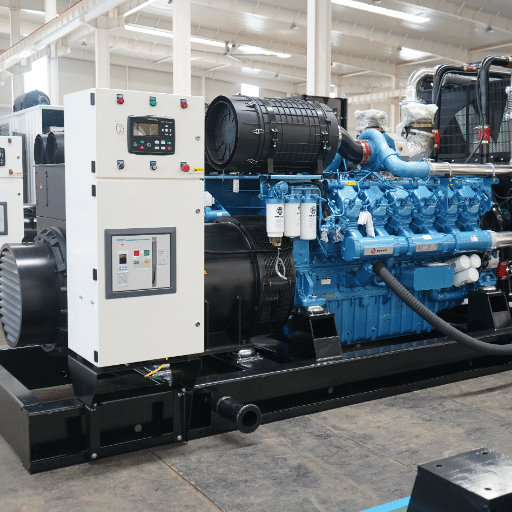
Even experienced contractors make errors. Here are the most frequent and costly mistakes:
Undersized Fuel Lines
Fuel line diameter must accommodate full-load consumption plus return flow. Undersized lines create vacuum at the lift pump, causing cavitation, hard starting, and power loss. Size fuel lines using the manufacturer’s fuel consumption rate, line length, and allowable pressure drop, typically 0.5 bar maximum from tank to engine.
Inadequate Combustion Air
Engine rooms with insufficient intake louvers create negative pressure. The engine cannot breathe properly, reducing power output and increasing smoke. Always calculate combustion air plus ventilation air requirements, then verify louvers are not blocked by filters, screens, or snow accumulation.
Improper Exhaust Routing
Horizontal exhaust runs must slope back toward the engine to drain condensation. Vertical runs need condensate drains at the lowest point. Rain caps on outdoor stacks prevent water ingestion that can hydrolock the engine. These details are easy to overlook but expensive to correct.
Skipping Vibration Isolation
Rigid-mounted generators transmit vibration to the building structure. Over months, this loosens electrical connections, cracks concrete, and damages adjacent equipment. Always verify the foundation natural frequency and provide isolation appropriate for the building type and generator size.
No Load Bank Testing
Running a generator at no-load or light-load during commissioning does not validate performance. Many problems, overheating, voltage regulation instability, fuel system limitations, only appear under full load. Budget time and equipment for proper load bank testing in every project.
For an expanded analysis of foundation errors, exhaust leaks, grounding faults, and other field failures with prevention strategies, see our guide on common generator set installation mistakes.
When to Upgrade from Standard to Custom Installation
Standard generator set installations suit typical commercial and light industrial applications. Custom installations become necessary when:
Application demands exceed standard ratings: Data centers requiring 10-second startup and zero-transfer-time paralleling need synchronized controls and fast-acting breakers beyond standard ATS packages.
Environmental conditions are extreme: Desert installations need sand filtration, oversized radiators, and sealed electrical enclosures. Arctic installations require arctic-grade fluids, insulated enclosures, and pre-heating systems.
Regulatory requirements are stringent: Hospitals under NFPA 99, data centers under Uptime Institute standards, and nuclear facilities under 10 CFR 50 each impose installation requirements that exceed standard practice.
Fuel alternatives are required: Natural gas, biogas, or dual-fuel installations need gas train design, pressure regulation, and leak detection systems not found in diesel-only packages.
Paralleling and redundancy are needed: Installations with multiple generators operating in parallel require synchronizing controls, load sharing systems, and closed-transition logic that must be engineered for the specific electrical topology.
For these applications, work with a manufacturer or integrator that provides turnkey engineering support from initial specification through final commissioning. The additional upfront investment in custom design prevents costly retrofitting and ensures compliance with all applicable codes.
For a detailed breakdown of installation costs by kW class, labor vs equipment ratios, and regional price variations, see our article on generator set installation cost.
Conclusion
Generator set installation is a multi-discipline engineering process where attention to detail determines decades of reliability. From foundation design that absorbs vibration rather than amplifying it, to electrical integration that prevents ground loops, to commissioning tests that reveal hidden defects before they cause outages, each phase builds on the last.
The six phases covered in this guide, planning, foundation, electrical, fuel and exhaust, cooling, and commissioning, represent the minimum standard for industrial installations. Skipping any phase or treating it as an afterthought introduces risk that compounds over time.
For standard commercial installations, a qualified electrical contractor with generator experience can execute most of this scope. For industrial, critical, or complex projects, engineering support from the generator manufacturer ensures the installation matches the design intent and meets all warranty requirements.
Ready to plan your generator set installation? Contact our engineering team for site assessment support, custom foundation design, or turnkey installation services tailored to your project requirements.