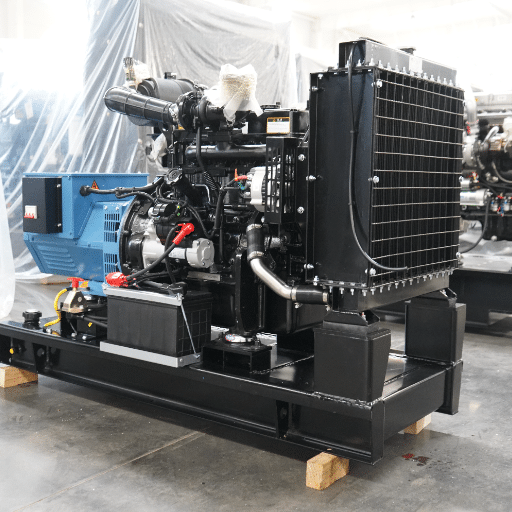

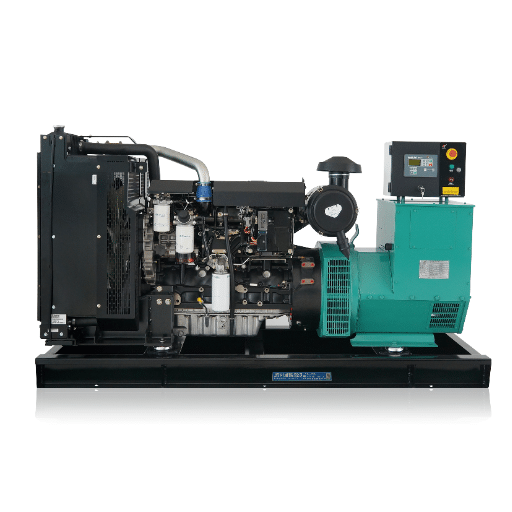
A fuel efficient diesel generator is a genset that converts diesel fuel into electrical power with low specific fuel consumption, typically in the range of 0.20–0.28 L/kWh for modern engines. For industrial and commercial buyers, fuel efficiency is not a luxury. It is the largest controllable operating cost over the life of the machine.
When Rajesh took over operations at a plastics plant near Ho Chi Minh City in early 2025, he inherited a 500 kW standby set. It sounded impressive on paper. In practice, it ran at less than 35% load during outages and burned through diesel at roughly 0.38 L/kWh. Within one year, fuel costs alone had erased the supposed savings from the low purchase price. His experience is common. Many buyers focus on upfront cost and ignore the fuel curve. They discover too late that the “cheap” generator is the expensive one.
This guide explains what makes a diesel generator fuel efficient. You will learn how to calculate fuel consumption for your actual load profile and which engine choices perform best under different duty cycles. You will also get practical steps to cut fuel burn and a clear framework for comparing total cost of ownership.
Key Takeaways
- Fuel efficiency is best measured as specific fuel consumption (SFC), typically 0.20–0.28 L/kWh for modern diesel gensets.
- The optimal operating band is 60–80% of rated load; light loading wastes fuel and damages engines.
- Cummins handles variable loads well, Perkins often saves fuel at medium loads, and MTU excels at continuous high-load duty.
- Regular maintenance and load management can cut fuel use by 5–15%.
- Total cost of ownership usually favors a slightly higher upfront investment in a fuel-optimized package.
What Makes a Diesel Generator Fuel Efficient?

Efficiency starts with the engine. A diesel generator burns fuel to spin an alternator that produces electricity. Not all of that fuel energy becomes electricity. Modern diesel engines convert roughly 30–40% of the fuel’s energy into mechanical work. The rest leaves as heat, exhaust, cooling losses, and friction. A fuel-efficient diesel generator minimizes those losses and matches the engine to the operating load.
Specific Fuel Consumption (SFC) Explained
The standard metric is specific fuel consumption, or SFC. It measures how much fuel the engine uses per unit of electrical output. SFC is usually expressed as liters per kilowatt-hour (L/kWh) or grams per kilowatt-hour (g/kWh). Diesel density is roughly 0.835 kg/L, so 200 g/kWh equals about 0.24 L/kWh.
A lower SFC means the generator produces more electricity per liter of diesel. The difference matters. A 250 kW set running 2,000 hours per year at 0.22 L/kWh will consume about 110,000 liters. The same set at 0.28 L/kWh will consume 140,000 liters. At 1.00perliter,that0.06L/kWhgapcosts∗∗1.00perliter,that0.06L/kWhgapcosts∗∗30,000 per year**.
SFC is not fixed. It changes with load, ambient temperature, altitude, fuel quality, and engine condition. Manufacturer data sheets usually show SFC at 100% load under ideal test conditions. Real-world operation rarely matches the test cell. Ask the supplier for fuel curves at 25%, 50%, 75%, and 100% load.
Modern Fuel Systems That Improve Efficiency
Several technologies help modern diesel generators reach better SFC:
- Common-rail fuel injection: High-pressure rails deliver precise fuel quantities and multiple injection events per cycle, improving combustion and reducing waste.
- Electronic governors: These systems adjust engine speed and fuel delivery in real time, keeping the engine in its optimal operating range.
- Turbocharging with intercooling: Forced induction increases air density, allowing more complete combustion and higher output from the same displacement.
- Optimized combustion chambers: Modern piston and cylinder-head designs improve air-fuel mixing, especially at partial loads.
Engines built before roughly 2010 often lack these features. An older mechanical-injection unit can consume 10–25% more fuel than a modern electronically governed equivalent.
Emissions Standards and Efficiency Trade-Offs
EPA Tier 4 Final and EU Stage V regulations force manufacturers to control particulate matter and nitrogen oxides. Engines use exhaust gas recirculation, diesel oxidation catalysts, diesel particulate filters, and selective catalytic reduction to comply. Some buyers worry that emissions equipment hurts fuel economy. In practice, modern Tier 4 engines are often more efficient than older designs because they use precise electronic controls to balance combustion and emissions.
The real trade-off is upfront cost and maintenance complexity. A Tier 4 package costs more initially and requires urea (DEF) for SCR systems. For generators running many hours per year, the fuel savings usually recover the extra investment.
Diesel Generator Fuel Efficiency Chart by kVA
A diesel generator fuel efficiency chart helps buyers estimate operating cost quickly. The figures below show typical diesel generator fuel consumption for modern industrial generators at common load levels. Always confirm with the manufacturer for the specific engine model.
| Generator Size | 50% Load | 75% Load | 100% Load |
|---|---|---|---|
| 20 kVA | 2.0–2.5 L/h | 3.0–3.7 L/h | 4.0–5.0 L/h |
| 50 kVA | 5.0–5.5 L/h | 7.5–8.0 L/h | 10.0–11.0 L/h |
| 100 kVA | 10.0–11.0 L/h | 15.0–16.0 L/h | 20.0–22.0 L/h |
| 150 kVA | 15.0 L/h | 22.5 L/h | 30.0 L/h |
| 200 kVA | 20.0 L/h | 30.0 L/h | 40.0 L/h |
| 250 kVA | 25.0–30.0 L/h | 37.5–40.0 L/h | 45.0–50.0 L/h |
| 500 kVA | 50.0–55.0 L/h | 75.0–82.0 L/h | 100.0–110.0 L/h |
| 1,000 kVA | ~100 L/h | ~150–165 L/h | ~200–220 L/h |
Notice that fuel use per kWh is usually lowest around 75% load. Below 50%, the engine is underworked relative to its displacement and cooling system, so each kilowatt-hour costs more fuel. Above 100%, SFC may rise again, and engine stress increases.
How Power Factor Affects Real kW Output
Generator ratings are usually given in kVA, but fuel consumption depends on real power in kW. The relationship is:
kW = kVA × Power Factor
For most industrial loads, the power factor is approximately 0.8. A 100 kVA generator therefore delivers about 80 kW of real power. If your site has a poor power factor due to motors and transformers, the generator must supply more reactive current, which increases fuel use without delivering useful work. Power factor correction can improve real efficiency.
How to Calculate Fuel Consumption for Your Fuel Efficient Diesel Generator

Accurate fuel budgeting for a fuel efficient diesel generator starts with a load profile, not a catalog table. Follow these steps to estimate real fuel use.
Step 1: List Connected Loads
Record every piece of equipment the generator will power. Include:
- Motors and pumps
- Lighting and HVAC
- Production machinery
- Control systems and IT loads
For each item, note the rated kW and an estimated run time per day or week.
Step 2: Apply a Diversity Factor
Not all connected equipment runs at full power at the same time. Multiply the connected load by a diversity factor, typically 0.70–0.85 for factories and 0.50–0.70 for commercial buildings. This gives the expected maximum demand.
Step 3: Add Motor Starting Surge
Large motors draw high inrush current when they start directly online. A 30 kW motor can briefly demand 150–180 kVA. The generator must handle the surge without excessive voltage dip, but surge events do not last long enough to dominate fuel consumption. The steady-state running load matters most for fuel budgeting.
Step 4: Size with a Safety Margin
Add 20–25% headroom to the expected maximum demand. This leaves room for load growth, measurement uncertainty, and transient peaks. The result is your target generator kW rating.
Step 5: Use the Fuel Formula
The standard estimate is:
Fuel (L/h) = kW output × SFC (L/kWh) × Load percentage
Example: A 200 kW generator running at 75% load with an SFC of 0.22 L/kWh will consume:
200 kW × 0.22 L/kWh × 0.75 = 33 L/h
At 4,000 run hours per year, that is 132,000 liters. Reducing SFC to 0.20 L/kWh saves 8,000 liters annually.
Reading Manufacturer Fuel Curves
OEM fuel curves show consumption across the load range. Look for:
- Values at 25%, 50%, 75%, 100%, and 110% load
- Whether the figures include the cooling fan and alternator losses
- Correction factors for altitude and temperature
- Whether the engine is tested with light or heavy fuel oil
If the curve only shows 100% load, ask the supplier for partial-load data. Many real-world generators spend most of their lives between 50% and 80% load.
Industrial Diesel Generator Fuel Efficiency by Engine Brand

Engine choice is one of the biggest drivers of industrial diesel generator fuel efficiency. The right brand depends on how the generator will actually run.
Cummins — Strong Partial-Load Performance
Cummins engines are widely used in prime and standby power around the world. They are vertically integrated. Cummins designs the engine, fuel system, and controls together. This integration gives Cummins generators strong performance under variable and partial loads. If your facility has fluctuating demand, a Cummins-powered set can maintain stable fuel economy across a wide load range.
Typical applications include hospitals, data centers, industrial plants, and mining operations. Cummins also has a global service network. That matters for buyers in remote locations.
Perkins — Fuel Economy for Medium-Duty Standby
Perkins engines are often cited as 5–10% more fuel-efficient than equivalent Cummins units under typical medium-load operation. They are popular for commercial standby, telecom towers, construction sites, and agricultural use. Perkins engines also tend to have simpler maintenance access and broad parts availability, which reduces lifetime service cost.
For buyers whose generators run steady loads in the 50–80% range, Perkins is frequently the most cost-effective choice.
MTU — Efficiency at Continuous High Load
MTU occupies the premium tier. Its engines excel in continuous high-load duty. Examples include prime power for industrial plants, large data centers, and mission-critical infrastructure. MTU’s common-rail injection and electronic engine management allow many configurations to achieve SFC below 200 g/kWh at high loads.
The trade-off is higher upfront cost and more specialized service. MTU makes sense when the generator runs many hours per year. Fuel cost then dominates total ownership cost.
How Shandong Huali Matches Engine to Duty Cycle
As an OEM generator manufacturer, Shandong Huali does not force every buyer into the same engine. We select the engine, alternator, and control package based on the actual duty cycle. For a factory with steady 24/7 production, we may recommend a Perkins or MTU package tuned for continuous duty. For a hospital with variable emergency loads, a Cummins-powered standby set may be the better fit.
This matching process is one reason customized generator packages often deliver lower lifetime cost than off-the-shelf units. Want to see how this works for your project? Contact the Shandong Huali engineering team for a duty-cycle analysis.
6 Practical Ways to Improve Diesel Generator Fuel Efficiency
Even a well-specified generator can waste fuel if it is operated poorly. These six practices deliver measurable savings.
1. Right-Size the Unit
Oversizing is one of the most common mistakes. A generator that is too large for the load spends most of its time below 50% load, where fuel per kWh is highest. Right-sizing means matching the generator to the expected maximum demand plus 20–25% headroom, not to the sum of every possible connected load.
A food processing plant in Kenya learned this the hard way. The procurement team specified a 500 kVA set because it was only slightly more expensive than a 250 kVA unit. Two years later, data showed the plant never exceeded 120 kVA. Fuel consumption per kWh was 30% higher than necessary. Downsizing to a 200 kVA unit paid for itself in 14 months.
2. Avoid Chronic Light Loading
Running below 30–40% load for long periods causes wet stacking, where unburned fuel and carbon accumulate in the exhaust system. Wet stacking reduces efficiency, increases maintenance, and can damage the engine. If light loading is unavoidable, schedule regular load-bank testing to clear the engine and verify performance.
3. Maintain Filters, Injectors, and Oil
Dirty air filters, worn injectors, and degraded oil all increase fuel consumption. A clogged air filter alone can raise fuel use by 3–5%. Worn injectors that do not atomize fuel properly can add another 5–10%. Follow the manufacturer’s generator maintenance checklist and use quality filters and lubricants.
4. Use Quality Diesel and Monitor Fuel Temperature
Fuel quality affects combustion efficiency. Water, sediment, and incorrect viscosity cause poor combustion and higher consumption. Store diesel in clean tanks, use water separators, and avoid long-term storage without fuel treatment. Fuel temperature also matters; very cold fuel is denser and can alter injection timing and combustion.
5. Install Load Management and Remote Monitoring
Modern digital control panels can schedule loads, start and stop multiple generators in sequence, and send alerts when efficiency drops. For sites with multiple sets, synchronizing generators and matching the number of running units to the load prevents individual units from running at light load. Remote monitoring also catches problems early, before they waste fuel or cause downtime.
6. Consider Hybrid or Synchronized Systems
For sites with highly variable loads, a diesel-battery hybrid system can reduce runtime fuel burn. The diesel generator runs at its optimal load point while charging a battery bank. During low-demand periods, the battery supplies power and the generator shuts down. In some applications, this can cut annual fuel use by 20–40%.
Fuel Efficiency vs. Total Cost of Ownership

Purchase price is only one part of the equation. For a generator that runs regularly, fuel and maintenance usually represent 60–80% of total cost of ownership over 5–10 years.
Upfront Cost vs. Lifetime Fuel Spend
A premium fuel-efficient diesel generator may cost 15–30% more upfront than a basic unit. If it saves 5–10% in fuel and runs 3,000 hours per year, the extra investment often pays back within two to three years. After that, the savings continue.
The table below compares three hypothetical 250 kW generators over 5 years. Assumptions are 2,000 hours per year and $1.00 per liter of diesel.
| Generator Option | Upfront Cost | SFC at 75% Load | 5-Year Fuel Cost | 5-Year TCO |
|---|---|---|---|---|
| Basic mechanical unit | $45,000 | 0.28 L/kWh | $210,000 | $255,000 |
| Modern electronic unit | $55,000 | 0.24 L/kWh | $180,000 | $235,000 |
| Premium optimized unit | $65,000 | 0.21 L/kWh | $157,500 | $222,500 |
The premium option has the lowest total cost despite the highest purchase price. This is why experienced buyers evaluate generators as long-term assets, not one-time purchases.
When Premium Engines Pay for Themselves
Premium engines like MTU or high-spec Cummins packages make the most sense when:
- Annual runtime exceeds 1,500 hours
- Fuel prices are high or unstable
- Load is continuous and near the generator’s rated capacity
- Downtime is extremely costly
For occasional standby duty, a mid-range efficient unit may be the better value. The key is matching the technology to the duty cycle.
FAQ
What is the most fuel efficient diesel generator brand?
There is no single best brand for every application. MTU excels at continuous high-load duty with SFC below 200 g/kWh. Perkins is often the most fuel-efficient choice for medium-load standby and commercial use. Cummins performs well across variable loads. The most efficient choice depends on your load profile, runtime, and fuel price.
How much diesel does a 100 kVA generator use per hour?
At 100% load, a modern 100 kVA generator typically uses 20–22 liters per hour. At 75% load, consumption drops to about 15–16 L/h, and at 50% load it is roughly 10–11 L/h. Exact figures vary by engine brand, age, and operating conditions.
Does a larger generator use more fuel at the same load?
Yes, usually. A larger generator running at light load consumes more fuel per kWh than a properly sized smaller generator at moderate load. For example, a 500 kVA set supplying 100 kW will generally use more fuel per kWh than a 150 kVA set supplying the same 100 kW.
How does altitude affect diesel generator fuel consumption?
Air density decreases with altitude, so the engine receives less oxygen per intake stroke. Power output drops. Fuel consumption per kWh rises. A common rule of thumb is a 3% power derating and corresponding fuel increase for every 300 meters above sea level. Turbocharged engines handle altitude better than naturally aspirated engines.
Can maintenance really improve fuel efficiency?
Yes. Clean air and fuel filters, properly functioning injectors, correct valve clearance, and fresh oil can reduce fuel consumption by 5–15%. Poor maintenance also leads to wet stacking, incomplete combustion, and carbon buildup, all of which waste fuel.
Is a silent enclosure less fuel efficient?
A well-designed acoustic enclosure has minimal direct impact on fuel efficiency. However, poor ventilation in a silent canopy can raise engine compartment temperature, which reduces air density and may increase fuel consumption. Proper cooling airflow design is essential for silent sets running long hours.
Conclusion
Fuel efficiency is one of the most important factors in diesel generator selection, especially for industrial and commercial users. A fuel efficient diesel generator is not just about a low SFC number on a data sheet. It is about matching the engine to the real load profile. It is about operating it in the optimal load band and maintaining it properly over time.
The key takeaways are clear. Measure efficiency by specific fuel consumption. Size the generator correctly. Choose the engine brand for your duty cycle. Keep the unit maintained. Evaluate total cost of ownership, not just purchase price.
Shandong Huali designs generator packages for real operating conditions. We can help you select the most fuel-efficient solution for your application. Request a fuel-efficiency quote and we will analyze your load profile, runtime, and fuel costs to recommend the right package.