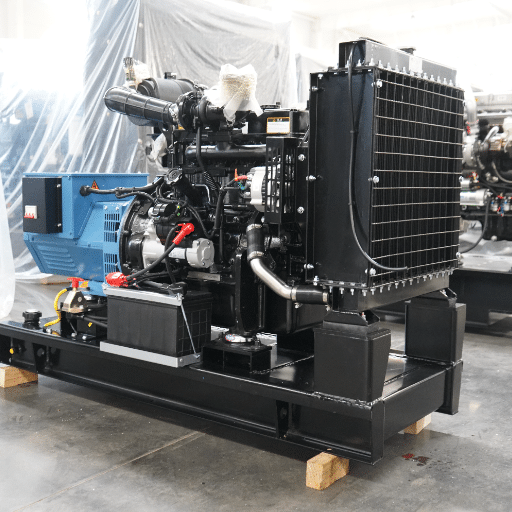



A diesel generator maintenance checklist is a structured schedule of inspections, fluid changes, load tests, and component replacements that keeps a genset ready to start and able to run at rated output. It covers daily visual checks, weekly exercise runs, monthly filter and battery checks, quarterly system inspections, and annual oil changes, load-bank testing, and automatic-transfer-switch (ATS) verification.
Marcus, a facility manager at a 400-bed hospital in Texas, learned this the hard way. In November 2024, his team skipped three monthly load tests because the unit “looked fine.” During a winter storm, the 1,000 kW standby set started, ran for eight minutes under load, then shut down on high coolant temperature. The root cause was a partially blocked radiator and a failed thermostat, both items a monthly checklist would have flagged. The repair cost $38,000. The cost of the missed checks? About two hours of operator time.
This guide gives you a complete diesel generator maintenance checklist built for industrial units from 25 kW to 2,000 kW. It includes daily through annual tasks, NFPA 110 and ISO 8528-5 compliance guidance, and real 2026 cost data you can use to budget maintenance or negotiate a service contract.
Key Takeaways
- Structured preventive maintenance prevents roughly 70% of generator failures and costs far less than emergency repairs.
- NFPA 110 requires weekly visual inspections, a monthly 30-minute exercise, and an annual load-bank test at 50% for 30 minutes plus 75% for 60 minutes.
- Maintenance intervals differ by duty rating: standby (ESP), prime (PRP), and continuous (COP) units do not share the same oil-change or inspection schedules.
- Annual maintenance contracts range from roughly 1,000fora25−100kWstandbysetto1,000fora25−100kWstandbysetto10,000-$25,000+ for a 1,000+ kW industrial unit.
- Operator-level checks handle fluids, leaks, and alarms; certified technicians should perform oil changes, coolant flushes, load-bank tests, and ATS functional tests.
Want the full maintenance picture first? Read our complete generator maintenance guide for duty ratings, predictive maintenance, and long-term service planning.
What Happens When You Skip Diesel Generator Maintenance
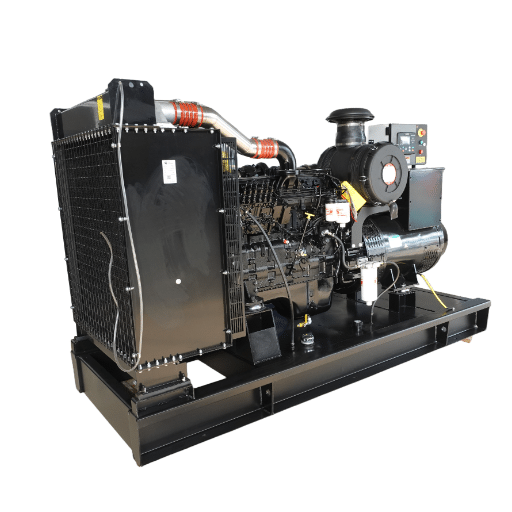
Diesel engines are durable, but they are not forgiving. Small problems compound quickly when a unit sits unused for weeks or months. The most common failures we see in the field are not sudden mechanical catastrophes, they are the result of gradual degradation that a checklist would have caught early.
Wet stacking is one example. When a diesel engine runs at light load or no load for long periods, combustion temperatures stay too low to burn off carbon and unburned fuel. The exhaust system and piston rings become coated with thick, oily soot. Over time, this reduces compression, increases oil consumption, and can damage the turbocharger. A monthly exercise at or above 30% of rated load prevents it.
Fuel contamination is another silent problem. Diesel fuel absorbs water, supports microbial growth, and leaves sediment in tanks. Contaminated fuel clogs filters, corrodes injectors, and can cause a no-start when backup power is needed most. A simple monthly water-separator drain and an annual fuel-polishing cycle solve most of it.
Battery failure is the single most common reason a generator fails to start. Lead-acid batteries sulfate when left at partial charge, and standby units spend most of their lives on float charge. Monthly voltage and load tests catch weak batteries before they strand the set.
The financial pattern is consistent across sites: reactive maintenance costs 3-9 times more than planned preventive work. A 45fuel−filterreplacementpreventsa45fuel−filterreplacementpreventsa2,800 injector service. A 1,500annualservicecontractpreventsa1,500annualservicecontractpreventsa15,000-$60,000 engine rebuild. Skipping the checklist is the expensive option.When symptoms like blue exhaust, hard starting, or low output do appear, our complete guide to generator troubleshooting helps you trace each one back to its root cause before it escalates.
The 6-System Diesel Generator Maintenance Framework
Every diesel generator is a combination of six subsystems. Treating them as separate systems makes the checklist easier to follow and ensures nothing is missed.
Fuel System Maintenance
Clean fuel is the foundation of reliable starting and steady output. Diesel fuel degrades over time, especially in hot climates or when tanks are partially filled and allow condensation.
Daily: Visually check the fuel level and look for leaks at lines, fittings, and the day tank. Confirm there is enough fuel for the required runtime.
Weekly: Inspect the fuel cap, vents, and seals. Water and debris enter through the smallest openings.
Monthly: Drain the water separator and primary filter bowl. Check for cloudiness, sediment, or slime that indicates microbial growth. Inspect secondary fuel filters for restriction.
Annually: Polish the fuel, clean or inspect the bulk storage tank, and send a fuel sample for contamination testing. Replace injectors and lift pumps according to the engine manufacturer’s hour-based schedule.If you are unsure how load, duty rating, and climate should adjust your drain timing, our guide to the correct generator oil change interval shows how to set the right schedule for your unit.
Industrial note: Bulk storage tanks should be internally inspected every 3-5 years, depending on local environmental rules and fuel throughput.
Lubrication System Maintenance
Engine oil does more than lubricate. It cools pistons, suspends soot and wear particles, neutralizes acids, and protects bearings during startup. Degraded oil accelerates ring wear and blow-by, which is why OEMs specify different oil-change intervals for different duty ratings.
Oil change intervals:
- Break-in service: after the first 30-50 operating hours
- Prime power (PRP): every 250 hours or per oil analysis
- Standby power (ESP): every 12 months or 500 hours, whichever comes first
- Continuous power (COP): every 250 hours or per oil analysis
Monthly: Check oil level, color, and odor. Milky oil indicates coolant intrusion. Fuel-diluted oil smells like diesel and thins quickly.
Quarterly or per interval: Change oil and oil filters together. Never install a new filter without an oil change.
Annually: Send an oil sample for analysis. Trend data on viscosity, soot, metals, and coolant traces can predict bearing wear, ring condition, and head-gasket health 500+ hours before symptoms appear.
Industrial note: In regions with high-sulfur diesel or high ambient temperatures, shorten oil-change intervals by 20-30%.
Cooling System Maintenance
Overheating is a top cause of forced outages. The cooling system must remove heat from the engine block, cylinder heads, turbocharger, and aftercooler while protecting against corrosion and freezing.
Daily: Verify coolant level in the expansion tank or radiator. Look for leaks under the unit and around hose connections.
Weekly: Inspect hoses, belts, and clamps for cracking, swelling, or soft spots. A single failed hose can empty the system in minutes.
Monthly: Check coolant concentration with a refractometer. A 50/50 mix of antifreeze and distilled water is standard for most climates. Verify that the block heater is operating in cold environments.
Annually: Flush and refill the cooling system, clean radiator fins, test the thermostat and pressure cap, and inspect the water pump for weep-hole leakage.
Industrial note: In high-dust environments such as mines or cement plants, blow out radiator fins monthly. In tropical locations, inspect the cooling fan and shroud quarterly for fatigue cracks.
Air Intake and Exhaust System Maintenance
A diesel engine breathes large volumes of air. Restricted intake airflow reduces power output and increases fuel consumption. Exhaust restrictions raise back-pressure, overheat the turbocharger, and accelerate valve wear.
Daily: Check the air-filter restriction indicator if equipped.
Weekly: Listen for exhaust leaks, inspect manifold and pipe insulation, and look for soot traces that indicate a leak.
Monthly: Inspect the air filter. Clean or replace it when restriction reaches the manufacturer limit. Do not wait for a scheduled interval if the environment is dusty.
Annually: Inspect the turbocharger for shaft play and oil leaks, measure exhaust back-pressure, and clean or replace the crankcase breather.
Industrial note: In mining or construction applications, weekly air-filter service is common. A clogged filter on a 500 kW prime-power unit can raise fuel consumption by 3-5%.
Electrical System Maintenance
The electrical system includes the alternator, automatic voltage regulator (AVR), control panel, wiring, and paralleling gear. Voltage instability, ground faults, and loose connections cause more nuisance trips than engine failures.
Daily: Check the control panel for active alarms, fault history, and display errors. Confirm the unit is in auto mode for standby applications.
Monthly: Inspect terminal blocks and cable lugs for corrosion, overheating, or looseness. Torque connections to the manufacturer’s specification.
Quarterly: Verify voltage and frequency under load. Check AVR stability and excitation system performance.
Annually: Have a qualified electrician or technician perform a full electrical inspection, including insulation resistance testing, ground-fault testing, and ATS functional testing.
Industrial note: Paralleled generator sets need quarterly synchronization and load-sharing checks. A single miscalibrated governor can destabilize the entire bus.
Battery and Starting System Maintenance
The starting system has one job: spin the engine fast enough to start within a few seconds. Weak batteries, corroded terminals, or a failing starter motor turn a reliable genset into an anchor.
Daily (for flooded batteries): Check electrolyte levels in each cell. Add distilled water as needed.
Weekly: Clean terminals and cable ends. Check specific gravity in flooded cells if a hydrometer is available.
Monthly: Measure battery voltage and perform a load test. Verify the battery charger output and float voltage.
Annually: Replace batteries before the end of their service life. Flooded lead-acid batteries typically last 3-5 years in standby service; AGM or VRLA batteries last 4-7 years.
Compliance note: NFPA 110 Level 1 emergency systems require battery capacity sufficient to support 90 minutes of cranking and control power.
Frequency-Based Diesel Generator Maintenance Checklist

This matrix turns the six-system framework into daily, weekly, monthly, quarterly, annual, and 36-month tasks. Use it as the core of your preventive maintenance program.For a version organized around duty ratings and hour meters rather than pure frequency, our detailed generator service schedule maps exactly what to service and when for standby, prime, and continuous units.
Daily / Pre-Start Checklist
- Walk around the unit. Look for fluid leaks, coolant puddles, fuel stains, loose bolts, and debris.
- Check engine oil, coolant, and fuel levels.
- Inspect battery terminals and verify battery voltage.
- Review the control panel for alarms, warnings, or fault codes.
- Confirm the generator is in the correct operating mode (auto/manual/off).
- If safe, perform a brief start test (15-30 seconds) and listen for abnormal noise.
Weekly Checklist
- Run the generator under light load for 15-30 minutes.
- Inspect fuel lines and tanks for leaks.
- Check hoses, belts, clamps, and connections for wear.
- Test safety devices and emergency stop functions.
- Verify battery charger operation and record battery voltage.
- NFPA 110 note: A weekly visual inspection of the emergency power supply system (EPSS) is required.
Monthly Checklist
- Inspect, clean, or replace the air filter as needed.
- Check battery electrolyte level and perform a load test.
- Drain the fuel water separator and inspect for sediment or microbial growth.
- Lubricate linkages, hinges, latches, and throttle shafts.
- For critical standby units, perform a load-bank test or exercise at ≥30% rated load for at least 30 minutes.
- Inspect control panel wiring and terminal tightness.
Quarterly Checklist
- Replace air, oil, and fuel filters (or per hour-based schedule).
- Flush the cooling system if indicated by coolant test results.
- Verify alternator voltage and frequency stability under load.
- Inspect the exhaust system for leaks, blockages, or corrosion.
- Perform an ATS transfer test under simulated utility failure.
- Check belt tension and replace cracked or glazed belts.
Some of these quarterly items are well within reach of a trained in-house team; our field-tested generator repair tips walk through the operator-level fixes you can safely handle before escalating to a technician.
Annual / Bi-Annual Checklist
- Change engine oil and all filters.
- Flush and refill the cooling system.
- Perform a comprehensive load-bank test: 50% of rated kW for 30 continuous minutes, then 75% for 60 continuous minutes (NFPA 110 profile).
- Perform a full ATS functional test, including automatic transfer and retransfer.
- Inspect AC wiring, alternator windings, and excitation system.
- Service the crankcase breather and inspect the turbocharger.
- Review maintenance logs, update compliance documentation, and schedule the next service.
- Professional technician required for most of these tasks.
The annual load-bank test is where most compliance gaps show up, so review our full breakdown of load bank testing requirements for the exact load percentages, durations, and documentation your system class demands.
36-Month Checklist (NFPA 110 Level 1)
- Run the generator for 4 continuous hours at not less than 30% of nameplate kW.
- Complete a full system inspection, including fuel, cooling, electrical, and starting systems.
- Update all records and confirm compliance with the authority having jurisdiction (AHJ).
Industrial-Scale Maintenance: 25 kW to 2,000 kW

Maintenance requirements scale with unit size, duty rating, and application criticality. A 50 kW residential-style standby set and a 1,500 kW data-center standby set share the same principles but not the same procedures.
Duty Rating Differences
ISO 8528-5 defines four duty ratings that directly affect maintenance intervals:
- ESP (Emergency Standby Power): Limited annual running hours. Oil changes are typically annual or 500-hour.
- PRP (Prime Power): Unlimited annual hours with variable load. Oil changes every 250 hours and more frequent filter service.
- COP (Continuous Operating Power): Continuous operation at constant load. Maintenance is time-based and often the most intensive.
- LTP (Limited-Time Running Power): Short-duration peak output. Inspect after each extended run.
Running a prime-rated set on an standby schedule wears the engine faster. Running a standby set on a prime schedule voids warranties and shortens life.
Maintenance by Size Tier
| Size Tier | Typical Application | Annual Service Contract Range | Key Additions |
|---|---|---|---|
| 25-100 kW | Small commercial, telecom, farm | 1,000−1,000−3,000 | Filter changes, battery, basic load test |
| 100-250 kW | Retail, office, small factory | 2,000−2,000−6,000 | Oil analysis, coolant testing, ATS test |
| 250-500 kW | Hospital, hotel, manufacturing | 4,000−4,000−10,000 | Fuel polishing, full load bank, vibration check |
| 500-1,000 kW | Data center, large industrial | 5,000−5,000−15,000+ | Predictive monitoring, redundant testing |
| 1,000+ kW | Utility support, heavy industry | 10,000−10,000−25,000+ | Thermal imaging, oil analysis trending, CMMS integration |
For facilities that cannot tolerate downtime, paralleled N+1 configurations add quarterly synchronization and load-sharing checks to the schedule.
Looking for the right industrial unit? Browse our range of industrial diesel generator sets built for 25 kW to 3,000+ kW applications.
What Diesel Generator Maintenance Actually Costs in 2026
Cost transparency helps facility managers budget accurately and avoid sticker shock when a service quote arrives. The figures below are based on 2026 industry data, service-contract benchmarks, and common contractor rates in North America and Europe. Regional labor rates and parts availability will shift these numbers.For a deeper cost model that breaks down contract pricing, labor rates, and consumables by kW tier and duty rating, see our detailed guide to generator maintenance cost.
Operator-Level Tasks
These tasks are usually performed in-house and cost little beyond labor and basic consumables:
- Daily visual checks and fluid top-offs: 0−0−200 per year
- Battery cleaning and voltage checks: 0−0−100 per year
- Basic air-filter cleaning or replacement: 20−20−80 per filter
Technician Service Costs
- Standard service call rate: 150−150−300 per hour
- Oil and filter change (consumables only): 80−80−250 depending on engine size
- Coolant flush and refill: 300−300−800
- Fuel polishing (per tank): 500−500−2,000 depending on volume
- Load-bank rental and technician: 500−500−2,000 per day, or roughly 1,000fixedplus1,000fixedplus1.50/kW for large units
Annual Comprehensive Service Contracts
| Size Tier | Annual Contract Range |
|---|---|
| 25-100 kW | 1,000−1,000−3,000 |
| 100-250 kW | 2,000−2,000−6,000 |
| 250-500 kW | 4,000−4,000−10,000 |
| 500-1,000 kW | 5,000−5,000−15,000+ |
| 1,000+ kW | 10,000−10,000−25,000+ |
Cost of Neglect
The same maintenance budget looks small next to failure costs:
- Clogged fuel filter replacement: $45
- Injector service due to contaminated fuel: 2,500−2,500−3,500
- Engine rebuild from oil starvation or wet stacking: 15,000−15,000−60,000
- One 8-hour unplanned outage at an industrial plant: 100,000−100,000−1,000,000+
The pattern is simple: the cost of preventing failure is always lower than the cost of recovering from it.
Compliance and Standards Reference
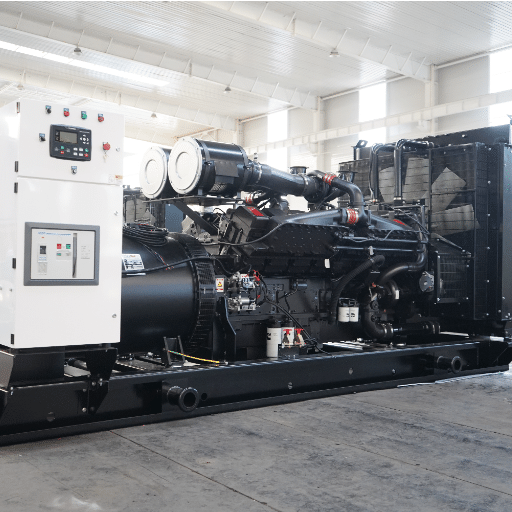
Industrial generator maintenance is not only a reliability issue. For hospitals, data centers, high-rise buildings, and critical infrastructure, it is a regulatory requirement.
NFPA 110
The National Fire Protection Association standard for emergency and standby power systems sets the minimum inspection and testing schedule:
- Weekly: Visual inspection of the EPSS
- Monthly: Exercise the generator for at least 30 minutes. For diesel units, operate at or above 30% of rated kW or at a load that maintains manufacturer minimum exhaust temperature.
- Annually: Full operational test plus load-bank testing, 50% of rated kW for 30 minutes, then 75% for 60 minutes, if monthly loads are insufficient.
- Every 36 months: Level 1 systems require a full-duration test of 4 continuous hours at not less than 30% of rated kW.
- Documentation: Written records must be kept on-site and available to the AHJ.
For a task-by-task walkthrough of meeting each of these obligations and passing an AHJ inspection, see our dedicated resource on NFPA 110 generator maintenance.
ISO 8528-5
ISO 8528-5:2013 defines duty ratings (ESP, PRP, COP, LTP) and declares the manufacturer is responsible for specifying maintenance intervals for each rating. Using the wrong rating as the basis for maintenance is a common cause of premature failure.
UFC and UFM 3-540-07
Federal and military facilities follow UFC 3-540-07 and UFM inspection forms, which include detailed generator inspection checklists and recordkeeping formats.
EPA Tier 4 Final
Modern diesel generators subject to EPA Tier 4 Final or EU Stage V regulations require additional maintenance:
- Diesel exhaust fluid (DEF) tank level and quality checks
- DEF dosing system and injector cleaning
- Diesel particulate filter (DPF) regeneration cycles and ash cleaning
- Selective catalytic reduction (SCR) catalyst inspection
DEF shelf life is about 12 months when stored between 50°F and 77°F (10°C-25°C). DEF consumption is typically 2-4% of diesel fuel consumption by volume.
Local Authority Having Jurisdiction
Always confirm which edition of NFPA 110 your local AHJ enforces. Many jurisdictions are on the 2022 edition; some are moving to the 2025 edition. Local amendments may add requirements for fuel storage, emissions testing, or record retention.
Predictive Maintenance and Remote Monitoring
Time-based checklists are essential, but condition-based monitoring can extend intervals, catch intermittent faults, and reduce emergency work.
Oil analysis: Trending viscosity, soot, oxidation, wear metals, and coolant traces reveals problems long before failure. Samples should be taken every 500 hours for prime-power units and annually for standby units.
Vibration analysis: Accelerometers on the engine block and alternator detect bearing wear, misalignment, and imbalance. A vibration trend that suddenly spikes is often the first sign of a developing mechanical fault.
Temperature monitoring: Continuous monitoring of coolant, exhaust, and bearing temperatures identifies restrictions, leaks, and overloaded conditions.
Remote monitoring systems: Modern digital control panels can send alarms, runtime data, and fault codes to a central dashboard or CMMS. This shifts maintenance from reactive to data-driven and supports distributed fleets.
A Midwest manufacturing plant extended its 1,000 kW standby generator from an expected 8-year replacement cycle to over 15 years by combining the checklist above with quarterly oil analysis and annual vibration testing. The avoided replacement cost was more than $200,000, not counting the avoided downtime during production peaks.
FAQ: Diesel Generator Maintenance Checklist
How often should a diesel generator be serviced?
Daily visual checks, weekly exercise runs, monthly filter and battery checks, quarterly system inspections, and annual oil changes, load-bank tests, and ATS functional tests. Hour-based intervals depend on the duty rating, typically 250 hours for prime power and 500 hours or annually for standby.
What is included in generator servicing?
Generator servicing includes fluid checks and changes, filter replacement, fuel-system inspection, battery testing, cooling-system maintenance, air and exhaust inspection, electrical and control-system checks, load testing, and compliance documentation.
Can I service a generator myself?
Operator-level tasks such as visual inspections, fluid checks, and alarm reviews can be done in-house. Oil changes, coolant flushes, load-bank testing, ATS functional tests, and major repairs should be performed by a qualified technician.
What happens if a generator is not serviced?
Unserviced generators are more likely to fail to start, overheat, or shut down under load. Common consequences include wet stacking, fuel contamination, battery failure, injector damage, and engine rebuilds costing tens of thousands of dollars.
What oil is best for diesel generators?
Use the engine manufacturer’s recommended oil grade and specification, typically a high-quality diesel engine oil such as CI-4, CJ-4, or CK-4 depending on the engine age and emissions system. Synthetic oils may allow longer intervals in prime-power applications.
What is load bank testing and when should it be done?
Load bank testing applies a controlled electrical load to the generator to verify output, cooling, and fuel-system performance under real conditions. NFPA 110 requires it annually if monthly exercise loads are insufficient. The standard profile is 50% load for 30 minutes followed by 75% load for 60 minutes.
What standards govern generator maintenance?
NFPA 110, ISO 8528-5, UFC/UFM 3-540-07, and local AHJ codes govern maintenance. EPA Tier 4 Final adds emissions-system requirements for modern diesel generators.
When should I call a professional technician?
Call a technician for oil and coolant changes, load-bank testing, ATS functional testing, electrical insulation testing, fuel-system repairs, turbocharger work, and any alarm or fault you cannot diagnose.
What does NFPA 110 require for monthly exercise?
NFPA 110 requires monthly exercise for at least 30 minutes. Diesel units must operate at or above 30% of rated kW or at a load that maintains the manufacturer’s minimum exhaust-gas temperature.
How much does a diesel generator maintenance contract cost?
Contracts range from about 1,000−1,000−3,000 per year for a 25-100 kW unit to 10,000−10,000−25,000+ per year for a 1,000+ kW industrial unit. The cost depends on unit size, duty rating, runtime, and whether parts and emergency callouts are included.
Conclusion
A diesel generator maintenance checklist is not paperwork. It is the practical system that keeps standby power ready and prime-power sets running. The most effective programs combine daily operator checks, scheduled technician service, NFPA 110 compliance testing, and condition-based monitoring for larger units.
The key principle is simple: maintenance costs are predictable, but failures are not. A disciplined checklist prevents wet stacking, fuel contamination, battery failure, and the cascading damage that turns a small issue into a major repair.
For industrial generator sets from 25 kW to 3,000+ kW, Shandong Huali provides not only the equipment but also the engineering support, spare parts, and maintenance guidance to keep your power system reliable over its full service life. Contact our team to discuss your maintenance schedule, request a service quote, or get help selecting the right generator for your application.