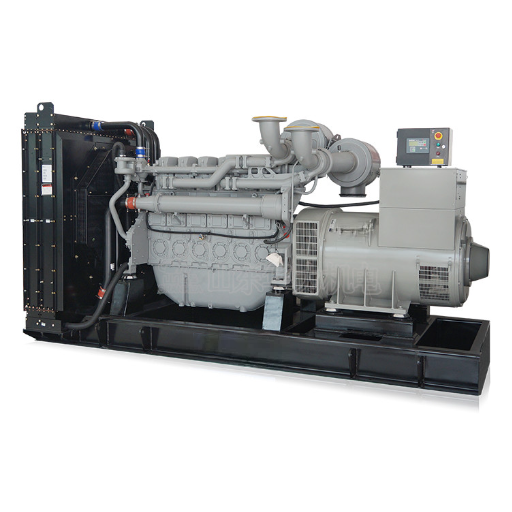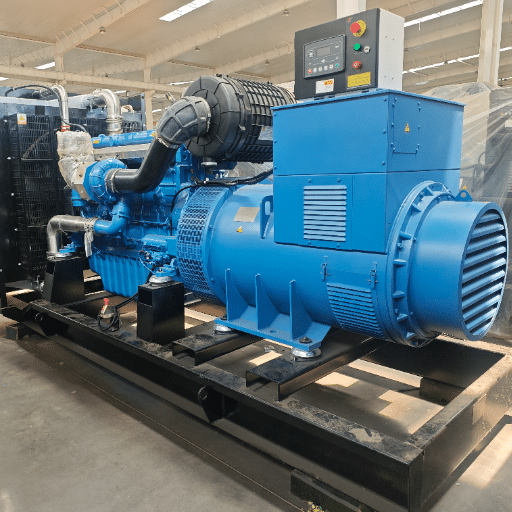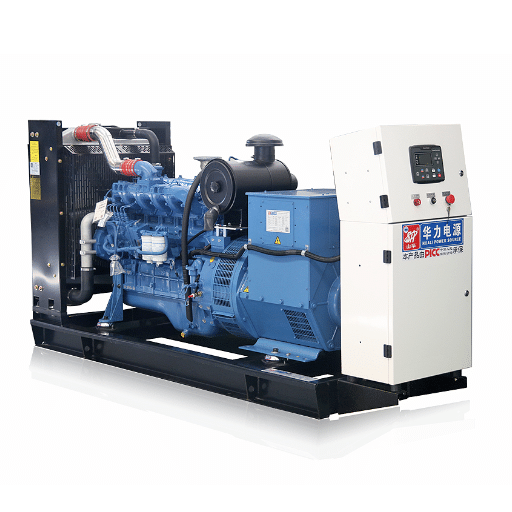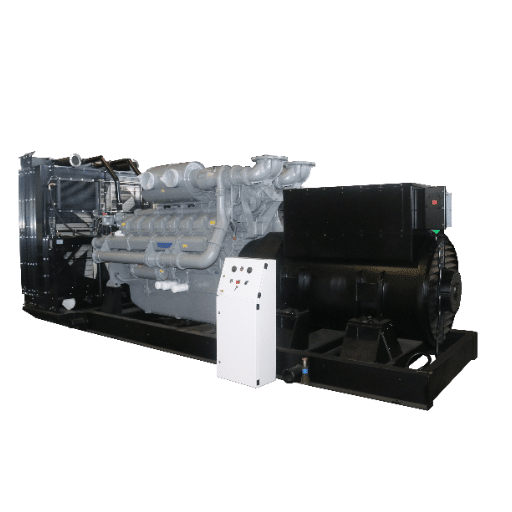



Load bank testing is required for most standby diesel generators whenever monthly loaded exercise cannot reach at least 30% of the unit’s nameplate kW rating. Under NFPA 110, those generators must then undergo an annual supplemental load bank test: 50% load for 30 minutes followed by 75% load for 60 minutes. Level 1 emergency power supply systems (EPSS) must also receive a full-duration test every 36 months.
At a pharmaceutical plant in Jiangsu, a 500 kW standby genset passed its weekly no-load exercise for two straight years. Technicians recorded run time, checked oil, and signed the log. Then a January cold snap knocked out utility power. The generator started immediately, but within 20 minutes under load it began smoking, lost voltage stability, and tripped offline. Carbon buildup from chronic low-load running had choked the exhaust and fouled the injectors. The unit had never been load bank tested. The problem was not the engine design. It was a gap between exercise and proof.
This guide explains the load bank testing requirements that keep standby and emergency generators ready. You will learn how NFPA 110 defines monthly, annual, and triennial testing, how healthcare facilities differ under NFPA 99, how to run a step-by-step load bank test, and how factory acceptance testing under ISO 8528 connects to field compliance.
Key Takeaways
- Standby diesel generators must exercise monthly under at least 30% load for 30 minutes; if building load cannot meet that, an annual supplemental load bank test is required.
- The annual NFPA 110 load bank test profile is 50% load for 30 minutes plus 75% load for 60 minutes, totaling at least 1.5 continuous hours.
- Level 1 EPSS require a full-duration test every 36 months, typically 4 hours at not less than 30% of nameplate kW.
- Healthcare facilities must also comply with NFPA 99, including 12 tests per year at 20–40 day intervals and a 10-second transfer requirement.
- Load bank testing reveals wet stacking, cooling problems, fuel delivery restrictions, voltage regulation faults, and alternator issues that no-load exercise cannot detect.
- Factory acceptance testing under ISO 8528-5 and ISO 8528-6 verifies generator performance before shipment; field load banking confirms site readiness.
Want the full maintenance picture first? Read our complete generator maintenance guide for duty ratings, predictive maintenance, and long-term service planning.
What Is Load Bank Testing?

Load bank testing applies a controlled electrical load to a generator to verify that it can produce its rated output under realistic conditions. A load bank is essentially a set of resistive or reactive elements connected to the generator output. It converts electrical energy into heat, allowing the operator to step the load up and down while measuring voltage, frequency, current, kW, kVAR, oil pressure, coolant temperature, and exhaust temperature.
This is different from generator exercise. Exercise starts the engine and may run it under light building load or no load at all. Exercise checks starting, charging, and basic control function. Load bank testing proves that the engine, alternator, cooling system, fuel system, governor, and voltage regulator can work together at high output. Many generators that start and run perfectly at no load will reveal problems only when the load bank pushes them to 75% or 100% of rated capacity.
There are three common load bank types:
- Resistive load banks test real power (kW) and are the most common choice for site acceptance and annual testing. They provide unity power factor loading.
- Reactive load banks add inductive or capacitive load to test apparent power (kVA) and the alternator’s ability to support motors and power-factor-sensitive equipment.
- Resistive/reactive load banks combine both and better simulate real facility loads such as data centers or hospitals.
Manufacturers use load banks during factory acceptance testing to confirm that each generator set meets its rated output, voltage regulation class, and transient response before shipment.
NFPA 110 Load Bank Testing Requirements
NFPA 110, Standard for Emergency and Standby Power Systems, sets the minimum operational testing schedule for EPSS in the United States. Many other countries and insurance policies reference the same principles. The standard applies to the generator, automatic transfer switch (ATS), control system, fuel system, and ventilation system as an integrated unit.
Monthly Loaded Exercise
NFPA 110 §8.4.2 requires diesel generator sets to be exercised at least once each month for a minimum of 30 minutes. The load must be either:
- not less than 30% of the standby nameplate kW rating, or
- the load that maintains the minimum exhaust gas temperature recommended by the engine manufacturer.
The purpose is to raise exhaust temperature high enough to burn off carbon and unburned fuel. Diesel engines that run repeatedly at low load accumulate soot and wet stacking deposits in the exhaust system, turbocharger, and after-treatment components.
For a task-by-task guide to meeting each of these obligations and passing an AHJ inspection, see our dedicated resource on NFPA 110 generator maintenance.
Annual Supplemental Load Bank Test
If the monthly exercise cannot reach the 30% threshold using the building’s actual load, NFPA 110 requires an annual supplemental load bank test. The common profile is:
| Load Level | Duration |
|---|---|
| 50% of nameplate kW | 30 minutes |
| 75% of nameplate kW | 60 minutes |
The total test must run at least 1.5 continuous hours. Some service providers and facility specifications use a stepped profile of 25%, 50%, 75%, and 100%, but the 50%/75% profile is the NFPA 110 minimum that satisfies the supplemental test requirement.
36-Month Full-Duration Test
Level 1 EPSS, where failure could cause loss of life or serious injury, must be tested at least once every 36 months. The test must run continuously for the assigned Class duration, or up to 4 hours if the Class is greater than 4 hours. For diesel units, the load must be at least 30% of nameplate kW or the manufacturer’s minimum exhaust temperature. This test can be combined with the annual load bank test; in that case, the first three hours meet the 36-month requirement and the final hour is run at not less than 75% load.
Level 1 vs. Level 2 Systems
Level 1 systems serve hospitals, fire pumps, emergency response centers, and life-safety loads. Level 2 systems serve less critical loads where failure is less likely to create safety hazards. The 36-month full-duration test applies only to Level 1 systems, although many industrial facilities choose to run extended tests on Level 2 units as part of their reliability program.
Spark-Ignited Generators
Natural gas and propane generators are not subject to the 30% diesel load rule. They must be exercised monthly under the available EPSS load for 30 minutes or until water temperature and oil pressure stabilize. Annual load bank testing may still be required by the Authority Having Jurisdiction (AHJ), insurance policy, or facility specification.
For a broader view of how these intervals fit into overall maintenance, see our generator service schedule.
Healthcare and NFPA 99 Requirements

Healthcare facilities in the United States operate under NFPA 99, Health Care Facilities Code, as well as NFPA 110. NFPA 99 defines the Essential Electrical System (EES) and its three branches: Life Safety, Critical, and Equipment. Hospital emergency power systems are classified as Level 1 / Type 10 under NFPA 110, meaning power must be restored within 10 seconds.
Testing Frequency and Load
NFPA 99 requires hospital generators to be tested 12 times per year at 20–40 day intervals. Each test must include:
- a simulated cold start unless testing is performed at cold-start conditions,
- automatic transfer of all essential electrical loads,
- at least 30 minutes of continuous operation under load.
The Joint Commission standard EC.02.05.07 EP 8 expects the 36-month test to use a dynamic or static load of at least 30% of nameplate rating, or the exhaust gas temperature recommended by the manufacturer.
10-Second Transfer Requirement
Life Safety and Critical Branch loads must transfer to emergency power within 10 seconds of utility loss. This means the ATS must be exercised electrically during testing, not just observed. A load bank test that does not transfer building loads through the ATS does not fully validate the emergency power path.
CMS Fuel Rule
Centers for Medicare & Medicaid Services (CMS) Conditions of Participation require Medicare-certified hospitals to maintain enough fuel to operate emergency generators at full capacity for 96 continuous hours. Load bank testing at high load helps validate fuel consumption rates and fuel delivery capacity under realistic demand.
Documentation for Surveyors
Joint Commission and state surveyors expect test logs to show actual kW readings, not just “generator ran.” Missing load-level documentation is one of the most common findings during healthcare accreditation surveys. Records should include date, start and stop times, load profile, operating parameters, deficiencies, and corrective actions.
Load Bank Test Procedure Step by Step
A well-run load bank test follows a consistent sequence. Skipping steps increases the risk of equipment damage or invalid results.
1. Pre-Test Inspection
Check engine oil, coolant, and fuel levels. Inspect belts, hoses, clamps, and wiring. Confirm the radiator and air intake are clean. Verify the battery voltage and charging system. Check that the load bank cables are properly sized and that the load bank cooling air path is clear. Make sure the ATS will transfer building loads away from the load bank if normal power fails during the test.
2. Start and Warm Up
Start the generator and let it run at no load for 5 to 15 minutes. Monitor voltage, frequency, oil pressure, and coolant temperature until readings stabilize. A cold engine loaded too quickly can suffer accelerated wear or oil pressure problems.
3. Apply Load Incrementally
Apply load in steps. A common sequence is 25%, 50%, 75%, and then 100% of rated capacity. Hold each step for several minutes while recording voltage, frequency, amperage, kW, oil pressure, coolant temperature, and exhaust temperature. Watch for abnormal smoke, vibration, noise, or alarms.
4. Sustained Full-Load Run
Hold the target load for the required duration. For an NFPA 110 annual supplemental test, that means 30 minutes at 50% followed by 60 minutes at 75%. For a full-capacity site acceptance test, some specifications require 100% load for 60 to 120 minutes.
5. Gradual Load Reduction
Step the load back down in reverse order: 75% to 50% to 25% to 0%. Abrupt removal of full load can stress the alternator and voltage regulator. Observe voltage and frequency overshoot after load rejection.
6. Cool-Down
Run the generator at no load for 5 to 10 minutes before shutdown. This allows the turbocharger, pistons, and exhaust system to cool gradually.
7. Documentation and Sign-Off
Record ambient conditions, generator run-hour reading, load profile, operating parameters, deficiencies, corrective actions, and technician names. Store the report with the EPSS maintenance records. A detailed inspection checklist can be found in our diesel generator maintenance checklist.
ISO 8528 and Factory Acceptance Testing

While NFPA 110 governs field compliance in the United States, ISO 8528 governs generator set performance at the factory level. The two standards complement each other. A generator that passes ISO 8528 acceptance testing at the factory should be capable of passing NFPA 110 load bank testing on site, provided it is installed, fueled, and maintained correctly.
ISO 8528-5 Performance Classes
ISO 8528-5 defines four performance classes for voltage and frequency behavior:
| Class | Typical Application |
|---|---|
| G1 | Basic loads, unsophisticated equipment |
| G2 | General commercial loads |
| G3 | Sensitive telecommunications, computing, or medical loads |
| G4 | Criteria agreed between manufacturer and customer |
Industrial generator sets bound for data centers, hospitals, or telecommunications sites are often specified as G2 or G3.
ISO 8528-6 Test Methods
ISO 8528-6 defines the test methods used to verify performance class. Tests include steady-state voltage and frequency regulation, transient voltage dip and recovery, transient frequency deviation, and load acceptance/rejection behavior. These tests are performed using load banks in the manufacturer’s test cell under controlled ambient conditions.
Factory vs. Field Testing
Factory acceptance testing proves that the generator set design and assembly meet specification. Field load banking proves that the installed system, including site wiring, fuel supply, cooling air, and controls, performs as intended. Both are necessary. A unit can pass the factory test and still fail on site if fuel lines are undersized, the radiator is recirculating hot air, or the ATS settings are wrong.
For guidance on installation factors that affect performance, read our generator set installation guide.
Load Bank Testing Frequency by Application
Testing frequency should match the duty cycle and the consequences of failure.
| Application | Typical Load Bank Testing Frequency |
|---|---|
| Standby commercial / industrial | Annually, or whenever monthly 30% load is not achieved |
| Prime power generators | Every 6–12 months or per operating hours |
| Continuous duty generators | Every 250–1,000 hours, often with oil analysis |
| Hospitals and healthcare | Monthly loaded exercise plus annual/triennial load bank testing |
| Data centers | Semi-annual or quarterly at 50–100% load |
| Telecommunications | Annual or per client SLA |
A university in Guangdong operated three 800 kW standby generators for campus buildings. Monthly exercise showed no alarms, but an annual load bank test revealed that one alternator could not maintain voltage above 70% load. The AVR needed recalibration. Because the test caught the issue before an outage, the facility avoided a failure during the next typhoon season and adjusted its testing frequency to semi-annual for critical buildings.
Load Bank Testing Costs: Buy, Rent, or Contract?
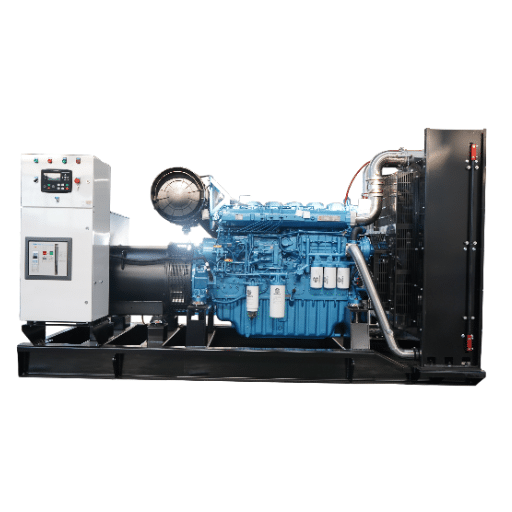
Facilities have three main ways to satisfy load bank testing requirements.
Portable Rental
Renting a portable load bank is the most common option for small and mid-sized facilities. A technician delivers the unit, connects it to the generator, runs the test, and removes the equipment. Rental costs typically range from 1,000to1,000to3,000 per test for commercial and industrial units, depending on generator size, test duration, and travel distance. Large units above 1,000 kW may cost more.
Permanent Installation
Installing a fixed load bank on site eliminates scheduling and logistics. This approach makes sense for facilities with multiple generators, strict testing schedules, or limited access for rental equipment. Capital cost depends on kW rating, load bank type, cooling method, and controls. Over a multi-year period, the installed option can be more cost-effective than repeated rentals.
Third-Party Service Contract
Some facilities contract with a generator service provider to handle all testing, documentation, and compliance reporting. This shifts responsibility to specialists and ensures test reports are formatted for AHJ or accreditation review. Contracts may include monthly exercise, annual load bank testing, fuel sampling, and 36-month full-duration testing.
For a detailed breakdown of generator maintenance expenses, see our generator maintenance cost guide.
Common Load Bank Testing Mistakes
Even facilities that understand the schedule can make errors that reduce the value of the test or create compliance exposure.
- Testing only at no load or light load. No-load exercise does not verify alternator capacity, cooling performance, or fuel delivery under demand.
- Skipping documentation. Test logs must include actual load levels and operating parameters. A log that says only “ran generator” will not satisfy Joint Commission or insurance auditors.
- Wrong load bank sizing. The load bank should be sized to the generator nameplate kW, not the average building load. An undersized bank cannot reach the 75% test level.
- Ignoring fuel quality. Contaminated fuel can cause poor combustion, low power, and false failure readings during a test. Annual fuel sampling is part of a complete test program.
- Not combining tests efficiently. Level 1 facilities can combine the annual load bank test and the 36-month full-duration test into one event, reducing generator runtime and labor.
- Failing to test the ATS. A load bank connected directly to the generator bypasses the transfer switch. The ATS must still be exercised separately or integrated into the test sequence.
If a generator fails or performs poorly during testing, the diagnostic process is similar to troubleshooting any under-load problem. Our generator troubleshooting guide covers common causes of voltage instability, overheating, and hard starting.
FAQ: Load Bank Testing Requirements
How often should a generator be load bank tested?
Most standby diesel generators should receive an annual load bank test if monthly exercise cannot reach 30% of nameplate kW. Level 1 EPSS also require a full-duration test every 36 months. Prime and continuous units may need more frequent testing based on operating hours.
What percentage load is required for generator load bank testing?
NFPA 110 requires monthly exercise at not less than 30% of nameplate kW. The annual supplemental load bank test uses 50% load for 30 minutes and 75% load for 60 minutes. The 36-month Level 1 test requires at least 30% load for the class duration.
How long does a load bank test take?
The actual loaded portion is 1.5 hours for the annual NFPA 110 supplemental test and up to 4 hours for the 36-month full-duration test. Including setup, incremental loading, cool-down, and documentation, most tests take 2 to 4 hours total.
Does load bank testing affect building power?
No. A load bank connects directly to the generator output terminals and does not interact with the facility electrical system. Utility power continues to serve the building normally during the test.
What is the difference between load bank testing and generator exercise?
Exercise starts the engine and may run it under light or no load to verify starting and basic function. Load bank testing applies a controlled electrical load to prove full-load performance, cooling capacity, voltage regulation, and fuel delivery.
What problems can load bank testing reveal?
Load bank testing can reveal wet stacking, cooling system inadequacy, fuel delivery restrictions, voltage regulation faults, alternator winding problems, governor instability, exhaust backpressure, and battery or charging system weaknesses.
Do natural gas generators need load bank testing?
Natural gas and propane generators are not subject to the diesel 30% load requirement, but many AHJs, insurance policies, and facility specifications still require annual load bank testing. The test profile is usually based on available EPSS load or site-specific requirements.
Conclusion
Load bank testing requirements are not optional extras. They are the proof that a standby generator can do more than start. The transition from monthly exercise to annual load banking, and from annual testing to the 36-month full-duration test, is built around one idea: verified performance under real demand.
A generator that sits idle or runs only at light load will degrade. Oil chemistry changes, carbon builds in the exhaust, fuel absorbs water, and alternator windings never reach operating temperature. The monthly 30% exercise rule exists to burn off carbon before it accumulates. The annual load bank test exists for cases where building load cannot provide that exercise. The 36-month test exists to prove that the system can run long enough to outlast a sustained outage.
From the manufacturer side, ISO 8528 factory acceptance testing establishes that the generator set is capable of rated output and acceptable transient response. From the facility side, NFPA 110 and NFPA 99 field testing confirms that the installed system is still capable. Both perspectives are necessary for reliable power.
If you are planning a load bank testing program, start with the schedule in this guide. Match each test to your generator’s duty cycle, your AHJ requirements, and your facility’s risk tolerance. Keep complete records. And schedule the next test before the outage happens.
For maintenance support, genuine spare parts, or help selecting a generator set designed for your application, contact Shandong Huali for technical support. Our engineering team can review your site requirements and recommend a testing and maintenance plan that protects your power and your compliance status.