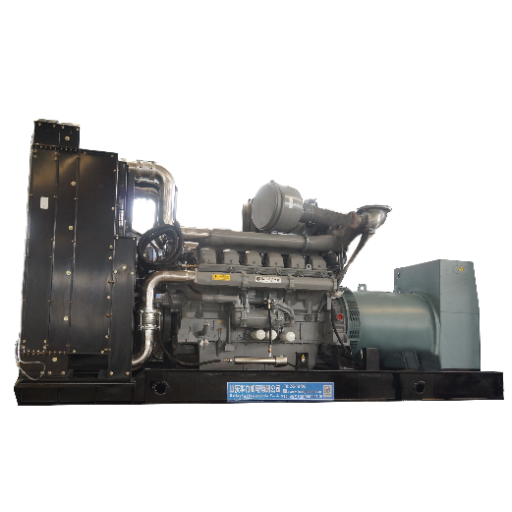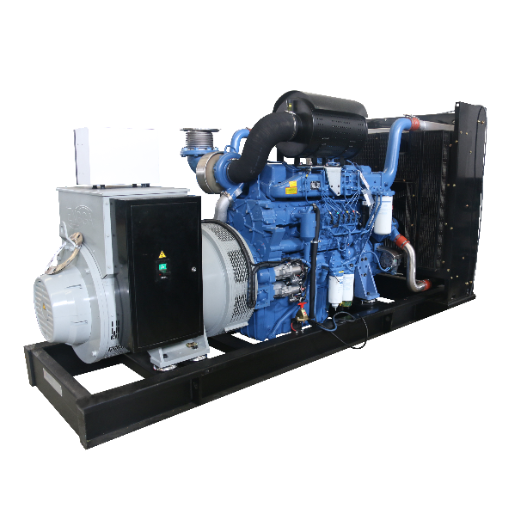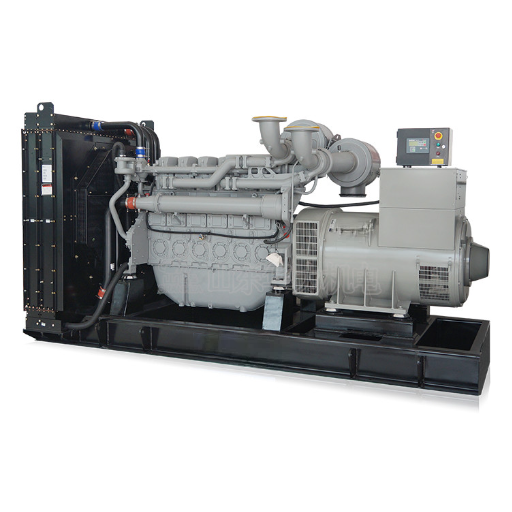

Sourcing from an OEM diesel generator manufacturer in China puts two names on the machine. The factory’s name goes inside, on the engine, the alternator and the control panel. Your name goes on the outside, on the nameplate.
A set actually carries three plates, from three different makers, and only one of them is yours. Only one name carries the manufacturer’s legal duties, and it is yours.
That is not a marketing line. It is how the product rules work in the European Union, and in the many markets that follow the same framework. The moment a machine is placed on the market under your brand, you become the manufacturer in law, and the factory’s CE certificate does not travel with the goods.
Camila found that out two years after delivery. Her company had badged a run of generator sets for a European distributor and shipped them without incident.
Then a market surveillance authority asked for the technical file behind the CE marking. The factory sent its own file, under the factory’s name, covering the factory’s machine. It was not her file, and it was not the document the authority wanted.
This guide sets out what the legal switch means in practice. You will see who the manufacturer becomes, what documents you must hold and for how long, where generators carry a second marking duty that most buyers miss, and the six questions to put to a factory before you commit.
Puntos Clave
- Placing a generator on the market under your own name or trademark makes you the manufacturer in law, whatever the supply contract says.
- You must compile and hold the technical file, not merely obtain the factory’s certificate. The file and the declaration are kept for at least ten years from the last date of manufacture.
- The EC Declaration of Conformity must name a person authorised to compile the technical file who is established in the EU. If nobody can be named, the declaration does not stand.
- Generators under 400 kW are also covered by the Outdoor Noise Directive, so the CE mark must be accompanied by the guaranteed sound power level.
- A Stage V emissions approval is held against a defined engine family. Confirm your configuration sits inside the approval, in writing.
Not sure what your own file needs to contain? Send us your target market and we will tell you what applies to your build →
Who the Manufacturer Is When an OEM Unit Carries Your Brand
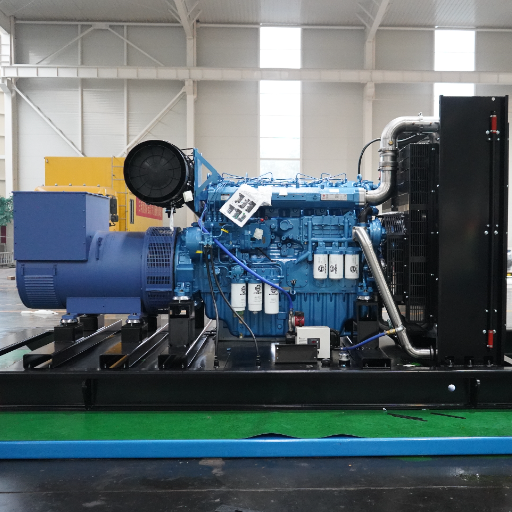
The rule is set out at the top of the EU’s product compliance framework. Under Regulation (EU) 2019/1020, Article 3, a manufacturer is any person who manufactures a product or has a product designed or manufactured, and markets that product under its name or trademark.
Read the second half again. You don’t have to build anything. Commissioning the build and putting your brand on it is enough, provided you place it on the market.
The European Commission’s Blue Guide, which explains how the product rules are applied, puts the consequence plainly. The operator who introduces a product on the market under its own name or trade mark automatically becomes the manufacturer, and takes on responsibility for the conformity assessment even where someone else carried it out.
The machinery legislation reaches the same result from the other direction. Its definition of manufacturer covers the case where nobody else in the chain qualifies, so the party that places the machine on the market is treated as the manufacturer. There is no gap to fall through. The obligation attaches to whoever puts the machine into circulation, and it does not move because a purchase order says otherwise.
That clause in your supply agreement assigning “product compliance responsibility” to the factory is worth reading closely. It may shape what the factory owes you commercially. It doesn’t change who the authority will look for.
What You Have to Hold: The Technical File
Buyers dealing with an OEM diesel generator manufacturer in China tend to focus on the certificate. The obligation is different. It is to compile and keep the generator technical file, because that file is the evidence the machine was assessed at all.
For machinery, the Directiva de máquinas 2006/42 / CE sets out what that file contains. Annex VII A requires, for each representative machine of a series:
| The technical file must contain | Lo que demuestra |
|---|---|
| A general description of the machine | What it is and what it is for |
| Assembly drawing and control circuit diagrams | How it is built and how it operates |
| Detailed drawings, calculations and test results | Whether it meets the safety requirements |
| The risk assessment, with the measures taken | That hazards were identified and addressed |
| The standards and specifications applied | Which route the assessment followed |
| Technical reports with test results | The evidence behind the assessment |
| A copy of the machine’s instructions | The manual that ships with it |
| Copies of the EC Declarations of Conformity of incorporated products | The engine, alternator and controller each carried their own |
Then comes the clock. The technical file, together with a copy of the EC Declaration of Conformity, must be kept for at least ten years from the last date of manufacture. Where a run of identical machines is built, one file representative of the series is enough.
Here is the part that catches brand owners out. The technical file normally stays with its holder, because it contains the know-how behind the machine, and only the declaration and the instructions need to be handed to the customer. But failure to present the file in response to a duly substantiated request from a national authority may itself be sufficient grounds to doubt the presumption of conformity.
The machine doesn’t have to be unsafe to become a problem. If you cannot produce the file, the presumption that it conforms is weakened, and the burden lands on you.
Practically, that makes the file a contract question long before it becomes a technical one. If the factory holds the file and you are the manufacturer, you need a written undertaking that the file will be released to you or to an authority on request, for the full retention period. That is a clause to negotiate at the start, not to discover you lack at year eight.
For the documents that travel with the machine, including the factory test report and the certificate of origin, see our guide to generador diésel personalizado builds, which lists the shipping pack alongside the customization workflow.
The Declaration and the Person Who Must Sign It
The declaration of conformity is the document that carries the CE mark’s claim, and it is not a formality you can fill in later.
Annex II of the Machinery Directive lists what it must state. Several fields are routine: the business name and address of the manufacturer, a description identifying the machine by model, type, serial number and commercial name, the statement of conformity, and the place, date and signature of the person empowered to draw it up.
One field is not routine, and it is the one brand owners miss. The declaration must carry the name and address of the person authorised to compile the technical file, and that person must be established in the Community.
Read that together with the section above and the problem becomes visible. If your company sits outside the EU, you cannot be the person named, because the named person has to be established within it. There must be a real, EU-established party in that box. If the factory is outside the EU, it cannot fill the box either.
So for a brand owner outside Europe selling into Europe, the declaration needs an EU-established person who is authorised to compile the technical file. That is normally an authorised representative appointed by written mandate, or an EU importer that has accepted the role. Appoint one deliberately, and confirm they will hold the documentation for the ten-year period.
Where an EU importer places the machine on the market, that importer carries its own duties alongside yours. It must verify conformity before placing the product, show its own name and contact address on the product or its packaging, and keep a copy of the EU Declaration of Conformity for ten years. A compliant chain has both sets of duties discharged, not one.
One change is coming, and it affects this section. Regulation (EU) 2023/1230 replaces the Machinery Directive from 20 January 2027. It removes the requirement to name a person authorised to compile the technical file, and replaces it with a single manufacturer contact point carried on the machine or its documents.
The documentation duties do not move: the file is still the manufacturer’s to hold and to produce for ten years. Separately, Regulation (EU) 2019/1020 requires an economic operator established in the Union for machinery placed on the EU market. If your program will still be shipping in 2027, plan for the declaration template to change.
Generators Carry a Second CE Regime
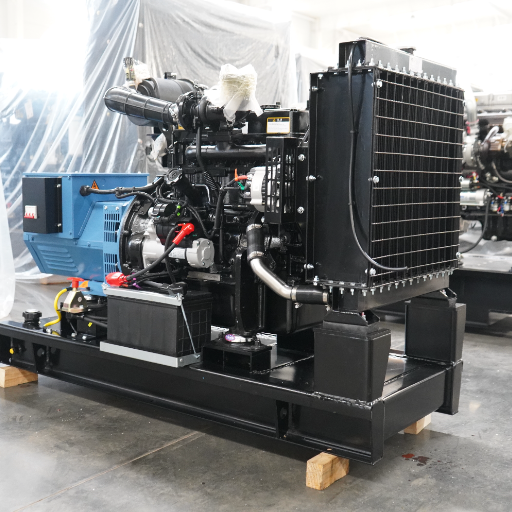
This is the part almost no supplier guide mentions, and it is specific to generating sets.
A generator is not covered by the machinery rules alone. Power generators below 400 kW are listed equipment under the Directiva 2000/14/CE sobre el ruido exterior, and that directive adds a marking duty of its own.
Under Directive 2000/14/EC, equipment in scope must bear the CE marking accompanied by the indication of the guaranteed sound power level. Both must be affixed visibly, legibly and indelibly to each machine. The guaranteed sound power level is a ceiling, not an average. It is the level the manufacturer, or its authorised representative in the EU, undertakes that the equipment will not exceed, determined with production variation and measurement uncertainty taken into account.
The directive also changes the assessment route. For equipment subject to noise limits, conformity runs through a notified body, using one of the modules the directive sets out. The declaration of conformity has to be drawn up, and the technical documentation kept, for at least ten years.
Manufacturers’ compliance sheets quote indicative bands for generating sets: in the region of 95 dB(A) up to 2 kW, 96 dB(A) to 3.1 kW, and 97 dB(A) above that. The figure that matters is the one on your own plate.
Ines ran into this from the other side. Her company had put the CE mark on a batch of enclosed sets and assumed that was the whole marking obligation.
At inspection, the question was not about the mark at all. It was where the guaranteed sound power level was shown. The machinery marking was in order; the noise marking was simply absent.
Both duties sit on the same plate. Neither substitutes for the other.
OEM Diesel Generator Manufacturer China: What to Ask the Factory
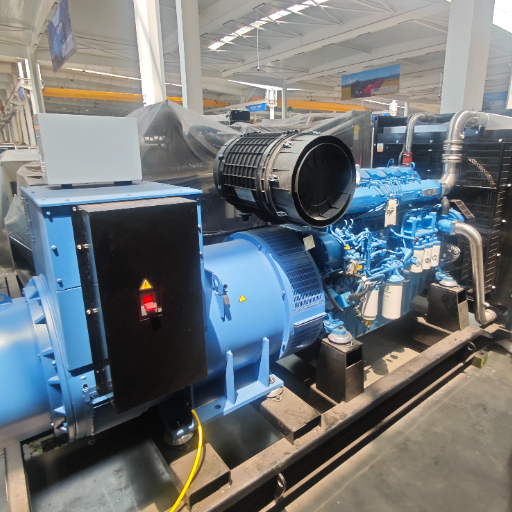
The legal position is simple to state and easy to test. These six questions turn it into something you can put in writing before a purchase order.
| Solicite la ayuda confidencial de | Por qué importa | Cómo es una buena respuesta |
|---|---|---|
| Who is named as the person authorised to compile the technical file, and where are they established? | The declaration is invalid without an EU-established person in that field | A named entity inside the EU, with the authorisation in writing |
| Can we have the technical file, not the certificate? | The factory’s certificate covers the factory’s machine under the factory’s name | A written route to the file, or a retention undertaking for ten years |
| Which approval covers our engine configuration? | A Stage V approval is held against a defined engine family, and a build outside it is not covered | The approval reference, with your configuration confirmed inside it |
| What guaranteed sound power level will appear on the plate? | The noise directive requires the figure to be marked and guaranteed | A number you can check, plus where it comes from |
| Who keeps the file and the declaration for ten years? | The obligation is yours, so the custody and release terms must be yours to enforce | A named custodian and a release clause in the contract |
| Does an EU importer or authorised representative sit in the chain? | Both roles carry their own duties, and one may need to be created | A named party, or a decision to appoint one |
Two general rules apply to all six. Ask for the document, not the assurance. A statement that a supplier is “CE compliant” is not the generator technical file, and it isn’t the declaration. And get the answers in the contract, because the conversation that happens when an authority writes to you is not the conversation you had at the quotation stage.
One caveat before you act on any of this. These obligations are summarised from the instruments that create them, and this is not legal advice. Your own counsel should confirm how they apply to your product and your target market.
Vendor-verification checks, the audit tells that separate a real factory from a trading company, and a transparent bill of materials belong with our guide to choosing an industrial generator set supplier in China, which covers that side of the assessment. Our comparison of diesel generator suppliers covers how manufacturers, OEM partners, distributors and trading companies differ.
Regulatory drawings and documents for our own OEM programs are produced by our engineering team and named to the buyer. For a worked example of how a customized build is specified, see our guide to the customized generator set manufacturer ruta.
Preguntas frecuentes
Who is the manufacturer for CE marking on a private label generator?
Whoever places the machine on the market under their own name or trademark. Under Regulation (EU) 2019/1020 Article 3, that includes a company that has a product designed or manufactured and markets it under its own name, whether or not it built anything. The customer’s brand owner becomes the manufacturer in law.
Does the factory’s CE certificate transfer to my brand?
No. The certificate the factory holds covers the machine as the factory placed it on the market, under the factory’s name, and it sits inside the factory’s technical file. Your machine, sold under your name, needs a declaration and a technical file of its own. Treat the factory’s certificate as evidence they did their part, not as a document you can inherit.
What documents must a brand owner keep for a generator?
The technical file, containing the description, drawings, calculations, test results, risk assessment and applied standards, together with a copy of the EC Declaration of Conformity. Both are kept for at least ten years from the last date of manufacture. Where an identical series is built, one representative file is enough.
Is a generator covered by the outdoor noise directive?
Yes, if it is below 400 kW. Power generators are listed equipment under Directive 2000/14/EC. Equipment in scope must carry the CE marking together with the guaranteed sound power level, and the conformity route for noise-limited equipment involves a notified body. This duty sits alongside the machinery marking, not instead of it.
¿Cuánto tiempo debo conservar el archivo técnico?
At least ten years from the last date of manufacture of the machine it covers. The same period applies to the copy of the EC Declaration of Conformity. If you are not the party physically holding them, the custody arrangement needs to be a contract term, because the obligation to produce them is yours.
Who owns the emissions approval on an imported generator?
The approval is held by the party that obtained it, against a defined engine family, and it does not automatically extend to every configuration built around that engine. Ask which approval covers your specific build and get the reference in writing.
Conclusión
An OEM diesel generator manufacturer in China supplies the machine. The legal manufacturer is the brand on the plate, and for an own-brand or private-label program that is you.
Three duties follow:
- Hold the file. Compile the generator technical file and keep it, with the declaration alongside it, for at least ten years.
- Name the right person. Under the Directive, the declaration must identify a person authorised to compile that file who is established in the EU. Without one, it does not stand.
- Mark for both regimes. The machinery rules apply, and so do the outdoor noise rules for sets below 400 kW, with the guaranteed sound power level on the plate.
None of this is difficult when it is arranged in advance. It is expensive when it is discovered by letter, two years after delivery.
Send us your target market and your product configuration, and our engineering team will set out which documents your program needs and who should hold them.