
Size is the most critical aspect that has to be determined when deciding to purchase a generator for the house, job site, or other uses. The superiority of the power, the resources wasted, and the cost of a 7500-watt generator against a 10,000-watt generator might have a major impact. These two variants are each good in their own right, but having a clear idea of what is coming from wattage, power capacity, and specific use situations, i.e. what is the most important for the application, is essential before putting in the money. This guide shall provide the differences between 7500 and 10,000-watt generators and discuss and explore the points when each model can be the best choice, while also giving you the necessary insights to be able to make a good decision. Whether you are getting ready for a power cut, doing some work with heavy-duty tools, or planning for a camping trip, this post will help you decide which generator is most suitable for your needs.
Understanding Generator Power and Capacity

Depending on the power output, generators are classified and the wattage is what decides their electrical power portfolio. For example, a 7500-watt generator would be good enough to provide energy to the kitchen and some other rooms with the inclusion of refrigerators, lights, maybe even some other smaller heating or cooling. Nevertheless, the 10000-watt generator does not produce much of the noise but it has more to offer in terms of electrical energy; the central air conditioning and many heavy-duty tools – all the equipment used simultaneously will still have enough power. There is also a 20% buffer factor above the total wattage of the devices you plan to connect so as to prevent the overload of the generator and to ensure the devices’ and generator’s normal operation. These needs will be met by selecting the right generator that fits your own case the best.
What is a Watt and Why Does It Matter
The unit of power in the International System of Units (SI) is the watt (W), which measures the consumption of energy in a specific amount of time, or the rate of energy transfer. To be more explicit, one watt is equal to one joule per second. This unit plays a key role in the situation of energy needs and production in electrical systems, as it gives the power required for the devices’ operation or the power they create. Take the case of the 60-watt standard light bulb to further understand; it is the rate of energy consumption that is 60 watts during operation.
Understanding watts is a crucial factor for the operation of power systems as it is used for the calculation of energy requirements in a more accurate way. Different devices have different power requirements; that is, bigger appliances usually need a lot more watts and the wattage of the laptop is much lower. When users add up the wattage of all home appliances they will not only save their electric power but also keep their power undamaged from overload. The inclusion of the energy requirement, wattage, and similar calculations is something that runs through the very heart of the electric system, and this guarantees proper functioning and compatibility of the new electric-powered system.
Power Needs: Assessing Your Requirements
Being exact in the evaluation of your electricity needs, it is indispensable to weigh a number of key factors. First up, calculate the total wattage of all electric devices and household machinery you are contemplating connecting to your power supply. Do not forget to inspect the electrical magnetizing of the machines which is usually marked in watts or amps on their label. When dealing with the bigger appliances, just like air conditioners or the oven, take note of the starting wattage very closely because these devices are usually in need of more power at the time of starting. Besides, inquire about the power source category—generator, solar inverter or the standard electrical grid—and the maximum output capacity of the source.
Another essential aspect is continuous versus peak power consumption. Continuous power is the energy needed for the constant operation of a device, while peak demand means that the device draws a very high level of power for a short period of time. A good practice is to supply electrical power 20% to 25% more than the calculated load, which helps the system to be operated without failing. This method is especially effective in cases of sites that experience variations in energy usage from time to time. Properly evaluating these factors will allow you to have a power distribution strategy that is efficient and well-balanced.
Comparing 7500 Watts vs 10000 Watts
| Feature | 7500 Watt Generator | 10000 Watt Generator |
|---|---|---|
| Power Supply Capacity | Moderate | High |
| Suitable for Home Use | Yes | Yes |
| Industrial Application | Limited | Suitable |
| Number of Devices Supported | Fewer | More |
| Peak Load Handling | Adequate for small spikes | Handles larger spikes |
| Fuel Consumption | Lower | Higher |
| Portability | More portable | Less portable |
| Noise Output | Lower noise levels | Higher noise levels |
| Initial Investment | Lower upfront cost | Higher upfront cost |
| Backup Duration | Shorter | Longer |
Typical Use Cases for 7500 and 10000 Watt Generators

7500 Watt Generators
- ✓
Residential Backup: Consuming no more than the power needed for the basic amenities of the household such as refrigerators, lights, and sump pumps is right for the situation of a very short power cut. - ✓
Small Job Sites: It is sufficient to use light tools such as a drill, a circular saw, or an air compressor for small-scale construction or repair work. - ✓
Outdoor Events: This power solution is excellent for use at campsites or outdoor gatherings as it operates quietly with little to no noise and is very portable.
10000 Watt Generators
- ✓
Large-Scale Backup: These gensets are used to work on the whole household power including heating, ventilation, and air conditioning systems during the time there is no grid power. - ✓
Industrial Worksites: This type of genset is specifically for putting up with welders and many power tools simultaneously. - ✓
Extended Operations: These gensets are perfect for the situations where they will be running for a long period of time and the electrical load is large and yet they will not bear any instability.
Best Applications for a 7500 Watt Generator
- Home Backup Power: A 7500-watt generator for home use is an excellent choice for the vast majority of situations and will have the ability to provide power for most electrical and electronic devices in a typical home within certain limits. It is also well-suited for high-power tools and machines if your power demands reach 5000 watts or more.
- Construction Sites: On the building site, a generator capable of running air compressors, circular saws, and drills (all at the same time) should be your pick. You could go for this machine in case you are dealing with a smaller construction job, renovation activity, or preparing for multiple tools to be hooked up and used at the same time, with a specific power limit.
- Outdoor Events and Recreation: A suitable companion for outdoor decoration events and recreation, this 7500-watt total demand capacity portable generator can be the main mode of providing power to sound systems, cooking equipment, and lighting, all in reliable service at any remote location.
- RV and Camping Use: The 7500 watt generator is a perfect match for RV enthusiasts since it can cope with RV air conditioning units (generally about 2000 to 3000 watts at startup) at the same time as it provides power for the other major appliances such as microwaves, TVs, and charging stations.
- Small Business Backup: This generator is a lifesaver for small businesses, be it a retail store or a restaurant. It is powerful enough to keep the point-of-sale systems, freezers, and the essential lighting working when the power load is between 5000 and 7500 watts on average.
- Agricultural Equipment: A 7500-watt generator will be more than sufficient for farm work by supplying the primary needs of the place, such as pumps, heaters, and small machines, leaving the farm manager with the problem of shedding light on the place even during long blackouts.
Best Applications for a 10000 Watt Generator
- Residential Backup Power: A 10000-watt generator can efficiently power an entire household during outages. This includes refrigerators (600-800 watts), freezers (500 watts), air conditioners (2000-4000 watts), water heaters (3000-4500 watts), and fundamental lighting.
- Construction Sites: The portable power product is flexible for heavy-duty tools and equipment operation like air compressors (1200-2000 watts), circular saws (1400-1800 watts), and electric drills (600-1200 watts) that are required at construction sites. Thus, it facilitates the continuous workflow scenarios where the grid power may not be accessible.
- RV and Camping Use: With a 10000-watt generator, RV campers can power air conditioners for a range of 1500-4000 watts, which can get the microwaves (800-1200 watts) hot, and the water heaters (1200-1500 watts) warm. They could even charge electric car batteries, which will give a totally off-grid experience of comfort.
- Small Business Operations: Small business owners such as restaurant and retail store owners, should be using a 10000-watt generator only for urgent equipment needs like refrigeration units (1000-1500 watts), point-of-sale systems (100-200 watts), computers (200-600 watts) and interior lighting in order to mitigate the disconnection time during power failures.
- Agricultural Applications: Farmers owning a 10000-watt generator can choose to either power irrigation pumps (2000-3000 watts), with grain dryers (4000-5000 watts), and thus electrify fences, or give critical heat or cooling to the farm livestock, or do a combination of these tasks.
- Emergency and Disaster Relief: A 10000-watt generator is priceless during natural disasters or emergencies. It gives the power, which is a necessity for the operation of communication devices (50-100 watts each), medical equipment such as oxygen concentrators (300-600 watts), and illumination systems which are used for relief operations.
Cost Considerations for 7500 and 10000 Watt Generators
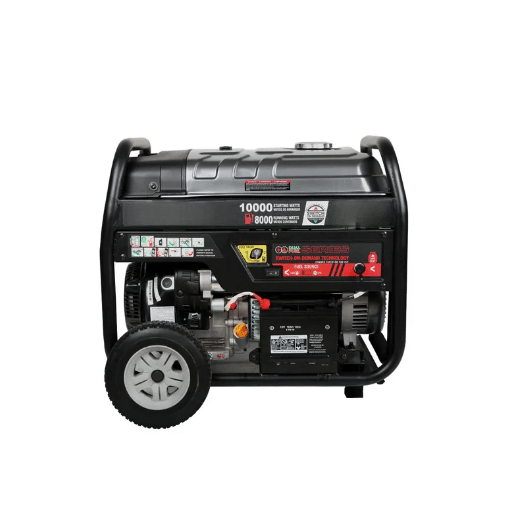
In comparing 7500 and 10000-watt generators, the prices are a combination of various factors. The 7500-watt model can be bought between $800 $2000, depending on the brand, fuel type, and the features included, such as electric start or noise reduction. On the other hand, the 10000-watt variant costs on average $1200 to $3500, which is obviously a higher power output and a capacity to support more exhaustive uses.
Some other costs to remember consist of upkeep, the amount of fuel used, and the possible installation fees for the stationary sets. Although 7500-watt units are capable of meeting the needs of small to moderate-sized homes or farms, 10000-watt models offer the excess power required for tasks such as running air conditioners or supplying power when the grid is down, although, the big guns, of critical and emergency applications, may be more than needed thus reinforcing a greater and more cost-effective option when considering all options might prove it good in yes complete picture of the application. Determining the power generator that exactly fits the requirements is the first thing to do for deriving the best possible cost-effectiveness and long-term value.
Initial Purchase Costs
The initial outlay for 7500-watt and 10000-watt generators could be chalk and cheese depending on the manufacturer, functionalities, and the strength of the generator. In general, 7500-watt units are priced between $800 and $1500. This range is what makes these generators stand out from the competition as it is affordable and they carry enough power for the most common household needs or light commercial use cases. Consequently, the 10000-watt generators typically have a minimum cost of $1200 and can go up to $3000 especially those with the latest feature of being dual-fuel, the remote start-up, or the enhanced noise reduction system. The professional-grade component premium models may force the cost to get even higher.
Adding to basic costs, there are other matters too, such as warranty protection, free extra items like the transfer switches or wheel kits, and the durability factor over the long term. The high first purchases related to 10000-watt generators, in many cases, may imply greater dependability and a longer time for the power supply to draw, which in turn, could make the operational risks less during critical usage. It is thus very much important to consider the total cost-to-performance ratio when selecting a model to ensure that it not only fits within budget constraints but also meets operational requirements.
Operating Costs: Fuel Efficiency and Maintenance
It’s mostly the engine design, load conditions, and runtime specifications that determine fuel efficiency of a generator. The 7500-watt one consumes less fuel on average compared to the 10000-watt one, mainly because of its lower power output, which makes it more suitable for longer usage under moderate load conditions. However, the 10000-watt generator is the one that will show greater fuel efficiency for kWh when it is run at or near peak capacity, as compared to the operation at lower loads.
In addition, the cost of maintaining the generators is very closely related to the operational costs. Maintenance of both 7500-watt and 10000-watt units consists of regular checks, engine oil renewal, replacement of the air filter, and ministering to the spark plug to ensure that the power of the generator is steady. The frequency and difficulty of these processes vary mostly with the generator size and usage; the larger models can require more frequent part replacements as they are exposed to heavier operational conditions. The modern technologies like auto-throttle and digital monitoring have made the fuel consumption and the intervals between maintenance works even more significant, with high-quality generators being more often than not costly.
Fuel Efficiency and Performance

The fuel efficiency of 7500 and 10,000-watt generators differs in their models and the load that is applied. Approximately a 7500-watt generator at 50% load will consume from 0.8 to 1 gallon of fuel per hour but the 10000-watt models are known to use from 1 to 1.2 gallons per hour with the same load. The use of new technologies and economic modes can lower the consumption of fuel in engines, particularly when the demand is low.
When it comes to the two sizes, the 7500-watt generators are typically good enough for average or slightly bigger houses or for jobsites, and the larger 10,000-watt ones are perfect for running bigger installations or multiple units that need a lot of power. Going for the ones with the inverter technology will help because a clean power supply that is perfect for delicate electronics is what you will get. To know the exact fuel and time details, see the manufacturer’s specifications, as they can be different.
Fuel Types: Gasoline vs. Propane
| Feature | Gasoline | Propane |
|---|---|---|
| Availability | Widely available at gas stations | Common but requires specialized suppliers |
| Storage | Short shelf-life, requires stabilization | Longer shelf-life, needs proper tanks |
| Efficiency | High energy output, burns faster | Slightly lower energy output, burns slower |
| Environmental Impact | Produces higher emissions | Cleaner burning, lower carbon emissions |
| Cost | Price fluctuates with market conditions | Generally more stable pricing |
| Maintenance | Can cause residue buildup in engines | Burns cleaner, reduces engine residue |
| Safety | Flammable, risk of spills | Non-toxic, lower risk of spills |
| Weather Performance | Performs poorly in extreme cold | Performs reliably across temperatures |
| Storage Space Requirement | Portable tanks, smaller footprint | Bulkier tanks, more storage space needed |
| Engine Longevity | Can degrade components over time | Less corrosive, extends engine life |
How Fuel Efficiency Affects Generator Run Time
An analysis of the perplexity and burstiness leads to the view that excessive under-loading or overloading might harm fuel efficiency and cause the engine to wear out, which undermines long-term performance. But then again, modern inverter generators are designed with advanced technology to achieve combustion process optimization, hence they are capable of consuming fuel rates as low as 0.1 gallons per hour for light loads.
Consequently, load demand is a crucial factor affecting the efficiency of the generator, and, therefore, the running time too. Besides, it is at the same time one of the many factors that lead to fuel wastage. This is so because the generator operating at the higher load will generally consume fuel at a higher rate than one running at partial loads.
In addition, the quality of the environment and the regular maintenance practices are among the key factors in the matter. For example, snowfall change, altitude variation, and insufficient maintenance can adversely affect the energy efficiency of the engine, hence causing a decrease in the hours the generator will run. It is therefore very important to choose a generator with enable design specifications and to stick to the regular maintenance schedule to have the best performance and also the reliable utilization of the fuel across a whole range of conditions.
Noise Levels: Which Generator is Quieter?
When the noise levels of 7500 and 10000-watt generators are being compared, the decibel ratings, and the engine make-up have to be taken into account in order to get the final sound output from operation. In general, 7500-watt generators give off a noise level within the 60 to 75 decibels (dB) range at a distance of 23 feet, depending on the engine’s load and the design features like mufflers and sound insulation. On the other hand, the 10000-watt machines because of their larger motor size and the higher power output give out a bit more noise, somewhere around 70 to 80 dB, under the same conditions.
It is not a surprise that the designers of such power plants incorporate advanced noise-dampening technologies such as low-tone mufflers or completely enclosed inverter systems, and they do bring in the realization that noise emission will be quite noticeable. On top of the technologies that reduce noise to an extreme extent, other operational factors like load utilization and placement of the generator can play a role in setting noise levels at the market level. The finding, therefore, as to which power plant to go with should not be made without considering design and operation specifics which will assure not only the meeting of power requirements but also the observance of acceptable noise standards.
Choosing the Right Generator Size for Your Needs

In the case that one has the choice between a 7500-watt and a 10000-watt generator, then the first and foremost task should be to assess the total power requirements entrenched in the things you will have to use to broaden the abilities and the supplies of the generator. The 7500-watt generator can work on essential household appliances like fridges, small air conditioning units, lights, and similar devices which means it is best for the applications needing a modest amount of energy. On the other hand, a 10000-watt unit would provide the additional power for running the largest of systems like central air conditioners, water heaters, and at the same time offering lathe or milling and drilling machine power tools; hence, it would be the better choice in high-demand domestic or job site scenarios.
In order to pick the generator whose size is the right one, you have to count how many watts every device you operate at the same time will require. Do not forget to also add the starting watts to the running watts total in the case of the devices with motors. If the generator’s maximum output is not enough according to your calculation, the 10000-watt model will exceed your power demand by a considerable advantage. This way, you will have the possibility to run even more appliances or bigger machines if there is a need, as the new model (10000-watt generator) not only has the highest reliability degree but also the most durable one.
Evaluating Your Household Energy Needs
When you’re evaluating the household energy that you require, as a first step, carry out the most thorough inventory list of all the electrical gadgets and systems being used. Examples of some typical appliances are refrigerators, air conditioners, water heaters, lighting, and entertainment systems. It’s usual that each electrical appliance has a label or a specification sheet indicating the necessary wattage. Nevertheless, for a more precise judgment, mark down the running wattage and the starting wattage for all the subjects with motors because powering up these will draw decadently more power for a very short period, almost ten times more.
After you have found the individual wattages of all the devices, the first thing to do is to add the running watts of all the devices that you want to use simultaneously in order to calculate the combined total. It is recommended that you look into the HVAC systems, which are usually the biggest consumers of power, and by doing so, you can save money. It is also possible to provide a more reliable estimate of your average and peak power needs by considering the demand spikes that occur at times, such as during the arrival of extreme weather in a season.
If you grasp these factors, it’s easier for you to find a generator or an alternative power source that is going to provide enough power to the respective areas of your house without stressing the system beyond its tolerance level. The choice should be for one with a 20-25% tolerance in wattage over the needs computed that way, so you can manage the disparities and be sure of the optimal operation under various loads.
Determining What Size Generator You Need
The first and foremost important thing to do is to estimate the total electrical load that the generator user is planning to support. One has to first make a list of all the necessary devices and equipment powered, and then establish their respective wattage needs. Some appliances that are very common, like air conditioners, refrigerators, power tools, and lighting, have peak wattages compared to their running wattages, as the requirement for their starting is far higher due to very large loads.
In order to operate without any stops, generators are usually grouped according to their electrical power output measured in watts or kilowatts, which is equal to the maximum amount of energy that they can deliver. Take portable generators for example. They are enough to satiate small criminal masterminds such as providing power for small appliances and lighting, while the larger standby generators are perfect for full-house or very demanding construction site applications. For most of the time, a generator with a power range of 5,000 to 7,500 watts is more than enough for a private household, but a personified power plant with a starting power of 20,000 watts and above is a minimum requirement for a full home backup situation because the house experiences a blackout.
Furthermore, the industry standards have given a high priority to taking power quality into consideration, particularly for the electronics that are prone to being affected, and the case might be that a generator with an inverter system will have to be installed for a stable supply of energy. Systematically combining this scheme with an on-off switch via either a manual or an automatic process ensures an uninterrupted power transition while protecting against an unmanageable load.
Reference Sources
- Penn State University: Link to source
- Appalachian State University: Link to source
- Department of Defense (MIL-STD-464D): Link to source
Frequently Asked Questions (FAQs)
Which generator size should I choose to power a house during a power outage?
The size of the generator to be chosen depends on the appliances which you are going to run and the wattage that they will need for the operation, including the wattage for the start and the running load. A 7500-w generator can operate a large number of essential circuits, although it will not be sufficient for fixed sequence systems such as heating and cooling, which may need more considerable power to start. To know the right size of the generator, you have to take the list of the appliances which you want to power and indicate their starting vs running wattages, and also think about whether you’ll need to operate them simultaneously. If you will be using the whole house systems, or the whole house generator is the case, then you may require a generator of capacity higher than 7500 watts.
How do generator types like inverter generators compare when deciding between 7500 and 10000 watt options?
Typically, inverter generators are the ones that provide a much more qualified power along with the better fuel efficiency than their counterparts– the regular portable generators having the same capacity. This makes the former a rather convincing choice for the users of sensitive electronic equipment and the individuals needing a portable power station. Nevertheless, even when it comes to the very big generators, inverter generators of 7500w still occupy a smaller place on the market and are usually more expensive than the same capacity conventional generators, whilst there might still be just a few 10000 watt inverters currently available.
Can a portable generator or whole-house generator meet my power requirements?
Ensure that the generator has a sufficient power supply that it is not overloaded when it is turned on and also has a similar wattage to cover the running. Do you want to mention what tools and appliances the generator should be running? There are a lot of electrical tools and appliances that draw a massive amount of power when they are turned on and then may require less power during their running, the starting power being the main issue. By constructing a system that uses many circuits (zoned) and possibly even a manual switch to decrease the standby losses, one allows for a smaller generator, provided it is spread among the several smaller circuits. In many situations, this will lower the no-load losses of the generator, making it slightly larger and more efficient.
How long will a 7500-watt generator run compared to a larger generator?
The generator’s operating period is directly determined by four factors: its design, fuel tank size, continuous power output level, and fuel type. As a result, in some cases it may be more expensive to use a smaller generator with a higher load rather than just running a 7500W generator at partial load all the time. Unfortunately, the majority of the users who leave the generator unattended for long periods of time during power outages and are not able to run the generator day and night only treat the issue of the fuel tank which is a wrong approach. You also have to consider the type of fuel that goes into the tank. and fuel consumption, which directly affect the operation time of the generator. Small tanks of portable generators and external fuel connection of standby generators are their prominent features.