

Making the wrong choice of operation with the cycle can lead to a financial disaster capable of resulting in huge expenses restructuring the system and ensuring its effectiveness, which will be lacking it in the long run, when it is most essential. The struggle for the choice of a single or a three-phase units is, first of all, flesh and blood—it is the fight for installation costs, operational efficiency, and the provision of equipment for many years.
When the Martínez family opened a commercial bakery house in 2019, they installed a single-phase 25 kW generator as a standby power system, since they only had mixers and ovens. It was actually the lid of their needs. Yet, come 2021, when they needed a large commercial dough sheeter and further developed the manufacturing process, it came out that the new macihes needed three-phase power. The cost of converting their electrical system and replacing the generator exceeded 35,000. Look what they have done, if their reach was capable enough and they had implemented a three-phase generator, then instead of an extra 8,000, their dynamic could easily have been less.
Focused on engineering-driven, the current article exhausts the topic of the generator set use in terms of the number of the phases. It will provide you with the basic electrical differences, design and installation factors and concerns in the use of one or three phase system, and the element of cost. Whether you want an on demand power service or you are simply looking to adding more apparatus in an already existing electrical system, you will not make a mistake by sparing little time to read this report since it will arm you with a vast information range and hence make the right decisions.
Understanding Electrical Phase Basics

What Is Single-Phase Power?
Single, three phase power is the basic type of alternative current (AC) power transmission form. In the single phase system, the system voltage is a pure sinusoid voltage with no DC component that oscillates between positive and negative directions at the rate of 60 times per second (this is for North American systems) or 50 times per second in other systems.
The top aid in the progress in single phase is line dynamic. It is when the freight power is at two maximum levels, and has no power twice in the dual stages of the cycle. They are the fact that single-phase power inherently suggests various stages of no power supply, thus promoting vibration in motors and suppressing maximum power factors transmission efficiency.
There are one-phase generators in which the alternating current is generated using only one alternating current waveform. In a single-phase alternator, there is a single winding that generates the AC output. This particular case is the simplest meaning that single-phase generators are very cheap to produce as well as having low maintenance costs, since they hold a disadvantage when it comes to power.
Typical single-phase voltage standards include:
- 120V (North American residential)
- 240V (North American residential/commercial split-phase)
- 230V (European residential standard)
Single-phase power suits well for illumination, heating as well as small motors. Presently, the widespread residential and small commercial enterprise type is being totally powered by a single phase.
What Is Three-Phase Power?
The electric distribution system operating on a three-phase basis is a further step forward, where power is transmitted by means of three separate ac waveforms, each of which is phase-shifted by 120 degrees. Such phase difference prevents any zero crossing points so that the delivered power is continuous.
In the three phase generator, the alternate current generator usually has three sets of windings which are located at 120 degrees from one to another around the rotor. The phenomenon associated with the use of the three sets of the winding is as illustrated in the three phase generator output forms; hence there is three-phase output.
When the phases are concerned, there is a geometrical relationship between the phases, such that at any given instant, the magnitude of the sum of the three voltages remains the same. Since the system can last making forward and backward spins at any given fixed moment, it gives rise to driving threats in the one-phase motor such as smoother operation, less vibration and higher efficiency of work.
Three-phase power can be configured in two ways:
Wye (Y) Configuration: The three phases connect at a common neutral point. Line-to-line voltage is √3 times the line-to-neutral voltage. Common voltages include 208V/120V and 480V/277V.
Delta Configuration: The three phases connect in a triangular loop with no neutral point. Common voltages include 240V and 480V.
Technical Specifications Comparison

Voltage Characteristics
Voltage standards vary by region and application, creating important compatibility considerations for generator selection.
Single-Phase Voltage Standards:
| Region | Standard Voltage | Typical Application |
|---|---|---|
| North America | 120V | Residential outlets, lighting |
| North America | 240V | Large appliances, HVAC |
| Europe | 230V | Residential and light commercial |
| Australia | 240V | Residential and commercial |
| Japan | 100V/200V | Residential (split) |
Three-Phase Voltage Standards:
| Region | Line-to-Line Voltage | Line-to-Neutral Voltage | Application |
|---|---|---|---|
| North America | 208V | 120V | Commercial buildings |
| North America | 240V | N/A (delta) | Industrial |
| North America | 480V | 277V | Large commercial/industrial |
| Europe | 400V | 230V | Commercial and industrial |
| International | 380V/415V | 220V/240V | Industrial (varies by country) |
Generator Voltage Selection:
It is paramount to ensure the compatibility of the respective generator’s output voltage to the electrical grid in any facility. This is due to the fact that three-phase generators often present several voltage taps or options of reconnectable alternator windings as a design choice so as to enable them to meet different voltage requirements.
In any international ventures, it is important to check both the voltage standard and the frequency as this affects the generator specification and the motor that can be used.
Current and Power Delivery
Current carrying capacity determines conductor sizing and affects installation costs.
Single-Phase Current Calculation:
Current (A) = Power (kW) × 1,000 / (Voltage × Power Factor)
Example: 10 kW load at 240V with 0.8 power factor
Current = 10 × 1,000 / (240 × 0.8) = 52.1 amps
Three-Phase Current Calculation:
Current (A) = Power (kW) × 1,000 / (Voltage × Power Factor × √3)
Example: 10 kW load at 480V with 0.8 power factor
Current = 10 × 1,000 / (480 × 0.8 × 1.732) = 15.0 amps
The three-phase system delivers the same power with less than one-third the current. This difference becomes significant at higher power levels:
| Power | Single-Phase Current (240V) | Three-Phase Current (480V) | Conductor Size Reduction |
|---|---|---|---|
| 10 kW | 52 A | 15 A | 70% smaller |
| 25 kW | 130 A | 38 A | 71% smaller |
| 50 kW | 260 A | 75 A | 71% smaller |
| 100 kW | 521 A | 150 A | 71% smaller |
Smaller conductors reduce material costs, installation labor, and voltage drop over long distances.
Efficiency and Power Factor
Power factor—the ratio of real power to apparent power—affects generator sizing and operating costs.
Single-Phase Power Factor:
Typically, single-phase loads are characterized by power factors that fall between 0.7 and 0.9. Here, in domestic applications such as lighting and heating, the loads have upward power factors that are close to unity (1.0), while the power output by motors could be as low as 0.7 when switched on.
It is incorrect to assume that a 10 kW generator will be adequate to power a 10 kW load provided it has the terms demanded (0.8 power factor) since the power supply should be larger, i.e., having a size of 12.5 kVA instead.
Three-Phase Power Factor:
Three-phase networks normally have characteristics that are inconsistent with a poor power factor. In the industrial applications, three-phase motors have a power factor that typically ranges between 0.85 and 0.95. Balancing the loads between the three phases also led to an improvement in the quality of the system power factor as a whole.
Three-phase generators are equipped with voltage regulation features that are unaffected by changes in the power factor of the load. This feature is particularly important when industrial processes require delicate equipment.
Efficiency Comparison:
Three-phase motors are inherently more efficient than equivalent single-phase motors:
- Single-phase motor efficiency: 75-85%
- Three-phase motor efficiency: 85-95%
This 10% efficiency difference translates directly to operating cost savings for motor-intensive applications.
Wiring Configuration Differences
The physical wiring required for single-phase versus three-phase installations differs significantly.
Single-Phase Generator Wiring:
- Two power conductors (line and neutral) for 120V
- Two power conductors for 240V (no neutral required for pure 240V loads)
- Ground conductor for safety
- Simple transfer switch with two poles
Three-Phase Generator Wiring:
- Three power conductors (L1, L2, L3)
- Optional neutral conductor (required for wye-configured loads)
- Ground conductor for safety
- Three-pole transfer switch (or four-pole if neutral switching required)
Installation Complexity:
Single-Phase vs Three-Phase Generators: Detailed Comparison

Power Output Capabilities
Generator capacity ranges differ significantly between single-phase and three-phase designs.
Single-Phase Generator Capacity:
- Small portable: 2-10 kW
- Residential standby: 10-25 kW
- Large residential/small commercial: 25-50 kW
- Maximum practical: approximately 50-75 kW
Above 50 kW, single-phase generators become impractical due to high current requirements and the limited availability of single-phase loads at higher power levels. The physical size of conductors and the difficulty of starting large single-phase motors make three-phase systems more economical.
Three-Phase Generator Capacity:
- Small commercial: 15-50 kW
- Medium commercial: 50-300 kW
- Large commercial/industrial: 300-1,000 kW
- Heavy industrial: 1,000-3,000+ kW
Three-phase generators scale efficiently to very high power levels. Industrial applications routinely use three-phase generators rated at several megawatts.
Overlap Range (15-50 kW):
In the 15-50 kW range, both single-phase and three-phase generators are available. This overlap creates decision complexity for small commercial applications.
- Future expansion to larger loads is likely
- Three-phase equipment is already present
- Multiple motors require starting
- Load balancing is important
Physical Size and Weight
Generator physical dimensions relate more to power capacity than phase configuration.
Size Comparison at Equivalent Capacity:
At the 25-50 kW capacity where both single-phase and three-phase generators are available, physical sizes are comparable. The alternator differs in winding configuration but occupies similar space.
Weight Considerations:
Weight-wise, single-phase alternators of appropriate capability can weigh more than three-phase alternators since the power is spread out across three windings rather than being concentrated at one point. This difference, however, is insignificant (typically below 10 percent).
Space Requirements:
Single and three-phase generators need the same clearances for ventilation, maintenance and installation. Three-phase systems will require those additional copper conductors but the space occupied is never of any concern.
Maintenance Requirements
Maintenance schedules are similar regardless of phase configuration, but component complexity differs.
Single-Phase Generator Maintenance:
- Alternator: Single winding set to inspect
- Voltage regulator: Controls one output
- Standard maintenance intervals: 250-500 hours (diesel)
Three-Phase Generator Maintenance:
- Alternator: Three winding sets to inspect
- Voltage regulator: Controls three outputs with balancing
- Standard maintenance intervals: 250-500 hours (diesel)
Diagnostic Complexity:
There are machines to verify the phase symmetry — that is, the fact that the power out of the generator is evenly divided among the three phases. An imbalance of 2-3% is to be tolerated since anything much more compares to alternator problems. Traditional stabilizers requiring mechanical adjustment, provided incorrect voltage level as responses to changes in loads.
Parts Availability:
Both single-phase and three-phase generators consist of straightforward components. Among which are three-phase voltage regulators and AVRs. These types of components–specifically the AVRs–loom with commonly available technologies within the market.
Fuel Efficiency
Fuel consumption relates to engine efficiency and alternator efficiency.
Engine Efficiency:
The engine-driven generator is equally efficient when supplying energy in single-phase mode or three-phase mode. The fuel usage per energy transfer is dependent on the energy utilization patterns, the design of the engine, and the progression of its cleanliness.
Alternator Efficiency:
Due to more effective use of windings and reduction in harmonic magnetic field, triple-phase generators or alternators have marginally better performance in terms of efficiency by some 1-3% relative to single phase generators. As such as it is a type of triple or alternator, which use more efficiently.
System Efficiency:
When powering three-phase motor loads, the overall system efficiency advantage of three-phase power becomes significant:
- Three-phase motor efficiency: 90-95%
- Single-phase motor efficiency: 75-85%
This 10% motor efficiency advantage often outweighs any generator-level efficiency differences.
Applications: When to Choose Each Type
Best Applications for Single-Phase Generators
Single-phase generators excel in applications with lower power requirements and predominantly single-phase loads.
Residential Backup Power:
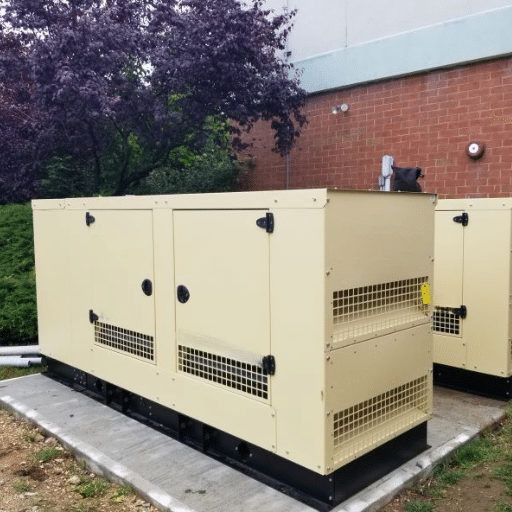
Generators in the range of 10 to 25 kW are nearly always available in single-phase as most dwelling places have a single-phase power system layout. A 20 kW power generator in single-phase can run crucial loads in a home including lights, fridge, cooling, heating, and wall outlets during a blackout.
For instance, during Hurricane Ian in 2022, Florida homeowners, thanks to 15-20 kW single-phase generators continued to enjoy essentials throughout the days within which the grid power had not been connected. The purpose of the single-phase design was pragmatic in isolation building a case for their home use.
Small Commercial Applications:
Retail stores, small offices, and restaurants with power requirements under 50 kW often use single-phase generators, especially when:
- The existing electrical system is single-phase
- Loads are primarily lighting, HVAC, and standard outlets
- Budget constraints favor lower initial cost
Light Industrial:
Small fabrication sites with 120V tools may be able to do with regular single-phase configurations. However, verify that each and every machine operates with single phase power only because many of the industrial machines need to be supplied with three phase power.
Remote/Small Capacity Needs:
Construction sites, remote monitoring stations, and agricultural applications with minimal power requirements (under 15 kW) are well-served by portable single-phase generators.
Best Applications for Three-Phase Generators
Three-phase generators are essential for industrial applications and larger commercial facilities.
Industrial Manufacturing:
Factories, processing plants, and machine shops require three-phase power for:
- Three-phase motors driving pumps, compressors, and conveyors
- CNC machines and automated equipment
- Welding equipment
- Large HVAC systems
For instance, one Ohio-based company (employing 200 workers in the automotive industry), had to cope with a disaster of power shortage when the grid was affected, and a 500 kW three-phase generator had to keep only 3 productions from a total of 4 available lines going.
Large Commercial Buildings:
Office buildings, hospitals, and shopping centers typically require three-phase generators because:
- Elevator systems use three-phase motors
- Large HVAC chillers require three-phase power
- Fire pumps are typically three-phase
- Tenant equipment may require three-phase
Data Centers:
The auxiliary components like cooling systems, UPS, and in some buildings, HVAC systems use 3-phase power. Generation for data centre equipment beyond a certain size level (typically anything above 500 kW up to a few MW) is usually only three-phase.
Heavy Motor Loads:
Any application with motors over 10 horsepower (7.5 kW) benefits from three-phase power. Three-phase motors offer:
- Higher starting torque
- Smoother operation
- Better efficiency
- Longer lifespan
HVAC Systems:
Business water-cooling systems along with major compact HVAC units for buildings will also commonly require three-phase power. Cooling units for computer equipment and commercial air conditioning equipment with three-phase induction load motors can have three-phase power supplies including generators,
Application Decision Matrix
| Application Type | Power Range | Recommended Phase | Rationale |
|---|---|---|---|
| Residential | 10-25 kW | Single-phase | Matches home electrical system |
| Small retail/office | 20-50 kW | Single or three-phase | Depends on HVAC and equipment |
| Restaurant | 30-75 kW | Three-phase | Kitchen equipment typically three-phase |
| Small manufacturing | 50-150 kW | Three-phase | Machine tools require three-phase |
| Large commercial | 100-500 kW | Three-phase | Elevators, HVAC, fire pumps |
| Data center | 500+ kW | Three-phase | Industry standard |
| Hospital | 200-2,000+ kW | Three-phase | Life safety systems require three-phase |
Voltage Standards and Global Considerations

North American Standards
North America uses a unique combination of voltages derived from a transformer center-tap configuration.
Residential and Light Commercial:
- 120V/240V split-phase: The standard residential service provides 240V line-to-line with a center tap creating two 120V circuits
- Single-phase generators for residential backup typically provide 120V/240V output
- Small commercial may use 208V three-phase (derived from 120V/208V wye service)
Commercial and Industrial:
- 208V/120V three-phase wye: Common in commercial buildings with mixed load types
- 240V three-phase delta: Used in industrial applications with predominantly three-phase motor loads
- 480V/277V three-phase wye: Standard for large commercial and industrial facilities
- 480V three-phase delta: Heavy industrial applications
Generator Voltage Selection:
When specifying a three-phase generator for North American applications, verify the required voltage:
- 208V generators suit commercial buildings with 120V/208V service
- 480V generators suit industrial facilities with 480V equipment
- Many generators offer field-reconfigurable voltage (208V/240V/480V) through alternator reconnection
European and International Standards
International voltage standards differ significantly from North American standards.
European Standard:
- 230V single-phase: Standard residential voltage
- 400V/230V three-phase wye: Standard commercial and industrial voltage
- 50 Hz frequency (vs. 60 Hz in North America)
Asia-Pacific:
- Australia/New Zealand: 240V single-phase, 415V three-phase
- China: 220V single-phase, 380V three-phase
- India: 230V single-phase, 415V three-phase
- Japan: Unique 100V/200V system with 50 Hz (east) and 60 Hz (west)
Middle East and Africa:
- Generally follow European standards: 230V/400V, 50 Hz
- Some countries use 220V/380V
Voltage Compatibility:
Devices sticking to one frequency will have to be modified to operate correctly when used in a power network of a different voltage, frequency, or power type as there are transformers or frequency converters. Operation of a 60 Hz motor using 50 Hz may cause the motor to operate at a frequency lower than the magnetic frequency for the motor.
Matching Generator to Local Grid
Generator output must match the facility’s electrical service voltage and frequency.
Voltage Matching:
- Verify your building’s service voltage before selecting a generator
- Check equipment nameplates for voltage requirements
- Consider future expansion—higher voltage systems (480V vs. 208V) offer more growth capacity
Frequency Matching:
- Match generator frequency to local grid frequency
- Export projects require explicit frequency specification
- Dual-frequency generators are rare and expensive
Phase Configuration Matching:
- Single-phase generators connect to single-phase panels
- Three-phase generators connect to three-phase panels
- Mixed systems require careful transfer switch configuration
In sending its generators overseas, Shandong Huali undertakes to supply equipment that is compatible with the voltage and frequency requirements of the potential buyer’s country, including 50 Hz engine-compressors for the European, Asian and African regions.
Installation and Wiring Considerations

Single-Phase Generator Installation
Single-phase installations are straightforward but must comply with electrical codes.
Wiring Configuration:
- 120V/240V split-phase generators require three conductors: two hot legs (L1, L2) and neutral
- 240V-only generators require two conductors: L1 and L2
- Ground conductor required for all installations
Transfer Switch Requirements:
The single-phase transfer switches are also available in the 2-pole configurations even switch them (pole – pole) in 240V systems. The normal conditions are that the neutral is not in a residential setting
Service Panel Connection:
The generator connects to the main electrical panel through the transfer switch. For residential applications, this typically involves:
- Installing a transfer switch adjacent to the main panel
- Connecting selected circuits to the transfer switch
- Installing a generator inlet (for portable) or hardwired connection (for standby)
Installation Cost Factors:
- Conductor sizing based on current (typically larger than three-phase for equivalent power)
- Standard two-pole transfer switch
- Standard electrical panel (no three-phase bus required)
Three-Phase Generator Installation
Three-phase installations require more complex wiring but offer greater flexibility.
Wiring Configuration:
Three-phase generators may be configured as:
Wye (Y) with Neutral: Four conductors plus ground (L1, L2, L3, N, G)
- Provides both line-to-line and line-to-neutral voltages
- Required for mixed 277V/480V commercial loads
- Neutral carries imbalance current
Wye without Neutral: Three conductors plus ground (L1, L2, L3, G)
- Line-to-line voltage only
- Suitable for pure three-phase motor loads
- Simpler installation
Delta: Three conductors plus ground (L1, L2, L3, G)
- No neutral point
- Used for industrial motor loads
- Corner-grounded delta provides ground reference
Transfer Switch Requirements:
Three-phase transfer switches must switch all three phases simultaneously. Options include:
- Three-pole switch (switches phases only, neutral continuous)
- Four-pole switch (switches phases and neutral)
Four-pole switching is required when:
- The generator and utility have different grounding systems
- Ground fault protection coordination is needed
- Local codes require neutral switching
Installation Cost Factors:
- Three power conductors (vs. two for single-phase)
- Three-pole or four-pole transfer switch (30-50% cost premium)
- Three-phase distribution panel or bus
- Specialized three-phase metering (if required)
Load Matching and Sizing

Identifying Your Load Requirements
Proper sizing begins with accurate load identification.
Load Inventory Process:
- List all equipment the generator will power
- Record nameplate voltage, current, and power ratings
- Identify motor loads (require special starting considerations)
- Note continuous vs. intermittent loads
- Identify critical vs. optional loads
Voltage Verification:
Check equipment nameplates for voltage requirements:
- 120V single-phase: Standard outlets, lighting
- 240V single-phase: Large appliances, HVAC
- 208V three-phase: Commercial HVAC, some motors
- 480V three-phase: Industrial equipment, large motors
Phase Requirements:
Single-phase power is generally suitable for smaller machines and loads, while more powerful sources need three-phase power.
Single-Phase Load Calculations
Calculate total single-phase load using these steps:
Step 1: List All Single-Phase Loads:
| Equipment | Voltage | Current (A) | Power (W) |
|---|---|---|---|
| Lighting | 120V | 15 | 1,800 |
| HVAC | 240V | 25 | 6,000 |
| Outlets | 120V | 10 | 1,200 |
| Refrigeration | 120V | 8 | 960 |
Step 2: Calculate Total Power:
Sum the power (watts) of all loads: 1,800 + 6,000 + 1,200 + 960 = 9,960 watts (9.96 kW)
Step 3: Apply Diversity Factor:
Not all loads operate simultaneously. Apply a diversity factor (typically 0.7-0.9 for commercial):
9.96 kW × 0.8 = 7.97 kW
Step 4: Add Safety Margin:
Include 20-25% for future expansion and to prevent chronic overload:
7.97 kW × 1.25 = 9.96 kW
Recommended Generator Size: 10-12 kW
Three-Phase Load Calculations
Three-phase load calculations follow similar principles with phase balancing considerations.
Step 1: List Three-Phase Loads:
| Equipment | Voltage | FLA (A) | Power (kW) |
|---|---|---|---|
| Chiller | 480V | 50 | 33.0 |
| Air Handler | 480V | 15 | 9.9 |
| Pump | 480V | 10 | 6.6 |
Step 2: Calculate Using Three-Phase Formula:
Power (kW) = Voltage × Current × √3 × Power Factor / 1,000
For the chiller at 0.85 power factor:
480V × 50A × 1.732 × 0.85 / 1,000 = 35.3 kW
Step 3: Sum All Three-Phase Loads:
35.3 + 10.6 + 7.1 = 53.0 kW
Step 4: Apply Diversity and Safety Margin:
53.0 kW × 0.85 (diversity) × 1.25 (margin) = 56.3 kW
Recommended Generator Size: 60-75 kW
Balancing Three-Phase Loads
Balanced three-phase loads improve efficiency and prevent neutral current.
Load Balancing Concept:
Ideally, each phase (L1, L2, L3) carries equal current. In practice, perfect balance is rare but should be targeted.
Balancing Single-Phase Loads Across Three Phases:
When connecting single-phase loads to a three-phase generator, distribute them evenly:
- Phase L1: Lighting circuits A, office outlets
- Phase L2: Lighting circuits B, break room
- Phase L3: Lighting circuits C, HVAC control
Measuring Balance:
Current measurements on each phase should be within 15% of each other. Greater imbalance causes:
- Neutral current flow
- Generator derating requirements
- Reduced efficiency
Generator Derating for Imbalance:
NEMA standards call for derating of three-phase systems even if the voltage imbalance exceeds 2%. In case of a considerable difference (almost 10%) often the generator is reduced by 20-30%.
Cost Analysis and ROI
Initial Equipment Cost Comparison
Equipment costs vary significantly by phase configuration and capacity.
Single-Phase Generator Costs:
| Capacity | Price Range | Typical Application |
|---|---|---|
| 5-10 kW | 2,000−2,000−5,000 | Residential portable |
| 10-20 kW | 5,000−5,000−10,000 | Residential standby |
| 20-30 kW | 10,000−10,000−18,000 | Large residential/small commercial |
| 30-50 kW | 18,000−18,000−30,000 | Small commercial |
Three-Phase Generator Costs:
| Capacity | Price Range | Typical Application |
|---|---|---|
| 20-30 kW | 12,000−12,000−20,000 | Small commercial |
| 50-100 kW | 30,000−30,000−60,000 | Medium commercial |
| 100-250 kW | 60,000−60,000−150,000 | Large commercial/industrial |
| 250-500 kW | 150,000−150,000−300,000 | Industrial |
Price Premium Analysis:
Between the 25-30 kW capacity where both options can be utilized, three-phase generators are known to be 20-30% costlier than the single-phase ones. Nevertheless, the three-phase system could hardly be pulled out above 50 kW.
Installation Cost Differences
Installation costs differ based on electrical complexity.
Single-Phase Installation Components:
- Two power conductors plus ground
- Two-pole transfer switch
- Standard single-phase panel connections
- Typical cost: 3,000−3,000−15,000 depending on complexity
Three-Phase Installation Components:
- Three power conductors plus neutral plus ground
- Three-pole (or four-pole) transfer switch
- Three-phase panel connections
- Typical cost: 8,000−8,000−50,000+ depending on complexity
Cost Ratio:
It is typically more expensive to install 30% to 60% more for three-phase equipment than for the equivalent single-phase equipment due to the cost of transfer switches and the running of the additional conductors.
Operating Cost Comparison
Operating costs include fuel, maintenance, and efficiency factors.
Fuel Efficiency:
Three-phase generators powering three-phase loads achieve better overall system efficiency:
- Single-phase system efficiency: 75-85%
- Three-phase system efficiency: 85-95%
This 10% efficiency advantage translates to annual fuel savings of 500−500−2,000+ for continuous operation.
Maintenance Costs:
When it comes to maintenance, costs are nearly the same per hour of operation and do not depend on the number of phases. However, it should be noted that three-phase generators work more efficiently so that same work is realised with less operating hours.
Total Operating Cost Example (50 kW generator, 500 hours/year):
- Single-phase system: 8,000−8,000−12,000 annually
- Three-phase system: 7,000−7,000−10,000 annually (including efficiency gains)
Total Cost of Ownership
Lifecycle cost analysis provides accurate comparison.
10-Year TCO Example: 30 kW Application:
| Cost Component | Single-Phase | Three-Phase |
|---|---|---|
| Initial equipment | $15,000 | $20,000 |
| Installation | $10,000 | $15,000 |
| Fuel (10 years) | $45,000 | $40,000 |
| Maintenance (10 years) | $12,000 | $12,000 |
| Total | $82,000 | $87,000 |
Making the Right Choice for Your Application

Decision Framework
Systematic evaluation ensures appropriate phase selection.
Step 1: Inventory Current and Future Loads:
- Document all existing electrical equipment
- Identify voltage and phase requirements for each load
- Project future equipment additions (5-10 year horizon)
- Determine critical vs. optional loads
Step 2: Evaluate Existing Infrastructure:
- What electrical service currently exists?
- Is three-phase power available from the utility?
- What is the capacity of existing electrical panels?
- Are transfer switches already installed?
Step 3: Calculate Total Power Requirements:
- Sum all loads requiring generator backup
- Apply diversity factors for non-simultaneous operation
- Include 20-25% safety margin for future growth
- Identify starting requirements for motor loads
Step 4: Determine Phase Compatibility:
- Can all loads operate on single-phase?
- Are three-phase loads essential or optional?
- Is phase conversion a viable alternative?
Step 5: Evaluate Economic Factors:
- Compare initial costs (equipment + installation)
- Project operating costs (fuel + maintenance)
- Consider expansion flexibility
- Calculate total cost of ownership
Step 6: Make Phase Selection:
- Choose the phase configuration that meets technical requirements
- Ensure economic viability
- Plan for future growth
Conclusion
Choosing a single-phase or three-phase generator is actually a game-changing choice and one that will impact the electrical infrastructure for at least 20 years. This informative source has created a technical basis for making such a decision safely.
Key considerations for your phase configuration selection:
Understand Your Load Requirements: Establishing an inventory of all items expected to be serviced by the generator, as well as the voltage and frequency requirements that shall be met. Motor loads and starting current shall be calculated in any case. When it comes to energy distribution, residential and light commercial applications are best served through use of single-phase power transfer facilities, whereas three-phase power transmission equipment is commonly found in industrial sectors and for large-scale commercial buildings.
Consider Total Cost of Ownership: Even though the costs of three-phase generators and installations are usually higher by 20-40% at the start, the benefits of efficiency, practicality and revamping in the future such systems into bigger capacities typically appeal to most owners. So let me see all the costs for the first 10 years: both equipment purchase and repair, refueling, maintenance in general.
Plan for Future Growth: It is a well-acknowledged fact that more and more constituent elements are introduced into electrical systems in the course of time. This is also the case of the addition of electrical loads within a facility. Therefore, the above cited advantages of a three-phase generator which is in the range of 25-50 kW that allows more electrical load to be accommodated as compared to a single phase system cannot be overemphasized.
Verify Compatibility: It is therefore very important that the output voltage and phase of the generator match the electrical system of the facility. In case of international projects, the voltage standards has to paid special attention to including 120V/240V or 230V/400V as well as the frequency (50 Hz or 60 Hz).
Work with Professionals: There are three-phase installations and single-phase systems of large power that require the involvement of electricians with certifications in generator installations. Doing the install correctly is of utter significance for such projects as it ensures the safety of the inhabitants, the compliance to the electrical code and the smooth running of the device.
It is estimated that the generator unit that is currently to be installed would be servicing the facility for up to 15 – 20 more years. Proper planning however is needed, not just to meet today’s loads, but the loads of tomorrow too, and the difference in applications three-phase and single-phase power to ensure that the selected generator system will provide the specified services for a given duration without failure during its operation.