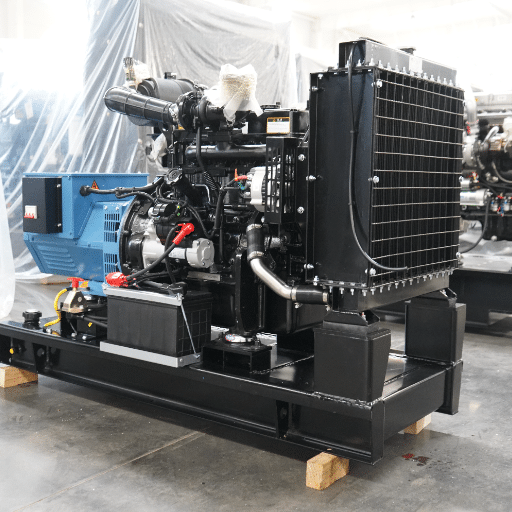


A construction contractor based in Denver had no choice but to make a very important investment decision early this year: buy a portable diesel generator for 3,200 for immediate use on site, or spend 18,000 on a fixed stationary installation. Yet, after six months of lugging round the unit on five separate jobs, managing fuel distribution wherever they worked and wasting two hours daily for installation and dismantling, it became apparent that the “cheaper” option was more expensive in the long run. This small convenience generator made a total loss for the company, which almost reached $8,000, the amount of fuel and time wasted in labor, in addition to the depreciation suffered by the workforce.
You realize that the decision between a portable and a stationary generator system is not all about the price that you incur immediately. It is about matching the power that the generator can deliver with the activities that one is performing. The sub-optimal decision results in the accumulation of costs in the course of time, whereas the right generator becomes what brings back the investment, due to the improvements and the effectiveness it brings.
This guide proposes an engineering analysis framework which will be useful in accomplishing the aims of the study of portable vs stationary power generators by major functionality cost, power size, ease of setup and actual uses. It defines standard criterion to use in achieving the set objective of designing and optimizing any system.
Understanding the Differences

What Is a Portable Generator?
A portable generator is defined as a standalone machine that is capable of producing electrical energy on the move or for temporary activities. It sustains built-in tank of fuel, built-in carrying system like handles or castors, and is equipped with matching connectors to the equipment or units that need power.
Key characteristics of portable generators:
- Mobility: Mounted on frames with wheels or lifting points for transport
- Temporary power: Designed for non-permanent installation
- Manual operation: Requires physical startup and connection
- Limited fuel capacity: Onboard tanks typically provide 8-12 hours runtime
- Lower power output: Generally range from 1,000 to 15,000 watts
Portable generators therefore find vast applications in circumstances where the need for power is occasional, for example, during electricity blackouts or for on-car site jobs.
What Is a Stationary Generator?
A stationary generator is a power system that is built to last and is connected to a house’s power supply, using an automatic transfer switch. This kind of generator is designed to serve a long-term mission and is able to work automatically, taking over when there is a power failure or a blackout.
Key characteristics of stationary generators:
- Fixed installation: Mounted on concrete pads or integrated enclosures
- Automatic operation: Starts and transfers load without human intervention
- Extended runtime: Connected to external fuel supplies (natural gas lines or large tanks)
- Higher power output: Range from 7,000 watts to 150,000+ watts
- Weather protection: Enclosed in sound-attenuated housings
Stationary generators provide seamless backup power for critical facilities and continuous operations.
Key Technical Distinctions
| Feature | Portable Generator | Stationary Generator |
|---|---|---|
| Mobility | Fully mobile | Fixed installation |
| Power range | 1-15 kW | 7-150+ kW |
| Startup | Manual | Automatic |
| Fuel supply | Onboard tank | External (line/tank) |
| Runtime | 8-12 hours | Unlimited |
| Installation | None required | Professional required |
| Cost range | 500−500−4,000 | 2,000−2,000−25,000+ |
| Transfer switch | Manual plug-in | Automatic (ATS) |
Understanding these distinctions is essential for matching generator type to application requirements.
Power Output Comparison
The fundamental difference in power delivery affects everything from equipment compatibility to operational capability.
Portable Generator Power Characteristics:
- Single-phase output (120V/240V)
- Limited surge capacity
- Direct equipment connection via outlets
- No load management capability
- Best for individual tools and small loads
Stationary Generator Power Characteristics:
- Single or three-phase output
- Higher surge capacity for motor starting
- Hardwired into building distribution
- Sophisticated load management
- Powers entire facilities or critical branches
Want to understand power requirements for your specific application? Explore our generator sizing guide to calculate exact capacity needs.
Cost Comparison: Upfront and Long-Term
Initial Purchase Price Ranges
The purchase price gap between portable and stationary generators reflects fundamental differences in engineering, capacity, and features.
Portable Generator Costs:
| Power Range | Typical Price | Application |
|---|---|---|
| 1,000-3,000W | 500−500−1,200 | Camping, light residential |
| 3,000-5,000W | 800−800−2,000 | Home essentials, small tools |
| 5,000-8,000W | 1,200−1,200−3,000 | Home backup, construction |
| 8,000-15,000W | 2,000−2,000−4,000 | Large tools, multiple circuits |
Stationary Generator Costs:
| Power Range | Typical Price | Application |
|---|---|---|
| 7,000-12,000W | 2,000−2,000−4,500 | Small home backup |
| 12,000-20,000W | 3,500−3,500−7,000 | Whole-house residential |
| 20,000-50,000W | 6,000−6,000−15,000 | Commercial buildings |
| 50,000W+ | 12,000−12,000−25,000+ | Industrial facilities |
Installation Costs Breakdown
Installation costs represent a significant differentiator between the two generator types.
Portable Generator Installation:
- Cost: $0 (no installation required)
- Setup time: 15-30 minutes per deployment
- Requirements: Safe outdoor location, proper ventilation
- Connection: Manual plug-in to equipment or transfer switch
Stationary Generator Installation:
- Cost: 1,500−1,500−5,000+ depending on complexity
- Components:
- Concrete pad or mounting: 300−300−800
- Electrical connection and ATS: 800−800−2,500
- Fuel line connection: 500−500−1,500
- Permits and inspections: 200−200−500
- Setup time: Professional installation over 1-3 days
Operating Costs and Fuel Efficiency
Maria Hernandez was planning to open her clinic in Phoenix and purposefully did not include any estimate of recurring expenses because she thought only about the generator costs. However, operating results of her engine operation expressed in relative values contradicted to that presumption. Because every such service call cost her more gas money, because instead of using that fuel more effectively in her pinch, she had to physically get revised gas refilled in each compartment and cover 340 more monthly expenses due to her monsoon normal season power costs with reduced contribution of the portable unit to ease within this period.
Fuel Cost Comparison (per kWh generated):
| Fuel Type | Portable/Stationary | Cost per kWh | Notes |
|---|---|---|---|
| Gasoline | Portable | 0.35−0.35−0.50 | Highest cost, shortest shelf life |
| Diesel | Portable/Stationary | 0.25−0.25−0.35 | Better efficiency, longer storage |
| Natural Gas | Stationary | 0.15−0.15−0.25 | Lowest cost, unlimited supply |
| Propane | Portable/Stationary | 0.30−0.30−0.40 | Clean burning, good storage |
Fuel Efficiency Factors:
- Diesel engines: 30-40% more efficient than gasoline
- Load factor: Running at 75-80% capacity optimizes efficiency
- Maintenance condition: Well-maintained generators use 10-15% less fuel
Maintenance Cost Differences
Portable Generator Maintenance:
- Annual cost: 100−100−300
- Frequency: Every 50-100 hours of operation
- Tasks: Oil changes, filter replacement, spark plug service
- User-performable: Most maintenance can be done in-house
Stationary Generator Maintenance:
- Annual cost: 300−300−800 (contract typical)
- Frequency: Every 200-500 hours or annually
- Tasks: Comprehensive service, load bank testing, system inspection
- Professional required: Most owners use service contracts
Total Cost of Ownership Analysis
The cost associated with buying a diesel generator is more than the price one would pay for the system as shipping costs, installation costs, duties, and other costs are involved. For example, consider this 10-year case study for a 15 kW backup power application in a commercial building:
| Cost Category | Portable Diesel | Stationary Natural Gas |
|---|---|---|
| Initial purchase | $3,500 | $8,000 |
| Installation | $500 | $3,500 |
| Fuel (10 years) | $18,000 | $9,000 |
| Maintenance | $2,500 | $6,000 |
| Downtime/Setup | $8,000 | $0 |
| 10-Year TCO | $32,500 | $26,500 |
Power Capacity and Performance

Wattage Ranges by Type
Understanding power output capabilities helps match generators to actual load requirements.
Portable Generator Capacity Spectrum:
- Light duty: 1,000-3,000W (lights, small electronics)
- Medium duty: 3,000-7,000W (power tools, appliances)
- Heavy duty: 7,000-15,000W (multiple tools, small home backup)
Stationary Generator Capacity Spectrum:
- Residential: 7,000-22,000W (whole-house backup)
- Commercial: 20,000-100,000W (business facilities)
- Industrial: 100,000-500,000W+ (manufacturing, data centers)
Starting vs Running Watts
There is an important difference in the working intensity of any device designed to produce electricity between when it is turned on and when it is then used.
Motor Starting Requirements:
- Induction motors require 3-7x running current to start
- A 1 HP motor may need 5,000W to start but only 1,500W to run
- Portable generators often struggle with high starting loads
- Stationary systems typically offer higher surge capacity
Voltage Dip Considerations:
- Portable units may experience 15-20% voltage dip during motor starting
- Stationary systems with automatic voltage regulation maintain ±5%
- Sensitive electronics require stable voltage
Load Management Capabilities
Portable Generator Load Management:
- Manual load balancing required
- No prioritization capability
- Risk of overload if too many devices connected
- Operator must monitor and adjust
Stationary Generator Load Management:
- Automatic load shedding available
- Priority circuit designation
- Prevents overload through smart distribution
- Load monitoring and protection built-in
Ready to calculate your exact power requirements? Contact our engineering team for a professional load analysis and sizing recommendation.
Installation and Setup Requirements
Portable Generator Setup
Deploying a portable generator requires attention to safety and operational factors.
Setup Procedure:
- Position on level surface 20+ feet from structures
- Ensure adequate ventilation (carbon monoxide risk)
- Check fuel and oil levels
- Connect grounding wire if required
- Start engine and stabilize before connecting loads
- Connect equipment via appropriate cords
Safety Requirements:
- Never operate indoors or in enclosed spaces
- Use heavy-duty extension cords rated for load
- Protect from weather (rain, snow)
- Secure against theft on jobsites
Stationary Generator Installation
Stationary generator installation requires professional electrical and plumbing work.
Installation Components:
Site Preparation:
- Concrete pad or engineered mounting surface
- Proper drainage and elevation
- Code-required setbacks from property lines
- Access for maintenance
Electrical Connection:
- Automatic transfer switch (ATS) installation
- Load center modifications
- Proper grounding and bonding
- Code-compliant wiring
Fuel System Connection:
- Natural gas line extension or propane tank installation
- Fuel pressure regulation
- Leak detection and shutoff systems
- Seismic restraints where required
Permitting and Code Requirements
Portable Generators:
- Generally no permits required for temporary use
- Local noise ordinances may apply
- OSHA requirements for construction sites
Stationary Generators:
- Electrical permits always required
- Building permits for pad/enclosure
- Fire department inspections common
- EPA compliance for diesel units
- Utility approval for grid-connected ATS
Application Specific Recommendation

Home Backup Power
The Thompsons of Florida had a gas-powered $900 portable generator which worked well until its capacity was put to the test the third time. Consistent and boring daily fuel refilling regime, no electricity available for air conditioning in 95-degree-sizzling days and an unsettlingly loud machine operating outside made them look for another alternative. In the end, they just decided to invest in a fixed generator once and for all.
Portable Generator for Home:
- Best for: Occasional short outages, essential circuits only
- Power: 3,000-8,000W typical
- Runtime: Limited by fuel tank (8-12 hours)
- Cost: 800−800−3,000
- Limitations: Manual setup, limited circuits, weather exposure
Stationary Generator for Home:
- Best for: Frequent or extended outages, whole-house coverage
- Power: 12,000-22,000W typical
- Runtime: Unlimited with natural gas
- Cost: 4,000−4,000−12,000 installed
- Advantages: Automatic operation, full coverage, added home value
Construction Sites and Mobile Operations
Construction contractors have unique power requirements that favor portable solutions.
Portable Generator Advantages:
- Move between jobsites as work progresses
- No installation costs or permitting delays
- Right-size power for specific phase needs
- Available for rental if the purchase is not justified
Typical Construction Applications:
- Power tools and welding equipment
- Temporary lighting and heating
- Site offices and break areas
- Concrete curing and material processing
Stationary Considerations:
- Permanent construction facilities may justify stationary units
- Long-term projects (12+ months) may benefit from installed systems
- Sites with utility delays may use stationary as primary power
Commercial and Industrial Facilities
Companies in vital sectors have no choice but to use fixed generators as an uninterrupted power source.
Commercial Applications:
- Retail stores: POS systems, security, refrigeration
- Office buildings: HVAC, elevators, data systems
- Restaurants: Food safety, refrigeration, cooking equipment
- Healthcare: Life safety systems, patient care equipment
Industrial Applications:
- Manufacturing: Process control, safety systems
- Data centers: Server uptime, cooling systems
- Warehousing: Material handling, climate control
- Telecommunications: Network infrastructure
Why stationary dominates commercial:
- Automatic response ensures zero downtime
- Load management protects critical systems
- Lower insurance costs for protected facilities
- Regulatory compliance for certain industries
Events and Temporary Power
Denver Outdoor Music Festival 2023 experienced an expensive lesson regarding the selection of generators. The permanent natural gas backup unit based in the main current site could not serve other parts of the site such as the remote stages and vendor areas requiring the team to invest in portable materials and subsequently rendering the stationary information useless for the new event expansion project.
Portable Generator Advantages:
- Position power exactly where needed
- Scale capacity for event size
- No permanent infrastructure required
- Rental option for one-time events
Event Applications:
- Stage lighting and sound systems
- Food vendor equipment
- Temporary climate control
- Emergency and security systems
Emergency and Disaster Response
Emergencies create unique demands that often favor portable solutions.
Emergency Response Applications:
- Search and rescue operations
- Mobile command centers
- Medical triage units
- Communication infrastructure
Portable Generator Benefits:
- Rapid deployment to affected areas
- No dependency on damaged infrastructure
- Air-transportable for remote access
- Flexible power where permanent systems fail
Stationary Role in Emergencies:
- Hospital and critical facility backup
- Water treatment and sewage systems
- Emergency operations centers
- Communication hubs
Fuel Options and Considerations

Gasoline Portable Generators
Gasoline remains the most common fuel for smaller portable units.
Advantages:
- Widely available fuel
- Lower initial generator cost
- Easy refueling
- Quick starting in cold weather
Disadvantages:
- Short shelf life (3-12 months with stabilizer)
- Higher cost per kWh
- Safety concerns with storage
- Not suitable for large capacity needs
Diesel Portable Generators
Diesel portable generators offer superior performance for demanding applications.
Advantages:
- Better fuel efficiency (30-40%)
- Longer engine life
- Safer fuel storage
- Higher torque for motor starting
Disadvantages:
- Higher initial cost
- Heavier units
- Cold weather starting challenges
- Emissions regulations (Tier 4 Final)
Natural Gas Stationary Systems
Natural gas is the preferred fuel for stationary standby generators.
Advantages:
- Unlimited fuel supply (pipeline connection)
- Lowest cost per kWh
- Clean burning with lower emissions
- No fuel storage or degradation concerns
Disadvantages:
- Infrastructure dependency (gas line required)
- Slightly lower power output than diesel
- Not available in all areas
- Earthquake/shutoff risks in some regions
Propane and Dual-Fuel Options
Propane offers middle-ground characteristics suitable for specific applications.
Propane Advantages:
- Long storage life (unlimited)
- Clean burning
- Available in portable and stationary systems
- Good for areas without natural gas
Dual-Fuel Systems:
- Can operate on gasoline or propane (portable)
- Can operate on diesel or natural gas (stationary)
- Flexibility during fuel supply disruptions
- Higher initial cost
Fuel Availability and Storage
Consider fuel logistics when selecting generator type:
| Fuel | Availability | Storage | Shelf Life | Best For |
|---|---|---|---|---|
| Gasoline | Excellent | Portable cans | 3-12 months | Small, occasional use |
| Diesel | Good | Tanks | 12-24 months | Heavy-duty portable |
| Natural Gas | Utility-dependent | Pipeline | Unlimited | Stationary standby |
| Propane | Good | Tanks | Unlimited | Remote locations |
Convenience and Operational Factors

Startup Time and Ease of Use
The difference in startup procedures affects operational readiness.
Portable Generator Startup:
- Time to power: 5-15 minutes
- Steps: Transport, setup, fuel check, manual start, connect loads
- Requires operator presence
- Weather-dependent (cold starting issues)
Stationary Generator Startup:
- Time to power: 10-60 seconds (automatic)
- Steps: None (fully automatic)
- No operator required
- Pre-heated engines for cold climates
Automatic vs Manual Operation
The operational mode distinction often determines suitability for specific applications.
Manual Operation (Portable):
- Requires trained operator
- Setup time delays power restoration
- Risk of human error
- Cannot respond when facility is unoccupied
Automatic Operation (Stationary):
- 24/7 monitoring and response
- Immediate power restoration
- Consistent, reliable performance
- Protection during nights, weekends, absences
Noise Level Comparison
Noise is a critical factor in many applications.
Portable Generator Noise:
- Typical range: 65-85 dB at 23 feet
- Open-frame units: Louder (75-85 dB)
- Inverter units: Quieter (55-65 dB)
- Sound decreases with distance but carries
Stationary Generator Noise:
- Typical range: 55-75 dB at 23 feet
- Sound-attenuated enclosures reduce noise
- Can meet strict municipal codes
- Proper placement minimizes disturbance
Noise Regulations:
- Many jurisdictions limit generator noise to 65-70 dB at property line
- Portable units often violate residential ordinances
- Stationary units can be engineered for compliance
Weather Protection Requirements
Operating generators in adverse weather requires different approaches.
Portable Generator Weather Concerns:
- Cannot operate in rain without protection
- Requires temporary shelters or canopies
- Cold weather starting challenges
- Vulnerable to theft and vandalism
Stationary Generator Weather Protection:
- Weatherproof enclosures standard
- Engine heaters for cold climates
- Ventilation systems prevent overheating
- Secure, permanent installation
Safety Considerations
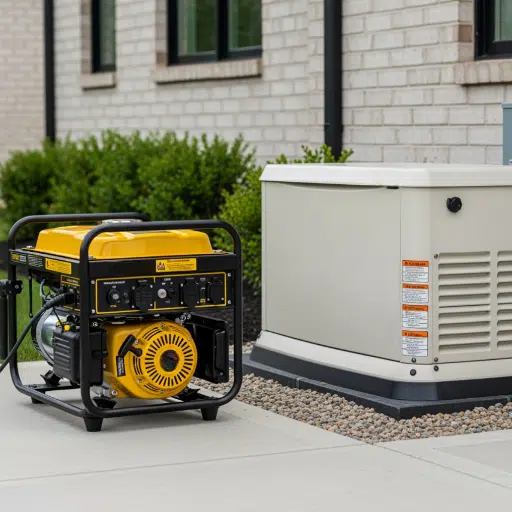
Carbon Monoxide Risks
Carbon monoxide poisoning is the primary safety concern with generators.
Portable Generator CO Risks:
- 85% of generator-related CO deaths involve portable units
- Risk of indoor use or improper placement
- Exhaust direction often toward structures
- Users may not understand ventilation requirements
Safety Requirements:
- Never operate indoors or in enclosed spaces
- Maintain 20+ foot distance from buildings
- Use CO detectors when operating nearby
- Be aware of wind direction
Stationary Generator CO Safety:
- Permanent exhaust systems directed away from structures
- Engineered ventilation and airflow
- Professional installation ensures safe placement
- Lower risk due to fixed, compliant installation
Electrical Safety
Both generator types present electrical hazards requiring proper precautions.
Portable Generator Electrical Safety:
- Risk of backfeeding utility lines (electrocution hazard to lineworkers)
- Use transfer switches or interlock kits
- Proper grounding required
- Extension cord ratings must match loads
Stationary Generator Electrical Safety:
- ATS prevents backfeeding automatically
- Professional installation ensures code compliance
- Grounding and bonding properly engineered
- Circuit protection coordinated with existing systems
Fuel Storage Safety
Fuel storage presents different risks for each generator type.
Portable Generator Fuel Storage:
- Portable containers (5-gallon typical)
- Risk of spills during transport
- Storage limits in residential areas
- Fire code restrictions on quantity
Stationary Generator Fuel Storage:
- Permanent tanks (diesel) or pipeline (natural gas)
- Professional installation with leak detection
- Secondary containment for diesel tanks
- Seismic restraints where required
Transfer Switch Requirements
The method of connecting generator power to loads affects safety and convenience.
Portable Generator Connection:
- Extension cords to individual devices
- Manual transfer switch for house circuits
- No protection against utility backfeed without proper equipment
- Limited to circuits that can be manually connected
Stationary Generator Connection:
- Automatic transfer switch (ATS) standard
- Seamless transition to backup power
- Complete isolation from utility
- Can power entire facility or designated critical circuits
Need help selecting the right transfer switch for your application? Our engineering team can guide you through the selection process.
The Maintenance and Reliability

Portable Generator Maintenance Schedule
Regular maintenance ensures portable generators start when needed.
Daily/Before Each Use:
- Check oil level
- Inspect fuel level
- Examine air filter
- Check for damage or leaks
Monthly:
- Run unit under load for 30 minutes
- Check battery condition (electric start models)
- Inspect spark plug (gasoline units)
- Clean exterior and cooling fins
Annually or Every 100 Hours:
- Change engine oil
- Replace oil filter
- Replace air filter
- Replace spark plug
- Check fuel filter and lines
Stationary Generator Maintenance Requirements
Stationary systems require professional maintenance but offer greater reliability.
Weekly (Automated):
- Exercise cycle (typically 15-20 minutes)
- Self-diagnostic checks
- System status monitoring
Monthly:
- Visual inspection
- Check fluid levels
- Verify control panel indicators
- Test battery voltage
Quarterly:
- Full system inspection
- Load bank testing (if available)
- Fuel system check
- Cooling system inspection
Annually:
- Complete service by qualified technician
- Oil and filter changes
- Fuel filter replacement
- Air filter replacement
- Coolant testing/replacement
- Belt and hose inspection
- Control system testing
Expected Lifespan Comparison
Generator lifespan varies significantly between types.
Portable Generator Lifespan:
- Typical: 1,000-2,000 operating hours
- Equivalent: 5-10 years of occasional use
- Factors affecting life: Maintenance frequency, load factor, storage conditions
- Most wear occurs from transport and environmental exposure
Stationary Generator Lifespan:
- Typical: 10,000-30,000+ operating hours
- Equivalent: 20-30+ years of standby service
- Factors affecting life: Maintenance quality, exercise schedule, load management
- Protected environment extends component life
Winterization and Storage
Cold weather affects both generator types but requires different preparations.
Portable Generator Winter Storage:
- Drain fuel or add stabilizer
- Change oil before storage
- Store in protected location
- Battery maintenance (remove or trickle charge)
- Cover to prevent dust accumulation
Stationary Generator Winterization:
- Engine block heaters (cold climates)
- Battery warmers
- Coolant heaters for diesel units
- Regular exercise to maintain readiness
- Weatherproof enclosures protect components
Environmental Impact
Emissions Comparison
Generator emissions vary by fuel type and engine technology.
Gasoline Portable Generators:
- Highest emissions per kWh
- No emission controls on most units
- Significant CO and NOx output
- Not suitable for indoor use or environmentally sensitive areas
Diesel Portable Generators:
- Better efficiency reduces per-kWh emissions
- Tier 4 Final engines include aftertreatment
- Particulate matter concerns without proper filtration
- Suitable for heavy-duty applications with proper equipment
Natural Gas Stationary Systems:
- Lowest emissions of fossil fuel options
- 25-30% less CO2 than diesel
- Minimal particulate emissions
- Meets strict air quality regulations
Fuel Efficiency and Carbon Footprint
Efficiency directly affects environmental impact.
Efficiency by Fuel Type:
- Natural gas: 35-42% efficient
- Diesel: 32-38% efficient
- Gasoline: 25-32% efficient
Carbon Footprint (grams CO2 per kWh):
- Natural gas: 350-450g
- Diesel: 600-750g
- Gasoline: 650-800g
From the environmental perspective, stationary natural gas systems are the most fuel-efficient forms of fossil fuel energy.
EPA and CARB Compliance
Regulatory compliance affects generator selection and operation.
EPA Tier 4 Final (Diesel):
- Required for stationary diesel generators
- Reduces NOx and particulate matter
- Adds cost but improves air quality
- Not required for portable units under certain sizes
CARB Certification (California):
- Strictest emissions standards in the US
- Many portable generators not CARB-compliant
- Stationary systems require CARB certification
- Affects resale and use in California
Decision Framework: Which Generator Is Right for You?

Choose a Portable Generator If…
- Power needs are temporary or mobile
- Budget constraints limit upfront investment
- Operations span multiple locations
- Power requirements are under 15 kW
- Manual operation is acceptable
- Fuel transport and storage are manageable
Choose a Stationary Generator If…
- Facility requires automatic backup power
- Power needs exceed 15 kW
- Frequent or extended outages occur
- Operations cannot tolerate downtime
- Natural gas is available
- Long-term reliability is critical
- Code requires emergency power systems
Decision Matrix by Application
| Application | Portable | Stationary | Recommendation |
|---|---|---|---|
| Home (occasional outages) | ★★★ | ★★ | Either acceptable |
| Home (frequent outages) | ★★ | ★★★ | Stationary preferred |
| Construction site | ★★★ | ★ | Portable essential |
| Small business | ★★ | ★★★ | Stationary recommended |
| Industrial facility | ★ | ★★★ | Stationary required |
| Events/temporary | ★★★ | ★ | Portable essential |
| Emergency response | ★★★ | ★★ | Portable critical |
| Healthcare | ★ | ★★★ | Stationary required |
Hybrid Approaches and Complementary Systems
Some operations benefit from both generator types.
Hybrid Configuration Examples:
- Facility with stationary backup plus portable for remote areas
- Construction company with fleet of portables plus one stationary for yard
- Hospital with stationary life safety systems and portable emergency response units
- Data center with stationary primary backup and portable for maintenance periods
Cost-Effective Hybrid Strategy:
The fixed-and-portable approach works well when fixed escalation does not get beyond the periodic outages and when there is a need for system expansion.
Rental vs Purchase Considerations
When Renting Makes Sense
Rental generators offer flexibility for short-term needs.
Rental Advantages:
- No capital investment
- No maintenance responsibility
- Right-size for specific project
- Access to larger capacity when needed
- No storage requirements
When to Rent:
- One-time events
- Temporary construction projects (under 6 months)
- Emergency response situations
- Testing before purchase decision
- Supplementing existing capacity
Conclusion
Knowing the adaptability and possibilities of the working force, one can easily judge that portable and stationary generators are logical alternatives. For instance, a contractor may pay $15,000 in portable generators to use upfront and end up spending $50,000 within the next three years; a good reason to not make the wrong investment as it saves on the back end. On stationery generators in gensets, a homeowner should calculate the outage rate in the last three occurrences to determine what factors induced the change.
Key decision factors to remember:
Choose portable when considerations such as mobility, less initial costs and give and take situations take center stage or more preference is placed on manual start and uninterrupted running is less relevant. Generally, they are widely used in building and construction sites, during events or entertainment functions, emergencies and on short term rental or hire.
Choose stationary when the requirement of work according to these particular systems is of paramount importance. Such systems are essential in deferred, repair or backup power in facilities such as hospitals or factories where smooth operations are a must on an everyday basis.
Ohio’s Precision Manufacturing Corporation has carried out an analysis of their needs in backup power in 2022. At first, they thought of portable generators/units only by 2022 due to budget constraints. But when they were busy with depth of production processes and range of order acceptance, it was revealed that in a peak season, just one four-hour cut can result in expenses that are more than what a stationary generator can cost. With 75 kW of diesel capacity, the standby facility (stationary generator) has so far met periodic power failures twelve times without any loss of production whatsoever.