

Last updated:
A generator set commissioning procedure checks whether the equipment and installed system meet agreed project requirements. It runs from factory acceptance testing to site handover. Keep a clear record of what passed, what stays open and who signed each release.
A factory test sheet is a starting point. It doesn’t prove that the site’s fuel supply, airflow or transfer sequence works. If you’re buying a generator or preparing a site for startup, that gap deserves attention before you book the witnesses. This guide follows the work from procurement to operator training, with records and decisions to request at each phase.
Key Takeaways
- FAT provides factory-stage evidence; site acceptance must address the installed arrangement.
- Agree the rating, test conditions, limits, witnesses and release authority before testing.
- Use the installed equipment manuals for startup, insulation tests and protection checks.
- Record load behavior and transfer sequences against approved criteria, without assuming a universal test schedule.
- Close defects, retain test records and confirm written warranty conditions before signing handover.
What a generator set commissioning procedure must establish

A generator set commissioning procedure links equipment checks, site checks, startup, tests and handover. Use the phases below to plan the work. The required tests will depend on the project. The contract may group tests or add others for the site.
FAT versus SAT versus commissioning
Factory Acceptance Testing, or FAT, addresses the equipment and scope agreed for testing before shipment. Site Acceptance Testing, or SAT, addresses acceptance at the project location. Commissioning links those tests to site readiness, control signals, training and the final running state.
Use the generator set installation guide to coordinate the installation work that must precede site testing. Name who signs each release in the generator set commissioning procedure.
| Gate | Scope to identify | Records to request | Who decides? |
|---|---|---|---|
| Factory release | Package and controls actually tested | FAT report linked to unit; exceptions | Who permits shipment? |
| Ready to start | Finished site work | Mechanical and electrical checks | Who authorizes first start? |
| Site acceptance | Installed equipment and specified interfaces | Test results and defect dispositions | Who accepts the results? |
| Handover | Running system and support file | Records, training and open defects | Who takes operating responsibility? |
Use this suggested record format to build your generator set commissioning procedure. Assign each role in the contract. Don’t assume the supplier, installer and owner can all approve the same decisions.
Standards and acceptance criteria
The ISO entry for ISO 8528-5:2025 sets out its scope for generating-set performance. The edition was published in May 2025. Check which edition the contract uses. A new edition does not change a signed contract on its own.
The public summary does not give the full test rules. Ask the project engineer which standards, local rules and pass limits belong in the generator set commissioning procedure. A generic guide can’t prove compliance. Use the manuals for the installed models.
Give the generator set commissioning procedure a revision ID and a list of referenced drawings. If the build changes, review the affected tests before using the plan again. Keep the earlier test records so the next reviewer can trace what changed.
Before arranging tests, send a project enquiry with the rating, duty, site location and required acceptance records. Ask which equipment and test scope can be confirmed for your project.
Agree the test plan and complete factory acceptance
Phase 1: Factory Acceptance Test
Start the factory section of the generator set commissioning procedure with the order, approved drawings and required records. Check the engine and alternator IDs against the order. Confirm the rating, voltage, frequency and agreed build.
Does the generator set commissioning procedure cover the supplied package? If the setup differs, record what changed before you assess the result.
Ask what load will be used and which rating it refers to. Agree how long to run each test and what to record. Name the readings and control functions to demonstrate.
A load figure alone isn’t enough. You need its power factor and rating basis to compare it with the site’s requirements.
The Cummins T-016 Paralleling Application Manual, particularly its startup appendix, separates equipment review, individual generator checks and system operation. It helps explain those test boundaries. Its control steps apply to the equipment it names. Don’t apply them to a different set without checking.
For your generator set commissioning procedure, agree the following before the factory test:
- The exact unit and build covered by each test sheet.
- The approved procedure, acceptance criteria and revision numbers.
- The load bank and meters, with calibration records.
- Who must witness, how much notice they need and who signs.
- Who approves changes, missing data and retests.
Witnesses, exceptions and shipment release
Watching a test does not give a witness the right to accept a change. The generator set commissioning procedure should name the plan approver, test recorder and person who can accept an exception. Will the witness join remotely? Agree how they’ll see the unit IDs, meter readings and full test record.
Illustrative scenario: A buyer receives a signed factory sheet, but its power-factor field and test-condition entries are blank. The signature does not prove the agreed scope was met. Ask for the missing data. The named approver must decide if the gap needs a written answer or a retest.
Keep that decision with the report and the approved generator set commissioning procedure. Don’t replace a test gap with a note that the set was factory tested. State whether shipment can proceed, must wait or has approval for a named exception.
Request the proposed FAT deliverable list with the procurement enquiry. Include witness travel, test equipment and potential retest arrangements when discussing generator installation cost planning. Agree those costs and dates for the project. This guide sets neither.
Factory records should travel with the unit identification to site. They provide a baseline for comparison, but do not establish that the site’s exhaust, airflow, fuel supply or control wiring is ready.
Inspect delivery and close pre-commissioning checks
Phase 2: Delivery and site preparation
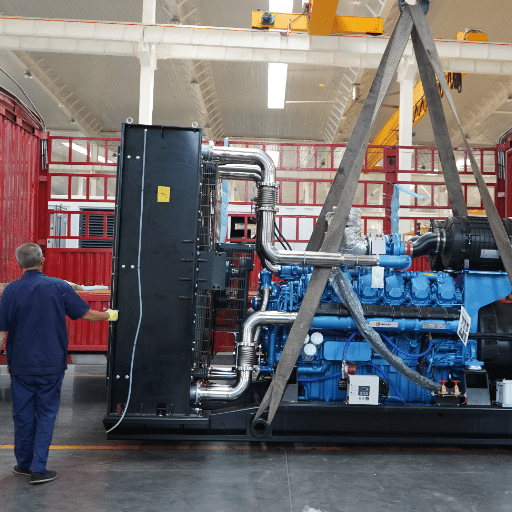
When the unit arrives, compare its nameplates and serial numbers with the order and FAT records. Record damage and missing parts. Note any difference from the approved build.
Take dated photos and note the condition on the delivery record. Report it through the agreed route.
Use the delivery section of the generator set commissioning procedure to check the supplied parts list. Don’t assume it includes chargers, heaters, remote indicators or transfer switches. Will the unit be stored before installation? Get the storage and preservation instructions first.
Delivery is one milestone. It doesn’t give permission to start the engine.
Check the finished supports and mounts against the approved design. The generator set foundation guide covers that adjacent planning subject. Keep the foundation sign-off in the site file. Don’t leave foundation design questions until first start.
Phase 3: Pre-commissioning checks
The generator set commissioning procedure should require a ready-to-start check. The installer and test lead should sign it before first start. Use the actual engine, alternator, controller and switchgear instructions to close it.
Use this table to index the records. You still need the model instructions.
| Area | Readiness evidence to retain | Question before release |
|---|---|---|
| Fuel and fluids | Approved fluids, fill checks, leak test and prep records | Is the system ready for this engine? |
| Exhaust and ventilation | Site checks, clearances and airflow path | Does the site match the approved design? |
| Cooling | Coolant preparation, connections and required auxiliaries | Are the specified checks complete? |
| Power cables and earthing | Cable ends, torque, phase and earthing records | Have qualified staff signed off the work? |
| Batteries and auxiliaries | Polarity, charge, charger and heater checks | Does it meet the model instructions? |
| Controls and documents | Settings, diagrams, interlocks and defect list | Is first start authorized? |
Suppose a cable-torque record is unsigned. Name who must close it, what proof is needed and who can release the hold. The generator set commissioning procedure should link each hold to its closure record.
A tick beside “electrical complete” does not name who checked the work. Refer detailed wiring questions to the generator electrical connection guide and the approved project drawings.
Insulation tests and sensitive electronics
Don’t use one insulation-resistance limit or test voltage for every alternator. The STAMFORD P7 Owner Manual, section 7.8, gives winding-test safety steps for that model. It also names parts to isolate to avoid damage.
Put the installed model’s test method and pass value in the generator set commissioning procedure. Use that method to record the winding ID and condition. Include the test voltage, temperature, reading interval and result.
After the test, have the approved team reconnect each part. Check that they completed the safety steps.
A site reading differs from the factory result. Before drawing a conclusion, check whether both tests used the same method and conditions. Have the installer close defects. Use the common installation mistakes guide to discuss the work; it does not approve a release.
Verify first start, protection and control functions
Phase 4: Initial startup and no-load run

Have qualified staff carry out first start under the approved plan. Check the work area and equipment state. Agree how the team will stay in touch and who can stop the test.
Keep the operating manual at the unit. A generic checklist isn’t enough.
The generator set commissioning procedure should require a copy of the control settings and setpoints before the run. Follow the engine instructions for any required pre-lubrication, starting, warm-up and shutdown. Pre-lube equipment and times depend on the model. This guide does not set one pressure or run time for all units.
During the first run, record speed, voltage and frequency. Include oil pressure, coolant temperature and the other readings the plan requires. Use the nameplate and approved settings as the reference. Use the approved checks to look for leaks, unusual noise, shaking and active faults.
If a reading falls outside the agreed limit, record the condition and follow the stop or hold instruction. Do not keep running merely to complete a scheduled test duration. After a repair, name the checks to repeat. Record who approves the restart.
Phase 5: Protection and control testing
An alarm on the screen isn’t the whole test. Use the approved cause-and-effect matrix: the list of inputs and required responses. It should separate a status light, alarm, shutdown, start block and remote message.
Check the required response for each input. Don’t assume every fault must stop the engine.
Request the approved matrix and the authorized test method before this work begins. Use test signals or test tools approved by the equipment maker where specified. Don’t damage the set by forcing excess speed or heat to prove a trip works.
Use these fields for each protection-test row in the generator set commissioning procedure:
- Input signal and the approved method used to simulate it.
- Expected local alarm, shutdown or inhibit, as specified.
- Expected remote message and its destination, if required.
- Actual response, settings revision, witness and result.
- Test signals removed and the final control state.
Another engineer should be able to match this record to the generator set commissioning procedure. A checkbox alone won’t tell them what happened.
For a charger-failure input, for example, use the response required by the approved matrix; do not assume a generator shutdown is intended. Check the required remote point as well as the local light. A panel lamp does not prove that the building management system got the right message.
When protection tests end, remove temporary overrides and test signals. Check that the controls are back in the approved state. Retain the final settings record. The generator set commissioning procedure should make this restoration a recorded release condition, not an informal assumption.
Load tests in the generator set commissioning procedure
Phase 6: Load bank testing and step loading
Agree the load-bank setup in the generator set commissioning procedure before the test team arrives. State the rating, load type and power factor in the plan. Set out each load step, its duration, the readings to take and the pass limits.
Get approval before any overload test. Don’t assume a standby rating permits it.
The generator set commissioning procedure must separate a steady-load run from the response to a load change. A steady reading tells only part of the story. It doesn’t show the dip or recovery time when load changes. A set-only load test also does not prove each transfer switch, backup power system or remote control link.
Use a record like this within the generator set commissioning procedure. Fill in the values and get approval before testing:
| Test record | Values or references to agree |
|---|---|
| Unit and basis | Test ID, serial numbers, rating and build |
| Applied load | kW, kVA, power factor and load-bank type |
| Sequence | Start state, load changes and time at each point |
| Conditions | Ambient, enclosure, airflow and other required checks |
| Readings | Meters, sample method and channels to log |
| Pass rules | Limits, source of criteria and named approver |
| Result | Readings, test gaps, witness and retest reference |
Don’t copy load steps from an online list and claim ISO requires them for every set. Get the required performance class and test conditions from the agreed standard and project file. Settle any gaps before calling a result a pass.
Steady load, heat and transient records
Caterpillar’s ambient-capability paper explains why the enclosure and heat conditions matter. You need that context to assess the factory cooling test. Describe the site airflow path. Record the temperatures at the points named in the approved test.
Illustrative scenario: The factory report records full-load operation, but the site enclosure and airflow path differ from the factory arrangement. The test lead asks which site temperatures and conditions need proof. Keep the factory sheet. Use the approved site test to address the changed setup; one record can’t stand in for the other.
For a transient test, the generator set commissioning procedure should state the starting load and the step added or removed. Log voltage and frequency. State how you measure recovery and when you count it as complete.
A note saying “step load passed” leaves too much unanswered. Which step? Against which limit?
For each measured channel, put the limit beside the result. Add the trace or log reference. Name the reviewer and decision. Do not infer a performance class from the generator’s size.
Caterpillar’s underloading paper discusses low-load risks and how they differ by equipment type. Follow the installed model’s guidance. A single test run can’t prevent all later low-load problems.
Review deviations and decide what to repeat
The generator set commissioning procedure should retain failed or stopped runs in the test record. State what happened, what was fixed, which tests it affects and the retest result. Send the evidence to the named approver. They must decide whether to accept, hold or allow release with stated limits.
For visual context, Generator Source’s video below presents a load-bank test on a Cummins unit. It is an equipment example, not the acceptance schedule for your project.
The load-bank testing requirements article provides a related reading route. Keep the commissioning acceptance record separate from the ongoing maintenance testing plan.
Test ATS and installed-system integration
Phase 7: ATS and system integration
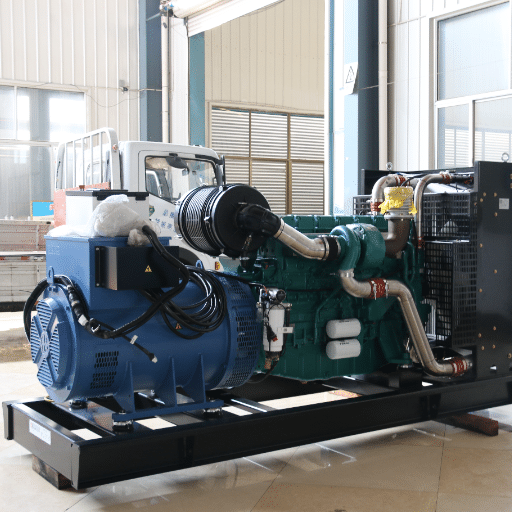
The automatic transfer switch, or ATS, switches the load between the agreed sources. Agree a test window with the site team. Name the loads at risk, who gives permission, when to stop and who restores the system.
Qualified staff must carry out the test. Do not open live utility equipment based on this guide.
The Cummins T-016 startup framework includes manual and automatic operation, black start and system acceptance within its application scope. Base the system tests in the generator set commissioning procedure on the approved site sequence. Include parallel operation, the uninterruptible power supply (UPS) and building management links if the project requires them.
The generator set commissioning procedure should ask the team to prove the approved sequence. Record each event:
-
Loss of normal supply and the start command.
-
Generator source available and permission to transfer.
-
Transfer and operation of the specified load.
-
Normal-source return and retransfer.
-
Cooldown and return to the approved automatic state.
These events form a test record. They do not tell you how to switch live equipment. Use the project’s permitted test method and actual states and times. A final “auto” indication alone isn’t enough.
Transfer timing and automatic readiness
In the generator set commissioning procedure, give each event a trigger, expected response and result. Include a time reference and any alarms. Keep three measures distinct: engine start, generator source ready and supply restored to the load.
Check each measure against its own limit. They are not all the same “transfer time.”
Don’t assume all emergency systems share one time limit. Ask the project engineer which code, class and load rules apply. Don’t promise that power will stay on or voltage won’t dip. You need proof for the actual transfer setup.
Illustrative scenario: Each set at a site has its own signed test report. But no one has shown the combined loss-and-recovery sequence. Which units start, which loads get power and how does the system recover? The single-set sheets don’t prove those links.
Agree the required sequence tests, interlocks and load-sharing checks with the system specialist. If a test exposes an incorrect signal or sequence, keep the result and identify the affected interface. Record the fix and approved retest. Don’t replace a failed page with an unexplained pass.
The generator set commissioning procedure needs a final restoration check before the test window ends. Check the status of each temporary test connection. Notify the facility team of the final status, including any remaining restriction.
Write the final state in the handover file. Operators shouldn’t have to guess which control mode you left behind.
Complete the generator set commissioning procedure and site handover
Phase 8: Documentation, training and handover
Link the generator set commissioning procedure to a handover file indexed by unit ID and installed build. Include FAT records, receiving checks, installation verification, startup readings, protection results, load tests and system sequence records. Link each deviation and retest to the first record. Keep the full test history.
Keep approved as-built drawings, manuals, final settings and the service contact. Record what training took place and who attended. The Cummins startup appendix includes customer acceptance, training and an installation report. It supports these close-out tasks within the scope it describes.
Include a training record in the generator set commissioning procedure. Cover the installed system:
- Identify the normal control state and how to check it.
- Explain alarms and the actions operators are permitted to take.
- Show where the drawings, manuals and settings records are kept.
- Name the contact and escalation route for faults.
- Explain restrictions that still apply at handover.
Give operators the site documents. Explain who owns each maintenance task. A demonstration of the start button alone does not address the full handover scope described here.
Use the generator set commissioning procedure to track each open defect and the function it affects. Name its owner, the action needed and the planned closure date. Attach proof when it is closed.
Does the contract permit conditional acceptance? If so, state the exact limits and who approved them. Do not turn an unresolved protective-function or safety issue into an administrative checkbox.
Warranty terms and maintenance responsibilities
Get the written warranty terms for the equipment and territory. Ask when cover starts and whether registration is required. Check who can authorize startup and which records you must keep.
Keep the written warranty terms with the generator set commissioning procedure. They control the start date. Don’t assume one missing signature cancels all cover.
Set up the maintenance plan using equipment instructions and applicable project requirements. The diesel generator maintenance checklist offers a related planning route. Use it to plan ongoing care. Keep the first acceptance records in the handover file.
Questions before signing acceptance
Does a passed FAT replace SAT? No. FAT covers the agreed factory test boundary. Site acceptance must address the installed arrangement and specified interfaces; identify what factory evidence can be carried forward and what requires site verification.
Is there one load schedule for every generator? No. Agree the rating basis, load type, steps, durations, measurements and limits for the actual equipment and application. Use the adopted requirements and approved procedure rather than an unsourced universal schedule.
Does commissioning automatically activate warranty? Not as a universal rule. Check the written terms for the supplied equipment, including any startup authorization and registration requirements. Retain the evidence those terms request with the generator set commissioning procedure.
Before handover, check three things: each result has a pass limit, each test gap has a decision and each restriction has an owner. Use the generator set commissioning procedure to check the agreed scope and release conditions. Sign off only the work that the records support.
For a new procurement enquiry, contact us with your rating, intended duty, site location, single-line information and required test records. Request confirmation of the equipment and test scope available for the project before committing to its acceptance plan.